Love 'em or hate 'em, dandelions are popping up all over. The plant contains natural anti-inflammatories, The greens are edible, and some believe they reduce the risk of cancer. |
|
2025 Session Nears Final Hours
Unusual Path to Finish Sine Die
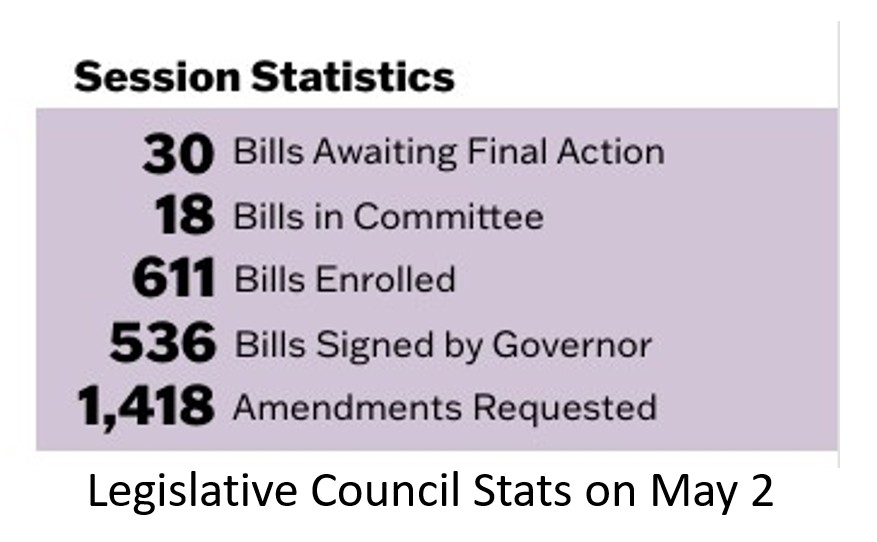
The North Dakota Legislature is finishing up in dramatic fashion, with lawmakers opting to work late into the evening Friday – Legislative Day 74 – rather than finishing what they can today and coming back on Saturday to wrap things up Sine Die. At the time of publication there are 13 bills still left to be decided. Here is a snapshot of what is known on what is left for bills we’ve been following closely. A full report on the legislative session will be provided in next week's edition of the WDEA newsletter. SB 2012, the Department of Transportation budget had a highly unusual conference committee where conferees voted on amendments, without the actual amendments in hand and without discussion on the amendments. They then voted the full bill out of the committee. Hurdsfield Rep. and Speaker of the House Robin Weisz quipped, “we made some well-seasoned sausage here.” It was a reference to a quote often attributed to Otto von Bismarck, “Laws are like sausages. It’s better not to see them being made.” Listen to Jamestown Sen. Terry Wanzek offer his rationale for the unusual procedure here. The main vehicle for property tax reform, HB 1176, was unanimously passed out of conference committee and passed on the House floor. Key components of the bill include a primary residence tax credit of $1,600 and removal of what was dubbed the “skin in the game” provision, which proposed requiring property owners to pay at least 25% of their property tax bill, rather than have it zeroed out. Political subdivision budgets will be capped at 3% growth from the previous year. With the passage of the bill, it’s most certain that HB 1168 and HB 1575, the other property tax reform bills, will be killed. After passing out of conference committee Thursday, it seemed as if SB 2014, the Industrial Commission budget, was heading for final passage. However, the consternation over state support for a natural gas pipeline from west to east spilled over to the Senate floor, which rejected the conference committee report. The bill was finally headed to conference committee late Friday evening at the time of publication. Still left for a final floor vote is HB 1459, a bill to create public policy and a regulatory framework to encourage the extraction of critical and rare earth minerals found within North Dakota’s lignite coal seams. The conference committee report was overwhelmingly rejected this week over concerns of retroactive changes to mineral leases including establishing a minimum 2.5% royalty rate. Late Friday, the conference committee passed an amendment keeping the minimum 2.5% royalty rate, with a provision to allow the mineral owner and producer the ability to negotiate new terms, while keeping a retroactivity provision in the bill. The legislation establishes legislative intent for critical and rare earth minerals, in case the final law is challenged in court, which many anticipate it will be. Hazen Rep. Anna Novak said the bill was a good compromise that also gives certainty to industry. Listen to her comments here. It is clear the 69th Legislative session is ending somewhat haphazardly, which isn’t completely uncommon, but many around the Capitol have commented that this session has had some of the most bizarre final hours in recent memory. |
|
New Drilling Incentive Bill Passes
Heads to Governor for Signature
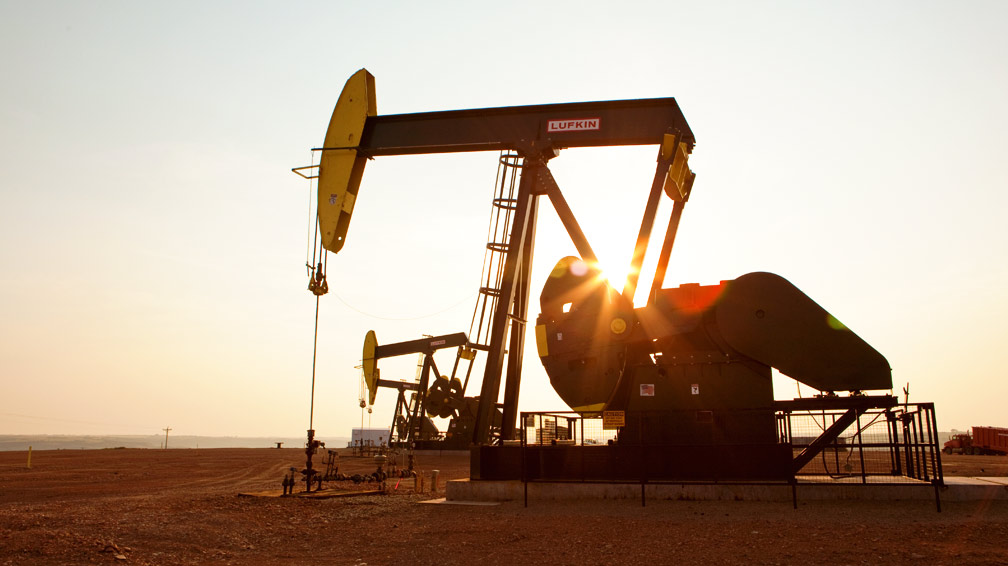
The North Dakota Legislature has approved SB 2397, a bill to incentivize new and innovative drilling techniques within the Bakken and Three Forks formations. The conference committee amended the House version of the bill to include a tiered qualification system for operators and the number of “development incentive” wells they can drill. Listen to Department of Mineral Resources Director Nathan Anderson explain here. Mandan Rep. Todd Porter raised concerns around the tiered system, worrying that it could detract the true innovators from exploring new techniques. Listen to Rep. Porter’s comments here. The bill also lowers the amount of initial production exempt from the 5% extraction tax from the first 300,000 bbls to 250,000 bbls for the first 36 months. The Industrial Commission will be responsible for certifying wells as a development incentive well, however it was important to Anderson that the burden is on the operator to demonstrate that a well is using innovative techniques. Listen to Anderson’s comments here. The incentive applies to operators who have drilled wells beginning July 1, 2023 and ending June 30, 2025. The incentive sunsets on June 30, 2028. |
|
Disappointment in Education Funding Levels
Legislature Increases Per Pupil Funding Just 2.5%
Like more than a dozen other bills, the final policy and funding bills for the Department of Public Instruction were still being debated at publication time, but it's fairly certain the legislature will provide just a 2.5 percent increase in the per pupil payment each year of the coming biennium. Policy is established in HB 1369, which specifies that the per pupil figure will increase to $11,349 per student for the 2025-26 school year, and $11,633 in the 2026-27 school year. The fiscal note on the bill indicates it will cost an additional $115 million in the coming biennium. The DPI budget bill, HB 1013, which includes funding for the K-12 Foundation Aid formula, will approach the $3 billion mark this biennium. Minot Rep. Scott Louser, who served on the conference committee that wrote the final bill and is a member of the Minot School Board, said the modest increase doesn't reflect the value of education. Click here to listen to Louser's comments. Public school districts will also be disappointed to learn that the legislature did not put additional dollars into the state's low interest school construction loan pool. Lawmakers did reduce the amount that a school district could borrow from the pool, which offers loans at 2% interest. Districts with projects of less than $75 million will be capped at $10 million, down from the current $15 million, and projects exceeding $75 million will be capped at $20 million, down from the current $30 million. There is currently about $30 million available for new loans, with more than $500 million in outstanding loans, payments on which are deposited in the revolving loan fund. The conference committee also adopted language that allows a school district on an Air Force Base to receive a loan of up to $20 million from the Coal Development Trust Fund. Plans are in the works for a new K-8 school on Grand Forks Air Force Base, which has an estimated cost of $76 million. Eighty percent of the building's cost is to be covered by a pair of Department of Defense grants. The fate of another bill that would assist with the cost of school construction, HB 1130, is uncertain at this time. The legislation, sponsored by Williston Rep. David Richter, passed the House, but failed on the Senate floor on a 23-23 tie vote. |
|
Dickinson Airport Terminal Gets Funding
Construction is Expected to Begin This Year
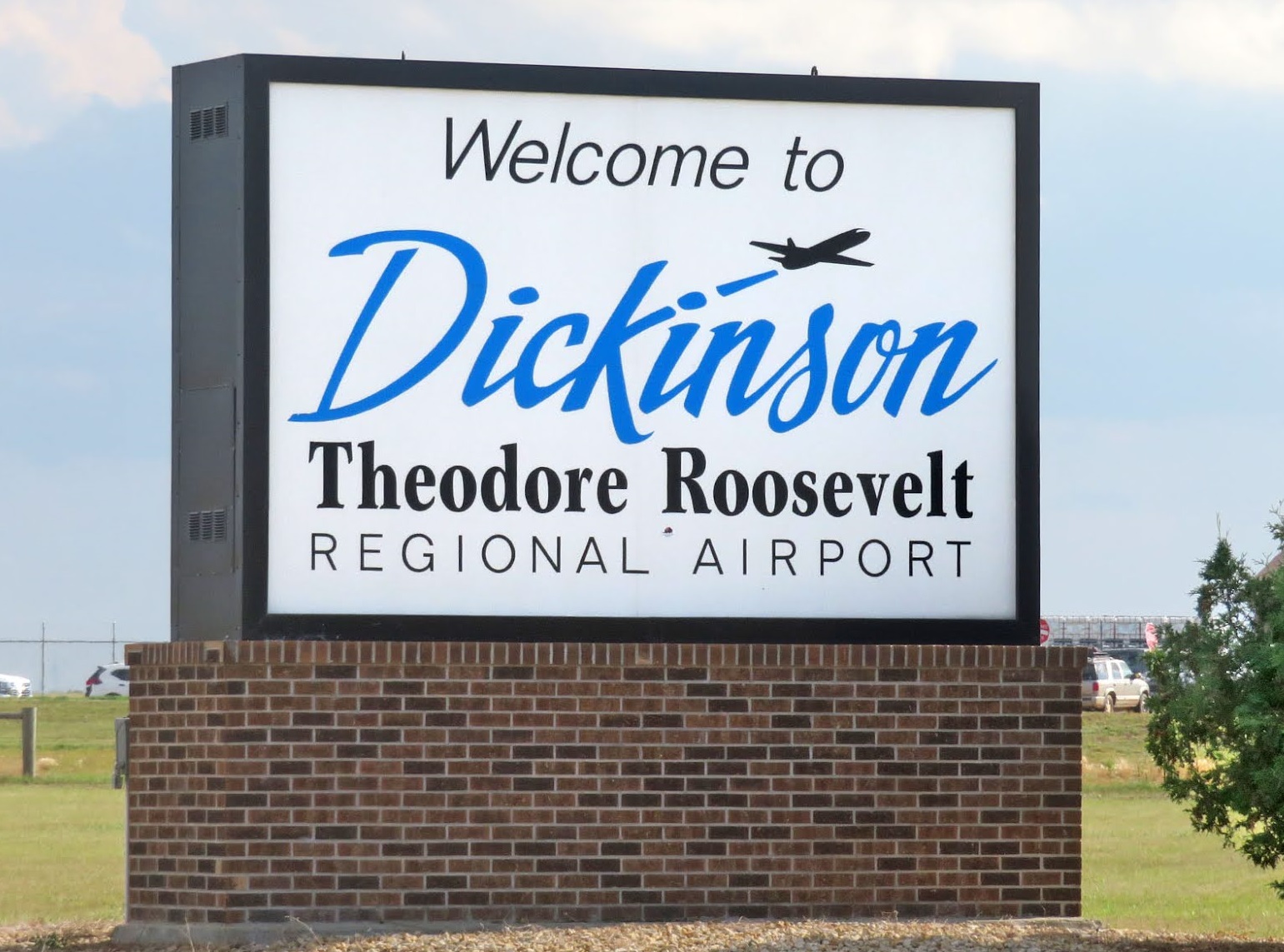
The budget bill of the ND Aeronautics Commission includes funding for three airport terminal projects, including $25 million for construction of a new terminal at Theodore Roosevelt Regional Airport in Dickinson. Preliminary plans released last summer indicated the terminal would be between 26,000 and 33,000 square feet, and be built at an estimated cost of $46.5 million. The Federal Aviation Administration would be expected to pay $12 to $15 million toward the project, and the City of Dickinson's share would be $5 million. Cost of the new terminal would also include the associated taxiways, aprons, access roads and parking lots. The original version of SB 2006 would have appropriated $30 million to Dickinson, but the amount was reduced by a conference committee. Members said Dickinson could use the additional $4 million it would receive under the Hub City debt relief provisions found in SB 2323. The current terminal, built in 2001 and expanded in 2012 and 2018, covers about 10,200 square feet. It was initially designed for turbo-prop aircraft, but the terminal space is now inadequate with the city's transition to larger regional jets. The legislation also provides one-time funding for a terminal expansion project in Fargo and runway reconstruction in Grand Forks. |
|
Coal Conversion Tax Issue Settled
Resolution Required Nine Meetings
The ND Legislature has passed a bill that would extend a partial exemption on coal conversion taxes paid by North Dakota lignite power plant operators. The coal conversion tax is imposed on electrical generating plants in lieu of property taxes. The coal severance tax is imposed on coal used for industrial purposes in lieu of sales tax.
The 2021 Legislature approved HB 1412 that temporarily waived the 85% share of the conversion tax paid to the state, while keeping in place the 15% that supports political subdivisions in the county where the plant is located. The current exemption is due to expire June 30, 2026. The original version of HB 1279 passed by the House would extend the exemption another 10 years, but the Senate objected to the extension, insisting that at least some tax be paid. The compromise worked out by a conference committee that met nine times would phase in the 85% share over the next five years, increasing to 10% the first year, then 20%, 30%, 40% and 65% in ensuing years, until it was back to the full tax rate in 2013. Williston Senator Brad Bekkedahl, who was one of the conferees, said it's unusual for such a bill to be debated a such length in conference before action in the final days of the session. He complimented his fellow committee members and industry lobbyists for their effort to work out the compromise. Click here to listen to Bekkedahl's comments. The compromise will result in the industry paying $35 million over the next five years, nearly all of which will be deposited as principal in the Legacy Fund. Five percent of the total is earmarked for the Lignite Research Council. Grand Forks Senator Scott Meyer said the partial tax exemption is warranted, considering the regulatory assault on coal orchestrated by the Biden administration and environmental extremists. Click here to listen to Meyer's comments. Despite resistance to imposing any type of tax on the industry, the House approved the amended bill 68-21, and passed the Senate on a 44-2 vote. |
|
MISO Summer Capacity Prices Soar
Higher Cost Means Grid Need More Power
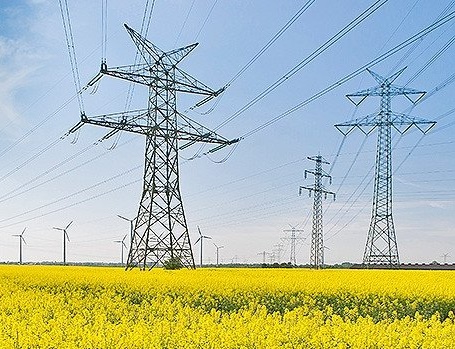
The 2025-26 capacity auction of the Mid-Continent Independent System Operator (MISO) resulted in much higher prices for the summer months, strongly indicating the need for utilities to build new power generation soon. Capacity prices shot up to $666.50/MW-day for the months of June, July and August, driven in part by declining surplus capacity. MISO, which manages the electric grid across 15 states including parts of North Dakota, holds the auction to ensure there’s enough power available for the upcoming year. The results showed that while supply is getting tighter, there is still enough electricity to meet demand. “This year’s results amplify the need and urgency for MISO’s efforts around resource availability and market redefinition as outlined in the Reliability Imperative,” said MISO CEO Clair Moeller. “We will continue working with our member utilities and states to hone regional planning processes and market mechanisms to meet the needs of our evolving fleet.” This year, MISO introduced a new pricing system called the Reliability-Based Demand Curve, which adjusts prices based on how close the system is to running low on power. The system is aimed at rewarding reliability, by encouraging energy suppliers to value their capacity properly. Most electricity providers already secure the power they need before the auction, but those who buy from the auction must pay the clearing price, determined by supply and demand. The effect on consumer costs depends on various factors like power agreements and state regulations. Here’s how is how the MISO clearing price auction works:
- Energy suppliers (like power plants) offer their extra electricity capacity at different prices.
- Electricity providers (like utility companies) bid to buy the capacity they need.
- The market system arranges the bids from lowest to highest price and keeps selecting capacity until it reaches the total amount needed.
- The last accepted bid sets the clearing price, meaning all buyers pay the same rate, and all sellers get that same rate. So, if the last accepted bid in the summer auction was $666.50 per megawatt per day, then everyone pays or receives that amount, regardless of the price they originally bid. The system helps keep prices fair while ensuring enough electricity is available for the grid.
|
|
Leaders Urge Energy Tax Credit Reform
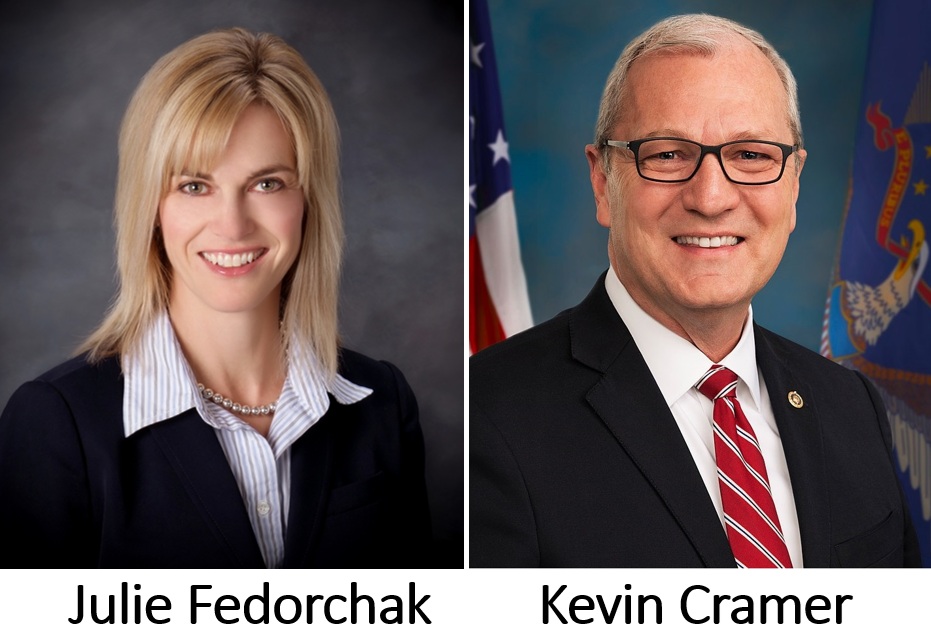
Fedorchak, Cramer Raise Reliability Concerns
Congresswoman Julie Fedorchak and Senator Kevin Cramer are calling on congressional leadership to reevaluate and reform federal energy tax credits to better align with America's goals of energy reliability, affordability, and security. In a letter sent to House and Senate Republican leaders and committee chairs, the two former state utility regulators warn that current energy tax policy distorts markets and weakens the electric grid by disproportionately subsidizing intermittent power sources like wind and solar.
“We understand state and regional power markets and strongly believe smart, targeted federal investments in our energy sector can be in the national interest. Multiple federal statutes state the public policy of the United States is to provide a reliable and resilient grid, yet all too often our tax code subsidizes the opposite,” they wrote. “Regrettably, it continues to shower intermittent energy generators with incentives and resources without regard to its contribution to a rapidly degrading electrical grid.”
The letter raises concerns about the state of the U.S. power grid, citing a recent report from the North American Electric Reliability Corporation that found 11 of 18 regional transmission organizations face an elevated risk of resource adequacy shortfalls. The Midcontinent Independent System Operator (MISO)—which serves 45 million Americans—is at high risk of not having enough electricity to meet demand, even under normal conditions.
Fedorchak and Cramer are calling for a responsible phase-out of costly tax credits like 45Y and 48E, which favor only zero-emission sources while overlooking key attributes like reliability, affordability and dispatchability. They say the credits send the wrong signals to the energy market and contribute to growing risks to grid stability. Instead, they support targeted incentives such as 45Q for CO2 capture and 45U for existing nuclear power, tools that reduce emissions while helping maintain dependable, affordable electricity.
“Generators should be paid for their performance; not how good they make policymakers feel,” they concluded. “As we continue to formulate the parameters of an American energy dominance agenda, we stand ready to work with you and other Republican elected officials to deliver on the mandate the American people entrusted with us.”
Read the full letter here.
|
|
Interior Aims at Permitting Delays
New Procedure Will Cut Years to Days
In response to President Donald J. Trump’s declaration of a National Energy Emergency, the U.S. Department of the Interior will implement emergency permitting procedures to accelerate the development of domestic energy resources and critical minerals. The measures are designed to expedite the review and approval, if appropriate, of projects related to the identification, leasing, siting, production, transportation, refining, or generation of energy within the United States. The new permitting procedures will take a multi-year process down to just 28 days at most. The procedures apply to actions relating to a wide range of energy sources, including Crude oil, Natural gas, Lease condensates, Natural gas liquids, Refined petroleum products, Uranium, Coal, Biofuels, Geothermal energy, Kinetic hydropower, and Critical minerals. “The United States cannot afford to wait,” said Interior Secretary Doug Burgum. “President Trump has made it clear that our energy security is national security, and these emergency procedures reflect our unwavering commitment to protecting both. "We are cutting through unnecessary delays to fast-track the development of American energy and critical minerals, resources that are essential to our economy, our military readiness, and our global competitiveness," Burgum continued. "By reducing a multi-year permitting process down to just 28 days, the department will lead with urgency, resolve, and a clear focus on strengthening the nation’s energy independence.” The declaration of a National Energy Emergency recognizes that current delays in energy project approvals pose significant risks to the nation’s economic stability, national security, and foreign policy interests. In response, the Department will utilize emergency authorities under existing regulations for the National Environmental Policy Act, Endangered Species Act, and the National Historic Preservation Act. The procedures, outlined below, will significantly enable faster permitting timelines—reducing processes that typically take several months or years to just weeks. Read more from the Department of Interior here. |
|
New ND Tourism Logo Revealed
Inspired by ND's Wide Open Spaces
North Dakota’s new icon was unveiled at the 2025 North Dakota Travel Industry Conference. This icon is a colorful representation of the state’s geography, scenery, and spirit. It will be used in conjunction with the “Be Legendary” brand, which for more than 20 years has signified the state’s adventure, hospitality, and pioneering ambition. "The new ND Icon captures the essence of North Dakota – a place where our opportunities are as big as our skies, and our smiles are as bright as our sunsets," said Commerce Tourism and Marketing Director Sara Otte Coleman. "It will serve as a powerful symbol of our shared identity and a source of pride for all North Dakotans." The public was invited to participate in choosing the new icon through a widely advertised poll, which garnered over 10,000 responses, with 80% favoring the selected icon. Read more on Tourism’s website. |
|
DSU and Titan to Host Diesel Camp
An Opportunity for High School Students
Dickinson State University, in partnership with Titan Machinery, will host a three-day, two-night summer camp to introduce high school students to careers in diesel technology. The camp will feature hands-on workshops in diesel mechanics, engine maintenance, and welding. Students will stay in DSU residence halls and enjoy meals in the university cafeteria. Each day, participants will travel to the Southwest Area Career and Technical Education (SWCTE) Academy for training sessions. The camp is open to students entering the 9th through 12th grades in the fall. The fee is $150 per student, which includes lodging and meals. Space is limited to the first 30 registrants, so early registration is strongly encouraged. North Dakota is experiencing a growing demand for skilled diesel technicians, driven by the state’s strong ag, energy, and transportation sectors. Employers across the region are actively seeking qualified technicians to maintain and repair heavy equipment and commercial vehicles. “DSU's Diesel Technician program and the SWCTE are excited about teaming up with Titan Machinery to bring their high school Diesel Mechanics camp to Dickinson,” said Dr. Chip Poland, director of agriculture and technical studies at DSU. “This is a great opportunity for upcoming high school students to explore a career in diesel mechanics.” The summer camp also directly supports DSU's dual mission as a regional comprehensive institution and a dual-mission university. By blending academic and technical education, the camp provides early exposure to career-ready training while encouraging pathways to higher education. DSU continues to fulfill its commitment to both workforce development and academic excellence. Click here for more information or to register. |
|
WDEA Offering 8 Energy Scholarships
Aimed at Students Pursuing Energy Career
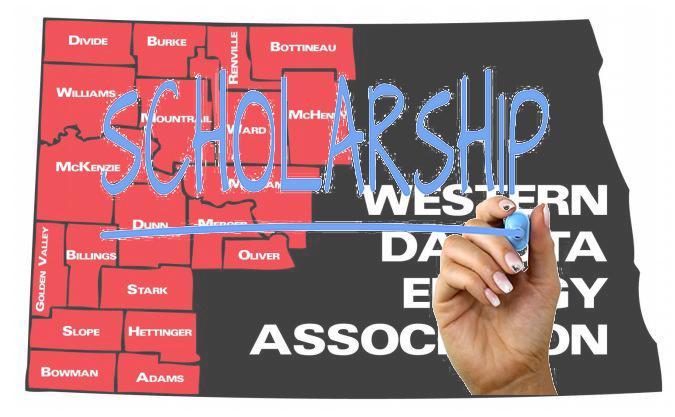
The Western Dakota Energy Association will award eight $1,000 scholarships this spring to students in an energy-related field at a North Dakota college, university or technical school. WDEA President Leslie Bieber said the association is offering the scholarships to help the industry and western communities meet the workforce challenges historically experienced with oil industry growth. “We recognize that North Dakota will see benefits from the fossil fuel industry only if it is able to attract the workforce it needs,” said Bieber. “We want to do everything we can to encourage young people to explore the many opportunities for a rewarding career in the energy sector.” Funding for the scholarship program is generated by sponsorships of WDEA’s annual meeting, which this year will be held Oct. 8-9 in Watford City. Click here to learn more about the selection criteria and how to apply. Click here to view or download an application form. The application deadline is May 16. Scholarship winners will be announced following WDEA's Executive Committee meeting in early June. Click here to see an article about last year's winners. |
|
Western ND Honor Flight Welcomed
Fedorchak, Burgum Join Veterans at US Capitol
Congresswoman Julie Fedorchak this week welcomed 180 veterans to the nation’s capital as part of the Western North Dakota Honor Flight. The group was escorted by Capitol Police from their hotel to the U.S. Capitol steps, where they met with Fedorchak and Secretary of the Interior Doug Burgum before heading for a tour of the Capitol Rotunda and the House Chamber.
“North Dakota has a proud tradition of service, and these men and women embody the very best of who we are,” Fedorchak said. “Welcoming our heroes from western North Dakota and bringing them to the House Floor—the heart of democracy—was one of the greatest privileges I’ve had in Congress. I hope this visit served as a small token of our deep gratitude and a reminder that we will never forget their service to our great nation.”
On the House Floor, the group of veterans heard from Fedorchak about her time in Congress and her priorities in Washington. The group also received insight into the history of the House Chamber by Capitol Historian Matthew Wasniewski.
To see Rep. Fedorchak's video posted on X, click here. |
|
Registration Open for Roads Roundtable
Counties, Oilfield Truckers to Discuss Issues
County road managers and oil industry trucking interests will have an opportunity to discuss common concerns and share best practices at a Western Energy Roundtable set for May 27 at the Rough Rider Center in Watford City. The annual event is co-hosted by the Western Dakota Energy Association and the ND Local Technical Assistance Program. The event will get underway at 10:00 a.m. with an overview from the ND Department of Transportation summarizing road and bridge funding opportunities and seasonal construction plans. WDEA will also provide a legislative report, covering issues of importance to western North Dakota communities. The agenda also includes a presentation on oversize truck permitting, an oil industry panel and a panel discussing transportation-related issues in western counties. The event concludes with an open mic discussion of other issues of concern. Registration is free and lunch will be provided. Interested persons are urged to register early so name tags can be prepared and organizers can get an accurate headcount for lunch. Click here to see the tentative agenda. Click here to register. |
|
New WX Station at Little Mo State Park
Station to Better Measure Winter Snowpack
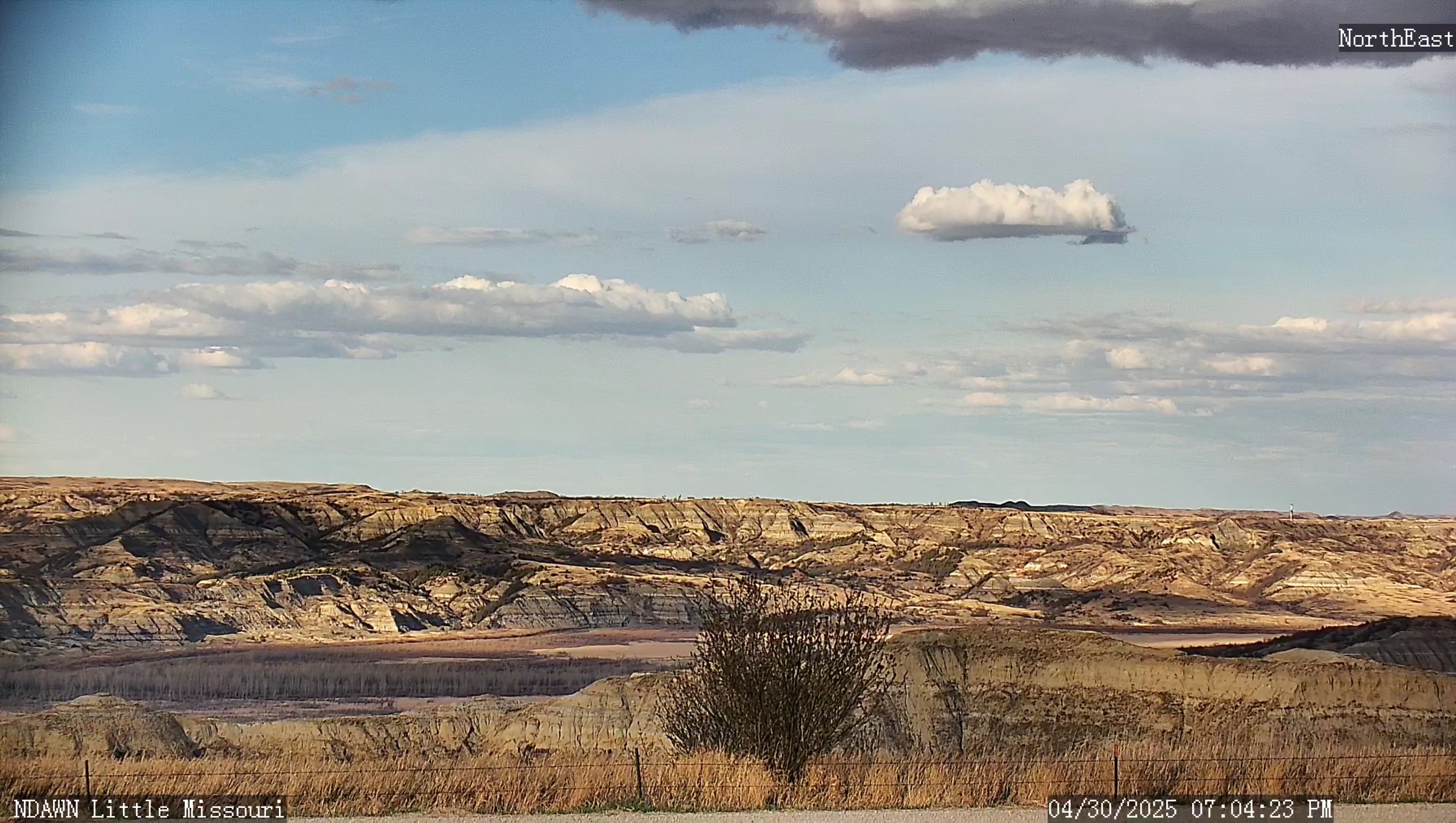
The ND Agricultural Weather Network (NDAWN) crew recently made the journey to the North Dakota Badlands to install a weather station next to the Little Missouri State Park. Situated just across the road from the park entrance sign, it isn’t your everyday backyard weather station. It’s equipped with an all-season precipitation gauge, soil moisture from 2-to-40 inches, deep soil temperature to a depth of 7.5 feet, snow depth sensor, and the station is 30 feet tall. It will allow NDAWN to measure an even bigger profile of what the atmospheric conditions are like near the surface, and the soil conditions below. Why the State Park? ND Parks and Recreation was hoping to get weather stations in or near all the state parks in the state. The Army Corps of Engineers wanted a station in the area around the Little Missouri State Park to measure winter snowpack and soil moisture conditions, so it was a perfect match to place the station next to the park. Besides adding a new station near the park, the NDAWN team also placed a new station just north of the McKenzie County Ag Expo along Highway 85. That station also has all the same equipment as the station by the Little Missouri State Park. The former Watford City NDAWN station has been renamed Schafer and was upgraded with better power management equipment as well as a camera this past week as well. The goal of NDAWN is to provide citizens and companies of North Dakota with accurate and timely weather condition updates. There are endless applications for oil companies and their employees, families enjoying the beautiful weather at the park, and park staff monitoring conditions. This information is disseminated online on the NDAWN website and the NDAWN Inversion App. |
|
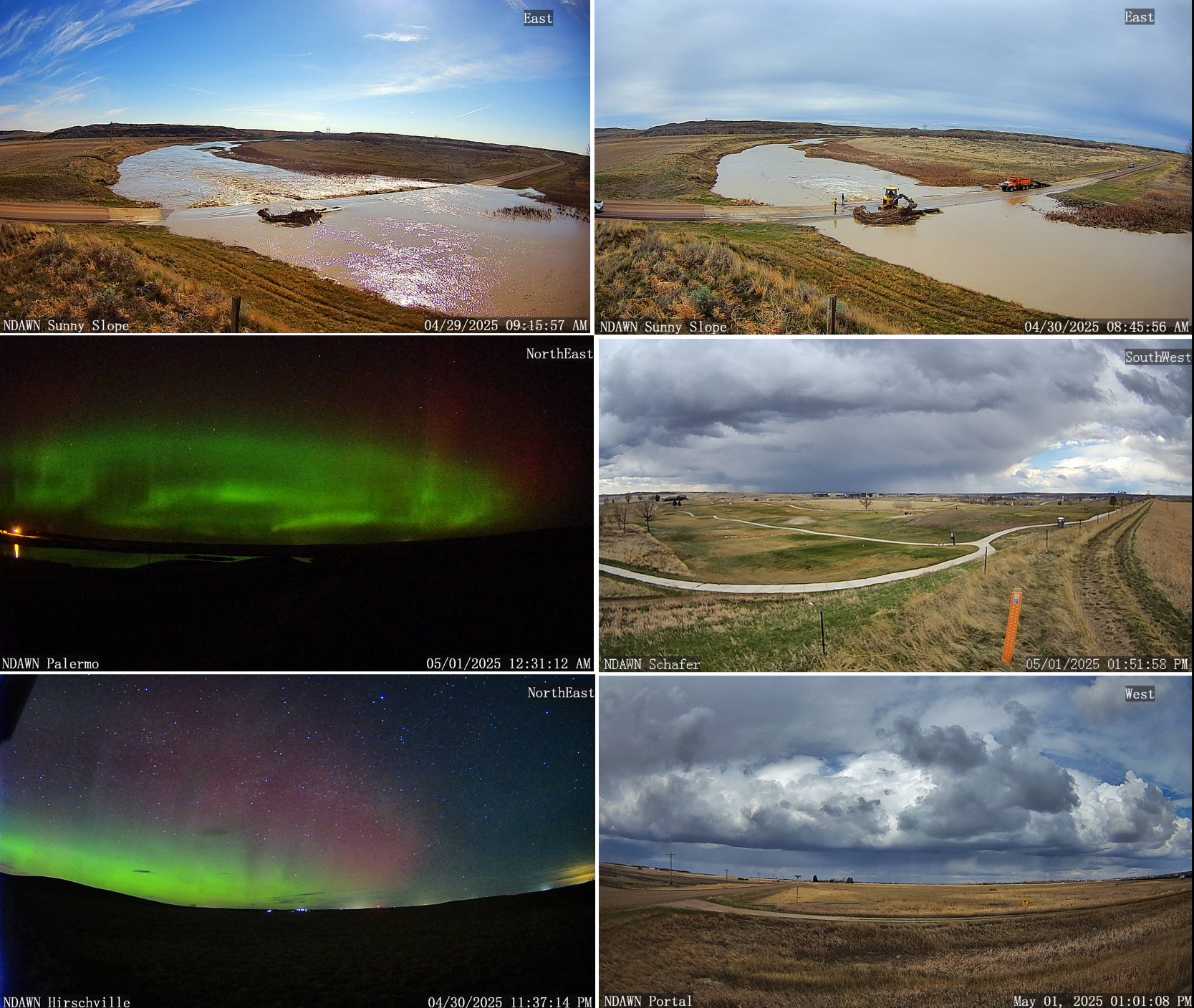
Wise Roads Shots of the Week
Logjams, Rain Showers and Aurora
Spring rains bring welcome moisture, but occasionally the runoff picks up debris that can cause problems downstream. That happened this week on the Little Missouri River in Bowman County. The high-resolution cameras on Wise Roads weather stations also captured images of the Northern Lights and some of the dark clouds that brought rain to western North Dakota. Photos from Wise Roads cameras are updated continuously throughout the daylight hours on the Wise Roads web page.
The Wise Roads project (Weather Information System to Effectively Reduce Oilfield Delays and Disruptions) was developed by WDEA to increase the efficiency of the movement of oilfield truck traffic. Most weather stations were placed in the core area of Bakken production, focusing on Dunn, McKenzie, Mountrail and Williams Counties. The project provides more accurate weather information to county road managers, especially about rain events, to minimize the need to impose weight restrictions when gravel roads get wet. It was developed in partnership with NDAWN, which maintains the stations for WDEA. The project was also assisted with a $250,000 grant from the Oil & Gas Research Council.
Fifty new stations have been installed, 39 of which are located in the four core oil-producing counties. Prior to the start of the project, Dunn and McKenzie Counties had just one station each, Mountrail County had three and Williams County had four. Weather station data and high-resolution photos can be found at wiseroadsnd.com. There is also an interactive Google Map that users can access to pinpoint the location of Wise Roads and NDAWN weather stations. Additional information is also available from NDAWN. Featured shots this week are clockwise from upper left: Sunny Slope, with the crossing clogged with branches; Sunny Slope, with a highway crew and a backhoe at work to clear the debris; Schaefer, otherwise known as Fox Hills Golf Course in Watford City, from the camera installed this week by NDAWN; Portal, near the northern border with rain shows on the horizon; Hirschville, with a display of the Northern Lights; Palermo, with another vivid display of the Aurora Borealis. Click on the link for a high-resolution image. |
|
Quick Connect
• North Dakota legislature approves more debt relief for oil hub cities -- KFYR - TV
• Oil regulator says uncertainty, not 'fundamentals' behind low price -- Bismarck Tribune
• Hess Corp. dishes on first four mile Bakken wells in North Dakota -- Hart Energy
• Williston Basin conference highlights Saskatchewan oil boom -- Western Standard
• Trump gives five North Dakota coal plants more time to meet emissions standards -- Dickinson Press
• BLM oil & gas lease sale in Montana, North Dakota nets $3.4 million for 11 parcels -- NBC Montana
• Summit could face new hurdle as some Iowa lawmakers question eminent domain -- Bismarck Tribune
• Lawmakers set to grow North Dakota gas pipeline subsidy potential to $500 million -- Bismarck Tribune
• Senate defeats bill to expand income tax cuts to more North Dakotans 35-11 -- North Dakota Monitor
• House kills term limit start date bill after conference committee stalemate -- North Dakota Monitor
• Lawmakers selected for committee that makes study decisions for interim -- North Dakota Monitor
• Nearly 500 bills signed this session; North Dakotans can expect these changes -- Dickinson Press
• State's farmers feeling effects of Robert F. Kennedy Jr.'s health kick; tariffs another issue -- InForum
• Federal funding cuts prolong anxiety for North Dakota's State Library, universities -- Dickinson Press
• State's rural caucus felt session successful despite some priorities dying out -- Bismarck Tribune
• Chair of North Dakota House Republican Caucus Jeremy Olson resigns due to new job -- KFYR - TV
• Bill to raise speed limit to 80 mph in North Dakota failed by two votes in House -- North Dakota Monitor
• Legislature passes commerce budget bill with no funding for presidential library -- KFYR - TV
• County hears more concerns about transmission line from Blooming Valley Township -- The Journal
• Residents and Stark County officials prepare for disaster resilience at workshop -- Dickinson Press
• Join the spring sweep: "Pick Up the Patch" returns to beautify Watford City -- McKenzie County Farmer
• New tribal national park in North Dakota aims to preserve rugged and scenic landscape -- KX News
• The road forward: Stark Co. Highway Supt. Al Heiser's next chapter in public service -- Dickinson Press
• Injured McClusky firefighter Bauer shares story of wildfire battle that went wrong -- Bismarck Tribune
• NDDOT, Reede Construction, City of Williston announce 26th Street road closure notice -- NDDOT
• Ward County Teacher of the Year Risha Allen finds rhythm at John Hoeven Elementary -- KFYR - TV
• Letter: Our support for school choice was never about getting money for nonpublic schools -- InForum
• NDSU launches "Bison to the Bakken" to immerse students in energy -- McKenzie County Farmer
• Dean highlights AI Energy opportunities at Hamm Institute Conference -- McKenzie County Farmer
• Fox Hills Elementary School teacher honored as outstanding educator -- McKenzie County Farmer
• Minot Board of Realtors taking donations towards school lunch balances through April -- KFYR - TV
• Dickinson Public Schools has opened busing registration for the 2025-26 school year -- Dickinson Press
• Legislature compromises on 2.5% yearly increase to school districts; awaits full vote -- KFYR - TV
• Lignite Energy Council awards scholarships to seniors from Bismarck, Underwood -- Minot Daily News
• Fargo-based Golden Path announces partnerships with North Dakota CTE centers -- Williston Herald
• New report shows ND average teachers' salary of $58,581 ranks 40th in the nation -- Fargo Forum
• Trump's push to save fading coal industry gets a warm embrace in West Virginia -- Minot Daily News
• US has a single rare earths mine. Chinese export limits energizing push for more -- Bismarck Tribune
• China's oil refiners and coal miners are struggling with weak demand and overcapacity -- Oil Price
• EPA allows high-ethanol gasoline to be used all year after Trump's emergency declaration -- The Hill
• First quarter of Trump's presidency was a real test for Big Oil finances and drilling plans -- World Oil
• Burgum's sharply different tack as secretary, leans away from 'all-of-the-above' energy -- E&E News
• Fossil fuel booster Alex Epstein meets with EPA's Zeldin; urges burning more fossil fuels -- E&E News
• Spain declares state of emergency after nationwide power blackout hits Iberian Peninsula -- Reuters
• Electric vehicles are quiet, fast and fun to drive, but technology to build comes at a price -- Townhall
• Alaska, despite proven petroleum reserves, faces a looming energy shortage -- News From The States
• United States and Ukraine signed their long-awaited mineral deal says Treasury Dept -- The Hill
• In Trump's first hundred days, US energy dominance plans roiled by trade uncertainty -- Reuters
• Former Prime Minister Tony Blair says efforts to phase out fossil fuels are "doomed to fail" -- Oil Price
|
|
Factoid of the Week
Lightning strikes the United States about 25 million times a year, killing about 20 people each year, and severely injuring hundreds more. "Bolts from the blue" can strike 10 to 15 miles from a thunderstorm. Lightning is hotter than the surface of the sun, reaching temperatures up to 50,000 degrees.
|
|
May 6 Bismarck and via Teams
May 7 - 8 Bismarck State College
May 20 Watford City
May 20 Medora
May 27 Watford City
June 9 - 12 Bismarck
June 16 - 19 Bismarck State College
June 18 - 19 Dickinson
|
|
Oil prices and rig count May 2, 2025
WTI Crude: $58.29 Brent Crude: $61.29 Natural Gas: $3.63
North Dakota Active Oil Rigs: 29 (Unchanged ) May 2, 2024 -- 39 rigs |
|
Geoff Simon Editor/Executive Director
|
|
|
|
|
|
|







.jpg)





.jpg)