|
Day 17, Sunday, November 26
CÓRDOBA.
OK, we were completely sold on Granada as the most remarkable town we have ever experienced, so how could Córdoba, or anywhere, save perhaps Barcelona, compete? But Córdoba, the name borrowed for a terrible Chrysler car back in the ’70s/’80s, competed just fine, thank you very much.
The two-hour ride from Granada to Córdoba wound through Spain's most intensive olive-growing area, maybe the world. For mile after mile, every square inch of hill and low mountain was orderly patterned with olive groves. How can olive oil be so expensive when the supply seems so plentiful? And how can they harvest the olives when 90% of the trees are on steep hills, some so steep that the tree trunks literally grew out of the ground sideways before turning upward? We have seen olive and orange groves thriving in all shades of tan and beige gravel. This was pure white gravel. Where does the moisture come from? Our theory about the morning dew doesn’t hold up as the farther inland we get, the less humid the air. This morning was plenty chilly, but the RV was bone dry. This is the cool season, averaging around 65º F, and all we see is blue sky and sunshine. The summers are hot – in the 100ºs F. Yet, there they are, olives as far as the eye can see.
Officially founded by the Romans in 169 BC, Córdoba had traces of Neanderthal existence some 40,000 years ago, and as far back as 800 BC, people in the area began working with metal. At its height under Moorish rule around 900 to 1000 AD, Córdoba had the distinction of being the largest city in the world with estimates as high as one million residents, and for being the most advanced city in the world, boasting the best craftsmen, housing the best libraries of science and medicine in the world, and being an important hub of world trade, culture, and financing. Jewish, Muslim, and Christian cultures lived and worked in harmony at that time.
But all good things must come to an end. The decline started in 1009 AD, and by 1031 AD, after a series of bitter political double-dealing, its less enlightened rulers burned the science, medical, and cultural books and generally became disinterested in the rest of the world in a Trumpian' Cordoba-First policy. Does this sound familiar? By the 1700s, Cordoba’s population had shrunk to 20,000. It has rebounded to its current 350,000.
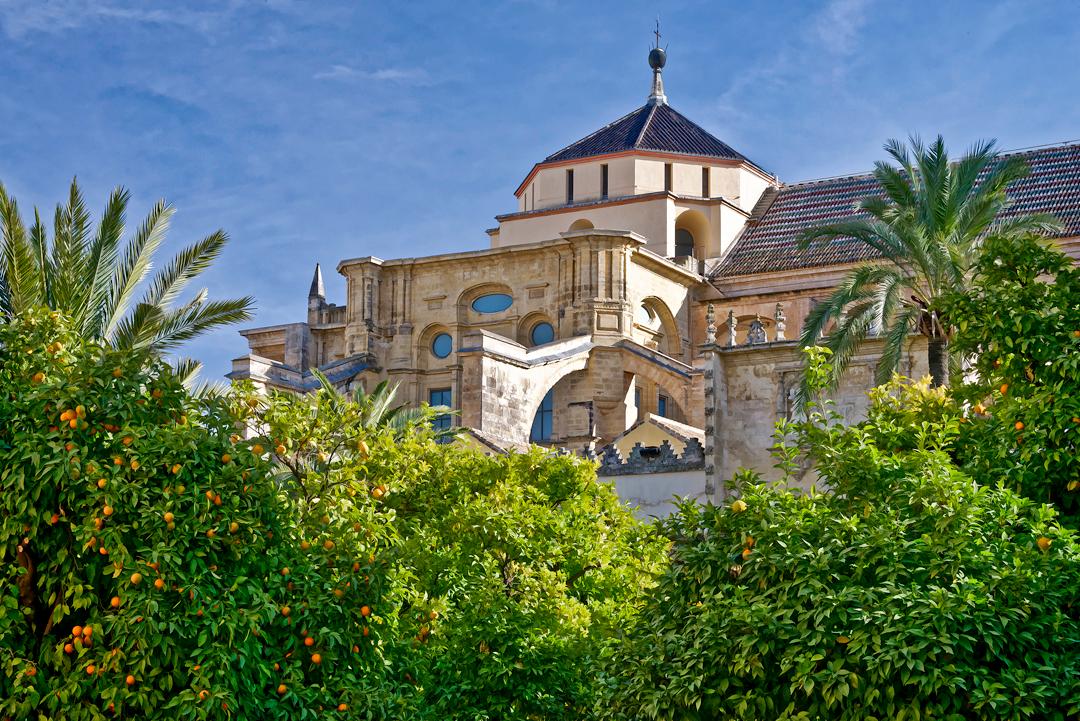
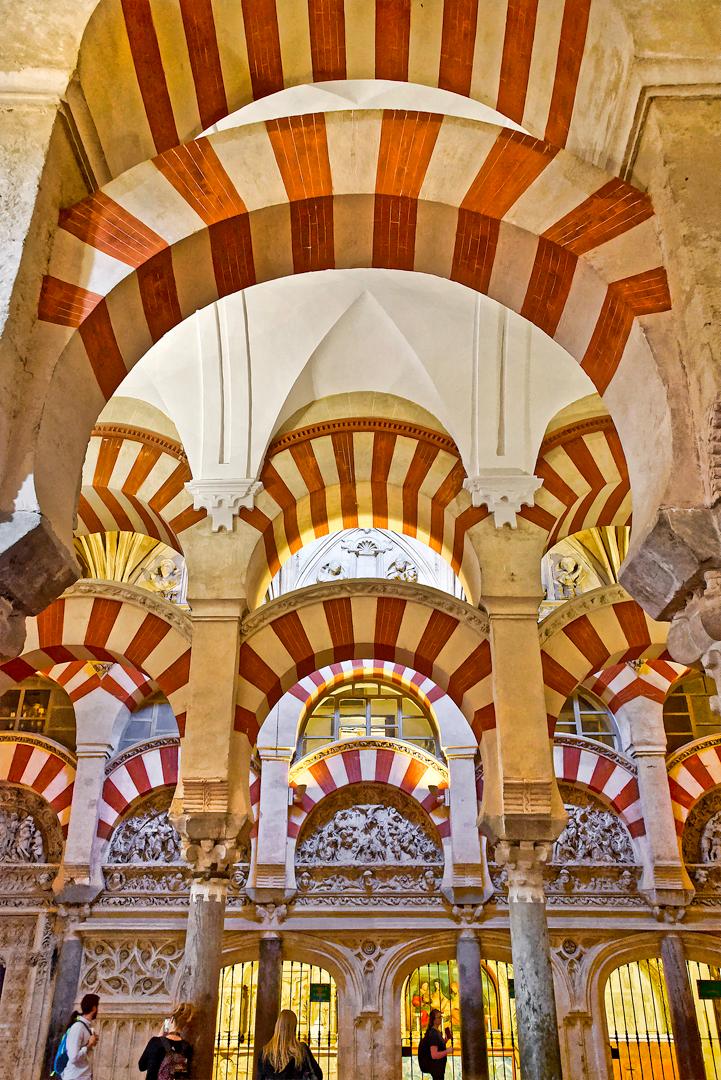
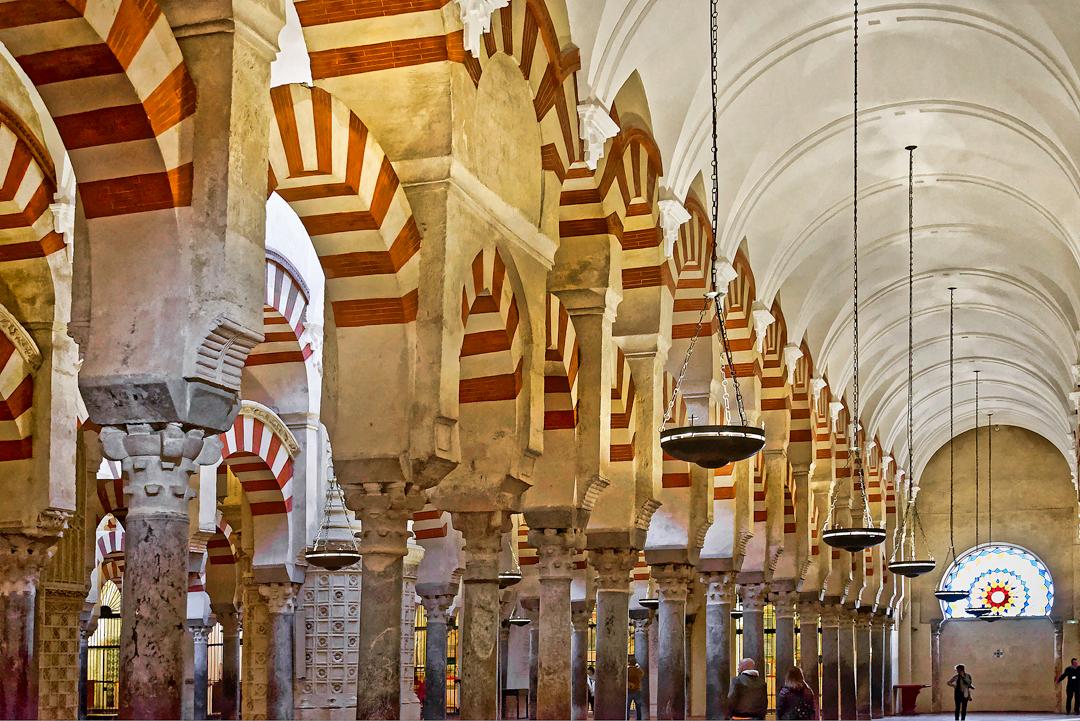
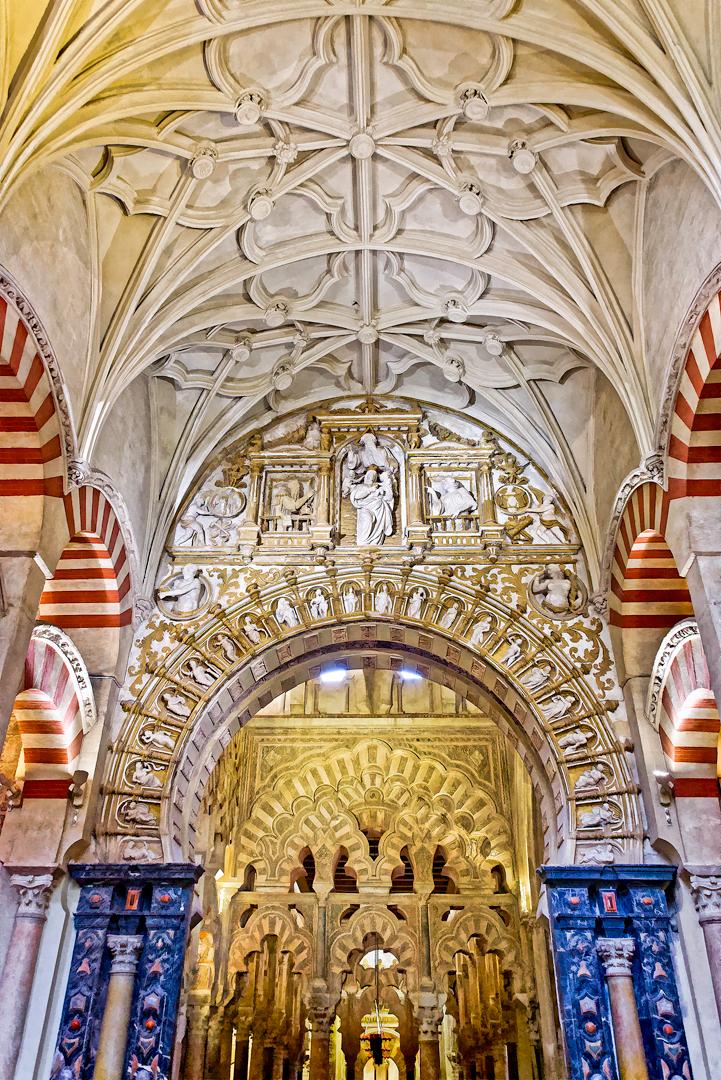
However, many remarkable buildings remain. Especially astounding is the grandiose Mosque-Cathedral of Córdoba. Like many great mosques, when the Christians took over in the ‘Spanish conquering’ completed in 1492, this Mosque became a Christian Cathedral. Well, sort of. The Mosque was too beautiful to destroy or remodel, so a grandiose Cathedral was attached. The two distinctly different styles of churches somehow mesh.
And what a religious complex it is. We have now seen many impressive churches throughout Europe, and granted, we haven’t seen the tremendous unfinished Cathedral in Barcelona yet, but so far, the Mosque-Cathedral of Córdoba took our breath away, leaving us simply giddy with ‘WOW’, like no other building of any kind has.
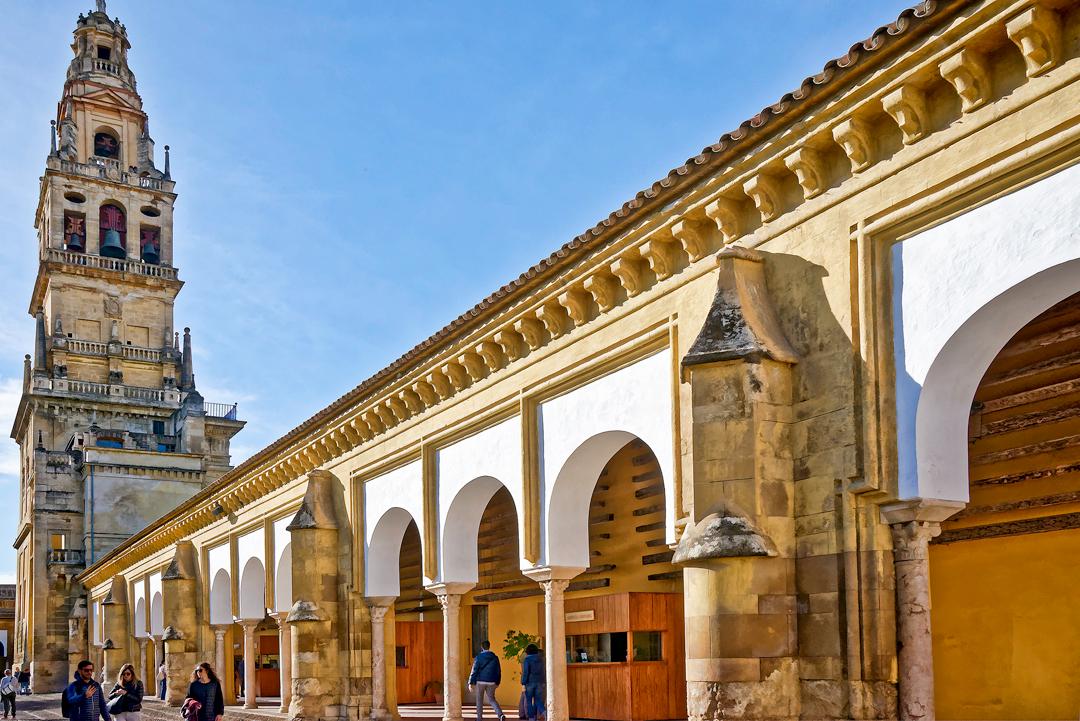
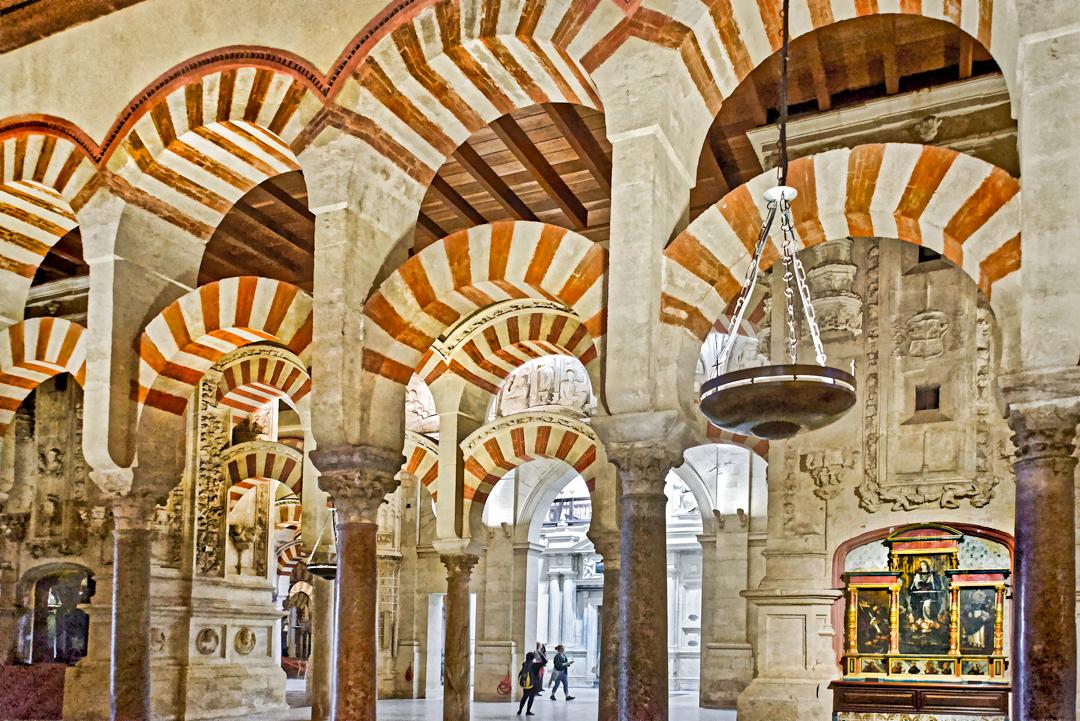
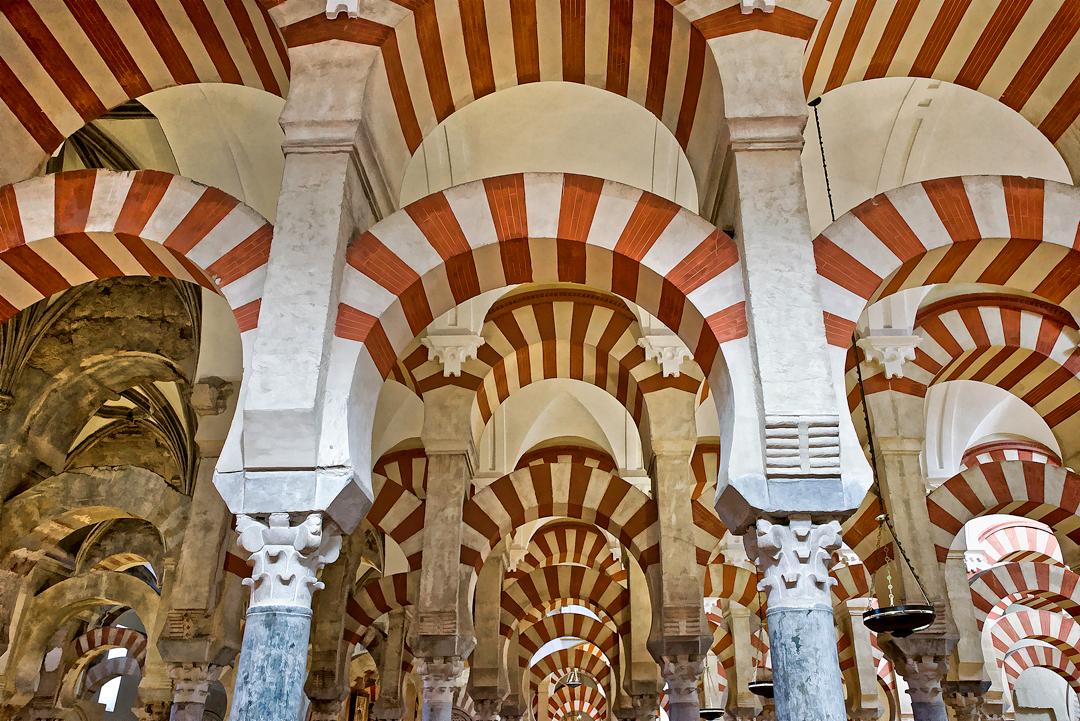
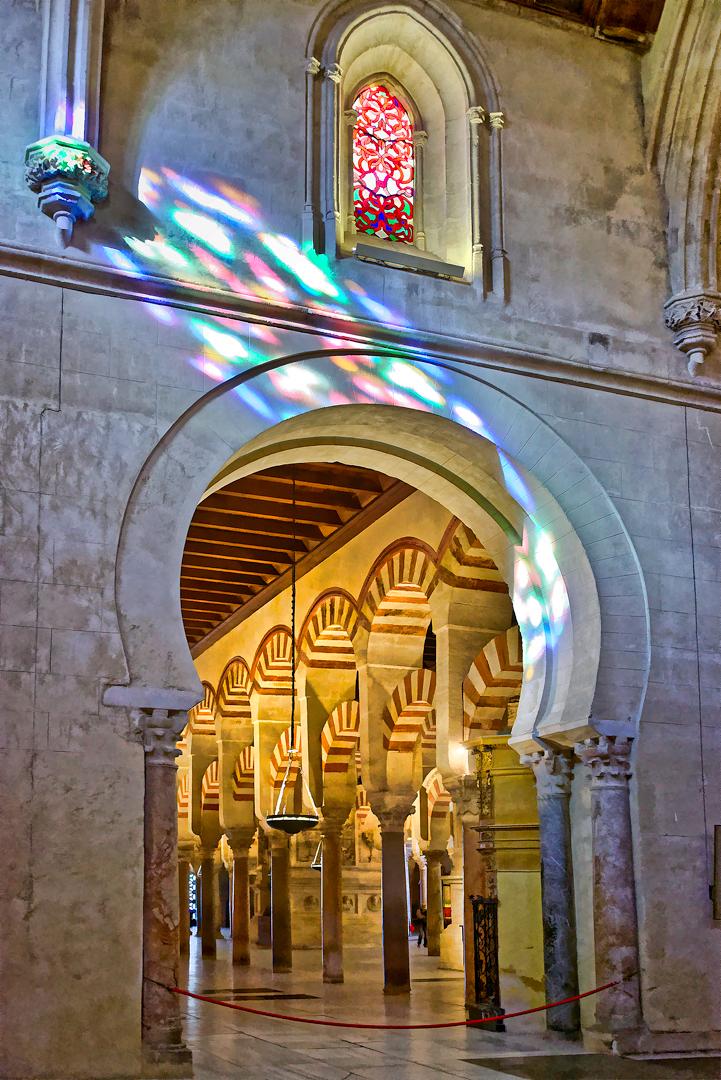
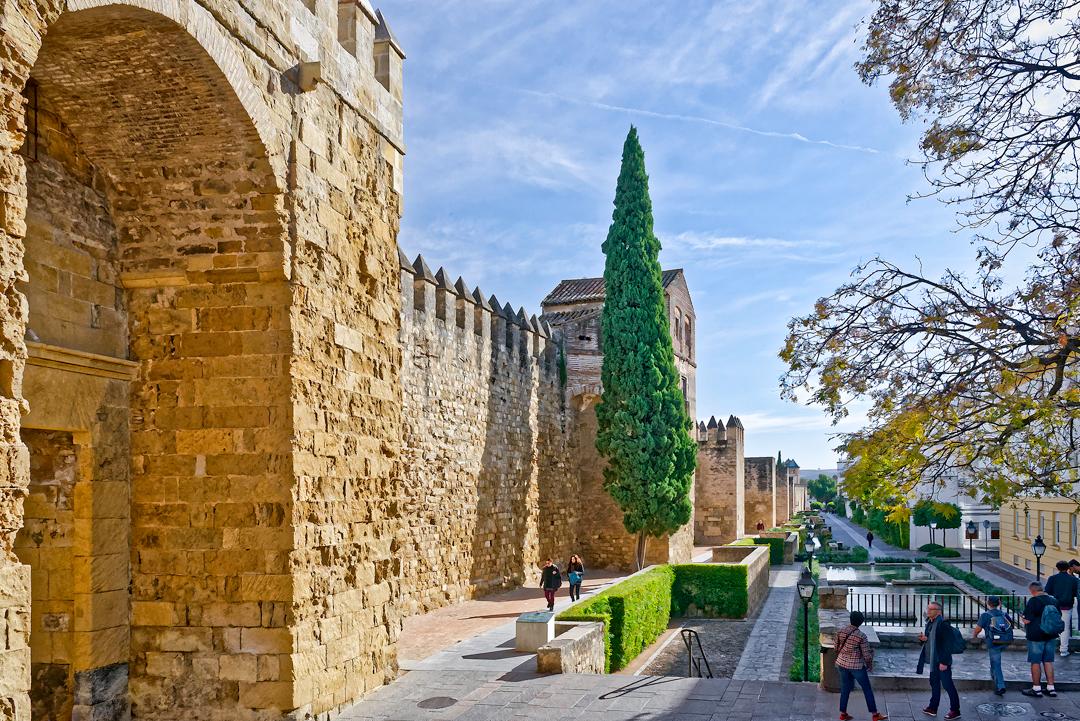
A square stonewall with grand arch entryways surrounds the entire grounds. A tall impressive steeple separate from the actual church is at one corner of the wall. The courtyard is shady, with many trees and palm trees. Then you enter the Mosque. It is hard to be prepared for your first impression. The entire building is acres and acres of cream-colored ‘column arches’ with orange trim forming a surreal pattern in every direction or angle you look. Along the outside walls are rows of elaborate chapels with more gold than Fort Knox. Strategically located window portals give off a soft, contemplative atmosphere with indirect lighting.
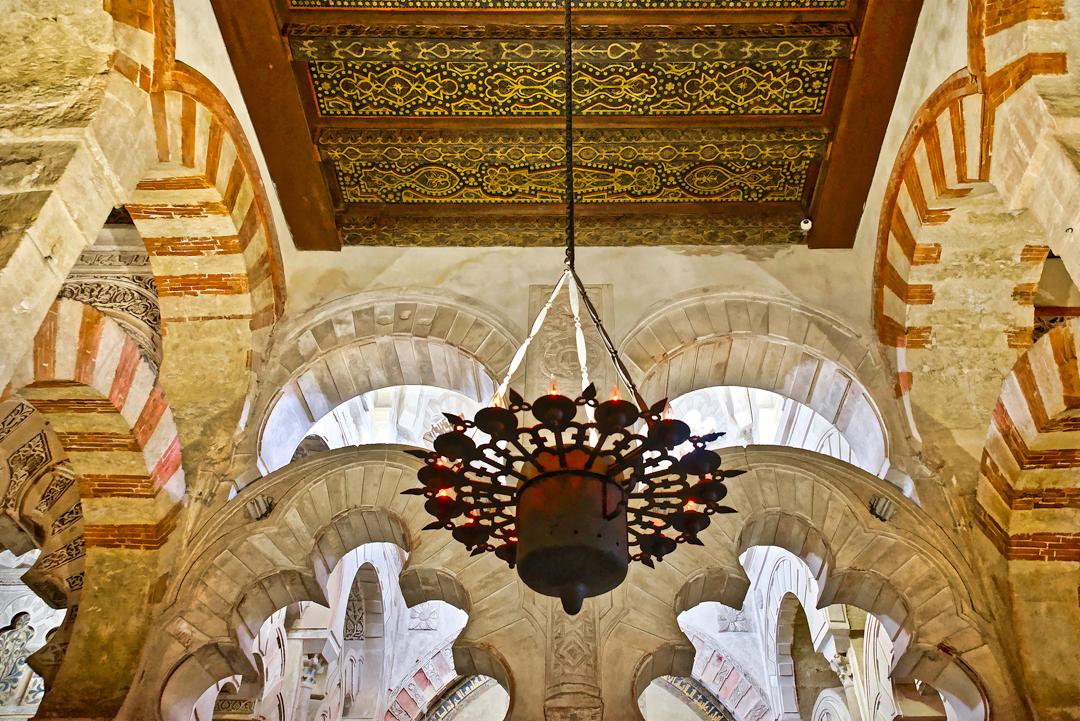
Around every corner and column is some treasure or gem. It might be an elaborately carved ceiling, a different stone floor pattern, an impressive gold sculpture, an extra special archway, etc. A series of rooms are filled with over-the-top Christian gold church artifacts like chalices, tabernacles, and clothing, all wonderfully crafted and ostentatious. Religion provided a most opulent lifestyle for those lucky enough to get the work.
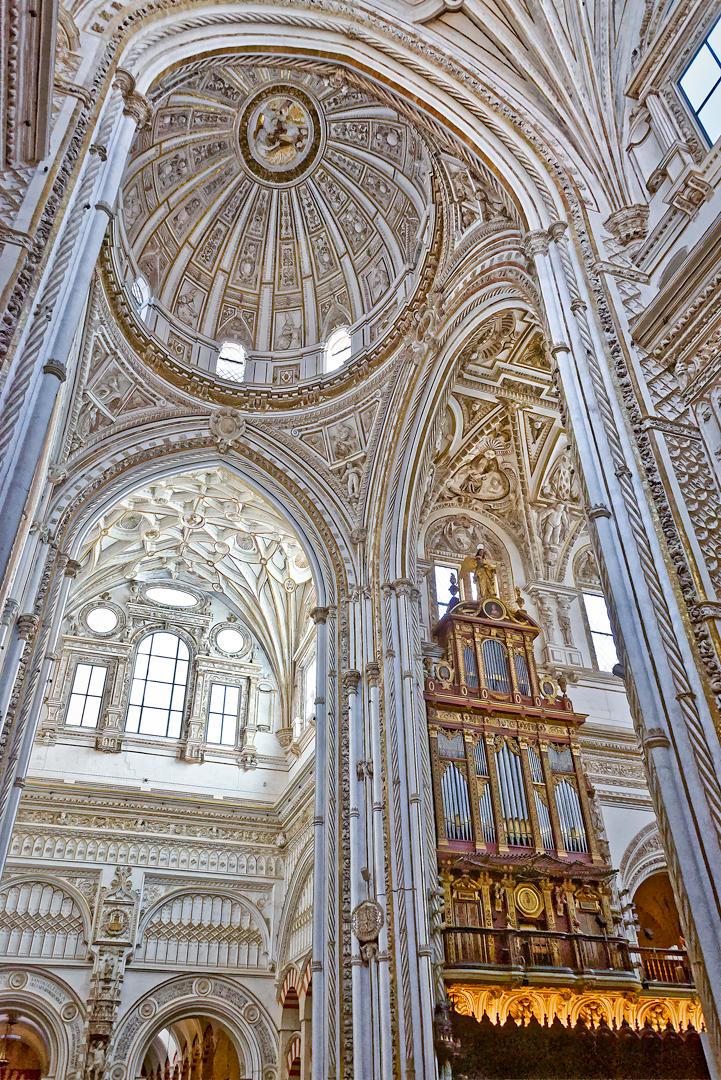
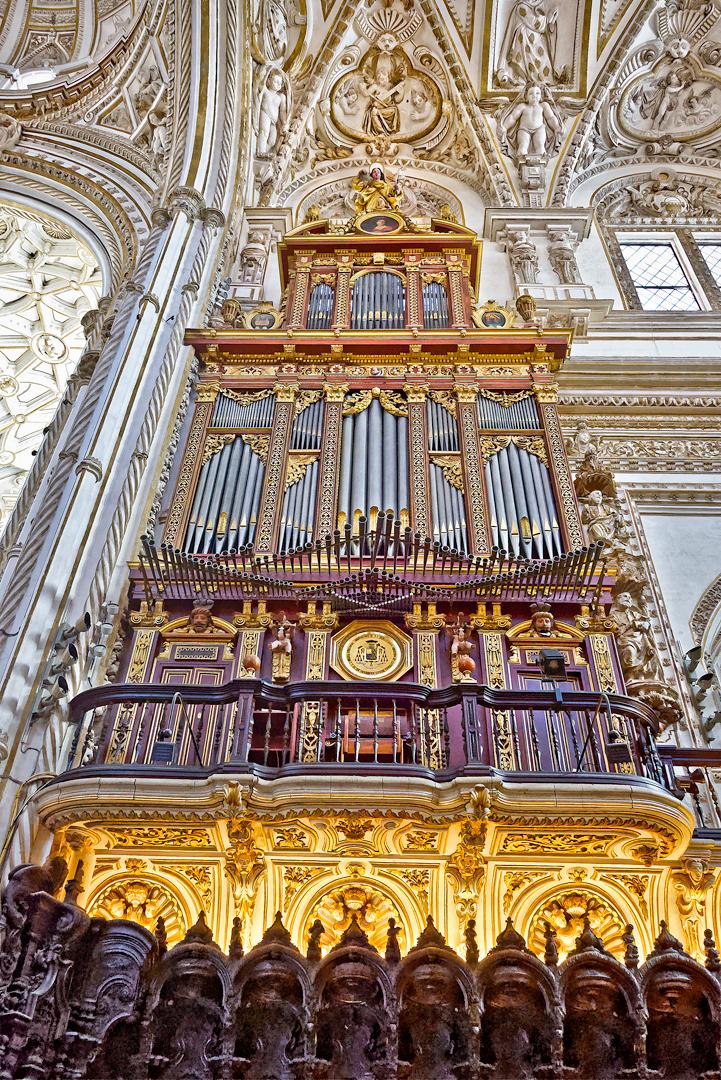
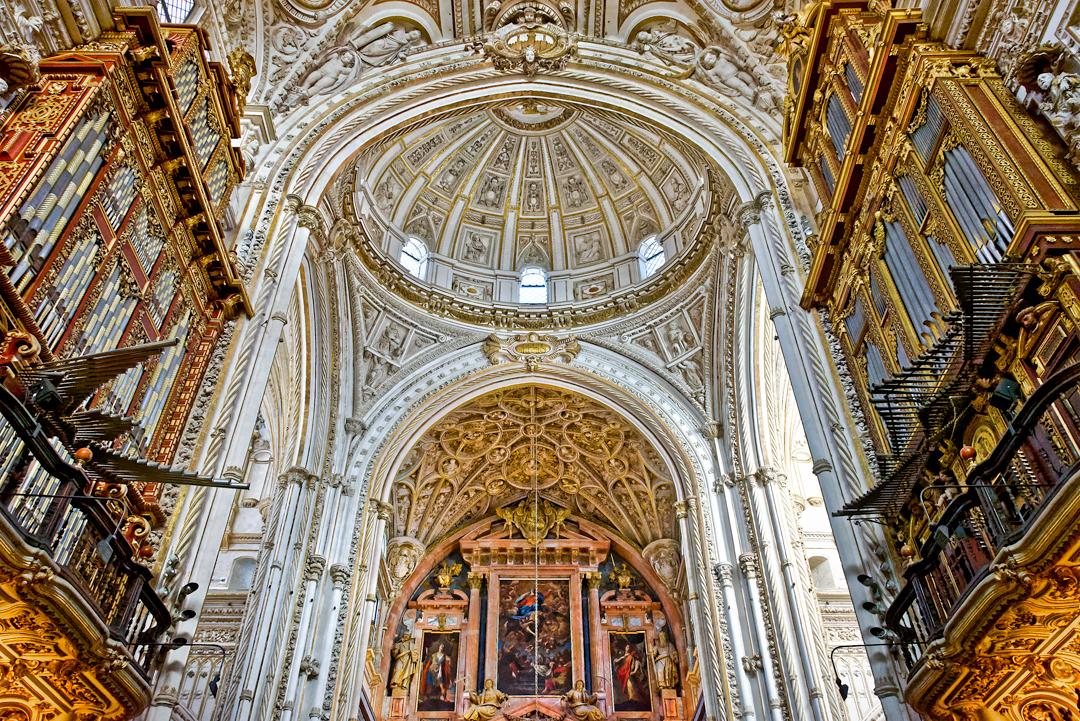
In the middle of this eerie near-psychedelic atmosphere is the Cathedral, soaring what seems to be a mile or two into the sky and lit with great windows. The carved pews are unparalleled by anything I’ve seen in any church. The ceiling is intricately carved. The altar is another Fort Knox. Twin organs fly above everything with gigantic vertical pipes, and horizontal horn-like pipes fanned out like a big swing band - just incredible.
|