|
Homeschooling a Child with Math Challenges
By Laura M. Jackson
Homeschooling my daughter for math class was not something I ever planned to do as a parent. But as I witnessed my daughter struggle her way through special education math, through 4th, 5th, and into 6th grade, I finally realized that we needed to do something drastically different.
Since I couldn’t find adequate dyscalculia math resources in the US, I turned to researchers and educators in the UK who seemed to have a better grasp of the subject. With these new resources to try, I pulled my daughter from 6th-grade math class to explore math together at home. We did this for three years, from 6th to 8th grade.
During this time, we explored a new way of learning math. And most importantly, we worked to help my daughter develop a better sense of numbers and quantities. I was surprised to see firsthand all the concepts she did not grasp, math concepts I assumed everyone innately knew. I could see more clearly why math at school had been so difficult.
It was exciting to see her make new connections about numbers, experience new ways to explore quantities, and shed that anxiety and confusion that had been a part of her life for so long. During that time, we also added Science class at home. We were learning just how many school subjects dyscalculia impacted.
As we looked ahead to my daughter’s transition to high school, she wanted what she called “the high school experience.” Doing math at home with her mom was not part of the image a now 15-year-old wanted for high school. So, with new accommodations, a smaller classroom, and a flexible teacher, she enrolled in Algebra at our local high school. Then she applied her newly developed numeracy skills to the class.
My daughter and I were both surprised as the year went on. She was hardly ever stressed about homework, received “As” on most of her exams and quizzes, and even helped struggling peers with their homework.
I did not expect this at all! I had mentally prepared for hours of helping her after school, many after-school teacher meetings, and her just barely making it through with the same anxiety and stress we had experienced in elementary school.
Even my daughter was surprised at the difference. She’d say, “Isn’t this crazy, Mom?! I’m helping a friend with math today." Or “I finished all my homework in class.” Or “I got an A on that test.”
Now, the dyscalculia and math struggles had not gone away. She was still very dyscalculic. In fact, we were uncovering more struggles with numbers and quantities in other school subjects, as well as many aspects of daily life.
But what was new was that she had a better understanding of her unique experience with numbers. She had language and new visuals for quantities to help her when things were confusing.
She ended the year with an A in algebra. We were shocked. The following school year, she aced geometry. She became her own peer advocate, giving questionnaires to friends struggling in math to help them determine if the struggles were because of dyslexia or perhaps dyscalculia like hers.
My daughter has commented to me many times over the past few years about how lost she would still be without those years exploring dot patterns and digging into early number sense together.
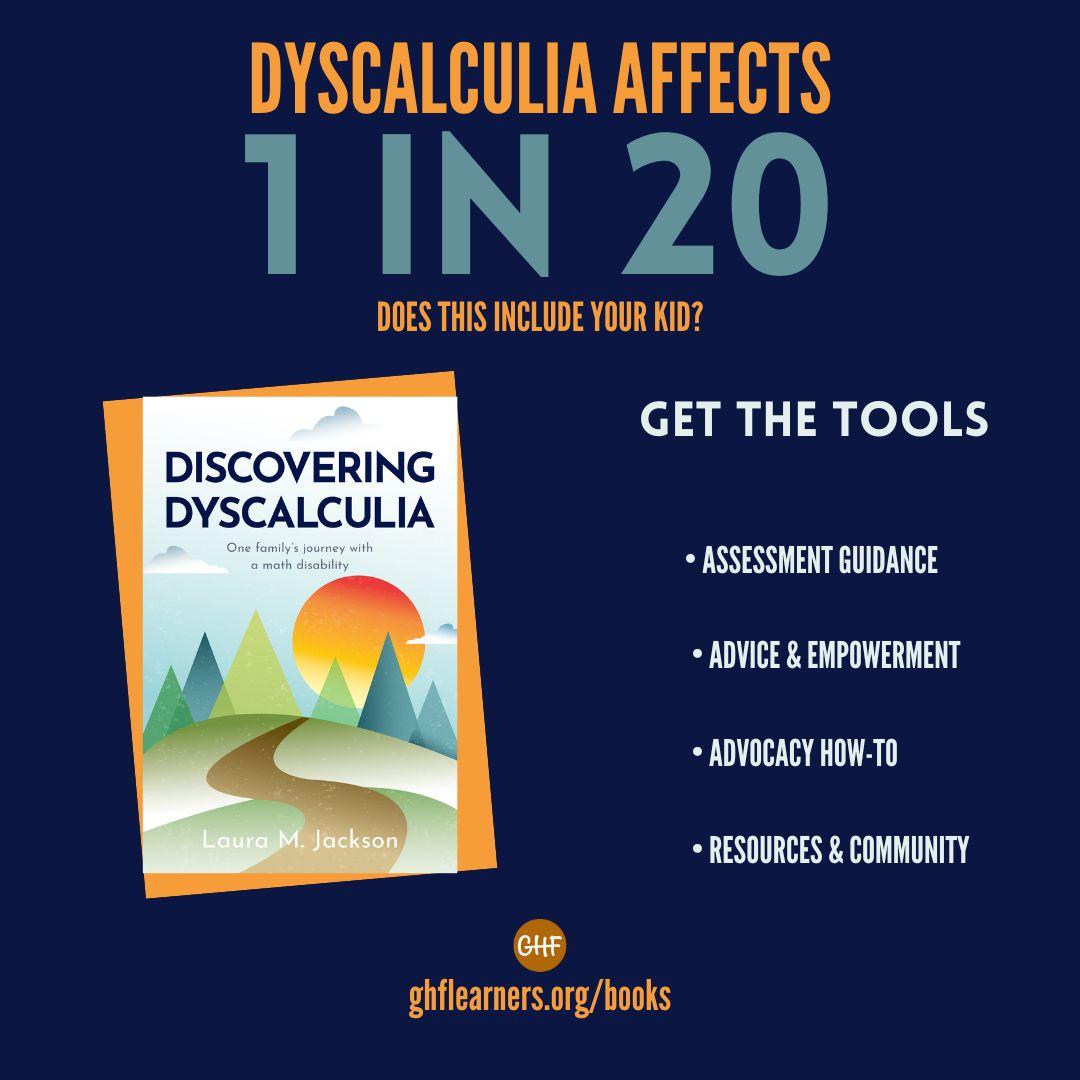
A few years ago, GHF Press published my book, which details my experience of discovering the reason behind my daughter's persistent math struggles. Discovering Dyscalculia covered many of the early questions surrounding how to identify dyscalculia, the evaluation process, and finding initial supports. That was four years ago, and since then, I have continued to discover and explore so much more about math education for students with a math learning disability.
My book includes a letter my daughter wrote to a fellow student learning in this new way. This letter may encourage your child as they embark on a similar journey of developing numeracy later in life.
It is possible to support dyscalculic students in tangible and life-changing ways. It’s also possible to teach math in a way that these students can connect with and translate to everyday life.
This kind of intensive math learning does not make dyscalculia go away. My daughter will always experience numbers and quantity differently from most of her friends and society around her. She will always need to self-advocate and find her own solutions with tasks involving numbers and quantities, especially with time, money, dates, memory, driving, and cooking.
But we also understand dyscalculia so much better now, so we are better able to make pivots, provide adequate supports, and know when and where our daughter will need specific help. Learning this way has also done so much for her mental and emotional health, growing her confidence, self-advocacy, and acceptance of herself.
I’m not saying it’s been easy. I have had many frustrated, exasperated, and overwhelmed moments. My daughter has too. There are highs and there are lows, just like in all of life’s complicated journeys.
It’s helpful to remember this is a process, a journey, a continued exploration. It helps us embrace the long-term reality and settle in for the adventure.
This summer, I created a new Audio Guide to Math Education for Dyscalculia. If your child is struggling in math and you want to know which teaching strategies, books, and learning materials to use, I encourage you to get a copy of this guide. The format is a podcast so that you can listen on your phone while on the go. You can also read the full text plus links to the resources in the show notes. Learn more on my website at www.discoveringdyscalculia.com/mathguide.
|