News and information to help journalists serve the public and stay safe.
June 18, 2020
This newsletter will return on Monday, as the Institute will be closed to honor Juneteenth tomorrow.
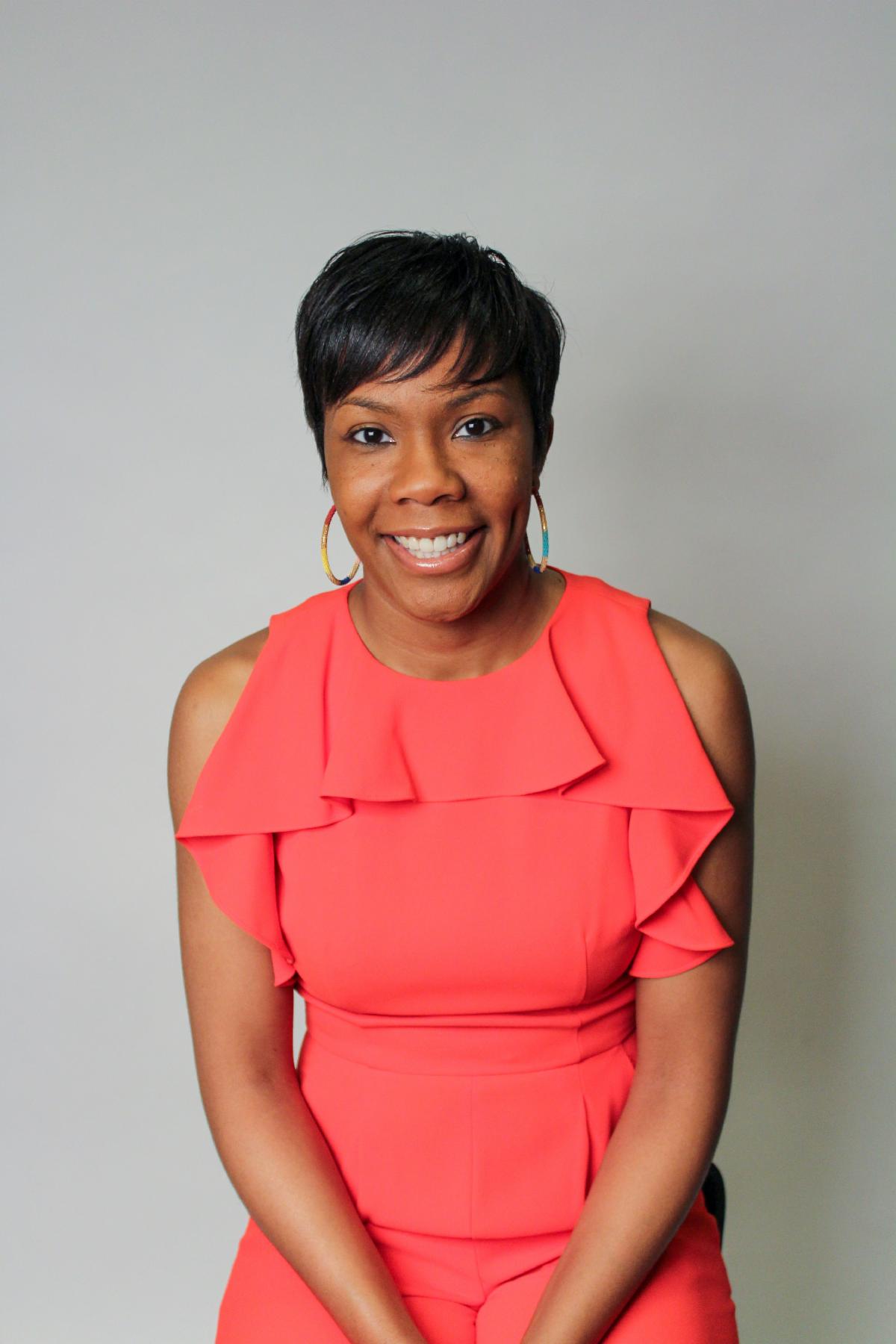
Two months ago, Cara Anthony was writing about pandemic anxiety in public housing and the challenges COVID-19 places on multigenerational families . Then George Floyd was killed by Minneapolis police while in custody, and Anthony knew she needed to get back to Darnell Hill.

She had first met Hill in February while reporting for Kaiser Health News about where children hide when they hear gunfire in their neighborhoods.. Now she wanted to tell his story — the story of an African American mental health case worker teaching Black teenagers how to cope and survive. The story, published by Kaiser Health News this week and featured in Time magazine, was headlined, ‘Just Make It Home’: The Unwritten Rules Blacks Learn To Navigate Racism in America .

Anthony is KHN’s Midwest Correspondent and a veteran journalist. Her six-part Belleville News-Democrat series titled “Then I Knew” about racism in America was nominated in 2018 for an Emmy.

We emailed Anthony to learn more about how she covers underrepresented communities and how she tells stories about the intersection of health, race and identity.

You have been writing about race and the pandemic and now about the aftermath of the killing of George Floyd. What have you learned about journalism's ability to tell a larger story?

Anthony :  The feedback I’ve received from readers about “ the unwritten rules ” reminded me how important it is for us to take a step back and listen to what people are talking about when they think no one is paying attention. This is a critical moment for newsrooms across the country. The big breaking stories are important, but we also have the power to share larger stories about humanity, resilience and grit.

You wrote and produced an Emmy-nominated documentary about racism in America for the Belleville News-Democrat in 2018. How does your reporting then affect or inform your reporting now? 

Anthony : I had to learn how to be comfortable with making other people uncomfortable. Talking about race and identity isn’t easy. It’s hard enough bringing those topics up at the dinner table, but we can’t be afraid to have those conversations. You also have to give it time. Daily stories about tragedy and triumph in my community only share a very small part of the big picture. My documentary, “ Then I Knew ,” explored the silence in between joy and pain. It’s about everyday life as a Black American.

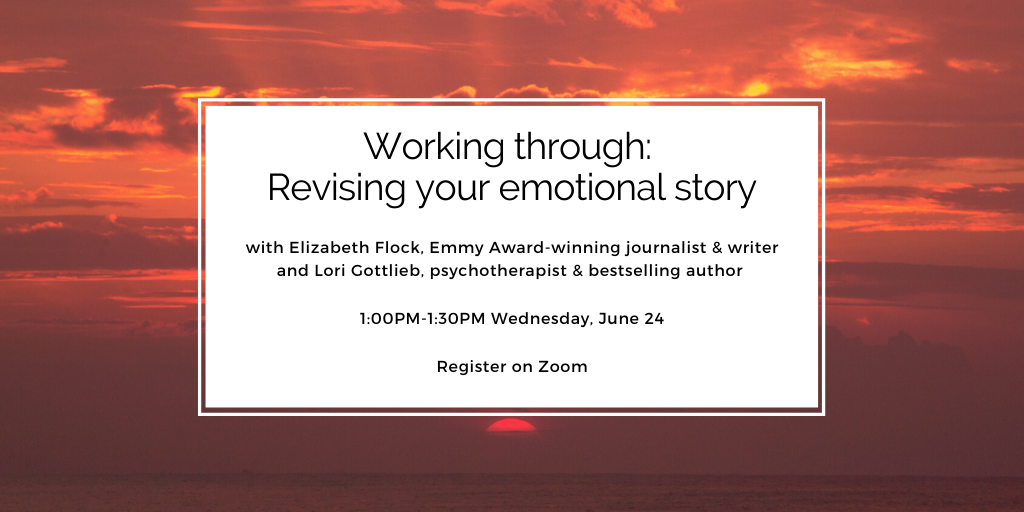
Many journalists are covering a physical and mental health crisis while they also may be struggling to cope themselves. This conversation will examine how to work through this moment, by looking at the stories we’re telling ourselves about it, how these stories affect our emotional lives, and consequently, the stories we are reporting and writing.

Registration is open  for this program, featuring writers Elizabeth Flock and Lori Gottlieb .
Practice doesn’t make perfect in design - but it certainly can improve your work over time. But where do you start if you don’t have funds for software or a background in design? 

Dozens of free tools offer both templates and tutorials to help journalists produce infographics, stock photos, social cards, fliers and brochures, even if they have no design training or visual storytelling experience. Journalism Institute Senior Director Beth Francesco shared the following tools, as well as design foundations and exercises, during a program this week titled “Design hacks: How to create visuals when it’s not usually your job.”

Before you use one of the free programs below to start designing, review these seven basic design principles so you can use them effectively. Here are a few other rules of thumb to keep in mind.

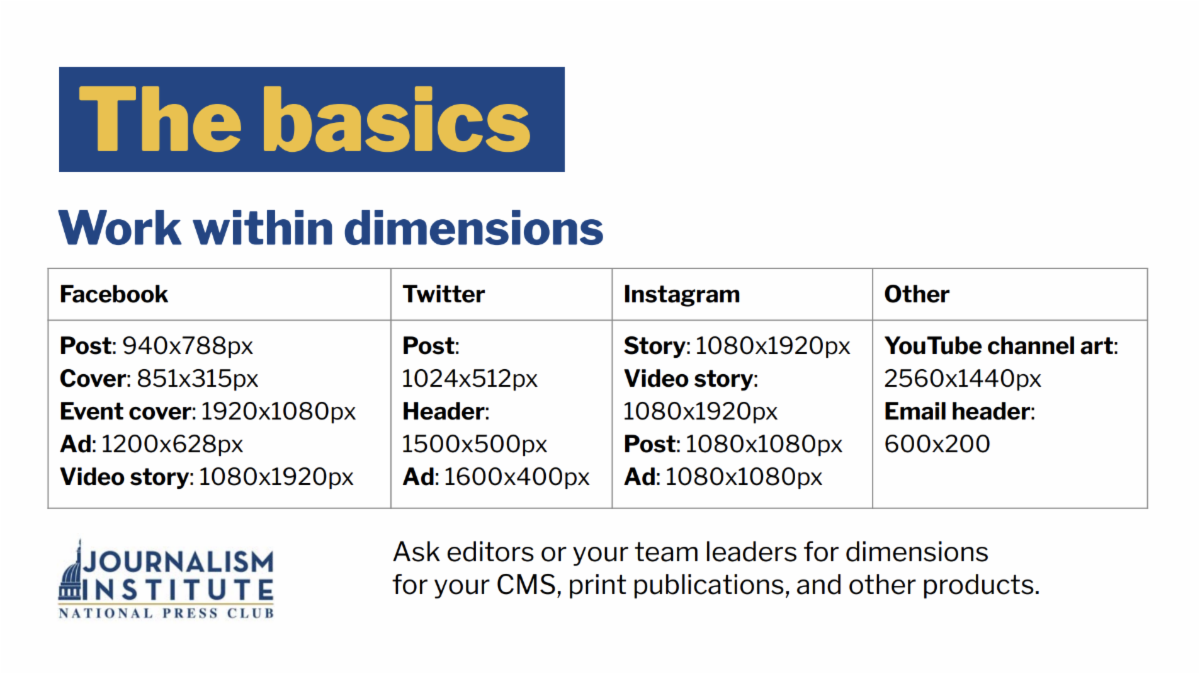
  • Think about where the graphic is going to live once it is finished. Is it going on social (Twitter, Instagram, Facebook)? Will it be packaged with a story on your organization's CMS? Is it bound for print? Know the dimensions each format requires and take that into consideration.
  • Text should be readable for people scanning on phones, tablets or desktop. 
  • Stick to short words and phrases.
  • Use type that is no less than 9 pts.
  • Your readers are all ages and abilities - don’t make things difficult for them. 
  • Don’t use any more words than necessary. Try eliminating three words. Then another three. 
  • Avoid bad breaks (split verbs, hyphenated words, phrases).
  • Remember that for social and web, you can use share text or supplemental text to get across points not made in your visual. Don’t crowd your image.
  • Too many different fonts (bold, italics, underlined) or colors can be a distraction or cause confusion for the reader. 
  • Don’t put type on a news photo, it covers up vital visual information. 

With all of the following tools, review site licensing and credit requirements: Some don’t allow commercial or political use; others have more open policies. Explore several sites, then get familiar with the terms/use of the one or two that seem to best suit your needs.

Free design tools

Free tools for photos, vector images and illustrations

Free photo editors 

View the presentation or download the slides . Have a design question? Contact Beth at bfrancesco@press.org or @bethfrancesco .
Though newsrooms have been scrambling to cover the breaking news of recent events, coverage of police misconduct is not new to many newsrooms. As protests continue and attention turns to policy proposals, newsrooms can play a role in providing important context for community conversations. Several examples of 2020 Regional Murrow Award-winning journalism covered incidents of potential police misconduct. They show that collaboration and context are key to thorough reporting.

  • Develop expertise inside your newsroom. Bret Jaspers, who reported for KJZZ News on a community meeting following a viral police video in Phoenix, recommended dedicating one or more reporters to covering criminal justice and policing.
  • Collaborate within and outside the newsroom. Both Karen Brown, a New England Public Media journalist who reported on an incident related to drinking at police headquarters, and Jeff Cohen at CT Public in Connecticut who covered a fatal shooting by police, suggested collaboration as a way for small newsrooms to provide depth of coverage on police issues despite limited resources.
  • Use FOI and data to look backwards and build history and context. A WMAZ-TV investigation into the local effects of a nationwide officer shortage used data and FOI records to show that Georgia law enforcement agencies often hired officers despite a history of discipline, past domestic issues or a history of conduct-related resignations at past agencies.
  • Follow up is key. Brown says in one case involving more than a dozen officers from her story about drinking at the station, five have recently been reinstated to desk duty by the police commissioner, drawing criticism.


A dvice from  Jill Geisler ,
Bill Plante Chair in Leadership & Media Integrity, Loyola University Chicago
Freedom Forum Fellow in Women’s Leadership

June 19 marks a turning point in American history.

It is  Juneteenth , the holiday that celebrates the end of slavery nationwide.

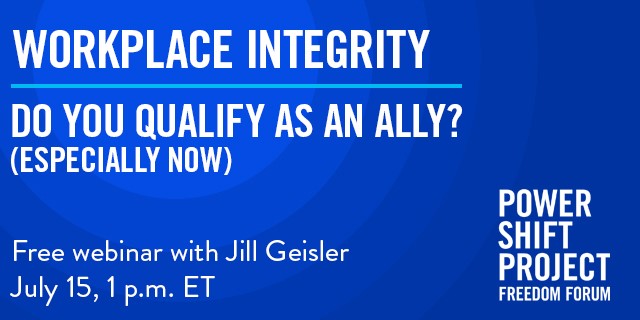
We are at another turning point in our nation’s history, and people of good faith want to be part of that change. This week, the Freedom Forum’s Power Shift Project hosted a webinar titled Do You Qualify As An Ally? (Especially Now). Nearly 400 people, most of them journalists, tuned in.

What was behind that remarkable turnout?

A turning point. A push for change.

Protests are evidence.

So are polls.  Monmouth University  reported a robust, remarkable jump in the number of people agreeing that racism and ethnic discrimination is a big problem in the United States. From 51 percent five years ago, to 76 percent (including 71 percent of whites) today.

People want to change systems that are inherently biased.

But they also know they have to change themselves, too.

They want to take responsibility for being “a trusted force for good,” which is how The Power Shift Project describes allies.

People want to do the right thing, the right way.

That’s been our goal, too.

From the very first Power Shift Summit in 2018, launched in the wake of the #MeToo scandals in media, we learned that harassment and discrimination are inseparable. So, as we tackled the cultural change needed to produce equitable workplaces for women, we didn’t focus on their challenges alone.

We took on marginalization, discrimination, harassment and bias affecting all who are underrepresented in journalism.

We listened to expert voices, learned from research and bore witness to open wounds.

But even as we developed a curriculum to upgrade workplace cultures, we heard repeatedly from people who wanted to do more – as individuals.

That’s why we launched “ Do You Qualify as an Ally? ” a year ago.

Before COVID-19 and its disproportionate effect on women and people of color.

Before Breonna Taylor, Ahmaud Arbery, George Floyd and Rayshard Brooks lost their lives.

Before marches that filled our streets and our screens with clarion calls for change.

We knew it was time to update our Ally teaching; to build on what we started and match this moment.

The news demands it.

And so do people of good will – people who are more ready than ever to learn.
The hundreds who joined us took in 10 (of many) ways to qualify as an ally, with practical of examples of each point:

  1. Understand that power affects our perspectives.
  2. Recognize the realities and risks of unconscious bias.
  3. Be a learner, but don’t expect anyone is obligated to be your teacher.
  4. Recognize, relieve and reward the “invisible work” done by underrepresented employees.
  5. Understand the meaning and impact of microaggressions.
  6. Find a voice for courageous conversations.
  7. Challenge systems, traditions, practices and assumptions that foster inequity.
  8. Measure what matters.
  9. Be more than a mentor; be a sponsor.
  10. Be more than an ally; be an amplifier, an accomplice, an advocate and an ally to other allies when they step up.

And we told them that most of all, to do all of those things without expectation of credit or profit.

Be like the university professor who teaches his students how unconscious bias causes female professors to get lower evaluations from students – on the week they turn in those evaluations.

Be like the TV station group leadership team that sent a memo to employees, stating that as a journalism organization, they’ve traditionally refrained from commenting on political issues – but that racism isn’t political and employees have the right to speak out against it.

Be like the young NFL social media producer who “ went rogue ,”  working behind the scenes with players to create their “Black Lives Matter” video, calling for change in the NFL.

Be like the media organizations that monitor their own progress on diversity – or lack of it, who create databases of diverse sources – and  share them .

Be like the newsrooms that listened to the  National Association of Black Journalists , tossed out the AP Stylebook guidance, and have turned “black Americans” into “Black Americans” out of respect.

That’s a taste of what those 395 participants learned about for one hour on a Monday afternoon, on their journey to qualify as allies.

You’re welcome to take a look at the recorded version   here  – along with all of our  Power Shift resources .

Better yet, join us for the next “Do You Qualify?”  webinar on July 15 .

Imagine how allies, as trusted forces for good, might be part of positive change.

This article appeared first on  Freedom Forum . Republished with permission.

You don’t need to spend an afternoon indoors to appreciate art . All around the world , street artists have been at work depicting life amid the pandemic . As you plan your weekend activities, consider an art walk through your town to appreciate new murals . You can also browse Instagram hashtags #streetart or #murals to see paintings from other places. Local websites can also point you in the direction of newly painted murals.

Read on for more self-care tips, or share your own .
This newsletter is written & edited by the National Press Club Journalism Institute staff: Beth Francesco, Holly Butcher Grant, Jim Kuhnhenn, and Julie Moos. Send us your questions and suggestions for topics to cover.

Get this from a friend? Subscribe , and view the archives .