REMINDER: YOUR SUBMISSIONS ARE ENCOURAGED | | |
1. Bindu's Corner: This week, Bindu has curated a collection of quotes from great thinkers on happiness.
2. Mother's Day: Mother's Day is just around the corner; it's not too early to make your Mother's Day plans. I have some suggestions to show your mom your love this year.
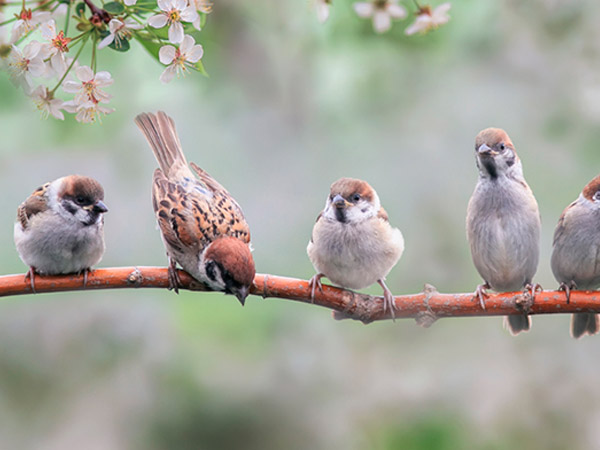
3. Flock Friends: Dr. Puneet Shroff's daughter, Simran Shroff, has entered the ESU National Shakespeare Competition and is in the running for this year's People's Choice award. You can help Simran reach her goal by casting a vote for her submission.
4. Earth Day: Next Wednesday is Earth Day. Visit the official Earth Day site to learn about the Great Global Cleanup and Earth Day events near you.
5. Arbor Day: Coming right on the heels of Earth Day, next Friday, April 24th, is Arbor Day; both holidays share a commitment to environmental stewardship, with a forward-looking emphasis on conservation for future generations.
6. Nature: Invasive species can enter an ecosystem in several ways and cause environmental damage, including threatening indigenous species.
7. University of Arizona: A University of Arizona Dean has been awarded one of France's highest honors, the French National Order of Merit, earning him the honorific title Monsieur le Chevalier Joaquin Ruiz.
8. The Heavens: Over the next week, Earth will pass through the dust trail left by Comet Thatcher. As grains of dust burn up upon entering the atmosphere, we will be treated to the week-long Lyrid meteor shower, which should peak on Tuesday night.
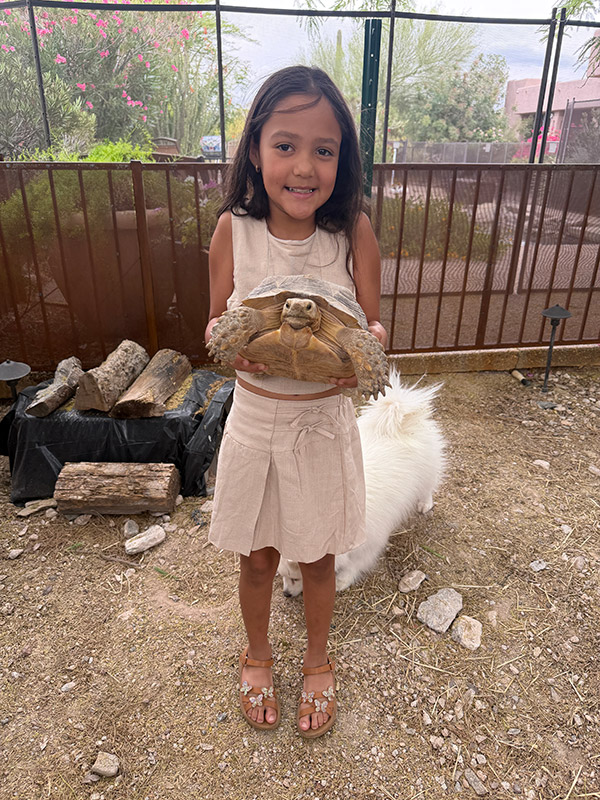
9. Pet's Corner: Last Sunday, two young ladies came by my place to introduce their recently adopted rescue sulcata tortoise to my two black sulcatas, and we had a tortoise party.
| | Now, to this week's Flock. | | 1. Bindu's Corner: Happiness | | Great thinkers throughout time have pondered the quest and desire for happiness. Thank you, Bindu, for curating this list of quotes for us. | | |
If you want to be good and happy in this world, have patience and forbearance. Infinite patience, unlimited forbearance, and forgiveness - these alone bring peace and happiness.
— Swami Premananda
Here is the secret of happiness: Forget yourself and think of others.
— Swami Premananda
Happiness is a perfume you cannot pour on others without getting a few drops on yourself.
— Ralph W. Emerson
Happiness? That’s nothing more than health and a poor memory.
— Albert Schweitzer
Happiness is not a state to arrive at, but a manner of travelling.
— Margaret Lee Runbeck
| |
Chinese proverb of the day:
"When you drink the water, remember the spring as the source of your blessings, your roots, and the efforts that provided it"
| |
2. Mother's Day: May 10, 2026
| | Mother's Day is just three weeks away, and I want to give everyone a head start on their plans for mom. Rather than focus on over-the-top, extravagant Mother's Day gift ideas, I want to look at what moms say they really want. | | What Moms Really Want for Mother’s Day | Dear families, we don’t need anything elaborate. Just quality time with you—and maybe without you, too. | From: Oprah Daily, By Jennifer Tung, May 11, 2023 | |
Yes, it’s lovely to open a thoughtful present on Mother’s Day, and a handwritten card always hits the spot. But if you ask us, the ultimate gift is not having to plan a thing or fight everyone’s phones for attention. Agree? Then share these wishes from Oprah Daily staffers and contributors with your crew as a not-so-subtle hint.
Your presence is my present
“When my kids were little and it seemed like I couldn’t be in the bathroom for more than 30 seconds without a tiny person pressed up against the door breathing loudly through the crack, all I wanted for Mother’s Day was a minute to myself—a morning to go to have a coffee with a friend or whatever. Nowadays, all I want is to have one of those days back! Barring that, my standards are pretty low. I still love anything made by hand, a card, preferably not written under duress, or a meal planned, shopped for, and prepped by anyone other than me. Something that suggests they have given the day—the person—more than perfunctory consideration.” —Pilar Guzmán
“I want my kids to go to an art museum with me. They don’t have to like it—and let’s face it, they probably won’t—but hiding their distaste is part of my present.” —Nicole C. Kear
Please don’t make me think
“I want a day where I do zero planning—a day where not only do I not make breakfast, but I don't even think, What is for breakfast? What is for lunch? What is for dinner? What are we doing today, and did I forget to sign up for it? I don’t care if we eat three meals, one meal, no meal, if we go to a restaurant, have a picnic in the park, eat a baguette on the couch (as long as I don’t have to clean up the crumbs). I don’t care what we do as long as there’s some fresh air involved. I just don’t want to have to think about it. If my Mother’s Day wish had a theme song, it would be ‘Don’t worry about a thing, ’cause every little thing is gonna be all right.’” —Eleni N. Gage
Kids? What kids?
“I’d love to do something by myself for Mother’s Day! It can be a massage, a glass of wine with a book, or a walk in the park. Just me.” —Abigail Greene
“For many years, my answer to this question was sleep. Just let me sleep. Last year, my kids made a valiant effort, but it turns out I can’t actually sleep in like I used to, so I lay in bed hungry, wondering what they were doing. Forget that. Instead, my challenge for them this year is: At some point, I am going to get on the phone with my mom, my sister, and a mom-friend or two, and you cannot interrupt me.” —Kate Sandoval Box
| | For my Tucson readers, this is an idea that I can personally vouch for: spend some quality time with mom and pamper her with one of the best brunches Tucson has to offer, the Mother's Day Brunch at Hacienda Del Sol. Get your reservations in because this yearly event often sells out. | | Mother's Day Brunch at Hacienda Del Sol | | Sunday, May 10th | 10am - 5pm | | Treat mom like the queen she is by taking her to the best brunch in Tucson! Along with our delicious entrées, enjoy salads, soups, seafood, a carving station, and her favorite breakfast fare. Our festive photobooth will make this very special day something for the whole family to remember! | |
3. Flock Friends: Simran Shroff's Entry in the ESU National Shakespeare Competition
| | The English-Speaking Union (ESU), originally founded in London, England, in 1918 to promote closer ties among English-speaking peoples, is an international organization with more than 50 independent ESUs worldwide. The ESU USA has more than 4,00 member across 65 branches promoting cultural and educational programs for English-speaking and English-learning students. Each year, the ESU USA sponsors the ESU National Shakespeare Competition. This year, one of the Flock's own, Simran Shroff, Dr. Puneet Shroff's daughter, has submitted an entry into the competition! There are two tiers of Awards in the program: those given by in-house judges and a People's Choice award judged by the general public who view contestant videos on the ESU USA site. | | Vote for the National Shakespeare Competition People's Choice Award! | | |
How to join in on the fun:
1. Click the button below to see performance videos from all of our branch champions on the 2026 ESU National Shakespeare Competition YouTube Channel. Each performer has been assigned a number.
2. Using the form below, submit “NSC” and the number of your favorite performance (example: NSC57)
3.You will receive a return email confirming that your vote has been received.
Voting will ONLY take place via the form below. One vote per email. Repeated votes from the email will not be counted. Please do not call in; your vote will not count and your call will not be returned. You will receive a confirmation email. Please do not email or call to confirm your vote. Voting ends on Tuesday, April 21. The winner will be announced at the National Shakespeare Competition on April 27 and on our website.
| | Simran Shroff - Tucson Branch - 2026 ESU National Shakespeare Competition | Watch Simran's entry video above and follow the link below to the People's Choice Award page. To show Simron some support, type the code NSC5 to vote for her performance. Just be sure to get your vote in by Tuesday, April 21st! | | 4. Earth Day: April 22, 2026 | | Next Wednesday, April 22nd, is Earth Day. In past issues of the Flock, I've featured the origins of Earth Day, and a video of Walter Cronkite reporting on the first Earth Day in 1970. This year's theme is Our Power, Our Planet, focusing on the transition to clean, renewable energy and community-led climate solutions. In observance of Earth Day, community groups around the world are organizing local cleanup efforts to remove trash and clean up their small part of the Earth as part of a larger Great Global Cleanup. Visit the official Earth Day website to find a local cleanup and more Earth Day events near you. | | Join The Great Global Cleanup | | |
What is The Great Global Cleanup?
The Great Global Cleanup aims to rid the world of waste and plastic pollution for good through connecting the powerful Global Cleanup Movement. Plastic pollution is a crisis—one that demands systemic change, not just the cleanups we do every day. While we take action to protect our communities and loved ones, we need real commitments from leaders, businesses, and policymakers to stop the endless wave of pollution that we end up picking up.
EARTHDAY.ORG (EDO) calls on governments, businesses, and communities to step up. A waste-free world starts with you—whether that means organizing a cleanup, pushing for legislation, or demanding corporate and governmental responsibility.
Join The Great Global Cleanup today. Be part of the global cleanup movement that refuses to accept pollution as the norm. We don’t just clean—we fight for a world where cleanups are no longer necessary.
| | Reid Park Zoo: Party for the Planet 2026 | | |
Saturday, April 18, 2026
9:00a.m – Noon
| | |
Join Reid Park Zoo for Party for the Planet, a joint celebration of Earth Day, Endangered Species Day, and World Ocean Day! From 9:00 a.m. – 12:00 p.m., learn about the conservation efforts the Zoo supports around the world, as well as in southern Arizona. Participate in interactive activities for all ages. Talk to local conservation partners about their work in our community and how you can make everyday choices to help wild animals and wild places right here around Tucson. Reduce clothing going to the landfill by bringing gently used clothing with you to the Zoo for a clothing drive hosted by Goodwill Industries of Southern Arizona.
This event is free to members and included with Zoo admission.
| | 5. Arbor Day: April 24, 2026 | | Next Friday, April 24th, is Arbor Day, the national celebration of Trees. While Arbor Day is closely associated with Earth Day, it is the older of the two "environmental" holidays. The holiday is celebrated by planting trees or simply getting outside to appreciate them. I think it is also a good day to visit a local botanical garden or arboretum. | | Arbor Day 2026: Why Do We Celebrate Arbor Day? | | |
Arbor Day sprouted from the mind of a zealous tree lover named Julius Sterling Morton. A popular Arbor Day tradition is to plant a tree in honor or memory of a loved one. Learn some interesting facts about this day, and learn about the power of trees, which support our well-being!
“Other holidays repose upon the past;
Arbor Day proposes for the future.”
—J. Sterling Morton
What Is Arbor Day?
Arbor Day, much like Earth Day, is a holiday that celebrates nature.
Its purpose is to encourage people to plant trees, and many communities traditionally take the opportunity to organize tree-planting and litter-collecting events on or around the holiday. A popular Arbor Day tradition is to plant a tree in honor or memory of a loved one.
The Power of Trees
- Trees support our health and the health of our planet! They clean our air and water. They provide shade, which cools our urban areas. Even on a personal level, trees have been proven to calm us and reduce our stress levels.
- Trees also support wildlife and our entire ecosystem. One oak trees attracts thousands of pollinators and beneficial insects! Trees provide birds and aquatic animals with habitats. In addition, they provide humans with powerful medicine, materials for living, and agriculture.
- Finally, trees are our biggest allies as the world climate warms; they are a cost-effective way to pull carbon dioxide out of the atmosphere today. Planting even one tree makes a difference.
| |
6. Nature: Invasive Species
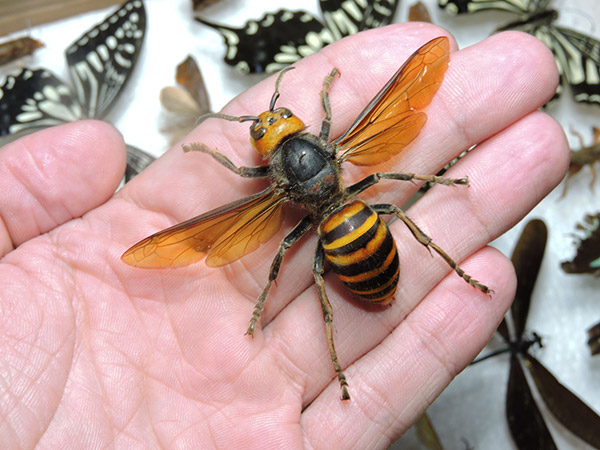
| | The Asian Giant Hornet, aka the "murder hornet". | A-Z Animals has an article listing the 10 most common invasive species and their impacts on ecosystems in the USA. These non-native species can enter an ecosystem in several ways. Some hitchhike here in the cargo holds of ships and airplanes. Domestic pets and livestock allowed to roam free or intentionally released into the wild by irresponsible owners can become feral and pose a threat to existing animal populations and agricultural lands. Some invasive species result from the intentional, but ill-conceived, introduction of a non-native species. | | Invasive Species in the United States: The Big List of Common Invasive Animals | | From A-Z Animals, By: Rebecca Bales, September 26, 2024 | | |
Aclosely connected and globalized world can sometimes bring benefits to a local ecosystem, but it also brings much harm. One of the worst phenomena is the spread of invasive species. According to the US Department of Agriculture, an invasive species can be defined in two major ways: it is alien or non-native to the ecosystem it occupies, and it also causes significant damage to the local ecosystem.
Some invasive animals are spread intentionally (for example, in an attempt to control other pests) and some are spread entirely by accident. Climate change is also encouraging the spread of species into new habitats. The list will cover the top 10 worst invasive species in the United States. Each animal will be judged by the extent of its spread and the damage it’s done.
Summary of Invasive Species in the US
1. Asian giant hornet: Originating from eastern Russia, China, Korea, and Southern Asia
2. Burmese Python: A native of southeastern Asia
3. The Northern Snakehead: Originating from China, Russia, North Korea, and South Korea
4. Spotted Lanternfly: Originated from parts of China, India, and Vietnam
5. European Starling: This species is very common throughout Europe and migrates south for the winter
6. Feral Swine: They were domesticated in Eurasia and brought over at some point in the 16th century
7. Asian Tiger Mosquito: Native to tropical southeastern Asia
8. Domestic cats: Domesticated in Eurasia (from a Middle Eastern wild cat), brought over to the Americas with European settlers
9. Zebra Mussel: Originating from the Caspian and Black Sea regions of southern Russia and Ukraine
10. Emerald Ash Borer: Native habitat of northeastern Asia, it has spread rapidly throughout North America and Europe
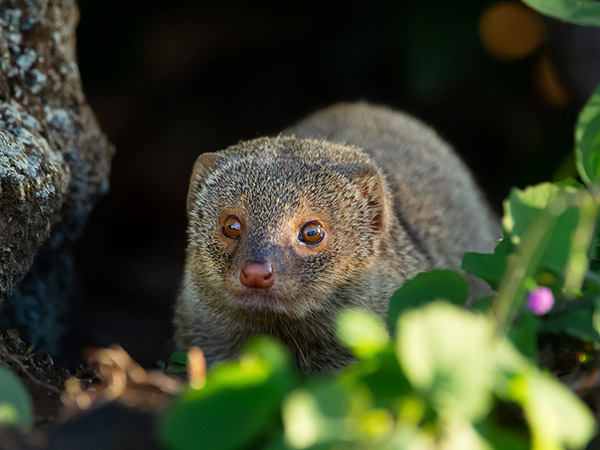
| | The mongoose didn't make the A-Z Animals list, but after being introduced by the sugar cane plantations in the late 1800's, they have caused big problems throughout the islands. | | The Story of the Mongoose in Hawaii | | |
What is that animal with the long brown body, long tail, short legs, pointy ears, and beady eyes you saw scurrying into or out of the bushes? Was it a squirrel? A muskrat, or maybe a ferret? More than likely, it was a mongoose in Hawaii. Mongooses (not mongeese) are native to Africa, Asia and some parts of Europe. However, the only place you will find them in the United States is in Hawaii.
Although not native to Hawaii, mongooses are well established on Hawai’i Island (aka; The Big Island), Oahu, Maui, and Molokai. In recent years, there have even been a few found either dead or captured alive on Kauai.
Mongoose Arrival in Hawaii
In 1872, Big Island sugar planters uncovered an article on Caribbean sugar growers’ success in controlling their rat problem. Sugar planters there had introduced the mongoose from India into their fields. This supposedly was successful in significantly reducing the sugar cane damage caused by rats. Initially, 72 mongoose from Jamaica were brought in and were raised. Their offspring were shipped to plantations on other islands, first Maui, then Molokai, and finally Oahu.
However, none were introduced on the island of Kauai.
Not everyone on Big Island was in favor of bringing in the mongooses. They felt there should be more research on how mongooses were faring in the war on rats in the Caribbean. And that the research should be completed prior to bringing the animals. Unfortunately, those warnings went unheeded.
So the mongooses were brought to Hawaii and released into the fields to kill the rats. However, there was one small problem. Rats are nocturnal animals, meaning they’re only awake at night. Mongooses are only awake during the day. So the two never came in contact with each other.
The Idea of the Mongoose Controlling the Rat Population was an Epic Fail!
Instead of ridding the cane fields of rats, the mongoose began destroying some of Hawaii’s most native species and fauna. Many bird populations and turtle eggs declined as the mongoose would feed on unprotected nests. It continued to get worse when the mongoose started reproducing and needing food for their young ones. Special fencing was put up just to keep them out of nature sanctuaries and reserves.
Mongoose in Hawaii are not a cute and cuddly animal. If you see them they will most likely run and hide in the bushes. However, they can be very vicious if cornered so it is best to give them plenty of space. If they feel they’re in danger, they may very well become aggressive and will leave a nasty bite.
The next time you see one of these little critters scurrying through the bushes or jumping out of a public trash can, you’ll know what they are and how they got here.
| | Not all invasive species are animals. Invasive plants can also wreak havoc on the environment. The Kudzu vine was introduced into the southeastern US to combat soil erosion in the mid-1930s and quickly began to overtake the landscape. | | Kudzu: The Invasive Vine that Ate the South | | Kudzu looks innocent enough yet the invasive plant easily overtakes trees, abandoned homes and telephone poles. | | From: The Nature Conservancy, February 24, 2026 | | |
What is Kudzu?
Known as “mile-a-minute” and “the vine that ate the South,” this creeping, climbing perennial vine terrorizes native plants all over the southeastern United States and is making its way into the Midwest, Northeast and even Oregon.
Kudzu—or kuzu (クズ)—is native to Japan and southeast China. It was first introduced to the United States during the Philadelphia Centennial Exposition in 1876 where it was touted as a great ornamental plant for its sweet-smelling blooms and sturdy vines.
From the 1930s through the 1950s, the Soil Conservation Service promoted it as a great tool for soil erosion control and was planted in abundance throughout the south. Little did we know that kudzu is quite a killer, overtaking and growing over anything in its path.
Kudzu grows out of control quickly, spreading through runners (stems that root at the tip when in contact with moist soil), rhizomes and by vines that root at the nodes to form new plants.
Once established, kudzu grows at a rate of one foot per day with mature vines as long as 100 feet.
What Problems are Caused by Kudzu?
An invasive plant as fast-growing as kudzu outcompetes everything from native grasses to fully mature trees by shading them from the sunlight they need to photosynthesize.
This loss of native plants harms other plants, insects and animals that adapted alongside them, leading to cascading effects throughout an ecosystem.
Over time, these effects of habitat loss can lead to species extinctions and a loss of overall biodiversity.
| |
7. University of Arizona: Joaquin Ruiz recieves the French National Order of Merit
| | Joaquin Ruiz, Dean Emeritus of the University of Arizona College of Science, Biosphere2 Director, and Executive Director of the France-Arizona Institute for Global Grand Challenges, has been awarded the French National Order of Merit, the French equivalent of knighthood, and one of the highest honors awarded by the French Republic. | Biosphere 2 director honored by French government | | |
During a career spanning more than four decades at the University of Arizona, Biosphere 2 director Joaquin Ruiz assumed numerous leadership positions and garnered many accolades, most recently a National Order of Merit appointment by the French government. When he reflects on those 42 years of accomplishments, he comes to one word – luck.
“I’ve just been lucky. I believe in luck,” said Ruiz, who is also executive director of the France-Arizona Institute for Global Grand Challenges. “Some people would argue that you need to be prepared for what luck brings you. Well, that may be true but if that is the case, you must be fearless in what you try. You need to have a vision of what things could be. You just go after it.”
Ruiz points out three moments where he says luck presented him opportunities, and he threw his all into the roles.
The first came in 1983, when he accepted an assistant professor appointment at the U of A College of Science Department of Geosciences. The second came in 2000, when he became dean of the College of Science, a position he held until 2019. And the third occurred in 2013, when he was named director of Biosphere 2.
Ruiz says his role at Biosphere 2 is one of the most exciting he’s ever had, and he credits that to the facility and his team members.
“I’ve worked at the university for a long time, and I’ve never worked with a team that is more committed to the vision of and mission of what we’re doing here,” Ruiz said. “What we strive to do is educate the public about the environment, climate and food security. We have the most extraordinary tool for environmental research.”
The chevalier appointment in the National Order of Merit – a French equivalent of a British knighthood reserved for non-citizens who made considerable contributions – appears to be a crowning moment in an impressive career.
This National Order of Merit isn’t the first time Ruiz has received international acclaim. A member of the Mexican Academy of Sciences, he was named a national researcher by the Mexican government in 2010 in recognition of outstanding scientific contributions and efforts to enhance Mexico’s scientific and technological capacity through collaborations with the U of A.
Ruiz says he places the National Order of Merit honor alongside the National Researcher distinction as the awards he is most grateful for.
“I was honored to even be considered for this award,” Ruiz said. “It really points out to me that people take note of my efforts to make things better for all of us.”
| | 8. The Heavens: Lyrids Meteor Shower | | If you can get out to a dark area away from light pollution this weekend, you have a good chance of spotting some shooting stars from the Lyra meteor shower. If you wait until the night of Tuesday, the 21st, the display will be even better as the meteor shower peaks in intensity with a good chance of seeing extended fireballs in the night sky. | | An Ancient Meteor Shower Is Lighting Up Skies This Week—Here’s the Best Time to View | | This meteor shower has been observed since 687 BC. | | From: Good Housekeeping, By: Kate Franke, April 17, 2026 | | |
Buckle up, space fans—a meteor shower is on the way. While it’s nothing to be scared of, it is a unique astrological event you won’t want to miss. From April 17 through April 26, Earth will pass through the debris trail of the Lyrid meteor shower. To help you catch a glimpse, we’ve broken down where, when, and how to watch this dazzling display.
What is the Lyrid meteor shower?
Before diving into how to watch this celestial event, it helps to understand what it is and where it comes from. According to NASA, the Lyrids are “one of the oldest known meteor showers,” first recorded as far back as 687 BC—making observations of this event nearly 2,700 years old.
Like all meteor showers, the Lyrids originate from debris left behind by comets and asteroids. As Earth travels through this trail of dust and rocky fragments each year during its orbit around the Sun, those particles burn up in our atmosphere, creating the bright streaks we see in the sky.
Every April, the Lyrids put on their annual display, typically producing 10 to 20 meteors per hour at their peak, which usually falls around April 21-22. However, on rare occasions, the shower intensifies with as many as 100 meteors visible per hour, according to The Old Farmer’s Almanac. With a bit of luck, this could be one of those standout years.
Where to see the Lyrid meteor shower
The good news: the Lyrid meteor shower is visible from both hemispheres, though it tends to be more active in the Northern Hemisphere. For the best view, NASA recommends heading to a spot far from city lights and giving your eyes about 30 minutes to adjust to the darkness—this makes it much easier to spot faint meteors streaking across the sky. The shower is typically visible from moonset until just before dawn, offering a wide viewing window.
While Earth passes through the Lyrids’ debris trail from April 17 to 26, the best nights to watch are April 21 and 22, when activity peaks. For optimal visibility, The Old Farmer’s Almanac suggests looking away from the Moon as its brightness can wash out the night sky.
| | The Lyrid Meteor Shower 2026 Your Ultimate Guide to Cosmic Fireballs | |
9. Pet's Corner: Tortoise Party at Beth's
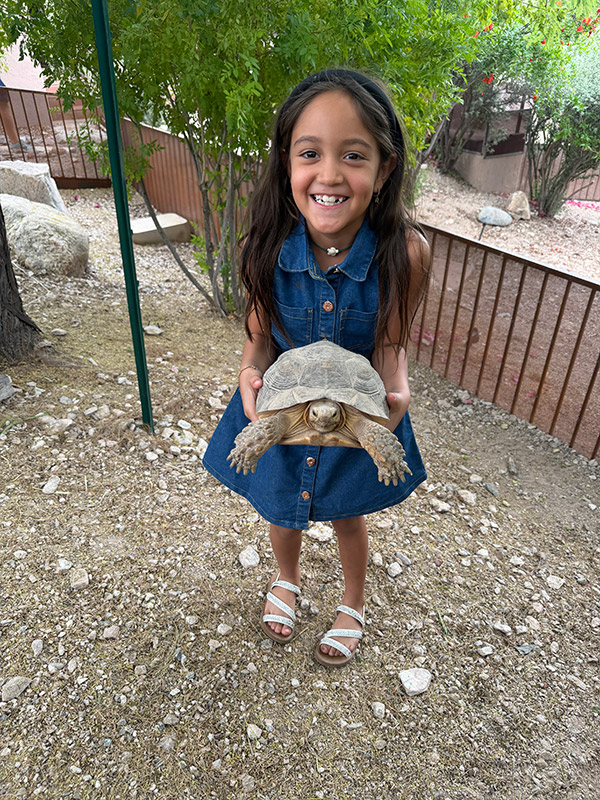
| | Family friends, Maria and Renata Rodriguez, recently adopted a rescue sulcata tortoise named Tulip. Tulip had had a mishap with a car that resulted in a cracked shell. The good people at the Desert Museum patched up the shell, and after a year of recovery, Tulip is growing and looking good. I invited the girls over this past Sunday so we could have a tortoise party and for Tulip to meet two of my sacatas, Jack and Jill. Tulip was very sweet and friendly and got along with Jack and Jill right away. | | Maria Rodriguez poses with Jjack | | Here Renata poses with Jill, or maybe that's Jack again. | | These Flock regulars are always here for you: | | Don't Be Shy: Share Your Stories! | | I'm looking forward to sharing more of your personal stories - oral, written, or otherwise, as we enter our third year. I'd so love to present them to The Flock, hit a mailbox below to share your story. | | Subscriptions & Idea Submissions
Reminder: Your submissions are always welcomed. | | |
Feel free to forward this email to a friend. If this was forwarded to you and you would like to receive your very own Flock Newsletter, you can sign up here. If you have any questions or suggestions for future Flock resources, don't hesitate to contact me.
Your fan and friend,
Beth
| | | The information and materials contained or referenced in this newsletter are for informational purposes only and not intended to be a substitute for professional medical advice, diagnosis, or treatment. Always consult a physician or other qualified medical professional with any questions you may have regarding a medical condition or treatment and before beginning a new health care regimen. Do not disregard professional medical advice or delay seeking medical advice or care based on anything contained in this newsletter. | | | | |