Rail Workers Weekly News Digest
Number 15 - April 14, 2020
|
|
Below is a series of articles compiled over the previous week.
They are of interest to railroad workers.
|
|
Article 1 -
CORONAVIRUS NEWS
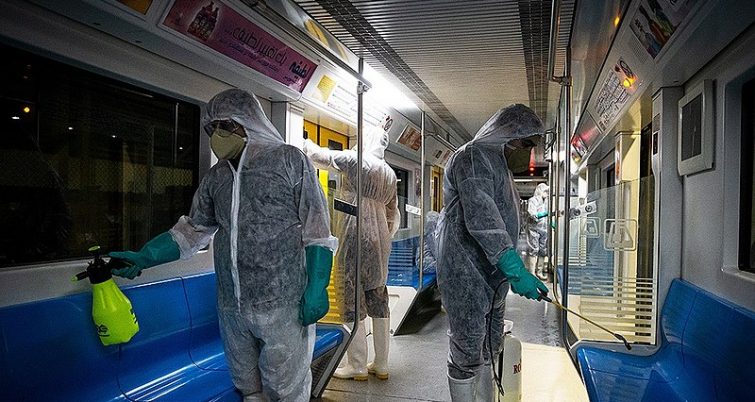
Below is a series of links to various articles about coronavirus and the railroad. These are followed by a number of links that you as a railroader will find helpful in your efforts to get the job done safely. NOTE: The first red link is useful information written by Nancy Lessin, RWU member and longtime advisor on health and safety issues. Please read!
|
|
Resources for Rail Workers
|
|
Article 2 -
PASSENGER RAIL NEWS
Amtrak receives $1 billion in emergency funding
WASHINGTON (Reuters) - The U.S. Transportation Department said Friday it released $1 billion in emergency funding for U.S. passenger railroad Amtrak, which has been devastated by the coronavirus pandemic.
Amtrak said last week that daily ridership was down 96% and future bookings were 95% lower. Amtrak has suspended its high-speed Acela service and cut about 50% of daily train trips nationwide. Congress approved the funding last month as part of a $2.2 trillion bill to address the coronavirus.
The department is preparing to award $10 billion in grant funds to U.S. airports that was also approved by Congress and could announce funding as early as next week. Last week, the department announced awards of $25 billion to public transit systems, including $5.4 billion to the New York City area
The funds will help Amtrak "maintain service for its passengers when the economy recovers,” said U.S. Transportation Secretary Elaine Chao.
Last year, Amtrak set records for ridership, revenue and financial performance, including 32.5 million customer trips, a year-over-year increase of 800,000 passengers. Amtrak reported a loss of $29.8 million in its last fiscal year compared with a loss of $170.6 million in the prior fiscal year.
Of the $1 billion, $492 million will go to the northeast corridor and $526 million for the national network. Amtrak Senior Executive Vice President Stephen Gardner said in a statement that "with this necessary financial support, we will come out of this crisis ready to continue growing ridership and improving our performance."
|
|
Article 3 -
RAIL TRAFFIC NEWS
AAR: U.S. Rail Carload Activity Drops to Great Recession Levels
The impact of the coronavirus pandemic on U.S. freight-rail traffic is growing, with the number of carloads and intermodal containers and trailers transported during the week ending April 4 tumbling 15.9 percent to 429,095 units compared with volumes logged in the same week a year ago, according to the
Association of American Railroads
(AAR).
Total carloads for the week plunged 16.2 percent to 210,911 units, while intermodal volume dropped 15.7 percent to 218,184 containers and trailers.
AAR officials haven't witnessed sustained declines of carloads at the current level since the Great Recession, said AAR Senior Vice President John Gray in a press release.
"Since 1988, when our data begin, total U.S. rail carloads were lower than they were last week only during a few Christmas and New Year's weeks, when rail operations are seasonally low," he said. "Part of the problem now is sustained weakness in coal carloads, but even excluding coal, carloads last week were down 13.1 percent."
|
|
Article 4 -
RAIL SAFETY NEWS
Canada Orders Speed Restrictions on Higher-risk trains
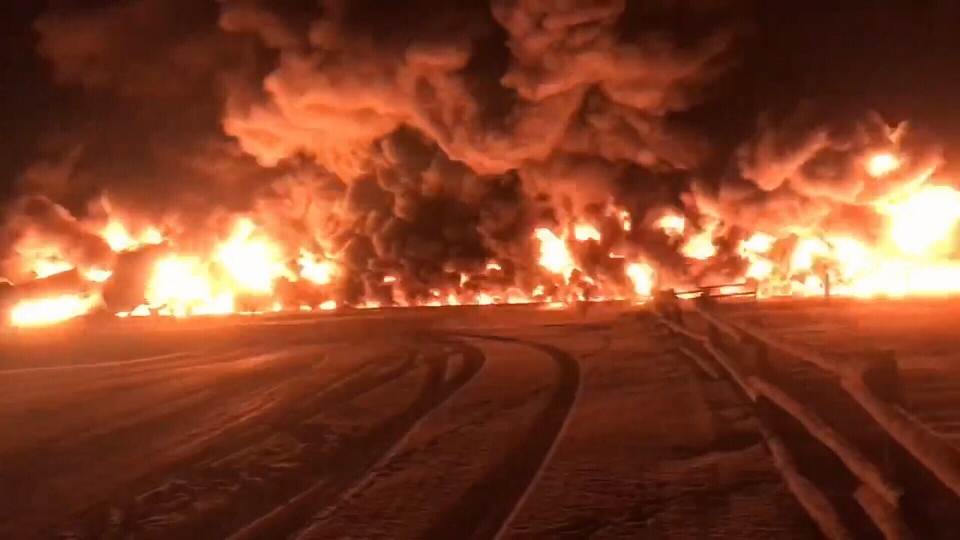
Canada's Transport Minister Marc Garneau late last week announced new rail safety measures aimed at reducing train derailments.
• key trains that have one or more loaded tank cars of dangerous goods that are toxic by inhalation or contain 20 or more tank cars containing dangerous goods; and
• higher-risk trains that carry crude oil or liquefied petroleum gases in a continuous block of 20 or more tank cars or 35 or more tank cars dispersed throughout the train.
In addition to the speed restrictions, the order directs railroads to address track maintenance and inspection management.
The latest order follows measures implemented in February in response to crude-oil train derailments that occurred over the winter.
"I recognize that railway operations in Canada are carried out in a highly complex and difficult environment, but I believe that a strong response is warranted after the series of derailments of trains carrying crude oil," Garneau said in a press release. "The measures are being implemented to reduce main track derailments and encourage safe railway operations."
|
|
Article 5 -
RAIL SAFETY NEWS
Rail Regulators Intensify Push to Advance Grade Crossing Safety
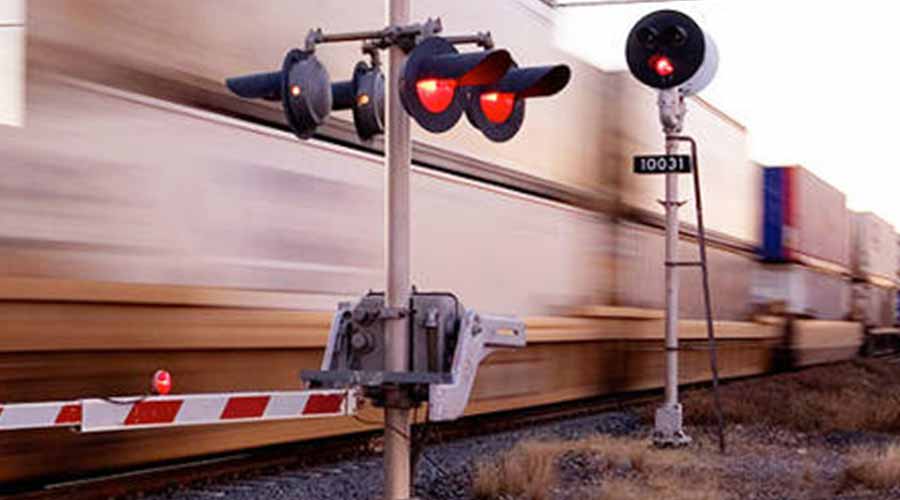
Grade crossing incidents and illegal trespassing on rail property continue to account for about 95 percent of all U.S. rail-related fatalities each year, according to the
Federal Railroad Administration
(FRA). Sadly, most of those incidents are preventable.
The FRA’s most recent data shows that in 2018, there were 2,217 collisions at public and private crossings in the United States, up from 2,123 in 2017, 2,049 in 2016 and 2,080 in 2015. While the number of fatalities resulting from collisions fell to 262 in 2018 from 271 in 2017, the deaths in 2018 outpaced the figures in 2016 (255) and 2015 (237) and tied 2014’s total.
Rail safety experts cite two factors that they believe caused the 2018 increase in collisions: a higher volume of train traffic and a greater number of distracted drivers and pedestrians.
In an effort to further drive down crossing-related incidents and deaths, U.S. Transportation Secretary Elaine Chao last month announced the
U.S. Department of Transportation
(USDOT) has “significant plans” to advance grade crossing safety around the nation. The announcement followed steps the FRA has taken over the past several years to raise crossing safety awareness.
“The department is committed to supporting infrastructure improvements, new communications tools and working to change driver behavior so that highway-rail grade crossings are safe environments for all transportation users,” Chao said in a press release.
|
|
Article 6 -
OIL BY RAIL NEWS
Oil Glut Creating Storage Problems
The glut of oil caused by plummeting prices is beginning to outpace capacity for storage. According to a report by
Yahoo! Finance
, IHS Markit, a Canadian firm, projects that storage space will be gone by the middle of the year.
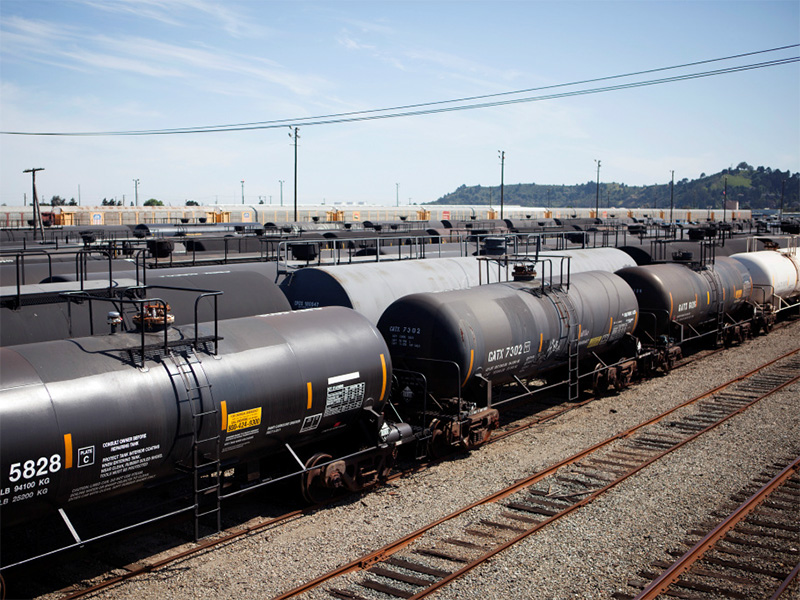
As a result, the industry is now looking at railroad tank cars as storage space. With crude tank farms and supertanker ships just about full, rail storage is seen as a viable alternative.
Sandy Fielden, director of research at Morningstar, Inc., said “Rail certainly is an economic option to store crude while the contango is at historic levels.” (A contango is a scenario where the futures price of a commodity is higher than the spot price). Fielden added “A trader has to mitigate risks associated with the quality and location because rail yards may not be located in major trading hubs.”
While the economics may be right for storing crude in rail cars during the next few months, Federal Railroad Administration rules say that tank cars loaded with crude or other hazardous materials can only be stored on private tracks. These rail yards must have robust security and equipment for fire protection. In addition, using rail cars for storage would require crude oil trains to carry the cars to the locations where they are needed. Jared Margolis, a senior attorney at the Center for Biological Diversity, says “That’s the big risk – moving it around so you can store it,” referring to accidents that could contaminate the environment with crude oil.
|
|
Article 7 -
INTERNATIONAL RAIL NEWS
India Has Closed its Railways for the First Time in 167 Years
Now Trains are Being Turned into Hospitals
When Prime Minister Narendra Modi imposed a nationwide
lockdown
on March 25, Indian Railways took the unprecedented move of suspending passenger trains across the country until April 14.
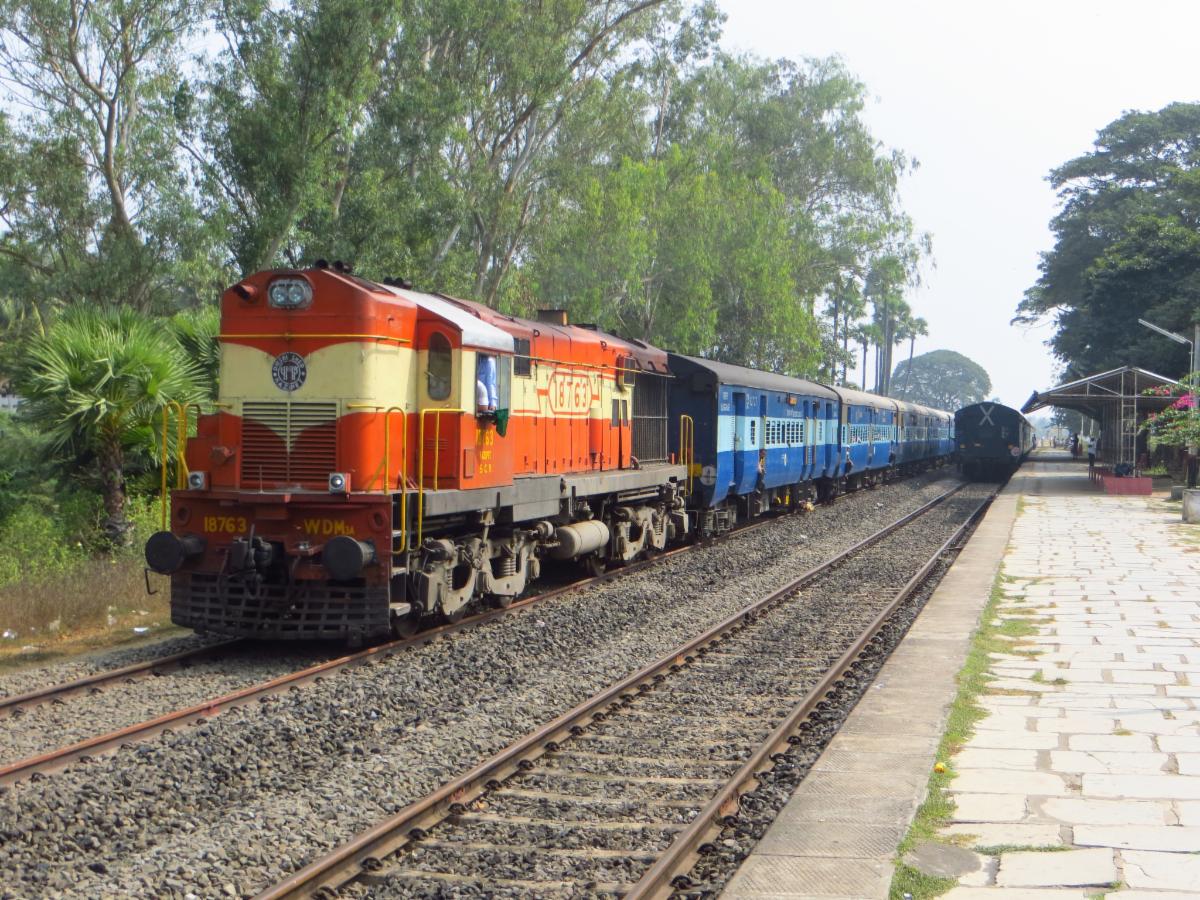
It was the first time in 167 years that Asia's oldest rail network had been suspended. Now the railway network has decided to convert as many as 20,000 old train carriages into isolation wards for patients as
the virus
spreads.
The network, which is the world's fourth-largest rail operator and India's biggest employer, already operates 125 hospitals across the nation, so has the expertise to expand into mobile beds.
On April 1, India had recorded 4,288 cases of
Covid-19
, including 117 deaths, according to Johns Hopkins University -- a relatively small number for a nation of 1.3 billion. While India's hospital system isn't overwhelmed yet, the repurposed trains could ease some of the pressure if the number of coronavirus patients begin to rise.
"Now, the railways will offer clean, sanitized and hygienic surroundings for the patients to comfortably recover," Piyush Goyal, the Railways Minister said in a tweet.
India's railway network
Normally, Indian Railways runs more than 20,000 passenger trains a day, on long-distance and suburban routes, from 7,349 stations across India.
|
|
International Railway Journal Editor-in-Chief Kevin Smith talks with the International Union of Railways on the COVID-19 response in Europe.
|
|
Article 8 -
TRANSIT NEWS
FTA Allocates $25B for Public Transportation
The Federal Transit Administration (FTA), via the CARES Act, recently allocated a total of $25 billion in Federal funding to help the Nation’s public transportation systems respond to COVID-19.
FTA is allocating the $25 billion to recipients of urbanized area and rural area formula funds, with $22.7 billion allocated to large and small urban areas and $2.2 billion allocated to rural areas. Funding will be provided at a 100% Federal share, with no local match required, and will be available to support capital, operating and other expenses generally eligible under those programs to prevent, prepare for and respond to COVID-19.
Further, operating expenses incurred beginning on Jan. 20, 2020 for all rural and urban recipients, even those in large urban areas, are also eligible, including operating expenses to maintain transit services as well as paying for administrative leave for transit personnel due to reduced operations during an emergency.
More information on eligibility can be found here
.
In addition to the $25 billion, FTA has taken a number of steps to support the transit industry during this public health emergency, including
expanding the eligibility of Federal assistance
available under FTA’s Emergency Relief Program to help transit agencies respond to COVID-19 in states where the Governor has declared an emergency.
|
|
|
|
|
|
|