Welcome to the University of Oklahoma Carceral Studies Consortium Newsletter. The Carceral Studies Consortium strives to build a community for intellectual exploration that includes faculty, staff, graduate students, community members, practitioners, and organizers.
Carceral Studies is concerned with the independent function and nexus of the political and social systems that organize, shape, sustain, and entrench practices of punishment, surveillance, incarceration, and harm.
|
|
National Institute of Justice Releases FY 2021 W.E.B. Du Bois Research Program on Reducing Racial and Ethnic Disparities in the Justice System
The National Institute of Justice’s W.E.B. Du Bois program seeks “to fund research that uncovers ways to reduce empirical racial and ethnic inequalities at the criminal and juvenile levels of the justice system. Funding categories include proposal options for researchers that are early in their career at a minimum of $250,000 grants and advanced scholars/mentors with a minimum of $500,000 grants.
|
|
|
Carceral Studies Conversations Podcast |
|
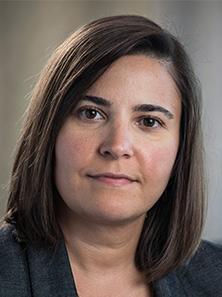
In this episode, Dr. Sarantakos discusses social care work, how social work can support communities, the ethics of academia, and movement lawyering as an actionable framework for social work. Sarantakos explores how communities are mobilized and organizing, offering social workers an opportunity to listen to, respect, and support this ongoing work in preparation for moments of crisis.
|
|
Minesh Bacrania / NBC News |
|
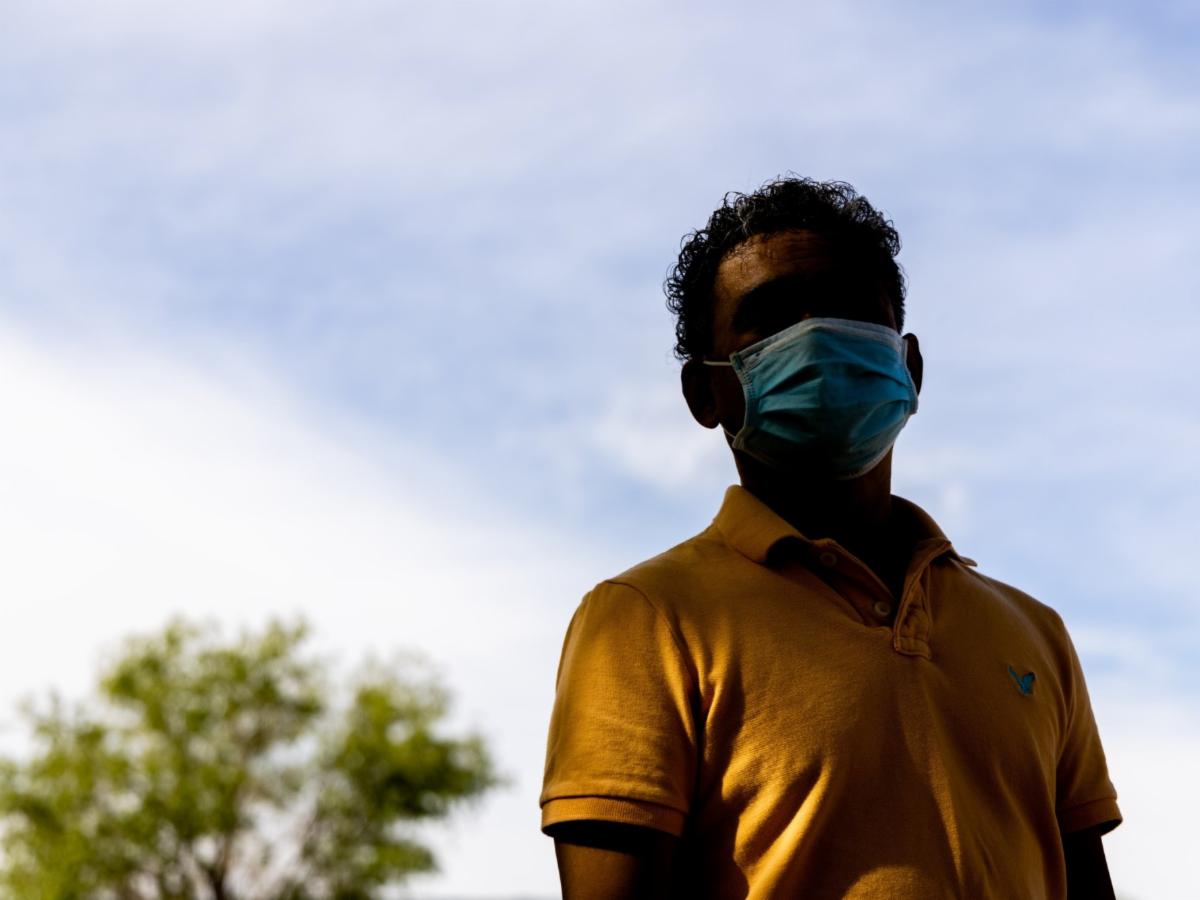
According to NBC News, “cash seizures (in Canadian Country during 2020) yielded more than $1.8 million” in 2020 with only 58% of cases resulting in criminal charges. Nang Thai and Weichuan Liu planned to purchase a 10-acre plot of farmland in Oklahoma but were detained by the sheriff who interrogated them and confiscated their money. Thai and Liu were not charged with any violation. Despite this, the sheriff confiscated their money. They claim that the sheriff’s office reported the seized amount ($131,500) as “$10,000 short of the total they had in their car that day.” Rich Schapiro explains that “their (Thai and Liu) experience highlights the controversial law enforcement practice known as civil asset forfeiture, in which police can confiscate a person’s cash or other property even without bringing criminal charges.” Megan Lambert, the legal director for the American Civil Liberties Union of Oklahoma, found that this case highlights “the lack of accountability or transparency and the perverse financial incentive [for] civil asset forfeiture make[s] the process ripe for abuse and bias.”
|
|
Tamir Kalifa / Getty Images |
|
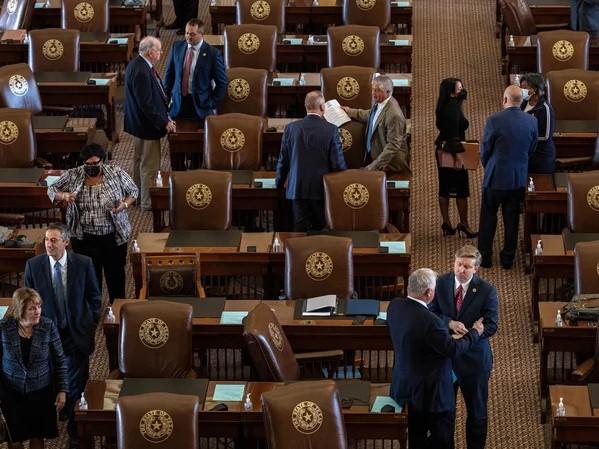
In response to Texas Governor Greg Abbott’s recent ban on vaccine mandates, twenty-four Texas lawmakers have sponsored a bill (House Bill 155) that would “allow workers who are fined or otherwise sidelined to file suit against their employers.” Bill Chappell explains that employees that remain unvaccinated would be protected from punishment because any action against them would be akin to “if the establishment engaged in discriminatory or unlawful employment practice[s].” The bill also includes a stipulation against vaccination for those that have “acquired immunity against COVID-19” due to prior exposure and infection. HB 155 effectively uses state power to hinder public health initiatives which have continued to place excessive COVID-19 risks on populations that interact with state agencies, such as law enforcement agencies and correctional facilities. According to State Representative Tom Oliverson, the bill would conform to the concept of patient autonomy which is the “idea that a patient of sound mind and body has the right to accept or refuse medical advice and treatment.” Abbott and Texas lawmakers cite these “reasons of conscience” as the crux of HB 155. However, in creating such clear opposition to President Biden’s federal mandate on vaccines, sources such as the Houston Public Media believe that “Texas could be heading for a court battle with the federal government over the ban.”
|
|
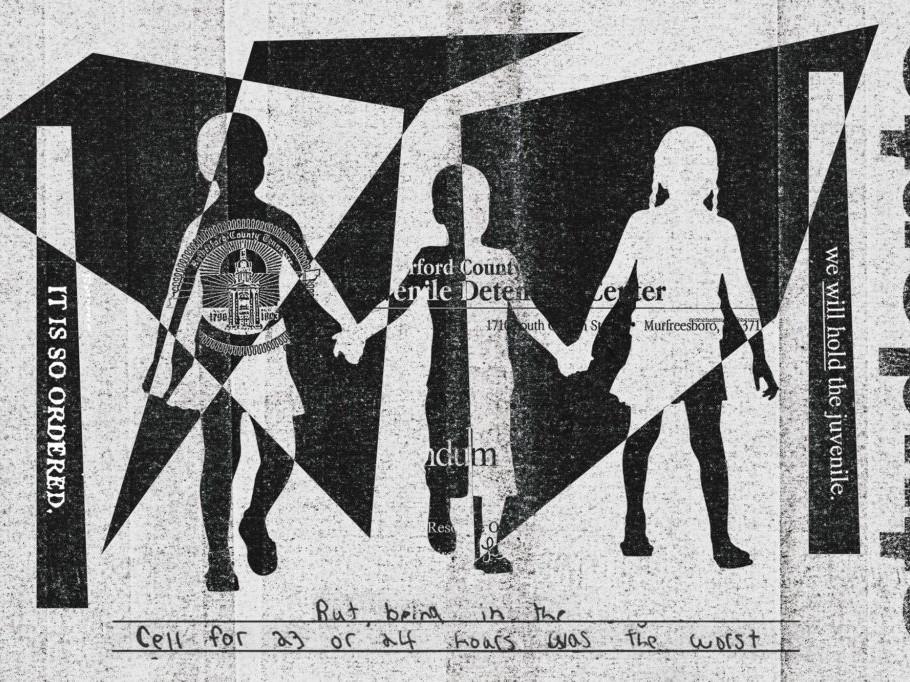
According to Meribah Knight and Ken Armstrong, in 2016, the juvenile legal system in Rutherford County, Tennessee, was responsible for handcuffing and detaining multiple elementary school children for the crime of “criminal responsibility.” Under this ambiguous statute, for example, children were arrested and jailed because police officers in Rutherford County found a recording of a fight where the children had “failed” to intervene and therefore were deemed to have “encouraged and caused” the assault. The issue here, besides handcuffing a crying third-grader in front of other students, is the fact that the district attorney for Rutherford County confirmed that there is no such crime as “criminal responsibility.” Yet, this is just one of the many examples of how the county has used vague terminology to illegally detain juveniles while also violating laws concerning the length of detainment for children. Judge Donna Scott Davenport is one of the individuals responsible for the county’s high rate of detaining youth. Davenport has used her discretion in the courtroom to jail children for 2-10 days for “cursing” her. This action violates a law stating that children are to be released within one day after their court appearance. In 2016, Rutherford County was not only locking up 48% of children referred to the juvenile court, compared to a rate of 5% statewide, and the county was also responsible for jailing 986 children for a total of 7,932 days. Although the extensive list of civil actions and charges against the county have continued, officials like Davenport remain in power and have shown no sign that their agenda will change. Davenport believes she is “here on a mission. It’s not a job. It’s God’s mission.”
|
|
Damon Winter / New York Times |
|
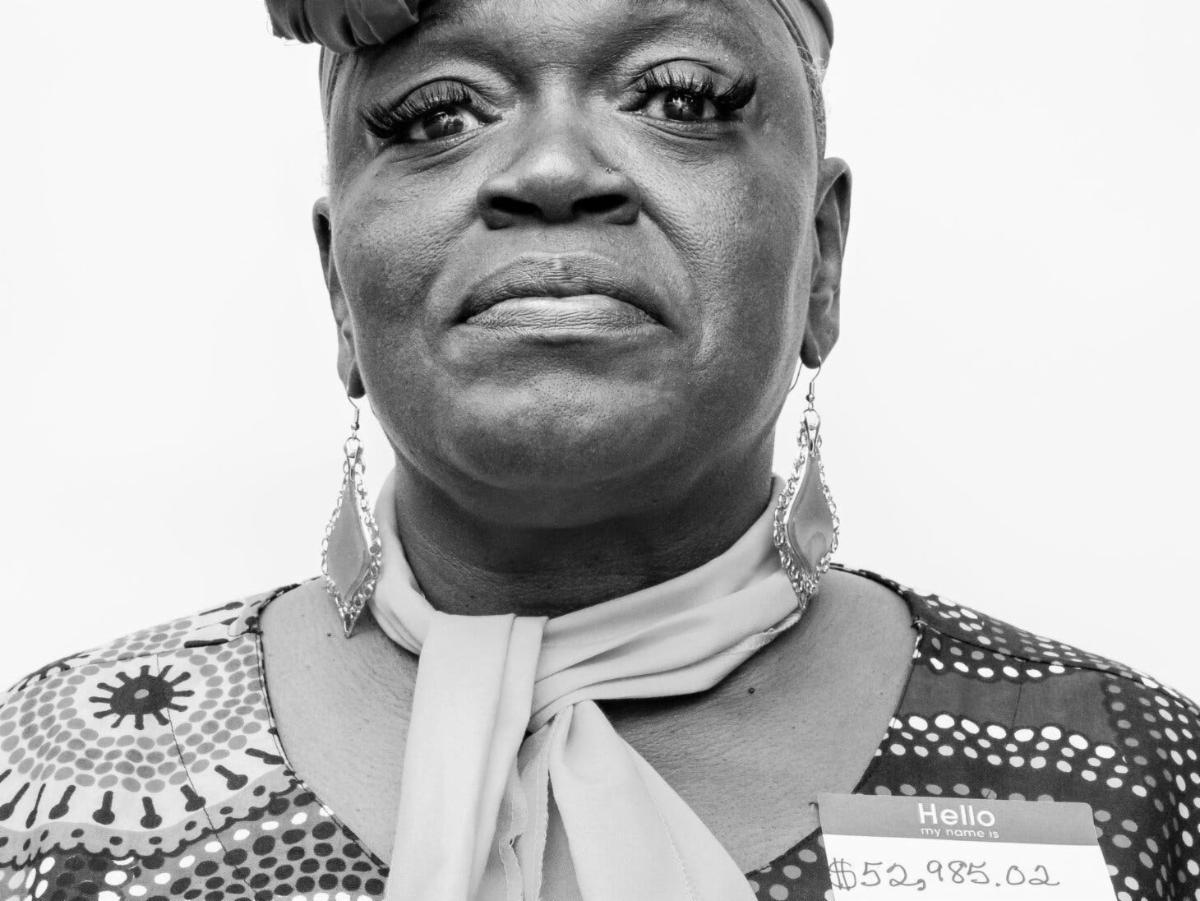
The state continues to punish formerly incarcerated individuals through voter disenfranchisement which is often a lifelong consequence or one that is enforced through the entirety of a legal sentence. Although many states have begun to eliminate this practice, states like Florida have created additional barriers. According to Jesse Wegman, in 2018 “Floridians overwhelmingly approved a constitutional amendment restoring voting rights to nearly everyone with a criminal record, upon the completion of their sentence. ...but within a year, Florida’s Republican-led Legislature gutted the reform by passing a law defining a criminal sentence as complete only after the person sentenced has paid all legal financial obligations (LFOs) connected to it.” Wegman found that as a result of this change, “more than 700,000 people in Florida are barred from voting.” For example, Sergio Thornton, a formerly incarcerated person owing nearly $20,000 on a $40 drug charge, found the situation to be hopeless; he told the judge: “the only way I could come up with that kind of money is to commit another crime.” Many formerly incarcerated people are also left in the dark when they attempt to find out the details of their obligations. Formerly incarcerated individuals often receive different amounts owed or they find out that their debt was sold to a collection agency.
|
|
Please share recent research you would like to see featured, including your own!
Send it to carceralstudies@ou.edu
|
|
ABSTRACT: Data from 25 large U.S. cities is assembled to estimate the impact of the onset of the COVID-19 pandemic on crime. There is a widespread immediate drop in both criminal incidents and arrests most heavily pronounced among drug crimes, theft, residential burglaries, and most violent crimes. The decline appears to precede stay-at-home orders, and arrests follow a similar pattern as reports. There is no decline in homicides and shootings, and an increase in non-residential burglary and car theft in most cities, suggesting that criminal activity was displaced to locations with fewer people. Pittsburgh, New York City, San Francisco, Philadelphia, Washington DC and Chicago each saw overall crime drops of at least 35%. Evidence from police-initiated reports and geographic variation in crime change suggests that most of the observed changes are not due to changes in crime reporting.
|
|
ABSTRACT: Diversification is a widely proposed policing reform, but its impact is difficult to assess. We used records of millions of daily patrol assignments, determined through fixed rules and preassigned rotations that mitigate self-selection, to compare the average behavior of officers of different demographic profiles working in comparable conditions. Relative to white officers, Black and Hispanic officers make far fewer stops and arrests, and they use force less often, especially against Black civilians. These effects are largest in majority-Black areas of Chicago and stem from reduced focus on enforcing low-level offenses, with greatest impact on Black civilians. Female officers also use less force than males, a result that holds within all racial groups. These results suggest that diversity reforms can improve police treatment of minority communities. ways.
|
|
ABSTRACT: How do criminal justice interactions affect political participation and through what mechanisms? In this new era of criminal justice expansion, the number of people who have had interactions and who will interact with the criminal justice system has increased significantly. Notwithstanding the abundant scholarship detailing the expansion of the carceral state, the subsequent increases in carceral contact, and the negative externalities of punitivity, we know little about the mechanisms that drive the observed negative political consequences. We know what is happening but not how it is happening. I argue that predacious criminal justice policies are having a negative interpretative policy feedback effect on the well-being of those contacted. First, I find that feelings of well-being are strongly associated with political participation. Second, using structural equation modeling, I offer evidence that carceral contact has a strong direct effect on well-being and a strong indirect effect on political participation mediated through measures of well-being. Twenty-three percent of the political suppression effect is an indirect effect of carceral contact mediated through well-being.
|
|
ABSTRACT: In 2003, Congress passed the Prison Rape Elimination Act (PREA). Although subsequent research to PREA has shed light on the prevalence and incidence of sexual violence in American prisons, few studies examine inmates’ perceptions of rape and safety from rape in prison. Even less is known about how inmates’ perceptions of rape influence mental health treatment–seeking behavior during incarceration. Using a sample of incarcerated men, this study adds to the limited body of research by examining the perceived fear of rape and mental health treatment–seeking behavior in two vulnerable prison populations—gay and bisexual inmates and inmates with a history of childhood sexual abuse. Compared with straight inmates, gay and bisexual inmates were approximately two times more likely to perceive that rape was a threat and three times more likely to voluntarily request mental health treatment in prison. Inmates with a history of childhood sexual abuse were over twice as likely to perceive the threat of rape and nearly four times more likely to request mental health treatment than inmates who did not report a history of childhood sexual abuse. Policy, practice implications, and recommendations for future research are discussed.
|
|
OU Libraries and Carceral Studies Consortium Assemble “Racial Capitalism” Library Guide
In a collaborative effort between OU Libraries and the Carceral Studies Consortium, a library guide on “Racial Capitalism” is now available for all students, staff, and faculty. Racial capitalism contends that racist oppression is central to how capitalism operates. Racial subjugation is not one specific manifestation of a larger capitalist system, but rather, capitalism itself is a racial system. The guide includes resources (written, audiovisual, and contacts) for information about the carceral state, crimmigration, and race and labor.
|
|
|
Join the Consortium for "Prison Lands,"
a Film/Discussion Series
The OU Carceral Studies Consortium is pleased to host its Fall 2021 documentary series, in partnership with the WGS Center for Social Justice and Poetic Justice, on the theme "Prison Lands." Each screening will be followed by a group discussion facilitated by scholars. Films remaining in the series include The Facility (Weds., Nov. 3, 6pm), Grey Matter (Thurs., Nov. 4, 7pm), and The Prison in Twelve Landscapes (Weds., Dec. 1, 6pm). Please pre-register at the link below.
|
|
|
Call for Papers: 2022 Conference - "Perspectives on Carcerality" hosted by DePaul Philosophy Graduate Students
DePaul University at the University of Illinois, Chicago invites papers for their virtual and in-person graduate student conference. The conference, titled Perspectives on Carcerality, Surveillance, Policing, and Abolition, “aims to explore critical approaches to these technologies as well as the practices of subversion that allow us to both imagine and create a post-carceral society.” Interested parties can submit abstracts and panel proposals to depaulgradcon2022@gmail.com. The deadline for submissions is November 28th, 2021.
|
|
|
OU PolicyMap Trial
OU Libraries is currently offering a trial subscription to the program PolicyMap until November 23, 2021. PolicyMap enables users to interact with data and mapping tools with indicators that include demographics, jobs, housing, crime, quality of life, education, socioeconomic factors, and much more. Some data sources include the Census Bureau, Department of Homeland Security, and Center for Disease Control Behavioral Risk Factor Surveillance Survey. If you would like to see OU subscribe to this program, it is important to try it out and respond to the feedback survey as soon as possible.
|
|
|
2021-2022 Carceral Studies Consortium Student Work Prize
The Carceral Studies Consortium is inviting original student essays or creative works developed as part of any course in any discipline during the 2021-2022 academic year that engages the topic of Carceral Studies, broadly conceived. Submissions are not limited to essays, but may be in any creative or scholarly format, including but not limited to art in any medium, story maps, and more.
|
|
|
ABOUT
The Consortium Newsletter will offer a roundup of a few selected articles that reflect today’s news, organizing, and thinking related to the carceral state. We understand that freedom work is built on education and engagement. Education requires an understanding of contemporary issues informed by their historical context. We hope that these curated articles will help you analyze the issues that we face and understand the community that we strive to construct.
Join the conversation!
We encourage feedback, suggestions, and article suggestions. Please reach out to carceralstudies@ou.edu with any ideas, thoughts, or recommendations.
If anyone you know is interested in receiving this newsletter and other information from the Carceral Studies Consortium, please forward them this email and they may click this link to subscribe.
|
|
Land Acknowledgment
The University of Oklahoma is on the traditional lands of the Caddo Nation and the Wichita & Affiliated Tribes. This land was also once part of the Muscogee Creek and Seminole nations. It also served as a hunting ground, trade exchange point, and migration route for the Apache, Cheyenne, Comanche, Kiowa, and Osage nations. Today, 39 federally-recognized Tribal nations dwell in what is now the State of Oklahoma as a result of settler colonial policies designed to confine and forcefully assimilate Indigenous peoples.
|
|
The University of Oklahoma is an equal opportunity institution. ou.edu/eoo |
|
|
|
|
|
|