The Provider Relief Fund Reporting Period 1 portal will be reopened from 9:00 a.m. Eastern Time on December 13, 2021 through 11:59 p.m. Eastern Time on December 20, 2021. During this time, PRF recipients may register, request corrections, and/or submit their report on PRF payments received prior to June 30, 2020.
This one week will be the final opportunity for providers to report on Reporting Period 1 payments. Providers who submitted their reports before November 30, 2021, may request to have their report reopened for revisions by contacting the Provider Support Line (866-569-3522). All reports must be finalized and submitted before December 20, 2021, at 11:59 pm ET to be compliant with the terms and conditions of the PRF program.
Click here for additional information about PRF reporting.
|
|
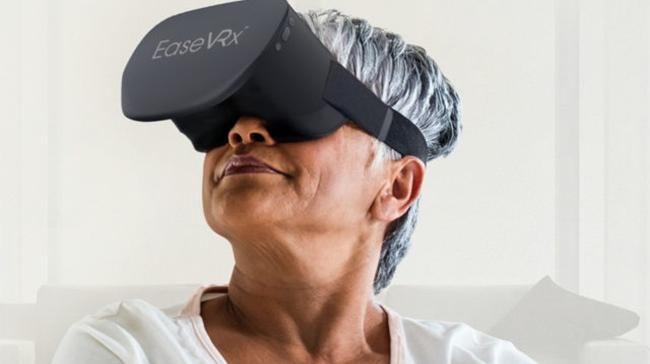
The FDA has authorized marketing of the immersive virtual reality (VR) device EaseVRx (Applied VRx) for the treatment of low back pain (LBP) in patients 18 years of age and older. It requires a prescription for use.
The device uses the principles of cognitive-behavioral therapy (CBT), including deep relaxation, attention shifting, interoceptive awareness and perspective taking, distraction, immersive enjoyment, self-compassion, healthy movement, acceptance, visualization, knowledge of pain and rehabilitation. The device is used in a program of 56 brief (two to 16 minutes) VR sessions over eight weeks. CBT has been shown to reduce pain and pain intensity, and to improve function in LBP patients.
“VR substantially modulates pain and pain intensity,” said Beth Darnall, PhD, about behavioral treatments for chronic pain at the 2021 annual Pain Medicine Meeting of the American Society of Regional Anesthesia and Pain Medicine. “There has been quite a sea change [in acceptance of the therapy] facilitated by COVID. Now, we need to make it really convenient and attend to the needs of each patient.”
|
|
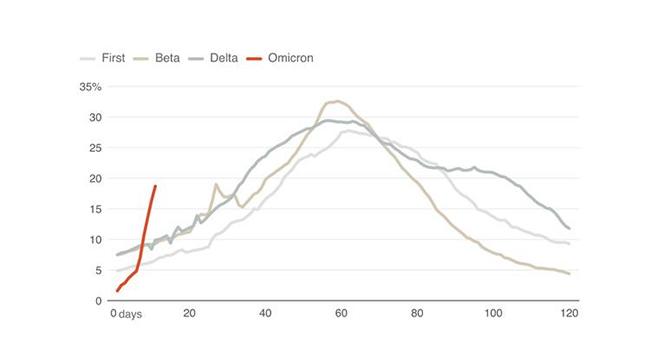
Omicron spurs a rapid rise in positive coronavirus tests in South Africa
Compared with three previous coronavirus variants, the newly identified omicron variant is sparking a faster surge in the percentage of positive tests in South Africa. Classified as a “variant of concern” by the World Health Organization on Nov. 26, omicron has now been reported in more than 30 countries — and at least 19 states in the U.S.
The first country to really get hit by omicron is South Africa.
Before the new variant took off last month, coronavirus cases there were low – only several hundred per day in mid November.
But by early December, the tally of daily infections had shot up to more than 4,500 — and genomic sequencing shows that omicron is to blame.
|
|
The company applied for emergency use authorization for the oral antiviral in November.
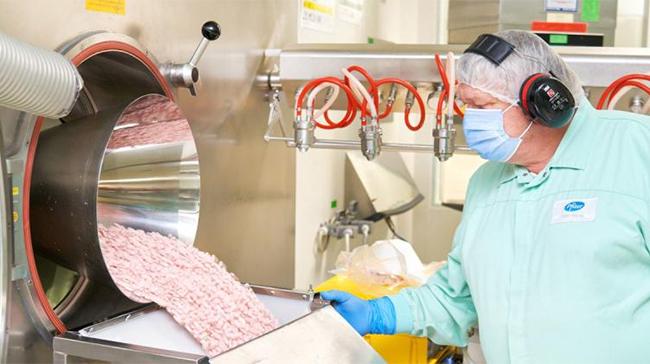
Additional data from Pfizer's clinical trial of its oral COVID-19 antiviral drug confirm the treatment's high level of effectiveness, the company said in a news release Tuesday.
In the final analysis of its Phase 2/3 clinical trial, the antiviral, called Paxlovid, was found to be 89 percent effective at preventing high-risk people from being hospitalized or dying from COVID, the company said.
The findings are consistent with the results of the interim analysis the company released last month, although the full data have not been made public for scientists to review. Pfizer halted its clinical trial based on the interim results and submitted an application to the Food and Drug Administration for emergency use authorization several weeks later.
|
|
Only 12 state medical boards have taken action against physicians who have spread false or misleading information about COVID-19, according to a new survey from the Federation of State Medical Boards (FSMB).
The FSMB reports that in its 2021 annual survey two-thirds of its 71 member boards (which includes the United States, its territories, and Washington, DC) reported an increase in complaints about doctors spreading false or misleading information.
"The staggering number of state medical boards that have seen an increase in COVID-19 disinformation complaints is a sign of how widespread the issue has become," said Humayun J. Chaudhry, DO, MACP, president and CEO of the FSMB, in a statement.
|
|
-
To log in for the first time you will need to click “forgot password” at the bottom of the login window.
- Check your email and then log in as directed.
-
If you have problems logging into your account, click here.
|
|
As researchers in the field of nutrition and mental health, and authors of The Better Brain, we recognize that many in our society experience brain hunger, impairing their cognitive function and emotion regulation.
|
|
We answer some commonly asked questions about this hot, but little understood, asset
Cryptocurrencies have become an investing mania again, which means—because I cover the topic for The Wall Street Journal—I field questions from a lot of people I don’t usually hear from. Most recently, a high-school friend I haven’t talked to in years pinged me. He has started investing in cryptocurrencies, but was looking for some guidance.
“Would welcome tips on where to find good info, particularly geared for the newbie,” he wrote.
As an asset class, crypto is so new even some people inside it don’t understand it. And the boom-bust, Wild West, no-holds-barred-nature of the market attracts some bad players.
|
|
Call for
Abstracts & Poster Presentations
|
Proposals accepted through March 1st
|
A $50 submission fee is required upon completion of the form. |
Questions can be directed to
Savannah Gold at 270.554.9412 ext 4219 or
|
|
After reading the 2022 Abstracts & Poster Presentations guidelines, please complete the form along with the presenter's CV by clicking here.
- Top 3 will present during the general session on the final day.
- Top 10 will present during the abstract breakout session.
-
Rapid review and publication in the Pain Physician journal will be extended to the Top 10 authors accepted for meeting presentations.
Click here for Abstract and Poster Presentation
|
|
Registration coming soon! |
|
Pain Medicine Case Reports (PMCR) and Editor-in-Chief Alaa Abd-Elsayed, MD, PhD would like to invite you to submit case reports and case series to the PMCR journal. Your article will be published free of charge.
Open access journals are freely available online for immediate worldwide open access to the full text of published articles. There is no subscription fee for open access journals. Open access journals are no different from traditional subscription-based journals: they undergo the same peer-review and quality control as any other scholarly journal.
Interested in becoming a member of the PMCR Editorial Board?
Editorial board members are asked to review 2-6 manuscripts per year. Please submit your most up-to-date CV to sgold@asipp.org for consideration.
For more information or to submit your articles, click here.
|
|
| CASE REPORT |
Shalini Shah, MD
Abstract
BACKGROUND: Pudendal neuralgia (PN) can cause severe, disabling chronic pain. Though common, PN is frequently unrecognized and misdiagnosed. Historically, the last-resort treatment for PN has been permanent implantation of spinal cord stimulation (SCS), but SCS for PN carries high risk of complications and explantation. We report the first case of temporary (60-day) peripheral nerve stimulation (PNS) treatment for refractory PN.
CASE REPORT: A 63-year-old woman presented with one year of chronic bilateral suprapubic vaginal pain radiating to the bilateral proximal medial thighs with concomitant dysuria, urinary frequency, and pain with intercourse. PN was confirmed via diagnostic pudendal nerve block. Using fluoroscopic guidance, we implanted PNS leads on the left and, subsequently, the right pudendal nerves, with explantation at 60 days for each lead. The patient reported continuing pain reduction with 80% improvement in the Visual Analog Scale score at 6 months, resumption of normal activity and functionality, discontinued use of opioids, and high satisfaction with treatment. This case is notable for the sustained pain relief provided by this temporary and minimally invasive treatment.
CONCLUSIONS: This case suggests that 60-day PNS with fluoroscopic guidance is a viable treatment for refractory PN in correctly selected patients. This treatment is low-risk, minimally invasive, and may be used early in the care continuum, potentially sparing patients multiple failed treatments and the risks associated with permanently implanted devices.
KEY WORDS: Pudendal nerve, peripheral nerve stimulation, neuromodulation, chronic pain, pelvic pain, perineal pain, case report
|
|
| RANDOMIZED CONTROLLED TRIAL |
Andri Marulitua Lubis, MD, PhD, Samuel Maruanaya, MD,
Aida Rosita Tantri, MD, PhD, Ludwig Andribert Powantia Pontoh, MD, PhD,
and Nadia Nastassia Primananda Putri Shah Ifran, MD
Abstract
BACKGROUND: Adequate pain management has an important role in supporting early ambulation after total knee arthroplasty (TKA). Multimodal analgesia is one of the modalities of overcoming postoperative pain. The use of a combination of paracetamol and ibuprofen is expected to reduce the total morphine requirement after TKA.
OBJECTIVES: The use of a combination of paracetamol and ibuprofen to reduce morphine requirement after TKA, to provide adequate pain management and early ambulation.
STUDY DESIGN: Patients scheduled for total knee arthroplasty who met the requirements for inclusion criteria were consented and randomized using randomizer.org in a 1:1:1 ratio to receive either combination paracetamol iv and ibuprofen iv (Group II), paracetamol iv only (Group II), or ibuprofen iv only (III).
SETTING: Thirty-six patients aged 63-68 years who underwent TKA were included in this study.
METHODS: All patients were divided into 3 groups. Group I received paracetamol 1 g and ibuprofen 800 mg, group II received 1 g paracetamol iv and 100 mL normal saline, group III received 800 mg ibuprofen iv and 100 mL normal saline, 10 minutes before the end of surgery and every 6 hours up to 24 hours. Total morphine consumption, pain score (resting, walking, knee flexion), and 2 minute-length walking tests were measured in hour 24 postoperative. Data were analyzed with SPSS 16.0.
RESULTS: Median of total morphine consumption between 3 groups respectively was 7.5 (3.0-36.0) mg vs 15.0 (4.5-28.5) mg vs 9.0 (0.0-24.0) mg with no difference (P = 0.391). Mean of pain score at walking phase respectively was 4.8 ± 0.5 vs 7.3 ± 1.2 vs 5.6 ± 0.5 (hour 24, P < 0.01). Medians of 2-Minute Walking Test respectively were 6.0 (2-16) meters vs 0.0 (0-4) meters vs 0.0 (0-4) meters (hour 24, P < 0.01).
LIMITATIONS: The total morphine requirement measured in this study illustrates the consumption of morphine in resting phase.
CONCLUSION: The combination of paracetamol and ibuprofen is better in reducing the total morphine requirement after TKA when compared with the administration of paracetamol injection alone or ibuprofen injection alone. Combination paracetamol injection and ibuprofen injection also provides adequate pain management in order to help early ambulation.
KEY WORDS: Multimodal analgesia, paracetamol, ibuprofen, TKA, morphine consumption, pain score
|
|
| NARRATIVE REVIEW |
Jordan Sam, MHSc, Michael Catapano, MD, Sachin Sahni, MD,
Frederick Ma, MD, Alaa Abd-Elsayed, MD, and Ognjen Visnjevac, MD
Abstract
BACKGROUND: Pulsed radiofrequency (PRF) treatment uses low energy, short pulsations to modulate tissue characteristics. PRF treatment has been effective as an interventional pain management technique to treat a variety of chronic neuropathic pain (neuralgia) disorders, but a comprehensive review of its biological mechanism has not been updated in a decade.
OBJECTIVES: In this literature review, we performed a literature search in PubMed to identify publications describing the mechanisms of action of pulsed radiofrequency for pain indications.
STUDY DESIGN: Narrative literature review.
METHODS: A systematic search was performed through PubMed from database inception to December 31, 2019, to identify all articles addressing the cellular or molecular mechanisms of action of PRF on neuropathic pain. The search terms “pulsed radiofrequency” and “pulsed radiofrequency mechanisms” were used. Cellular and molecular mechanisms of PRF interventions were subdivided into 3 broad categories: nociceptive signalling, immune activity, and synaptic function. A total of 20 publications were identified for inclusion in this updated review.
RESULTS: It was found that pulsed radiofrequency impacts many different biological pathways involved in the modulation of chronic neuropathic pain (neuralgia). With regards to nociceptive signalling, PRF treatment modulates ion channels (Na/K ATPase, HCN, P2X3), CGRP, neurotransmitters (aspartate, citrulline, M-ENK, glutamate), postsynaptic receptors (AMPA-R, GABA-B), and synaptic function (KCC2). PRF treatment also modulates immune activity, including microglial markers (CD3, CD56, Iba1), inflammatory cytokines (IL-6, IL-17, IRF8, IFN-g, TNFa), and intracellular proteins implicated in immune mediated neuropathic pain (BDNF, b-catenin, JNK, p38, ERK1/2).
LIMITATIONS: This review is primarily limited by the diverse data sets that needed to be collated and correlated, as no study was comprehensive in addressing all markers, cytokines, pathways, neurotransmitters, ion channels, proteins, genes, and gene expression changes, along with their clinical outcomes concurrently. As such, the interplay of these individual pathways and mechanisms and their isolated effects on efficacy of PRF cannot be concluded. Rather, the large majority of findings can be seen as associations instead of definitive causal relationships to clinical outcomes.
CONCLUSIONS: Herein describes a clinically relevant collated update describing the cellular and molecular mechanisms of action of PRF for pain management.
KEY WORDS: Biomarkers, chronic pain, cytokines, ganglia, hyperalgesia, immunomodulation, neuralgia, neurotransmitter, nociceptors, pulsed radiofrequency treatment, receptors, spinal
|
|
Since this malpractice insurance program officially launched in November 2018, ASIPP has signed up hundreds of providers with an average savings of 30%. This is professional liability insurance tailored to our specialty and will stand up for us and defend our practices.
Norcal Mutual is A-Rated by AM best and is licensed in all 50 states. To read a few important points to keep in mind about the program, including discounts, administrative defense, cyber coverage, aggressive claims handling, and complimentary award-winning risk management CME activities, click here.
|
|
ASIPP® has formed a partnership with Henry Schein and PedsPal, a national GPO that has a successful history of negotiating better prices on medical supplies and creating value-added services for independent physicians. Working with MedAssets, PedsPal provides excellent pricing on products like contrast media that alleviate some of the financial pressures you experience today.
|
|
ASIPP® is now offering our members the benefit of a unique revenue cycle management/ billing service.
We have received a tremendous amount of interest in the ASIPP® billing and coding program.
Click here to learn more about the negotiated rate for practices and more!
|
|
|
up-to-date news related to you, your practice, and your patients!
|
|
|
|
|
|
|