| |
NASA History News & Notes
NOVEMBER 2026 • Volume 43, Number 10
| | |
CONTENTS
- Get immersed in the history behind Hubble servicing missions
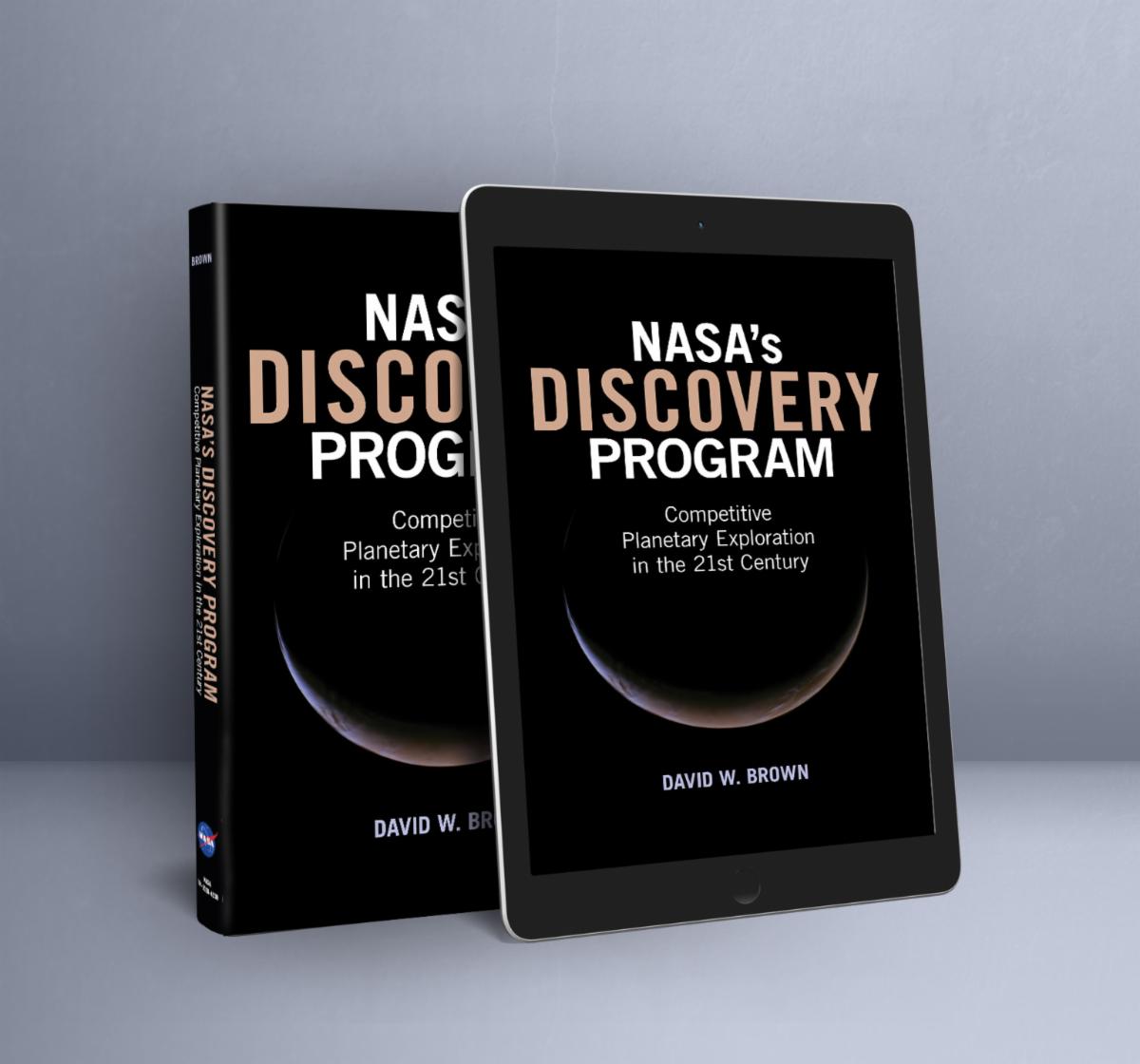
- New book release – NASA’s Discovery Program: Competitive Planetary Exploration in the 21st Century
- Reminder: Submit your proposal for our next symposium
- Apollo 12 trivia challenge
| | |
SERVICING SPACECRAFT IN ORBIT
In the Depths, Hubble Servicing Was Born
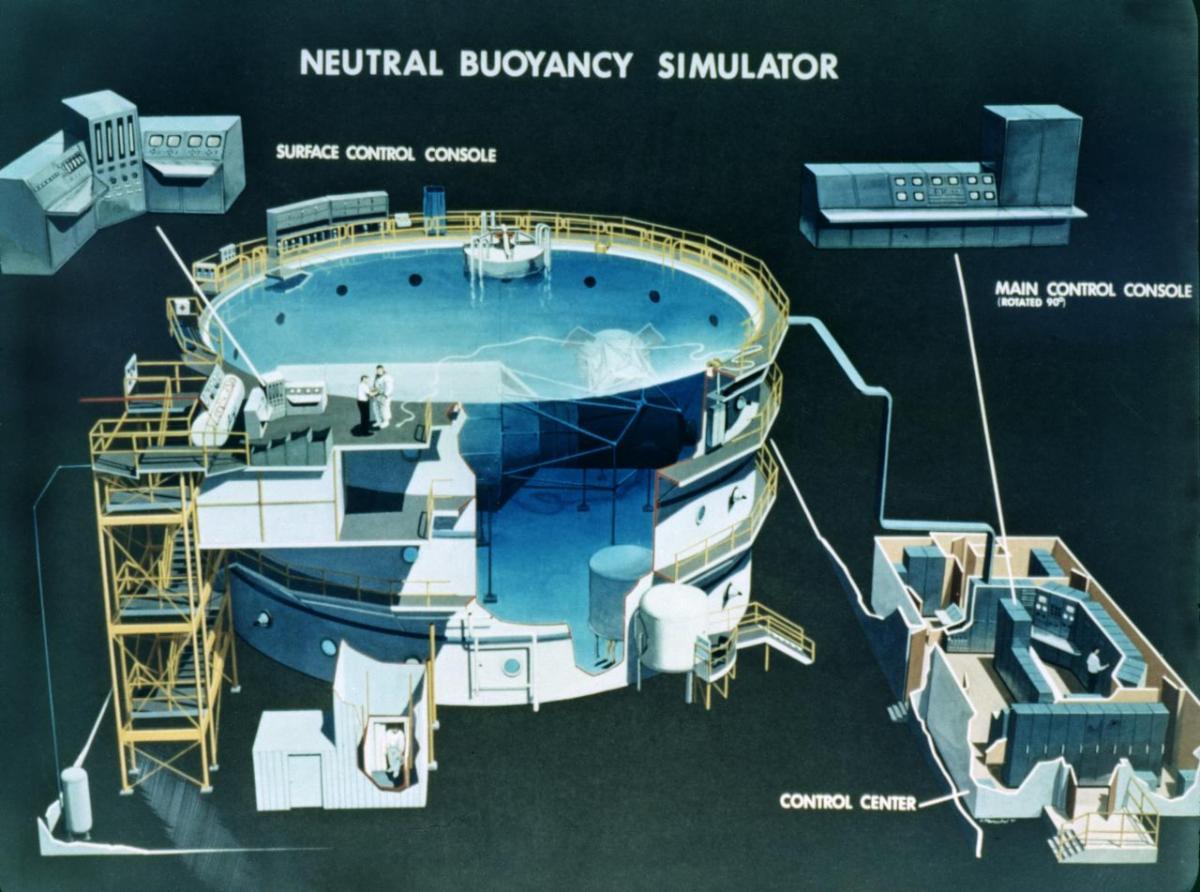
| | This 1972 illustration of the Neutral Buoyancy Simulator shows the components of the facility. The tank became a National Historic Landmark in 1985 and remained operational until 1997. Credit: NASA | | |
Longevity was woven into the heart of the Hubble Space Telescope. Since its launch in 1990, servicing missions have allowed Hubble to evolve over the years, leading to science that has profoundly altered our understanding of the universe. Hubble’s enduring success recently led NASA to seek potential commercial partnerships to further extend its mission through either an orbital boost or a sixth servicing mission—the first since 2009. The telescope’s modular design included multiple replaceable instruments that required both specially trained astronauts and an innovative tool kit for each servicing mission. To prepare for the first two servicing missions, NASA turned to Marshall Space Flight Center’s Neutral Buoyancy Simulator (NBS), a massive, 40-foot-deep water tank. Between 1979 and the mid-1990s, NASA used the NBS to choreograph spacewalks, train astronauts, and develop specialized tools. Using carefully arranged weights and counterweights, neutral buoyancy simulation closely mimics the weightlessness of space, and its unique working conditions.
Until the late 1990s, NASA had two neutral buoyancy facilities. The NBS served primarily as an engineering facility for the concept and verification phases of spacewalk choreography and tool design. Astronaut training typically occurred at the Weightless Environment Training Facility located at Johnson Space Center. Hubble, however, challenged this long-standing norm. The Hubble servicing missions required full-scale mockups of large mission hardware—some Hubble instrument modules are the size of telephone booths. The NBS stood as NASA’s only underwater facility capable of holding full-size mockups of both the telescope and the shuttle cargo bay. Thus, the NBS accommodated astronaut training for the Hubble servicing missions in addition to its traditional roles.
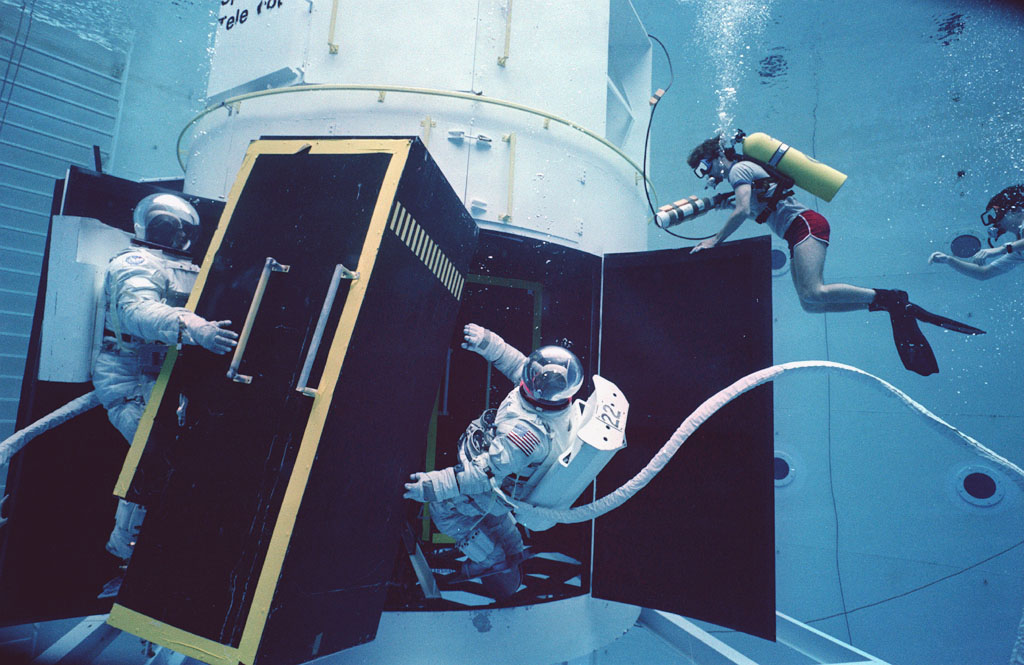
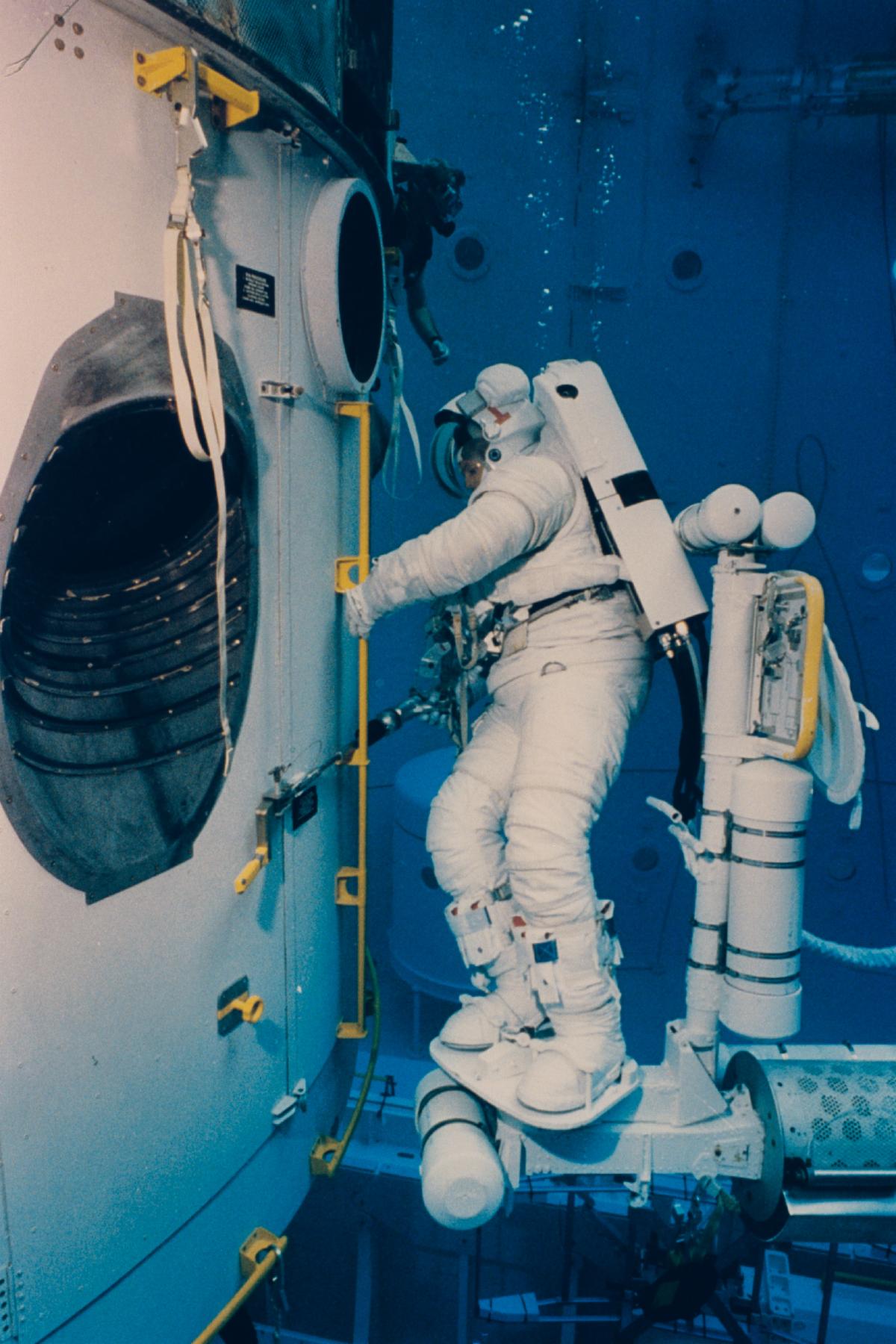
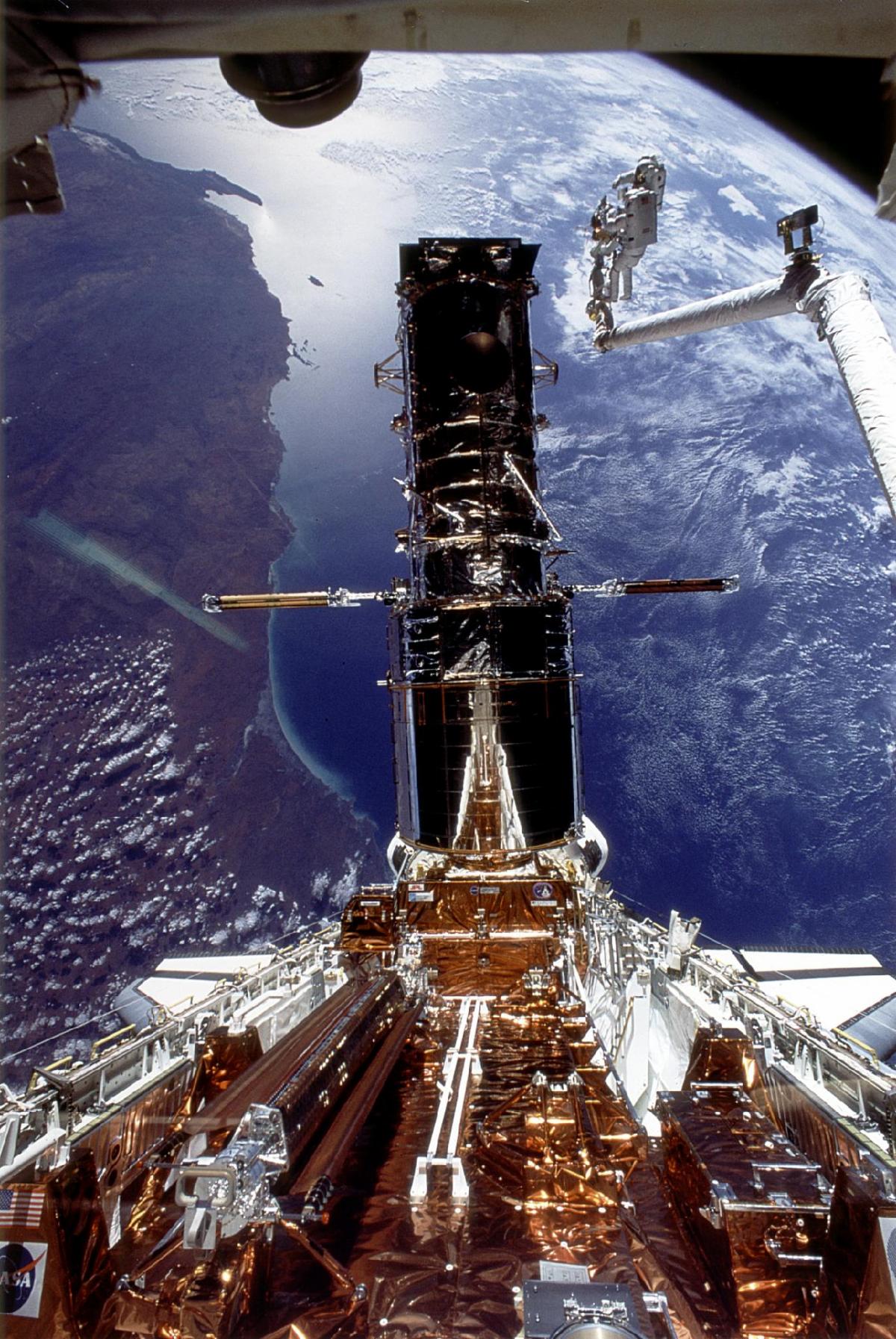
| | Time spent at the NBS by engineers and astronauts was vital to developing tools and procedures for Hubble servicing missions, the first of which lifted off on December 2, 1993. With the assistance of scuba-equipped divers, suited testers performed preplanned tasks ranging from the basic, such as determining whether a specific function could be performed outside Hubble or required access to its interior, to the complex, including precise movement sequences and procedures for removing bolts from the telescope in simulated weightlessness. Such tasks required specialized tools for accurate and efficient execution. Astronauts contended not only with a loss of dexterity during spacewalks because of their thick, balloon-like gloves, but also with tools that caused significant fatigue. The manual ratchet wrench, for example, was difficult to use in a weightless environment because of the lack of environmental friction. | | Astronauts in Marshall's Neutral Buoyancy Simulator work with Hubble Space Telescope mockups in preparation for future servicing missions. Credit: NASA | | NBS testing revealed a need to redesign astronaut tools. The first Hubble servicing mission, which included 35 hours of physically demanding spacewalks, ignited innovation in crew aids. Among other items, a new power tool and foot restraint were developed for Hubble servicing. Although it was not mission-ready until the second Hubble servicing mission in 1997, the Pistol Grip Tool (PGT) functioned as a computer-controlled, programmable drill that turned slowly and delivered high torque. The PGT proved so effective that its use transcended Hubble; it later became part of the tool kit used to build and maintain the International Space Station. Similarly, the Portable Foot Restraint (PFR), rigorously tested and verified in the NBS, changed spacewalks forever. For the first Hubble servicing mission, the PFR provided astronauts with a mobile work platform that locked their boots in place. Unlike prior designs, its tilt was adjustable, giving astronauts stability and leverage. Latching points were placed on Hubble's exterior and within the shuttle cargo bay, allowing astronauts to attach the PFR wherever it most effectively served their work. Critical though they were, the PGT and PFR are but two of the innovative crew aids that Hubble NBS testing produced. | | Thomas D. Akers uses a power wrench and the redeveloped Portable Foot Restraint to train inside the Neutral Buoyancy Simulator in preparation for the first Hubble servicing mission. Credit: NASA | | Astronauts Story Musgrave and Jeffrey Hoffman put their training into practice during the first Hubble servicing mission in December 1993. Credit: NASA | | Jillian Rael
NASA Historian | | |
NEW NASA HISTORY PUBLICATION
NASA’s Discovery Program: Competitive Planetary Exploration in the 21st Century
| | | | |
How do you explore the solar system when budgets are tight, opportunities are limited, and scientific ambitions are boundless?
For more than three decades, NASA’s Discovery Program has answered that question through a model of competitive, cost-capped planetary missions that have transformed our understanding of the solar system and beyond.
| | |
The Discovery Program emerged in response to limited flagship mission opportunities and an unpredictable budget process in the early 1990s. By emphasizing innovation, competition, and relatively low-cost missions, Discovery opened new pathways for planetary exploration while demonstrating that groundbreaking science could be achieved on shorter timelines and within constrained budgets. In early 2024, the NASA History Office published NASA’s Discovery Program: The First Twenty Years of Competitive Planetary Exploration, which covers the program's early history.
Now, historian and author David W. Brown brings the story up to the present in his new book, NASA’s Discovery Program: Competitive Planetary Exploration in the 21st Century. Covering the period from 2011 through 2025, Brown examines how the program evolved during an era of remarkable scientific achievement as well as growing institutional and mission-development challenges.
Discovery helped revive Mars exploration in the 1990s, launched 14 missions, and inspired the creation of NASA’s New Frontiers program. Its accomplishments have been extraordinary, from landing on an asteroid and returning samples from a comet to Earth to revolutionizing our understanding of exoplanets. Yet the program’s competitive, cost-capped approach also faced institutional resistance. As successes accrued and ambitions grew, the appetite for risk shrank. More time and energy went into formal reviews, inevitably, increasing spacecraft costs and complexity. A focused mission proposed well below the cost cap soon found it difficult to compete against missions that promised sweeping, flagship-like scientific returns and that were proposed at the cap.
Brown's engaging new volume captures both the triumphs and tensions that have shaped the Discovery Program’s recent history, offering readers an inside look at one of NASA’s most influential approaches to planetary exploration.
| | |
REMINDER
Submit Your Proposal for Our Next Symposium
| | |
The NASA History Office invites historians, interdisciplinary scholars, NASA leaders and practitioners, scientists, engineers, and other researchers to participate in a symposium examining NASA’s history and institutional evolution since 2000.
The symposium, “NASA in the 21st Century: History, Change, and Institutional Adaptation,” will be held at NASA Headquarters in Washington, DC on November 16–17, 2027. Those interested in participating are asked to submit an abstract of the proposed paper or presentation and a brief biography by May 31, 2027.
| | |
|
TRIVIA CHALLENGE
Regolith Remarks
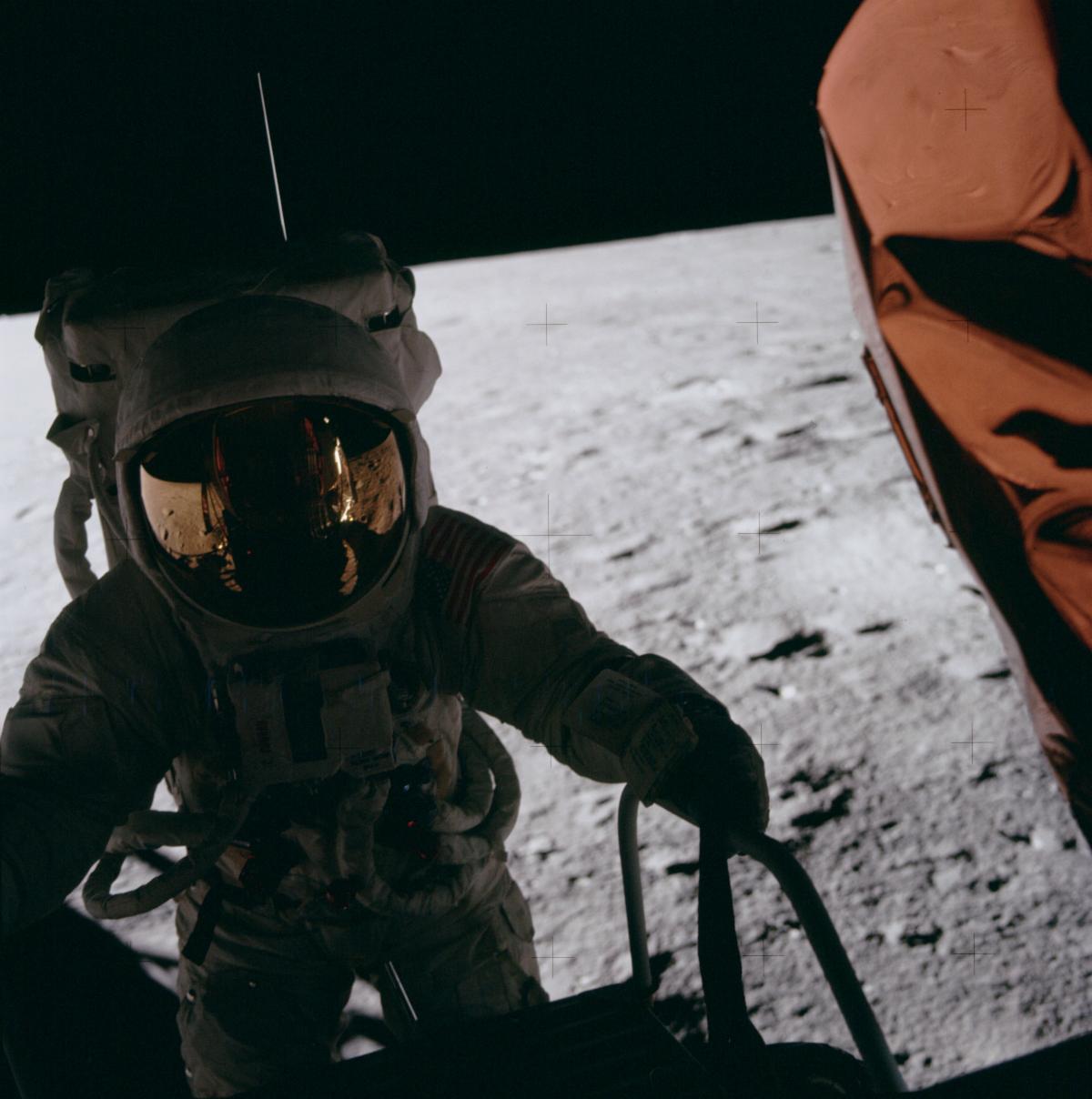
| | Fifty-seven years ago this week, Apollo 12 Commander Charles “Pete” Conrad Jr. and Lunar Module Pilot Alan Bean became the third and fourth astronauts to walk on the Moon. Many people know the first words Neil Armstrong spoke as his boots touched the lunar soil. | | What were Pete Conrad’s first words as he stepped onto the Moon? | | | | Apollo 12 Commander Pete Conrad descends the ladder from the lunar module to the Moon’s surface in November 1969. Credit: NASA | | |
NASA History
The NASA History Office documents and preserves NASA’s remarkable history and strives to engage with the public about NASA's past and how it relates to our world today.
| |
| |
National Aeronautics and Space Administration
NASA explores the unknown in air and space, innovates for the benefit of humanity, and inspires the world through discovery.
Visit nasa.gov
| | | | | |