Included in this issue of the newsletter:
- Message from Sasakawa USA's Chairman, Satohiro Akimoto
February Activities
- Policy Briefing: The EU's Strategy for Indo-Pacific Engagement with Mr. George Cunningham
- US-Japan NEXT Alliance Initiative: Alliance Options for Responding to a Taiwan Crisis
- US-Japan NEXT Alliance Initiative: Reflecting Pool: What’s ‘NEXT’ for the US-Japan Alliance?
- Sasakawa USA Emerging Experts Delegation (SEED): SEED Discussion with Dr. Michael Reich
- Congressional Program on U.S.-Japan and Indo-Pacific (CPUSJ): Certificate Program in Partnership with the East-West Center for Washington
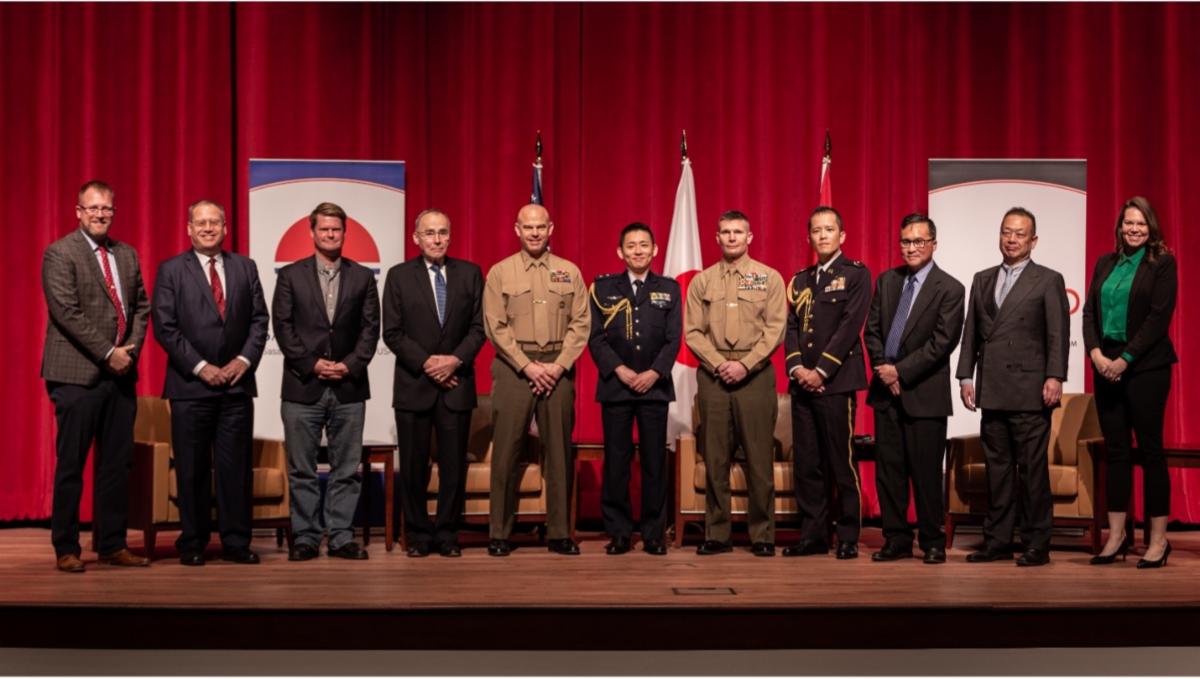
- Japan-U.S. Military Program (JUMP): JUMP Quantico
- Japan-U.S. Military Program (JUMP): JUMP Honolulu
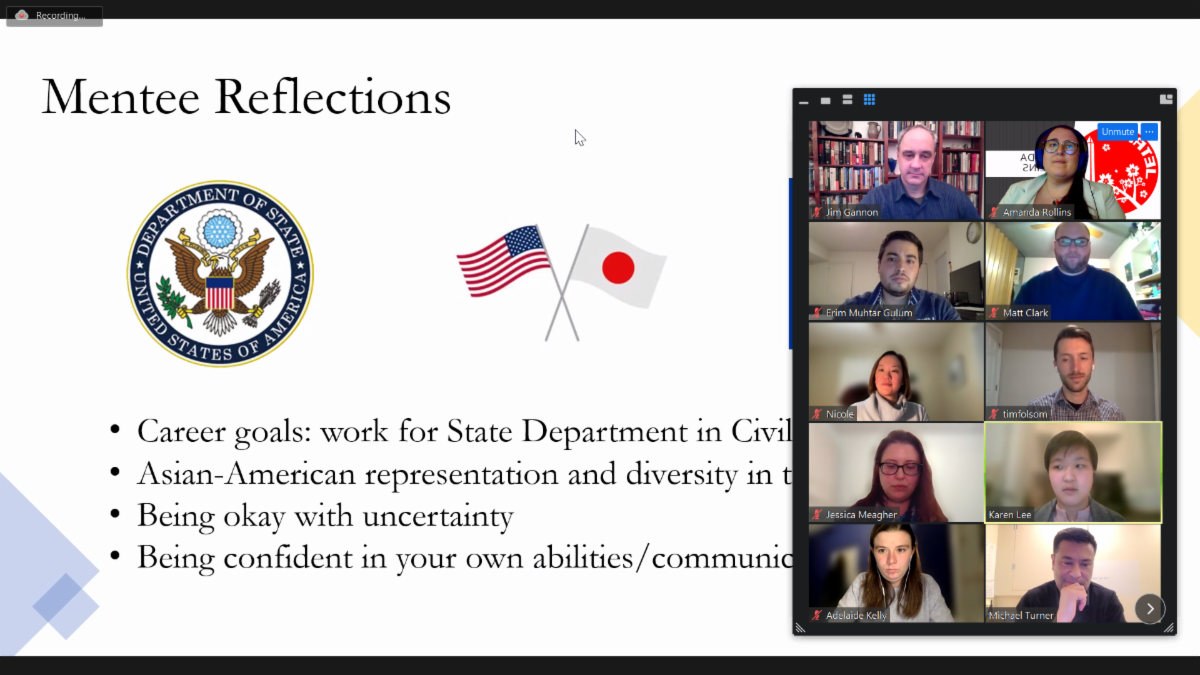
- JETAADC 2021-2022 Mentorship Program Closing Ceremony
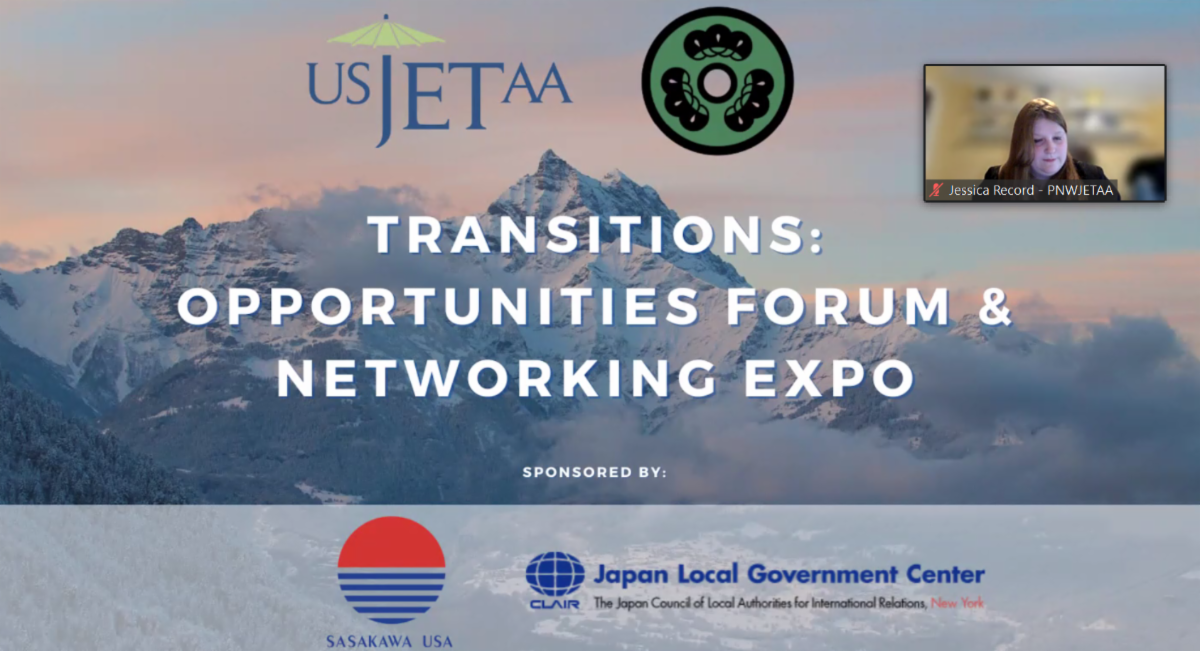
- PNW JETAA & USJETAA Transitions Career Forum
Recaps
- Policy Briefing: Requirements for Crafting Japan's New National Security Strategy with LtGen. Koichi Isobe
Publications
- Commentary & Analysis: Australia's Views of Europe in Indo-Pacific: Potential to Balance (Ms. Patton)
- Japan Political Pulse: Is a Grand Kochikai Possible? (Dr. Akimoto)
External Engagements
- Ms. Shanti Shoji Joins "Internships: Searching, Applying, and Tips for a Meaningful Experience" by U.S.-Japan Bridging Foundation
- US-Japan NEXT Alliance Initiative: Mr. James Schoff Joins "Geostrategic Outlook for Asia 2022" by the Japan Society Canada and the Canadian Chamber of Commerce in Japan
|
|
Message from Sasakawa USA's Chairman, Satohiro Akimoto |
|
“The holiday from history is over.” Former Secretary of Defense Robert Gates said in a recent television interview on Russian aggression on Ukraine.
Russian President Vladimir Putin certainly forced the international community to think about the fragility of peace and stability within a historical context. Putin clearly evoked historic images of a violent and merciless old Soviet Union, when he ordered Russian troops to invade Ukraine without any provocation. He also evoked historic images of strong and often brutal historic leaders of the country such as Ivan the Terrible, Peter the Great, Catherine the Great, Lenin, and Stalin. He seems to have succeeded to remind the world that Russia is Russia and some things fundamental to the nation never change.
As a matter of fact, it is not only a national security concern but also nationalistic pride to regain the greatness of the Soviet and Russian imperial existence from the ruins of the Cold War. As early as 2005, Putin declared that “the demise of the Soviet Union was the greatest geopolitical catastrophe of the century” in his annual state of the nation address to the parliament and the country’s top political leaders. He continued to say that, “As for Russian people, it became a genuine tragedy. Tens of millions of our fellow citizens and countrymen found themselves beyond the fringes of Russian territory. The epidemic of collapse has spilled over to Russia itself.”
President Putin is clearly not living within the accepted norms of the 21st century world order by trying to take control of Ukraine through military aggression. Putin had smaller successes when he waged two wars in Chechnya in the 1990s, staged a serious cyber attack against Estonia in 2007, invaded Georgia in 2008, and annexed Crimea in 2014, with little consequences. But this time may be different. Putin might have miscalculated the West’s resolve to prevent him from resetting the world order. Rather than driving the wedge in the West, Putin might have galvanized the West to form a unified front, including Germany, against Russia, even at severe economic costs.
Putin might have also miscalculated the reaction of China, a partner of Russia against the diplomatic and economic interest of the U.S. and its allies. Wang Yi, Chinese Foreign Minister made it clear in a video message at the Munich Security Conference in February that “the sovereignty, independence, and territorial integrity of every country must be safeguarded” and “Ukraine is no exception.” Wan Yi’s remarks must have disappointed Putin as he is certainly not willing to cross the only major ally which Russia keeps.
In addition, Putin might have miscalculated domestic and international grassroots opposition to unprovoked aggression against Ukraine. Ukrainian forces and civilians seem to be fighting bravely. There have been anti-Russian and anti-war demonstrations in major cities around the world, including those in Russia.
The Russian military is likely to overwhelm the Ukraine military and civilian fighters with its superior firepower. Russia may succeed in propping up a puppet regime, which aligns with the Kremlin. However, 100,000 to 200,000 soldiers are not enough to keep control of roughly 41 million people, who are largely hostile to Russia, in an area which is about the size of Texas. It is a grave concern that Putin put Russian nuclear forces on high alert under such circumstances.
The West, including Japan, seems to have more or less united in not appeasing to or accommodating Putin. Rather, they are determined to apply maximum economic pressure, including putting Putin himself on a sanctions list and cutting off major Russian financial institutions from Swift, the main international payment system. In addition, they are extending military support to Ukraine and are sending more military assets and personnel to the neighboring region. The best-case scenario is that the heavy costs of invading Ukraine, such as Russian domestic impoverishment from the West’s economic sanctions, rising Russian military and government casualties in Ukraine, and severe domestic and international protest, will eventually force Putin to give up ambitions in Ukraine. However, this scenario takes time and the West is challenged to maintain a strong unified stance vis-à-vis Russia.
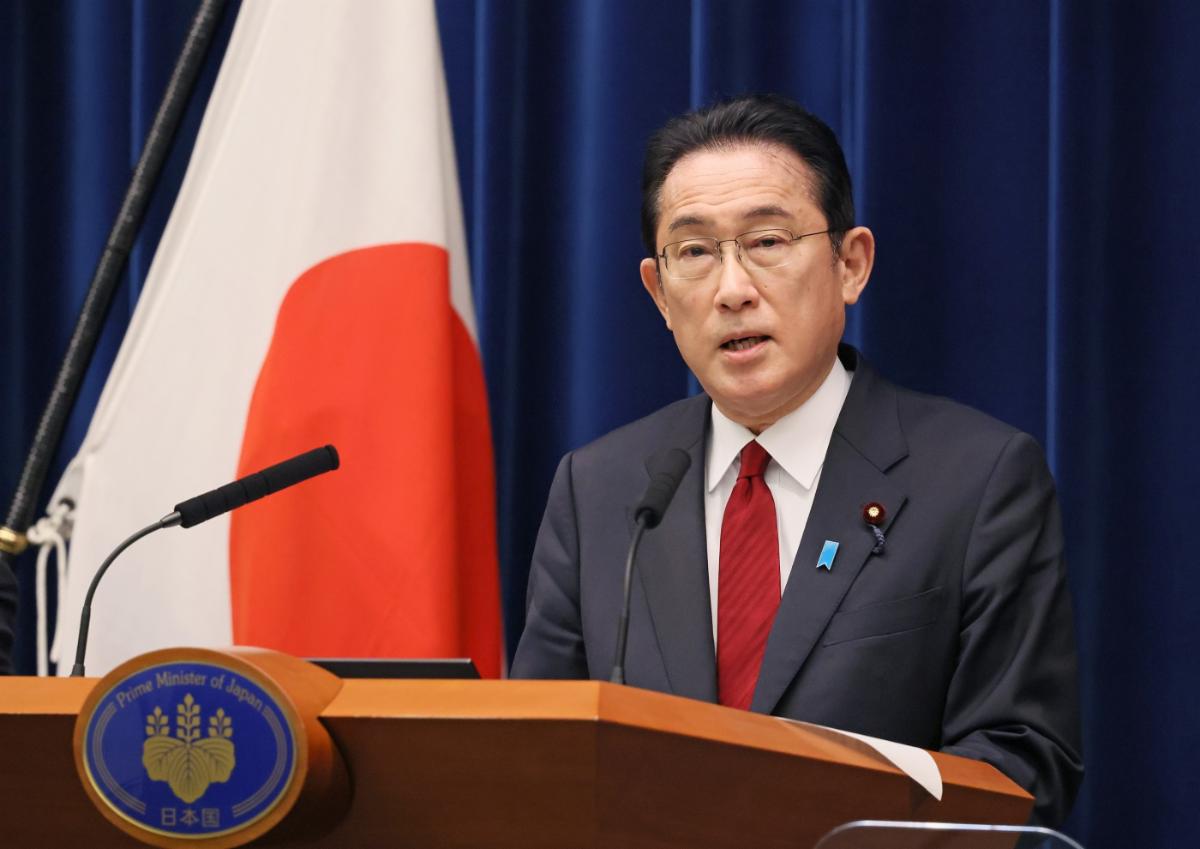
Former Prime Minister Abe usually receives high marks in areas of national security from U.S. policy makers on Asia. However, Russia seems to be an exception. Abe had 27 bilateral meetings with Putin, whom he had a rather strange chemistry with, but no tangible results were ever produced. As for Prime Minister Kishida, he seems to share no sympathy for Putin. He made the decision to join the West’s attempt to cut off Russia from the international financial system and global economy, including Swift banking system, and placed individualistic sanctions on Putin and Russian government officials. Prime Minister Kishida also agreed to support the EU for its energy needs by providing extra LNG, hedging against a Russian cutoff. Additionally, he decided to provide $100 million in humanitarian assistance to Ukraine. President Biden sent a letter of gratitude to Prime Minister Kishida for joining the U.S. efforts to deliver “massive consequences” to Russia.
The Biden administration released its Indo-Pacific Strategy last month. While it had a greater focus on Asia, as expressed in the “Pivot to Asia” or “Rebalance to Asia,” and is a welcoming development to Japan, President Putin’s blatant disregard for accepted international norms unfortunately reminds the U.S. and its allies, including Japan, of the necessity in forming a unified front to protect the post-Cold War world order, which the West toiled to establish based on shared values. This is going to be a long struggle, which will test the patience and resolve of the West, as there will not be any favorable solutions in the coming months. Prime Minister Kishida is expected later this year to set the foundation of Japan’s defense policy for the next 10 years by releasing the new National Security Strategy. This is an opportunity for Prime Minister Kishida to firmly establish himself as a respected leader in his own light, both domestically and internationally.
|
|
Policy Briefing: The EU's Strategy for Indo-Pacific Engagement with Mr. George Cunningham |
|
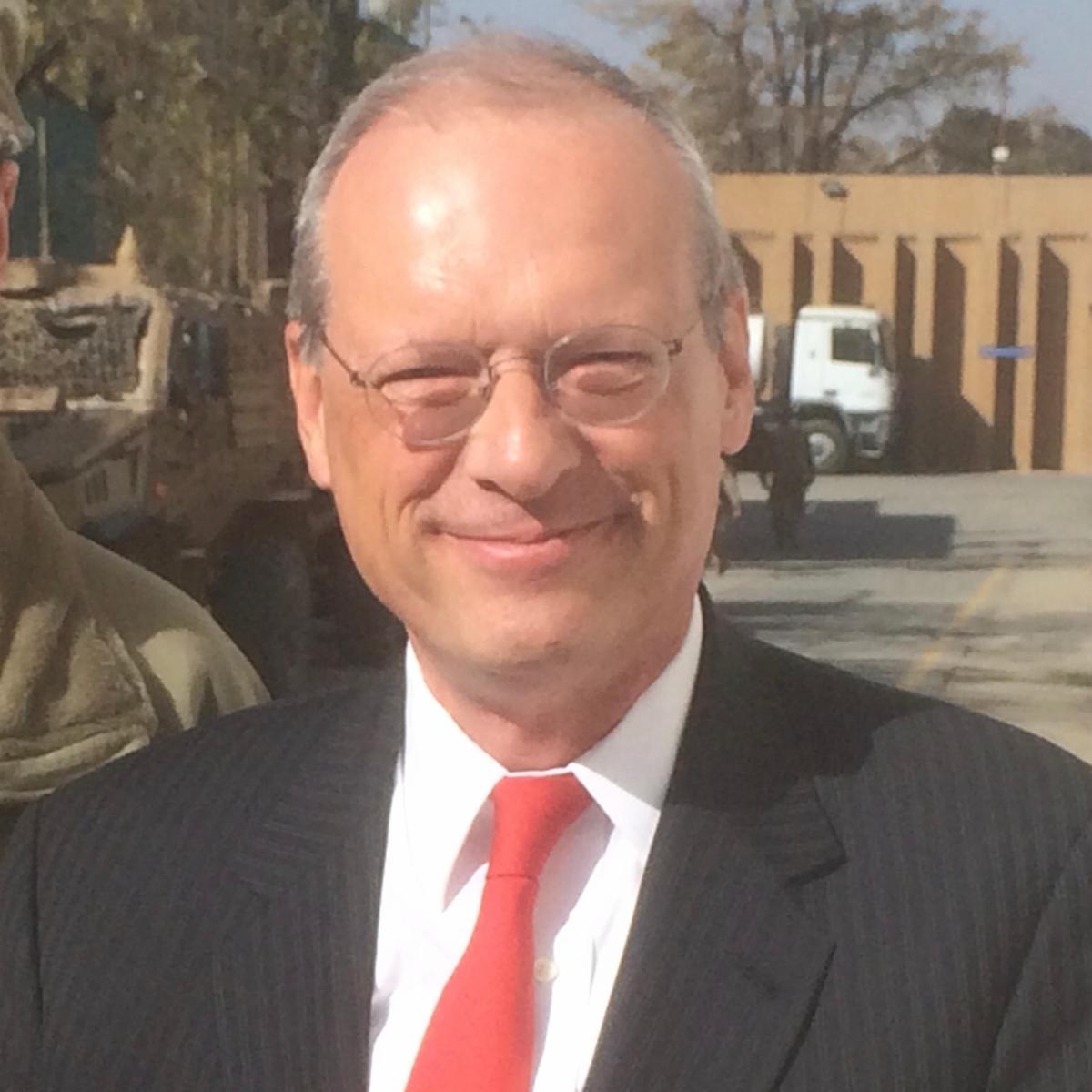
On February 28, Sasakawa USA hosted the virtual Policy Briefing, “The EU’s Strategy for Indo-Pacific Engagement.” This briefing featured Mr. George Cunningham, Former Strategic Adviser at the Asia-Pacific Department of the European External Action Service, for a discussion on the EU’s strategy for cooperation in the Indo-Pacific which is outlined in his recent paper published on Sasakawa USA’s website. He further touched upon the recent developments of the Ukrainian crisis and its potential impact on the EU’s strategy and the outcomes of the February 22, 2022 Ministerial Forum addressing specific challenges related to security and defense, digital connectivity, and global infrastructure development. The recap and video of the event will be available on the Sasakawa USA website in the coming weeks.
Photo: Mr. Cunningham
|
|
US-Japan NEXT Alliance Initiative: Alliance Options for Responding to a Taiwan Crisis |
|
On February 10, the US-Japan NEXT Alliance Initiative hosted a bilateral discussion on Taiwan. Sasakawa USA Senior Director Mr. James Schoff virtually hosted a small group of American and Japanese experts from think tanks, academia, and the ranks of retired members of the U.S. military and Japan Self-Defense Forces to exchange views on regional security, potential crisis scenarios involving Taiwan, and show how the allies might respond. The purpose of the dialogue was to identify the opportunities, vulnerabilities, and risks associated with an allied response to Chinese aggression against Taiwan. The recap of this event will be available on the Sasakawa USA website in the coming weeks. |
|
US-Japan NEXT Alliance Initiative: Reflecting Pool: What's 'NEXT' for the US-Japan Alliance? |
|
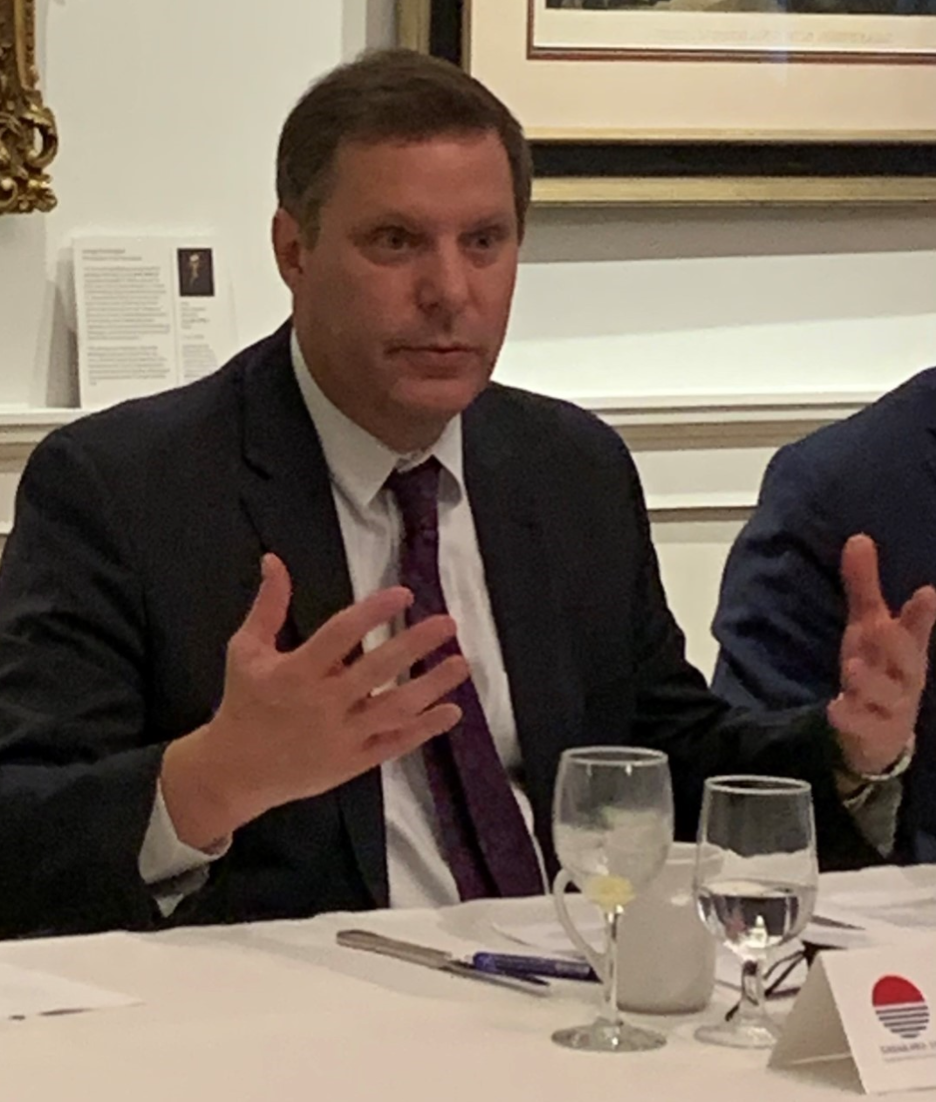
On February 18, The US-Japan NEXT Alliance Initiative hosted a “Reflecting Pool” roundtable to exchange views among current and former U.S. policymakers about emerging challenges for the U.S.-Japan alliance. Mr. Chris Johnstone, Director for East Asia at the U.S. National Security Council, helped open the discussion, as well as reflections upon his long government career involved with Japan and the broader Indo-Pacific. Sasakawa USA Senior Director, Mr. James Schoff, moderated the roundtable discussion that featured well over a dozen alliance specialists with expertise in education and intellectual exchange, government, business, security, and diplomacy.
Photo: Mr. Schoff
|
|
Sasakawa USA Emerging Experts Delegation (SEED): SEED Discussion with Dr. Michael Reich |
|
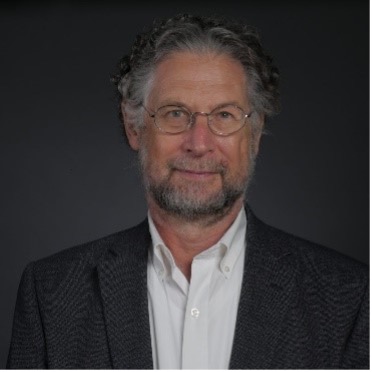
On February 16, Sasakawa USA hosted the third discussion for the SEED cohort, featuring remarks by Dr. Michael Reich, Taro Takemi Research Professor of International Health Policy, Harvard T.H. Chan School of Public Health. In his off-the-record remarks, Dr. Reich discussed Japan’s public health system and history of public sentiment regarding vaccines. The delegation will next meet with Professor Hitoshi Oshitani, Professor of Virology at Tohoku University Graduate School of Medicine and advisor for Japan’s COVID-19 response in March 2021. Sasakawa USA deeply appreciates the support Dr. Reich has provided in the development of this specific SEED program that is focused on bringing together emerging American experts in public health to learn about Japan’s response to COVID-19 and the wider public health system.
Photo: Dr. Reich
|
|
Congressional Program on U.S.-Japan and the Indo-Pacific (CPUSJ): Certificate Program in Partnership with the East-West Center for Washington |
|
CPUSJ began on February 7 and is set to conclude on March 3 after seven total sessions throughout the month of February. CPUSJ educates a handful of congressional staffers about the importance of the U.S.-Japan relationship and addresses opportunities for the two allies to work together in the Indo-Pacific. The seven sessions with prominent speakers are; U.S.-Japan Technological Partnership and Competition; Economic Challenges & Areas of Cooperation; U.S.-Japan Engagement with ASEAN and APEC; U.S.-Japan Frontier Defense and Technology Cooperation; Vaccine Diplomacy with information provided on the U.S. and Japan’s efforts; and Great Power Competition. Sasakawa USA partners with the East-West Center in Washington on this program. Please visit the Sasakawa USA website for more details. |
|
Japan-U.S. Military Program (JUMP): JUMP Quantico |
|
On February 11, JUMP hosted an event at Marine Corps University in Quantico, Virginia in its first partnership with the Marine Corps University and the Embassy of Japan. This event featured remarks on the U.S.-Japan security alliance by BGen Mark Clingan (USMC), Assistant Deputy Commandant, CD&I, Marine Corps University, and MG Hiroyuki Sugai (JASDF), Defense and Air Attaché, Embassy of Japan, as well as a panel of experts providing commentary on how to preserve peace and stability in the South China Sea.
Photo: Mr. Rob Peterson, Acting Director, Marine Corps History Division; Amb. Kurt Tong, Partner, The Asia Group; Sec. Randall Schriver, Chairman of the Board, Project 2049; LtGen. Wallace Gregson, USMC (Ret.); BGen Walker Field, USMC; MG Hiroyuki Sugai, JASDF; BGen Mark Clingan, USMC; Colonel Yusuke Kawachi, JGSDF; Dr. Christopher Yung, Academic Dean, Marine Corps War College; Dr. Satohiro Akimoto; Ms. Shanti Shoji, Sasakawa USA Director of Programs (Credit: Marine Corps University A/V)
|
|
Japan-U.S. Military Program (JUMP): JUMP Honolulu |
|
On February 22, JUMP co-hosted its Seventh Annual JUMP event virtually in partnership with the Japan-America Society of Hawaii, National Association of Japan-America Societies, and the Embassy of Japan. Titled “The Critical Role of the U.S.-Japan Alliance in the Pacific,” this JUMP event included observations of the U.S.-Japan alliance with the recent release of the Indo-Pacific Strategy from the Biden Administration from MG Suzanne Vares-Lum (USA, Ret.), President of the East-West Center, and a panel of next-generation leaders, moderated by Ms. Barbara Tanabe, owner and founder of Ho’akea Communications, LLC and JASH Board Director. JUMP continues to serve as a national program to connect past and present service members, families, and government civilians who have served in Japan through social networks and grassroots events. JUMP is the only national program to do so, providing a powerful foundation for sustaining the alliance between the United States and Japan. |
|
JETAA Florida Webinar on WWII Nisei Legacy |
|
On February 1, the JET Alumni Association of Washington, DC held a virtual Closing Ceremony to celebrate the conclusion of its 2021-2022 Mentorship Program, which is funded through the Sasakawa USA-USJETAA Mini-Grant Program for JETAA Chapters and Subchapters in the U.S. This year’s mentorship cohort consisted of ten pairs of mentors and mentees from a range of professional backgrounds, including individuals working in the media, think tanks, U.S. government, and universities. Mentors and mentees shared the valuable knowledge and new perspectives gained from their participation in the four-month program, emphasizing the importance of strengthening personal and professional ties between newly returned JETs and JET Program alumni with extensive career experience. JETAADC’s Mentorship Program will be used as a guideline for producing a virtual resource for other JETAA Chapters to replicate this program; information on this resource will be forthcoming on USJETAA’s website.
Photo: (from top left clockwise) Mr. Jim Gannon, Ms. Amanda Rollins, Mr. Matt Clark, Mr. Tim Folsom, Ms. Karen Lee, Mr. Michael Turner, Ms. Adelaide Kelly, Ms. Jessica Meagher, Ms. Nicole Uehara, and Mr. Erim Gulum
|
|
PNW JETAA & USJETAA Transitions Career Forum |
|
On February 5, Pacific Northwest (PNW) JETAA and USJETAA partnered to hold the 2022 Transitions Career Forum, a virtual career and networking event designed to help JET Alumni explore career options and receive advice from former JETs on how to apply their unique skillset to pursue professional opportunities in Japan. The event featured panelists from an array of professional backgrounds who shared insights on networking, professional development “post-JET,” and the job recruitment process in Japan. Sasakawa USA provided funding for the event’s keynote presentation by Mr. Ryan Armstrong, JET alumnus and Vice President of Aflac Life Insurance Japan Ltd. Mr. Armstrong provided remarks on the environment for American businesses operating in Japan and how JET alumni can leverage their unique skills to seek work in Japan. A recording of the event will be available on PNW JETAA's website in the coming weeks.
Photo: Ms. Jessica Record, Vice President of PNW JETAA
|
|
Policy Briefing: Requirements for Crafting Japan's New National Security Strategy with LtGen. Koichi Isobe |
|
On January 27, Sasakawa USA hosted the virtual Policy Briefing, “Requirements for Crafting Japan’s New National Security Strategy.” This event featured LtGen. Koichi Isobe for a discussion on the National Security Strategy Study Group’s (国家安全保障戦略研究会, Kokka Anzen Hoshō Senryaku Kenkyūkai) policy recommendation paper focusing on what the study group envisions for developing Japan’s National Security Strategy. The Hon. Randall G. Schriver provided commentary from the American perspective, welcoming the current trend in formulating a new strategic document in Japan. The recap and video of the event are available here. |
|
Commentary & Analysis: Australia's Views of Europe in the Indo-Pacific: Potential to Balance (Ms. Patton) |
|
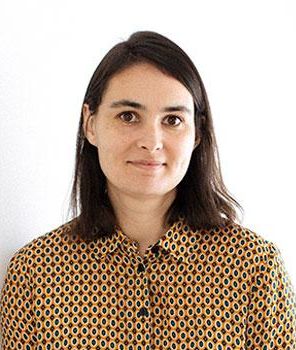
The second paper in the Commentary & Analysis series on Europe's evolving strategic vision for the Indo-Pacific is " Australia's Views of Europe in Indo-Pacific: Potential for Balance" by Ms. Susannah Patton, Research Fellow and Project Director of the Power and Diplomacy Program at the Lowy Institute in Sydney, Australia. Ms. Patton outlines three critical areas for further cooperation between Australia and Europe in the Indo-Pacific, recommending more institutional engagement, defense and security enhancement, and capacity building in development assistance. She concludes, “It is not clear whether Australia has conducted yet a thorough and objective assessment of the potential impact of this new cooperation with Europe. The contribution that European countries will make in maintaining a favorable balance in the Indo-Pacific remains to be seen.” You can read her paper here.
Photo: Ms. Patton
|
|
Japan Political Pulse: Is a Grand Kochikai Possible? (Dr. Akimoto) |
|
In his latest Japan Political Pulse article, “Is a Grand Kochikai Possible?” Dr. Satohiro Akimoto, Chairman and President of Sasakawa USA, provides insight on the history and lineage of Kochikai, the oldest existing faction within the Liberal Democratic Party (LDP). While four out of the first five leaders of Kochikai became prime minister, the faction has been through a period of stagnation after several splits. As a matter of fact, Prime Minister Kishida is the first prime minister from the Kochikai faction in almost 30 years. Dr. Akimoto points out that while Kishida faction is only the fourth largest faction in membership size within the LDP, if the split factions, namely the Aso faction, Tanigaki Group, and the Kishida faction work closely together to form an image of Grand Kochikai, Prime Minister Kishida’s support base within the LDP will be much more solid. This is a complicated situation for Prime Minister Kishida as he may not want to hurriedly re-establish a Grand Kochikai as a single faction as it may become unmanageable. You can read the article here.
|
|
Ms. Shanti Shoji Joins “Internships: Searching, Applying, and Tips for a Meaningful Experience” by U.S.-Japan Bridging Foundation |
|
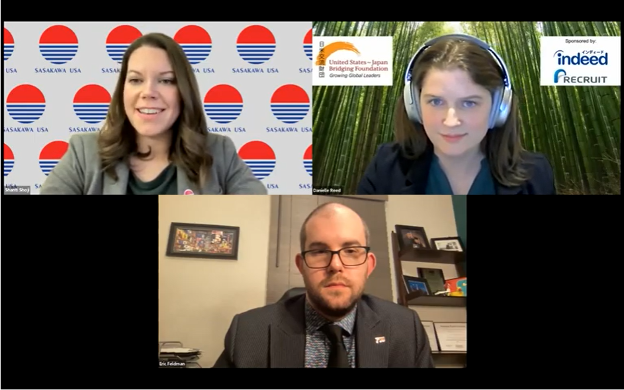
On February 15, Ms. Shanti Shoji, Sasakawa USA Director of Programs, spoke at the United States-Japan Bridging Foundation webinar on how to get the most out of U.S.-Japan related internships. Ms. Shoji highlighted the importance of relationship building, exploring the various facets of work in U.S.-Japan relations, and taking a deep dive into understanding the history and players in the field you are interning in. Practical tips on how to find, apply for, and secure internships were also provided by Mr. Eric Feldman, Associate Director at Florida International University in Washington, DC. You can view the webinar here.
Photo: (from top left clockwise) Ms. Shoji, Moderator Ms. Danielle Reed, Founder of PinPath LLC, and Mr. Feldman
|
|
US-Japan NEXT Alliance Initiative: Mr. James Schoff Joins “Geostrategic Outlook for Asia 2022” by the Japan Society Canada and the Canadian Chamber of Commerce in Japan |
|
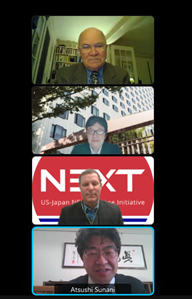
On February 16, Sasakawa USA Senior Director James Schoff was a featured panelist at the latest “Geostrategic Outlook for Asia 2022” event organized by the Japan Society of Canada and the Canadian Chamber of Commerce in Japan. The seminar was sponsored by the National Association of Japan-America Societies (NAJAS) and the Sasakawa Peace Foundation. Mr. Schoff focused his remarks on the nexus of traditional and economic security in Asia as viewed by Washington and what it means for the U.S.-Japan alliance. Professor Shino Watanabe of Sophia University provided a Japanese perspective for a virtual audience of over 100 scholars, officials, and businesspeople from Japan, Canada, and the United States. Together, they explored the delicate balance between sustaining valuable economic relationships amid intensifying strategic competition.
Photo: (from top to bottom) Mr. Peter Kelley, President of NAJAS; Professor Watanabe; Mr. Schoff; and Dr. Atsushi Sunami, President of Sasakawa Peace Foundation
|
|
Sasakawa Peace Foundation USA
1819 L Street, NW
Suite 300
Washington DC 20036
202.296.6694
|
|
|
|
|
|
|