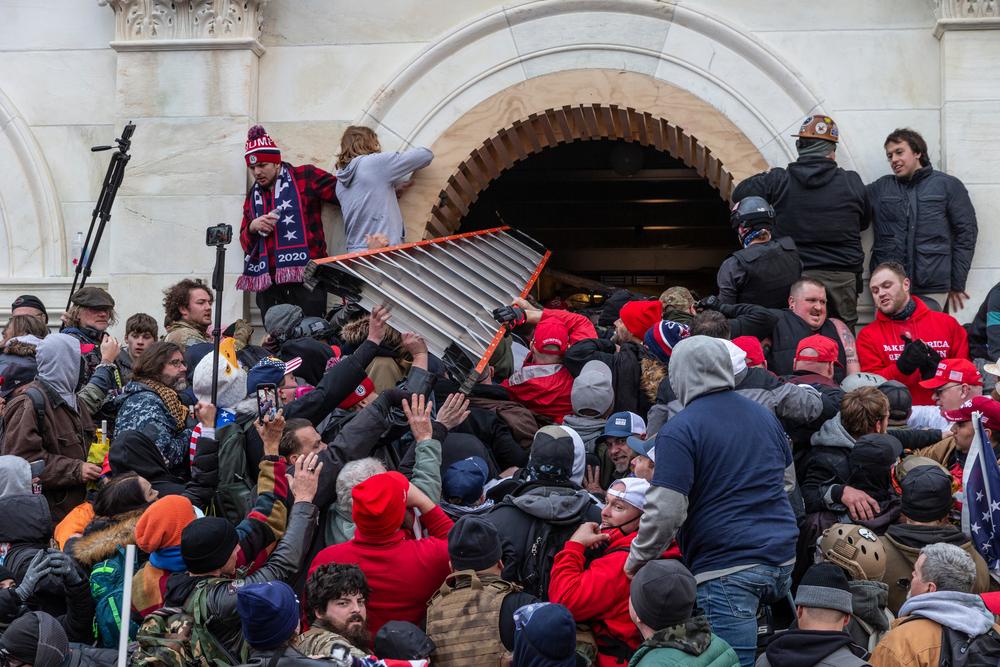
Jan. 6, 2021 marked a day in American history that no one imagined happening: a modern-day civil war riot. The attack on the U.S. Capitol left many people angry, worried and confused … NEBHE Senior Fellow Charles Desmond and environmental expert Thomas Jorling, both advisors to the law firm Murphy, Hesse, Toomey & Lehane, LLP, explain why the real heroes that day were the "dedicated individuals, many of whom are volunteers, [who] check voter registration lists, distribute and oversee collection ballots, monitor the physical security of the ballot boxes and machines and count ballots, all with a profound sense of the critical importance of the process." Desmond and Jorling add: "Unlike the president and his enablers, these workers, and the thousands who stood in line for hours to exercise the right to vote, revere our Constitution and the central role free and fair elections play in assuring the future of this country we call the United States of America. These patriotic citizens do not seek recognition; they consider it their civic duty to assist in ensuring that each federal, state or local election adds to the promise of government of, by and for the people."
|
|
|
More from The New England Journal of Higher Education ...
|
|
|
The latest Coronavirus Response and Relief Supplemental Appropriations Act (CRRSAA) creates a Higher Education Emergency Relief Fund known as HEERF II. How should institutions use this funding? Former UMaine System Chancellor Richard Pattenaude explains that while providing immediate financial support to students is critical, so is strengthening the institutions they attend. "Beyond simply replacing lost tuition or room and board funds, some institutions are exploring creative ways to use the funds in ways that increase the effectiveness of their online programs—and provide better support for students in the process," he notes.
|
|
|
How did we arrive at our current chaos? Tom Mortenson, the longtime publisher of the newsletter Postsecondary Education Opportunity and friend of NEJHE, hates to say it, but he has been warning for years about the trends that underlie the current upheaval in politics and higher education. Chief among these issues: income inequality surging ahead unchecked; men disengaging from the labor force and family life; higher ed becoming an engine of division, enriching the rich and leaving everyone else out; and the selective college admissions system as outright class warfare.
|
|
|
NEBHE Welcomes Two Diversity, Equity and Inclusion Fellows
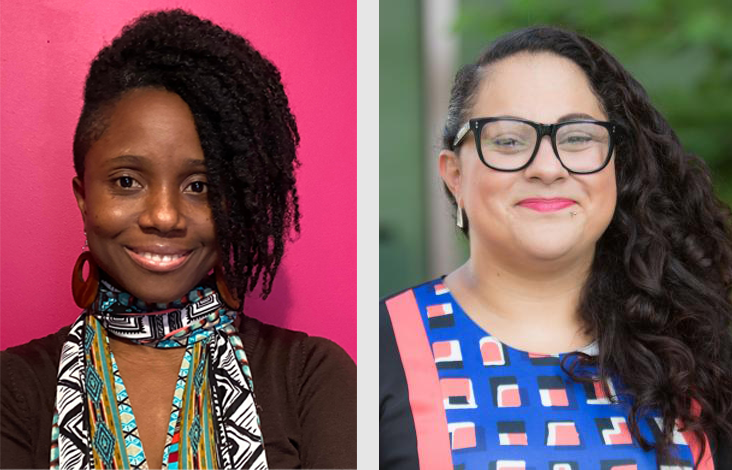
NEBHE appointed Kamille Gentles-Peart (left) and Tatiana Cruz (right) as new fellows to help develop a regional strategy to expand faculty diversity and other equity and inclusion efforts.
Gentles-Peart is an associate professor of communication and media studies at Roger Williams University. Her work centers Black women and the ways in which they negotiate and decolonize beauty and body politics in African diasporas. She is the author of Romance With Voluptuousness: Caribbean Women and Thick Bodies in the U.S. Among other initiatives, she co-designed the Diversity and Inclusion Fellows program at the university. She received an Andrew Mellon grant to participate in the Council of Independent Colleges institute for diversity and inclusion. She also co-founded the Collaborative for the Research on Black Women and Girls, aiming to change existing narratives in the African diaspora. A frequent commentator on diversity issues, Gentles-Peart earned a bachelor’s degree from the City University of New York (CUNY) and a doctorate and a graduate teaching certificate in women’s studies from the University of Michigan.
Cruz is a first-generation college graduate who earned her bachelor's degree in history and American studies from Williams College, then went on to earn a master's in history, a graduate certificate in African American and diaspora studies and a doctorate in history from the University of Michigan. Her research examines the history of African American and Latinx racial and political identity formation, community development and mobilizations for racial justice in the postwar urban north. She recently returned from a sabbatical granted through a Career Enhancement Fellowship funded by the Institute for Citizens and Scholars (formerly known as the Woodrow Wilson National Fellowship Foundation).
At NEBHE, the fellows will provide the vision, leadership and development of a regional strategy related to expanding faculty equity with activities, including helping to curate content for relevant convenings, research and policy work related to faculty diversity.
Currently, more than one-third of America’s college students are people of color. But only about 5% of college faculty are African-American, about 3% are Hispanic and about 1% are Native American.
"Expanding faculty diversity is a necessary condition for achieving equitable attainment outcomes for students of color, truly inclusive institutions and highest-quality learning for all," said NEBHE President and CEO Michael K. Thomas. "As NEBHE works to expand its leadership on these critical issues, the contributions of Kamille and Tatiana will be essential."
|
|
|
The Massachusetts Guarantee ensures acceptance at a participating institution for associate degree-holding students who have met a minimum GPA requirement of 2.5. The Massachusetts Guarantee landing page is a navigational resource for community college graduates seeking to transfer to a four-year institution to earn their bachelor’s degree. |
|
|
The number of students nationwide enrolled in distance education programs rose to nearly 3 million in fall 2019, a 7.5% increase over 2018 enrollment data, according to the most recent report by the National Council for State Authorization Reciprocity Agreements (NC-SARA). And that’s before the COVID-19 pandemic prompted an unprecedented shift to virtual course delivery!
|
|
|
Friday, Jan. 29 • 12 noon to 1:15 p.m. Eastern
Join NEBHE's panel of esteemed experts to discuss the far-reaching implications of WICHE's latest Knocking at the College Door report on high school demography and college enrollment. Panelists will include: report co-author Patrick Lane, vice president of WICHE's Policy & Research Division; Paul Reville, professor at the Harvard Graduate School of Education and former secretary of education in Massachusetts; G. Duncan Harris, CEO of Capital Community College in Hartford; Edinaldo Tebaldi, professor of economics at Bryant University; and Lisa Ellrich, director of admissions at the University of Maine Farmington and delegate to the National Association for College Admissions Counseling. To read NEBHE's New England-focused analysis of the data, click here. To register for the webinar, click here.
|
|
|
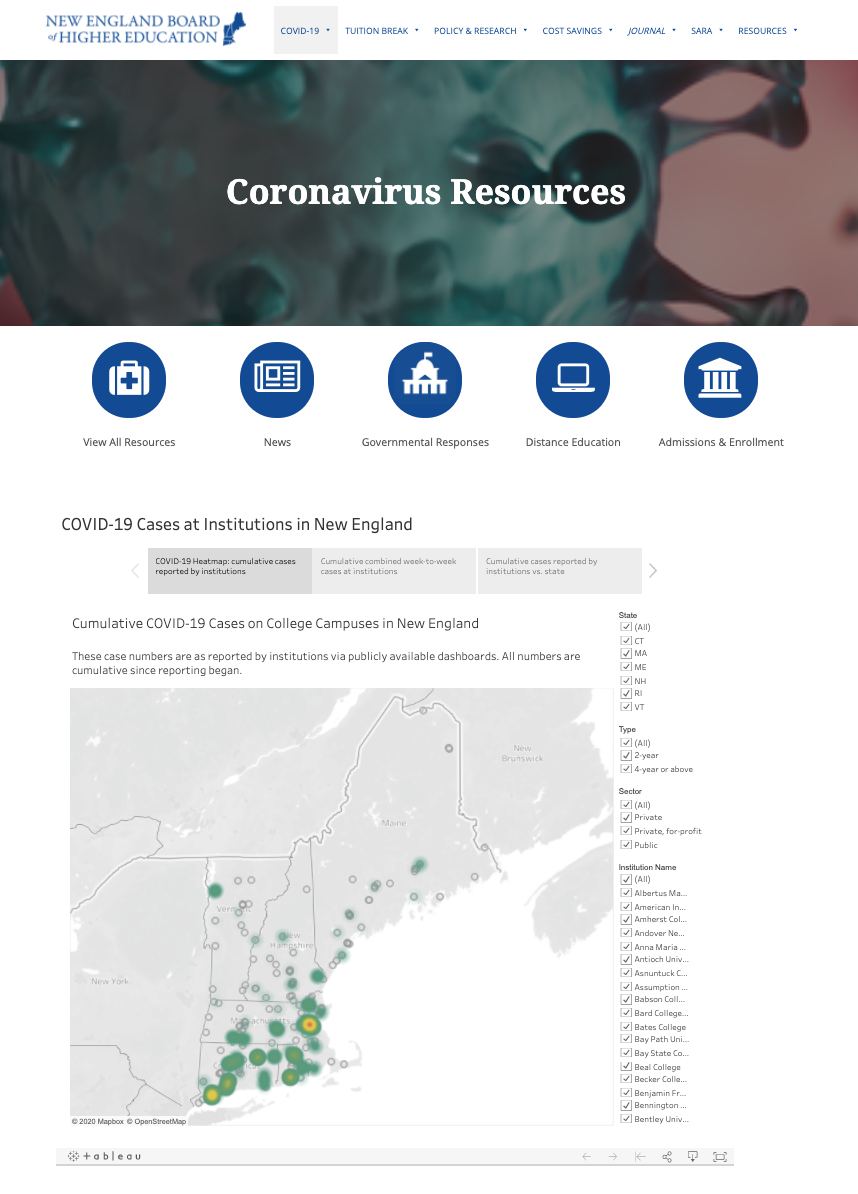
NEBHE's Tracking Coronavirus web resource features an easy-to-use display showing institutions' plans for the fall in light of COVID-19. It also details institutions' healthcare capacities and their proximity to external healthcare resources. Also find links to: COVID-19 News; Governmental Responses, Guidance & Advocacy; Distance Education Resources & Compliance; Institutional Finance Information; and Admissions and Enrollment Information. Please share updates from your institution at: cpeyser@nebhe.org.
|
|
|
NEJHE NewsBlast is a summary of NEJHE content and other news around NEBHE prepared weekly by NEJHE Executive Editor John O. Harney and emailed every Wednesday to opinion leaders and practitioners. When responding to NEJHE content, please make sure that your remarks are relevant, courteous and engaging. Individuals are responsible for their comments, which do not represent the opinions of the New England Board of Higher Education. We urge commenters to briefly note their occupational or other interest in the topic at hand. Please refrain from offensive language, personal attacks and distasteful comments or they may be deleted. Comments may not appear immediately. Thank you for staying engaged.
|
|
NEJHE NewsBlast is sponsored by
|
|
For more information about partnering with NEBHE, click here
or send an email message to our events coordinator Marla Phippen.
|
|
© 2020 New England Board of Higher Education |
|
|
|
|
|
|
|