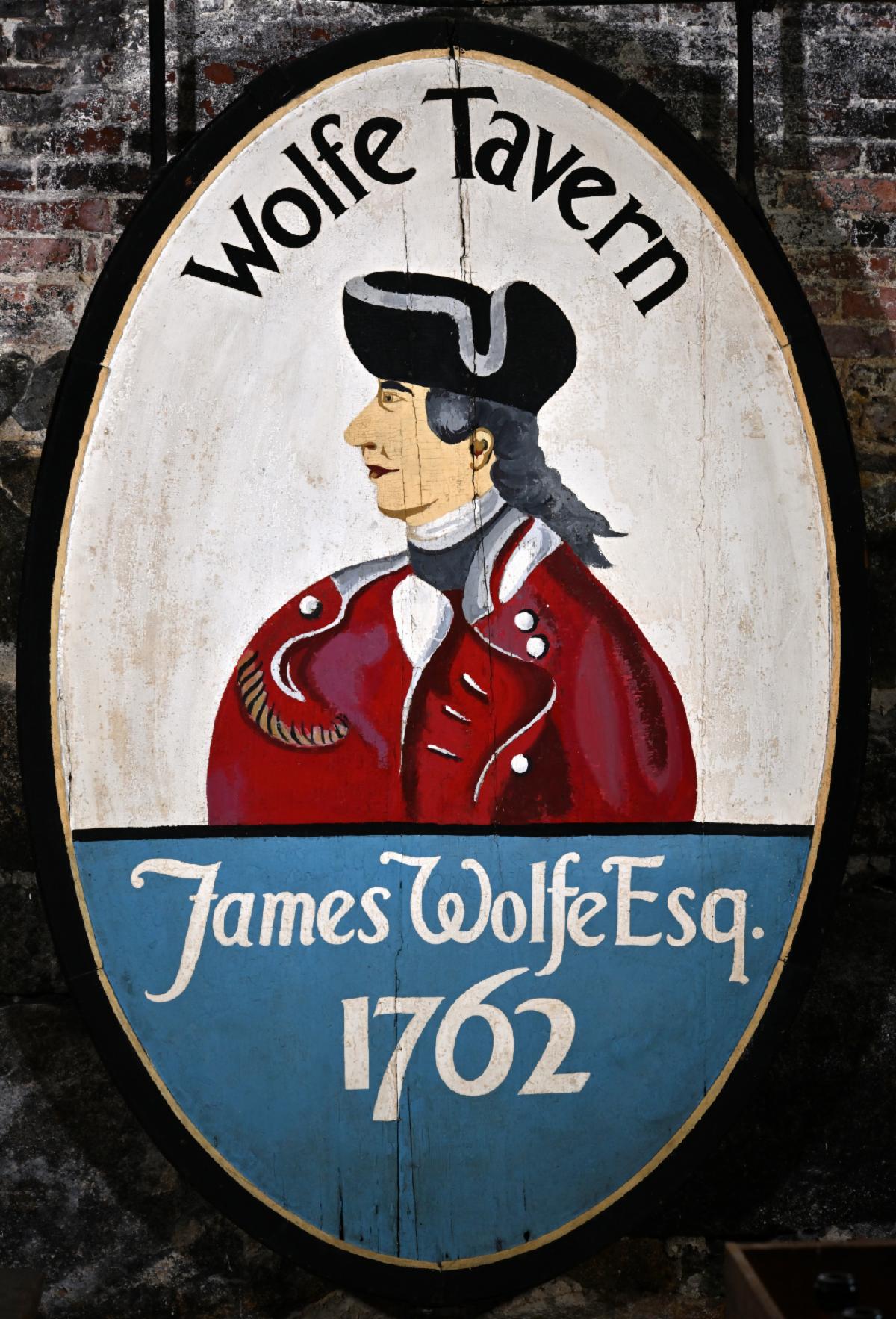
The tell-tale tavern sign was a welcome sight for weary travelers, news-starved farmers, hungry townspeople and thirsty militia men.
A public house in Colonial New England, alternatively called an “inn” or an “ordinary” depending on the fare and lodgings available, was much more than simply a place to grab a beer. It functioned as a meeting space, a platform for local politics, a place of entertainment, and sometimes even a courthouse.
Because of the central role they occupied in the social structure of Massachusetts towns, taverns were among the most highly regulated of early American enterprises. The tavernkeepers had to be certified by local selectmen as men or women "of good character." Once a tavernkeeper had received a license and put up a sign, they were bound by law to perform the public duty of keeping an orderly house. They could even be prosecuted for not providing suitable provisions or over-serving patrons; if convicted, they would lose their license and have their sign taken down by local law enforcement.
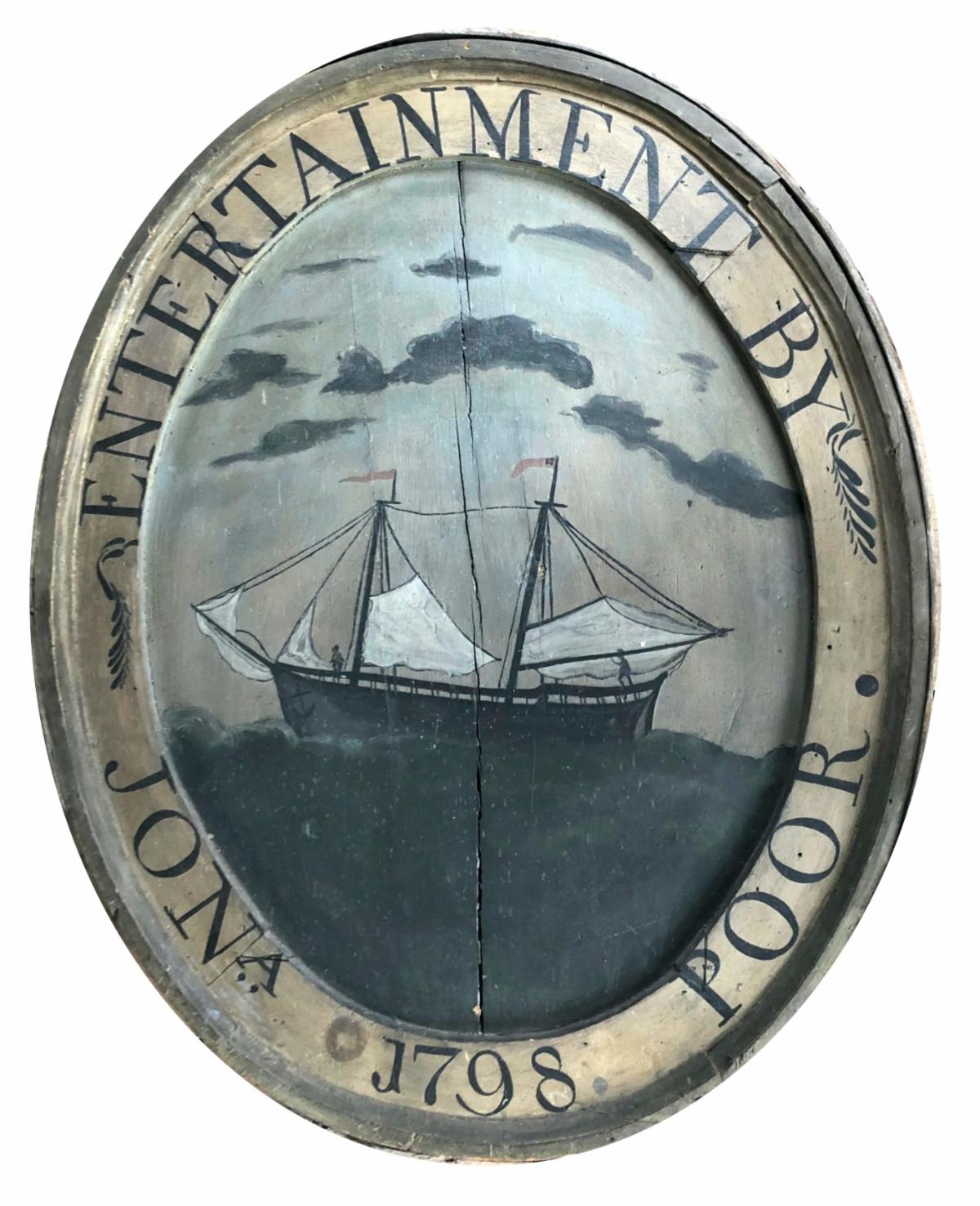
The museum is fortunate enough to have in its collection a sign from the Poor Tavern on Newbury Neck, just south of the Parker River.
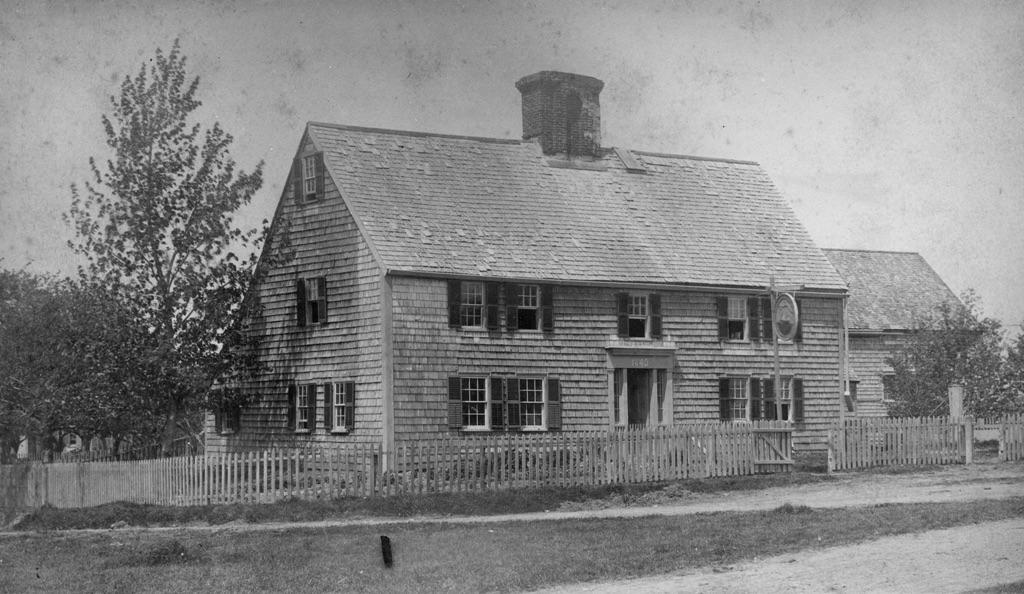
The dwelling was originally constructed by English immigrant John Poor in the mid-17th century and consisted of only one square room, or hall, on the ground floor with a chamber above it. Subsequent generations added on large additions including an equally sized parlor and chamber, an ell and a lean-to in the back. When this was roofed, it created the distinctive steeply pitched “salt-box” shape that was so common in early architecture of the area (see image below from the museum's collection).
This dwelling would have stood on the main thoroughfare from Boston to Portsmouth, marking the half-way point between the town centers of Rowley and Newburyport.
A century after it was built, it provided the perfect location for Captain Jonathan Poor to conduct a tavern in the later part of the 18th century, “handy for freight teamsters and others on the highway…to drop in and ‘wet their whistle’ in dusty summer or warm up in cold winter.”
The Captain was known and respected as a local militia leader who answered the call to arms on April 19, 1775. He led a group of men south to aid in the fight “against ministerial troops” in the Battle of Lexington and Concord. This, along with his marriage to Sarah Dole in 1759, put him in good enough social standing to procure a license to run a public house and the right to hang his sign of business along the thoroughfare.
He ran the tavern until his death in 1807. Sadly, the business died with him when the Newburyport Turnpike, which was constructed in 1805, began to draw travelers to a new route.
The iconic swinging tavern sign fortunately was preserved by the Newburyport Marine Society and later the Historical Society of Old Newbury even after the Poor Tavern was torn down in the spring of 1890.
Want to learn more about taverns in Colonial New England? Visit our friends at the Custom House Maritime Museum. The current exhibit “Entertainment for Man and Horse: Victuals Libations and Distractions in an Early American Tavern” is an experience, providing artifacts and images that immerse visitors in the world of public houses. Visit their website to reserve tickets here.