Rail & Labor News from RWU
| |
Weekly Digest Number 34 - August 20th, 2024 | |
Welcome to the RWU Rail & Labor News! This news bulletin is produced and emailed out each Tuesday morning. We hope you find each week's news and information useful. If so, please share with co-workers, friends, and colleagues. If you like, you can sign them up to get all the news from RWU HERE. Or forward them the link. Got a hot tip? Please forward the article and a link to raillabornews@gmail.com. Note: If you read over this news bulletin each week, you will be sure to never miss the important news of what is going on in the railroad world from a worker's perspective! | |
THIS WEEK'S RAIL AND LABOR NEWS | |
Editor's Note: Just like in the U.S. in the fall of 2022, the rail unions are asking for so little and are being stonewalled by the Class Ones. It will be a great day when the government demands that the carriers give the workers what they want, rather than risk a national freight rail shutdown. Don't hold your breath for this to happen anytime soon. | |
Progressive Railroading / August 12
Following the Canada Industrial Relations Board’s (CIRB) Aug. 9 decision that did not bring the labor conflict with the Teamsters Canada Rail Conference (TCRC) closer to a resolution, CN is formally requesting the Canadian Minister of Labor’s intervention under the Canada Labor Code to protect Canada’s economy from the impacts of prolonged uncertainty, CN announced late last week. The CIRB’s decision cleared the way for a work stoppage on CN and CPKC. “Unless there is immediate and meaningful progress at the negotiating table or binding arbitration, CN will have no choice but to begin a phased and progressive shutdown of its network, starting with embargoes of hazardous goods, which would culminate in a lockout” starting Aug. 22, CN officials said in a press release. CPKC announced on Aug. 9 that it would issue TCRC a lockout notice effective Aug. 22 if union leadership and the company cannot come to a negotiated settlement or agree to binding interest arbitration. CIRB's decision determined that no services must be maintained during a rail strike or lockout to protect Canadian public health and safety. The CIRB also ordered a 13-day extension of the cooling-off period which ends Aug. 22
| |
Editor's Note: We would hope that Brightline - after receiving millions in tax dollars to build out its west operation between LA and Las Vegas - would make nice with its workforce in Florida as they work towards unionization. Out west, the company agreed to voluntarily recognize strictly union workers. It would be a cynical and completely unacceptable move for Brightline to now go to war with its existing employees in Florida. | |
Orlando Weekley / August 8
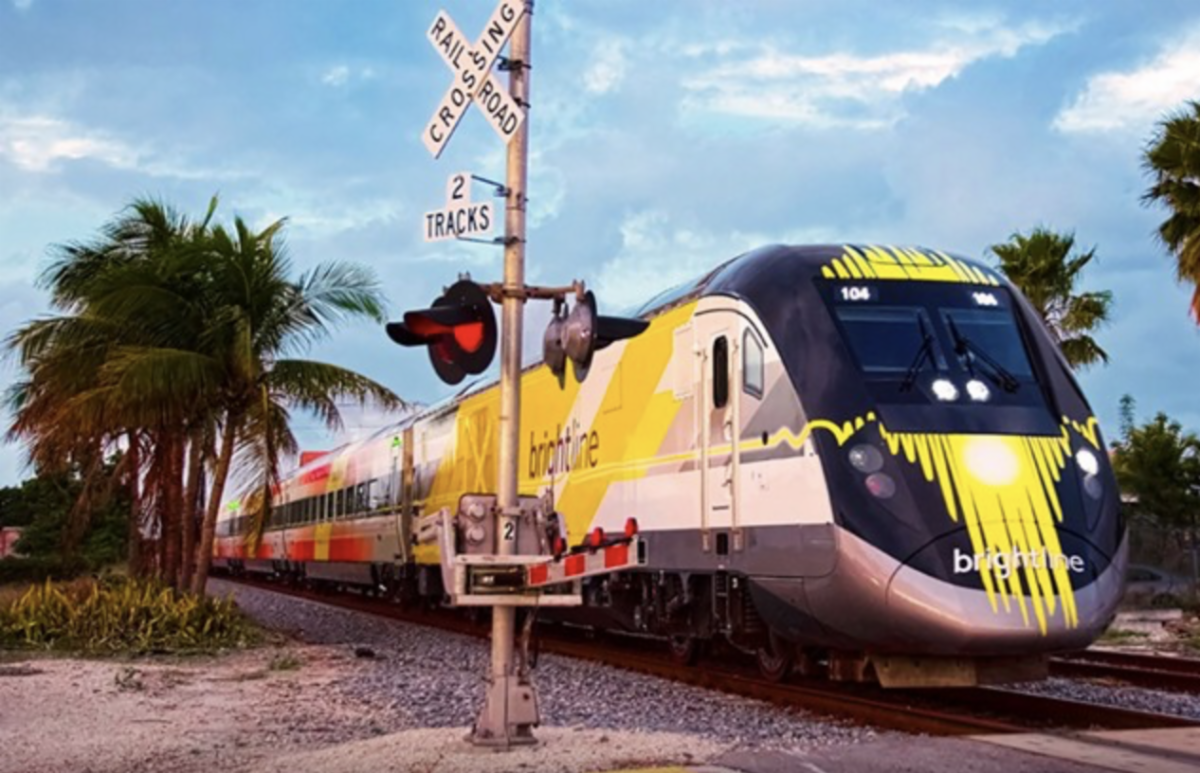
Just over 100 on-board attendants for Brightline Florida, including workers in Orlando, have begun the process of unionizing with the Transport Workers Union, an international labor union that represents more than 155,000 workers across the airline, railroad, transit and related sectors in the United States. It's a historic effort by the workers in a state generally considered hostile to labor unions, where less than 5 percent of the private sector workforce has union representation. According to the Transport Workers Union, a majority of the lead attendants and on-board attendants for Brightline Florida, who work on the Orlando-Miami line, have signed cards in support of unionization, submitted to the National Mediation Board
| |
Editor's Note: Switching rail cars in yards can be dangerous work. In recent years a number of very young, least senior workers have been killed or maimed in switching accidents. When the final report of NTSB is issued, look for inexperience, lack of training/mentoring. Other related issues could be fatigue, long hours, lack of time off work, etc. | |
Trains / August 9
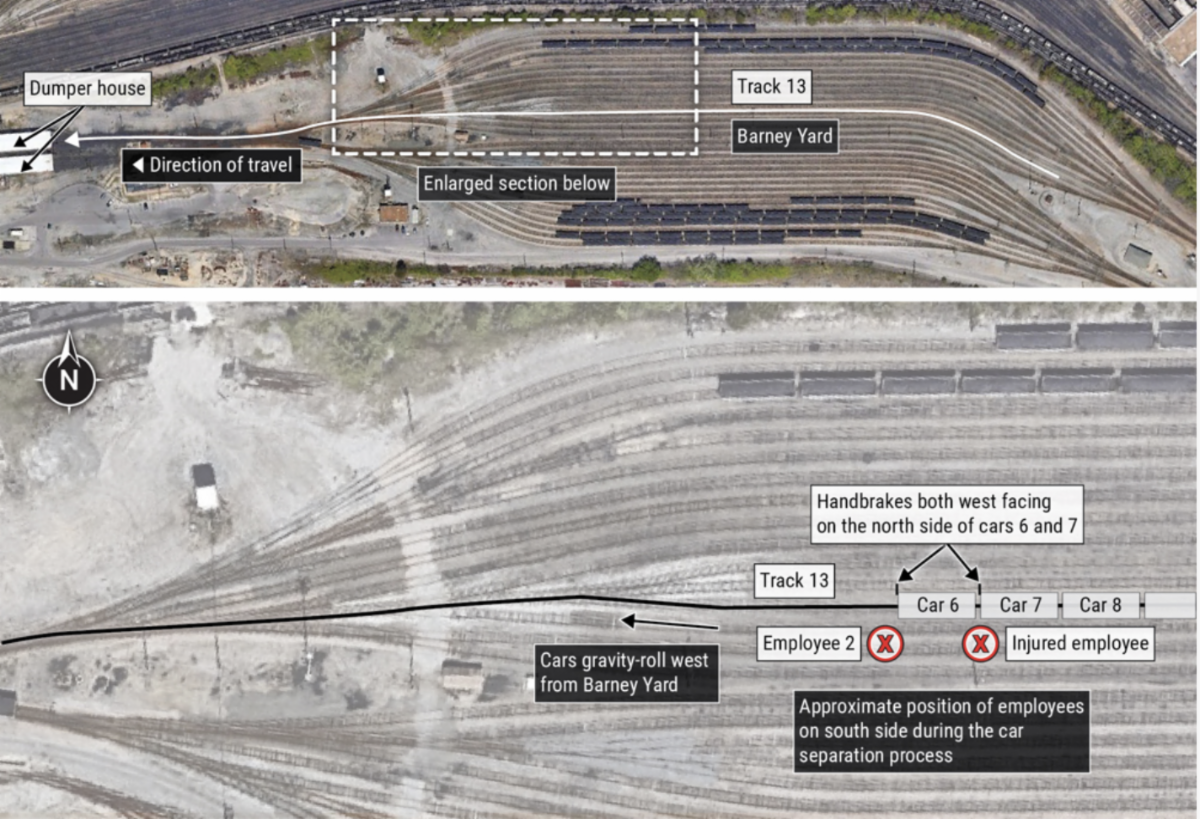
A Norfolk Southern conductor had his lower right leg and lower right arm amputated when run over by a railcar at the company’s Lambert’s Point Yard, the National Transportation Safety Board said in the preliminary report on a July 19 accident in Norfolk, Va. The incident occurred about 12:35 p.m. The conductor was part of a crew preparing to release a loaded car at a gravity-fed switching facility when another car unexpectedly began to roll in his direction. The employee’s two-person crew had released five cars from Track 13 at the Barney Yard section of the yard without incident and was working to release the sixth car when the uncoupled seventh car began to roll, striking the conductor, who was transported to a local hospital for treatment.
|
|
Editor's Note: It is very difficult to unseal a rail union president in most rail unions. Most elections in the rail unions are by Delegates at Convention. It is probably no coincidence that the only two unions that provide for a one-member-one-vote direct election for top officers - the BLET and IAM - saw the top officers deposed by insurgents since the 2022 national freight contract debacle. Just check the lopsided vote totals in this article: 952 -to - 45. | |
Progressive Railroading / August 13
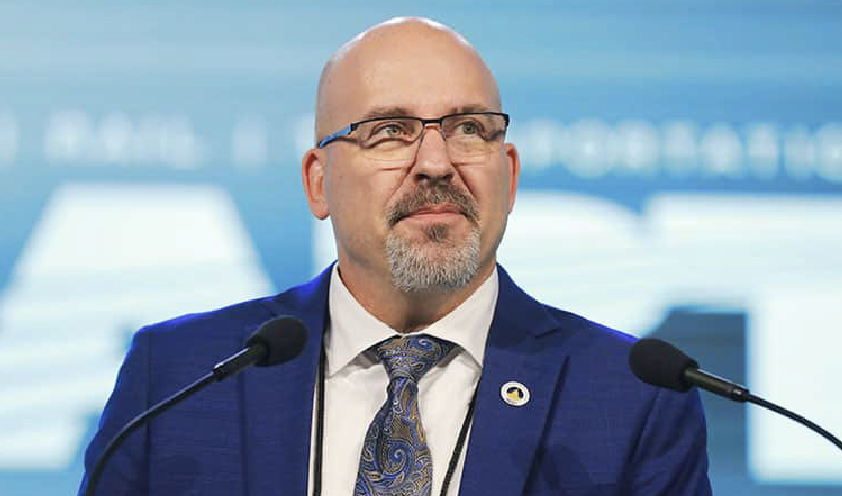
Jeremy Ferguson of Local 313, Grand Rapids, Michigan, has been reelected president of the Transportation Division of the International Association of Sheet Metal, Air, Rail, and Transportation Workers’ Transportation Division (SMART-TD). His second five-year term as the leader of the United States’ largest railroad and transit union begins Oct. 1. Ferguson was challenged for the office by attorney Terry Smith, a member of Local 794, Wellington, Kansas. Ferguson won reelection with 952 to 45 votes, SMART-TD officials said on Aug. 11 in a news release.
| |
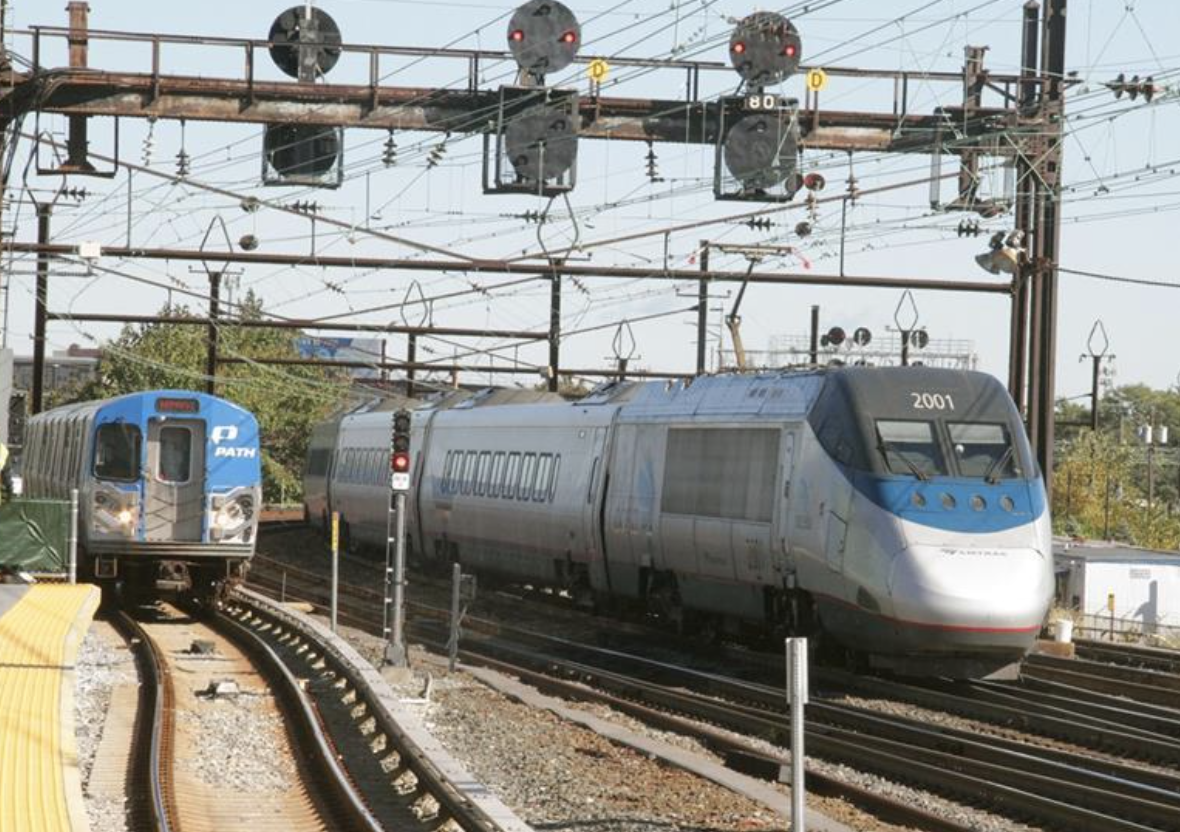
Editor's Note: While the Northeast Corridor is the showcase rail corridor in the U.S., it is woefully out of date and in dire need of updating and modernizing to the tune of tens of billions of dollars. Progress is being made finally, but there is an incredible amount of work to be done. | |
Amtrak / August 9
Amtrak is investing $260 million for track infrastructure improvements during the summer months, along with other ongoing work. These investments, a 109% increase from last year’s summer infrastructure renewal work, are fundamental to improving service to support the railroad’s ambitious goal of doubling annual ridership to 66 million by 2040. Project specifics include replacing more than 75,500 railroad ties and 32 track miles of rail, improving track stability to more than 170 miles of track, and renewing more than 35 track switches.
| |
Editor's Note: There are far too many railroad bridges collapsing in recent years. Three come to mind this year alone already. Could it be because so many were constructed over a century ago? And that the railroads are alone supposed to inspect and maintain them? And that this cuts into their short-term profit picture? Now there is legislation pending in the U.S. for inspection and maintenance standards. Watch the rail industry fight against its passage. | |
|
Trains Magazine / August 14
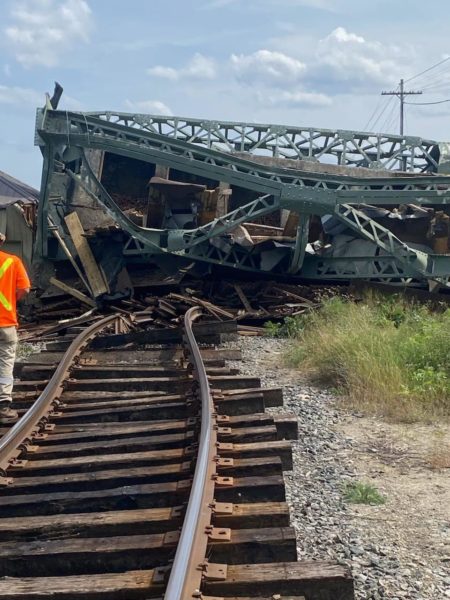
A Canadian National Railway lift bridge in Fort Frances has collapsed, the website NWOnewswatch.com reports. CN said in a statement to website operator Dougall Media on Wednesday, Aug. 14, that it was responding to “an incident” involving the bridge across the Rainy River that provides its connection to the Port of Thunder Bay, Ont., and that the waterway was blocked. The railroad said no train was involved in the incident and that the cause was under investigation.
In a statement on Thursday, Aug. 15, the railroad said its crews have begun repairs on the bridge, which “remains closed until further notice. Environmental crews have contained and are recovering a release of biodegradable, non-toxic hydraulic oil related to the incident.
| |
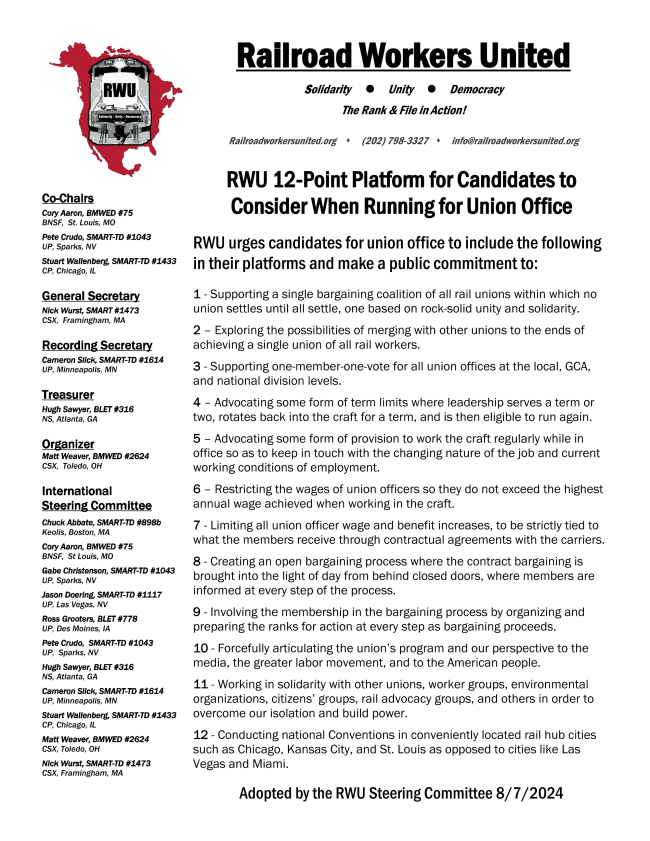
Editor's Note: As discontent with the status quo mounts, more and more rank and file workers are bound to become interested in running for union office. RWU knows that change takes more than just personalities at the top but institutional and cultural change as well. These 12 ideas for assisting with that all important change are outlined in the special bulletin and bi-fold flyer below. | |
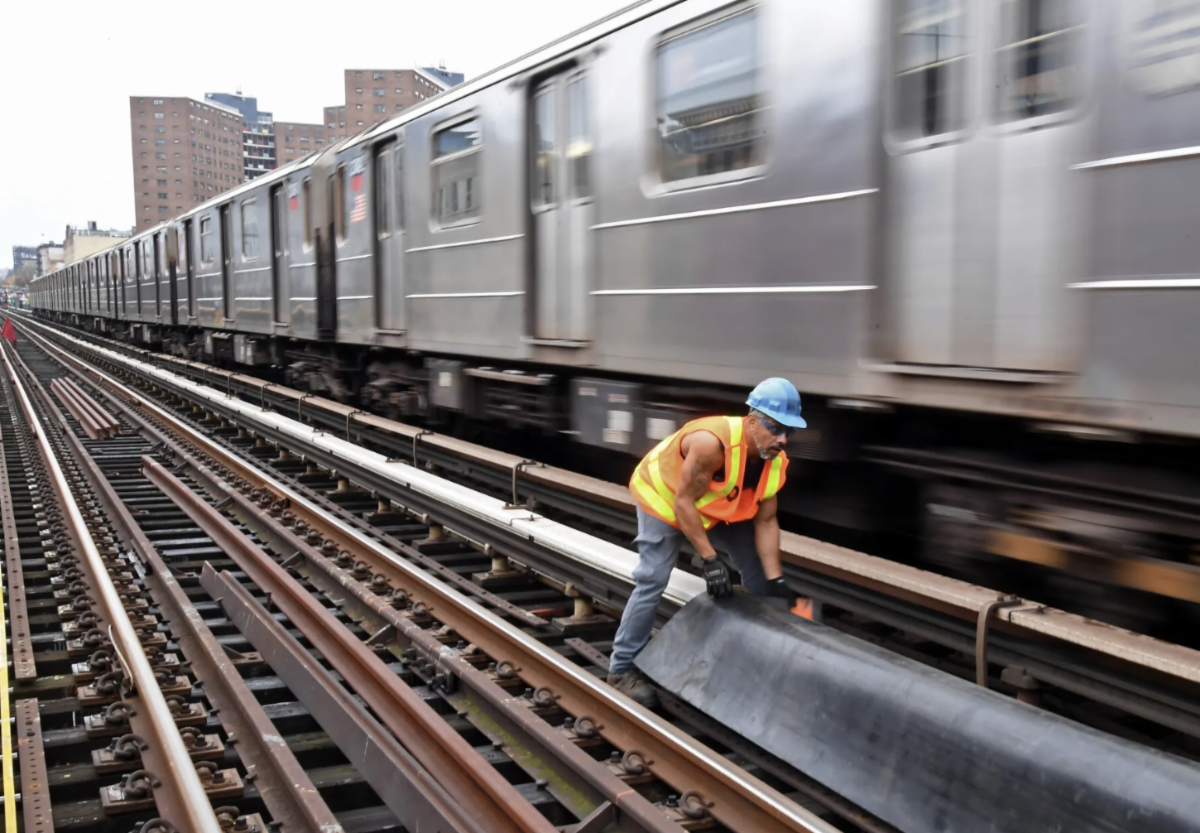
Editor's Note: In this day-and-age of modern communication and protections, it is unconscionable for any rail carrier to experience the number of fatalities and near misses that track workers face. | |
AMNY / August 15
The Biden administration has ordered the MTA to improve safety protocols for workers laboring on its subway tracks after the death of a flagger on the job last year and a significant increase in “near-misses.” The Federal Transit Administration (FTA) launched a probe into safety practices at MTA New York City Transit last November following the death of Hilarion Joseph, a rookie track employee who was flagging for a work crew when he was struck by a D train. The feds counted 38 separate incidents in 2023 where a worker was nearly struck by a train, up 58% from 2022 and 65% from 2021. In half of those near-misses, the regulator found the cause to be workers’ failure to follow proper flagging procedures. Other causes for alarm include improper radio communication, “improper roadway protection set-up,” and “train operator inattention.”
| |
Editor's Note: RWU has been banging the drum now for nearly two years about the decline in traffic on the Class One freight railroads. While making record profits and engaging in tens of billions in stock buybacks, the rail industry has managed to move 24% less freight in 2023 than in 2006. Finally, the government wants to know why. | |
Trains / August 15
The Surface Transportation Board will hear from more than three dozen participants during its two-day hearing next month regarding recent trends and strategies for growth in freight railroad traffic.
The hearing, set to begin at 9:30 a.m. on Sept. 16 and 17 in the board’s hearing room, will be livestreamed on the STB’s YouTube channel. The board called the hearing last month. It requested that executives from the six Class I railroads attend the hearing, and invited testimony from industry analysts, other railroads, shippers, suppliers, and rail labor.
| |
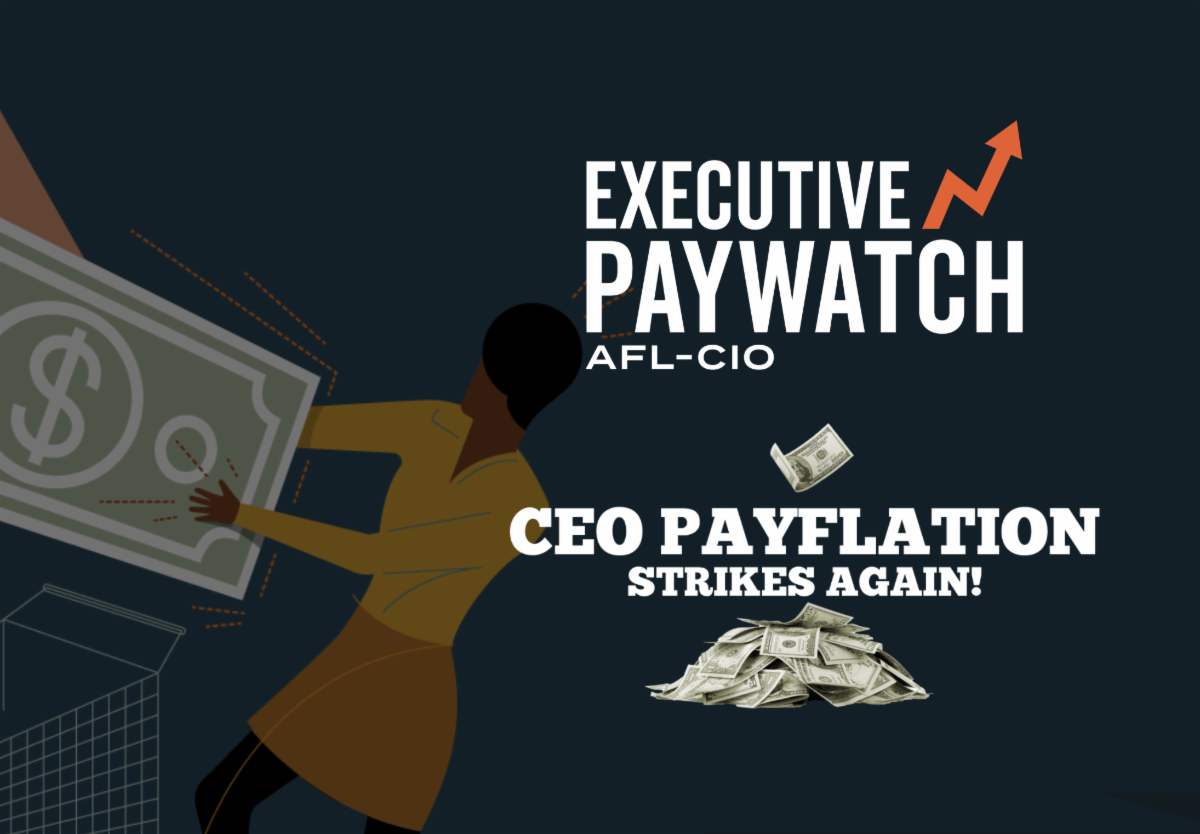
Editor's Note: You can check on your rail CEO's rate of pay by typing in the name of the carrier. Scroll down until you see the box that says, "Search by company name or ticker." Here is a tease: The highest paid rail CEO's are: CPKC — CEO Keith Creel made $20,079,552 in 2023. Union Pacific — then-CEO Lance Fritz made $15,552,576 in 2023. CSX — CEO Joe Hinrichs made $14,074,235 in 2023. Norfolk Southern — CEO Alan Shaw made $13,418,978 in 2023. How much did you make busting your ass on the rails last year? | |
AFL-CIO / 2024
Inflation has slowed, but large corporations are still charging high prices. Meanwhile, it would take more than five career lifetimes for workers to earn what CEOs receive in just one year. In 2023, commodity prices that companies pay fell by 3% while consumer prices rose 3%, boosting corporate profits and CEO pay. In 2023, CEO pay at S&P 500 companies increased 6% over the previous year—to an average of $17.7 million in total compensation. The average CEO-to-worker pay ratio was 268-to-1 for S&P 500 Index companies in 2023. It would take more than five career lifetimes for workers to earn what CEOs receive in just one year.
| |
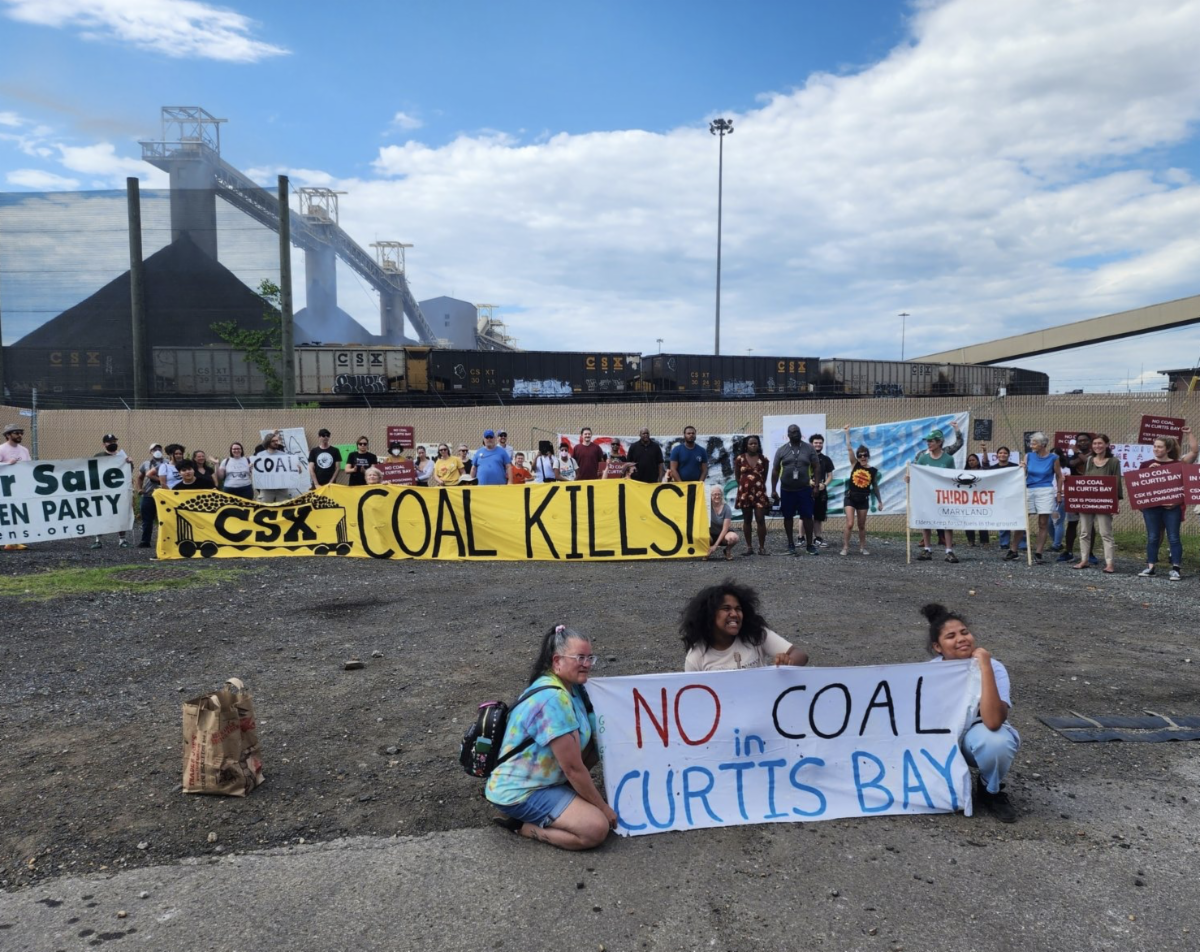
Editor's Note: From South Baltimore to East Palestine, OH; from Chicago to L.A., trackside communities across the country are coming together to fight toxic pollution caused by irresponsible Class One railroads. They deserve the support of rail workers and our unions. In unity there is strength. | |
In These Times / August 14
While the situation residents in South Baltimore face is different from the one in and around East Palestine, there are some devastating similarities. The most glaring connection, of course, is that both of these public health emergencies have a railroad running right through them. In their voracious pursuit to lower their operating ratios year after year, rail companies have cut costs and cut corners wherever they could, from routine layoffs to automation to reduced crew sizes — all while drastically expanding the length and tonnage of the trains. These changes have piled more work onto fewer workers who are given less time to do their jobs and bullied into silent submission by punitive managers and draconian attendance policies. Rail companies have invested tens of billions of dollars more over the past decade in stock buybacks and shareholder dividends than in rail maintenance. And while they’ve moved less freight, companies have jacked up prices and fees on captive shippers who rely on trains to transport their goods.
| |
Editor's Note: It is possible that this new AI tech could assist (the key word) in preventing rail collisions. But rail workers and unions must be on guard against such gimmickry because the carriers will no doubt play the "redundancy" card along the way, claiming that human beings are no longer needed in train operations. | |
|
American Journal of Transportation - August 12
Rail Vision Ltd, a rail technology company, announced that it has been granted patent approval from the United States Patent and Trademark Office for an AI-based railway obstacle detection system. The patent outlines a method for enhancing rail safety through the use of electro-optical imaging technologies combined with artificial intelligence. The system is designed to reduce collisions on railroads by employing an artificial intelligence model that includes comprehensive scene analysis and image processing techniques.
| |
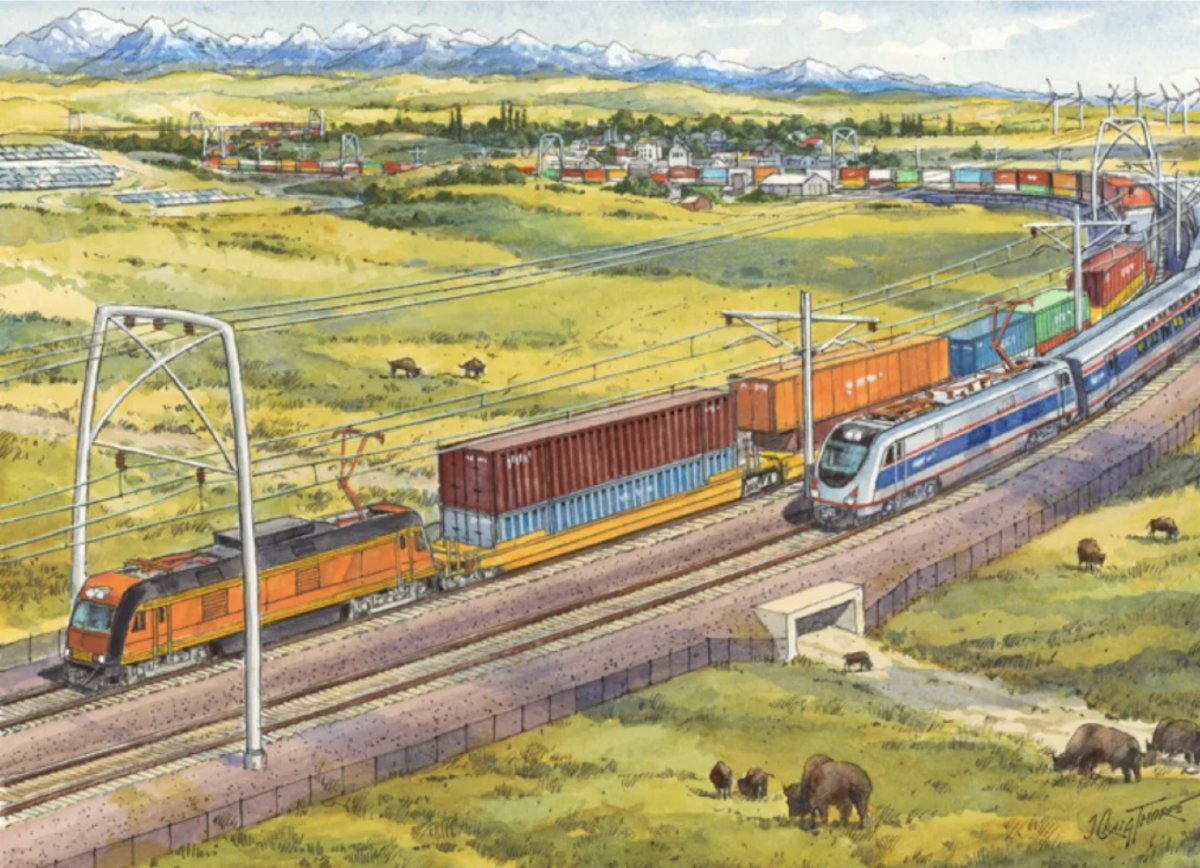
Editor's Note: RWU ally Solutionary Rail is gearing up for a new podcast to explain the immense value of rail in reconnecting the country, playing a leading role in modern electrification, rural and small town development, drastically reducing greenhouse gasses, all the while providing shippers and passengers with a modern, robust transportation network. | |
Solutionary Rail / August 13
We hope you'll take 3 minutes to listen to the teaser of Solutionary Rail's new Reconnect America podcast. You'll get a glimpse of the genius, creativity, and vision of our guests; the scope and diversity of their experience; and the emerging movement to put rail in service of solving problems and reconnecting America. Reconnect America presents a creative yet common-sense vision for U.S. railroads. It weaves together the genius of community and technical experts, workers and policymakers, advocates and scholars. Reconnect America culminates a decade of research, writing, and advocacy aimed at illuminating how the U.S. rail system can overcome its woes and address 21st-century problems. Check out this short trailer before we launch officially in September - and let us know what you think by replying to this email. We look forward to hearing your reflections on what you hear, and to being on this learning journey with you.
| |
NEWS FROM AROUND THE LABOR MOVEMENT | |
Each week, RWU includes a few articles about advances and developments in the larger labor movement that are of interest to railroad workers. Got an artcile to submit for possible inclusion next week? Email it along to raillabornews@gmail.com. Thanks! | |
Editor's Note: Unions have long taken political stances on all sorts of issues including foreign policy. The UAW for example was vociferous in its opposition to the Vietnam War. Calling for a cease-fire in the face of massive causalities and war escalation does simply not equate to anti-Semitism. | |
UAW / August 13
In the face of rising working-class militancy, anti-union forces have launched various legal attacks on the labor movement, using the false claim that union involvement in protests demanding a ceasefire in Gaza is somehow “anti-Semitic.” Most prominently, the federal monitor charged with rooting out corruption in the United Auto Workers has engaged in wildly inappropriate behavior, in a clear attempt to use immense legal power over the union to shut down their criticism of Israel. The National Right to Work Committee and union-busting law firms like Jones Day have also launched a series of legal cases, including some against UE locals, aimed at undermining union shops and exclusive representation. The attacks on labor over positions on Israeli policy towards Palestinians are not limited to the UAW, however. In July, a lawsuit against the Professional Staff Congress, the union representing faculty and professional staff of the City University of New York, was appealed to the Supreme Court. The National Right to Work Committee, which is providing legal counsel in the case, seeks to further weaken public-sector unions by asking the Supreme Court to eliminate the principle of exclusive representation. If exclusive representation is eliminated, then employers will be free to reward non-members with higher wages and other perks. This would further undermine public-sector unions, which are already suffering under the effects of the 2018 Janus decision outlawing union shops in the public sector.
| |
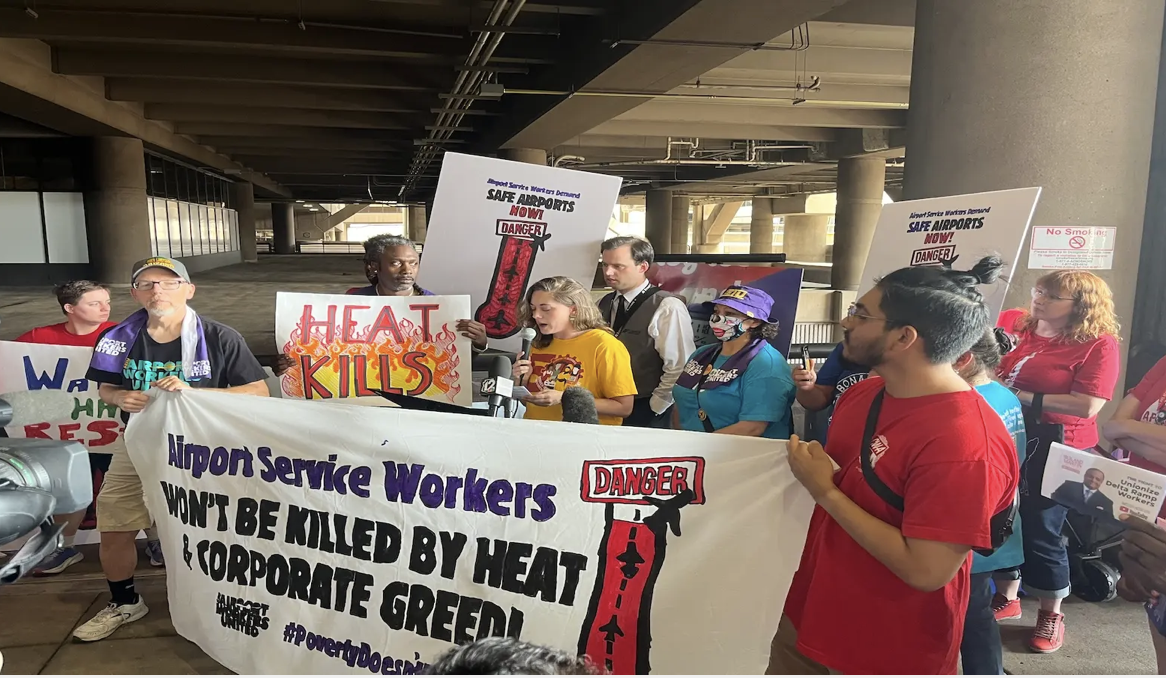
Editor's Note: Tens of millions of workers are subject throughout the summer months to dangerous and life threatening workplace temperatures. Railroad workers are just some of the employees that are exposed to extreme heat. There is no excuse for corporations to not provide for safe working conditions for all employees, and that includes humane temperatures that do not threaten the health and life of workers ion the job! | |
Grist / August 14
For the last two years, Cecilia Ortiz has worked as a passenger service agent at Phoenix Sky Harbor International Airport. She typically has to walk 10 to 15 miles a day, up and down ramps, pushing heavy wheelchairs, and carrying passengers’ luggage. This summer, temperatures have reached over 110 degrees Fahrenheit on the airport’s jet bridges, and yet she says she’s been denied breaks and water by her supervisors. Airport workers like Ortiz are being joined by laborers in fast food, retail, and the farm sector this week to demand on-the-job heat protections from employers and the federal government. From Atlanta to Los Angeles, a string of rallies, town halls, and delegations are taking place in 13 cities as laborers and coalitions escalate their demands to elected officials.
| |
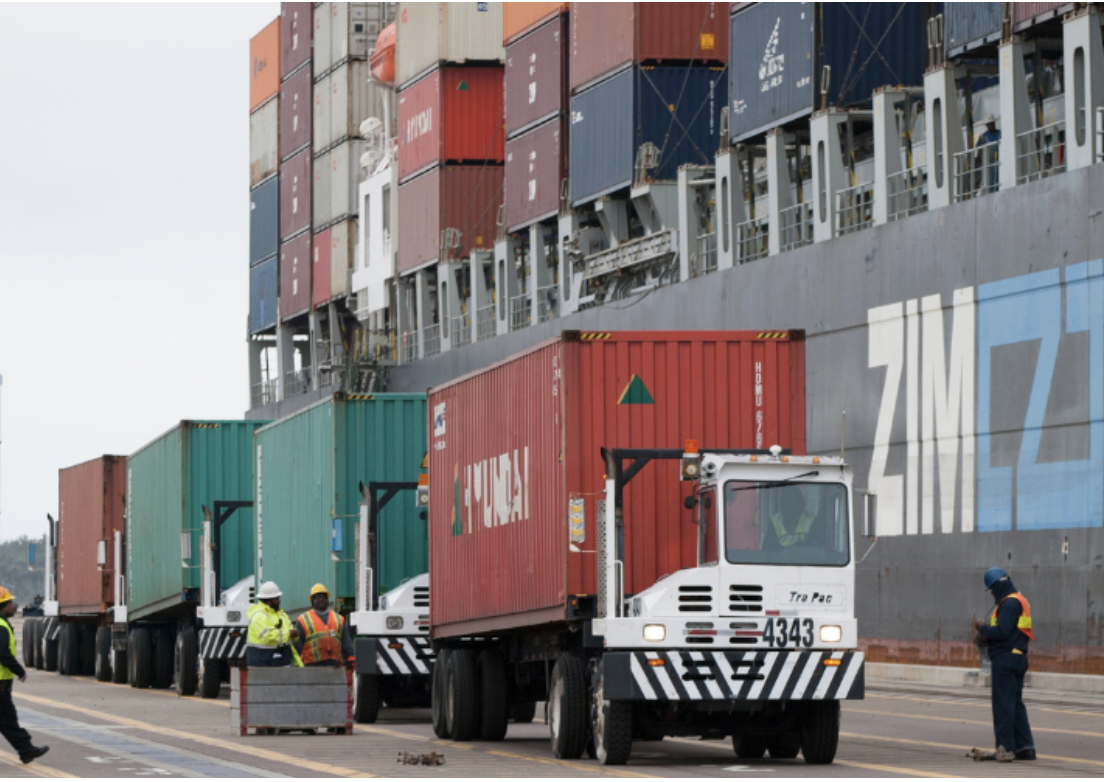
Editor's Note: A strike appears imminent on the East Coast, which will have ripple effects across the supply chain and the logistics industry including rail. All railroad workers will want to be vigilant and stand in solidarity with our sisters and brothers on the docks. | |
|
Labor Notes / August 12
Union negotiations covering longshore workers on the East and Gulf Coasts have been stalled since June 10, bringing the union closer to a potential strike at the September 30 contract expiration. Leaders of the International Longshoremen’s Association have called a September 4-5 delegates meeting to discuss demands and strike strategy. Last week the union sent the employer association, known as USMX, a strike notice that federal law requires 60 days before a strike. The contract between the ILA and the USMX is one of the largest expiring this year, and a strike would have a massive economic impact—billions of dollars per day. Negotiations broke down in June over union allegations that the port of Mobile, Alabama, as well as other unnamed ports, had automated some processing of trucks entering and leaving the docks—work traditionally done by ILA members. Union leadership and the USMX have not held public negotiations since.
| |
WEEKLY DERAILMENT DEPARTMENT | |
Each Tuesday in this news bulletin, RWU does our best to present a picture of what has been happening over the course of the previous week in terms of derailments in North America, and investigation determinations of previous accidents. NOTE: This list is by no means comprehensive. Smaller and less consequential mishaps are generally not reported here. If the wreck results in injury or fatality, or is especially damaging/extreme, a full article will appear as a feature in the dozen or so rail articles above. Know of a train wreck? Please feel free to forward a link to raillabornews@gmail.com for possible inclusion next week. Thanks! |
| | | |