- Connecticut Public Works Promotions & Announcements
- There's Still Time to Share Your Public Works Photos!
- Safety Matters: Let's Talk About Roundabouts — A Proven Safety Countermeasure
- Pay It Forward Corner: New Tailgate Talk — Street Sweeper Safety
- Ask an Engineer: Why Do You Need to Build the Bridge So Big?
- Innovation Station: Building a Stronger Public Works Workforce
- Connecticut Expands Wrong-Way Driving Detection Technology Statewide
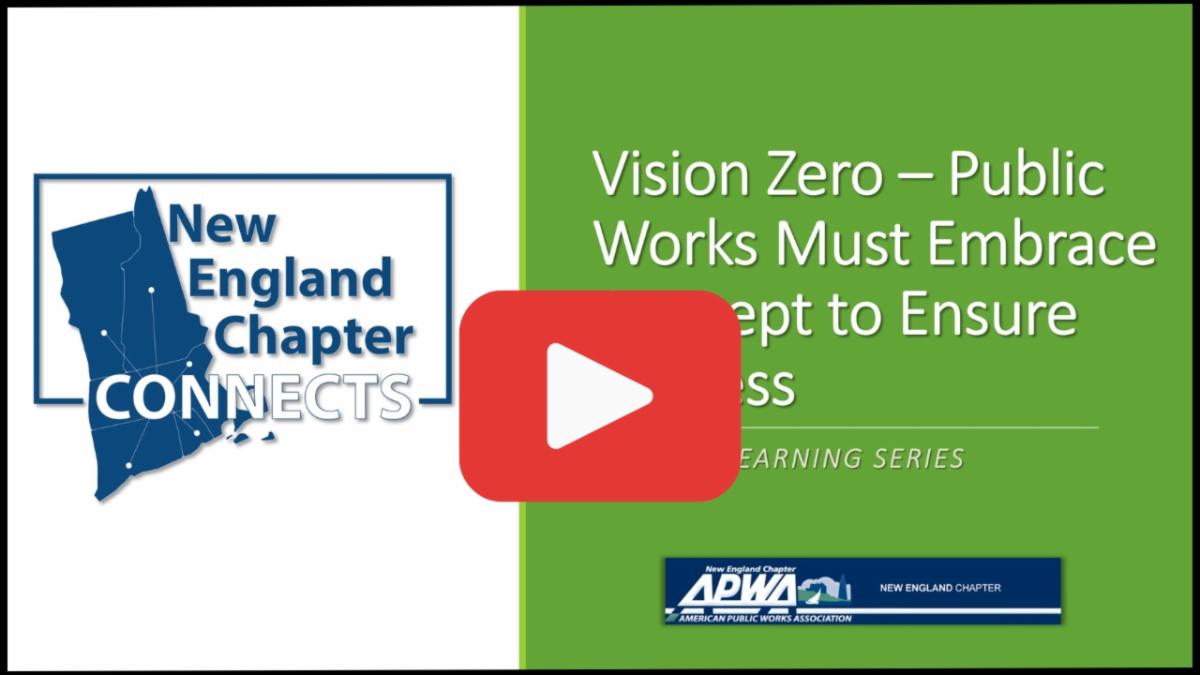
- NEAPWA Chapter Connects: Vision Zero — Public Works Must Embrace Concept to Ensure Success (Video)
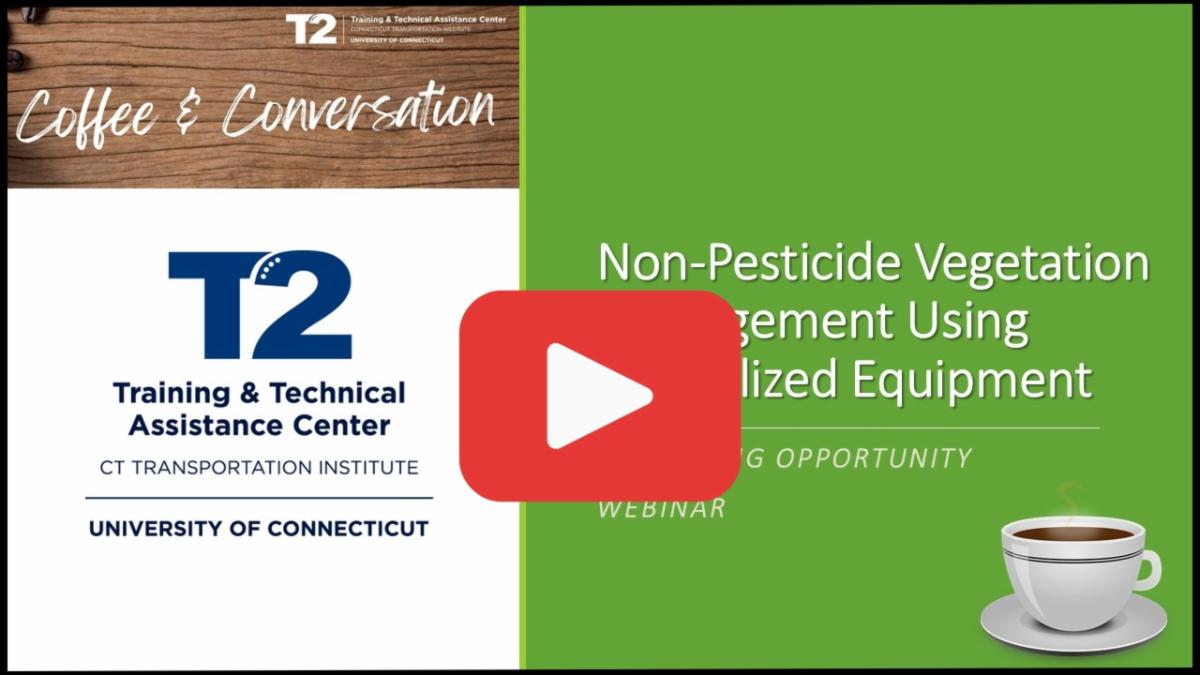
- Coffee & Conversation: Non-Pesticide Vegetation Management Using Specialized Equipment (Video)
| | |
Town of Ellington
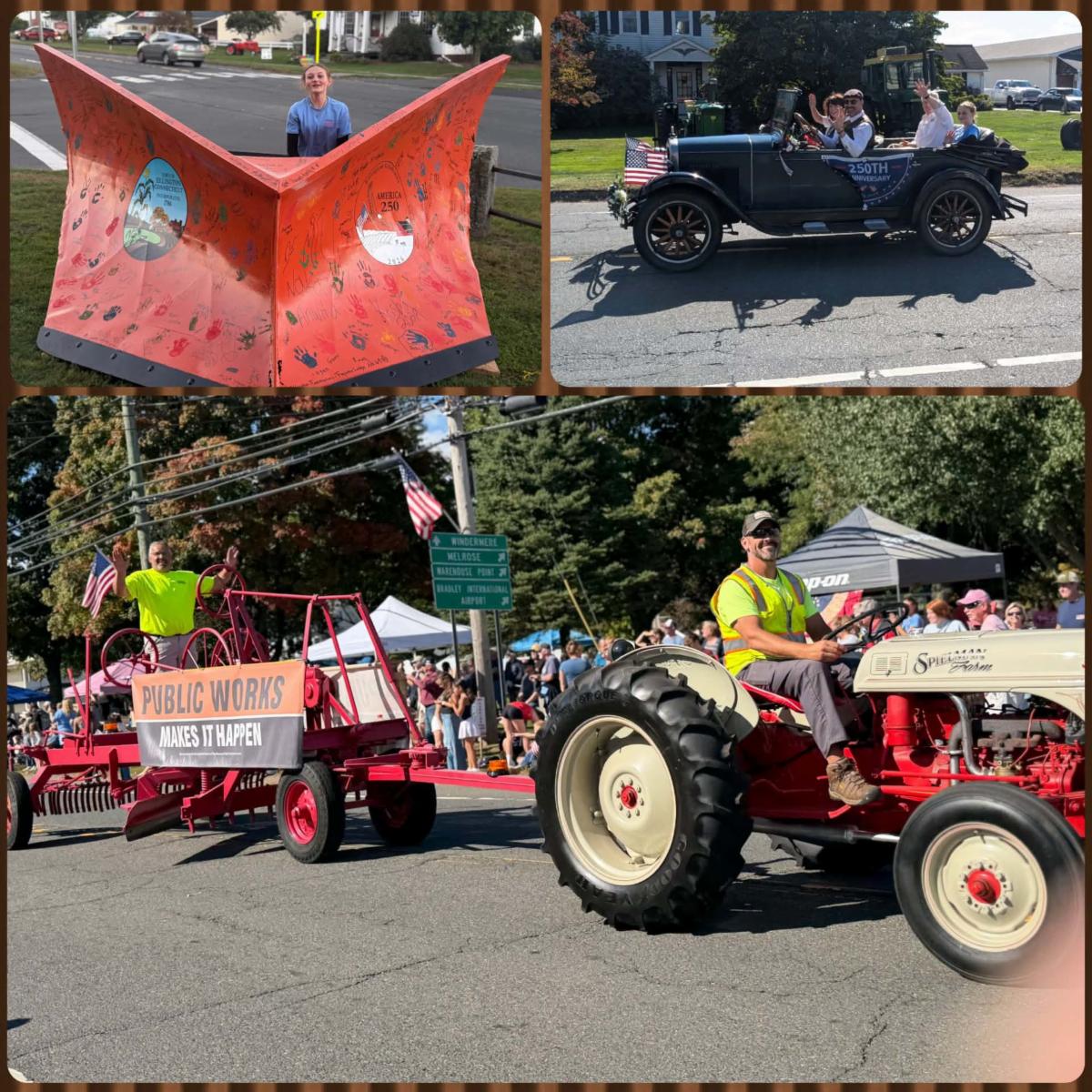
Ellington’s Department of Public Works helped celebrate America’s 250th Anniversary on October 3 with a parade appearance featuring antique vehicles and equipment, along with a booth on the Town Green. Attendees added handprints and signatures to a restored vintage snowplow to commemorate the occasion. The plow will be clear-coated and displayed in front of the Ellington Department of Public Works as a lasting reminder of this special day!
| |
Town of Manchester
Congratulations to Mark Rizzo on his appointment as Manchester’s new Director of Public Works! A Manchester native, Mark brings more than a decade of municipal leadership experience and previously served as the Town’s Interim Director, Deputy Director, and Field Services Superintendent. A U.S. Army veteran and recipient of the Bronze Star and Purple Heart, Mark has a distinguished record of service. Congratulations, Mark, and best wishes as you lead the public works team in your hometown!
| |
Town of West Hartford
Congratulations to John Pitek on his promotion to Grounds Maintainer II! John earned this recognition through his strong technical expertise and commitment to mentoring, supporting, and leading his co-workers. Best wishes, John, as you take on new responsibilities and continue to uphold the high standards of West Hartford Public Works!
| | Please email Regina Hackett with your agency’s promotions, awards, recognitions, or other great news, and we’ll proudly feature them in an upcoming newsletter. | | There's Still Time to Share Your Public Works Photos! | | Help T2 showcase the important work happening in Connecticut’s public works departments! The T2 Center is collecting high-quality photos highlighting the people, projects, and equipment that keep our communities safe and moving. | |
We're especially looking for photos featuring:
- Public works crews in action throughout all seasons
- Road, bridge, drainage, and sidewalk projects
- Road safety, work zones, and traffic control devices
- Equipment in the field and winter operations
-
Teamwork and community service
Please submit high-resolution photos whenever possible and include your town or agency name and a brief description. All photos should show appropriate PPE and safe work practices.
Deadline: Friday, October 30th
To submit a photo for consideration, click the button below to email us. Please use the subject line "Photo Submission – [Town/Agency Name]" so we can easily identify your submission.
We look forward to showcasing the outstanding work being done by Connecticut's public works professionals across the state!
| | | | Let's Talk About Roundabouts — A Proven Safety Countermeasure | |
We should strive to make our roads safer every day for our families, our friends, our neighbors, and ourselves. There are so many ways we help contribute to safer roadways, such as obeying traffic laws, looking out for obstacles, and being courteous to other road users. As practitioners looking for ways to improve safety on our roads, we should consider using Federal Highway Administration's (FHWA) Proven Safety Countermeasures. Proven safety countermeasures are defined by FHWA as “a collection of countermeasures and strategies effective in reducing roadway fatalities and serious injuries on our Nation’s highways.”
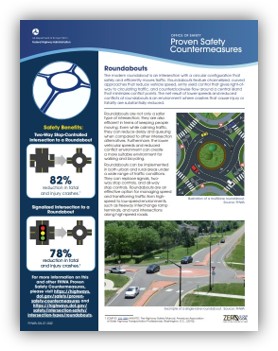
One of the most effective proven safety countermeasures is installing a roundabout. In Connecticut, we have seen many more of these safety improvements being built on our roadways. As you can see from the graphic, changing a two-way stop-controlled intersection to a roundabout can reduce fatal and injury crashes by up to 82%. Also, replacing a signalized intersection with a roundabout can reduce fatal and serious crashes by up to 78%. Roundabouts make intersections safer by reducing conflict points, lowering speeds, and improving traffic flow.
| | | | New Tailgate Talk — Street Sweeper Safety | |
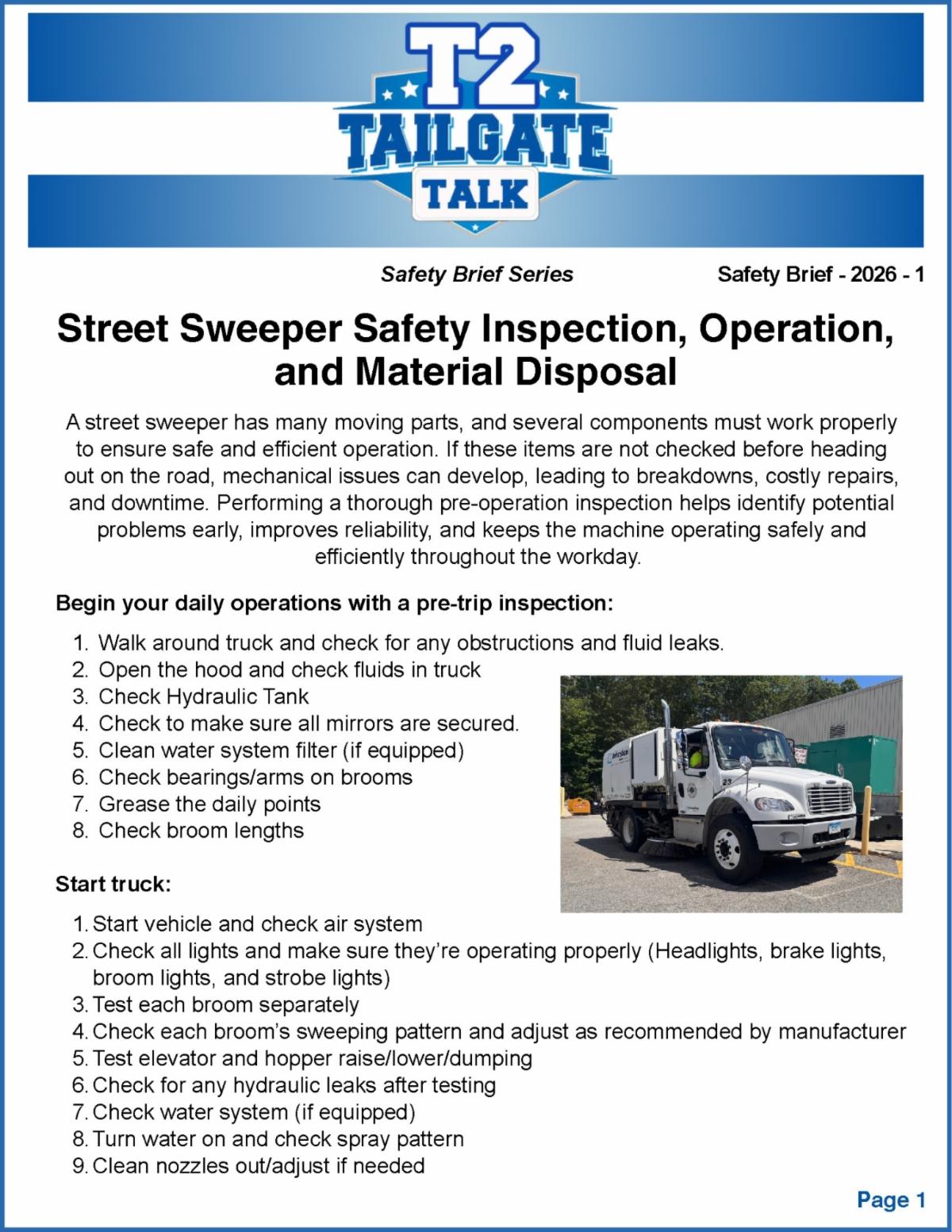
Our newest Tailgate Talk, Street Sweeper Safety Inspection, Operation, and Material Disposal, covers pre-trip inspections, safe operating practices, and safe handling and disposal of collected material.
Developed as part of TJ Spada’s Pay It Forward Project, this resource supports safer public works operations. TJ, from East Lyme Public Works, is a member of the Transportation Leadership Program Cohort 10. Congratulations, TJ, on your upcoming graduation in November, and thank you for sharing this valuable resource!
| | | |
Why Do You Need to Build the Bridge So Big?
By Chuck Ballard, Road Design Engineer, Town of New Milford, CT
| |
This is a question that we get all the time during public input and construction meetings. Our standard answer is that bridge designs are based on requirements established through permitting, typically standards set by the US Army Corps of Engineers. The Army Corps have set formulas and minimums for bridge width, length, and many other design details.
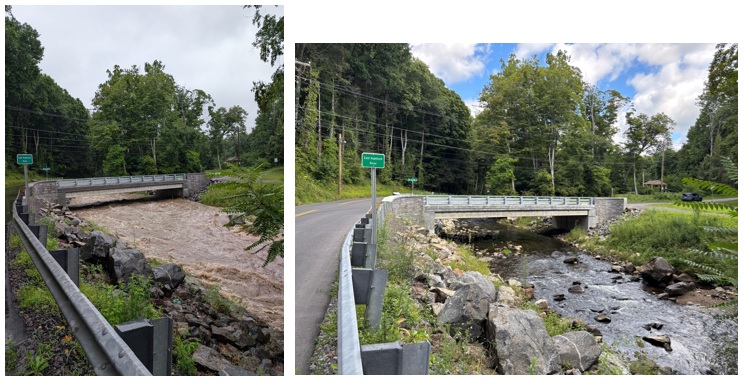
However, that answer does not really get to the "why" without explaining design factor terms like "freeboard" and "bank width". Freeboard is the distance from top of water level to bottom of bridge. Bank width is from edge of river to edge of river. Bridges must be built wide enough and high enough to handle the increased water levels and flow that come after severe storms. Both freeboard and bank width are explicitly regulated by the US Army Corps of Engineers, and for good reason.
Below are images of the Van Car Road Bridge in New Milford, CT during a significant recent storm event on August 3, 2026 (picture on the left) and the ordinary high water level on August 25, 2026 (picture on the right). As you can see, the bank width has expanded to the maximum design, which then forces water levels to increase in elevation and decrease remaining freeboard. It is estimated that the Van Car Road Bridge peaked at approximately 55% capacity during that localized rainfall event of ~4.5" on August 3, 2026.
| | | | Building a Stronger Public Works Workforce | Recruiting, training, and retaining skilled employees remain priorities for public works agencies. The Federal Highway Administration’s (FHWA) Every Day Counts 7: Strategic Workforce Development Toolkit offers resources, best practices, and success stories to help organizations identify, train, place, and retain workers in highway construction careers. | Looking for resources to support your own team? The T2 Workforce Development Hub brings together recruitment tools, training opportunities, and strategies for retention, mentoring, and succession planning to help Connecticut’s public works agencies build and sustain their workforce. | More innovation is on the way! T2 staff will attend the EDC-8 Peer Exchange later this month to learn about the latest round of innovations. Stay tuned for an update from T2! | | Connecticut Expands Wrong-Way Driving Detection Technology Statewide | More than 1,000 drivers have been alerted and turned around before a crash that would have occurred on a Connecticut highway, according to a CTDOT report. | |
Wrong-way driving remains one of the most dangerous threats on Connecticut highways.
Now, nearly three years after the state launched a statewide wrong-way detection program, transportation officials say the technology has helped more than 1,000 drivers recognize their mistake and turn around before entering the highway in the wrong direction.
The Connecticut Department of Transportation (CTDOT) recently activated its 300th wrong-way detection system, marking another expansion of the state’s efforts to prevent potentially deadly crashes.
CTDOT says wrong-way crashes are particularly dangerous, and the state experienced a deadly increase in these incidents in 2022. That year, 13 wrong-way crashes resulted in 23 deaths, compared with four crashes in 2021 and two in 2020.
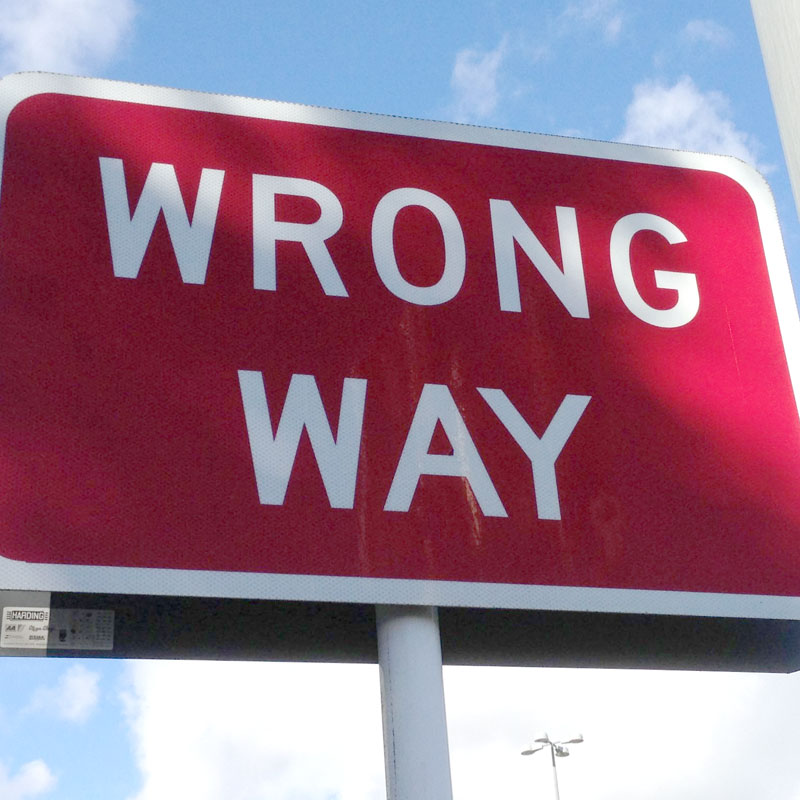
The wrong-way detection system uses video cameras to identify vehicles traveling in the wrong direction. When a vehicle is detected, signs equipped with multiple sets of red lights begin flashing to warn the driver that they are going the wrong way.
| | More Stories and Resources | | NEAPWA Chapter Connects: Vision Zero — Public Works Must Embrace Concept to Ensure Success (Video) | |
This recorded webinar introduces Vision Zero principles and explains why eliminating traffic fatalities and serious injuries is critical for every community. Learn about proven countermeasures, effective actions, and best practices that support safer roads for all users.
The session also highlights simple, practical steps public works agencies can take to improve roadway safety and build a culture committed to achieving Vision Zero.
| |  | Coffee & Conversation: Non-Pesticide Vegetation Management Using Specialized Equipment (Video) | In this Coffee & Conversation webinar, Christopher W. Samorajczyk of the Connecticut Department of Transportation discusses non-chemical approaches to managing unwanted vegetation. Learn how specialized equipment, including the Foamstream and Aqua-Pro systems, uses hot water to suppress vegetation without herbicides. Foamstream also uses biodegradable foam to help transfer heat to the plants. These methods can be useful in sensitive areas where pesticide use is restricted or undesirable. | | | | |
Connecticut Training and Technical Assistance Center
University of Connecticut
270 Middle Turnpike, Unit 5202
Storrs, CT 06269-5202
Phone: 860-486-9373
| | | | |