Newsletter — October 01, 2026 | | |
POLICY
ECONOMY
ON THE LOCAL FRONT
POLTICAL NEWS
RETAIL THEFT & PUBLIC SAFETY
IN THE NEWS
TRENDS
| | Image: Washington State Standard | | |
New I-9 inspection notice requirements take effect today
Today is the day. Washington’s new Immigrant Worker Protection Act requirements for I-9 inspections take effect October 1, 2026, creating new notification and posting requirements for employers.
Under the new law, employers must notify workers within five business days of receiving a federal Notice of Inspection (NOI) for Form I-9 and related worker records. The notice must be posted in a conspicuous workplace location and provided directly to workers using the employer’s primary method of communication. Employers must also provide the notice to an employee’s authorized representative, if applicable.
What the notice must include
The notice must include a copy of the federal Notice of Inspection and the following information in English and the five most commonly used non-English languages in Washington:
- The name of the federal agency conducting the inspection
- The date the employer received the inspection notice
- The types of records being requested and other identified purposes of the inspection, to the extent known
- Contact information for a statewide organization that provides information and advocacy related to immigrant and refugee rights
The Washington Attorney General’s Office has published a model notice and required workplace poster for employers, along with additional guidance. The materials are available in English, Spanish, Russian, Vietnamese, Ukrainian, and Chinese-Mandarin. Employers that use the Attorney General’s model notice can satisfy the required notice elements without arranging their own translations.
Don't forget the inspection results
The new requirements also apply after an I-9 inspection. Within five business days of receiving written inspection results, employers must notify affected workers and their authorized representatives, if applicable. This applies to workers identified as lacking federal work authorization or whose Form I-9 has deficiencies. The notice must include a copy of the federal results notice and information about any deficiencies, the time period for correcting them, scheduling options for a meeting to address corrections, and the worker’s right to representation.
Compliance reminder
Employers should document both the workplace posting and individual notifications and retain proof of transmission. The law allows direct notification through methods including hand delivery, mail with proof of delivery, email with proof of transmission, or text message with proof of transmission.
Federal and state deadlines are different: Federal law generally gives an employer at least three business days to produce I-9 forms after receiving a Notice of Inspection, while Washington’s new law gives employers five business days to notify workers.
The new law also addresses employer I-9 self-audits and limits employers from imposing work authorization verification or reverification requirements beyond those required by federal law. Employers are not required by Washington law to conduct I-9 self-audits.
Resources: The Washington Attorney General’s Office has posted the required poster, model notices, and employer guidance at atg.wa.gov/IWPA.
This article is provided for general information and is not legal advice. Employers should consult legal counsel with specific questions about how these requirements apply to their business.
| | |
What Washington retailers need to know about the new battery recycling program
Washington's new battery stewardship law (SB 5144) is bringing new requirements for retailers that sell covered batteries and battery-containing products in the state. The goal of the law is to ensure batteries are responsibly managed at end of life through a producer-funded recycling program.
Key retailer obligations include:
- Sell only compliant brands. Beginning July 1, 2027, retailers may only sell covered portable batteries and battery-containing products from producers that participate in an approved battery stewardship plan. Beginning July 1, 2029, the same requirement applies to covered medium-format batteries and battery-containing products. Retailers can use the state's list of participating producers and brands to verify compliance.
- Verify battery marking requirements. Beginning January 1, 2028, covered batteries and battery-containing products sold in Washington must meet state battery marking requirements. These markings identify the battery brand, chemistry, and indicate that the battery should not be disposed of in household trash.
- Private label brands require special attention. If a retailer owns or sells a private label covered battery brand or battery-containing product brand, that brand is considered a producer brand under the program and must be included in an approved stewardship plan before it can continue to be sold in Washington. Retailers with private label brands should confirm those brands are registered and participating in the program.
- No point-of-sale stewardship fee. Retailers may not charge customers a separate fee to recover battery stewardship program costs.
The Battery Network will provide retailers with educational materials, compliance resources, and a list of participating brands and producers to help prepare for implementation and ongoing compliance.
Bottom line: Retailers should begin reviewing their product portfolios now, especially any private label battery or battery-powered product brands, to ensure they will be included in an approved stewardship plan before the program requirements take effect. The Battery Network maintains a list of compliant producers and brands on our website to assist retailers with portfolio review.
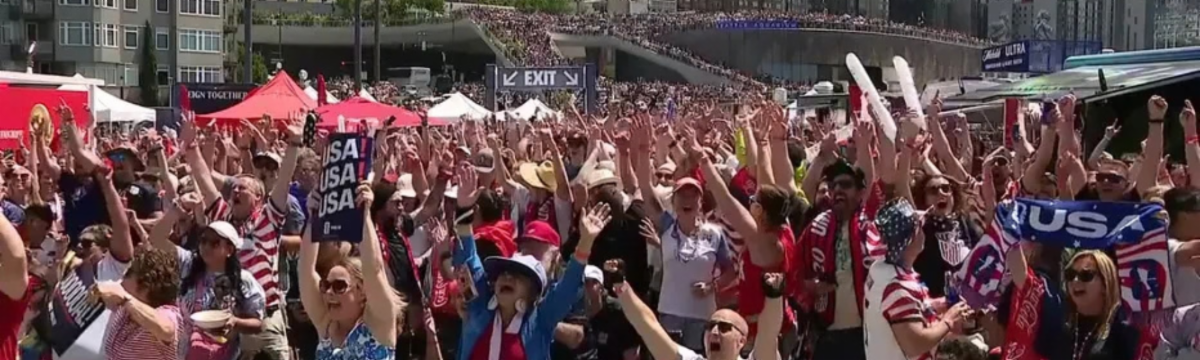
| | Image: Fans in Seattle cheer as Team USA makes their first goal of the match against the Australians in the World Cup on June 19, 2026 (Fox 13 Seattle) | | |
FIFA World Cup generated $889 million economic boost for Seattle region
The FIFA Men’s World Cup generated an estimated $889 million in total economic impact for Seattle and King County this summer, including $109 million in state and local tax revenue, according to a report released by Visit Seattle.
The tournament’s economic impact exceeded Visit Seattle’s most recent projection of $846 million, which had been revised downward earlier this year to account for expectations of fewer international visitors and reduced capital spending. The final estimate was higher than anticipated, in part because more international fans attended matches, overnight visitation increased around watch parties, and Seattle hosted a second match featuring the U.S. men’s national team.
The report, prepared by Tourism Economics, found that the tournament produced mixed results across the hospitality industry. Restaurants and bars near Lumen Field experienced some of the strongest benefits, with businesses reporting exceptionally busy days during matches and related events.
Hotels also saw a complicated picture. Occupancy declined compared with the previous year, partly because World Cup activity displaced some cruise passengers and convention visitors. However, higher room rates contributed to increased hotel revenue compared with the same period in 2025.
The tournament did not produce a significant increase in overall passenger traffic at Seattle-Tacoma International Airport. International passenger numbers increased only slightly in June and July, while domestic passenger numbers declined slightly. Total passenger volume was essentially flat compared with the previous year.
Visit Seattle initially projected a $929 million economic impact in late 2024. The organization said the final results demonstrate the potential for major sporting events to generate economic activity while increasing a destination’s visibility among future visitors.
The World Cup matches were part of a broader summer of soccer-related activity throughout the Seattle region, bringing visitors, events, and increased spending to businesses across the area.
| | |
Halloween spending expected to reach $13.5 billion
U.S. consumers are expected to spend $13.5 billion on Halloween this year, according to the National Retail Federation’s annual consumer survey conducted by Prosper Insights & Analytics. The estimate is above the previous record of $13.1 billion set in 2025.
Seventy-four percent of consumers plan to celebrate Halloween, similar to last year and above the 68% who planned to celebrate in 2019. Nearly half (49%) expected to begin shopping in September or earlier, reflecting the holiday’s expansion into a longer shopping season.
Consumers plan to spend an average of $115.14 per person. At the same time, shoppers report taking steps to manage costs. If Halloween items are more expensive than expected, 31% plan to comparison shop and 26% will look for coupons or sales. Another 34% plan to seek products they can reuse or repurpose.
Candy remains the most common Halloween purchase, with 96% of consumers planning to buy sweets and spending expected to reach $4.1 billion. Decorations are expected to account for $4.3 billion, while costumes are projected at $4.4 billion. Greeting card purchases are also increasing, with 42% of consumers planning to buy them, up from 38% in 2025.
Discount stores remain the most popular shopping destination at 39%, followed by specialty Halloween and costume stores at 32% and online retailers at 27%. Thirteen percent of consumers plan to shop at local and small businesses, nearly double the share reported in 2016.
The survey also found that 47% of consumers plan to use AI tools during their Halloween shopping journey, primarily for brainstorming, product research, and inspiration.
| | |
Washington budget outlook remains challenging despite revenue increase
Washington’s latest state revenue forecast shows modestly higher tax collections, but lawmakers are still facing significant budget challenges heading into the 2027 legislative session.
The Economic and Revenue Forecast Council’s September forecast projects tax receipts will be $22 million higher for the current two-year budget and $430 million higher for the 2027-29 budget cycle than estimates released in June. The increases are not enough to eliminate a projected shortfall in the 2028 fiscal year or address a multibillion-dollar gap expected in the following budget cycle.
The forecast also projects substantially higher revenue from a new tax on high-income earners. The 9.9% tax on individual and household wage income above $1 million was approved by lawmakers and signed into law by Gov. Bob Ferguson in March. It is scheduled to take effect Jan. 1, 2028, with payments beginning the following year.
The state’s chief economist now projects the tax could generate $3.5 billion during the 2027-29 biennium and $9.4 billion during the 2029-31 biennium. Those estimates are higher than previous projections, but the tax faces legal challenges and could be repealed by voters. Initiative 645, which would repeal the tax, is on the November ballot.
State officials and lawmakers continue to debate how to address the projected budget gaps. Some have pointed to spending reductions, while others have emphasized the potential loss of revenue if the new tax is repealed.
Washington’s economy is currently projected to generate $76.3 billion in revenue during the current budget cycle and $82.6 billion during the 2027-29 biennium.
The next revenue forecast is expected in November and will inform the governor’s budget proposal, which is scheduled for release in December. Lawmakers will begin the 105-day legislative session in January.
| | Image: National Retail Federation | | |
Services account for a growing share of household spending
Inflation and affordability are often associated with the price of goods, but data from the U.S. Bureau of Labor Statistics and National Retail Federation analysis show that services have generally experienced greater price increases than goods over the past several decades.
According to the analysis, a comparable basket of goods that cost $1 in the 1990s would cost about $1.28 today. Durable goods, including furniture, electronics, and appliances, have become even less expensive relative to their 1996 prices, costing about 71 cents for every dollar spent then.
At the same time, services have become a larger portion of household spending. Services now account for roughly two-thirds of personal consumption expenditures, compared with goods representing a larger share of household spending in the 1960s.
Recent inflation trends also show higher increases across many service categories. Over the past three years, financial services and insurance prices increased 21.1%, while housing and utilities rose 13.3% and transportation services increased 12.4%. Over five years, housing and utilities increased 30%, while financial services and insurance rose 33%.
The analysis also points to the competitive nature of retail pricing. Retailers face extensive price comparisons and competition, which can limit pricing power and keep profit margins relatively low. For example, publicly traded U.S. grocers have an average net profit margin of about 1.3%, according to the analysis.
The data suggest that understanding affordability requires looking beyond retail prices to the broader costs of essential services that increasingly account for household budgets.
| | |
Seattle adopts restrictions on personalized grocery pricing
Seattle has approved a new Fair Pricing and Transparency ordinance restricting grocery retailers from using personal information to set different prices for individual customers. The Seattle City Council approved the measure 7-2. The implementation date for this law is September 1, 2027.
The rationale offered for the ordinance is to prevent retailers from using personal data in algorithmic pricing to increase prices on some consumers.
While City officials have said traditional coupons and transparent discounts for groups such as seniors and veterans will remain legal, many programs that save consumers money are at risk.
The Washington Retail Association (WR) raised concerns during consideration of the ordinance, including its potential effect on loyalty programs, targeted coupons, and other discounts consumers use to lower grocery costs.
WR President and CEO Jan Himebaugh highlighted the value of loyalty savings for consumers, sharing that her family has saved nearly $1,000 through grocery loyalty programs this year, which she compared to the cost of more than 185 gallons of gas.
“We’re talking about the coupons that keep a cart full,” Himebaugh said, emphasizing that personalized discounts can provide tangible savings for households.
The debate also includes questions about whether restrictions on certain pricing practices could affect how retailers compete and offer discounts. Councilmember Maritza Rivera, who voted against the ordinance, said she supports prohibiting algorithmic pricing that increases prices but expressed concerns that the broader measure could limit loyalty discounts and contribute to higher grocery costs.
Councilmember Bob Kettle offered a series of amendments to save coupons, discounts, and loyalty programs that save Seattle consumers tens of millions of dollars annually. Councilmembers Kettle and Rivera fought hard to save those programs and ultimately voted against approving the legislation.
Seattle's action is drawing national attention as the first U.S. city to adopt this type of grocery pricing restriction. Coverage has focused on consumer privacy, artificial intelligence, loyalty programs, and potential effects on grocery prices.
Additional links: KOMO News | FOX 13 Seattle | MYNORTHWEST
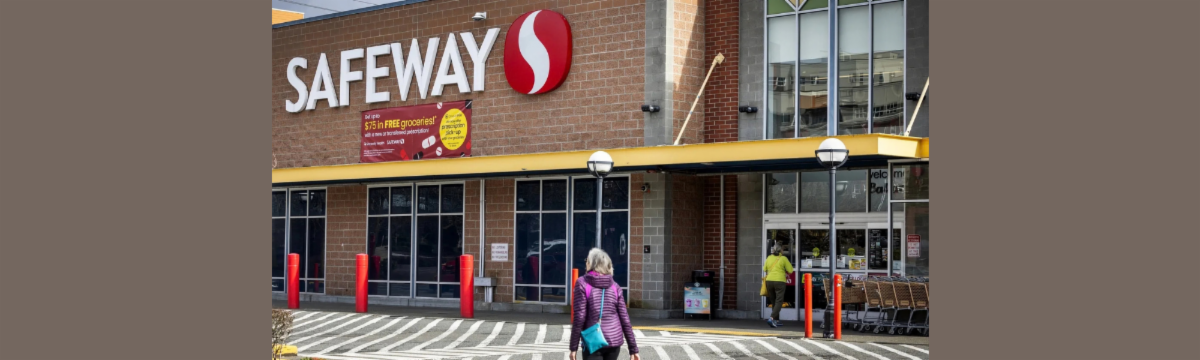
| | Image: Shoppers head into the Safeway in Ballard. (Ken Lambert / The Seattle Times, 2024 | |
Seattle Times Editorial: Seattle can address surveillance pricing without banning savings
Sep. 22, 2026
By The Seattle Times editorial board
No grocery store should use shoppers’ personal data to charge them more. On that, Seattle Mayor Katie Wilson, Councilmember Alexis Mercedes Rinck, the grocery workers’ union and the grocery industry all agree. That consensus could be the foundation of a city ordinance if the City Council lets it.
The current version of the Fair Pricing and Transparency Ordinance abandons that consensus. When it comes up for a vote, expected Tuesday, council members should demand substantive changes before passage.
Wilson and Rinck are pushing the ordinance, which would prohibit chain grocers with 20 or more locations worldwide from using personal data to set individualized prices and discounts. It also would cover delivery services such as Instacart. The rules still would allow discounts open to everyone, such as senior or bulk-purchase deals.
The ordinance could open grocers to a wave of lawsuits. It would let anyone claiming “tangible or intangible harm” file suits seeking up to $1 million in penalties. The industry says that such broad language could include people who never even bought an item.
Grocers might therefore abandon personalized discounts, even loyalty programs to avoid legal jeopardy.
A statewide approach makes more sense when people can find cheaper groceries in the next town or county over. Grocery stores in Bellevue and Shoreline could benefit at the expense of Seattle stores. Meanwhile, Seattle could lose sales tax revenue as those shoppers buy their beer, wine, and other taxable sundries outside the city, too.
Yet the Washington Legislature declined to pass a statewide ban this year. Only three states have done so, all in 2026. This is uncharted territory with the potential for expensive unintended consequences. Given that the ordinance would not take effect until September 2027, waiting to see what happens in those states and in Olympia costs nothing.
| | |
Minimum wage policies continue to evolve across Washington, with cities considering different approaches to wages while employers and workers weigh the potential effects on local economies.
Seattle will raise its minimum wage from $21.30 to $22.14 per hour on Jan. 1, 2027. The 84-cent increase is required under the city’s Minimum Wage Ordinance and is tied to inflation. Washington’s statewide minimum wage is $17.13 per hour in 2026. Renton, Burien and Tukwila also have local minimum wages above the state rate, with some requirements varying by employer size.
Tacoma is considering a different change. Deputy Mayor Joe Bushnell is developing an ordinance that would increase the city’s minimum wage to $20 per hour. The proposal is expected to come before the Tacoma City Council in the fall. Earlier community engagement included input from labor representatives, local businesses, nonprofits, healthcare organizations, childcare providers, and students.
Seattle’s upcoming increase has also prompted renewed discussion about the broader costs of operating a business, particularly in the restaurant industry. Anthony Anton, president and CEO of the Washington Hospitality Association, said during a Sept. 30 interview on KIRO Newsradio that labor now accounts for more than 40% of what customers pay at restaurants. He also pointed to rising food costs and consumers’ resistance to higher menu prices.
“I think the workers and the owners are in this together,” Anton said, arguing that reduced operating hours can mean fewer hours for employees. He estimated that Washington could be on track to lose about 9% of its restaurants without significant changes.
Meanwhile, local officials continue to gather input on how wage policies should be structured and what effects they may have on workers, businesses and consumers.
Seattle’s $22.14 rate takes effect Jan. 1, while Tacoma’s proposed $20 rate remains under consideration.
This version keeps the story centered on the statewide discussion, rather than making Seattle or the restaurant industry the entire focus.
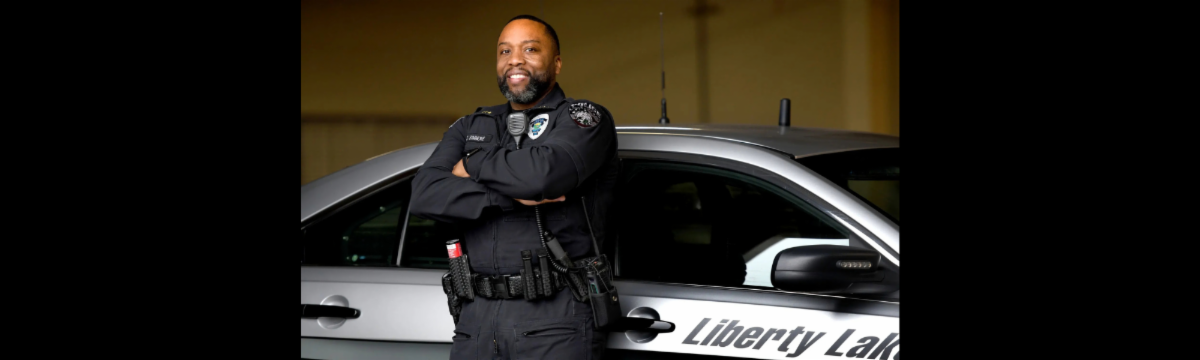
| | Image: Liberty Lake Police Chief Damon Simmons is photographed at the Liberty Lake police station on Dec. 21, 2020. The Liberty Lake City Council voted 6-0 earlier this year to ask voters for a 0.1% sales tax for public safety in the November 2026 election. (KATHY PLONKA/The Spokesman-Review) | |
Liberty Lake voters to consider public safety sales tax
Liberty Lake voters will consider a 0.1% sales tax increase intended to generate an estimated $750,000 annually for public safety.
City officials say the revenue would be dedicated to the Liberty Lake Police Department and could support officer salaries, additional personnel, equipment, and other public safety needs. Mayor Cris Kaminskas said police compensation has fallen behind in recent years, requiring the city to spend the past four years working to bring salaries up to date.
The city’s police officers previously worked under a contract negotiated through the Teamsters union. After that arrangement ended about four years ago, officers formed their own guild.
If approved, the additional revenue could potentially support one or two additional police officers, according to Councilman Dan Dunne. He said the city would work with Police Chief Damon Simmons to determine how the funds could best be used.
The Liberty Lake City Council voted unanimously on March 17 to place the measure before voters.
Councilwoman Linda Ball said the proposed increase is primarily tied to the city’s growth rather than an increase in crime. She noted that public safety represents more than half of the city’s annual budget and is its largest expenditure.
City officials also pointed to community support for the police department as a factor in bringing the measure forward. Kaminskas said residents have generally been supportive of local officers.
The proposal would direct the new sales tax revenue specifically toward public safety rather than the city’s general fund. Voters will determine whether the additional sales tax is approved.
| | |
Seattle Times Editorial: Voters beware: Candidate for state Supreme Court heads to the gutter
Sep. 20, 2026
By The Seattle Times editorial board
When a candidate for the state Supreme Court appears to violate judicial conduct rules during the campaign, voters ought to take notice.
That’s the case with Ian S. Birk, a state Appeals Court judge running for Position 4. His opponent is Sean P. O’Donnell, a King County Superior Court judge. The Times endorsed O’Donnell, citing his breadth of experience and wide range of endorsements.
Last month, Birk sent out a fundraising email intended to stoke outrage, tar his opponent and rake in the money. The missive led with: “We’ve said it for months: Ian’s opponent, Sean O’Donnell, is a Republican-affiliated judge with a deep history of support for and from his party.”
It goes on to allege that O’Donnell is a closet Republican who can no longer hide. “This past weekend the proverbial veil was lifted.” The hook? O’Donnell was among candidates recommended by the Washington State Republican Party.
Of course, Birk’s claims are balderdash. O’Donnell has the support of Democrats, Republicans and independents. He is running for a nonpartisan position.
What’s worse, this type of sleazy campaigning is expressly forbidden in Washington State Court Rules. Canon 4: “A judge or candidate for judicial office shall not engage in political or campaign activity that is inconsistent with the independence, integrity, or impartiality of the judiciary.”
Another Birk campaign email breathlessly states: “If the far right captures Washington’s Supreme Court, they don’t need to win in the legislature — they can undo decades of progress from the bench.”
The court rule states that a judge or judicial candidate shall not “publicly self-identify as a member or a candidate of a political organization …”
Seems like Birk has all but stamped a blue “D” on his forehead.
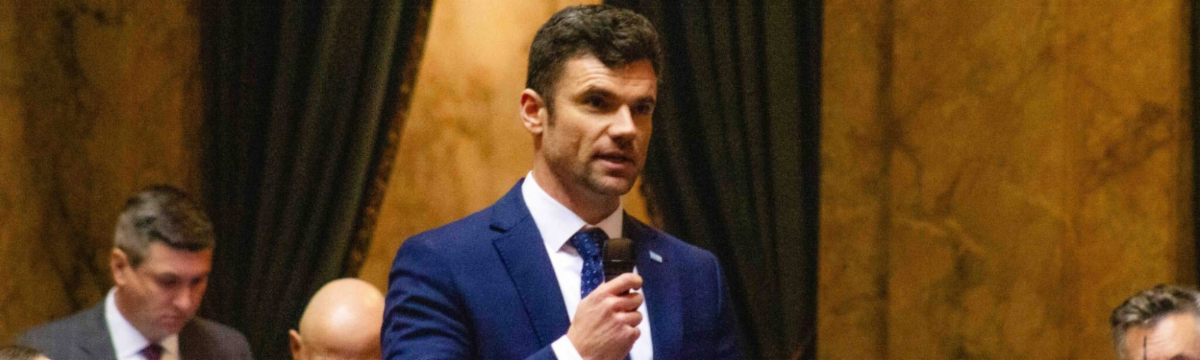
| | Rep. Skyler Rude giving a speech on the House floor. (Photo by Jacquelyn Jimenez Romero/Washington State Standard) | |
State lawmaker to resign days before election
State Representative Skyler Rude of Walla Walla (R-16th) announced Sept. 29 that he will resign from the Washington House of Representatives three days before the Nov. 3 general election to take a position with Democratic Secretary of State Steve Hobbs.
Rude plans to step down Oct. 31 and begin work Nov. 1 as Hobbs’ legislative director. His resignation means his name will remain on the November ballot for the 16th Legislative District, despite his planned departure from office. Rude has represented the district, which includes portions of Walla Walla, Franklin, Benton, and Grant counties, since 2018.
Rude said the job opportunity became final only recently, after ballots for the August primary had already been distributed. He said he chose to announce his plans before the election rather than wait until afterward.
The timing could result in two vacancies if Rude wins the election. One would cover the remainder of his current term, while another would begin in January with the new two-year legislative term. Under state law, local party officials would select a replacement to fill a vacancy, depending on the election outcome.
Democratic challenger Derek Sarley said he was surprised by the announcement and raised concerns about voters having a role in the replacement process if Rude wins. Rude has encouraged voters who want a Republican to represent the district to continue supporting his candidacy.
Rude serves as assistant floor leader for House Republicans and is the ranking Republican on the House Education Committee. He also serves on the Appropriations and Postsecondary Education and Workforce committees.
In addition to leaving the Legislature, Rude plans to close his stagecoach tour business in the Walla Walla Valley. He said his new role will allow him to continue working on issues involving Washington’s history and election administration.
| | |
Seattle’s budget plan faces a public safety test
Seattle Mayor Katie Wilson’s first proposed budget puts public safety among the city’s priorities, including additional funding for police, while also attempting to close a projected $175 million General Fund deficit without new major taxes. The proposed $9.1 billion budget relies on spending reductions and other changes to balance the city’s finances.
But as Seattle debates where to put its money, the city is still confronting a basic public safety question left unresolved after the July 26 mass shooting at the Bite of Seattle.
Two months after the shooting at Seattle Center, three people are dead, several others were injured, and one suspected shooter remains unidentified and at large. Police initially arrested a 15-year-old suspect, while a 19-year-old who died at the scene was later identified as another person believed to have been involved. Investigators said at least one additional suspect was involved and is still at large.
The continuing investigation has become part of a broader debate over accountability at City Hall and within the Seattle Police Department. An SPD after-action review identified communication and leadership problems during the response, including a five-hour delay before the public received information about the shooting. The department has since released internal messages and said it has implemented changes intended to improve coordination and transparency.
Seattle City Councilmember Debora Juarez has been particularly direct about the public's demand for improving public safety. In a more than eight-minute video addressing the situation, Juarez said: “If you can't hear that this whole city is saying ‘do something,’ you have no business being a leader.”
Her comments underscore the vigorous debate in Seattle about additional public safety resources. Funding police hiring and strengthening emergency communications are tangible budget commitments, but accountability also requires clear communications to the public.
Wilson's administration has acknowledged shortcomings in the city's response. The mayor and Interim Police Chief Andre Sayles said the shooting demonstrated the need for faster coordination and clearer protocols between the mayor's office and SPD. Wilson also signed an executive order addressing emergency management, information sharing, and preparedness, citing lessons from the Bite of Seattle shooting.
The budget will ultimately be judged not only by how Seattle closes its financial gap, but by whether the city can translate its public safety commitments into greater accountability, transparency, and public confidence.
| | |
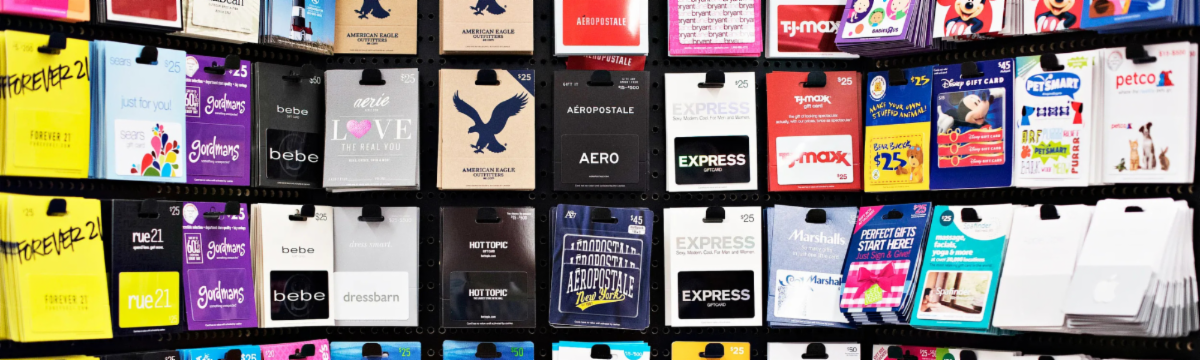
Gift card fraud evolves into organized retail theft
Gift card fraud is becoming an increasingly sophisticated form of organized retail theft, with criminals using methods that can leave both retailers and customers with significant losses.
During a recent Washington Senate Law & Justice Committee work session in Auburn, representatives from the Washington Retail Association and the state Attorney General’s Office discussed how gift card theft is evolving. Criminals may remove gift cards from store packaging, copy barcodes, or tamper with PIN covers before returning cards to store displays. Counterfeit barcodes can also redirect funds to accounts controlled by thieves.
Another emerging method, known as “ghost tapping,” uses contactless payment technology to purchase gift cards in bulk without taking cards from store shelves.
Once stolen card information is obtained, criminals can monitor balances online and quickly drain funds after cards are loaded. In one recent Washington case, two Snohomish County sisters were indicted in connection with schemes that allegedly generated more than $80,000 in gift cards.
Prosecuting these cases can be challenging. Investigators may need records from gift card issuers to establish when cards were loaded or used, and those records are not always readily available. Authorities also face difficulties identifying individuals who move stolen card information or money online.
The Washington Retail Association is developing legislation that would make tampering with gift cards chargeable regardless of whether a card has been activated. The association also supports expanding the Organized Retail Crime Association statewide and restoring $500,000 in funding that was vetoed during the previous legislative session.
The broader scale of retail theft underscores the issue. Statewide retail theft totaled an estimated $2.7 billion in 2024, according to the article.
| | |
Washington Retail Association advocates for retailers statewide
This week, Washington Retail Association’s (WR) team continued to advocate for retailers across Washington State.
Keeping the lights on: WR submitted comments to Washington’s Utilities and Transportation Commission (UTC) opposing Puget Sound Energy’s request to increase electricity and natural gas rates by 15% overall, and nearly 30% for many of our members. WR told the UTC:
Energy is an essential and largely fixed cost for retailers, who operate lighting, heating, and cooling seven days a week. Grocers also operate refrigeration around the clock. With margins often in the low single digits, retailers cannot absorb increases of this size. They are left to raise prices, cut hours or staff, defer investment, or close locations. For smaller retailers, the question is survival. Independent and family-owned businesses lack the scale to spread costs across multiple locations, and an increase approaching 30% could determine whether some stay open.
Consumers would pay twice. PSE estimates a typical household would pay approximately $28 more per month for electricity in 2027. That same household would then face higher prices for groceries and everyday goods as retailers pass along costs they cannot absorb. The result is higher prices, lost jobs, and fewer local businesses in the communities retailers serve.
The issue is also drawing attention from Washington Attorney General Nick Brown, who has identified utility affordability as a potential priority for the 2027 legislative session.
Brown said his office’s Public Counsel Unit, which represents customers of regulated investor-owned utilities, can have a direct influence on utility costs. His office is already challenging PSE’s proposed rate increases and is considering potential legislative proposals related to its work in utility proceedings.
WR knows our members need reliable, affordable energy so they can continue to provide the goods and products their communities need and want. We will continue to make sure the retail voice is part of these policy decisions.
Tax relief: The City of Everett is considering a reduction in its local B&O tax rate for retailers. Washington Retail Association communicated its support for reducing the rate from $1.00 per $1,000 to $0.75 per $1,000.
Retailers always welcome tax relief. WR also supports raising the exemption threshold from $20,000 to $250,000 in annual gross receipts. This would free approximately 6,500 of Everett’s small businesses from city B&O tax. For small retailers and emerging businesses, that would make Everett a more attractive place to start and grow a business.
Tax relief is always welcome, and these two parts of the proposal before the Everett City Council are positive steps for retailers.
WR also communicated its support for the City’s outreach efforts around public safety.
Retailers see firsthand how retail theft, organized retail crime, and repeat offenders drive up costs, drive away shoppers, and put workers at risk. WR urged the Council to:
- Set aside a share of the commercial district grants for safety, including retail theft prevention.
- Make public safety a core duty of the Business Support Team, with a direct line to the Everett Police Department.
- Consider directing part of the new revenue toward additional patrols in commercial districts.
WR continues to provide value to retailers of all sizes by advocating for tax and regulatory relief and an increased focus on public safety.
Sleep easy: Bills that died in the last session do not mean the issue is dead forever. WR knows that, which is why the team continues to work with other stakeholders on issues that matter to our retail members, including mattress extended producer responsibility (EPR).
While no bill addressing mattress EPR has passed the state Legislature, the issue continues to be discussed. This week, WR joined other stakeholders, legislators, and organizations engaged on this issue to make sure those conversations include the retail perspective.
| | |
Halloween 2026: Bigger, smarter, and more interactive
Halloween continues to grow into a full-season shopping event. The National Retail Federation expects consumers to spend $13.5 billion on Halloween in 2026, with decorations accounting for an estimated $4.3 billion and costumes another $4.4 billion. Nearly half of consumers began shopping in September or earlier.
So, what’s catching shoppers’ attention this year? Skeletons, animatronics, oversized yard displays, interactive technology, and fandom-driven costumes are among the biggest trends.
At The Home Depot, the 12-foot SKELLY returns with upgrades including app-controlled movement, custom sounds, and Bluetooth voice modulation. New giant displays include an 11-foot mummy and an 8-foot animated plant monster. The retailer says its giant animatronics are priced below $300, making large-scale displays more accessible.
Costco is also going big, offering oversized pieces such as a 62-inch groundbreaking skeleton with LCD moving eyes and sound, along with a 10-foot Jack Skellington with lights and music.
At Lowe’s, skeletons, tombstones, inflatables, and motion-activated animatronics are among the featured 2026 trends. Current best sellers include talking skeletons, witches, pumpkins, and other interactive displays.
Target is combining affordable décor with pop culture. Nearly 70% of its Halloween collection is new, with about 60% exclusive to Target. Popular offerings include poseable skeletons, ghost décor, and costumes tied to K-Pop Demon Hunters, Pokémon, Marvel, and other fan favorites.
For online shoppers, Amazon is seeing interest in more understated Halloween décor, including gothic accents, lighted garlands, pumpkins, candles, and seasonal pieces that can transition into fall décor.
For retailers, the message is clear: Halloween shoppers are looking for value, personalization, and experiences, whether that means a $5 ghost decoration or a 12-foot talking skeleton.
| |
Washington Retail Association diversity statement
Washington Retail Association is committed to the principles of justice, equity, diversity, and inclusion. We strive to create a safe, welcoming environment in which these principles can thrive.
We value all people regardless of race, ethnicity, gender, religion, age, identity, sexual orientation, nationality, or disability, and that is the foundation of our commitment to those we serve.
| | |
Jan Himebaugh, President & CEO — 360.200.6450 — Email
Crystal Leatherman, Dir of Policy & Government Affairs — 360.200-6453 — Email
| | | | |