Quarterly Digest December 29, 2022 |
And the winners are…!
MPAS AUTUMN COLORS 2022 Online Contest
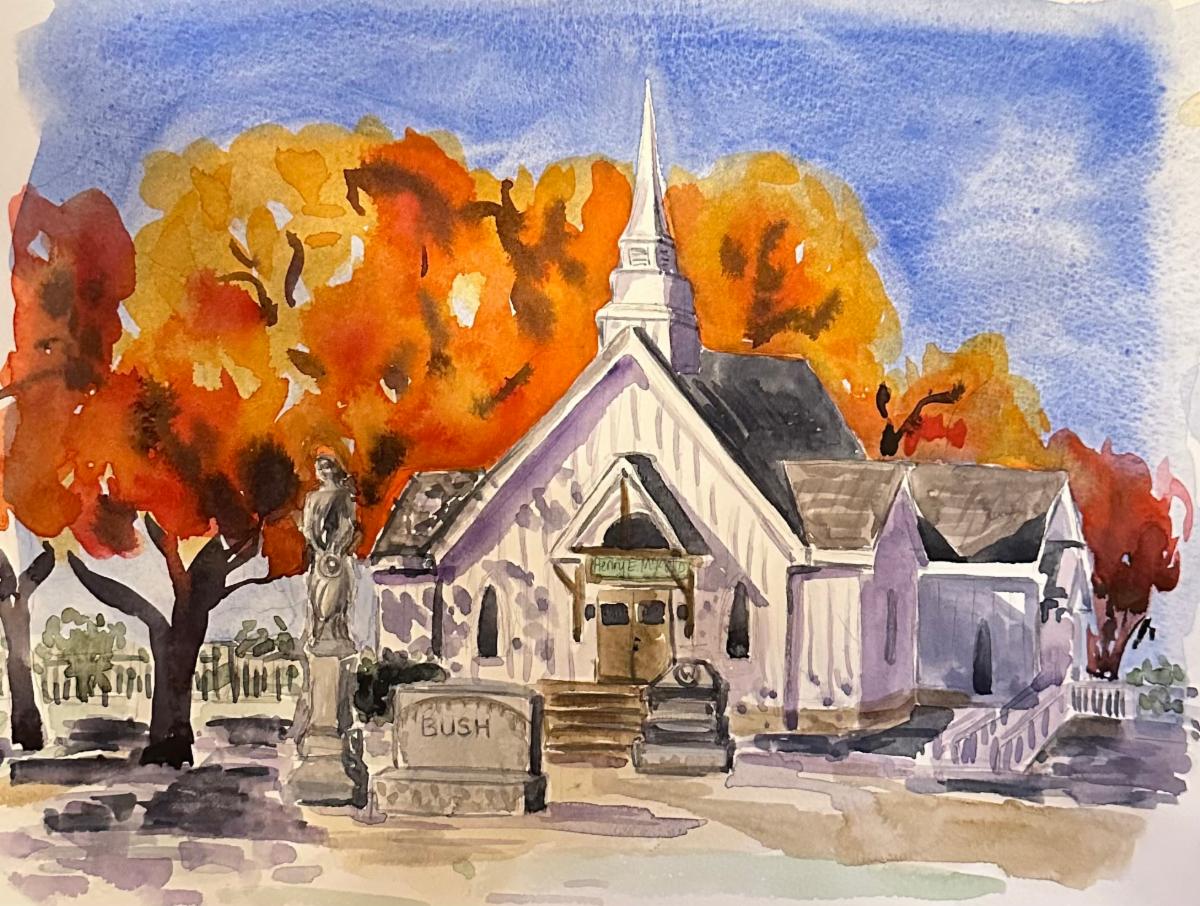
| 1st Place - Marie Blocker | |
"Pecan Grove Autumn"
watercolor - painted en plein air at the historic Pecan Grove Cemetery in McKinney, TX
| |
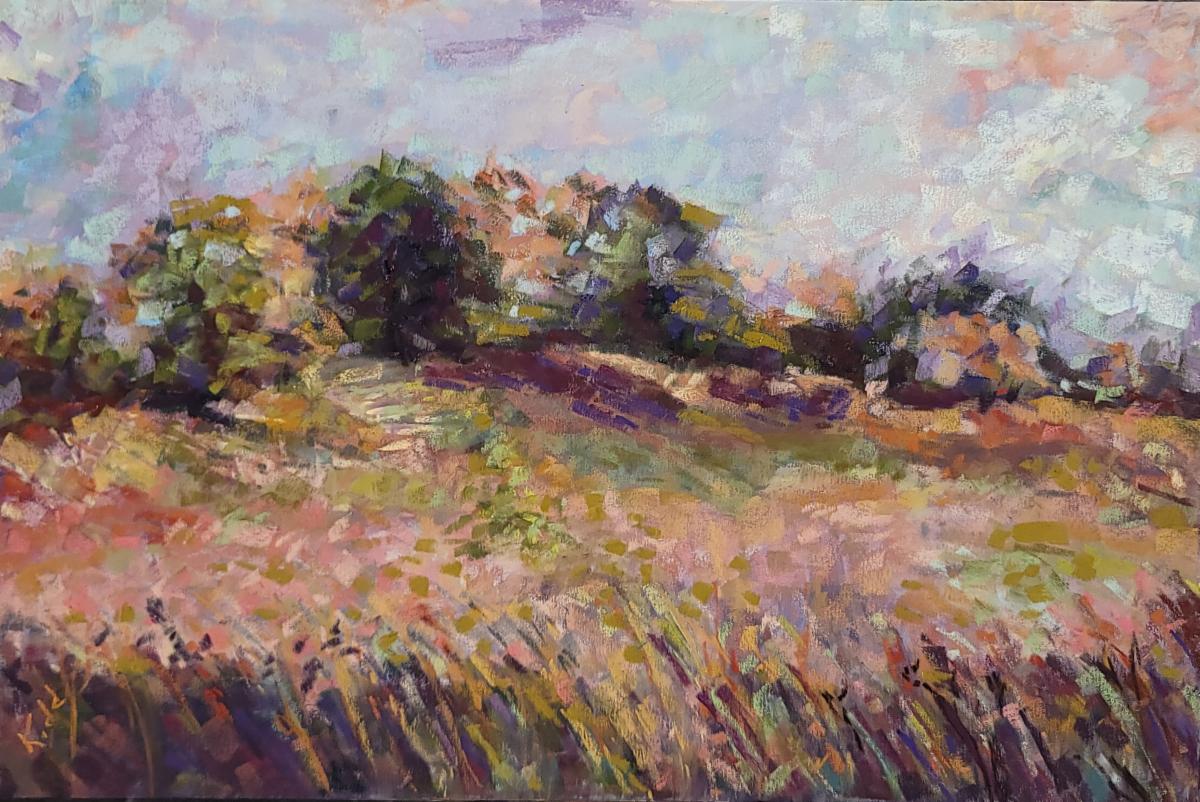
"Black Prairie"
pastel - painted en plein air at the Heard Natural Science Museum and Wildlife Refuge in McKinney, TX
|
|
Congratulations!
You can see all the entries for the MPAS Autumn Colors 2022 Online Contest HERE.
| |
|
NEXT ONLINE CONTEST
STARS AT NIGHT
The deadline to submit your nocturnal painting entry for the for the Stars at Night online contest is January 11 by midnight. For this contest, any painting made between sunset and sunrise counts as a nocturne.
Submit your image HERE.
Rules:
- Paintings submitted must be created on location. From your dining room window or from your car counts!
- Work must be original. Working from photographs or copying from the internet is not acceptable.
- Any medium is allowed.
- Each artist may submit ONE entry per contest.
| |  |
How to upload items to Google Photos from your browser:
-
On your computer, open photos.google.com.
- At the top right, click Upload Computer.
- Find and select your photos.
- Click Open.
You can also drag photos from your computer to the album to upload them to Google Photos. If you drag a photo to a specific album, the photo will be uploaded to that album.
| |
|
WHAT IS A NOCTURNE PAINTING?
Nocturne painting is a term coined by James Abbott McNeill Whistler to describe a painting style that depicts scenes evocative of the night or subjects as they appear in a veil of light, in twilight, or in the absence of direct light. In a broader usage, the term has come to refer to any painting of a night scene.
The use of the term "nocturne" can be associated with the Tonalism movement of the American of the late 19th century and early 20th century which is characterized by soft, diffused light, muted tones and hazy outlined objects, all of which imbue the works with a strong sense of mood.
Frederic Remington used the term as well for his nocturne scenes of the American Old West. Other artists known for their nocturne paintings are Rembrandt, Van Gogh, Degas, and Hopper.
SOURCE: Wikipedia
| |
11 Tips For Creating Great Nocturne Paintings
from Canadian oil painter Robert E. Wood
1. The best nights to paint are brightly lit by a full moon (or close to it), providing artists with the contrasts of light and shadow (and reflecting lights bouncing around in the shadows!), which make for the most dynamic paintings.
2. Tone value range is more limited in moonlight than it is in sunlight. The brightest lights will always be a couple values down from white.
3. Moonlight is much cooler than sunlight, often lending a blue or silvery-green hue to everything in your scene (unless it's impacted by another artificial light source, such as light from a building, a campfire, or streetlights).
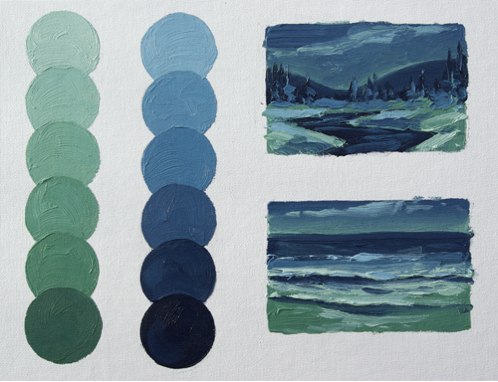
4. A perfect color mixture to match the range of blues in a nocturne is made by combining Pthalo Turquoise (from Rembrandt, or – alternatively – “Turquoise” from M. Graham, which is a very similar color but a bit more Blue than Green) and Alizarin Crimson, and then modifying the tone value with white.
5. The more elusive silvery-green range can be found by mixing the same two colors – Pthalo Turquoise and Alizarin Crimson – with Cadmium Yellow Deep. Again, modify this mixture with white to get the right tone values. You will notice that these three colors are a triad on the color wheel, representing Blue-Green, Red-Purple, and Yellow-Orange.
| |
|
Here is a color chart made by Robert E. Wood illustrating the color mixtures given in points 4 and 5, along with a couple quick sketches to demonstrate their diversity, without the addition of any other colors.
6. Look for opportunities to use your complements: For example, if the scene has a lot of Blue-Green in it, look for hints of Red-Orange (or places where you can use your artistic license to add in the appropriate complementary colors). These complements can be subtle: they don't need to necessarily be obvious, or shout. They can be elusive whispers, and still impact the eye of the viewer.
7. Red is probably the most under-used color on many artists' palettes, and the most frequently overlooked, but once you start looking for it you'll find it's amazing how much red there is in almost everything (in both sunlight and moonlight). When we consider the three primary colors, Yellow is warm, Blue is cool, and Red is a modifier. Red will make warm colors cooler, and cool colors warmer. The trick is in using the right red at the right time. A good general rule is to use bright warm reds like Cadmium Reds in daytime scenes, and cooler reds like Alizarin and Caput Mortuum Violet (another Rembrandt brand color) in nighttime scenes, but as with all rules there will be times to break it!
8. Just as with daytime scenes, the general rule for nocturnes is that warm colors come forward, while cool colors recede. There are times when this rule is broken, so when in doubt trust what you see; not what you think.
9. To create the glow on the sky's horizon in a nocturne (as you might see shortly after the sun has set, or a little while before it rises again), mix some of the silvery-green (perhaps the third or fourth tone from the top on my accompanying color chart) into the bottom of the sky.
10. The lightest whites will always be closest to you, and in a night scene will quickly recede down the tone value scale as they get further away. Light tone value elements in your painting (like snow, pale sand, or white buildings) will also be heavily influenced by the silvery-green color cast from the moonlight.
11. Artists who want to paint nocturnes en plein air can invest in a head-lamp in order to see your palette more clearly. Alternatively, spend some time outside just studying the light on a bright moonlit night, then use that acquired visual information to work in your studio with the color knowledge in this article and your own creative talents.
Bonus Tip: Quite often a good daylight photograph can be painted as a nocturne by swapping the sunlight color scheme for that of moonlight.(See the video below.)
SOURCE: Robert E. Wood 11 Things I know about Nocturne Painting
| |
A little art history about plein air painting . . . | |
|
FRANK REAUGH
This newsletter was intentionally sent to you today because December 29 is the 162nd birthday of early Texas artist Frank Reaugh. Those who are aware of Frank Reaugh are passionate about his work. And those who don't know of him, find themselves enthralled as they discover the man and his work.
In his time, Mr. Reaugh was a well known Dallas artist, teacher, philanthropist, inventor, performance artist, and the list goes on. Today, Reaugh is considered to be one of the most influential artists of his time, and his artwork is highly sought after by private collectors and is featured in many important museums.
Well known for his luminous and impressionistic small pastel landscape paintings, Mr. Reaugh's works feature his beloved Southwest, especially the Texas Plains. Known as the " Dean of Texas Artists", Mr. Reaugh fostered the artists who became known as the "Dallas Nine." He also taught hundreds of private students and took them on far flung sketching trips. Those trips were life-changing and life-long experiences for his students. The experiences are still being shared -- in stories handed down in families, with techniques passed from artist to artist, by historians seeking out lost information, and through Mr. Reaugh's works of art.
In Dallas, you can view Frank Reaugh's work first hand at the Dallas Central Library (7th floor), the Highland Park Library, and at the Dallas Museum of Art. You can visit much larger collections at the museums in Houston/Galveston, Lubbock, Canyon, and Austin.
LEARN MORE:
The Frank Reaugh Art Club is celebrating its 100th year today as well. Frank Reaugh enthusiasts share their stories, knowledge, and collections, keeping the memory of Frank Reaugh alive. If you wish to learn more about Mr. Reaugh or the Club, sign up for the Club’s mailing list, or become a member, please contact Bonnie Rea, President of the FRAC, at reaughclub@gmail.com
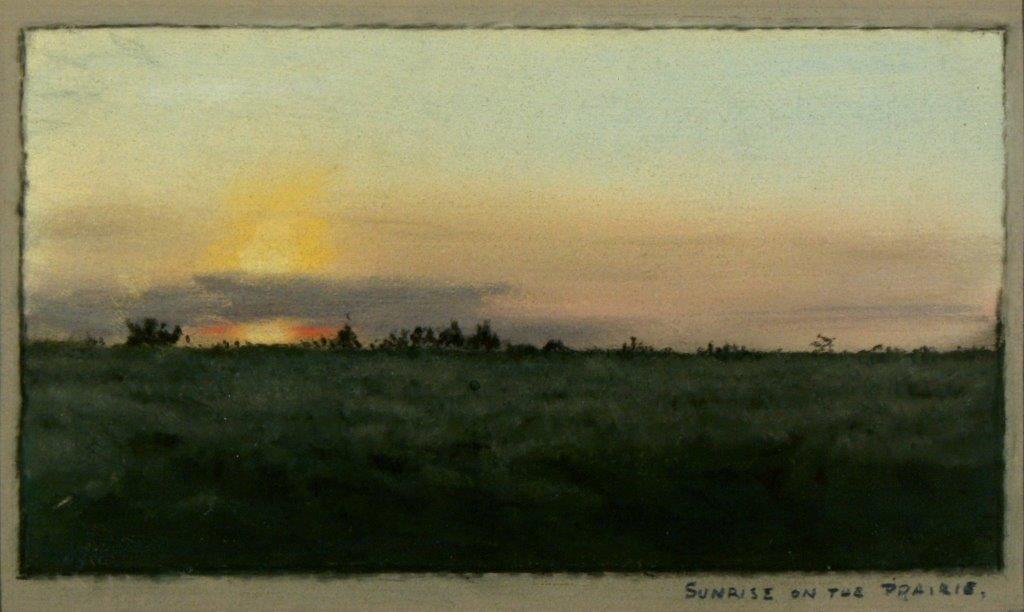
Frank Reaugh painted this beautiful little plein air nocturne in 1884.
| |
|
Frank Reaugh, “Sunrise on the Prairie,” 1884, pastel on paper, 5 5/8 x 8 3/4 in, Panhandle-Plains Historical Museum, Frank Reaugh Estate Collection.
| |
Plain fun at our Plein Air Paint Outs
We have had so much fun at our Plein Air Paint Outs. Each outing attracts new painters to our group. If you haven't gotten out there with us yet, plan to come paint on the first Saturday of each month. The community is becoming more and more aware of us -- and they love seeing us out painting!
2023 Paint Out Schedule
| |
|
JANUARY PAINT OUT
The January Paint Out will be on Saturday, January 7 at from 9:00 a.m. until 1:00 p.m. at Erwin Park, 4300 CR 1006 , McKinney, TX, 75071
| |
Inspired to paint McKinney's unique nature, our group is dedicated to friendship, learning, and sharing -- nurturing artists of all skill levels and experience. We welcome visiting artists! | |
McKinney Plein Air Society is a program of Arts and Music Guild, a 501c3 non-profit. | | | | |