Creating inclusive art experiences doesn't require a complete classroom overhaul - often, it's the small choices that make the biggest difference. From adaptive tools to culturally responsive activities, thoughtful planning can help every child feel welcomed, capable, and represented.


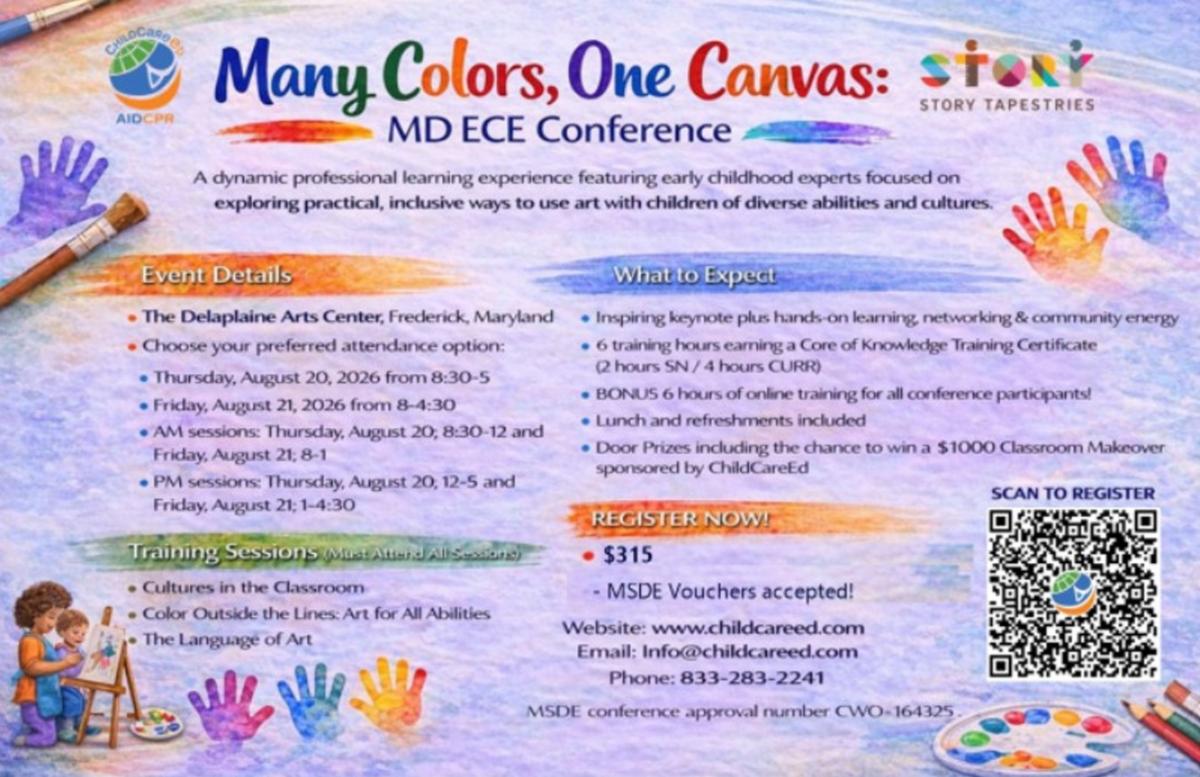
This week, we're sharing a few practical ideas to make art more accessible, meaningful, and engaging for all learners - plus some additional training resources if you'd like to explore these topics more deeply. If you will be attending our Many Colors, One Canvas: MD ECE Conference, you will get six bonus training hours (your choice!) included with your registration so you can continue learning more!

What classroom materials and setups make art accessible to all learners?


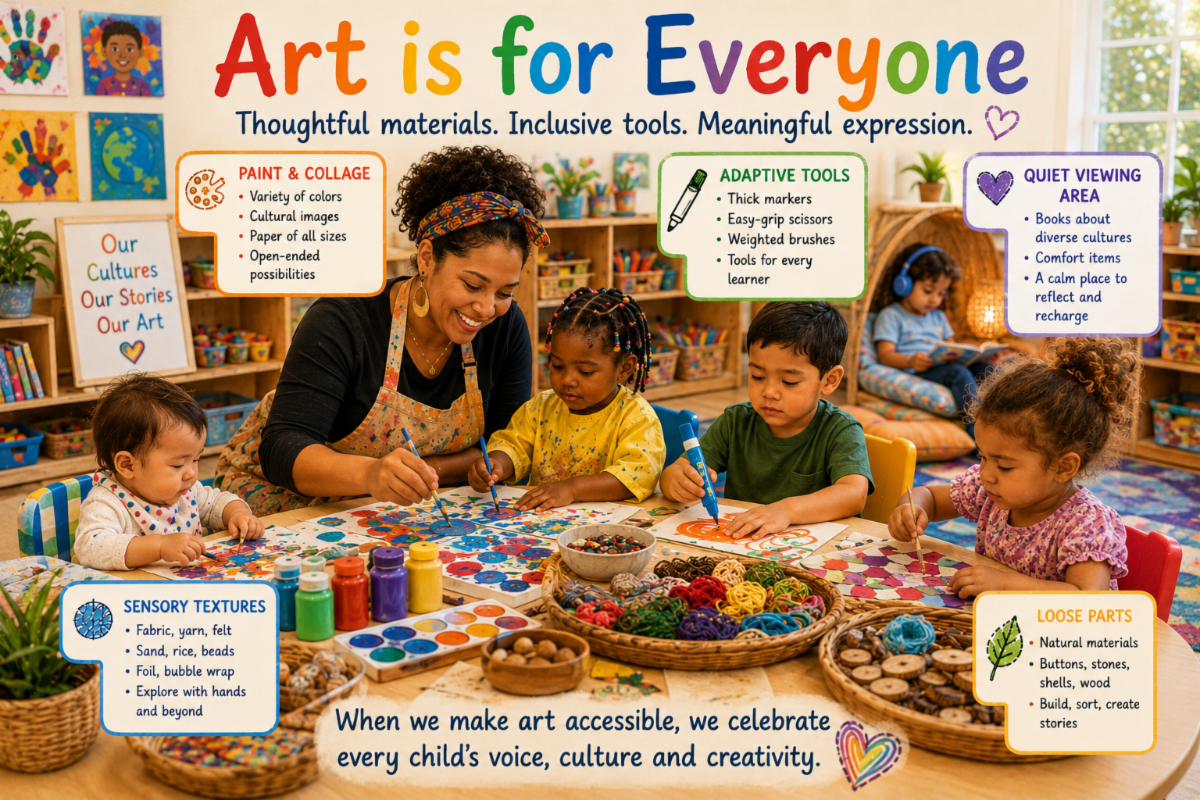
An inclusive setup helps every child participate. You can use the list below to equip your classroom and plan materials that meet the diverse needs of the children in your care.


  1. 🎒Choice of activity-based centers: offer 3-4 stations (paint/collage, sensory textures, loose parts, as well as a quiet viewing area). Children move to what suits them!
  2. 🧴Sensory-friendly options: provide gloves, spoons, brushes, and tools so children who dislike touch can still participate.
  3. 🔁 Focus on process over product: demonstrate examples of process art and avoid focusing on a "perfect" end piece. This respects cultural variation in art-making and encourages creativity and exploration. Learn more with this course: Montessori Cultural Activities
  4. ♿ Adaptive tools: thick markers, easy-grip scissors, and weighted brushes can help children with fine motor needs participate more independently. For deeper inclusion strategies, consider the Inclusive Montessori training.
  5. 🔖 Labels and language: label activity centers with photos and simple words. To add cultural elements, invite families to add translations - this welcomes home languages and also supports literacy.

*Safety note: check all materials for choking risks, allergies, and cleanliness. Always follow local safety rules and licensing requirements!


How do we make sure activities are respectful, meaningful, and classroom-ready in a multicultural environment?


When we do cultural art well, children learn respect, identity, and voice. When we do it poorly, we can accidentally teach stereotypes. Here are some Do's and Don'ts to follow:


  1. ❗Avoid costumes and caricatures. Instead, highlight everyday life through food, music, family routines, stories, and real photos. We've pulled together some practical & easy activities to celebrate all families with some helpful language: Celebrate Every Family.
  2. ✅ Use language of "some" and "many": Say "Some families..." not "All people from X do Y." This small change reduces stereotyping and opens curiosity.
  3. 📚 Avoid tokenization: Don’t show one book and call it "about a culture." Rotate books, toys, and music across the year. Explore ChildCareEd's multicultural games ideas: Multicultural Games and Activities.
  4. 🧭 Ask for family permission and input: Offer many ways to share (photo, a sentence, or a drawing). Keep participation optional and private when needed.
  5. 🔍 Reflect after each activity: What did children notice? What surprised us? What will we change next time? Use training like Many Colors, One Canvas: MD ECE conference sessions to guide reflection.


Final tips:


  1. Keep art activities between 20-40 minutes for preschool groups and even shorter for toddlers.
  2. Only include food with careful permission and alternatives for allergies. Consider using photos or pretend food instead.
  3. Make sure to check out ChildCareEd's free resources and training pages for more printable activities and course links.

Start small this week: try one new inclusive art setup, invite family input, or rethink how materials are presented in your classroom. Small adjustments can make a big impact on how children experience creativity and belonging!


If you'd like more practical strategies and hands-on ideas, join us at the Many Colors, One Canvas: MD ECE Conference, where presenters Hwaida Hassanein of ChildCareEd, Arianna Ross of Story Tapestries, and Amina Jones Law of Childcare Management Solutions LLC, will share inclusive, classroom-ready approaches for supporting children of diverse abilities, cultures, and backgrounds.

Three months from now, one lucky educator will be planning a

$1000 classroom makeover... and we can't wait to see who it will be 🎨✨


Along with our grand prize giveaway, we'll also have plenty of door prizes, resources, and inspiration waiting for you at the Many Colors, One Canvas: MD ECE Conference.


But don't wait until August for a chance to win...


⏰ This is the FINAL week to enter ChildCareEd’s

Teacher Appreciation Giveaway!


Two educators will each win a $50 Visa Gift Card - and everyone who enters will receive access to a FREE course.


Entering is easy:


✔ Fill out the form with your name and email

✔ Follow ChildCareEd on at least one social media channel (see links below)

✔ Choose one of two free courses (just add it to your cart and check out — no credit card required!)


At ChildCareEd, we believe professional development should be accessible, practical, and empowering for every educator. That’s why we’re proud to offer training designed to help teachers build inclusive, creative, and confident learning environments for all children.


We hope you’ll join us this August 20/21 at the Many Colors, One Canvas: MD ECE Conference at the Delaplaine Arts Center. MSDE Training Vouchers may be used to cover registration costs, and bulk registration options are also available - just send an email to grants@childcareed.com.


Together, we can help create classrooms where

every child feels seen, supported, and inspired.

And it all starts with YOU 💛

Facebook  X  Instagram