MARKET WATCH


April has been quite the month. Markets reacted erratically to President Trump’s tariff announcements, amendments, reprieves, delays, and olive branches. They were also perturbed by his Truth Social post indicating he could fire the Chairman of the Fed…but rebounded after he promised not to do so.


So, where does that leave us? Surprisingly not as poorly as you’d think.


Canadian and international markets are slightly lower on the month with US, Emerging Markets, and copper stocks falling a few percentage points. China and oil stocks were also lower, but considerably more. And uranium stocks – after initially falling quite a bit - are in positive territory.


Gold, as is often the case, travelled its own path. Following Trump's tariff press conference, global stocks fell sharply. Often seen as a safe haven, gold typically does well in such situations. However, significant market drops lead to margin calls for investors and hedge funds with significant debt. To cover those calls, they often sell their best performing asset, which, in this case, was gold. After a week of decline, gold's price jumped from $3,000, to $3,500 in the following weeks. It's since settled a little above the $3,300 range, or an increase of 5% on the month.


Despite having to work on my Caribbean cruise (Tanya and I set sail two days after “Liberation Day”), I'm not worried about the market’s reaction. And frankly, I'd love the opportunity to allocate our fixed income and gold to buy deeply discounted securities. We'll have to wait and see if that opportunity arises.


As always, feel free to reach out if you have any questions, and if you’re looking for more timely information on the markets, you can find them on the research section of my website.

BOOKS


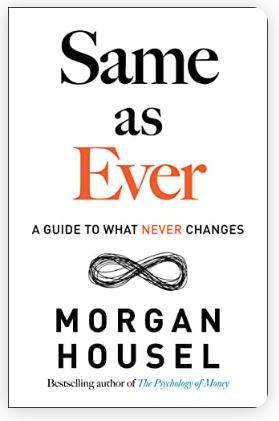
Same As It Ever Was: A Guide to What Never Changes by Morgan Housel: The world is changing - perhaps faster than it has in years. However, many things won’t change. Understanding them is just as important. This is the focus of Morgan Housel’s latest book Same As It Ever Was. The following are the book’s ideas I found most valuable, including my thoughts and a few examples:


Best Story Wins - In a perfect world, important decisions are made using reason and logic. However, that’s often not the case. From wines to politicians to stocks, the story surrounding how we perceive those things influences how we see them. To quote Housel, “The valuation of every company is simply a number from today multiplied by a story about tomorrow.”


Fear and Greed - Economic conditions usually vary from pretty good to pretty bad. Stock markets aren’t so nuanced. Given our propensity to be influenced by the headlines of the day, markets are more likely to swing from “incredible” to “the sky is falling.”


The Importance of Luck - From the storm that saved Japan from the Mongol fleet to the discovery of penicillin, luck repeatedly changed lives and history. As investors, our first priority is to ensure bad luck can’t ruin us, but we also want to benefit from good luck. This is one of the reasons we’ve owned gold for years!


The Importance of Incentives - I love the saying “never ask a barber if you need a haircut.” Our incentives influence our decisions and actions, from the teams we root for to the ideologies we support. As Charlie Munger once wrote, “Show me the incentives and I’ll show you the outcome.”


Wounds Heal, Scars Last - My grandparents lived through the Great Depression. Despite the prosperity of the decades that followed, they couldn’t shake the feeling another depression was around the corner. Much of their generation felt the same way.


I’ve seen something similar with investors. Those who lost significant sums during market crashes view market volatility differently. Traumatic experiences leave scars that can last a lifetime.


Life is Competition - Will and Ariel Durant were arguably the greatest historians of the 20th century. Their 11 book series The Story of Civilization spanned over 10,000 pages. In a separate book, The Lessons of History, they narrowed the most important laws of biology to three - one of which was “life is competition” (the other two were: “life is selection” and “life must breed”). Everything from evolution to new technologies to a country’s standing in the world are based on competition.


Don’t Let Your Guard Down - Throughout history, empires repeatedly followed a cycle. They rose from next to nothing, worked hard and prospered, then became complacent during a period of opulence. This left them vulnerable to internal threats and being overthrown by the next young and hungry civilization. 


Companies often follow similar trajectories. The list of today’s 50 largest companies looks nothing like they did in the 1990s. And it will look completely different 30 years from now.

GOLD & THE U.S. DOLLAR


Over the past century, the global monetary system has seen three major shifts. First, governments left the gold standard in the 1930s to address the Great Depression. Then, the Bretton Woods system tied the U.S. dollar to gold in the 1940s, allowing other currencies to be valued against it. Finally, in 1971, President Nixon removed the U.S. dollar from the gold standard. Since then, the U.S. dollar has been the world's reserve currency, meaning other currencies trade freely against it.


After Nixon's decision, most commodities, like gold, oil, and sugar, were only bought and sold in U.S. dollars. This was particularly important for oil given the ubiquitous need for it. A country's currency value relative to the U.S. dollar became crucial. If their currency weakened, their cost of oil increased. Countries therefore saved large reserves of U.S. dollars to buy commodities, and to support their own currency if it weakened.


This system had its flaws, but everyone generally followed the rules. However, that changed following Russia's invasion of Ukraine. In response, the U.S. froze Russia's U.S. dollar reserves. This unprecedented move alarmed countries like China and those outside American influence. What was to stop the U.S. from freezing another country’s American dollars for something less egregious?


Consequently, China, Russia, and other nations began preparing for a new world. Their central banks bought gold in earnest and explored ways to trade commodities without U.S. dollars. For instance, India purchased Russian oil in rupees, and China bought Saudi oil in Renminbi.


And then, Donald Trump won the election in November.


Trump's economic goals included lower energy prices, interest rates, and trade deficits. His aggressive tone and unpredictable nature alienated allies and brought adversaries closer to each other.


How does this relate to gold and the U.S. dollar?


Over the last 15 years, foreign countries invested over $23 trillion in U.S. stock markets and treasuries. This demand helped U.S. markets outperform while keeping American interest rates low. However, if the U.S. is seen as unstable, less money will flow there, or worse, funds will be moved to other markets. Should this happen, it would boost the value of gold and international markets, specifically Asia, Europe, and possibly Canada, while harming American markets.


Notably, gold has doubled since October 2022, and international markets have outperformed American ones this year. The U.S. government also needs to borrow $7 trillion through treasury auctions in 2025. Weak demand would force the U.S. to raise interest rates. But Trump's goal of a weaker U.S. dollar complicates this. Why would an investor in India buy a U.S. bond if they expect the dollar to fall? They'd only do so if they received a higher interest rate to offset their currency loss.


In essence, Trump's goals of lower interest rates and a weaker currency could jeopardize their attempt to raise that much debt.


We may be on the verge of the century’s fourth economic shift. If this is the case, increased inflation, rising gold prices, international markets outperformance, and strong commodity prices would be the likely result.

INDIA


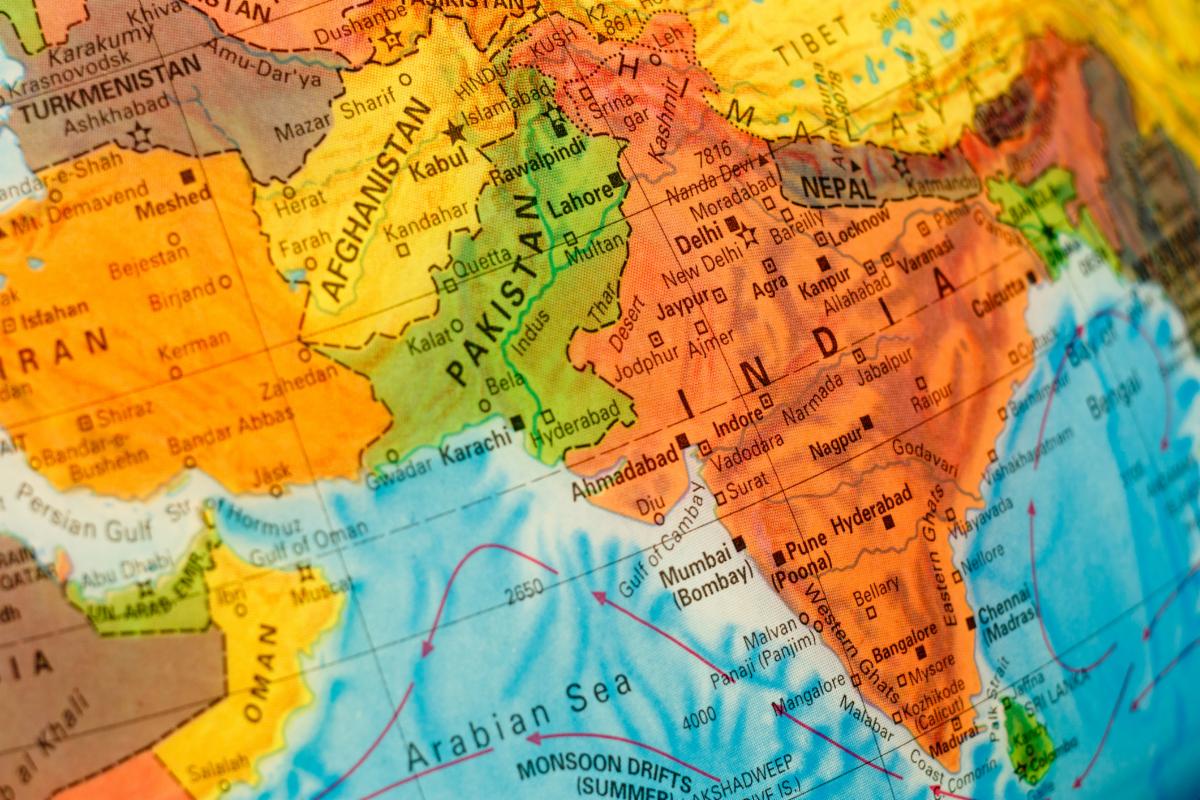
The War for India by Sarah Paine: Great lecture on the geopolitics affecting India and Pakistan over much of the last century. Paine’s key points were:


Attempt to Influence: Russia, the U.S., and China each sought influence over India and Pakistan, often disregarding local perspectives.

Limited Wars: The Sino-Indian War (1962) and the Bangladesh War of Independence (1971) were pivotal, resulting in quick victories but unexpected long-term changes.


Sino-Soviet Split: Initially, China relied on Soviet support, but after developing nuclear weapons, tensions rose over territorial disputes and differing communist ideologies, culminating in the 1969 border conflict.


Alliances and Non-Alignment: India, under its first Prime Minister Nehru, pursued a policy of non-alignment but leaned toward the Soviet Union due to shared socialist ideals and disillusionment with U.S. segregation and its policies.


India-China Relations: India recognized China early and supported its international legitimacy, even as China built strategic roads in Tibet, which India only discovered after completion – leading to China securing territory India claimed as its own.


Partition’s Damage: When the U.K. left the continent, they did an abysmal job partitioning India and Pakistan into separate countries. This led to animosity and conflicts which continue to this day. Unfortunately, a new development recently flared up, having the potential to become a larger conflict.


Shifting Alliances: The Cold War era saw frequent realignments based on short-term strategic interests rather than lasting partnerships.


Enduring Consequences: Decisions made in the 1950s and 1960s continue to shape South Asian geopolitics.

THINGS TO CONSIDER


“It is no exaggeration to say that we are at a turning point in history.”

- Takeshi Iwaya, Japanese Foreign Minister


“History never repeats itself; man always does.”

- Voltaire

Matthew Lekushoff
416-777-6368
matthew.lekushoff@raymondjames.ca
Subscribe to My Newsletter
Twitter  Linkedin  Facebook  
This provides links to other Internet sites for the convenience of users. Raymond James Ltd. is not responsible for the availability or content of these external sites, nor does Raymond James Ltd endorse, warrant or guarantee the products, services or information described or offered at these other Internet sites. Users cannot assume that the external sites will abide by the same Privacy Policy which Raymond James Ltd adheres to. The views of the author do not necessarily reflect those of Raymond James. This article is for information only. Raymond James Ltd. Member-Canadian Investor Protection Fund. Unless otherwise mentioned, all market returns are sourced from Thompson One.