Weaving Social Constructionism and Doughnut Economics: A Generative Pathway for Global Change
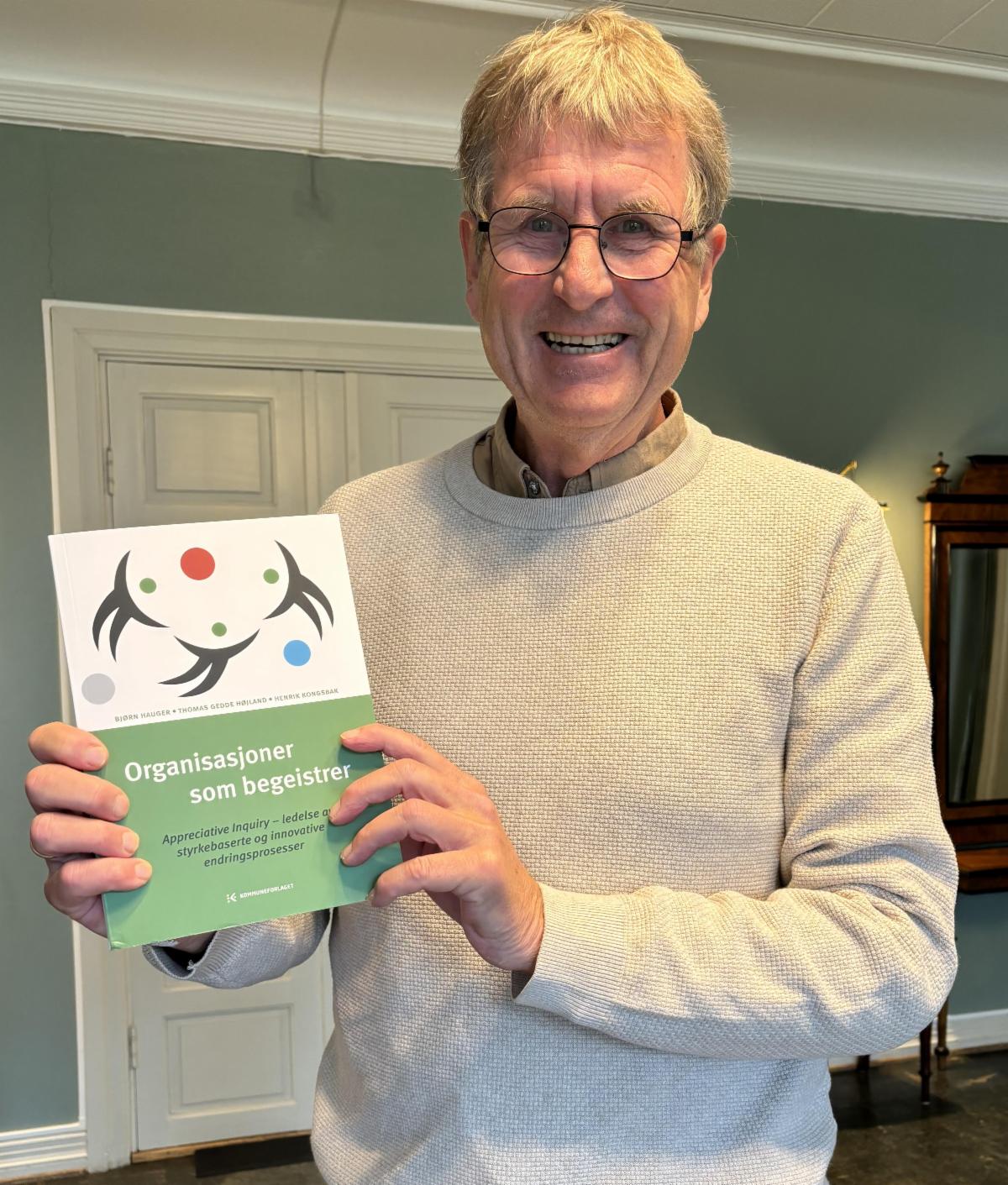
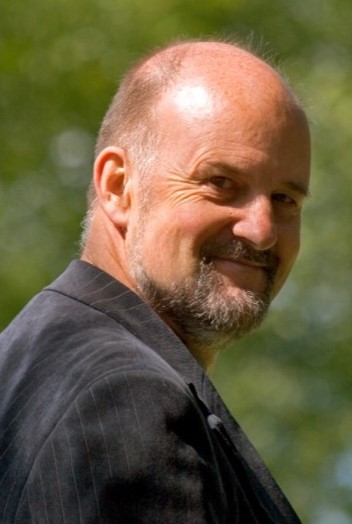
Bjørn Hauger, Taos Associate, Norway
| | | | |
"Thriving for all within planetary boundaries”
What first drew me to the field of social constructionism was a deep curiosity about how learning and knowledge creation can support the collective shaping of the organizations and societies we dream of. My introduction to this perspective came through the constructionist approach to action research. Over the past 20+ years, I’ve worked with Appreciative Inquiry and, later, Kenneth Gergen’s approach to Future Forming Research, using these frameworks to co-create communities where everyone is invited to flourish.
This journey culminated in my PhD project, Smart Upbringing: Co-creating Cultural Change through Future-Forming Research. The thesis documents a 15-year-long collaboration between myself and teachers, children, and leaders in a Norwegian municipality. Together, we developed new relational practices in childhood education—practices that continue to spread across schools and kindergartens nationwide.
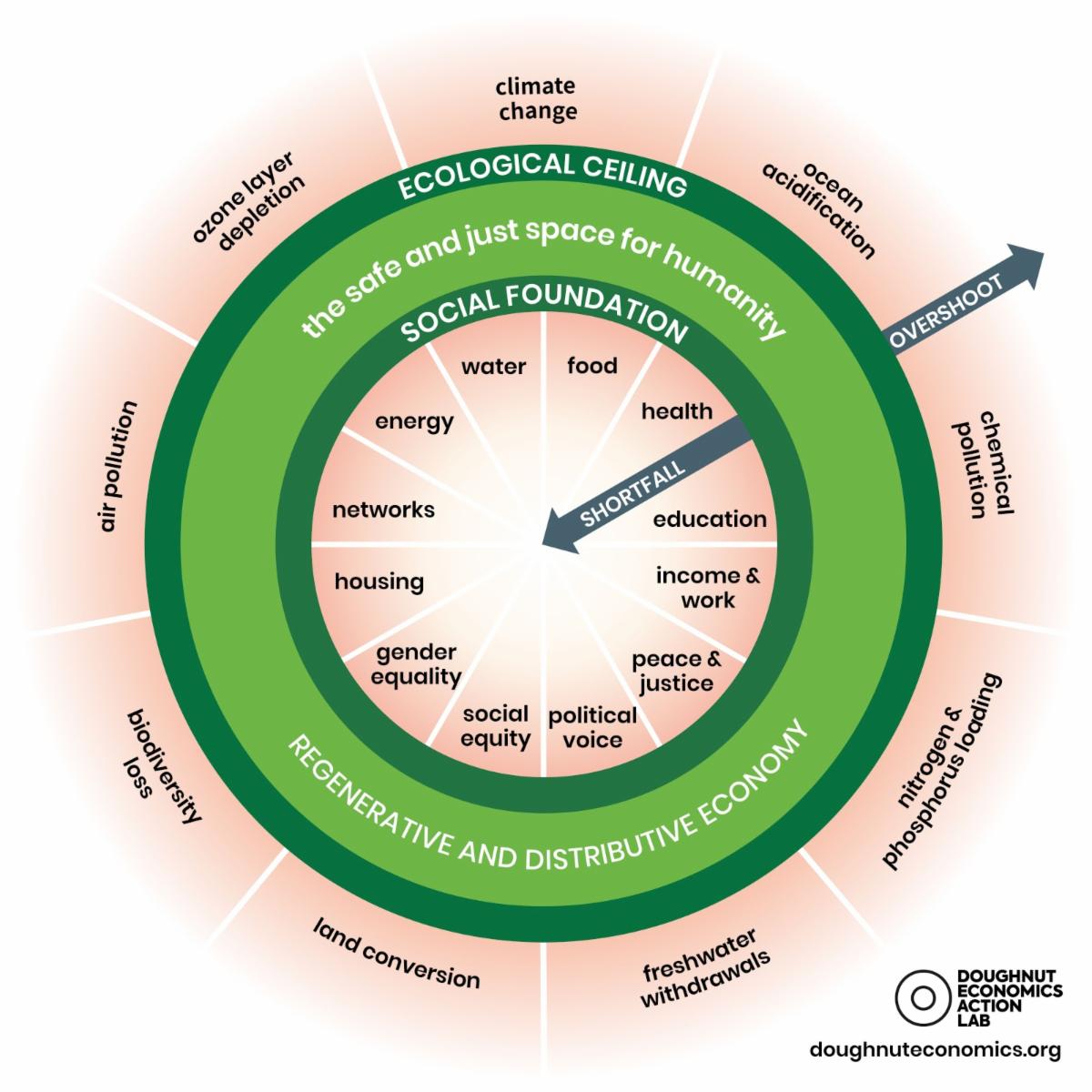
In recent years, I’ve become increasingly aware that meaningful and sustainable social transformation must also include our relationships with nature and the ecosystems of which we are part. Every aspect of our well-being depends on the health of these systems. About four years ago, I encountered Doughnut Economics, a book by British economist Kate Raworth. Her ideas opened my eyes to how our dominant, growth-driven economic model is failing both people and planet. In response, Raworth offers a new framework: a doughnut-shaped model that balances ecological ceilings with social foundations—defining a safe and just space where humanity can thrive.
| | |
What makes the Doughnut model especially relevant from a social constructionist perspective is its generative nature. As Gergen (1999) describes, generative theory challenges taken-for-granted assumptions and opens up new ways of seeing, understanding, and acting. Doughnut Economics redefines economics—not as a neutral, technical discipline governed by universal laws—but as a shared, ethical practice of resource stewardship. “We are all economists,” Raworth writes. We are all stewards of nature, social relations, and well-being.
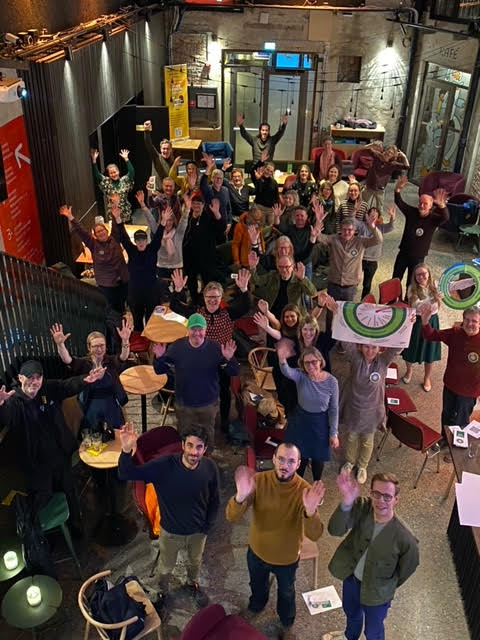
In 2024, we launched the Doughnut Economics Norway Network to localize and contribute to this global movement. In collaboration with the Doughnut Economics Action Lab (DEAL), we are building a learning- and action-oriented community devoted to reimagining our economies. This work is deeply relational and grounded in co-creation. Rather than designing change for communities, we aim to create it with them—amplifying local knowledge, creativity, and care.
For me, the integration of social constructionism and Doughnut Economics has become a deeply generative process. It’s not just about economic reform; it’s about re-storying the future. Social constructionism teaches us that change begins in conversation, in relationship, in how we name and make sense of the world. The Doughnut gives us a tangible, visual framework to centre those conversations—and turn them into collective action.
This is change as a co-creative, place-based process—fueled by imagination and grounded in the belief that economies should serve life.
| |
John Winslade, Ph.D.
With sadness the Taos Institute Board notes the passing of Taos Associate John Winslade.
"Dr. John Winslade died May 4, 2025 in his home country of New Zealand. John came to the US in 2003, accepting a professorship at California State University, San Bernardino, where he worked until 2021 as a tenured professor, supervisor and Associate Dean. John has an extensive publication record and was a sought-after international leader in the fields of narrative therapy, mediation, social constructionism and counseling. John was dedicated to service, loved good ideas, and supported others to find peaceful life pathways; whether he was working as a mediator for family court, spearheading projects in restorative justice for school districts, facilitating peace talks for high conflict communities, or hashing through complex theoretical concepts with graduate students. There are many who have been touched by his generosity and will carry his work forward, following in his footsteps to create what is just in actions and words." —Lorraine Hedtke, Ph.D.
|
| |
Last chance to register!
A four-week online course with 3 live meetings
May 19-June 16, 9:00-11:00 am EST
Join us in this journey to explore how aspects of the world that are taken for granted are socially constructed, thereby opening space for alternative, more generative ways to engage in complex situations and relationships. In this course you will not just learn about social constructionist theory and practice but also connect it to the challenges you face in your own work and explore the tremendous positive impact that this paradigm shift can have on society at large.
The interactive course includes 3 live zoom meetings. Between meetings, participants meet with a conversational partners to discuss the material (articles and videos) and questions for reflection. Join our learning community to experience first hand how knowledge is co-created! Learn more.
| |
|
Your facilitator:
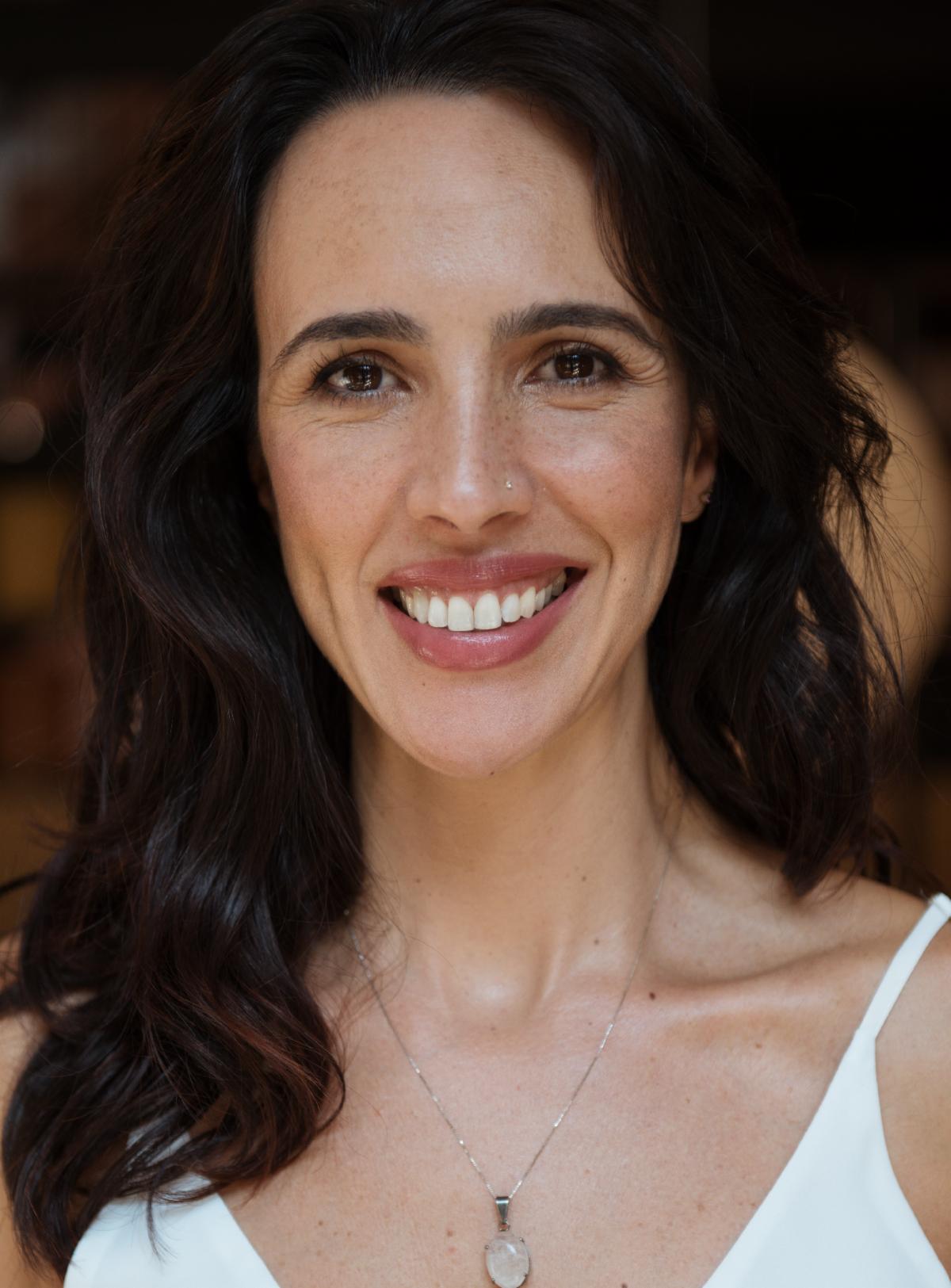
Celiane Camargo-Borges, co-author of Design Thinking and Social Construction
| | |
What participants are saying:
I would like to say how unexpectedly powerful this course has been for me.
I have tremendously enjoyed and benefited from this entire course and its process.
I dearly loved the conversations across the world. They were deep and intimate.
| | |
New Self-Paced Course, Start Anytime
Provocative, unsettling, liberating, inspiring…all have been applied to the dialogues on the social construction of knowledge. The ideas have swept across the academic world and into personal and professional life. For many, they contain the ingredients for a promising life together on this planet.
We are pleased to introduce the Taos Institute's first online self-paced course! In six modules, each with 3 short videos and questions for reflection, Ken Gergen introduces basic premises of social constructionist theory and how they apply to professional practices in all domains as well as everyday life.
Click here to learn more about the Taos Institute's first Self-Paced Course.
| |
Includes six modules with videos by Taos Institute Co-founder & President Ken Gergen! | | |
Joep C de Jong, The Netherlands
June 4, 1:00-2:00pm EST
What would happen if in our search in life for our gift(s) we could unconditionally hold a space in which the only prerequisite would be to see the other and be seen by the other? No career path, but a path that would be guided by the sole principle "To do what you love and love what you do," a space where we can meet in the silence of just seeing each other without the need to prove anything, a space that will eventually allow our real gifts, potential and possibilities to emerge. Throughout his life, Joep has been trying to discover and understand this process, applying, amongst others, Appreciative Inquiry, and designing questions from a space of being "lovingly curious," knowing that "I only can “Be” thanks to the "witnesses-who-see-me” in my life."
| |
| In this session participants will exchange stories on both the hope and the challenges we face when we want to find the space that will help us "migrate" from where we are to where we want to be. He will also share some of Peter Koenig’s thoughts on Love in Business where he uses the social construction concept as an approach that will help us widen our scope with regards to e.g. money. More details*. | | *You will be prompted to join, or sign in to, the Taos Institute Commons online community to access these events. It's free, quick and easy, and will give you instant access to events, resources, announcements, and a global network centered around social constructionist, relational, and appreciative practices. | | | |
May 16, 12-12:30pm EST
Whether you are new to the Taos Institute Commons online community or already a member (it's free and easy to join!), you are invited to this informal gathering to meet others in our global network to share stories of how you are applying (or hoping to apply) social constructionist, relational and appreciative approaches in your work and life. Stop by to say hello, we would love to meet you.
| | | |
Join with almost 2500 members from around the world in the Taos Institute Commons online community (free) as we explore social constructionist, relational, and appreciative theory and practices. You will instantly get access to free webinars, free books, event replays, announcements, workshops and courses, special interest and language groups, and meaningful connections with others interested in creating more promising futures, one conversation at a time.
Join in the Taos Institute Commons — it's free, quick and easy, to become a part of our global family!
| | | |
TIE is a center of gravity for researchers, practitioners and other like-minded people in Europe, who challenge the known and frozen paradigms of understanding, to build a better world for tomorrow. Join the TIE group in the Taos Institute Commons online community (free) to meet other relational practitioners in Europe.
| | |
TILAC serves as a regional and language hub to strengthen networks of cooperation and support among Spanish- and Portuguese-speakers; share and validate the unique knowledge and practices emerging from these regions; and contribute to the promotion of social constructionist thought. Join the Spanish or Portuguese group in the Commons (free), follow TILAC on Facebook or email tilac@taosinstitute.net.
| | |
The mission of TIJ is to build a network of collaboration and support led by Taos Institute Associates in Japan; to create a forum for dialogue centered on theory, to gather interesting cultural practices in Japan, and to disseminate them both domestically and internationally; and to contribute to the dissemination of social constructionist theory by translating foreign literature and organizing seminars. Visit the Taos Institute Japan Facebook page to connect with TIJ.
| | |
The RRN is a global initiative to explore, share, learn, and create practices and processes for doing research from a relational perspective. Online presentations featuring relational research projects will continue through the spring. Visit the Relational Research Network group in the Commons (free) for announcements. You may also explore their video series.
| | |
Taos Associates represent a network of more than 850 scholars and practitioners around the world, who have demonstrated exceptional talents, research, practices, and dedication relevant to the Taos Institute’s mission. You can find Taos Associates in your area on our website. TIAC is hosting two Virtual Tea, Story & Play sessions in the Commons on May 29 (free): 8:30am and 12:00pm — everyone is invited!
| | |
The ICCP Network, co-hosted by The Houston Galveston Institute and The Taos Institute, is an interdisciplinary program that provides an intensive, in-depth study of postmodern-social construction-relational theory and the possibilities for personal, organizational, and social transformation. ICCP partners with organizations in 15 countries and regularly host multilingual workshops. Visit their website for details.
| | |
|
East Side Institute
May 17, 10:30am-1pm or May 22, 7-9:30pm EST
In this two-and-a-half-hour workshop, Institute director Lois Holzman will introduce you to the conceptual framework and share four features of a developmentalist’s practice. You will be invited to try these on and have ample time to practice performing as developmentalists alongside Lois. Details
| | |
|
JST Institute
May 31, 2025, 10:30am-5:30pm EST
When people are consumed by despair and a sense of forboden, the notion of reengaging with hope and possibility can be challenging and risk trivializing their experience. We will explore the key elements of an inspiring, liberating conversation that generates hope, restores personal choice, strengthens social connection, and contributes to personal agency? Details
| | One way the Taos Institute carries out its mission to create brighter futures through social construction is by creating and disseminating a wide variety of resources for scholars, practitioners, and students interested in dialogic and relational approaches. These free resources span many disciplines and languages. To suggest a resource, email info@taosinstitute.net. | | | | The Taos Institute is a non-profit educational organization. We strive to keep our offerings free or at low cost to make social constructionist, relational, and appreciative ideas available to as many people as possible around the globe. Please consider supporting our mission of creating brighter futures through social construction by making a donation. For small, convenient monthly contributions, consider becoming a sustaining donor. | | | | |