-
Beyond Zoning Lines: Building Communities That Care
| -
Ecologically and Affordability Enhanced: Part 1
| -
The Elephant in the Room: The Importance of Cooperation in Cohousing
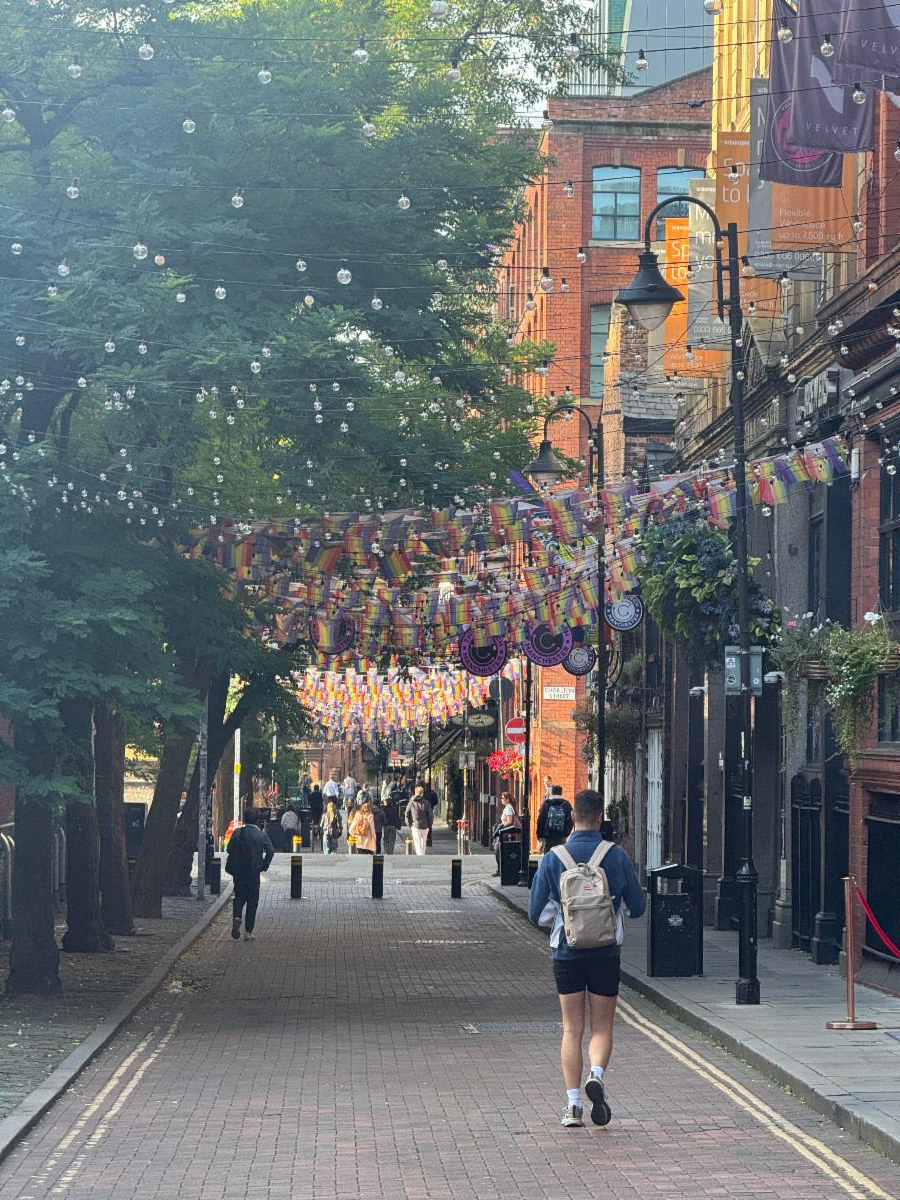
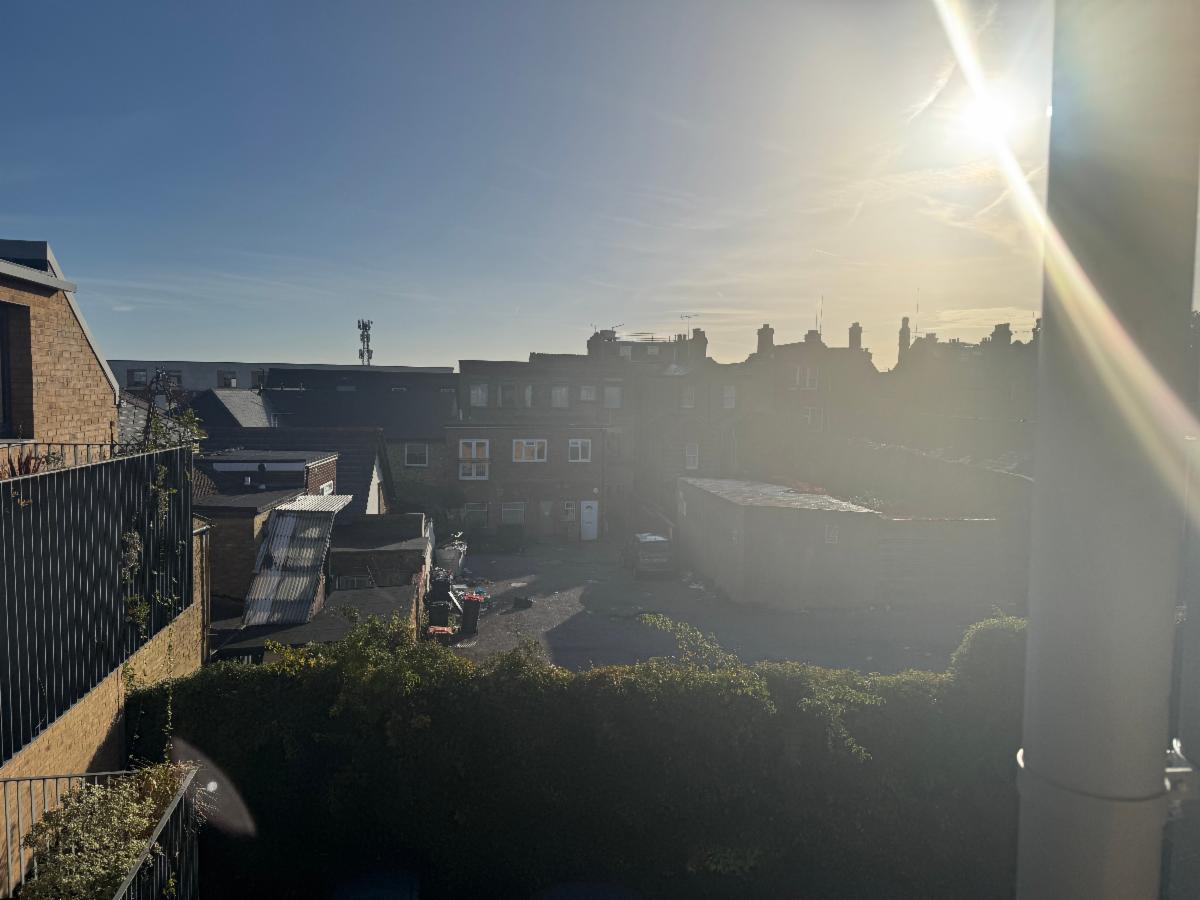
| | Beautiful day in Manchester | | | Beyond Zoning Lines: Building Communities That Care | | |
Some would say all of these countries use different nomenclature, have different zoning laws and etc., and of course that is true. However, end of the day we are just people talking to people, trying to solve good neighborhood making together. General plans, comprehensive plans, different names, same documents.
As much as I’d like to do a seminar for the British professionals that would likely to sharpen their zoning/planning skills as well as project management, site search skills, and site design skills, as well as adaptive reuse etc. – I’d love to do a seminar exclusively for the British audience. However, I firmly believe that the audience would not be big enough. This seminar will be presented in a way that folks from the U.S. of course, but also Britain, Australia, New Zealand, and others can hurdle the big miss between hoping for great neighborhoods and building great neighborhoods.
This class is to set cities up for success – In theory every city wants a high-functioning neighborhood in their town. It’s designed to set planners up for success – no planner wants to say “nay” to what is a genuinely good idea but they might because they don’t understand it. It’s designed to set future residents (cohousers) up for success – no cohousing wants to take 5-10 years when they know that it should never take more than 3 years. It’s designed to set existing neighbors and neighborhoods up for success – there are no better neighbors than cohousers. They care enough about their place, they keep an eye out for things, they’re involved.
| | |
It’s designed to set developers up for success, whether it’s a big project where the cohousing will just be part of it (like Cambridge U.K. hoping to build 10,000 new houses in the coming future) or just a smaller developer who plans to make a single cohousing development, but wants it to get readily and rapidly approved, and financed and marketed by allying with a cohousing group.
I worked with an Aukland planner once for a couple of hours on a cohousing project that we were working on there. Both of us marveled at how similar our systems are. But end of the day we’re all people trying to help people. We want to resonate with the planner, want s/he to resonate with the needs, wants, and desires for an efficient and fair, and equitable, and smart process. Everyone is trying to get the job done, yes to regulate as necessary, and yes to create as possible, and yes they can come together.
Ultimately, everyone wants to get the job done: regulate where and when it is necessary, find a process that is efficient, equitable, and practical. These goals don’t have to conflict.
After building more than 55 cohousing, I believe that the solution is within reach. What’s often missing is the knowledge, experienced skills, and shared understanding to bring these communities to life.
We can spend less time navigating the overly difficult, make it easier and have more time appreciating the great high-functioning neighborhoods (cohousing) that we all know are needed, if not essential.
| | Ecologically and Affordability Enhanced: Part 1 | | |
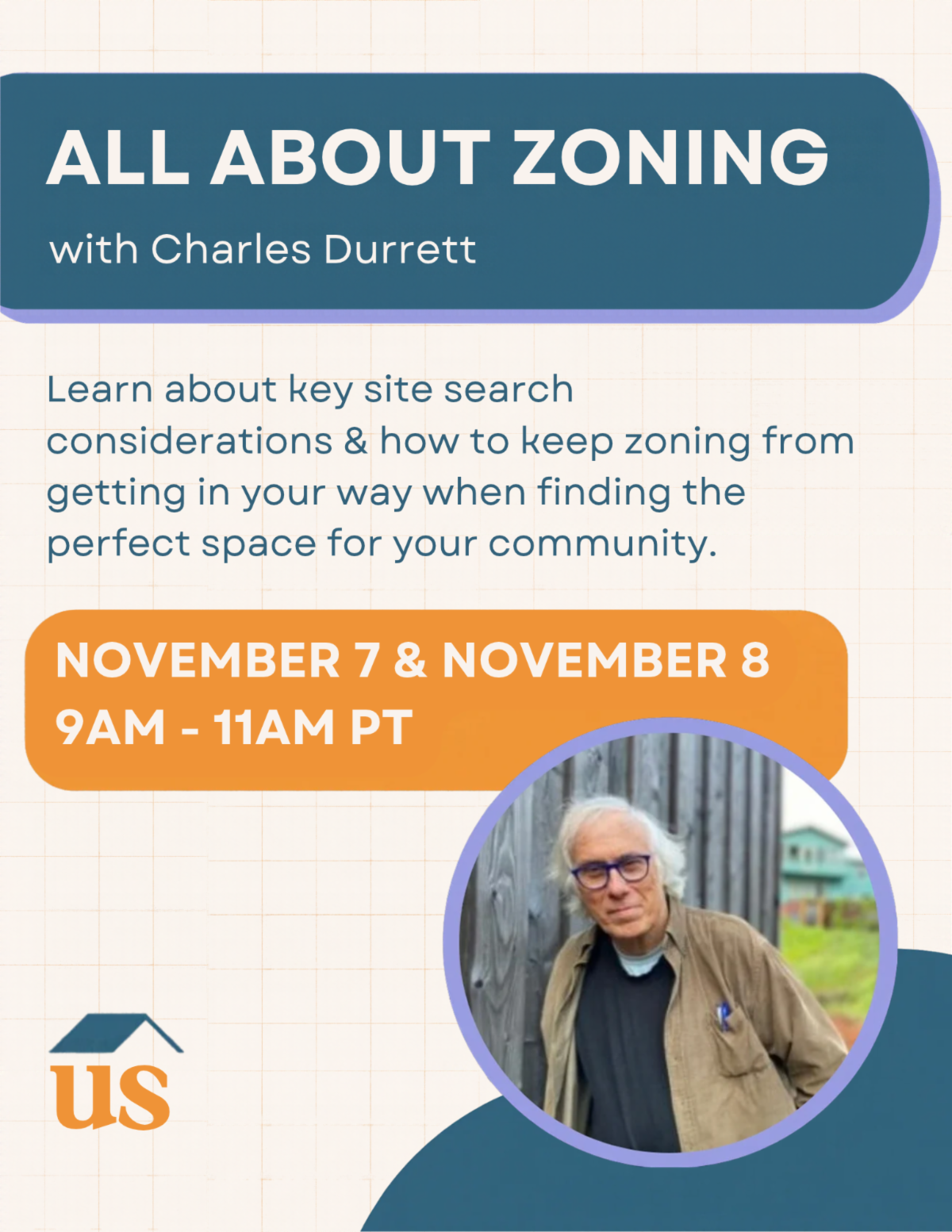
Affordability is another Elephant in the room. The Cohousing Company has always been successful at building cohousing communities at $50 less per square foot than what is originally quoted by local contractors. This series of 4 cohousing newsletter articles is designed to share that info. Nevada City Cohousing was quoted $150/sf and $200/sf by reputable and knowledgeable local contractors. We built it at $95/sf because we have a long track record of accomplishing high quality production construction. However, sometimes the biggest savings come from zoning changes. Come to the Nov 7,8 4-hour zoning class. See you there.
Community, affordability, and global warming and even race relations are not separate issues. Every city has people with quite different incomes but want the same thing in their neighborhoods–a safe place for children and elderly – a comfortable, connected place with great relations with neighbors. Some of the folks who will be great neighbors, but don’t have a lot of money. From what I know from living in small towns and cohousing is that those without money often make the best neighbors. So socially you do want it to be mixed and that means keeping the costs down so that more people and a diversity of incomes can participate.
| | |
1) Shared walls
a) Having designed numerous straw bale buildings, The Cohousing Company ended up at numerous conferences where we listened to designers’ debate whether those walls were R-25, or in effect R-35, or perhaps R-45 walls (the R-value being the resistance to heat transfer). I always asked, “What do you think about R-∞ walls?” That’s what you get when you have a neighbor’s wall next to another – no heat transfer at all. With 4,900 heating degree days, Nevada City Cohousing has had houses that have yet to turn the heat on after 20 years of living there. When the tenants have a thorough discussion about energy conservation, it can become a game, even a friendly competition among neighbors. All of these practices are very doable in multi-family housing.
2) Effective, non-toxic, repurposed insulation
a) We try to, and often do, use exclusively wet-blown cellulose insulation. No flanking, and it absolutely seals the void, trapping the maximum amount of air surrounded by insulation.
3) Natural light.
a) Don’t put headers above windows, instead use the rim joist (at 2nd floor framing and a rim board at the roof eave). Use the gable truss at the gable end. Use large, but good windows. We usually run 20-25% of the floor area in window area. Not long ago, energy efficient houses were limited to 15% and many of the early houses designed by The Cohousing Company come in at that number. But the last 50 that we’ve designed have been 20-25%, including glass doors and skylights. Consequently, the lights are never on during the day. If they are, something is wrong. Electric bills can average $0 a month with only an average of 1 kW per house if the natural lighting is done right.
4) Sustainably grown
(Forest Stewardship Council [FSC] Certified) lumber framed at 24” on center (O.C.).
a) There is no good reason to frame closer than 24” O.C. on buildings up to 3 stories high. By framing at 24” O.C., it uses 25% less lumber for wall framing and leaves more room for insulation.
5) Heating, Ventilation, Air Conditioning (HVAC)
a) Have one boiler per building for heat and domestic hot water (ex. showers and faucets). Use in-floor heating or radiant baseboards. HVAC costs can run $20-$30 per house per month using either electric or gas. Houses can generally avoid using air conditioning by applying with passive cooling techniques, although it will vary by location and climate. In those few places that actually require AC use mini-split air source heat pumps.
6) Use low to non-toxic materials in paint, glues, cabinets, carpets, linoleum flooring, etc.
a) Limit severely or completely avoid the use of volatile organic compounds and formaldehyde which can have adverse health effects on residents.
7) Acoustics
a) The environmentalists of the future will be the acoustic engineers who make it easier for the land-goblin North Americans to live closer together. We use double 5/8” insulation on both sides of the party walls as well as on the ceilings where there is a flat above. Use acoustic channels on the ceiling above, but never on the walls. Use double 5/8” gypsum on any other sound sensitive walls. There is a shared living dwelling project with 61 suites (bedroom and bathroom) that did not build good sound walls, and the average timeframe between moving in and moving out is less than one year. This isn’t conducive to community, nor is it sustainable from a business point of view. Land-goblin scenarios are also not conducive to community – everyone ends up driving to their house and become increasingly disconnected from one another.
8) For maximum cost savings see chapter 13 of Cohousing Communities: Designing for High-Functioning Neighborhoods. After all the secret ingredient to sustainability is community.
| | |
Whirlwind cohousing trip to the U.K. The Brits are getting serious!
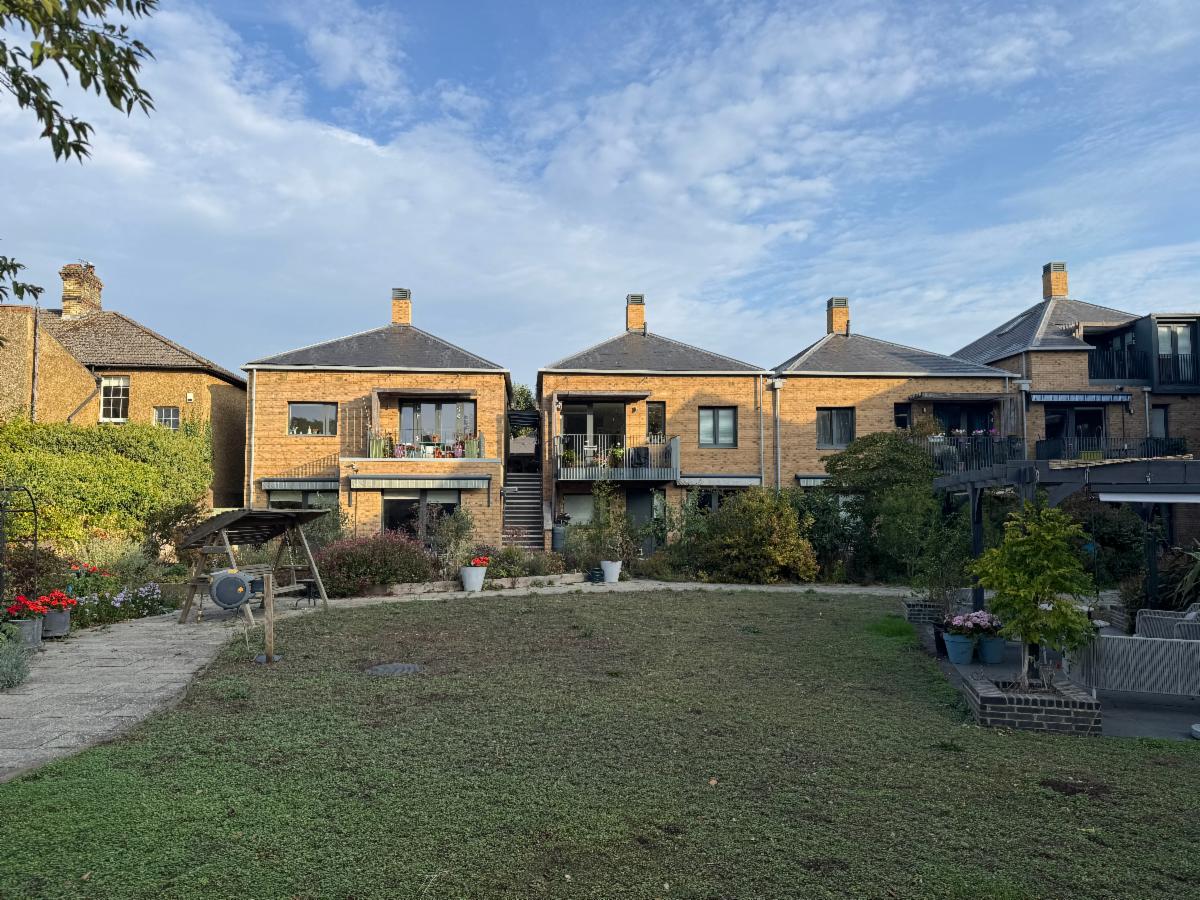
First stop New Ground, North London, the first Senior Cohousing Community finished in 2016. Visited with residents Rachel, Jude, and Vivian and the director of The U.K. Cohousing Network, Owen Jarvis. None have been done since and that’s exactly why I wanted to go. But I’ll get to that.
New Ground never disappoints – the cohousing grounds are giving and convivial. It enhances the character of the neighborhood perfectly. It took nothing away – it gave so much. Right next door is a lovely site for a second cohousing – maybe intergenerational. That’s another reason that I went there.
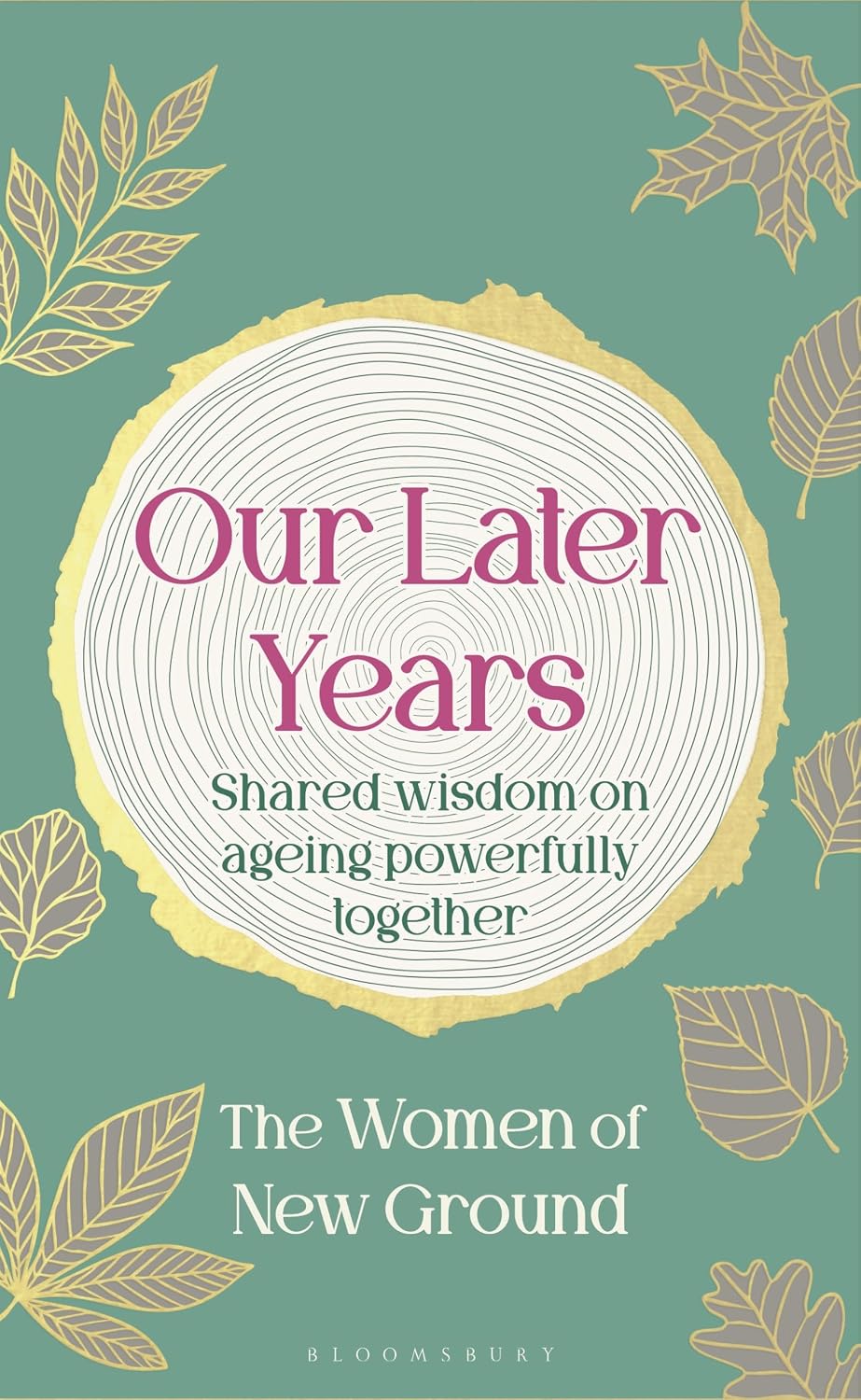
North London is not that crowded. I think that there are lots of sites and a lovely old neighborhood. A new one can happen right next door. New Ground is all female. Twenty-six women, 25 units (one couple). They just released a new book by the residents, and it is “brilliant” – a phrase I picked up in the old country. Our Later Years; and I have never read a book that better described day to day life in cohousing. Never read a book that better described a conscious creation of a successful cohousing social life nor a better more sustainable management scenario. If you want to read a book that details how to best, or should I say optimally, create and maintain harmony, I could not recommend a better one. A complete book review in a later newsletter – or better yet grab a copy– it’s well written and fun to read and it’s available on Audible (the book is better). But New Ground took 18 years to complete – that’s another reason I went. The Brits are motivated, and thoughtful, but apparently too nice to the bureaucrats. See the British Movie “Living”. It’s about a London planner who said no to every submitted project until 10 women walked into his office to demand a project to be approved – and it was.
| | New Ground Cohousing in Barnet | |
I had a small but gratifying role with New Ground. I facilitated a 4 hour meeting that adequately resolved the delays with the group and the Developer named Hanover.
Another reason that I went over. The U.K. current doesn’t have a covey of professionals that groups can depend on. Nor do the groups know when they need to hire them. I’m looking forward to solving this issue. But talking closely with The U.K. Cohousing Network director, Owen, and the U.K. cohousing board to do a complete debrief of lessons learned, and possible ways to expedite the process. The typical prejudice is that somehow it’s the group’s fault but I really don’t think so. There needs to be a somebody that can facilitate these mutually beneficial possibilities (deals).
The architecture of the common house is my big lesson from New Ground. Britain needs a professional to locate sites for cohousing groups and separately a facilitator to help put together deals. And they need architects that have adequately studied the book “Cohousing Communities: Designing for High-Functioning Neighborhoods” when it comes to designing the site, common houses, and other design elements, and how to save money.
| New Ground Cohousing in Barnet | The common house at New Ground has numerous big concerns. They’re “making it work,” but they should be able to go beyond “making it work.” The dining is too cold and clammy, the comfortable sitting area for after dinner to continue into smaller conversation is nonexistent. The lighting is the wrong temperature–should be 2700K (2600K to 2900K is fine) and the terrible acoustics will usher a sensitive person right out of the space. Reverberation should be .85 sec (.8-.9). And the feel should be warm and giving. Lots of warm wood, no ceiling mounted fluorescents. | | |
The Second Day
A long and bucolic north bound train to Lancaster. I forgot how green and agrarian Britain is.
| |
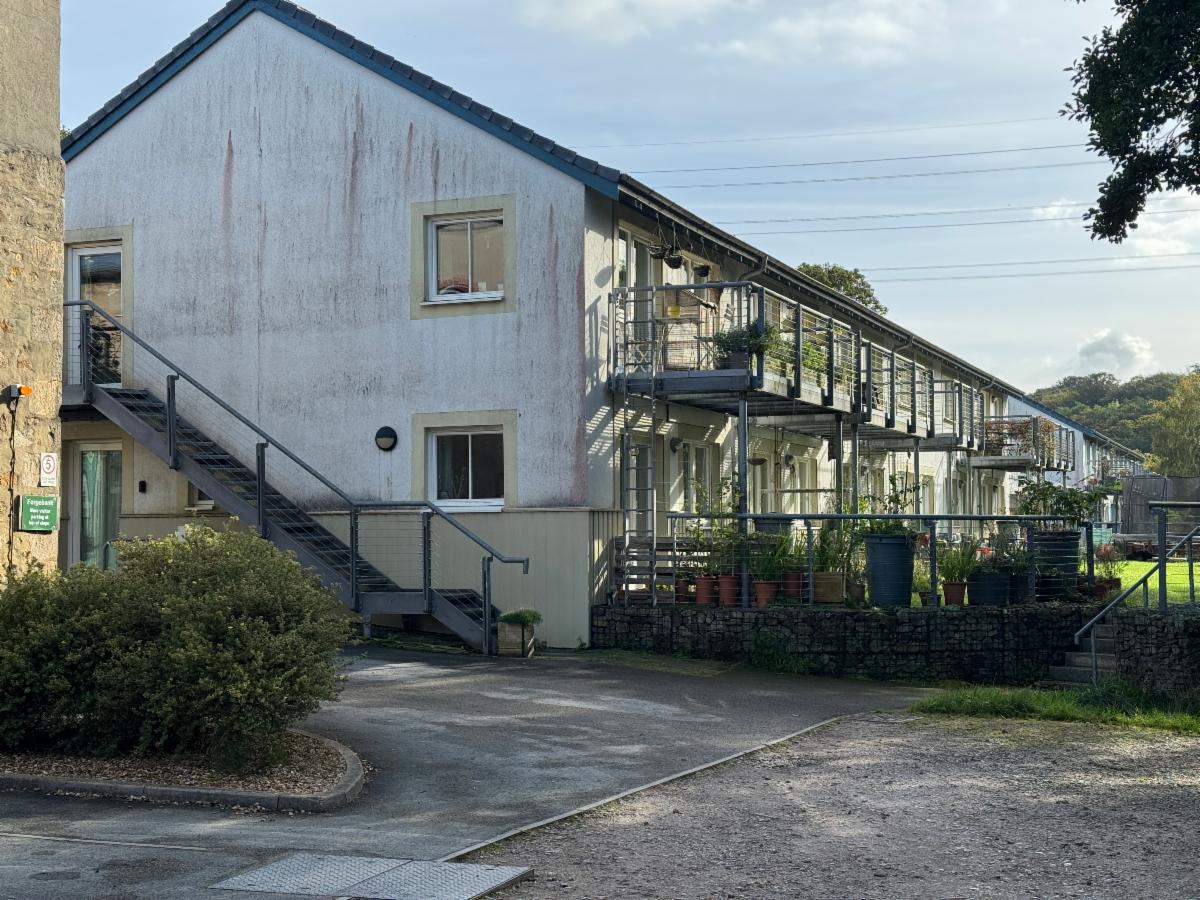
That project was the first project completed after our ten-day whirlwind trip in 2005. We did 10 presentations in ten days organized by Mark Westcome and Sarah Berger. Sarah became The U.K. Cohousing Director and called me 15 years later to inform us that they had since built 25 cohousing developments since our trip, and that 25 more were in planning. Lancaster Cohousing was the first.
The big take aways in Lancaster are
-
The group in particular Emma, Emma, and Allison are amazing.
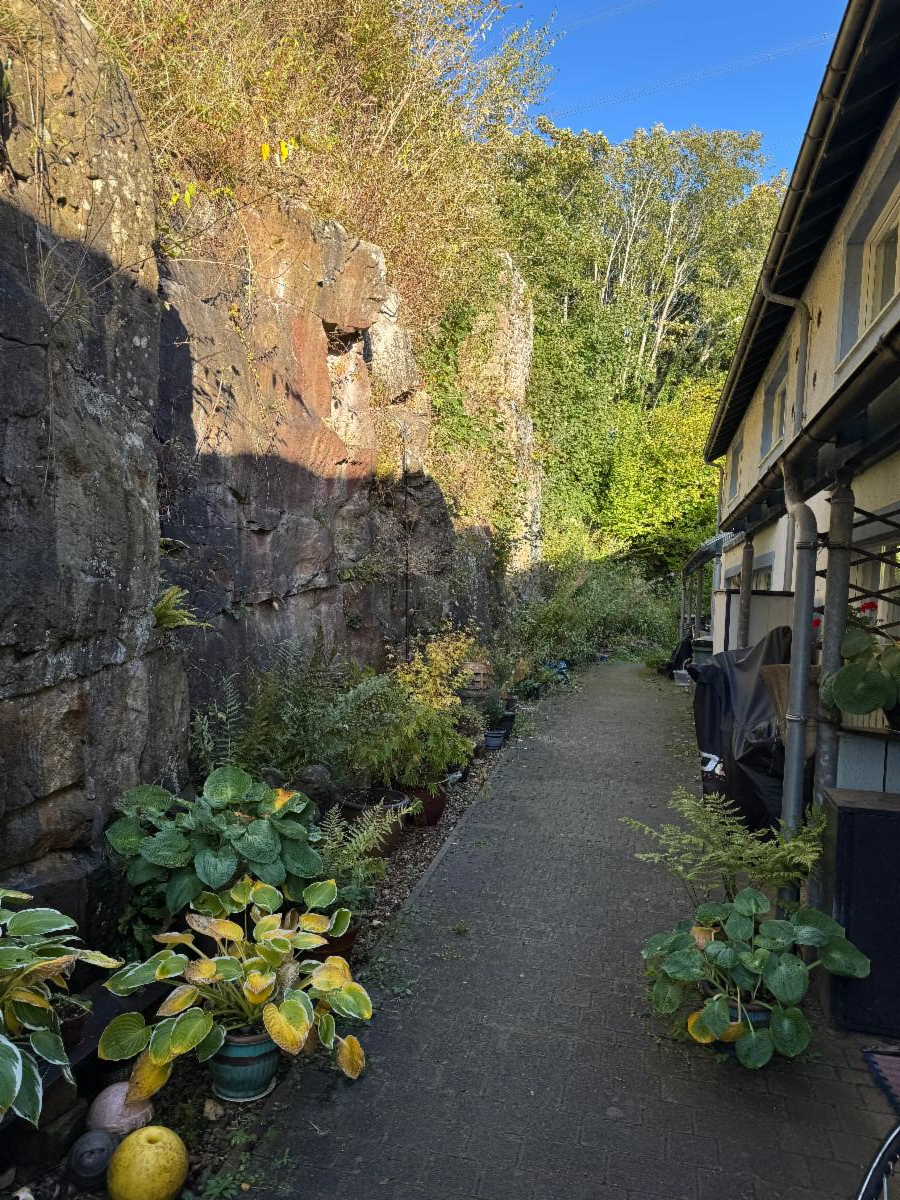
- Whoever found that site for them had very keen vision. Although at first it is a sliver of a site along the river, but they made the cliff–side site work by making the small flat area another 50 wider by carving up the cliff side. And having 20’-25’ high stabilized exposed sandstone shear verticals. The Geotech engineer and the civil engineer were particularly talented. The site plan and the use of existing building are brilliant.
| | |
But the sound in the common house chaperones and aggressively grabs you by the ear to force you right out of the room. The sitting area for after dinner smaller conversations is missing and somehow the plethora of sound coming out of the common house kitchen needs mitigation.
Competent and knowledgeable architects need to fix these. And somehow the management is missing the basics.
We need knowing each other, caring about each other, and supporting each other, more than anything else all of which leads to respecting each other and actually loving each other at some basic level. That’s lost. For the benefit of all a coffee maker in the common house would be is a benefit and anything else that brings people together–because then and only then will those appreciative sentiments grow. Forgive my forwardness but a lot of folks did real heavy lifting to make this happen and its sort of lost on folks who could be living in a functional neighborhood to appreciate those that busted their butt and to pay tribute to those who built this edifice to community for all.
| |
The lesson from the prospective senior cohousing next door to Lancaster cohousing is that planners are often not as well versed as the future residents in considering land use and the highest and best use for a particular site. They have already been working on this project way to many years, and they’re not even to first base.
Again, good advocates, and good architects are needed.
This is the story of the first 2 days, the U.K. Cohousing (the director and the board) have asked me to do a more complete lessons learned debrief so that projects can be built at less cost and much much more expeditiously and of course the big advantage of seeing all these projects is to improve our own systems and to see what we have and what we can improve.
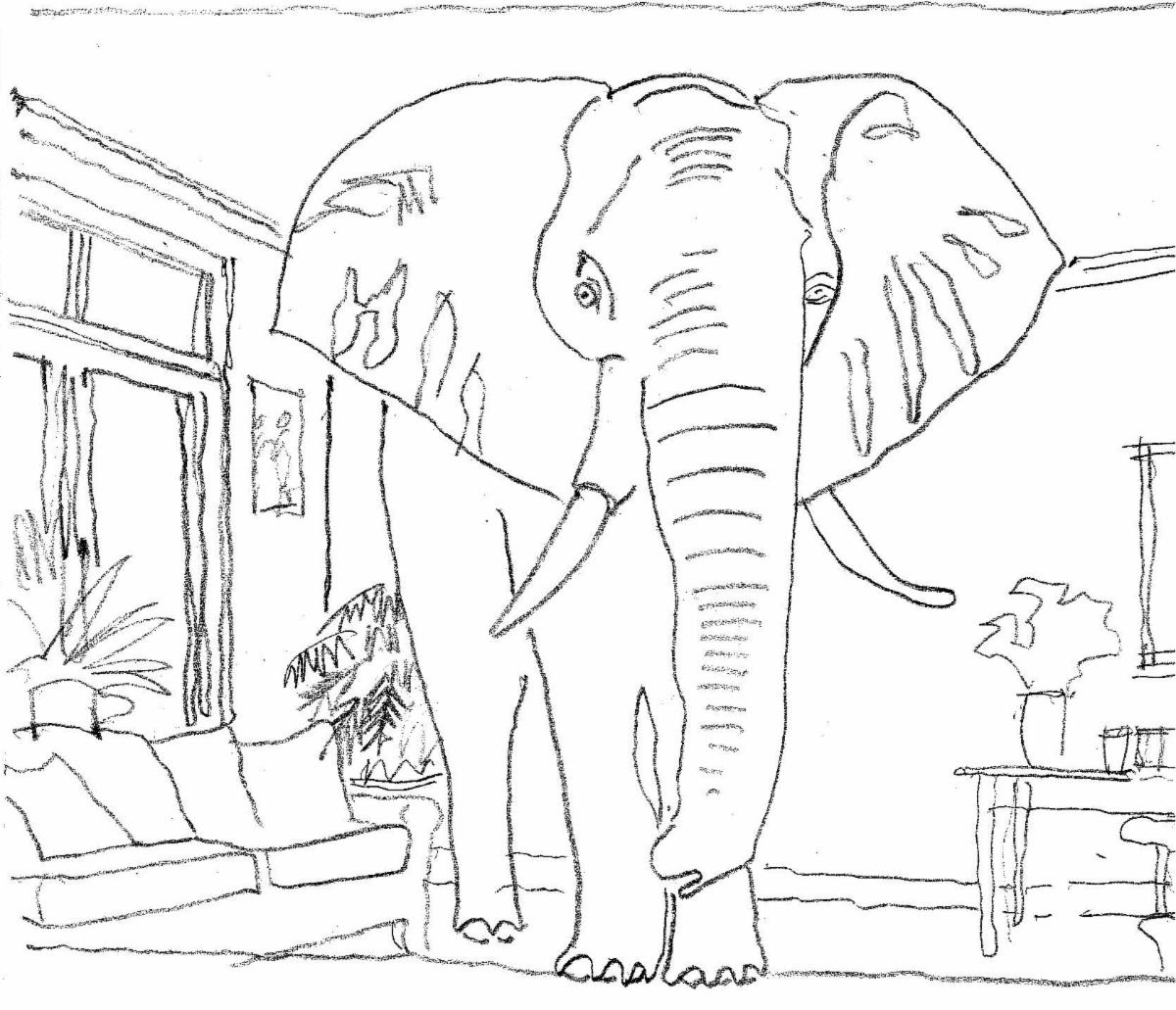
| | The Elephant in the Room: | Drawing by Charles Durrett | | |
The Importance of Cooperation in Cohousing:
A Book Review
| | |
Cohousing is impossible without a strong sense of cooperation. In cultures like my own, where competition is taught more often than cooperation, learning how to work together deserves deliberate attention.
Alfie Kohn’s No Contest: The Case Against Competition makes a compelling case for doing exactly that. I would give this thoughtful, thoroughly researched book another subtitle: The Case for Cooperation. Kohn challenges the familiar assumption that competition is natural, inevitable, and necessary to motivate people to do their best. Cooperation, he argues, is deeply rooted in human behavior and essential to our success.
Perhaps the members of a small clan discovered that hunting together brought home more food than hunting alone. Cooperation is not something we must force upon ourselves, nor is competition simply written into our DNA. Much of our behavior is learned and reinforced by the culture around us. If cooperation is not cultivated from childhood, we can still learn it later.
Kohn examines competition from many perspectives, drawing on research that challenges its supposed benefits. His discussion suggests that cooperation can improve performance across different levels of ability. Underachievers benefit, average performers benefit, and even gifted participants can exceed what they accomplish alone.
In cohousing, we often say that one plus one equals three. I have an idea; you have an idea. Through discussion, we develop something better than either of us imagined. Cooperation does not have to mean compromise, with everyone surrendering something valuable. It can mean thinking harder, thinking more carefully, and discovering possibilities together.
After decades of designing cohousing, I would add another benefit: cooperation is much more fun.
Cohousing is an excellent place to practice it. People learn to cooperate while planning a neighborhood, designing it, and getting it built. Once they move in, that learning continues. Eventually, cooperation becomes part of everyday life.
| | |
Where I live, 34 households share one lawn mower. It is an excellent electric mower, affordable for everyone because we purchased it together. Sharing equipment is simple, but its implications are substantial: we can enjoy better tools while spending less and consuming fewer resources.
Water use offers another example. Before moving into cohousing, the average household's use was more than 300,000 gallons annually in their single-family homes. Within a couple of years, household use in our community was below 70,000 gallons annually. In drought-prone California, that matters.
What we share most, however, is knowledge and energy. Someone suggests a more efficient drip irrigation system. Someone else knows how to install it. Another person helps organize the work. When cooperation becomes the default, possibilities emerge that are difficult to imagine when every household operates independently.
The same principle applies to creating the neighborhood. I often remind groups that an individual does not manifest a cohousing community. One person can ignite the idea, but bringing it into existence requires people to plan, make decisions, solve problems, and accomplish things together.
Enthusiasm helps, but it is not enough. People need the willingness to learn, and that learning never ends. Every combination of personalities and circumstances presents new challenges. Cooperation is a continuing practice, strengthened through use.
| | |
I once stayed with a family whose children divided their year between Denmark and the United States. The nine-year-old described participating in cooperative school projects at least weekly in Denmark and never experiencing them in his American school. It was one child’s observation, but it stayed with me. Cultures teach cooperation through the opportunities they provide to practice it.
This is why Kohn’s argument matters beyond any single neighborhood. Competition is so familiar that we often stop noticing it. We assume that someone must prevail and someone else must lose. Cooperation asks us to consider a different proposition: I can succeed because we succeed.
One of the most rewarding parts of my work is hearing people say that learning to accomplish something together was among the most valuable outcomes of creating their community. They arrived wanting a neighborhood. They left the development process with skills they could bring to their workplaces, churches, and schools.
Those skills produce tangible results. Watch a cohousing group develop a site plan, work through disagreements, and advocate for better land use. Character and integrity become visible in the effort to build something worthwhile. People move beyond complaining about what is wrong and take responsibility for creating something better.
I have worked for conventional developers whose attention centered on competing with one another. Too often, the resulting neighborhoods felt predictable and disconnected.
Working with future residents brings different priorities into view: places to meet, comfortable shared spaces, and opportunities for everyday conversation.
| | |
Visitors to cohousing frequently respond to its beauty. To me, that beauty includes the relationships the design supports. People talk outdoors through spring, summer, and fall. Homes and common houses offer warmth and companionship in winter. The neighborhood’s appeal grows from people participating in its creation and its life.
Cooperation also keeps knowledge circulating. Good ideas emerge, improve through discussion, and become shared accomplishments. Informal tutoring happens naturally: one neighbor teaches another a skill, explains a process, or helps solve a problem. That exchange can continue throughout our lives.
No Contest is not a new book, but its central questions remain relevant. What actually motivates people? What helps them flourish? What becomes possible when success is shared?
For anyone interested in cohousing, these questions are practical. A neighborhood takes shape through repeated acts of cooperation, and its quality depends on carrying that practice forward after construction ends. The buildings provide a setting; the people keep creating the community.
Kohn’s book offers a powerful invitation to question habits we have inherited and develop capacities we may have neglected. Read it with your own experiences in mind, and consider what you might accomplish with others.
The reward is not simply a finished project. It is the growing confidence that, when another challenge arrives, we have people beside us and experience working through difficulties.
Cooperation is how cohousing gets built. It is also part of what we are building. Perhaps it is the whole point.
| | |
|  | |
by Matt Drake for Oxford Mail
| |
| | | | |
by Not Born Yesterday Podcast
| |
| | | Charles Durrett sits down with architect, researcher, and community development expert Nazin Bagherynejad to explore how housing design can dramatically influence social well-being. The conversation expands beyond architecture to policy, exploring how interdisciplinary thinking, community participation, and better design practices could reshape the future of affordable housing for older adults. | | | | Patricia Darlington, one of the founders of Oakcreek Community in Stillwater, Oklahoma shares the personal story that first led her to discover cohousing and how that discovery turned into a real neighborhood built by ordinary people with a shared vision. Ever wondered how cohousing communities get started or why more people are seeking alternatives to living alone?this conversation offers an inside look at the process and the philosophy behind it. | | | | Charles Durrett chats with Alan Carpenter, co-creator and co-director of the Canadian Cohousing Network. Together they explore the evolution and impact of cohousing in Canada and beyond. They discuss the origins and growth of the Canadian Cohousing Network, the success of communities like Windsong Cohousing, and what makes these neighborhoods thrive. | | | | |
What if housing, social life, and daily needs were woven together into a walkable, intergenerational fabric?
Gary Morrison, the chief executive officer of Campus Communities, draws from real projects and decades of experience, this conversation dives into how underutilized land—like parking lots and peripheral campus edges—can be transformed into thriving neighborhoods.
| | | | Margaret Roesch, co-founder of Village Hearth Cohousing in Durham, North Carolina—the first LGBTQ+ cohousing community in the United States–shares how she and her wife helped bring Village Hearth to life from the ground up and why they chose to create a community where LGBTQ+ elders could live openly, safely, and connected with others. What began as a response to the fear of isolation in later life became a bold, community-driven journey to age with pride. | | | | Vesanto Melina, registered dietitian, author of over 15 books, and resident of Vancouver Cohousing — explores how common meals bring cohousing communities to life. Dig into: how shared cooking builds trust, how plant-based eating can work at scale, and why showing up to dinner on time might matter more than you think. This conversation will leave you hungry for community — and maybe dinner. | | | | What happens to adults with I/DD when their parents can no longer care for them? It's one of the most urgent and overlooked housing crises of our time — and intentional community may be one of the most powerful answers. In this episode. Charles Durrett sits down with Desiree Kameka Galloway, Director of the Autism Housing Network and lead consultant for Neuro-inclusive Housing Solutions. | | | | Quimper Village founding members Carolyn and Jack Salmon to unpack how their senior community in Washington went from a church meeting to a finished neighborhood with 28 homes in just three years. They share the philosophy that anchored everything — "you're buying a community, and a nice house comes with it" — and explain why hiring the right project manager (and keeping group members out of that role) made all the difference. | | | | What can a philosophy professor teach us after two decades of living in community? Carl Hall, Nevada City Cohousing resident and retired professor of philosophy, reflects on how an avowed introvert came to find social heaven, why cooperation deserves the benefit of the doubt, and how cohousing offers answer to what he sees as a growing culture of separation. | | | | Drawing from her experience rebooting three different communities, educational learning consultant and facilitator Julia Jongkind shares the surprisingly simple practices that can make the difference between a meeting and a meaningful conversation. Hear why every voice needs to be heard, how skilled facilitation can prevent meetings from becoming battlegrounds, and why routing conflict through a trusted facilitator helps conflict-averse members feel comfortable. | | | | Anthropologist Richard Senghas has lived in cohousing for 25 years and helped start two communities, including the exceptional FrogSong in Cotati, California. Drawing on his background studying how humans use language and build relationships, he digs into what makes cohousing work: "intentionally accidentally" bumping into your neighbors, the discipline of deep listening, and the slow, habitual work of becoming the kind of people who can live well together. | | | | Charles talks with tenacious project manager, Marty Maskall about what it actually takes to get a cohousing project approved. Together they discuss preparing for the obstacles, the hardships of the zoning process, how to win over the neighbors, the city, and the county. Learn when to fight the bureaucrats and when to punt, and why the group's willingness to keep showing up can make all the difference. | | | | Can cohousing do what so much of American life can't — bring genuinely different people together? In this episode, host Charles Durrett sits down with Alan O'Hashi, author and Silver Sage Cohousing resident. Alan reflects on a lifetime of collaborative living, from a large extended family to co-op houses to senior cohousing, and on his experience as one of the few people of color in a predominantly white movement — "the raisin in the Silver Sage oatmeal." | | | | Psychologist, author, and podcast host Dr. Richard Louis Miller joins Charles Durrett to make the case that connection isn't a luxury — it's a biological need we've engineered out of modern life, and one that cohousing is uniquely built to restore. Dr. Miller traces how architecture, economics, and the pandemic have manufactured isolation and offers small, concrete antidotes anyone can start this week. | | | | Senait Brown, a community organizer and single parent, shares how her community–House of Mkeka, an eight-household intergenerational pocket neighborhood being developed by a group of Black families in Seattle–chose "self-determined communal living": pooling their collective net worth and pursuing grants, donations, and community resources rather than taking on thirty-year mortgages or accepting the AMI and resale caps of conventional affordable housing. | | | | Owen Jarvis, director of the UK Cohousing Network and co-founder of the Community Led Housing Growth Lab, managing Chuck's upcoming UK tour through Lancaster, Manchester, Bristol, Oxford, and London. They discuss how cohousing has grown in Britain since its first community opened in 2003, and what needs to change for today's housing landscape. Hear about the London School of Economics' study on how much senior cohousing could save government. | | | | |