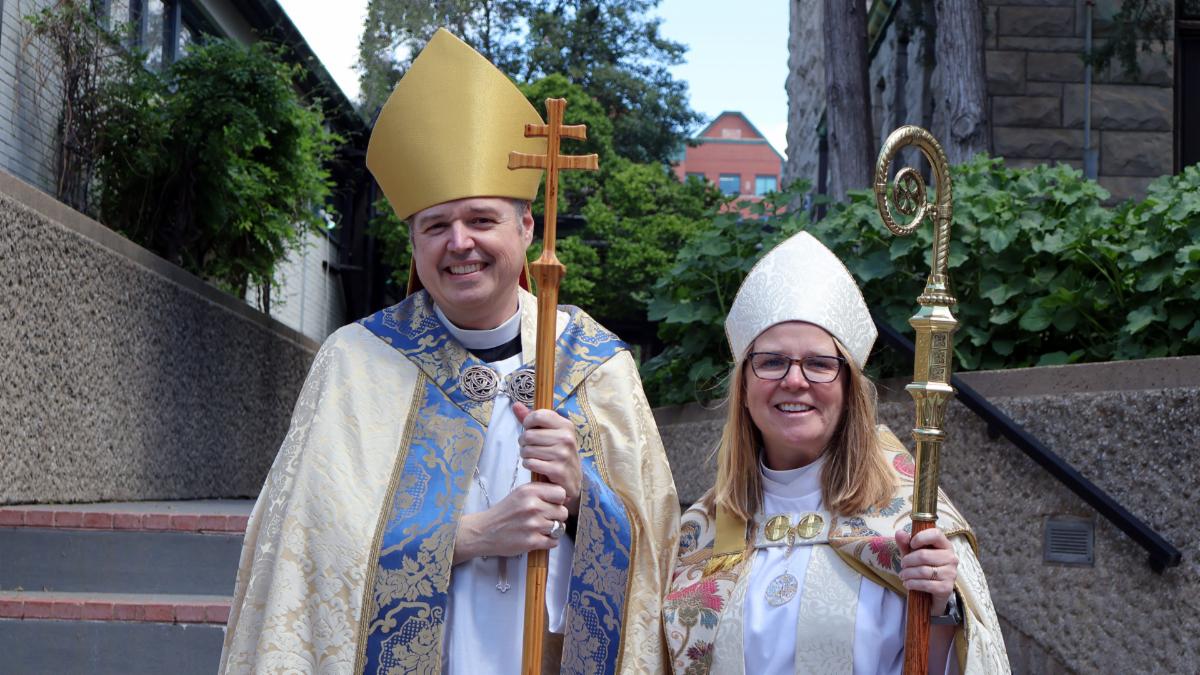
Become an expert
Last week we introduced this new feature of our weekly e-mail - learning the terminology of the Episcopal Church.
Keeping with last week's lesson, which defined a Bishop, today you'll see there are actually many different kinds of bishops!
Can you name the Bishop of the Diocese of West Missouri and the Presiding Bishop?
Diocesan Bishop: The primary bishop of the diocese. Sometimes referred to as the “Diocesan”; less often referred to as the “Ordinary”. In the Episcopal Church the Diocesan Bishop is elected by the Diocesan Convention.
Assistant Bishop: A bishop appointed by the Diocesan Bishop to assist the Diocesan and to serve under the Diocesan’s direction.
Assisting Bishop: A bishop appointed by the Diocesan Bishop to provide short-term assistance with episcopal duties in the diocese.
Bishop Coadjutor: An Assistant Bishop with the right of succession upon the resignation of the Diocesan Bishop. Before a Bishop Coadjutor is elected, the Diocesan Bishop must consent to such an election and state the duties which will be assigned to the Bishop Coadjutor when duly ordained and consecrated.
Bishop Elect: A priest elected to be a Diocesan Bishop, but not yet ordained and consecrated as bishop. The term may also apply to a person who is already a bishop in another diocese, but who has not yet been officially invested with authority in the new diocese.
Bishop Provisional: A bishop authorized to serve a diocese whose own bishop is unable to fulfill that ministry, until the diocese elects and consecrates another bishop of its own. The Diocesan Convention may revoke a provisional charge at any time.
Bishop Suffragan: A bishop elected by the Diocesan Convention to assist the Diocesan Bishop and to serve under the Diocesan’s direction. Unlike a Bishop Coadjutor, a Bishop Suffragan has no automatic right of succession to the diocesan bishop.
Presiding Bishop: Chief pastor of the Episcopal Church. The Presiding Bishop is elected at the General Convention of the Episcopal Church by a vote of all bishops for a term of nine years and is required to resign diocesan jurisdiction upon election.
|