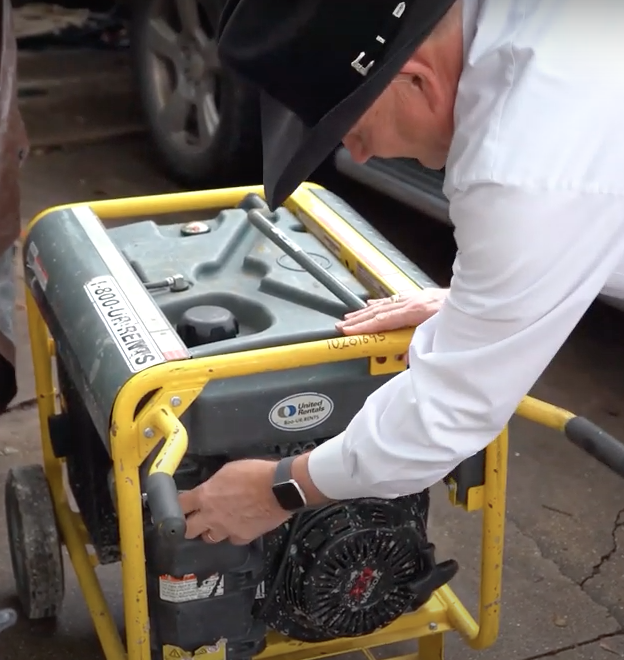
Jim recommends testing your generator now and make sure it is ready to go just in case you need it...
Install a transfer switch before the next storm. A transfer switch connects the generator to your circuit panel and lets you power hardwired appliances while avoiding the glaring safety risk of using extension cords.
Don’t attempt to backfeed your house. Backfeeding means trying to power your home’s wiring by plugging the generator into a wall outlet. This reckless and dangerous practice presents an electrocution risk to utility workers and neighbors served by the same utility transformer. It also bypasses some of the built-in household circuit protection devices, so you could end up frying some of your electronics or starting an electrical fire.
Never run a generator in an enclosed space or indoors. Most generator-related injuries and deaths involve CO poisoning from generators used indoors or in partially enclosed spaces.
Always place the generator at least 20 feet from the house with the engine exhaust directed away from windows and doors.
Don’t run a portable generator in the rain. You can buy tents for generators—that keep them shielded but still well-ventilated.
Before refueling, turn off a gas-powered generator and let it cool. Gasoline spilled on hot engine parts can ignite. Allowing the engine to cool also reduces the risks of burns while refueling. Stock up on extra gasoline and store it properly. When you think you’ll need to use the generator for an extended time, you’ll want extra fuel on hand. Just be sure to store gas only in an ANSI-approved container in a cool, well-ventilated place.