September 6, 2024

Newsletter for September 6, 2024

This Issue:

  • Congress is Failing America’s Farmers
  • County Farm Bureau Annual Meeting Dates Set
  • Tool Available For Pending Corporate Transparency Act Requirements
  • Nevada Department of Agriculture Seeking Increases In Cost Of Chemical Registrations
  • AFBF President Calls For Actions To Step Up Trade Building Efforts
  • Fresh Beef Prices Hit Record Highs – AFBF Market Intel Offers Details
  • Nevada Farm Bureau Urging A “NO” Vote On Question 3
Nevada Farm Bureau Website

Congress is Failing America’s Farmers

American Farm Bureau Federation President Zippy Duvall commented on USDA’s net farm income data, which shows a 23% drop in on-farm income since 2022.


"The drop in net farm income is not just an economic hiccup, it’s evidence of an agricultural downturn. High inflation, severe weather and plummeting crop prices should serve as a wake-up call for Congress to finally step up and do the right thing by modernizing the farm bill.


“We've lost 141,000 farms in five years—is Congress going to wait to act until we lose another 150,000 or 300,000? It has been two years of kicking the can down the road when it comes to the farm bill, and there is no road left for some farmers in light of the current economic realities and antiquated safety net programs. Congress is failing America’s families, not just on the farm, but in every home that relies on the safe, affordable food grown by the men and women who work year-round to provide it.


"It’s been more than 100 days since the House Agriculture Committee passed a bipartisan bill that addresses the needs of farm and ranch families. Since then, there has been no action in either chamber. I call on our elected leaders to show they are capable of putting politics aside—as they have in the past—to pass a new modernized farm bill. It can be done. It must be done."


Even when net farm income was higher, more than half of the farms in the U.S. were not profitable, according the 2022 Census of Agriculture. Currently, farmers are paying the highest dollar amount ever on interest, labor and taxes based on today’s USDA report.


County Farm Bureau Annual Meeting Dates Set

At this point there are three county Farm Bureaus who have announced their 2024 annual meeting dates.  They are:


  • Churchill County Farm Bureau – October 9 at the Golf Course in Fallon
  • Clark County Farm Bureau – October 29
  • Lyon County Farm Bureau – October 16 at the Lions Club House in Yerington

Tool Available For Pending Corporate Transparency Act Requirements

The American Farm Bureau Federation (AFBF) has shared this tool, a document designed by the Main Street Employers Coalition (AFBF is a member of the steering committee) to provide some helpful tips to folks trying to figure out the Corporate Transparency Act - whether and how to file their Beneficial Ownership Information with FinCEN. 


Nothing in the document is intended as legal advice. You are encouraged to take any questions of that nature to an attorney. 


The deadline to register for businesses in existence on January 1, 2024, is December 31, 2024. Businesses formed this year have 90 days from incorporation to file. 

Nevada Department of Agriculture Seeking Increases In Cost Of Chemical Registrations

The Nevada Department of Agriculture (NDA) Division of Plant Health and Compliance is conducting a survey to assess the potential impacts of proposed changes to Nevada Administrative Code (NAC) Chapter 586.011 on businesses. The changes proposed to NAC 586.011 pertain to the regulation of pesticide registrations.  Please click here to access the survey. This survey should take 5-10 minutes to complete.


Please note, this survey is the first step in assessing the impact of these proposed changes in accordance with Nevada Revised Statute (NRS) 233B.0608. Participation in this survey is voluntary, and data that you provide will be used to help the NDA draft a business impact statement. This statement, created from the results of this survey, will be available as part of a future public workshop announcement. In addition to completing this survey, you may also provide public comment on these proposed changes at a future workshop, which will be announced after the survey closes. We thank you for your time and feedback. 

Please review the proposed changes to NAC 586 prior to taking this survey. The link to these changes is provided here - Proposed changes to NAC 586


The deadline to complete the survey is Wednesday, Sept. 22.

AFBF President Calls For Actions To Step Up Trade Building Efforts

American Farm Bureau Federation (AFBF) President Zippy Duvall used his most recent Zipline Column to express the importance of U.S. trade efforts to go to work in seeking opportunities for growing export agricultural trade.


“USDA released its latest trade outlook the last week of August, and, unfortunately, the numbers are going from bad to worse.” Duvall shared, “For the 2024 fiscal year, we can expect a deficit of $30.5 billion -that’s nearly double last year’s record deficit of $17.1 billion.” 


“We need new trade deals to reduce barriers and open new market opportunities for U.S. farmers and ranchers.” Duvall said.

Fresh Beef Prices Hit Record Highs – AFBF Market Intel Offers Details

One of the issues at the top of the lists for voter concerns involves the increased prices that consumers are paying at the grocery store.  Supposedly, this will be dealt with by one of the candidates who is seeking the Presidency through actions that will stamp out greed and price gouging by those involved in the food supply chain.


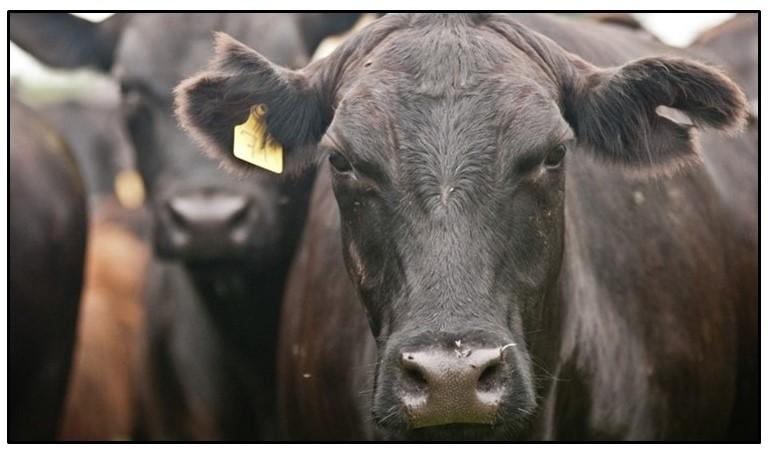
One of the major areas that has witnessed significant increases in prices is fresh beef prices.  Bernt Nelson, an American Farm Bureau Federation Economist, has written a piece on the organization’s Market Intel report, headlined as “Retail Price Of All Fresh Beef Hits Record of $8.15 Per lb.”


Nelson covers the background of what’s been happening in the beef production sector covering some of the recent history and what has gotten us to where we are.  As is pointed out, there’s a lot more to the factors that brought about the record level of fresh beef prices.  Along with the background on the consequences of the production challenges and inflationary increases that producers have had to deal with, he offers a record of the points since July of 1987 when the same report by the USDA Economic Research Service estimated the all fresh beef price was slightly above $2.  This trend showed that in July of 2015 the price level was up to $6 per pound, but then slipped back from there until about July of 2020 and 2021 when it again hit the $6 per pound mark.  From there the graph shows that around July of 2022 the level had reached $7

Nevada Farm Bureau Urging A “NO” Vote On Question 3

The Nevada Farm Bureau Board of Directors, following presentations by both the supporters of passage of Ballot Question 3 and those who are opposed to passage, made the decision to support a vote against passage of this proposed change to Nevada’s Constitution.  


Ballot Question 3, if adopted would amend the Nevada Constitution to establish a system of “Ranked-choice voting.”  Ranked-choice voting (RCV) is an alternative voting method where voters rank candidates in order of preference instead of choosing just one. If a candidate receives more than 50 percent of first-preference votes, they win. If not, the candidate with the fewest votes is eliminated, and their votes are redistributed to the voters' next preferences. This process continues until a candidate secures a majority of the votes. 


As the team working to persuade Nevada voters to vote “NO” on Ballot Question 3 have shared, this proposal would be bad for Nevada:

1. Complex and Confusing: RCV can be confusing for voters. The process of ranking candidates and understanding how votes are redistributed can lead to mistakes and spoiled ballots, disenfranchising voters. 


2. Longer and Costlier Elections: Counting RCV ballots is more complicated and time-consuming, leading to longer waits for election results. This complexity also increases the cost of administering elections. 


3. Reduced Voter Turnout:*Studies have shown that voter turnout can decrease under RCV due to its complexity. When people don't understand the system, they are less likely to participate. 


4. Potential for Unfair Outcomes: In some cases, RCV can result in the election of a candidate who did not receive the most first-preference votes, which can feel unfair to voters. 


Please visit this website to learn more details and consider adding your name with those who are voting “NO” on Nevada Ballot Question 3.

Have A Great Weekend!