Weekly Digest Number 41 - October 12th, 2021 |
|
(Editor's Note: As can be seen in the article below, rail workers are not the only ones having their butts kicked by corporate America. But the good news is that workers are organizing, and that the strike is making a comeback! Workers are fighting back and winning. We can too!) |
|
America Is in the Midst of a Dramatic Labor Resurgence |
|
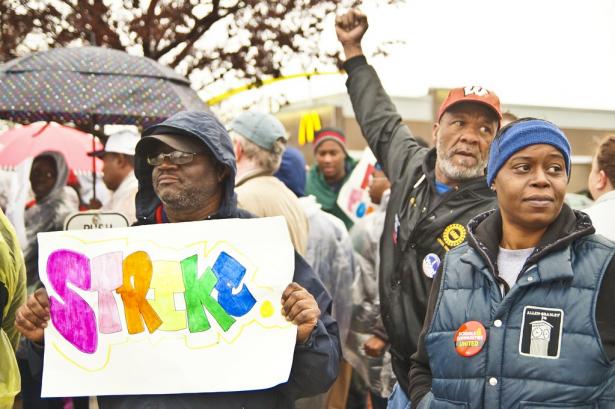
Our nation is in the midst of a labor revolution. It’s a wonderful thing, and you may not be aware of it.
After an emotionally, physically, and mentally taxing year dealing with ramifications of Covid-19, workers across the country are standing up for basic dignity and respect on the job in a historic way. And through the pandemic, the nation was reminded of the essentialness of labor - not the labor of Wall Street; rather, the labor that drives our hospitals, our groceries, our mail, our livelihoods.
Much of the renewed breath of labor activism can be tracked to the courageous workers at the Amazon warehouse plant in Bessemer, Alabama, who in February attracted national attention for demanding dignity against one of the largest and most powerful employers in America. In that campaign, we witnessed a greedy corporate giant pull out all the stops and engage in gross union-busting tactics that require rerunning the election, according to the National Labor Relations Board. We saw Amazon come under the microscope for its poor working conditions. We applauded a president of the United States who sided with the workers. And despite falling short of reaching its unionization goal, those mostly Black laborers told America’s workforce: If we can stand up for ourselves, you can, too.
|
|
Canada Sets Deadline for Vaccine Mandate |
|
Canadian Prime Minister Justin Trudeau yesterday announced details of the government's plan to require COVID-19 vaccination in the public service and transportation sectors. Employers in the federally regulated rail, air and marine sectors will have until Oct. 30 to establish vaccination policies that ensure employees are vaccinated.
Effective Oct. 30, travelers on VIA Rail Canada Inc. and Rocky Mountaineer trains will be required to be fully vaccinated, with very few exceptions. "Requiring travelers and employees to be vaccinated ensures that everyone who travels and works in the transportation industry will better protect each other and keep Canadians safe," said Minister of Transport Omar Alghabra in a press release.
The government strongly advises any Canadians planning to travel by plane or train in the coming weeks to get vaccinated as soon as possible or they will be unable to travel.
There will be a short transition period during which travelers not yet fully vaccinated will be able to travel if they can show a negative COVID-19 molecular test within 72 hours of travel. This transition period will end Nov. 30. There will be consequences for travelers caught falsifying documentation, as well as for transportation operators who don't comply, government officials said.
|
|
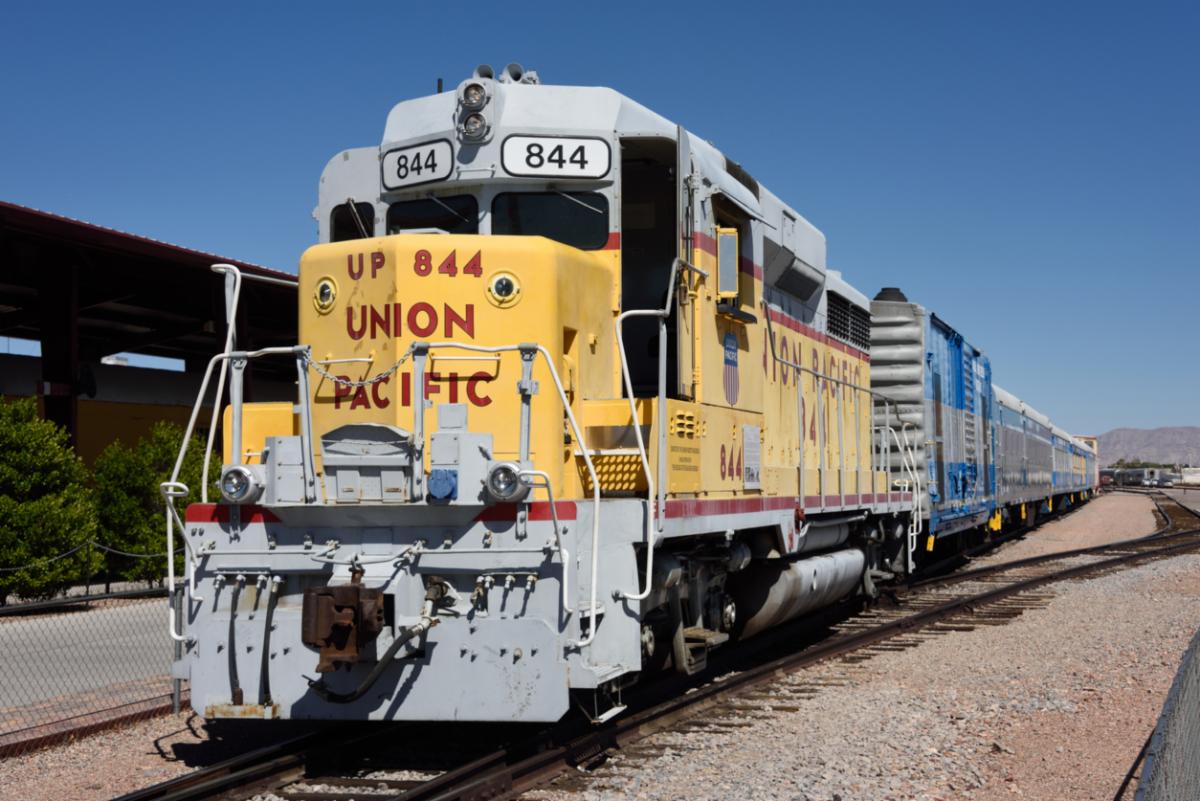
(Editor's Note: AS we have reported in previous issues of the RWU Rail & Labor News, the Nevada State Rail Plan is one of the more creative and innovative state rail plans to date. Does it stand to be torpedoed by Union Pacific? The NV State Legislative Chairs from BLET and SMART-TD report.)
|
|
Title Nevada's Rail Plan in Flux |
|
Nevada has a railroad plan. But will its implementation be stifled by an unwilling partner?
There has been much talk about the need to utilize railroads in moving a greater proportion of passengers and freight. Doing so is seen as crucial to the achievement of certain policy and climate initiatives. For many, the question is, how do we make this happen? And what may get in the way?
First, some history. State Rail Plans were established by the Passenger Rail Investment and Improvement Act of 2008. Submission of these plans to the U.S. Department of Transportation, while not mandatory, is encouraged under federal statutes established by the act. The statutes also set minimum standards for what should be included in the plans. Nevada's first State Rail Plan was submitted in 2012. An update was drafted and submitted this year.
The 2021 Nevada State Rail Plan established the goal of exceeding the minimum standards for a state rail plan established under statute. The fully realized plan would deliver on this goal, not only providing a detailed reference of Nevada's rail resources and establishing means for greater utilization, but also establishing the goals set forth in the plan as a key part of efforts to move Nevada forward from the pandemic-created recession.
Resulting from the involvement of more than 200 stakeholders, the plan provides the framework for increased utilization of existing infrastructure available for use by rail shippers, expanding future rail-served development and laying the long-term groundwork for a future direct rail connection between the northern and southern population centers of the state — which has not existed since the early part of the 20th century. Chapter 3 of the plan establishes a Passenger Rail Strategic Plan within the state, while Chapter 4 establishes the Nevada Strategic Freight Rail Plan.
|
|
Transport Workers Pushed Past the Limit Amid Export Surge |
|
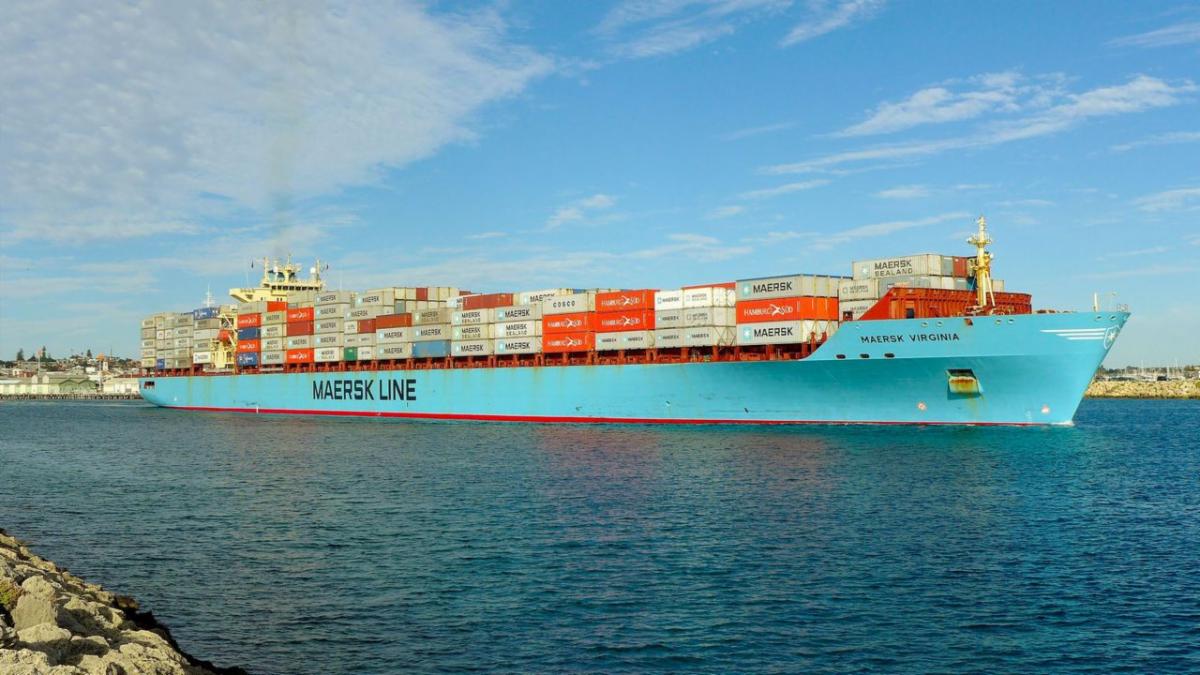
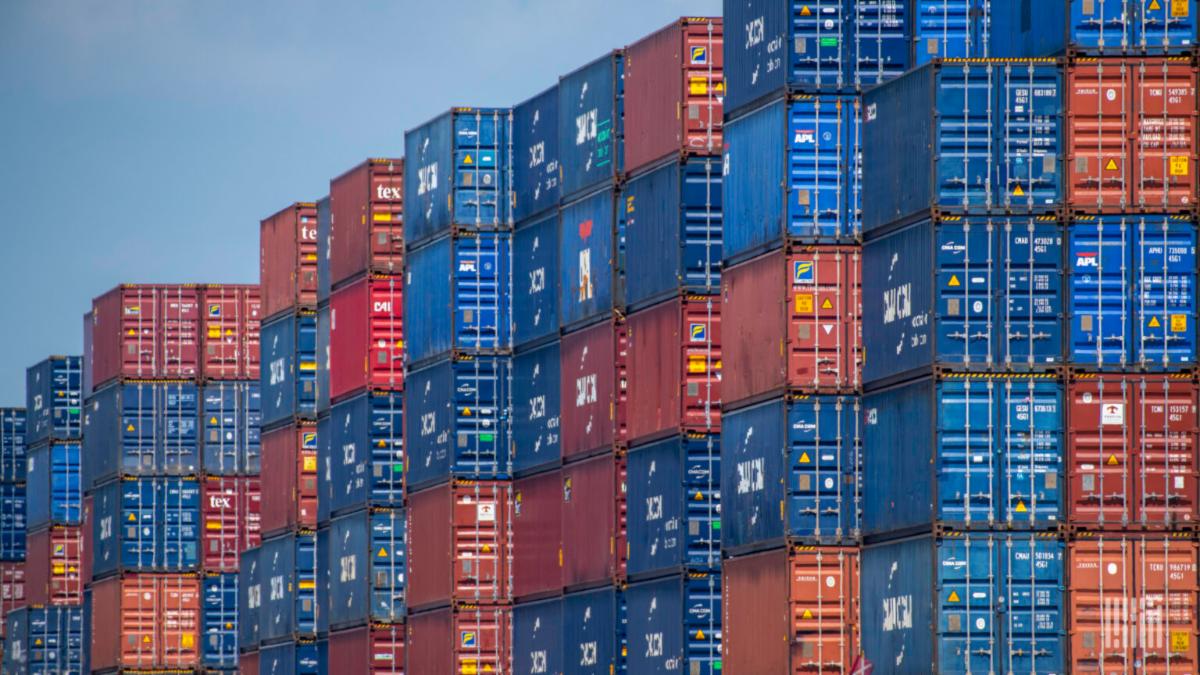
Transportation workers in the U.S. and globally are being pushed to the limit as a surge of exports overwhelms logistics networks. Demands for increased hours and time away from families has impacted workers in shipping, rail, warehousing and truck transport, with shippers demanding seven-day, 24-hour operations at the busy port of Los Angeles.
In an interview with American Shipper, Gene Seroka, director of the Port of Los Angeles, said, “The railroads are full. The warehouses are full. Port terminals are full. Ships are coming in and waiting to get worked. The factories are behind in orders. This incredible demand has got everybody in the entire value chain just clipping out at levels we never could have imagined—and it’s still not enough.” ...
According to trade publication Progressive Railroading, rail traffic of shipping containers in the US this past week was down 8.3 percent, related to the bottleneck at the ports. US railroad workers have been in negotiation with the Class 1 railroads for nearly two years. Meanwhile, their pay has been frozen. Shipping giant Hapag-Lloyd, based in Hamburg, Germany, reported its US containers had dwell time of 9.8 days this month, up from 5.9 since February.
Rail workers in the US are subject to the anti-worker Railway Labor Act (RLA) of 1926, which was expanded to include pilots and flight attendants of the airline industry in 1934. The imposition of the draconian law was a response to previous struggles by rail workers, including the 1877 Great Railroad Strike.
|
|
Agreement Reached to Postpone Single RR System Conventions: Membership to Decide by Mail-in Ballot |
|
The lawsuit brought by twelve of the fourteen system federations to stop BMWED National Division President Simpson from exercising his authority under the Bylaws to form a single joint protective board for each of the class 1 freight railroad employers and Amtrak has been settled.
Up until now, many officers and members have maintained that the formation of single joint protective board for each Class I railroad employer and Amtrak was the right thing to do, but that the timing was wrong. However, after a day in court, the parties have agreed to postpone the founding conventions and proceed with balloting the members to seek their direct input on establishing one system with one set of bylaws, one set of officers and one dues structure for each railroad or leave the current system in place of different dues, different bylaws, and multiple General Chairpersons on each railroad employer in place.
Ballots to each of the individual properties will be mailed out in early December 2021 and counted on January 31, 2022.
|
|
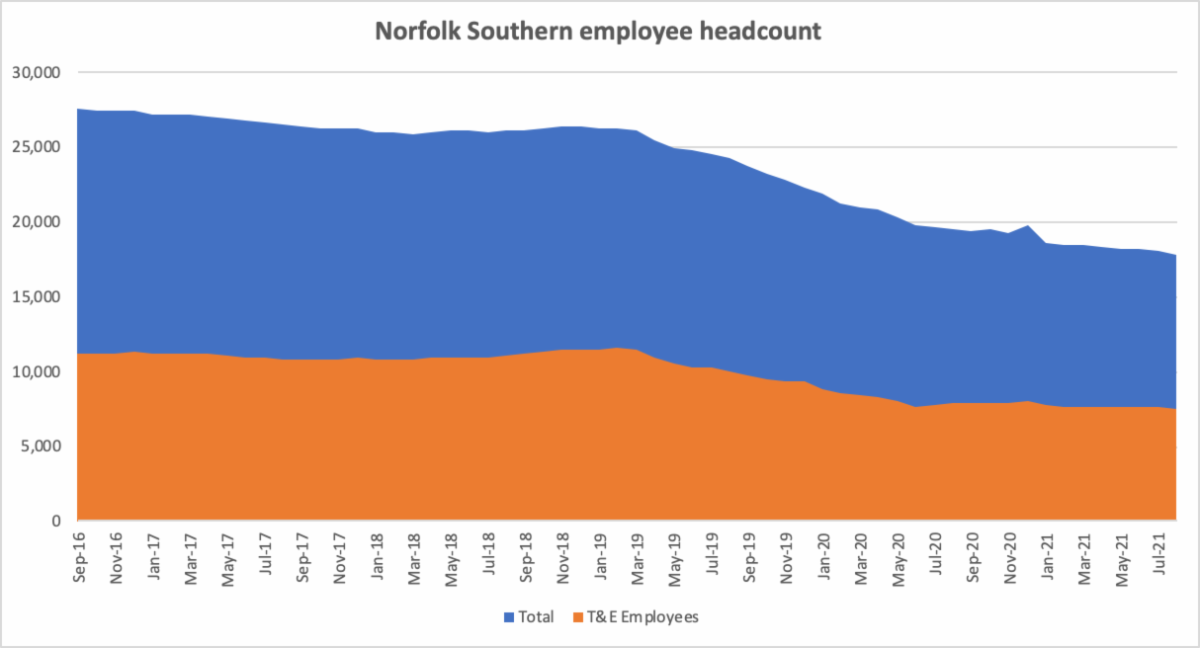
(Editor's Note: Last week we reported that the unions of the operating crafts are united in their efforts to thwart the Norfolk Southern wholesale violation of their union contracts.) |
|
Unions Allege Norfolk Southern Job Cuts Saddled Engineers with Other Duties |
|
The lawsuits, filed Thursday, contend that NS (NYSE: NSC) has been forcing engineers represented by BLET to work in conductor assignments. BLET says NS is unfairly taking advantage of a clause in the 2015 collective bargaining agreement related to workforce scheduling, according to a court filing. Conductors and brakemen are represented by SMART-TD.
In announcing the lawsuits, SMART-TD and BLET said NS has been “willfully” depleting its workforce and using locomotive engineers to fill the responsibilities left open by departing conductors and brakemen.
“The shortage of conductors and brakemen is so severe that NS started ordering locomotive engineers — under threat of termination for insubordination — to work conductor positions even though both the BLET Agreement and the SMART-TD Agreement prohibit the use of locomotive engineers in train service positions,” said SMART-TD President Jeremy Ferguson and BLET National President Daniel Pierce in a joint statement.
Today, our unions have initiated legal actions that are intended to compel NS to follow our contracts and obey the laws of our land,” they continued. “NS cannot lawfully lay off roughly 4,000 conductors and brakemen, and then give their work to another craft. Nor can NS lawfully deprive locomotive engineers of the jobs, wages and working conditions to which they are contractually entitled by forcing them to perform the work of other crafts.”
|
|
How Our Transportation System is Killing America - And How We Can Change It |
|
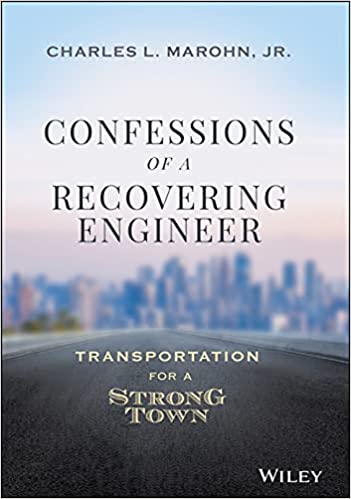
Charles Marohn’s new book argues that the U.S. transportation system is a tragedy and a con job of epic dimensions. It produces congestion and gridlock, death and trauma, hollowed-out communities, and off-the-charts levels of stress and dysfunction. But for all of the enormous costs that it imposes, in human as well as economic terms, the system delivers few public benefits.
The outcomes may be dismal, but they’re not an accident. Nor are they the product of free-market forces at work. They’re the result of deliberate choices and skewed priorities. Disturbing as it may be, the system works exactly as it is designed to work.
That’s because it prioritizes two goals over everything: Volume and velocity. It is designed to move as many cars as possible at the highest speeds possible. These priorities are continually, powerfully reinforced by federal transportation funding, which incentivizes states and cities to pursue dysfunctional projects simply because the money is available for them. At the same time, federal grants have a profound influence on local leaders’ ideas of what’s best for their communities.
|
|
WEBINAR: High Speed Rail in America: Prospects and Challenges |
|
The High Speed Rail Alliance (HSRA) is pleased to welcome Yonah Freemark to speak at the brown bag lunch series. Mr. Freemark is a noted researcher and writer who currently studies transportation and land use issues at the Urban Institute in Washington DC. Previously he worked at MPC, the Chicago area planning group. He also maintains his blog, Transport Politic, where he discusses world-wide transit issues with carefully reasoned and documented posts. Mr. Freemark will review the history and prospects for high-speed rail in America. We are at an exciting moment today as high-speed rail is once again being debated in Congress. He will discuss how we as advocates can play a meaningful role in pushing this agenda forward. Please join us for this timely discussion. This event is free, but registration is required.
Oct 15, 2021 - 12:00 PM Central Time
|
|
Freight Automation: Dangers, Threats, and Opportunities for Health and Equity |
|
In September, the Labor Network for Sustainability (LNS)conducted a webinar called Freight Automation: Dangers, Threats, and Opportunities for Health and Equity. LNS is grateful to MFN, RAMP, and HIP for their inspiring work and enlightening presentations on report findings and recommendations–a perspective and analysis that starts with people first. We heard communities and workers are on the frontlines of transition and must be at the table for decisions about automation. Vivian Malauulu reminded us, “robots don’t pay taxes,” and we learned to watch for claims that it’s either clean air or good jobs, false arguments that divide workers and communities.
Making the case that there is a path to zero emissions without displacing workers, Angelo Logan underscored that we have an opportunity and call to action to use this report as a tool for communities and workers to come together in collaboration as we transition to a climate safe world.
If you missed it, you can watch it here. If you would like to reach out to the speakers, please contact Judy Asman at judy@labor4sustainability.org.
|
|
7 Passengers on Derailed Train That Departed Chicago Sue Amtrak, BNSF Railway |
|
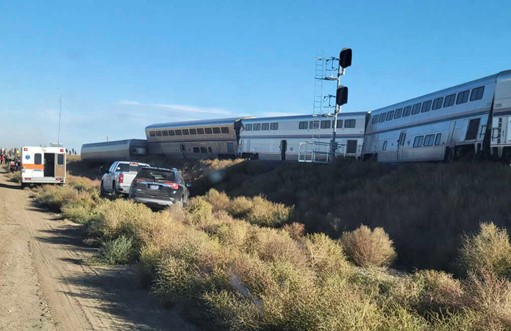
An Illinois law firm filed lawsuits Monday against Amtrak and BNSF Railway on behalf of seven passengers who were on an Amtrak train when it derailed in north-central Montana late last month, killing three and injuring dozens of others.
The lawsuits were filed in federal court in Illinois on behalf of a Massachusetts couple, a Pennsylvania couple, an Indiana couple and a Montana man who were all injured in the Sept. 25 derailment of an Empire Builder train near Joplin, Montana, Clifford Law Offices said.
The lawsuits allege negligence in failing to prevent the derailment and seek damages for injuries and psychological trauma suffered when the train went off the tracks. They also seek to challenge a mandatory arbitration agreement Amtrak put in effect in January 2019.
Sean Driscoll, a partner at Clifford Law Offices, said the agreement denies passengers their constitutional right to a trial by jury if they are injured on an Amtrak train and sets a maximum of $295 million in damages per incident for Amtrak.
The arbitration agreement, but not the cap on damages, also applies to host railroads, such as BNSF, Driscoll said.
Both Amtrak and BNSF have declined to comment on pending litigation.
|
|
(Editor's Note: This tragic shootout was years in the making. Thankfully no passengers were caught in the cross-fire. For many years now, Amtrak trains have been invaded by armies of police agents from a multiplicity of agencies at station stops in search of illegal drugs. These raids can threaten the safety of both passengers and crew. |
|
Gunfire on Amtrak Train: D.E.A. Agent Killed, 2nd Agent Is Critically Wounded |
|
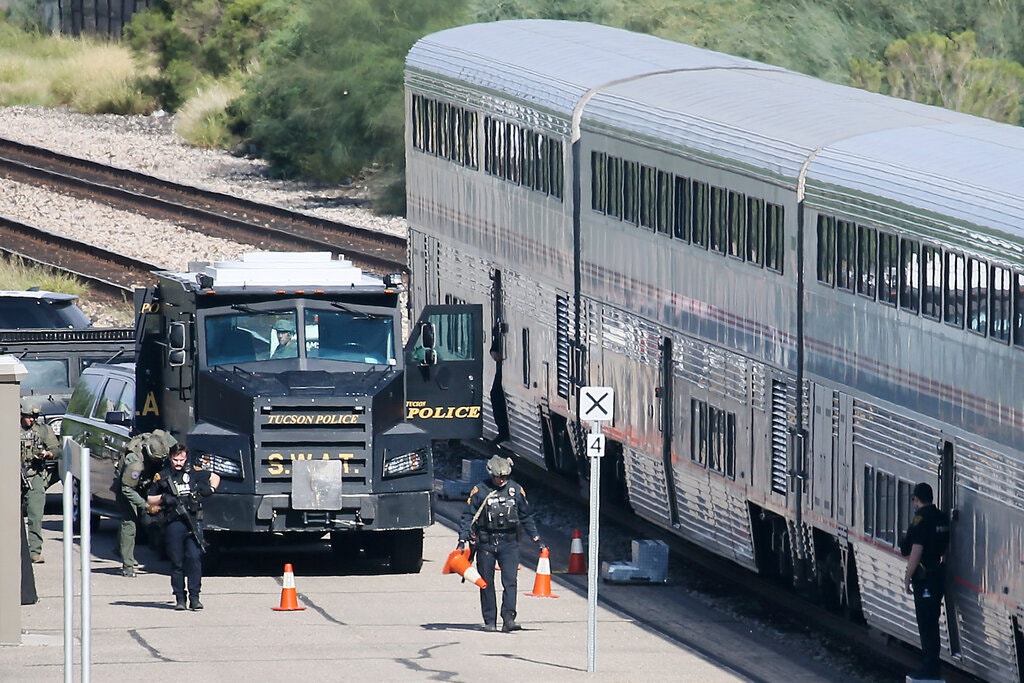
A federal drug enforcement agent was killed and another was critically injured in a chaotic scene of gunfire aboard a crowded Amtrak train while it was stopped at a station in Tucson, Ariz., on Monday morning, the city’s police chief said.
A city police officer was also shot and was in stable condition, Chief Chris Magnus of the Tucson police said at a news conference on Monday afternoon.
The three law enforcement officers, members of a joint task force from the Drug Enforcement Administration and local police, were conducting a routine sweep of the train when two people on board reacted to their presence and one opened fire, the chief said.
“They were checking for illegal guns, money, drugs,” Chief Magnus said. “This is something they do, as I said, routinely at pretty much all transit hubs.”
The gunman died in one of the train cars after barricading himself inside a bathroom, the authorities said, though it was not clear if he had been killed by the police or had taken his own life. The other suspect was taken into custody, according to the Tucson Police Department.
What set off the gunfire was not completely clear, Chief Magnus said, adding that he did not know whether any guns or drugs were found by officers. On Tuesday, the D.E.A. identified the agent who was killed as Michael G. Garbo, a group supervisor who had worked for the agency for more than 16 years combating criminal drug traffickers from the southwestern United States to Kabul, Afghanistan. Officials did not release the names of the other officers or the two suspects.
It was not clear if all the gunfire happened aboard the train or whether some shots were fired on the platform.
|
|
Progress Rail and Norfolk Southern Unite on Latest Tier 4 Locomotive |
|
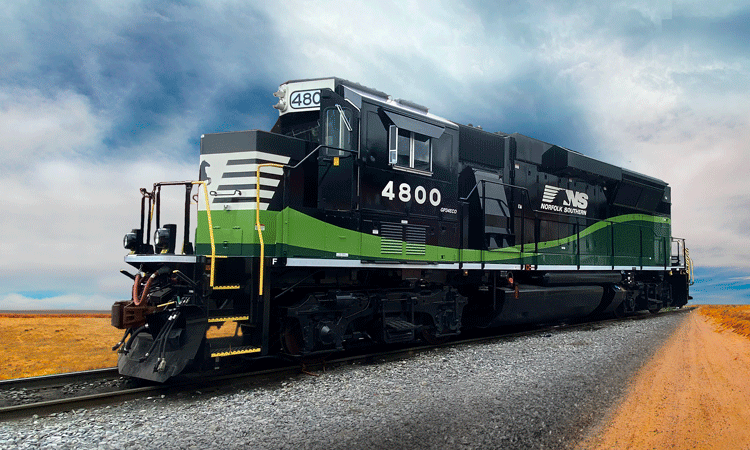
Progress Rail, a Caterpillar Company, and Norfolk Southern Corporation have collaborated on the first EMD GP34ECO (Tier 4) locomotive designed and built for yard and intermediate operations.
The locomotive is currently undergoing testing to meet the U.S. Environmental Protection Agency Tier 4 emissions certification requirements – the highest emission standard for locomotives. Compared to older locomotives, the GP34ECO achieves a 90 per cent reduction in nitrogen oxide (NOx) emissions and offers significantly higher fuel efficiency.
The locomotive is powered by a 3,000 horsepower 12-710 EMD engine and utilises the first diesel exhaust fluid (DEF) / selective catalytic reduction (SCR) aftertreatment system, intended for line haul locomotive applications.
Norfolk Southern assembled the locomotive core in Altoona, Pa., at the company’s Juniata Locomotive Shop. Together, with Progress Rail and Caterpillar engineering teams, they performed final assembly, engine, and SCR aftertreatment system work. In addition to the Cat® aftertreatment control system, the locomotive includes a new crashworthy cab and electronics.
|
|
(Editor's Note: Ed DeNike, president of Stevedoring Services of America Containers (SSA) that operates terminals at Seattle, Tacoma, Oakland and Long Beach, spoke recently at The Agriculture Transportation Coalition’s (AgTC) virtual convention and said this: “It (terminal congestion) started, quite frankly, with the railroads (UP and BNSF) not being able to handle the increased volume. We ended up having thousands of rail containers on the terminals that wouldn’t move...” The situation then spilled over to container yards and warehouses, resulting in a further backlog of containers at terminals.) |
|
Intermodal Kept a Lid on U.S. Rail Traffic Total in September |
|
U.S. railroads' combined carload and intermodal volumes in September reached 2,496,209 units, a 1.9% decrease from September 2020's level, according to Association of American Railroads (AAR) data. U.S. railroads logged 1,167,682 carloads last month, up 4.3%, and 1,328,527 containers and trailers, down 6.7% compared with the same period a year ago.
Fifteen of the 20 carload commodity categories tracked by the AAR each month posted carload gains, including coal, up 13.7%; crushed stone, sand and gravel, up 12.5%; and primary metal products, up 22.4%. Commodities that posted declines during the month included motor vehicles and parts, down 27.6%; grain, down 14.7%; and petroleum and petroleum products, down 3.1%.
|
|
|
|
|
|
|