|
Transparency in Congress and a well-informed electorate are vital to preserving our self-governing Constitutional Republic. My constituents deserve to know how their members of Congress vote, which is why I have explained every vote I have cast in Congress since I was first elected.
To read more about my votes and see the full list with explanations of all the legislation considered this week by the House, please click here.
Monday, April 27
I voted "Yes" on H.R. 227, the Clergy Act. This bill establishes a two-year re-enrollment window, covering taxable years 2029 and 2030, for clergy members who previously opted out of Social Security to voluntarily revoke their exemption and begin contributing. Under current law, clergy who opt out of Social Security are permanently barred from re-enrolling, leaving many faith leaders who made this decision decades ago without basic financial protection in retirement. This bill restores the ability of pastors and other clergy to secure their financial future without modifying existing Social Security regulations, ensuring eligible clergy still meet the standard contribution requirements to earn benefits. This bill passed the House by a vote of 350-5.
I voted "Yes" on H.R. 7959, the IRS Whistleblower Program Improvement Act. This bill strengthens the IRS Whistleblower Program by improving whistleblower protections, ensuring fairer judicial review, and incentivizing timely program administration. This bill provides a more favorable standard of review in whistleblower appeals, allows new evidence to be admitted to the record, permits whistleblowers to proceed anonymously when challenging an IRS action, and mandates interest be paid on a potential award if the IRS fails to issue a preliminary award recommendation within 12 months. It also aligns the tax treatment of attorney's fees for IRS whistleblowers with the standard applied under other federal whistleblower programs. The IRS Whistleblower Program is a critical anti-fraud tool that has recovered over $7.37 billion in unpaid taxes since 2007, and this bill ensures it remains effective and fair for those who come forward with firsthand knowledge of tax evasion. This bill passed the House by a vote of 346-10.
Wednesday, April 29
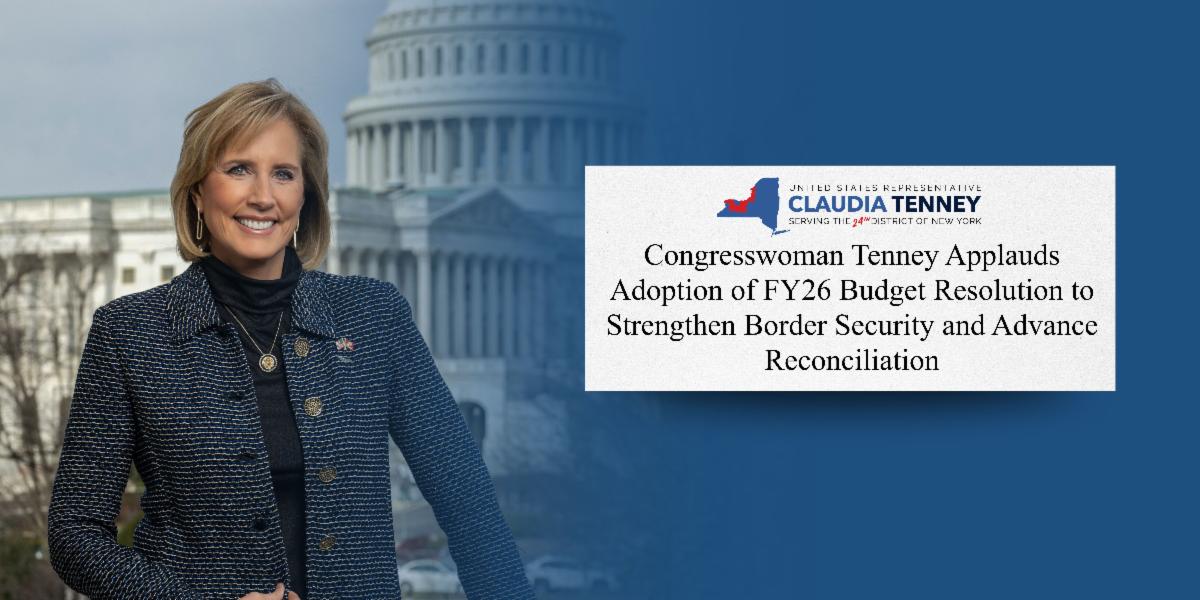
I voted “Yes” on S.Con.Res. 33, Setting forth the congressional budget for the United States Government for fiscal year 2026 and setting forth the appropriate budgetary levels for fiscal years 2027 through 2035. This resolution sets the parameters for the upcoming budget reconciliation process to fund the U.S. Customs and Border Protection (CBP) and the Immigration and Customs Enforcement (ICE) agencies. Additionally, this resolution provides up to $70 billion in flexibility over the next decade for border security and immigration enforcement priorities. For more than 70 days, Congressional Democrats have blocked efforts to fund CBP and ICE, demanding sweeping changes that would weaken enforcement and undermine border security. Adoption of this budget resolution allows Congressional Republicans to move forward with reconciliation and to fund agencies like ICE and Customs and Border Protection through a simple majority vote in the Senate. While providing regular funding for government agencies through reconciliation is never ideal, Democrats’ refusal to continue funding these critical national security agencies leaves us no choice. This narrow reconciliation bill will ensure President Trump and Homeland Security Secretary Mullin can keep our communities safe, support law enforcement, and deliver on the mandate the American people gave us. This resolution passed by a vote of 215-211, with 1 member voting present.
I voted “Yes” on S. 1318, the Foreign Intelligence Accountability Act. This bill would have extended Section 702 of the Foreign Intelligence Surveillance Act (FISA) for three years while making additional reforms to this critical national security program. FISA Section 702 allows U.S. intelligence agencies to spy on foreign non-U.S. persons who are connected to our adversaries, terrorism, weapons proliferation, and narcotics. Importantly, FISA Section 702 cannot be used to target Americans, nor can it be used against individuals in the United States. As a member of the House Permanent Select Committee on Intelligence (HPSCI), I have engaged in rigorous oversight of the use of FISA Section 702, and I am pleased that many of the historical abuses of this program have been curbed. The FBI now has a 99% compliance rate, and Director Kash Patel, along with Director of National Intelligence Tulsi Gabbard, are committed to ensuring that previous issues with the program are remedied. FISA Section 702 is a critical national security authority that we simply cannot afford to let lapse. As President Trump recently said after speaking with top military leaders, “not one said, even tacitly, that they can do without FISA Section 702.” Further, President Trump has made it clear that FISA Section 702 “is one of the reasons we have had such tremendous success on the battlefield.” A significant portion of the President’s daily brief is collected via FISA Section 702, and letting this critical authority lapse would be the greatest gift China, Russia, Iran, North Korea, and terrorists around the world could ever receive. As a constitutional lawyer, I remain dedicated to protecting our civil liberties and privacy while defending our national security, and please know that I will continue my rigorous oversight of this program as a member of HPSCI to ensure that the law is followed. This bill passed the House of Representatives by a vote of 235-191.
Thursday, April 30
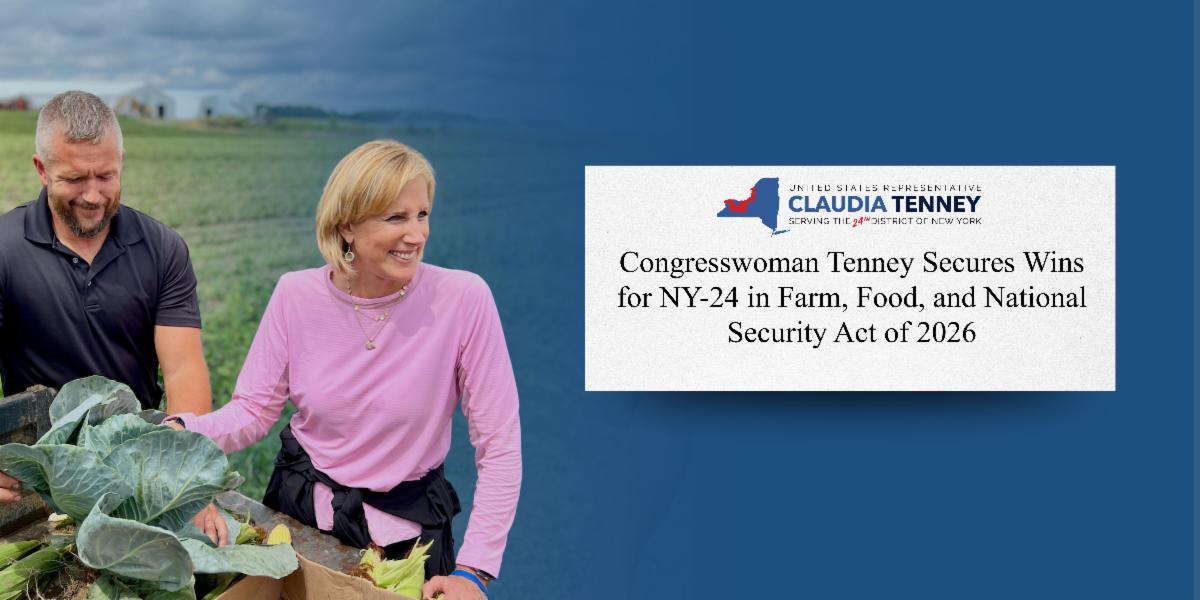
I voted “Yes” on H.R. 7567, the Farm, Food, and National Security Act. This bill reauthorizes key U.S. Department of Agriculture programs through 2031, modernizes farm policy, and strengthens the agriculture safety net to help producers navigate rising costs, market uncertainty, and supply chain disruptions. The legislation includes major investments in conservation, crop insurance, rural development, and agricultural research, while promoting U.S. exports and reducing regulatory burdens. It also enhances oversight of foreign ownership of American farmland and reinforces agriculture as a national security priority. Included in this bill was my Fairness in Vineyard Data Act, which requires the U.S. Department of Agriculture to produce a comprehensive report on national grape production. The report will include detailed data on total acreage, production levels, utilization, acreage by grape type and variety, as well as county-level breakdowns and planting timelines. This data will provide greater transparency and market insight for our viticulturists, including those in the Finger Lakes region, and allow USDA to better support our vineyards. House Republicans are backing the farmers and ranchers who feed, fuel, and sustain this country. However, I am disappointed that a controversial amendment to strike key provisions of this bill regarding pesticides was passed. These provisions prevented different states and localities from issuing different pesticide labeling requirements, allowing one federal standard; prevented localities from regulating pesticides that are already regulated by the state and federal government; and prevented states and localities from banning or further regulating pesticides that are already approved as safe. While I understand the concerns around pesticide usage, the Environmental Protection Agency’s process for approving pesticides is the global gold standard, using a risk-based approach. Without these critical safeguard provisions, state and local entities, such as New York’s DEC, far left Albany Democrats, profiteering trial lawyers, and other out-of-touch politicians can place unnecessary restrictions on these pesticide usages that harm our farmers without actually protecting people. In speaking with farmers throughout our district, I have heard how critical these pesticides are for crop protection. I am concerned that New York State and Democrat-controlled areas will use this opportunity to ignore science and impose overly burdensome regulations on the use of these pesticides, creating a cash cow for trial lawyers instead of trying to protect people and our food supply. However, I will continue working with Administrator Lee Zeldin to ensure the EPA always takes concerns over pesticide safety seriously and continues to do its important work in evaluating these chemicals for safety. Overall, in districts like mine, where agriculture drives our economy, this legislation helps ensure our farmers and family farms can continue to grow, hire, and invest in our communities. This legislation puts our farmers first and makes sure the United States remains a global leader in food production, which is why I supported its final passage. This bill passed by a vote of 224-200.
I voted “Yes” on S. 4465 To amend the FISA Amendments Act of 2008 to extend the authorities of title VII of the Foreign Intelligence Surveillance Act of 1978, and for other purposes. This bill extends Section 702 of the Foreign Intelligence Surveillance Act (FISA) for 45 days through June 12, 2026. As I discuss in my vote explanation for S. 1318, FISA Section 702 grants U.S. intelligence agencies the authority to conduct surveillance on foreign nationals outside the United States who are tied to our adversaries, terrorist networks, weapons proliferation, and drug trafficking. Critically, this authority cannot be directed at American citizens, nor at anyone located on U.S. soil. As a member of the House Permanent Select Committee on Intelligence, I have taken seriously my responsibility to conduct thorough oversight of this program, and I am encouraged that many of the abuses that plagued it historically have been addressed. The FBI now has a 99% compliance rate, and both Director Kash Patel and Director of National Intelligence Tulsi Gabbard have made clear their commitment to resolving the remaining concerns surrounding this authority. FISA Section 702 is an indispensable national security tool that we cannot allow to expire. President Trump knows how essential this program is, and it is fundamentally different from FISA Title I, which was used to spy on him in 2016. While I am disappointed the Senate did not take up the House-passed three year extension, I remain committed to working with my colleagues to reauthorize this essential program. As a constitutional attorney, I remain firmly committed to upholding civil liberties and privacy protections alongside our national security imperatives throughout this process. This bill passed the House of Representatives by a vote of 261-111.
|