Interested in joining us July 24-27 in Chicago for NACD's 2021 Summer Meeting? You still have time to take advantage of lower rates, as our early bird registration and hotel reservation deadlines have been extended to this Friday, July 9!
You won't want to miss out on this jam-packed agenda, which includes a full NACD board meeting, a 75th Anniversary Celebration event, a conservation forum plenary session and a set of walking, conservation-minded tours.
United States Department of Agriculture (USDA) Secretary Tom Vilsack will be providing remarks during the special 75th Anniversary Celebration on Sunday, July 25. Other speakers include NRCS Chief Terry Cosby, RFD Radio Network Director Rita Frazer and GROWMARK, Inc. Chairman of the Board and President John Reifsteck.
Be sure to register and reserve your hotel room by this Friday, July 9, 2021, to take advantage of the $275 early bird registration price and $185/night room rate!
|
2021 NCF-ENVIROTHON ANNUAL COMPETITION TO BE HELD JULY 25-28 |
The 32nd annual NCF-Envirothon competition, hosted by the National Conservation Foundation (NCF) and the Nebraska Association of Resources Districts (NARD), will be held from July 25-28, 2021. Due to ongoing COVID-19 restrictions and health concerns, the 2021 NCF-Envirothon competition will be in a completely virtual format - a first for the Envirothon program.
The virtual 2021 NCF-Envirothon Nebraska competition will highlight Nebraska's ecology and natural resources, with a special focus on "Water Resources Management: Local Control, Local Solutions" as the current issue that the teams are tasked to explore in-depth. This year, 42 teams – 35 from the United States, four from Canada and three from China – will virtually compete for scholarships and awards.
Over $45,000 in scholarships and awards will be given to the top 10 teams thanks to event sponsors: Smithfield Foods, Inc., the NARD Foundation, NCF and the Conservation Districts of Iowa. Individual subject awards will also be presented to recognize team achievements during the competition.
The virtual event kicks off on Sunday, July 25 with an opening ceremony, featuring Joel Sartore as the keynote speaker. Sartore, from Lincoln, Neb., is a photographer, speaker, author, conservationist, National Geographic fellow and regular contributor to National Geographic magazine.
Following the opening ceremonies, the teams will enter the competitive portion of the event. On Monday, July 26, the teams will take five “field” tests on the core Envirothon subjects: aquatic ecology, forestry, soils/land use, wildlife and the 2021 current issue. On Tuesday, July 27, the teams will virtually present a 20-minute oral presentation, focusing on the 2021 current issue topic, to a panel of judges. The top three scoring teams will be announced on Wednesday, July 28 and then give their presentations to a new panel of judges for a final oral presentation score. The highest-scoring teams will be announced during the Awards Ceremony later that evening.
Guest registration is still open for the virtual 2021 NCF-Envirothon Nebraska competition and is priced at $50. Guests will have access to the event portal, where they can view the opening and closing ceremonies, interact with fellow attendees and more.
|
JULY U&C
WEBINAR ADDRESSES
CONSERVATION ASSISTANCE PROGRAMS
|
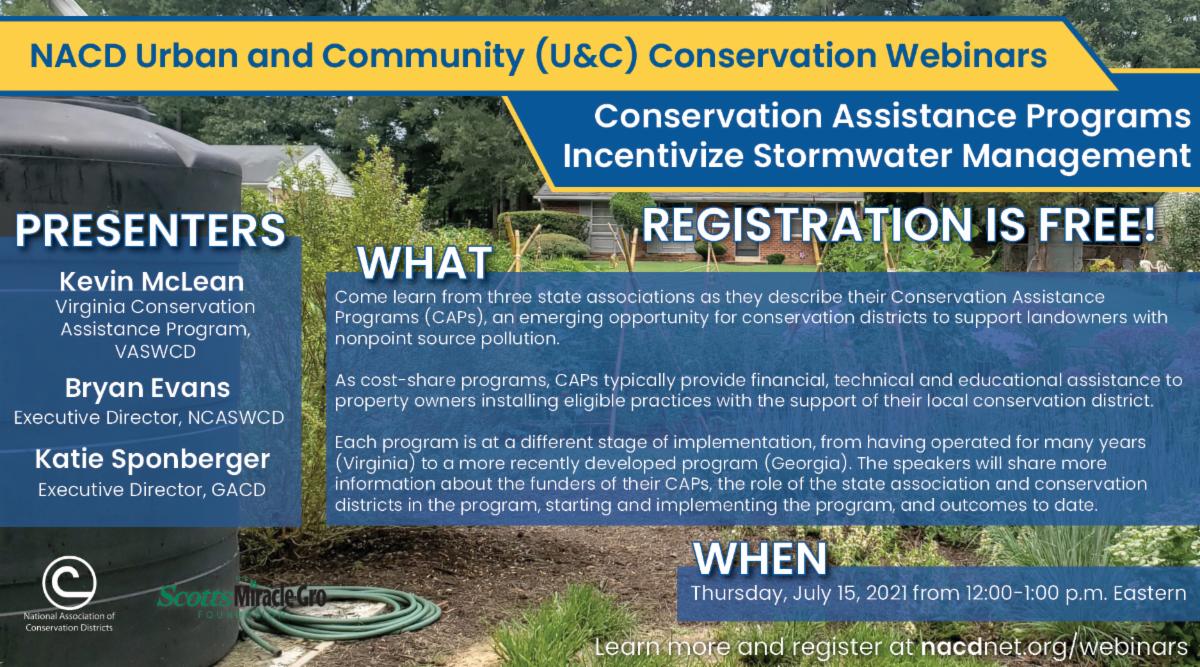
Conservation Assistance Programs (CAPs) are an emerging opportunity for conservation districts to support landowners with nonpoint source pollution. As cost-share programs, CAPs typically provide financial, technical and educational assistance to property owners installing eligible practices with the support of their local conservation district.
During the July Urban and Community (U&C) Webinar, scheduled for July 15 at 12 p.m. Eastern, learn from three conservation district state associations about their CAPs:
Each program is at a different stage of implementation, from having operated for many years (Virginia) to a more recently developed program (Georgia). The speakers will share more information about the funders of their CAPs, the role of the state association and conservation districts in the program, starting and implementing the program, and outcomes to date. Register online to learn more from Kevin, Bryan and Katie. |
NACD ATTENDS
UACD MEETING
|
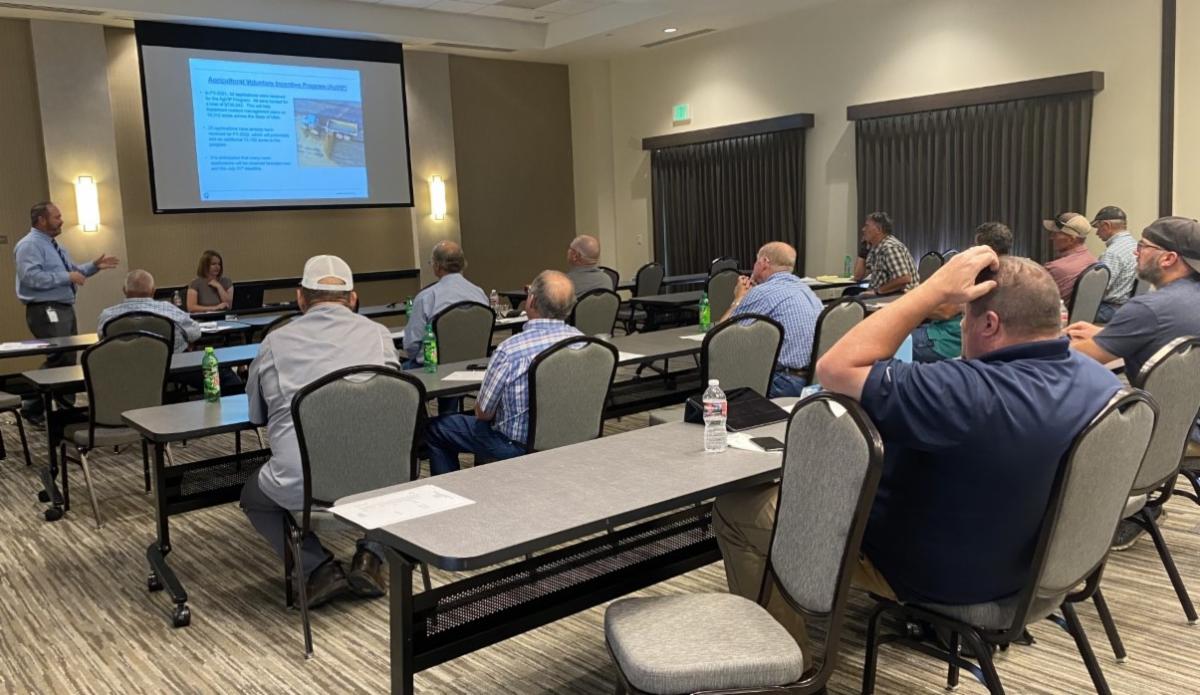
Conservation districts are always exploring ways to create new partnerships and strengthen the ones they have. The Utah Association of Conservation Districts (UACD) is no exception.
In 2017, UACD conducted their first annual partnership meeting. “The goal was to bring all the agencies and groups together to share their conservation efforts and see where we can better work together and allow district supervisors to connect with agency partners," said Kristy Davis, UACD executive director. They just conducted their third annual partnership meeting this past June. Each year the meeting has grown, with more partners attending this year’s meeting than ever before.
NACD Southwest Region Representative Rachel Theler was in attendance and able to meet UACD board and staff for the first time since starting in the role in March of this year. The agenda also hosted a wide range of other partners sharing the past year’s efforts, including Utah’s Natural Resources Conservation Service, the United States Forest Service, the Bureau of Land Management, the Utah Department of Agriculture and Food, Utah Department of Natural Resources and Utah's Division of Forestry, Fire and State Lands. The group listened to an update on the Utah Watershed Restoration Initiative as well as Utah’s developing soil health program.
Before conducting any business, however, partners and the UACD board had a meal together, setting the tone for camaraderie and collaboration, building relationships before the word ‘partnership’ even entered the conversation. As the growing attendance at each meeting proves, this annual event has been mutually beneficial to both conservation districts and their partners as they pool their brainpower and their resources to solve some of Utah’s most pressing conservation issues.
|
John Aeschliman farms with his son Cory on the steep slopes of the Palouse in Washington State, where the annual rainfall is between 12 and 20 inches. Aeschliman is one of the first no-till pioneers in his region, as he made the transition in the mid-1970s and has over 45 years of direct seeding under his belt.
Many of the challenges that farmers in the region face come from farming hills with a 60 percent slope or greater. If these fields are under tillage, there is massive soil erosion, especially with the low moisture levels. Through the use of no-till, cover crops, direct seeding and the employment of precision ag technology, Aeschliman has developed a system that works despite these challenges. His use of no-till and cover crops provides a protective residue barrier to the soil, keeping it cool from the sun’s heat and capturing the moisture even in the low levels of summer. This protective barrier prevents soil erosion through the winter months as well.
Aeschliman has had some of his land under contract in the USDA’s Conservation Reserve Program (CRP), which provides farmers 10-year contracts to grow soil-building crops such as grasses. In 2014, with some of his land coming out of the program due to expiring contracts, Aeschliman has been building on the progress that the program has produced in these acres through direct seeding. The year of transition, however, was not an easy one, as the land was not available to him until the dry summer months. It was for that reason that many of the farmers with similar expiring CRP contracts returned to conventional tillage on that land. Aeschliman said that the release on CRP contracts in his area needed to be in the early spring to save the moisture acquired through the winter months.
Seven years after his CRP contracts began expiring, the land has been annually cropped every year and has never been tilled. The soil organisms ate the root mass left by the grass and the pH levels increased from 4.5 and 5 to a pH level of 6. According to Aeschliman, the transition, while rough in the beginning, has been a great success – they haven’t disturbed the root activity and they continue to sequester carbon in the soil. He has also seen the performance of the soil improve greatly through the capturing of rainfall and moisture, no visible soil erosion and improved yields. Currently, he is working to introduce cover crops into the areas of lower rainfall, and, so far, he has had some successes. For Aeschliman, cover crops continue to be a work-in-progress.
If you or someone you know would like to join the NACD Soil Health Champions Network, please visit the NACD website or contact NACD North Central Region Representative Beth Mason at beth-mason@nacdnet.org. |
|
Join NACD for the Pacific/Southwest Regions Meeting |
Every year, NACD's Pacific and Southwest Regions jointly hold their region meetings as an opportunity to discuss some of the many shared issues across the West. Join the regions on August 30-31, 2021, as they gather in Jackson Hole, Wyo., for two exciting days of presentations, panels, workshops and conservation tours.
The meeting host, Wyoming Association of Conservation Districts, is now accepting registrations, with more information on the agenda, lodging, travel and other information on their website. |
Farmer-Rancher Pollinator Conservation Award Deadline Next Friday |
NACD and the Pollinator Partnership (P2) are soliciting nominees for the 2021 United States Farmer-Rancher Pollinator Conservation Award, recognizing an individual or family in the farm and ranch community who has contributed significantly to pollinator species protection and conservation.
Award winners support pollinators on their lands, engage in research and experimentation to increase our understanding of pollinator management techniques, work with community and government groups, and serve as advocates for these little, but hard-working, species that maintain our agricultural and natural landscapes.
The deadline to submit nominations is Friday, July 16. Learn more about the award and how to submit a nomination here.
|
Last Chance to Order Your True Timber Cap |
On hot and sunny days this summer, a lightweight and breathable cap is your best friend and a must-have accessory.
For only $47.94, you can get six customized caps with any logo of your choice. These True Timber Caps will no longer be available after July 31, so be sure to get yours today!
|
NACD is the national voice for all conservation districts and state and territory associations of conservation districts.
Now more than ever, NACD needs your district’s active involvement and financial support. Have you paid your membership dues this fiscal year?
NACD membership comes with a host of benefits, including webinars, training opportunities, networking, educational materials and more. Membership levels are accompanied by various incentives, including Marketplace deals, free registrations to NACD's annual meeting and more.
Click here to learn more and make a dues payment online. Invoices are in the mail for all districts who have not yet paid this fiscal year.
|
Pollinator Habitat Establishment Guide Now Available |
Habitat loss is a major threat to bees, butterflies and other beneficial insects.
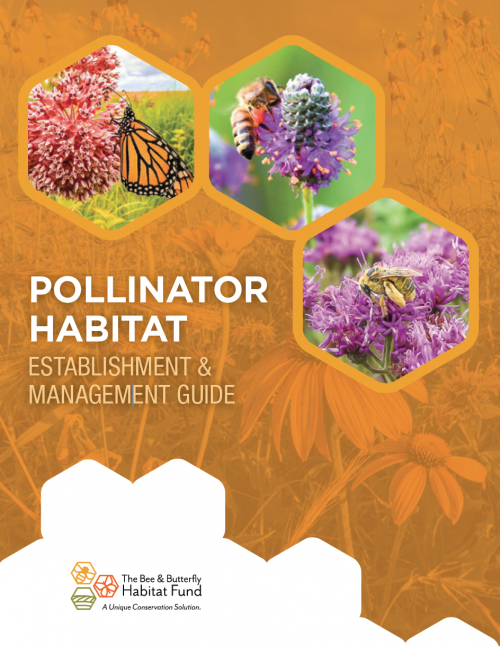
The Bee & Butterfly Habitat Fund has created a “Pollinator Habitat Establishment Guide” for anyone looking to establish pollinator habitat on their lands. The guide outlines the steps that go into planning, preparing, planting and maintaining great pollinator habitat.
|
Pollinator Response to NRCS
Pollinator Practices
|
USDA incentive-based conservation practices such as establishing diverse flower-rich meadows or hedgerows are examples of common practices producers are interested in implementing with NRCS assistance to support pollinators.
However, for some regions, the value of specific plant species to native pollinators and the ability of different plants to establish well and persist in local environmental conditions are not well documented.
Join NRCS on July 22, 2021 at 3 p.m. Eastern, for a webinar highlighting the results of a recent assessment of bee response to established and experimental pollinator plantings in Alabama. Learn more here.
|
Promote your conservation district or state association's tree sale, annual meeting, webinar, field day or more on NACD's Calendar of Events!
|
|