|
Pinkeye
Korbin Singleton - Faulkner County Intern
Pinkeye (infectious bovine keratoconjunctivitis) is the inflammation of the conjunctiva, which is the inner lining of the eyelids. It is a highly contagious infection of the eye from the bacteria Moraxella bovis. This affects both the conjunctiva and the cornea, which could potentially lead to painful corneal blisters or blindness in severe cases. Most commonly, infected animals will experience poor vision and pain, which leads to a decrease in production and an increase in weight. Some factors that contribute to the cause of pink eye are UV light, face flies, dusty environments, and tall pasture grasses/weeds. All of these factors increase the risk for irritation, which by default increases the risk for tears. The tears attract face flies, who are responsible for transmitting the bacteria between animals.
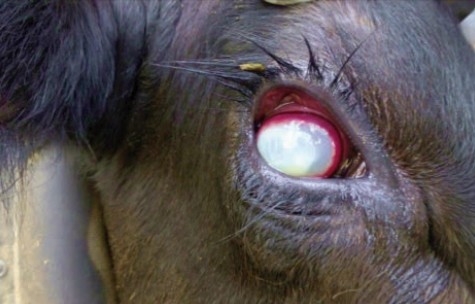
The symptoms of pinkeye in cattle include redness and swelling of the conjunctiva, watery eye discharge, and a cloudy or hazy cornea that appears blue to white in color. The color change will occur in the center of the eye, and an ulcer may develop in this area. As the ulcer progresses, small blood vessels can sometimes be spotted on the cornea. Infected cattle will likely keep the afflicted eye or eyes closed due to the pain that bright sunlight causes the wound. In extreme cases the ulceration can penetrate through the cornea, which causes the inner eye to prolapse. If this occurs, blindness is usually irreversible, and surgical removal of the eye is warranted.
Pinkeye symptoms can also be linked to another bacterium known as Moraxella bovoculi, which is related to Moraxella bovis. This bacteria is known for causing some of the more severe pinkeye symptoms and can also occur outside the traditional pinkeye season. M. bovoculi is not included in any commercial vaccines, so visit with your veterinarian for treatment strategies and vaccination options for M. bovoculi.
Treatment for pinkeye typically includes antibiotics and controlling the predisposing factors. Injectable oxytetracycline is commonly used to treat infection. Currently, there are no antibiotics for pinkeye that are labeled for use in feed. Show animals often tolerate treatment with topical ophthalmic antibiotic ointment. In severe cases, the veterinarian can place a cannula for injection of antibiotics under the eyelid. Several vaccines are also available for use in preventing this disease. Most of these vaccines require a booster dose to be effective during the first year of use, then require a yearly booster thereafter.
Regardless of the treatment method chosen, a big focus should be on controlling predisposing factors. Controlling fly populations with organophosphate or pyrethroid insecticides in ear tags, dust bags, sprays, or pour-ons will help to limit the exposure for the rest of the herd. Mowing the tall grass/weeds in the pasture will also prevent eye irritation from getting grass or weed seeds stuck in their eyes. Shade should be readily available to help prevent the affected animals from getting pinkeye.
In summary, vaccination will help limit the number of outbreaks in a herd but may not completely eliminate the occurrence of disease. However, vaccination combined with careful management for the predisposing factors provides the best chance for preventing disease.
|