|
Per Governor Kotek’s initiative, the Department of Land Conservation and Development (DLCD) is pursuing a rulemaking to expand housing opportunities in the state’s unincorporated communities (UCs). The Advisory Committee assisting in this effort met for the first time on August 19th. Though this sounds like a reasonable and appropriate policy change to bring housing to Oregonians, it is in fact a complete boondoggle and land grab. The rulemaking explicitly “Requires participating counties to plan and zone for community needs to support these areas, including but not limited appropriate commercial and light industrial uses, transportation, public facilities and urban services.” (emphasis added).
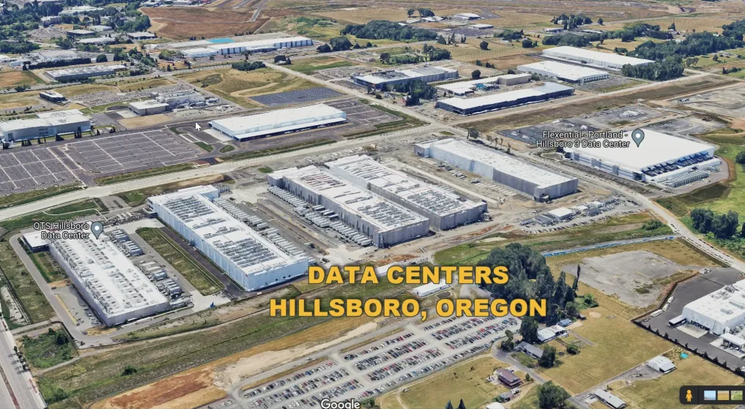
In other words, in addition to requiring the communities to host urban-density housing, the participating counties will be required (not permitted, but required), to zone them for commercial and light industrial uses — meaning everything from data centers and warehouses to strip malls, motels and gas stations. All this rezoning for commercial and industrial would pull development away from cities where it belongs. Why? Because rural land is cheaper to purchase, and its taxes are lower. Oregon’s rural communities would be forever compromised: urbanized and commercialized.
There are more than 400 unincorporated communities statewide, and at least forty-five in the coastal region. The new rulemaking would allow counties to expand the growth boundaries of these unincorporated communities to accommodate the new urban development, thus reducing the amount of farm and forestland across Oregon, and place urban uses in direct conflict with them. It would also add to Oregon’s water scarcity problem, which is a growing issue statewide, including the coast. But it rains so much! you might say. Yes, the coast receives much rainfall, but high water use is in the summer months, when coastal water supplies are at their lowest, and there is no water to spare.
Ironically, Oregon has more than enough land already zoned for needed housing, both in urban and rural areas. Portland alone has capacity to provide for 47% of the state’s entire projected housing need. Furthermore, the Legislature has recently passed several laws to assist in adding housing inside cities, and these have barely come online as of yet. As for rural areas, there is already more than enough land zoned for needed housing, from farmworker housing in exclusive farm use zones to accessory dwellings in rural zones. And on the coast especially, there are enough short term rentals (STRs) to meet the entirety of needed housing, if only they were restored to the longterm rental market.
ORCA is partnering with many other concerned people to let DLCD know that this rulemaking is unnecessary, and would also turn the land use system on its head, urbanizing rural Oregon in ways exactly opposite to what the land use laws were intended to do, which is keep rural Oregon rural.
|