April 2023 - Catch up on the latest news from CAARI! | |
|
Dear William,
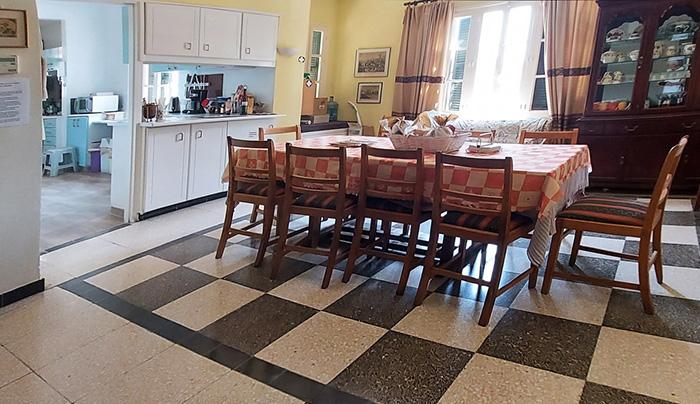
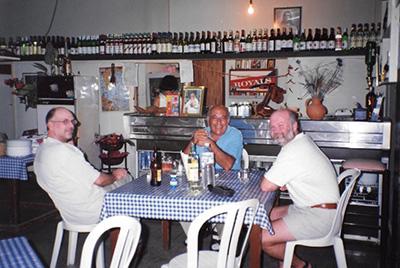
No matter which room was yours when you last stayed at CAARI, the room you may remember most indelibly is this one, whether barely seen on the beeline to your morning coffee, as a destination when hunger drove you from research to repast, or as the setting for evening conversations ardent with the impact of shared insights and experiences. This is CAARI’s dining area, with a view into the kitchen beyond. Modest, serviceable, and well-worn with use, it is nonetheless the fitting centerpiece for this newsflash, since it, too, is devoted to food. The newsflash brings favored recipes from excavation teams. A wonderfully international sampling of dig-directors has afforded us recipes and even colorful illustrations of the dishes they rely upon to slake appetites fueled by the rigors of archaeological effort. We hope they will evoke your own experiences of camaraderie and common purpose in meals shared with archeological colleagues.
If food is the meat of the newsflash, though, it is set in a sandwich between two substantial “bread and butter” elements. On top are CAARI’s own current activities, seen in Dr. Lindy Crewe’s Message from the Director and Dr. Maria Dikotimou Eliadou’s report on the interdisciplinary conference about archaeological sampling strategies that she held at CAARI under the sponsorship of the Cyprus Institute. On the bottom, after the food, is an earnest plea to friends and supporters of CAARI to help us stretch our ever straited financial resources to realize a dream we believe we share with you. We want to maintain the Zoom transmission and YouTube posting of our public lectures, begun in the pandemic. But to do so, we must acquire our own electronic equipment. We hope that CAARI’s ongoing activities and your warm memories of dig experiences bonded by food will inspire you to join in this effort.
| |
|
Message from CAARI’s Director
Dear friends and supporters of CAARI,
The Cypriot spring is in full flow, with the usual mixture of warm, sunny days and fierce freezing storms passing through. The Cypriot saying ‘save the logs for the March hearth’ has definitely been true for this year!
| |
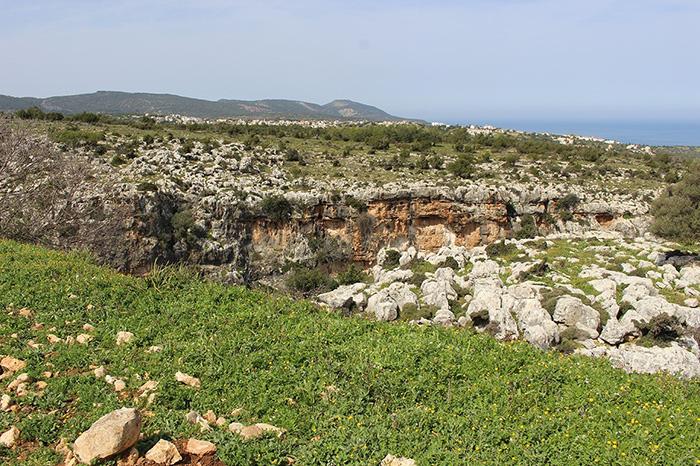
The Petratis Gorge near Androlikou village in the Akamas Peninsula | |
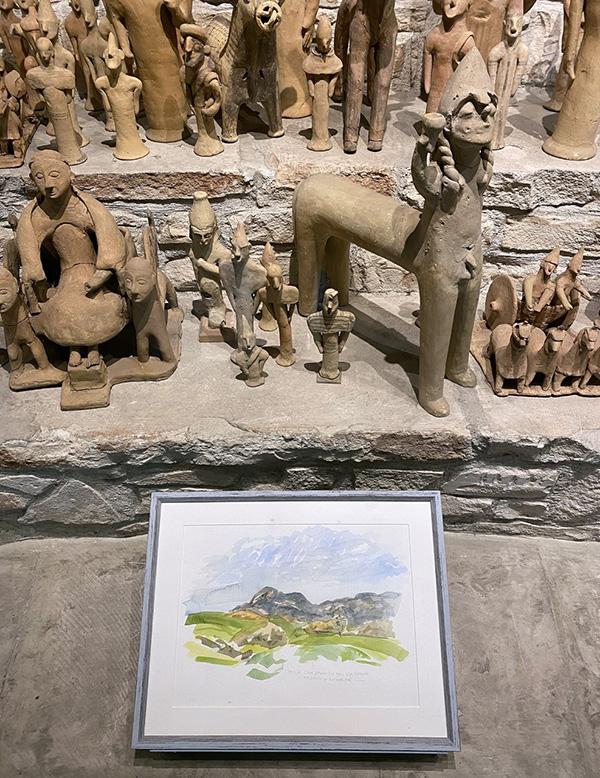
We are making the most of the beauty of the Cypriot landscape at this time of the year. We are getting outdoors in the good weather, as you can see from this shot of a glorious trip to the Akamas Peninsula a few weeks ago, or experiencing landscapes virtually during the bad, made possible with a fantastic new exhibition that opened last week at the Cyprus Museum. Artist Katerina Attalidou has created a series of water color paintings of the landscapes of the sites where the artifacts on display in the museum were found. In the image here you can see the landscape next to the fabulous figures from the Ayia Irini Sanctuary. In the coming week we also have another exhibition at the Cyprus Museum, called ‘Face to Face: Meet an Ancient Cypriot’ where the stories of people of the past will be brought to life. Both exhibitions run through the summer so those who are visiting Cyprus will have a chance to see them. | |
Katerina Attalidou water color showing the Ayia Irini landscape in front of the Ayia Irini Sanctuary display | |
|
The academic and social calendar is also extremely full and we are all glad to be able to attend in-person events and to get together. In addition to the workshop on sampling strategies held at CAARI for the students and fellows of the PlaCe-ITN Project that Maria Dikomitou-Eliadou describes just below, we were very grateful to Dr Artemis Karnava for giving us our first lecture for the year on the topic of Cretan and Cypriot writing in the 2nd & 1st millennia BC: on seeing and believing. If you missed it you can catch up here on our YouTube channel: https://www.youtube.com/watch?v=aLI36bDaeVg&t=174s.
Our next hybrid format lecture is coming up on Thursday the 27th of April. We will have Dr Craig Barker from the University of Sydney with a lecture titled From Vounous to Paphos: A brief history of Australian archaeologists excavating in Cyprus, including an update on his team’s excavations at the theater of Neapaphos. This year is the 50th anniversary of diplomatic relations between Cyprus and Australia so we are very pleased to be hosting the event jointly with the Australian High Commission in Cyprus. If you are here, please come along and enjoy the Australian wine at the reception after the lecture!
With best wishes and hoping to see many of you here in the summer,
Lindy Crewe, PhD
Director, CAARI
| |
|
Workshop on Sampling Strategies
Dr. Maria Dikomitou Eliadou
PlaCe-ITN project manager
Associate Research Scientist
The Science and Technology in Archaeology and Culture Research Center (STARC), The Cyprus Institute
| |
During the months of February and March 2023, CAARI became home for several research fellows of the project PlaCe-ITN. These doctoral research fellows, who are enrolled for their postgraduate studies in different universities in Belgium, Germany, and Greece, came briefly to Cyprus for training at the Cyprus Institute and the University of Cyprus. PlaCe-ITN (Figure 1) is a European funded project (Horizon2020-MSCA-ITN, GA no. 956410), which is coordinated by the Cyprus Institute, and it promotes the scientific study of ancient PLAsters and CEramics. | | |
|
Figure 1. The logo of PlaCe-ITN is based on a geometric motif from a 2nd /early 3rd century AD floor mosaic in the House of Dionysus, in Nea Paphos, Cyprus, referencing the project’s coordinating country. The decorative pattern reflects the project’s identity; a simple motif of interlacing strands represents the project’s interdisciplinarity, while the wave band references the Mediterranean Sea, the project’s region of focus. The knot of three figures of eight motifs at the center of the medallion signifies cooperation, unity, and harmony. | |
|
Ceramics play a central role in our understanding of past societies, and their central importance across archaeological research is well established. Plasters and mortars, though of similar importance and versatility, are much less valued, and their information potential in archaeology to this day remains under-explored. With the same range of scientific methods applied to their study, combining the two material categories, PlaCe provides a stable basis for an innovative and wide-ranging training agenda that will bring the recruited early-stage researchers to the forefront of archaeological and cultural studies.
The project’s consortium has identified specific plaster and ceramic assemblages from the wider Eastern Mediterranean region which form the topics for the individual doctoral study projects of the fellows. PlaCe focuses on the technology, know-how, raw materials, and tools developed and employed to produce plasters and ceramics, in different regions of the eastern Mediterranean, in pre-modern societies from prehistory to the post-medieval period. PlaCe is highly interdisciplinary and intersectoral, integrating traditional archaeological practices with a full range of analytical methods of physicochemical, mineralogical and microstructural analysis based on geology, geochemistry and physics, and advanced spatial and statistical data interrogation (for more information about PlaCe-ITN, please visit the project’s website: https://place-itn.cyi.ac.cy/).
With so many of the PlaCe research fellows under the roof of CAARI and in Nicosia, the Institute’s director, Dr Lindy Crewe suggested the organization of an event that would offer the opportunity to these young researchers to present their work to the local archaeological community. The challenging part was to find a theme that could unify nine different projects ranging chronologically from prehistory to post-medieval times, and spatially from Egypt and Cyprus to the Aegean and northern Greece. The answer was quite soon to be found among the students’ training requirements; sampling for archaeological research is a topic of relevance for every research project, whatever the method(s) chosen for the analytical study of ancient materials.
| |
|
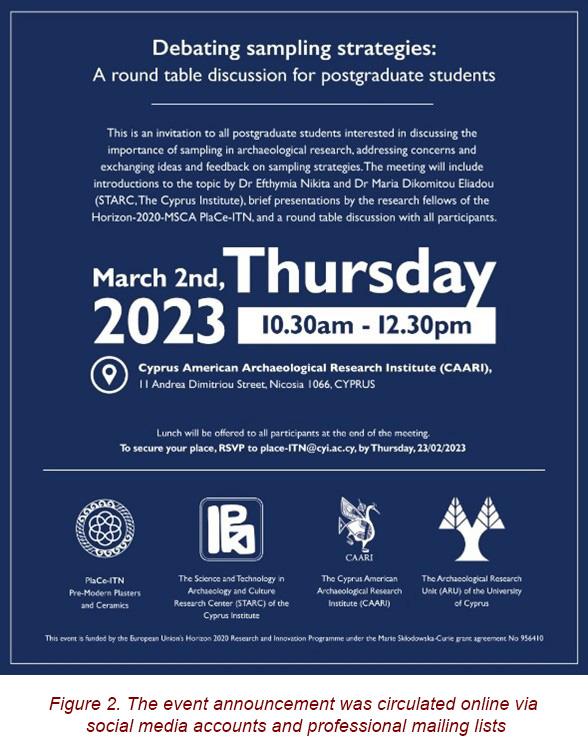
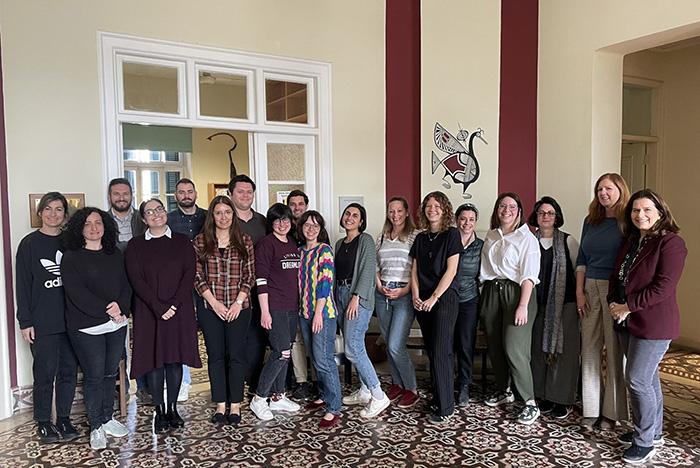
“Debating sampling strategies: A round table discussion for postgraduate students” was envisaged as a welcoming and inclusive event for the PlaCe fellows to present briefly their research, and particularly their individual approaches to sampling, and for postgraduate students in general to discuss the importance of sampling in archaeological research, addressing concerns and exchanging ideas and feedback on sampling strategies (Figure 2). The event was held in the CAARI library, and it included introductions to the topic by Dr Efthymia Nikita and Dr Maria Dikomitou Eliadou (STARC, The Cyprus Institute), the brief presentations by the PlaCe-ITN research fellows, and a round table discussion with all participants (Figure 3). It was followed by lunch, courtesy of the PlaCe-ITN coordinating institution, i.e., the Cyprus Institute.
| |
Figure 3. Smiling faces at the end of a very fruitful morning, discussing sampling strategies for archaeological research | |
|
The round table discussion highlighted the importance of sampling as perhaps the most crucial part of every project. It brought out how the selected samples are accountable for the quality of the generated data, and ultimately, how they should form the ground for sound archaeological interpretation. Sampling should be envisaged as an intermediate stage that links each project’s research questions and research methodology for addressing (if not answering) the majority of these questions. In an ideal world, a sample is a smaller, more manageable version of the population of materials under study. Sampling will be effective if from the smaller number of selected samples, we can make rigorous inferences about the larger material assemblage(s). However, as the real world is far from ideal, there are always conscious and unconscious biases infiltrating the sample as a result of various parameters or restrictions, including the state of the art of the subject matter, the state of preservation of the material, material accessibility, excavation or field survey conditions and documentation, export policies, particular regulations for destructive analyses, personal research interests and capabilities, the available budget, time constraints, and so on. Each archaeological case study has its particularities and therefore, not all projects can conform to a single sampling scenario. As the samples selected for analysis will eventually determine how confidently (i.e., data/evidence-based) we can answer our research questions, it is vital to invest time and carefully think and design a sampling strategy, considering the reasons for and objectives of sampling, as well as of the overall research project.
| |
|
Food: Feeding Bodies, Fueling Minds
“An Army Marches on Its Stomach”
| |
The quotation above was provided by Dr. Laura Swantek, CAARI Trustee extraordinaire and co-director of the Kourion Urban Space Project (KUSP). She sent a wonderful recollection of food from her summers with Dr. Stuart Swiny’s dig team at Sotira Kaminoudhia: | | |
|
Stuart Swiny was famous for quoting Napoleon, “an army marches on its stomach,” and so his dig teams were always fed very well! Every afternoon and evening, the Sotira Kaminoudhia dig team was welcomed to the courtyard of the Eustathiou family to enjoy the incredible meals cooked by their matriarch, Kyria Hambou, and served in the shade of a mulberry tree. Traditional fare was always on the menu and pourgouri with delightfully sour yoghurt and perfectly crisped Cypriot potatoes were vigorously and gleefully passed down the long table filled with hungry students. The food was always delicious, but everyone’s favorite days were those when the family made their halloumi. Kyria Hambou would serve it to us still warm, and that combination of salt and squeak kept the dig team happily “marching” and fulfilled for another day. | |
|
|
Dr. Swantek’s words capture so well the multiple dimensions of food in the archaeological experience. Food enables the work of body and mind. But it is also a rich avenue of cultural interaction. And it is a means of social bonding within a team. With each of these in mind, we settled on food as a theme for the newsflash.
Many teams, like Stuart Swiny’s at Sotira Kaminoudhia, do not cook for themselves, but rely on a local taverna. Thus Professor Maria Iakovou, director of the Palaepaphos Urban Landscape Project near Koulia in southwestern Cyprus, writes: We do not seem to have a favoured recipe. The team is happy to have good quality meals on a daily basis by Gabriel, the restaurant owner at Kouklia who has …. adopted our team. Similarly, Professor Kathryn Grossman, director of the Makounta Voules Archaeological Project in the far northwestern part of Cyprus, reports that we don't really have our own dig recipes. We have the usual breakfast (tomatoes, cukes, eggs, cheese, yogurt, bread, fruit, and variations on those), and then sandwiches for lunch. We eat dinners at a local restaurant, rather than having a dig cook. The food at the restaurant is great and changes every night (yay!), but those aren't our recipes by any stretch of the imagination. Professor Michael Toumazou is famous for the warmth with which his own village of Athienou has embraced season after season of his Athienou Archaeological Project (AAP). The unanimous enthusiasm for local fare is a clarion confirmation of what every Cypriot knows: Cypriot cuisine is irresistible.
But not every team turns only to the regional eateries. Many do have their distinctive rituals and recipes for shared meals. That they are able to compete with the tavernas in nutrition and flavor is proof in itself of the high value placed on food in the archaeological culture of Cyprus. Recipes offered by such teams are presented below, beginning with lunch, going on to dinner, and ending with dessert--plus pictures of the preceding courses. Whether cooking for appetites stoked by archaeological labor, or in the quietude of their own kitchens, readers will surely find fresh insights in them.
| |
|
Dr. Lindy Crewe, Kissonerga-Skalia Excavation
Kissonerga-Skalia warm black-eyed bean salad
This one is a filling and nutritious lunchtime accompaniment after a hard morning in the field. Quantities don’t really matter as you can add as much of each ingredient as you wish or improvise with other additions. Crumbling in feta at the end is a tasty choice. The recipe comes courtesy of our physical anthropologist, Dr. Michelle Gamble, who is always ready to encourage the students to eat a healthy diet with stories of what a lack of vitamins and minerals will do to your bones!
Ingredients:
Black eyed beans
Onion
Garlic
Spinach
Courgette (zucchini)
Vegetable stock cubes
Olive oil
Lemon juice
Preparation:
- Soak black eyed beans overnight. Make sure they are always covered with water. When ready to cook, dump out the water and rinse the beans well.
- Put beans on to boil with stock cubes. Being a bit heavy handed with the stock will give more flavor to the dish.
- Chop onions, garlic and courgette into small cubes or diced, and put into a pan with a generous amount of olive oil to cook.
- Wash the spinach and if it’s rather robust, it will need to be added to the pan with the onions and courgettes to cook a bit till wilted. If baby spinach, it can simply be stirred through the hot dish.
- The beans should have absorbed much of the water in cooking. Make sure you put enough in to cover them to begin with and then drain out any remaining water/stock once the beans squish against the side of the pot when pressed. This means they are cooked through and soft but not mushy.
- Mix together the beans and the cooked veg.
- Add a bit more olive oil and a healthy splash of lemon juice. Salt and pepper and then serve still warm.
| |
|
Dr. Andrew McCarthy, Prastio-Mesorotsos Archaeological Expedition
One-Pot Lentil Dish
The Prastio-Mesorotsos project has our students cook lunches daily, but most of our dinners are eaten in our taverna in Kouklia. We provide students with some basic recipes when they arrive, in case they have come without one of their own, but we have had students from all over the world (from Macau to Brazil and everywhere in between), and they often try to outdo each other with their signature recipes. Because dietary requirements and restrictions vary so widely, we encourage students to make meals that are nutritious and aren't too spicy, usually vegetarian, and filling but also light enough for a hot day in Cyprus. The staff on our project (usually Lisa Graham) always makes the first meal to show the students the idea of what to make, and we always begin by making our “One-Pot Lentil” dish.
Ingredients:
1 large bag (1000g) brown or green lentils
1 tablespoon olive oil
2 cubes vegetable stock
5 or 6 large carrots
5 or 6 stalks celery
1 large white or yellow onion
4 or 5 cloves garlic
1 bunch leafy greens like chard or kale
1 bunch flat leaf parsley
Fresh oregano (collected from site!)
Soy sauce to add umami flavor
Cumin
Pepper
Salt
Optional additions:
Yoghurt
Chili flakes
Garlic powder
Lemon
Preparation:
- Before starting, clean and soak the lentils by rinsing them and letting them sit in cold water for at least 10 minutes and draining them. Best if done a couple times.
-
A general rule for cooking lentils is 3 times as much water as there are lentils. Here we have 1000g of lentils, so you should boil 3000ml of water and add the vegetable stock cubes and set aside for later. If you would like a soupier consistency, you can have a 4:1 ratio and add another stock cube. then serve still warm.
- In a large pot, heat olive oil and add finely chopped onion and heat until they are soft and translucent. Add chopped garlic and stir then add finely chopped celery and carrots to make a mirepoix. Alternatively, the carrots can be shredded.
- Cook for about 2-3 minutes and then add 1000ml of vegetable stock as well as preferred amounts of fresh oregano, cumin, salt and pepper.
- Add the lentils, stir together and then add the remaining 2000ml of stock. Bring this mixture to a boil and then cover and simmer for about 15 minutes. Once the lentils are cooked, you can add finely chopped parsley and coarsely chopped chard (it will wilt and reduce, so don't be afraid to use a lot).
The result can be scaled for different numbers, but this recipe would probably serve about 10-12 people.
| |
|
Professor Ewdoksia Papuci-Władyka, Maloutena and Agora Project (1)
Spanakopita, and Vegetable Briam
The Polish team of the current MA-P Project[1] and the previous Paphos Agora Project have a long tradition and a great cooking experience. Every season, all of the participants are involved in food preparation. No person has ever missed the duty in the kitchen. The task is quite challenging – most students cook for the first time for such a big group, counting even 40 people! Usually, despite the difficulties, the chefs are very successful, and the expedition might publish an Archaeological Cookbook after all these years. It would definitely represent fusion cuisine. Here, we decided to present some specialities of Mediterranean cuisine.
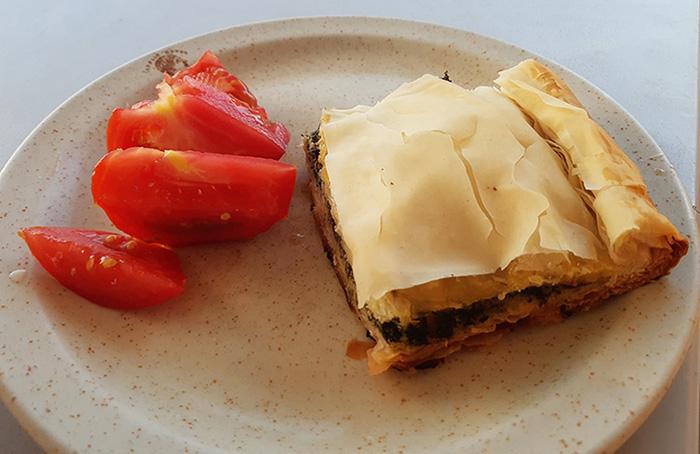
Spanakopita. This recipe comes directly from Ewdoksia Papuci-Władyka.
| |
|
Ingredients
2 large bundles of spinach
one package of filo
oil or butter (can be mixed)
½ kg feta cheese
4 eggs
2–3 spoons of full-fat yoghurt
green onion
dill
salt, pepper
Preparation:
- Wash the spinach thoroughly and scald it in boiling water for 2 minutes, drain it well, and cut it.
- Chop the feta up with a fork, add it to the spinach, whisk the eggs and add yoghurt, add chopped greens, add salt and pepper to taste, mix everything thoroughly.
- Grease the baking tray, half a packet of filo – brush each flake separately with liquid fat (or every other flake if you want the final result to be less greasy), and place on the baking tray.
- Spread the stuffing and spread the other half of the filo on top of it – each flake is greased, also the one on top. The edges are rolled up. Cut them into pieces as you want to serve them.
- Bake in a hot oven till golden.
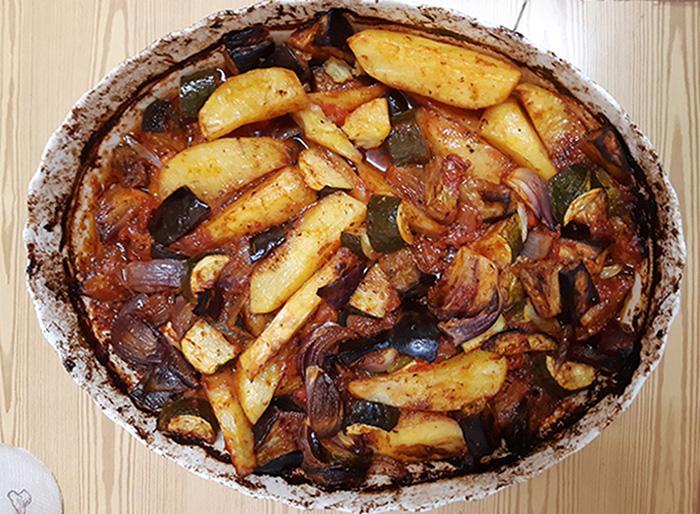
Vegetable Briam: This recipe comes from our coordinator of the field works, Łukasz Miszk, and Małgorzata Kajzer. It is inspired by the blog of the writer and journalist Dionisios Sturis: www.dturisowe.com. His recipes for Greek cuisine are ideal for excavations in Cyprus – simple, delicious dishes for which you can easily find and choose the ingredients. The Polish team from Paphos highly recommend these recipes. Vegetable Briam, delicious dripping with olive oil, is one of our favorites.
| |
|
Ingredients:
2 large eggplants
2 large zucchini
4 red onions
5 large potatoes
head of garlic
2 cans of tomatoes
salt, pepper, oregano
half a liter of olive oil
200 grams of feta cheese
fresh herbs: mint, dill, parsley
Preparation:
- Cut the eggplants and zucchini into thick cubes, the potatoes into quarters, the onions into eighths. Mix in a roasting pan, ovenproof dish or large cake pan.
- Add peeled garlic, spices and tomatoes. Pour the olive oil and mix everything thoroughly again – preferably with your hands.
- Put in the oven preheated to 375º (190 C º), with air circulation. Bake for 60 – 70 minutes, stirring a maximum of two times. Briam is ready when the potatoes are tender and the edges are well-browned.
- Before serving, sprinkle with crumbled feta and chopped herbs.
| |
|
Anthoulla Vassiliades, CAARI Librarian; senior member of the Paphos Theatre Archaeological Project
Pilafi Pourgouri me fide (bulgar pilaf with vermicelli) basic recipe
This recipe is for 1-4 people, for more just multiply ingredients, 2-3 cups of bulgar wheat, 2 onions, 2/3 cup of vermicelli, more hot water and tomato etc.
Ingredients:
250 g or 1 cup bulgar wheat (coarse or fine)
1 tin of chopped tomatoes or passata
1 onion chopped
1/3 cup vermicelli (fide) broken up
½ litre of hot water
Olive oil
Salt & pepper to season
Preparation:
- In a non-stick pan add olive oil and the chopped onion on a low heat, let the onion soften and then add vermicelli and cook until golden brown.
- Add the bulgar wheat and stir until coated with oil and mixed with onion and vermicelli.
- Add the tomato and hot water, mix well bringing to a boil, then lower heat (to lowest setting) and let it simmer. If using the fine bulgar it will only need about 5-10 mins, if using the coarse bulgar this will take a little longer.
- Remove from the heat, add salt and pepper and cover the pan with a tea towel or kitchen paper, close the pan with the lid on top of the paper. Let it stand for 10-20 minutes.
- It can be served on its own with yoghurt or as accompaniment to any veg, meat or fish dish and salad.
| |
|
Alison South, Vasilikos Valley Project
Quick Chocolate Cake, from British High Commission Recipe Book of about 1978
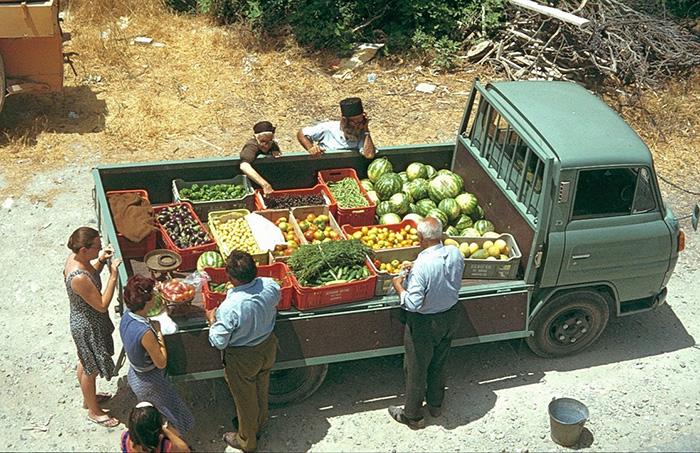
When we started our project in 1976, although we were not exactly out in the wilds, dig catering was much more difficult than now. The village shop in Kalavasos had a limited range (and in the summer “hens no lay eggs now”). Bread from a distant big-city bakery was delivered daily, milk only two or three times a week in a crate in the sun on the back of the school bus. Fresh fruit and veg were only obtainable from a small truck, and of course you had to be around when the truck came by.
| |
Vegetable truck in Kalavasos | |
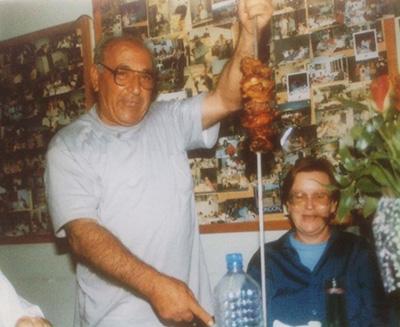
Just getting basic supplies for breakfast and a simple lunch was a continual worry. It was very difficult to spare a dig vehicle and driver for a trip to a big-city supermarket, or to a bakery for a cake for a special occasion. Our dinner in Stavros’ tavern was plentiful, but the menu relied rather too heavily on pork chops (Stavros had a pig farm).
| |
Stavros in his taverna: with skewer, and with friends and guests | |
|
|
In the circumstances, the following recipe was very useful for a bit of a treat, requiring only store-cupboard ingredients and only two eggs, and very simple to make (just squish everything together, basically). To feed a team, I often made two or three times the amount given here.
Ingredients:
6 tbs cocoa powder
10 oz sugar
9 oz plain flour
1 level tsp bicarbonate of soda
pinch salt
2 eggs
6 oz melted margarine
8 fl oz water
Preparation:
- Sift first five into large bowl.
- Add eggs, margarine and water and beat.
- Pour into greased rectangular pan.
- Bake in slow oven 300°F (150C) about 40 minutes.
- Add chocolate frosting if you like (cocoa powder, icing sugar, water).
| |
|
Help sustain CAARI
Food is our fundamental source of energy - we cannot do without it. It not only drives our daily purpose, but also gives us the spice of life to keep it going, as the delicious recipes from the field have shown. So much of what makes CAARI’s community so vibrant is this spice of life that we see within our walls - stone and virtual alike - in the scholars undertaking innovative research. For CAARI, basic funding is its energy - its beans and lentils. Without it, CAARI cannot provide the distinctive form and flavor of its programs through the support of fellowships and promotion of resulting research through our lecture and outreach programs.
This is precisely where the contributions of our friends and supporters come in - you are the key that enables CAARI to transform a mere set of ingredients into a cherished recipe around which our community gathers. The feeding of our fellowship programs is thus a consistent theme as they bring in the steady seasoning of fresh, strong minds that will become new master scholars to lead the field. We are grateful to your continued commitment and share your impact in former Fellows’ stories on the CAARI Web site: http://caari.org/former-caari-fellows/.
Today, however, we invite you to help with one of the newer items on the CAARI menu - the program of virtual access to our public lectures, both in real-time by Zoom and through CAARI’s YouTube channel. Many of you have appreciated this heightened access, and it has radically expanded attention to CAARI, often doubling the real-time audience of our lectures and drawing up to 300 hits for recordings on YouTube. Many institutions that developed virtual programming during the pandemic are settling back now into in-person events only. As our audience stretches across the globe, we believe it is crucial to sustain and improve CAARI’s virtual capability.
You can see below a spread of tools that we need in order to keep abreast of virtual programming. We hope you will consider underwriting one of them for us--or, if that is too much--making a contribution toward them. Two or three smaller gifts can often add up to a big need fulfilled.
This is where we hope you can help! You can see below a spread of tools that we need in order to keep abreast of virtual programming. We hope you will consider underwriting one of them for us--or, if that is too much--making a contribution toward them. Two or three smaller gifts can often add up to a big need fulfilled. Please join to sustain this effort!
| |
A good projector to make images clear both on-site and on Zoom: OPTOMA videoprojector HD28 or OPTOMA Laser UHZ45(880 €-1990 €) | |  |
| |
| |
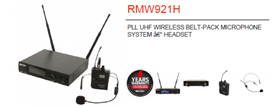
A good audio system with mics for on-site and Zoom transmission: PROEL WMF 700 wireless mic or PROEL RMW 921H (195 €-330 €) | |
A camera to record for Zoom: YEALINK UVC 34 conference camera or YEALINK UVC 30 conference camera (285 €-775 € plus 200€ installation) | | |
|
CAARI
11 Andrea Dimitriou Street
Nicosia 1066
Cyprus
| |
CAARI
209 Commerce Street
Alexandria, VA 22314
USA
| |
|
We extend our heartfelt thanks to all who join in this exciting and challenging venture! Your help is what makes our eager ambitions real!
Help us realize CAARI’s mission of supporting new and seriously innovative research on Cyprus itself and its eastern Mediterranean context.
| |
Annemarie Weyl Carr
Vice President, CAARI Board
| | | | | |