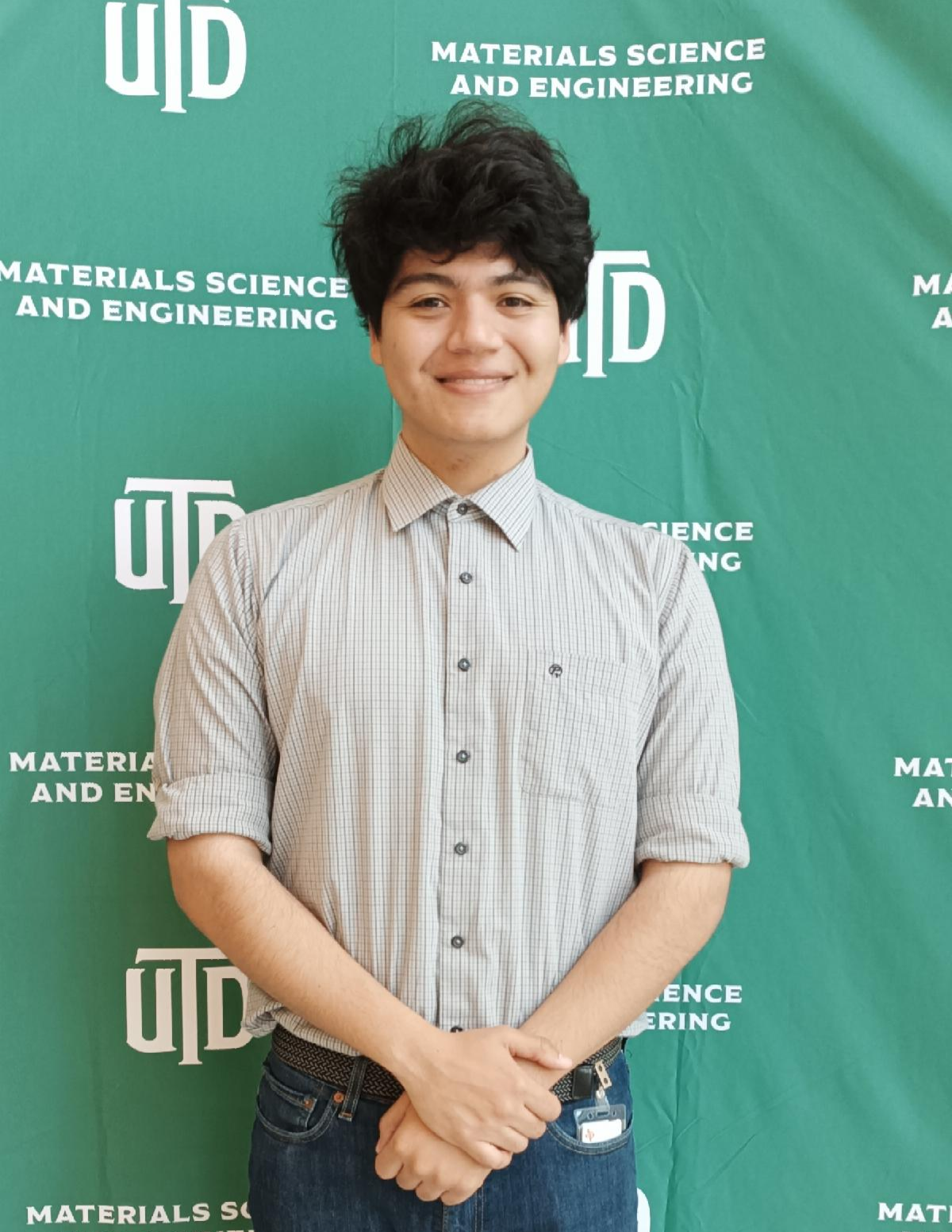
|
Tell us about your research project and why it is important to you.
My research takes a new approach to transistor design. The goal is to create high-electron-mobility transistors based on a gallium nitride (GaN)/aluminum gallium nitride (AlGaN) heterojunction. The project focuses on the development and integration, within a transistor gate, of aluminum-scandium nitride (AlScN) in its ferroelectric phase in such a way that it is possible to modulate the transistor’s threshold voltage to a normally-off state. The main idea is to design low-power nitride-based transistors for high-power applications that offer high reliability in harsh environments, such as high temperatures, high radioactivity, or a combination of both. One example of where this technology can be applied is in the electronic systems used in space exploration, in which reliability and energy efficiency are critical. Furthermore, the ability to modulate the transistor’s threshold voltage makes this technology particularly promising for neuromorphic computing and in-memory computing.
This research is important to me because, since it includes multiple phases—material development, device fabrication, electrical characterization, reliability testing, and simulations—it allows me to develop a wide range of skills while working on my PhD in Materials Science.
Have you presented or published your research anywhere? Tell us about the experience.
I've had the opportunity to present my work at various academic forums. At the Research Days Contest at the University of Texas at Dallas (UTD), I presented a poster on the simulation of Single Event Effects (SEEs) induced in semiconductor devices. At the Nuclear and Space Radiation Effects conference, held in Nashville, Tennessee, in 2025, I also presented a poster on the correlation between laser-induced SEEs via nonlinear absorption and those induced by heavy ions. Sharing my project with fellow researchers and receiving their feedback has been a very rewarding and enriching experience.
Share with us something interesting about your research that most people don't know.
Many people are unaware that GaN-based transistors, as well as ferroelectric materials, are deeply integrated into our daily lives. In fact, many systems and devices in critical infrastructure rely on them, ranging from electric vehicles to the manufacturing industry and systems in the aerospace sector.
Tell us about your academic or professional collaborations with Mexico.
There is currently no formal collaboration as part of this project. However, I regularly work with researchers from Mexico who are visiting my department and collaborating with our group. This creates an environment for exchanging experiences, where they can contribute to projects like the one I described, and we, as students, learn from their experience and work.
What attracted you to Texas and The University of Texas at Dallas?
The idea of studying in Dallas took form because of recommendations from my mentors during my undergraduate and master’s studies. They understood not only my scientific interests but also knew about the work being done at UT Dallas. Following their advice, I decided to do a research stay to explore the possibility of pursuing graduate studies. This experience gave me a firsthand look at the dynamic nature of research at the university, as well as the opportunities available to collaborate with strategic actors in both the public and private sectors.
What have been some good things you didn't expect from Texas or UT Dallas?
Among the things I didn’t expect from Dallas are the kindness of its people and how multicultural the city is.
What have been the biggest challenges of studying at UT Dallas and living in the United States?
My biggest challenge has been finding a balance between the time and energy I invest in my research, my academic responsibilities, and my personal life, since there are times when these areas compete with one another. Sometimes striving for excellence and meeting every expectation can be overwhelming. As for living in the United States, it has been a rewarding experience so far, although I have had to learn a few things that are different in comparison to where I come from.
How has the support of ConTex and Secihti impacted you?
The support of Secihti and ConTex has been invaluable, enabling me to live comfortably and focus on my studies and research without financial concerns.
What kind of work do you hope to do in the future, and how do you hope your research will benefit people in the U.S. and Mexico?
I hope to continue conducting research, whether in academia, industry, or the public sector. I am confident that my work will continue to strengthen ties between the two countries through collaboration and the exchange of experiences. Furthermore, I hope to contribute directly to fostering social development by creating better and more reliable technologies.
What advice would you give to other Mexican students considering studying in Texas?
I would advise them to consider the benefits and opportunities available to students in Texas, both on and off campus, and not to be intimidated by the application process or the requirements for admission. It is complicated at first, but it’s just a matter of taking the first step and staying determined. I would also tell them not to get discouraged if they apply and are not accepted the first time around; they can always try again. Texas offers so much more than just excellent academic and professional opportunities. Go ahead and seize the opportunity!
|