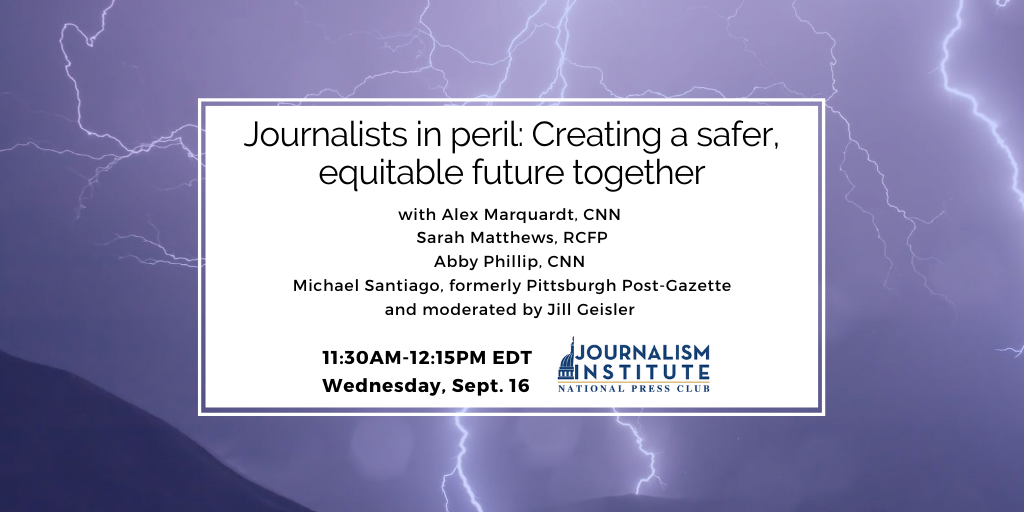
Safety for journalists has taken on a renewed sense of importance as newsrooms grapple with the convergence of hostility toward those in the field and systemic racism that pervades even the most revered journalistic institutions. It seems journalists have more reason than ever to be allies for each other as the industry confronts itself while serving conflicted communities.
Registration is open for this program, which will take place from 11:30 a.m. to 12:15 p.m. Wednesday, Sept. 16, 2020.
|
|
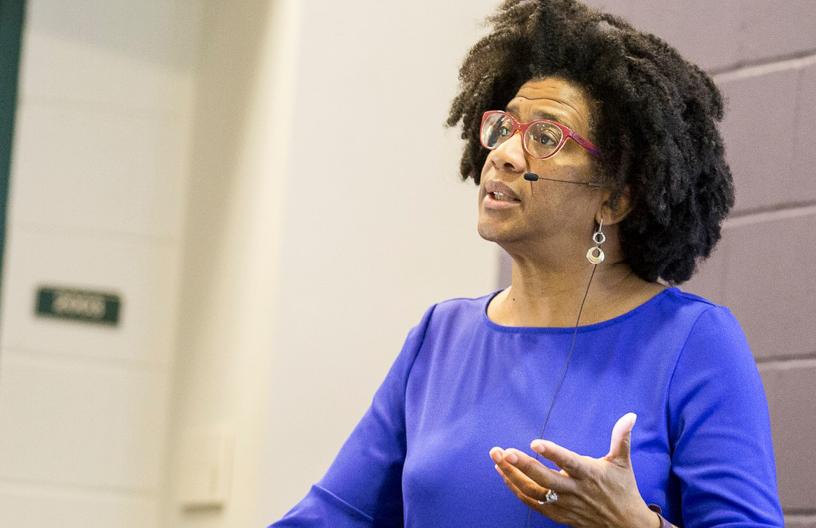
In her 32 years as managing director of the Dow Jones News Fund, Linda Shockley has received numerous honors and helped countless student journalists advance their careers in news.
This summer, the Fund secured virtual internships for nearly all its 78 interns, despite the pandemic.
As Shockley nears retirement next month, the Institute reached out to her by email to discuss trends in emerging journalists, what’s next for the Fund, and her legacy.
You’ve had a front-row seat in the development of high school and college journalists for more than three decades. What are some of the more recent trends you’ve seen in workshop and internship program planning?
Shockley: We found using virtual training for interns this year had lots of positive benefits. For example, Erin Ailworth of The Wall Street Journal spoke to interns about covering disasters and trauma from the streets of Minneapolis in the aftermath of George Floyd’s death. That would not have been possible without the technology.
Even before the pandemic, we used webinars to “visit” campuses, classrooms and journalism programs and to bring in speakers interns might not ordinarily see. The connections have been shaky at times, in fact, hampering communication with frozen screens and the inability to accurately “read” the audience.
Training participants are clamoring for hands-on experiences. People want to leave knowing how to do something they didn’t know before. Skills delivery is the biggest trend I see. Add that as people need to listen and be heard, virtual tough conversations will become more frequent.
What advice would you have for newsroom leaders exploring how to make remote or in-person internship opportunities meaningful as this pandemic wears on?
Shockley: I like what my colleagues at The Wall Street Journal said about the need to “triple-down.” Interns need technological resources, mentors, tuned-in supervision and newsroom coaches, even if the news staff is dispersed around the country.
The tumult of the pandemic, demonstrations and unrest make it imperative for managers to gauge how people are coping – emotionally and physically. Without technology and internet access from employers, some students, whether urban, rural or suburban, won’t be able to work at their fullest capability.
If editors are serious about covering communities of color, they must do so understanding how our society’s systems are underpinned by race as a major determinant of where we live, attend school, shop, access government officials and services, receive medical care, work, worship and vote (or can’t vote). Without this kind of introspective, fact-based training, newsrooms will find themselves re-litigating past debates over inequity.
|
|
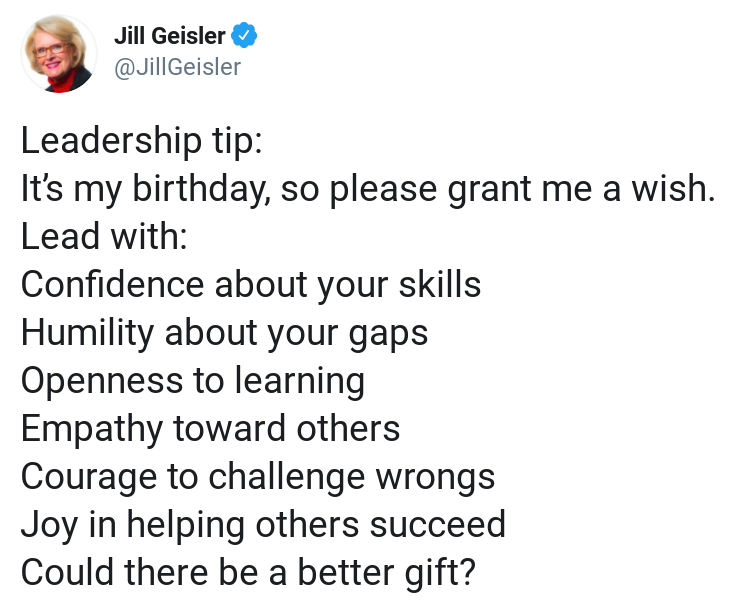
What’s the best gift a leader has given you? Pay it forward.
Advice from Jill Geisler, Bill Plante Chair in Leadership & Media Integrity, Loyola University Chicago, Freedom Forum Fellow in Women’s Leadership
|
|
|
Reading is a proven stress reducer, but our day-to-day “required” reading might be causing more pain than pleasure.
It may seem counterintuitive for journalists to put down the paper, turn off social media or ignore email — all required reading to get the job done (or get ahead). But escaping into other forms of reading can be a healthy way to temporarily evade stress and stop “doomscrolling”.
If you want to ramp up the self-care factor, try these seven quick reads to help you look inward.
|
|
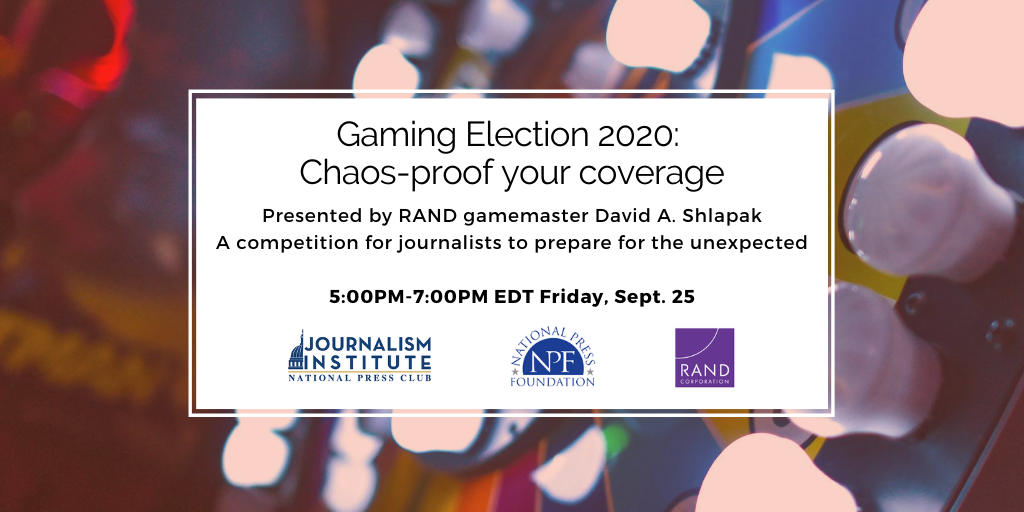
The National Press Club Journalism Institute, the National Press Foundation, and the RAND corporation are offering journalists a new way to prepare for the unexpected in Election 2020 news: Gaming your coverage plan.
Registration is open for this free program, which will be held on Friday, Sept. 25 from 5-7 p.m. ET.
RAND gamemaster David A. Shlapak will present players with scenarios based on current and likely events, and each team will make coverage decisions, not knowing what the next roll of the dice will bring.
The game will surface journalists’ assumptions and test decisions as reporters and editors balance competing goals, commit limited resources, and assess tradeoffs. The game’s timeline will begin in September, continue through Election Day, and end on Inauguration Day.
|
|
This newsletter is written & edited by the National Press Club Journalism Institute staff: Beth Francesco, Holly Butcher Grant, and Julie Moos. Send us your questions and suggestions for topics to cover.
|
|
|
|
|
|
|