LOW INCIDENCE DISABILITIES QUARTERLY NEWSLETTER
September 2024
| |
Trauma-Informed Teaching | |
|
"When it feels disheartening to learn that trauma changes the brain, remember that healing changes the brain, too."
- @howhumansheal
| |
|
Welcome back! I hope that everyone had a wonderful and relaxing summer break.
Childhood trauma and adverse childhood experiences can be a challenging topic to talk about. Many children in our schools today are living lives filled with trauma of one sort or another — trauma that is often beyond their control. According to the Alaska Mental Health Trust, 1 in 3 children are reported to child welfare before they turn 7. According to a National School Boards Association resource on Adverse Childhood Experiences (ACEs), “Childhood trauma is among the most relevant and significant psycho-social factors affecting education today.” It is important that parents, teachers, and other school staff are familiar with evidence-based strategies to help reduce and mitigate ACEs, promote the development of protective factors, and support the use of skill-building programs.
We hope this newsletter on strategies to mitigate trauma and adverse childhood experiences gives you the tools you need to support your students. Please reach out to your SESA specialist for additional information and support. For more information on SESA services, visit us at www.sesa.org.
Jennifer Schroeder
SESA Multiple Disability Specialist
Newsletter Editor
| |
Paraprofessional Spotlight | | |
|
|
October’s paraprofessional spotlight is Sylvia! She is an amazing paraprofessional because she:
- Believes that all students can learn and grow
- Encourages all students to try their best and work hard
- Asks questions to make sure that she has appropriate activities for students at various levels
- Willing to try a variety of strategies with her students
- Promotes independence
- Models calm and positive behavior for students
| | |
Keep up the great work, Sylvia! | |
Trauma-Informed Principles Can Help Create Access
by Meriah Cory, AKCAM Grant Coordinator
| |
There are a varying number of principles for trauma-informed care or teaching, depending on which research study you are reading. But there is a consistent list of principles that shows up on every list. If we take a look at these principles and apply them to supports needed for students with print disabilities, we can see that while some of these students will have experienced trauma that is affecting their learning, even the students who have not will benefit from the environment that is set up by incorporating these principles into the education setting. Below is a list of ideas to think about specifically for students with print disabilities. This is not meant to minimize the principles for trauma-informed teaching but rather to focus them on the needs of students with print disabilities. These principles are much more involved, and just thinking in this focused area will not only create a trauma-informed teaching environment but it will help support students who have print disabilities. | |
|
Safety - Students and teachers need to feel physically and psychologically safe. By creating an educational environment that allows for multiple tools and a variety of approaches students will learn to use the tools that they need without feeling isolated by being different. Check out What’s Your Role: https://aem.cast.org/get-started/by-role to learn about accessible materials and technologies.
| |
|
Transparency/Trustworthiness - Decisions are made with the goal of building and maintaining trust. Rather than just providing support and accommodations that are needed for the student, explaining, modeling, and showing how and why tools/materials are needed can help students understand and then trust why they are being asked to utilize the supports without making them feel like a failure. Check out Designing for Accessibility: https://aem.cast.org/create/designing-accessibility-pour
| |
|
Function-based Behavior Intervention Plans (f-BIP) through a Trauma-Informed Lens By Lyon C. Johnson, MA, NCSP, BCBA, LBA
With 32 years of experience in the field of education as a school psychologist, nine years as a Board Certified Behavior Analyst (BCBA), and 18 years traveling the State of Alaska working in rural and remote schools, I have witnessed the impact of historical trauma on communities and families; the behavioral manifestations of complex trauma students with Adverse Childhood Experiences (ACEs) in their histories; Alaskan educators struggling to meet the needs of this student population while concurrently developing secondary trauma. Moreover, this specialist has witnessed educational systems struggle to respond to this group of students' needs.
Students with Emotional-Behavioral Disorders (EBD) often face significant challenges stemming from various factors, including exposure to traumatic experiences, which can lead to learning, social, emotional, and behavioral challenges. Traditional disciplinary approaches, often reliant on punitive measures and power dynamics, can be counterproductive for students with EBD. Function-based Behavior Intervention Plans (f-BIP) are widely recognized as effective in addressing challenging behaviors in students with EBD. However, recent research findings (Pollack et al., 2023) recommend placing greater emphasis on aligning f-BIP with trauma-informed practices (TIPs). The alignment would better support students with EBD and trauma histories. Supporting students with EBD requires a comprehensive and empathetic approach that acknowledges the potential impact of trauma. Educators benefit from a greater understanding of TIPS and its application in schools. Key principles of TIPs include:
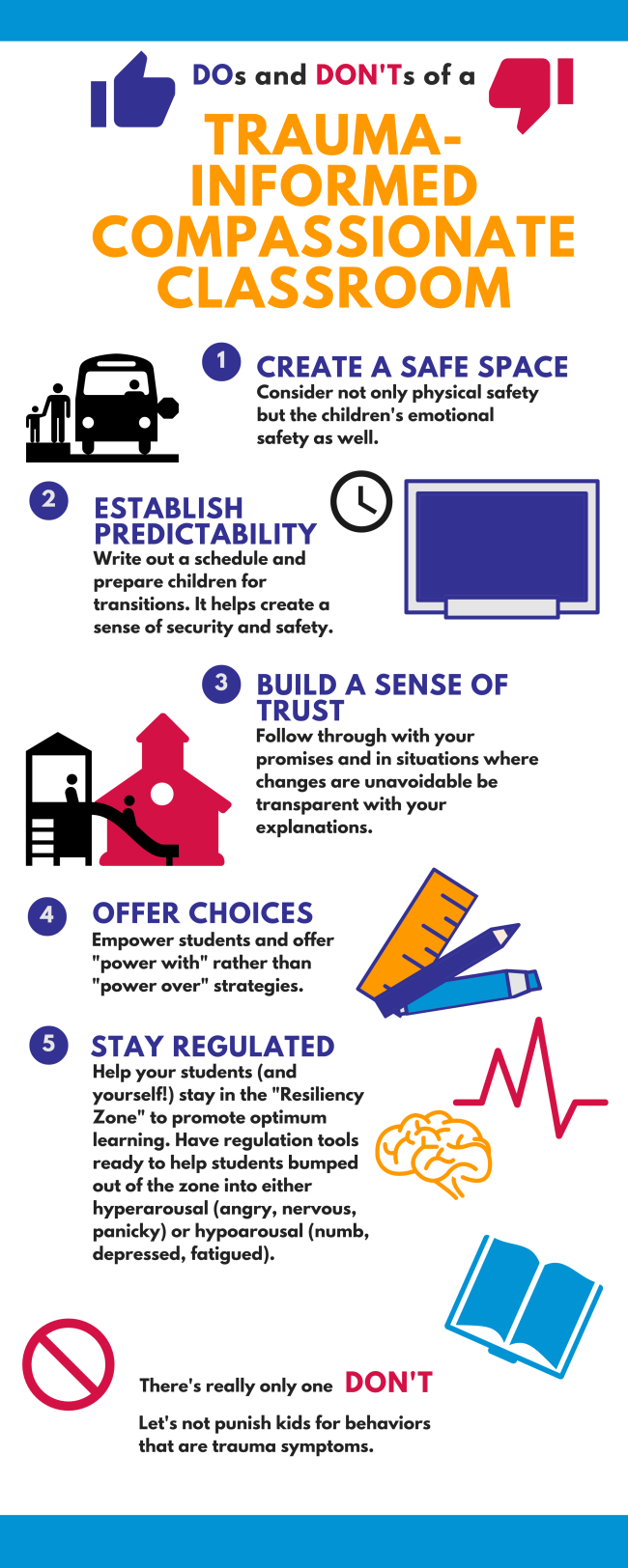
Safety: Teachers prioritize students' emotional and physical safety, avoiding any actions that might trigger a stress response. They create a calm and predictable classroom environment, minimize the use of punitive disciplinary practices that could trigger a stress response, and offer students a safe space to de-escalate when needed. Special education aides stay mindful of student interactions, use a gentle and reassuring tone, monitor students for signs of distress, and use least-to-most prompting to minimize behavioral error correction and offer support.
Trustworthiness: Teachers establish and maintain consistent routines, clear expectations, and communicate changes in schedules or activities in advance. Follow through on promises and commitments. Special education aides are reliable and consistent in student interactions and provide clear and predictable support.
| | | |
Trauma-Informed Teaching for Students Who Are Blind or Visually Impaired: A Holistic Approach by Angel Black, M.S.Ed.,TSVI, COMS, Vision and O&M Specialist | | |
|
Trauma-informed teaching is an educational framework that acknowledges the prevalence and impact of trauma on students' lives, emphasizing safety, trust, and emotional regulation in learning environments. For students who are blind or visually impaired (BVI), trauma-informed practices must be thoughtfully adapted, as these students may face unique challenges that intersect with their sensory impairments. This article delves into the principles of trauma-informed teaching, explores the specific needs of BVI students, and provides strategies for creating inclusive and supportive learning environments.
Understanding Trauma in Students Who Are Blind or Visually Impaired
Trauma can manifest in many forms—abuse, neglect, medical trauma, loss, or living in unstable environments—and it affects students in diverse ways. Trauma-informed teaching recognizes that students who have experienced trauma may struggle with emotional regulation, learning, and behavior, and these challenges may not always be immediately visible. For BVI students, trauma may also result from:
• Medical trauma: Many children who are blind or visually impaired experience multiple surgeries, hospitalizations, or invasive treatments that can be traumatic, especially when these interventions are experienced at a young age.
• Isolation and social stigma: Students who are BVI may face social exclusion or bullying, leading to feelings of isolation, anxiety, or depression. Navigating a world designed for sighted individuals can be frustrating and contribute to feelings of inadequacy.
• Loss of independence: Depending on the degree of their visual impairment, some students may struggle with activities that sighted peers accomplish with ease, resulting in a loss of confidence and autonomy. For those who lose their vision over time, the transition can be particularly traumatic.
• Educational marginalization: Students with visual impairments may face challenges accessing educational materials, leading to experiences of frustration, exclusion, or even failure, all of which can compound feelings of helplessness.
Trauma-Informed Principles in Education
Trauma-informed teaching is built on six key principles that can be adapted to the unique needs of students who are blind or visually impaired:
1. Safety: Ensuring students feel physically and emotionally safe in their learning environment is critical. For BVI students, this includes not only safe navigation of physical spaces but also ensuring that instructional environments are free from triggers related to their trauma or impairment.
2. Trustworthiness and Transparency: Consistent, clear communication and predictable routines help establish trust. BVI students may experience anxiety if they are unsure of what to expect in a classroom or learning activity, so being explicit about schedules, transitions, and expectations is essential.
| | |
|
Trauma-Informed Teaching
by Amy Topmiller, Multiple Disabilities Specialist
| |
|
When we talk about trauma-informed teaching, we may have heard the language but do not truly understand what that means or the depth of the subject. Trauma-informed teaching is knowledge of the signs and symptoms of childhood trauma, recognizing them in the students you work with, and making small changes in the classroom and teaching practices to address those needs. Adverse Childhood Experiences (aka ACEs) are categories of childhood trauma that can include abuse (physical, sexual, emotional), neglect, natural disaster, witness to violence, and/or dysfunctional household (substance abuse or mental health issues). There is a correlation between childhood “high ACE scores” and poor outcomes in adulthood in the areas of social, emotional, economic, and health (Alaska Scorecard 2023). One author, Alex Shevrin Venet (2021) referred to trauma as a lens, not a label. This may help shift the perspective of many educators when addressing behaviors in the classroom that may look defiant when they are actually the result of childhood trauma. Behaviors such as avoidance, aggression, refusal, or shutting down at the surface can seem like choices but often may be the result of something deeper and a lack of skill to respond to a situation in a healthy way. Childhood trauma can negatively impact brain development, especially in the early years, and cause a series of difficulties across all domain areas of development impacting a child’s ability to learn.
According to the National Child Abuse and Neglect Data System (NCANDS), Alaska ranked second highest for proven cases of child maltreatment with 18 children per 1,000 (2020 data). According to the CDC from 2019, ⅔ of children in the U.S. have experienced one or more types of trauma.
| |
When signs that a child may have Adverse Childhood Experiences, they often cannot learn if their basic needs are unmet. Maslow’s Hierarchy of Needs demonstrates the priority of needs that influence behavior including the readiness to learn.
Maslow’s Hierarchy of Needs
• Physiological (basic needs: food, water, shelter)
• Safety
• Love and belonging
• Esteem
• Self-Actualization
This applies to the needs of children who have experienced trauma. However, it is important to acknowledge there is a difference between surface-level supports and deeper, more impactful changes. Many resources cite that systemic changes and social changes are needed to embrace and implement trauma-engaged practices effectively.
In students with cognitive impairments who experience trauma, we know this population is much more at risk for abuse and neglect and often lacks the skill to report it or communicate about it. This makes finding supportive resources for these individuals more challenging, especially within the state. It is important to note that students with significant disabilities need support just like every other student who experiences trauma. They may need a modified version of support to meet their cognitive needs, communication needs, and level of understanding, but they need the support like any other child.
| |
|
Trauma-Informed Teaching & Autism
by Kelly Maki, Autism Specialist
Trauma is a result of an event or series of events experienced by an individual physically or/and emotionally that is harmful or threatening and has a lasting, adverse effect on the individual’s functioning, including mental, physical, social, and emotional well-being. (U.S. Department of Health and Human Services, 2013). The observed behaviors caused by trauma can overlap with those behaviors observed in students with autism. This means the observed behaviors descriptive of students with autism are similar to students who have experienced developmental trauma. These can include a lack of interest in peers, repetitive play, outbursts, communication difficulties, compromised executive functioning, and failure to regulate emotion/effect (Cook, A, et al., 2003 and Michna, G. et al., 2022). With that said it may be difficult for an educator to determine if a student with autism has experienced trauma. A best practice for teachers is to provide students with lessons designed to teach skills that help in preventing traumatic experiences. Knowing how trauma can affect students’ learning, the idea of Trauma-Informed Care, or TIC, has been developed. It is a framework for educators to use with students who have experienced trauma. TIC has five components: Safety, Choice, Collaboration, Trustworthiness, and Empowerment. How these are addressed by the classroom teacher can be different for students with autism. Consider each component and potential teaching goals and strategies to support trauma-informed teaching.
Safety is ensuring physical and emotional safety. Most students with autism will experience some level of social and emotional skills deficits. Note that these deficits alone can cause trauma for the student.
Teaching Goals:
• Ability to say “no” or “stop.” Consider verbal, visual cue cards, and/or use of an AAC device, if needed.
• Identify safety signs and/or words. Consider daily/weekly practice during functional skills lessons.
• Identify potential unsafe situations and be able to communicate a need for help or assistance. Consider a social narrative to teach this skill.
Choice is providing opportunities where the individual has choice and control. Someone who has experienced trauma has had their ability to make choices taken away from them during the traumatic experience. As a student with autism, personal choices can be limited or not even available in certain circumstances, so it is important for teachers to offer choices throughout the school day and assist students in informed decision-making.
Teaching Goals:
• Provide multiple choices when the environment allows. This can include choices for an activity or lesson, a time to complete a given task (flexible schedule), or a location to complete the task.
• Build decision-making skills. Use a choice board to allow the student to practice choice-making. Give options that are preferred and not preferred. As the skills grow, challenge the student with more difficult choice options where all options are not preferred.
| | | |
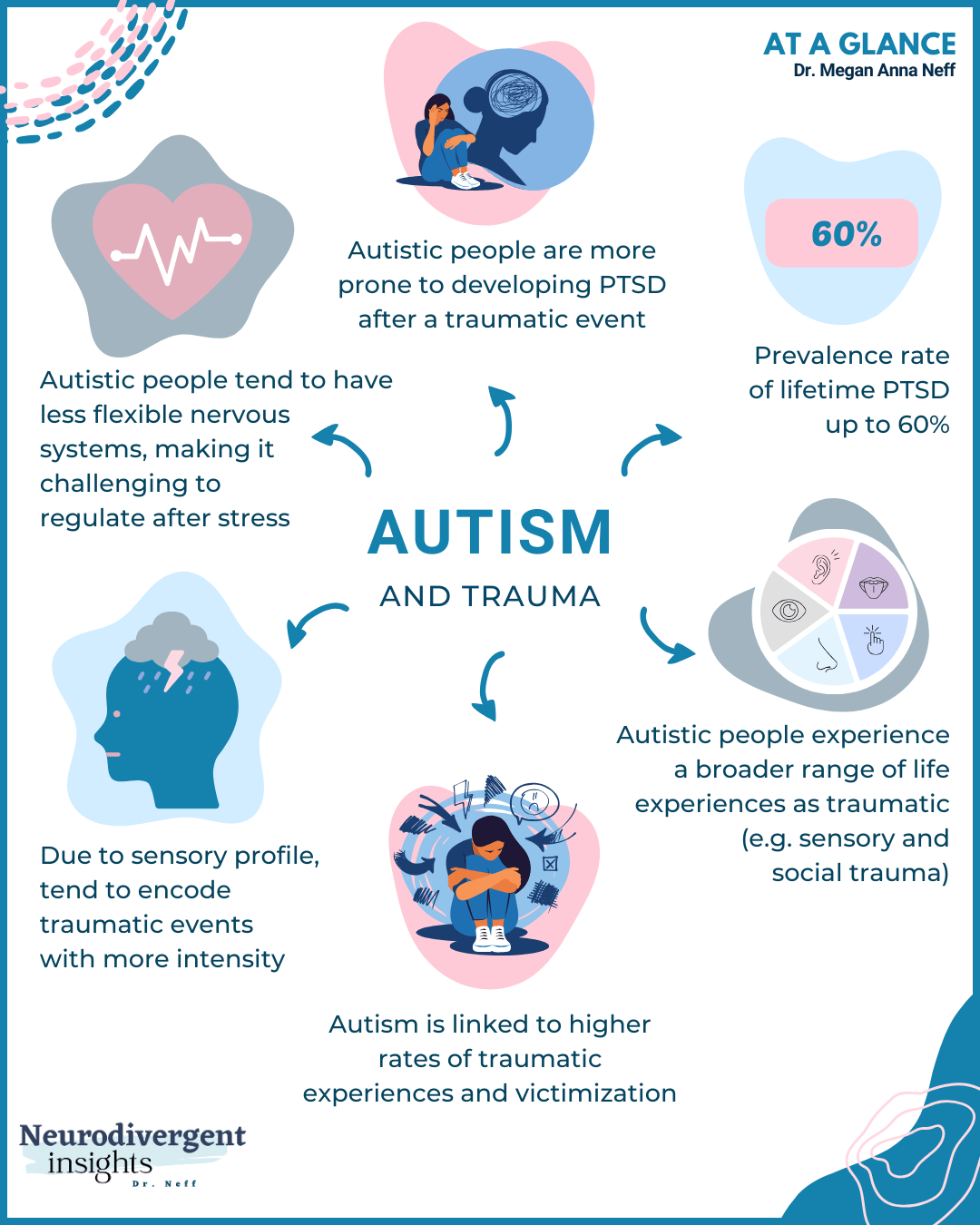
People with autism are more likely to experience and be affected by trauma than those without a disability. Consider this graphic and article by Dr. Megan Anna Neff: How are Autism and Trauma Related? | |
| |
Sign up for all of our quarterly newsletters to stay up to date on all of our SESA adventures, including new library materials, special events, newsletters, and much more! | | | | |