In This Issue
Research Spotlight:
Time to Sleep: Promoting Healthy Sleep to Prevent Poor Outcomes
Upcoming Events
Recent Publications
|
|
Time to Sleep: Promoting Healthy Sleep to Prevent Poor Outcomes
|
CPCE Core faculty member
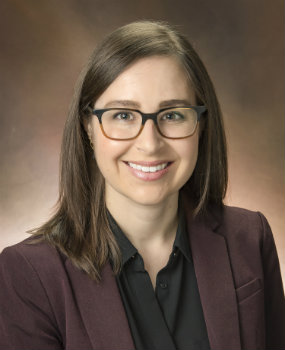
Ariel Williamson, PhD is an advocate for healthy sleep across the lifespan, but especially in childhood and adolescence, when insufficient and poor quality sleep can negatively impact child development. Dr. Williamson, CPCE Director
Alexander Fiks, MD, MSCE, and Lisa J. Meltzer, PhD, a pediatric psychologist at National Jewish Health in Denver, CO, recently published a
Viewpoint in
JAMA Pediatrics titled “A Stimulus Package to address the Pediatric Sleep Debt Crisis in the United States.” In it, they highlight the potential role of pediatricians and other primary care professionals in supporting sleep health. They offer three suggestions for better integration of sleep into primary care.
First, sleep should be thought of as a vital sign, monitored and tracked across preventive visits. The National Sleep Foundation Sleep in America Poll contains questions on nighttime sleep duration, regularity, and electronics usage which could be used to guide sleep assessments, and the validated Patient-Reported Outcomes Measurement Information System (PROMIS) sleep measures may be used to assess any reported sleep disturbances.
Second, the growing presence of wearable devices and mobile applications may be leveraged to support prevention, problem identification, and initial behavioral treatment. While the authors acknowledged some limitations of these tools, including acceptability across diverse racial/ethnic and socioeconomic groups, these tools nonetheless could provide value to clinicians, and integration with electronic health record (EHR) systems could help to facilitate uptake.
Third, pediatricians and sleep specialists can mobilize a public health campaign to raise awareness of known sleep-related morbidities and promote sleep health. The Safe to Sleep campaign (formerly known as Back to Sleep) to reduce the risk of sudden infant death syndrome (SIDS) provides a highly successful model.
In addition to raising awareness about the need to address pediatric sleep in primary care, Dr. Williamson has led research projects with
Jodi Mindell, PhD, of the CHOP Sleep Center, focused on identifying individual child, family, and environmental factors associated with
poor sleep in early childhood and the
persistence of sleep problems over time. Identifying these factors can contribute to tailoring sleep interventions that prevent poor child health and wellbeing. In an
editorial accompanying a study conducted outside of CHOP and published in
JAMA Pediatrics, Dr. Williamson, Dr. Fiks, and
Jonathan A. Mitchell, PhD, of the CHOP Division of Gastroenterology, Hepatology and Nutrition noted that "the tailoring of messages to specific subgroups of adolescents ... may help pediatric clinicians become more effective and efficient in providing advice that addresses the epidemics of poor sleep and obesity in adolescence.”
What's next? Dr. Williamson is currently conducting a NICHD-funded K23 Career Development project focused on addressing early childhood sleep problems in primary care. In this work, she is partnering with families and primary care clinicians to adapt evidence-based behavioral sleep strategies for implementation in urban primary care with families who are predominantly of lower socioeconomic status backgrounds.
|
|
Upcoming Events
To P or not to P. That is the question. Life and death beyond statistical significance
Date: February 7, 2020
Time: 12:00 - 1:00 pm
Location: Roberts Center for Pediatric Research, 1st floor, Room 1-120A
A. Russell Localio, PhD will present for the CPCE and PolicyLab Seminar Series. Dr. Localio is Emeritus Associate Professor of Biostatistics at the University of Pennsylvania. For more information or to RSVP, e-mail
CPCE@email.chop.edu.
CPCE/PolicyLab Faculty Seminar Series featuring Jim Guevara, MD, MPH
Date: February 21, 2020
Time: 12:00 - 1:00 pm
Location: Roberts Center for Pediatric Research, 2nd floor, Room 2-180
James Guevara, MD, MPH is a core faculty member of CPCE and PolicyLab, professor of pediatrics and epidemiology at the University of Pennsylvania, and a primary care pediatrician at CHOP. Dr. Guevara will discuss community-based participatory research. To RSVP, e-mail
CPCE@email.chop.edu.
Emerging Therapies in a New Era of Care
Date: March 3, 2020
Time: 6:00 - 7:30 pm
Location: The Franklin Institute, 222 North 20th Street, Philadelphia
Penn Medicine bioethicist and pediatric oncologist
Dr. Steven Joffe joins Franklin Institute’s Dr. Jayatri Das for a dynamic discussion exploring the promise and the realities of newer breakthrough therapies. Free,
advance registration required.
|
Recent Publications
Young black and Latinx men who have sex with men (YBLMSM) and transgender women (YBLTW) are disproportionately impacted by HIV. Few reports have examined the community and health care experiences of social marginalization of youth service providers who have multiple roles in the community.
Nadia Dowshen, MD, MSHP and colleagues conducted key informant interviews with key informants (KI) who were members of or connected to the YBLMSM and young black and Latinx transgender (YBLTG) community. KIs described key themes related to marginalization: lack of competent care among health care providers and both clinical and community spaces that left out key populations.
Studies estimate that 30-50% of antibiotics prescribed for hospitalized patients are inappropriate, but pediatric data are limited.
Jeffrey Gerber, MD, PhD, MSCE and a team of researchers ran a cross-sectional analysis of antibiotic prescribing at 32 US children’s hospitals. They found that across 32 children’s hospitals, approximately 1 in 3 hospitalized children are receiving one or more antibiotics at any given time. One quarter of these children are receiving suboptimal therapy, and nearly half of suboptimal use is not captured by current antimicrobial stewardship program (ASP) practices.
Stent angioplasty of patent ductus arteriosus has been shown to be a viable alternative to operative shunt placement in cyanotic neonates. With broader implementation of this strategy, novel complications are bound to arise. Researchers including
Michael O’Byrne, MD, MSCE reviewed a series of cases evaluated for ductal stent angioplasty in which a dilated and torturous ductus arteriosus compressed the left mainstem bronchus. They estimate the incidence of bronchial compression by the dilated ductus is 4.6% (3/64, 95% confidence interval 1.0-12.9%).
Previous work by
Joseph W. Rossano, MD, MS and colleagues had shown that neurologically favorable survival after drowning is low but improved by bystander cardiopulmonary resuscitation. In a new study, Rossano and colleagues sought to describe the efficacy of bystander compressions only cardiopulmonary resuscitation (CO-CPR) and ventilations cardiopulmonary resuscitation (CV-CPR) in cardiac arrest following drowning. They queried the Cardiac Arrest Registry for Enhanced Survival (CARES) database for patients who suffered cardiac arrest following drowning from January 1, 2013 through December 31, 2017, and in whom data were available on type of bystander CPR delivered (ie, CV-CPR or CO-CPR). In cases of cardiac arrest following drowning, bystander CV-CPR was statistically significantly associated with neurologically favorable survival in children aged five to 15 years and survival to hospital discharge.
Neonates and immunosuppressed or immunocompromised pediatric patients are at high risk of invasive fungal diseases. Despite the development of several new antifungal classes and agents in the past 20 years, and their now routine use in at-risk pediatric populations, data to guide the optimal dosing of antifungals in children are limited. A research team including
Kevin Downes, MD and
Brian Fisher, DO, MSCE reviewed the spectra of activity for approved antifungal activity and summarize the current literature specific to pediatric patients regarding pharmacokinetic/pharmacodynamics data, dosing, and therapeutic drug monitoring.
In 2017, Pennsylvania amended school-entry vaccination requirements including reduction of the provisional period from eight months to the first five days of school and requirement of meningococcal-conjugate vaccine for students entering 12th grade.
Kristen Feemster, MD, MPH, MSHP and her colleagues ran a cross-sectional study to evaluate the impact of these new requirements on clinical practice and vaccination rates among requirement-eligible adolescents within a large pediatric network in the metropolitan Philadelphia area. Overall, providers were supportive of the new vaccination requirements and reported that their facilities were equipped to accommodate the increased demand prior to the beginning of the school year. Their results suggest that these amended school-entry vaccination requirements may help improve timely vaccination rates for required and non-required vaccines.
Iron deficiency anemia affects millions of children worldwide. Iron intake assessments can inform targeted interventions. This cross-sectional study by
Elizabeth Lowenthal, MD, MSCE and her team describes diet and hemoglobin levels of children 1-5 years old in a resource-limited setting in the Dominican Republic. They found that iron intake and bioavailability were low, with liberal estimates indicating that not more than 40% of subjects consumed the recommended daily allowance for iron. Forty of 80 children had anemia, with 23% demonstrating moderate or severe anemia.
|
|
About CPCE
We are a pediatric research center dedicated to discovering and sharing knowledge about best practices in pediatric care by facilitating, organizing and centralizing the performance of clinical effectiveness research -- research aimed at understanding the best ways to prevent, diagnose and treat diseases in children. CPCE’s multidisciplinary team conducts research on a diverse range of clinical effectiveness topics.
CPCE E-News is edited by
Holly Burnside. Please feel free to contact us with questions or feedback.
|
|
|
|
|
|
|