Rail Workers Weekly News Digest
Number 31 - October 22, 2019
|
|
Below is a series of articles compiled over the previous week.
They are of interest to railroad workers.
_____________________________________________
|
|
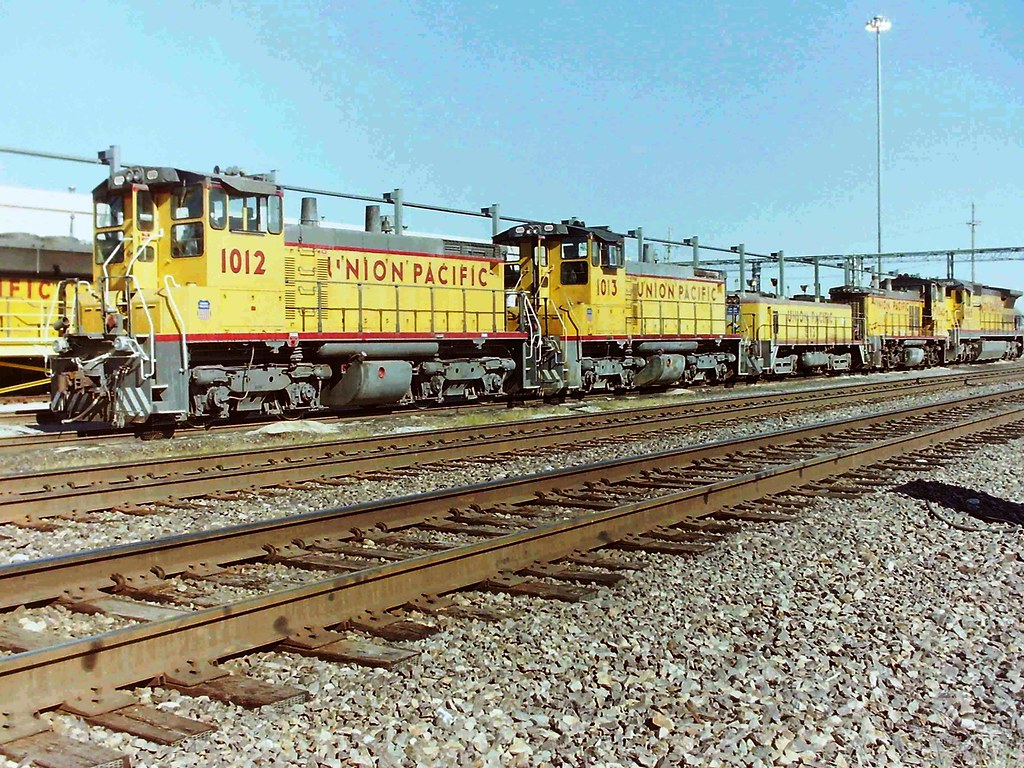
‘It’s unethical’: 200 Union Pacific workers given 2 days notice before KC’s Neff Yard closed
KANSAS CITY, Mo -- Two hundred people who worked at Union Pacific's Neff Yard are out of a job. They were given just two days notice that they're no longer employed.
"There is a reason they call it getting railroaded. Right now the railroads are railroading the communities," said Ty Dragoo, the Kansas Legislative Director for transportation union SMART.
Dragoo said this closure is all part of Precision Scheduled Railroading, or PSR, a term coined by Wall Street that really means doing more with less to increase profits for shareholders.
"Railroads are historically making more money than they have at any point in time. This just boils down to insatiable corporate greed," Dragoo said.
Part of the reason railroads, including Union Pacific, are making so much money is because of tax breaks and subsidies partially funded by the citizens of Kansas City.
In exchange for that support, the railroads have provided jobs to the community dating back to the 1800's.
"We want people in our community to have these jobs. The railroads will still receive the incentive benefits like the tax cuts, those tax subsidies, but now they get to take the money and cut and run," Dragoo said. "It's not fair. It's not right. It's unethical, and we need to start asking these hard questions."
|
|
A federal appeals court has ruled against the BMWED in our attempt to require BNSF to perform full visual human-conducted track inspections at the bare minimum requirement of FRA standards.
Judges from the U.S. Court of Appeals for the D.C. Circuit denied our petition against the FRA, allowing for BNSF to curtail physical track inspection to twice monthly in order to test new unmanned inspection technology.
Ruling on the BMWED’s appeal, two judges maintained that the FRA’s decision to grant BNSF a temporary suspension of the track safety standards described in 49 CFR § 213.233(c) “is necessary to the conduct of a … test program,” “is limited in scope and application to such relief as may be necessary to facilitate the conduct of the test program,” and “is conditioned on the observance of standards sufficient to assure safety.”
We disagree that reducing the frequency of physical track inspections by trained and qualified Track Inspectors is “necessary” to test the capabilities of machine track inspection equipment. We disagree that manually inspecting track twice monthly is sufficient to assure public safety. Just a few years ago, BNSF was boasting about its inspection and derailment prevention measures, making certain to note that the company inspects “above the frequency required by the FRA,” noting that the company inspected “key routes…four times per week and the busiest main lines are inspected daily.”
|
|
OIG: Amtrak could save millions by improving on-time performance
Improving Amtrak's on-time performance (OTP) by 5 percentage points on all routes would result in $12.1 million in financial benefits to the railroad in just one year, Amtrak's Office of Inspector General (OIG) reported this week.
The benefits would include $8.2 million in reduced costs and $3.9 million in increased revenue, OIG officials said in a press release.
"In the longer term, if OTP on long-distance routes could improve to 75 percent and be sustained at that level for at least a year, the company could realize an estimated $41.9 million per year in cost savings, and a one-time savings of $336 million by reducing equipment replacement needs," the OIG reported.
|
|
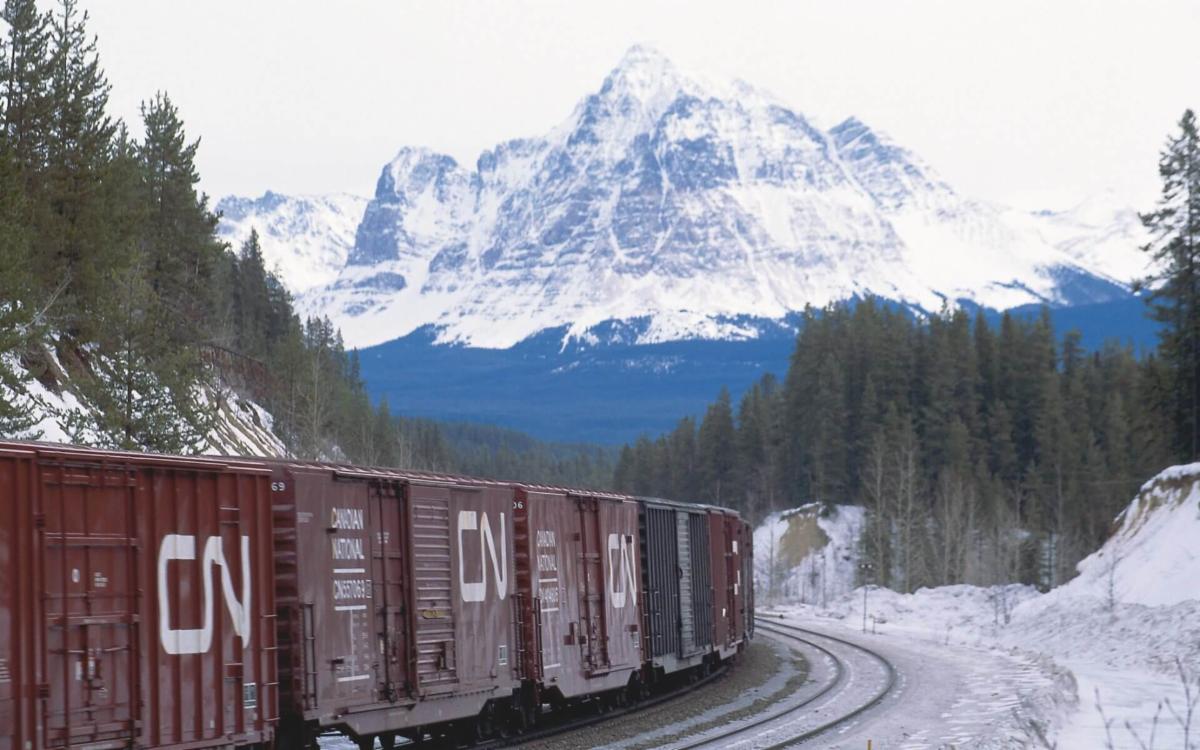
CN Rail says it is ready to implement its winter plan to keep grain moving
Those in the railway business are already starting to prepare for the winter months that lie ahead. As snowstorms hit parts of the Prairies in the last few weeks. some have wondered if that would put a strain on the movement of grain.
David Przednowek, director of sales and marketing for CN Rail, says these past couple of weeks have had an impact on the supply chain just like it has for those in the field. With that in mind, he says there’s the winter plan in place to address two main challenges.
“It outlines the challenges that CN faces operating in Canadian winters, and more importantly it sets out the actions that we’ve implemented to maintain operations through the winter at a level that’s acceptable to the needs of all of our customers,” Przednowek says. “While at the same time, ensuring that we’re operating in a safe and efficient manner.”
RealAg Radio host Shaun Haney points out the snow has already delayed getting the crop off, and wonders if this could potentially mean another grain backlog this winter. Przednowek says with all that’s been done leading up to the earlier-than-normal snowstorms, they should be in good shape going into the winter months.
|
|
Our Solidarity is Crucial to our Success
By Dennis R. Pierce
BLET National President
(BLET Editor’s Note: The following message from BLET National President Dennis R. Pierce has been excerpted from the August-October 2019 issue of the Locomotive Engineers and Trainmen News.)
INDEPENDENCE, Ohio, October 21 — In past President’s Messages, I have written to BLET’s Membership about the many issues that confront us in our effort to protect the interests of locomotive engineers and trainmen, as well as working class Americans in general. While my past Messages may not have presented those issues as “good news,” I am still convinced that we will prevail if we remain united. Our solidarity as BLET members, and our solidarity with other Unions that share our goals, is the key to that success.
To foster that internal solidarity, I have made an increased effort to be out in the field meeting with member and officer groups in 2019. So far this year, in addition to our two Regional Meetings, I have attended over two dozen membership meetings across the country where I have explained the key issues that we are working on at the National Division. As part of those discussions, I have also solicited the input of the members in attendance on those key issues. Not only do the members who attend these meetings leave with a better understanding of what we are confronted with, my ability to do the best in my job is improved when I get direct information on our issues from the membership’s perspective.
|
|
Activist investor who brought change to CSX sells sizable portion of shares
CSX Corp. (Nasdaq: CSX) has agreed to buy back 4.7 million shares of its stock from Mantle Ridge, the activist hedge fund that brought industry veteran E. Hunter Harrison to the Jacksonville-based railroad and began its transition to a new operating model almost three years ago.
The buyback, announced in a filing with the Securities and Exchange Commission, is part of CSX's previously announced $5 billion stock buyback program, so no new funds will be allocated for it.
CSX stock closed at $69.78 Wednesday, meaning the Mantle Ridge repurchase agreement will cost about $328 million at the current price.
Mantle Ridge was formed by Paul Hilal, who had been part of Pershing Square Capital's push to install Harrison at Canadian Pacific Railway.
Pershing made $2.6 billion in profit
from Harrison's time there. Hilal left the fund in 2017 and founded Mantle Ridge with the intent of bringing Harrison to CSX.
When Mantle Ridge embarked on the process of bringing Harrison to CSX, it owned about 44.4 million shares of the company, or about 4.9 percent of outstanding shares at the time.
|
|
U.S. rail carload and intermodal volumes are down for week ending October 12
United States rail carload and intermodal volumes were down for the week ending October 12, according to data issued this week by the Association of American Railroads (AAR).
Rail carloads, at 243,807, were off 7.5% annually and below the weeks ending October 5 and September 28 at 247,028 and 250,450, respectively.
AAR reported that two of the ten carload commodity groups it tracks saw annual gains, with were petroleum and petroleum products, up 912 carloads, to 12,717 and chemicals, up 439 carloads, to 30,855. Commodity groups that posted decreases compared with the same week in 2018 included coal, down 12,263 carloads, to 73,902; metallic ores and metals, down 3,402 carloads, to 19,720; and motor vehicles and parts, down 2,305 carloads, to 15,295.
Intermodal containers and trailers, at 267,013, slipped 6.6% annually, which trailed the weeks ending October 5 and September 28 at 268,033 and 278,886, respectively.
Through the first 41 weeks of 2019, U.S. rail carloads, at 10,355,081, are down 4% annually, and intermodal units, at 10,924,972, are down 4.2%.
For the first 41 weeks of 2019, U.S. railroads reported cumulative volume of 10,355,081 carloads, down 4 percent from the same point last year; and 10,924,972 intermodal units, down 4.2 percent from last year. Total combined U.S. traffic for the first 41 weeks of 2019 was 21,280,053 carloads and intermodal units, a decrease of 4.1 percent compared to last year.
|
|
Article 8
Rail Advocacy Group Expands Nationwide, Launches Petition
The Midwest High Speed Rail Association is now the High Speed Rail Alliance. Our mission and purpose remain the same. We are still a community of people who want the game-changing power of high-speed trains here, in North America. We know that high-speed trains, as a driver of an integrated transit network, will revitalize cities, towns and regions by making visits to family, friends or business partners easier, more productive and more affordable. And they will dramatically reduce carbon emissions in the process.
High-speed rail strikes at the core of today's biggest challenges with our environment, the economy and the financial health of our cities. We can't wait any longer to dramatically change our priorities and rapidly expand passenger trains.
The Midwest cannot do it alone. Travel does not begin and end at the edges of our region. We have to tackle this at the federal level.
That means a lot of people—from diverse backgrounds, living in towns big and small, from the Atlantic seashore to the Pacific coast—will need to come together to send our state, provincial and federal governments a clear message: We need high-speed rail now.
The High Speed Rail Alliance is uniting that diverse group. We already have members across the entire continent, and we need your help to invite more to join.
The first step is a simple one. Help us gain thousands of signatures on our new petition to the U.S. Congress. Please sign the petition today, and then ask two friends to sign.
Welcome to the Alliance!
|
|
|
|
|
|
|