|
The war in Iran continues to strain global energy markets. Iranian attacks on shipping and retaliatory U.S. strikes have kept Strait of Hormuz traffic, a corridor that once carried a fifth of the world's oil and gas, far below pre-war levels for five months. Ceasefire talks keep collapsing, leaving the strait effectively closed to normal commercial flow.
Despite this, New York's electric market remains comparatively insulated. Natural gas fuels over 50% of the state's power generation, more than any other fuel, so gas prices flow directly into electric costs. Because the U.S. is a net gas exporter with a large domestic production base, Hormuz-driven volatility has limited pass-through to U.S. gas prices overall. Still, New York's constrained pipeline capacity can create local basis spikes during extreme cold, meaning electric costs here can rise during the winter months (just like last winter).
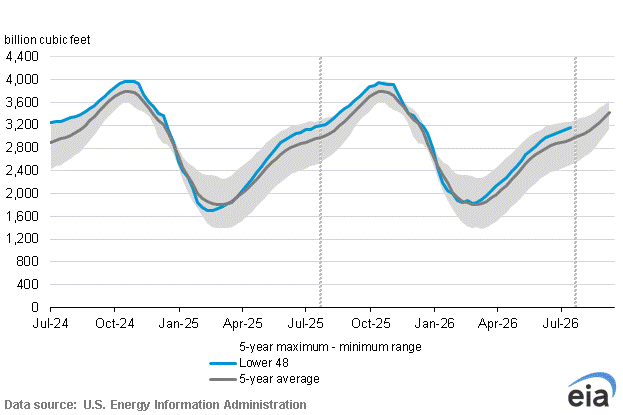
Three factors support price stability this winter, which should translate into steadier electric costs. As Figure 1 indicates, gas storage sits about 6% above its five-year average, and prices are historically less volatile above that benchmark. NOAA's winter outlook favors warmer-than-average conditions across the Northeast as El Niño strengthens, easing heating demand and storage drawdowns. And domestic production is running above last year's pace and on track for another record, adding further cushion to supply.
For MEGA participants, the takeaway is caution while national fundamentals argue against sharp winter electric price spikes. New York's pipeline constraints mean local costs may still run elevated during extreme cold. We encourage you to collaborate with your energy advisor on specific energy management goals to keep strategies aligned with current market conditions and any changes to your usage.
For more details, or to discuss your individual energy strategy, please reach out to us at info@megaenergy.org.
|