Protecting Lake Thoreau: Reston Association’s 2026 Hydrilla Monitoring Plan
By Spencer Orvis, Watershed Specialist
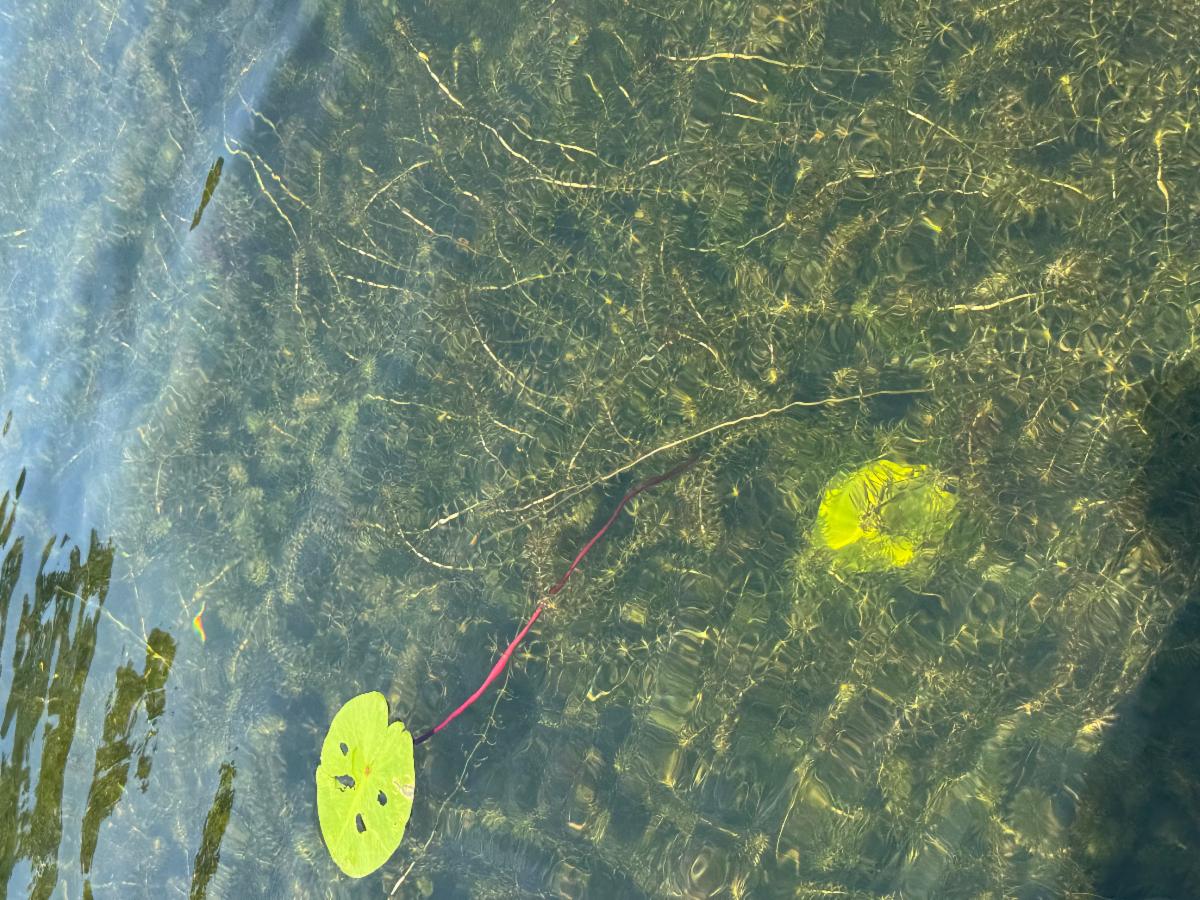
It’s a beautiful summer day in July of 2025 on Lake Thoreau. You’re headed out on the boat when suddenly, your engine jams! Unfortunately, in 2025 this was an all-too-common occurrence on Lake Thoreau. The culprit is the invasive aquatic plant species Hydrilla verticillata, commonly referred to as hydrilla. If you do not live, work, or play on Lake Thoreau, you can get caught up by reading the RA blog post on hydrilla from last summer.
Reston Association (RA) is committed to keeping Lake Thoreau healthy, navigable, and enjoyable for everyone who uses it. A major part of any natural resource management program is monitoring the resource—in this case, for hydrilla. For 2026 RA Watershed staff have crafted comprehensive monitoring and management plans to track and tackle hydrilla.
Hydrilla grows quickly and spreads easily, crowding out native plants, interfering with boating, and disrupting ecological processes. Because it can regrow from underground structures called tubers that can remain dormant for years, hydrilla requires long-term attention. The 2026 monitoring plan is designed to detect new growth early, understand where hydrilla remains in the lake, and guide future management decisions.
RA’s monitoring will take place in four phases across the year: pre-growing season, early growing season, main growing season, and post-growing season. This year-round approach allows staff to observe hydrilla at every stage of its life cycle.
Before hydrilla begins growing in late winter and early spring, staff will collect sediment samples to look for hydrilla tubers buried in the lakebed and survey the lake's bottom using sonar equipment. Staff will also inspect shorelines for floating plant fragments that may have broken off and drifted with the wind, which can be an early warning sign of new growth and spread.
As temperatures warm in spring, RA will expand monitoring efforts to include hands-on plant sampling at 19 established monitoring plots around the lake. These sites were carefully selected based on previous data and include areas important for lake navigation. Staff will use specialized tools to sample underwater plants and measure the abundance of hydrilla and to determine how tall they are growing.
During the peak growing season from mid-May through July, monitoring will continue with regular underwater plant surveys and sonar mapping. These methods help track where vegetation is growing, how dense it is, and how conditions are changing over time. While sonar shows where plants are located, physical sampling is still necessary to confirm that hydrilla, and not some other aquatic plant, is present.
At the end of the growing season, staff will conduct a final round of sediment sampling to identify where hydrilla tubers remain and where new growth could appear in future years.
Throughout the year, RA staff will stay alert for hydrilla whenever they are on the lake, recording any sightings with GPS so the information can be mapped and addressed quickly. All monitoring equipment will be carefully cleaned and dried after use to prevent spreading hydrilla to other lakes. Residents should also practice the clean, drain, dry method to prevent the spread of hydrilla to or from Lake Thoreau.
Long-term monitoring is essential to prevent hydrilla from returning to the levels seen in 2025. Through close observation, a science-backed approach, and an adaptive management strategy, RA is taking the necessary steps to protect Lake Thoreau for years to come.
|