2024 Fishing Licenses are Available Online | | |
|
Fishing Fuels Conservation!
100% of your investment funds fish and fishing
| |
Latest Updates from the Fisheries Division
To advance the conservation, enhancement, restoration, use, and appreciation of Connecticut’s fish, fisheries and fish habitats.
| |
The CT Fisheries Division has partnered with FishBrain, the world's largest fishing APP to provide CT's fishing regulations right to your smart device. These regulations are available in the FREE version of the APP. As with any APP if you would like to have access to premium features there is a subscription fee. | |
|
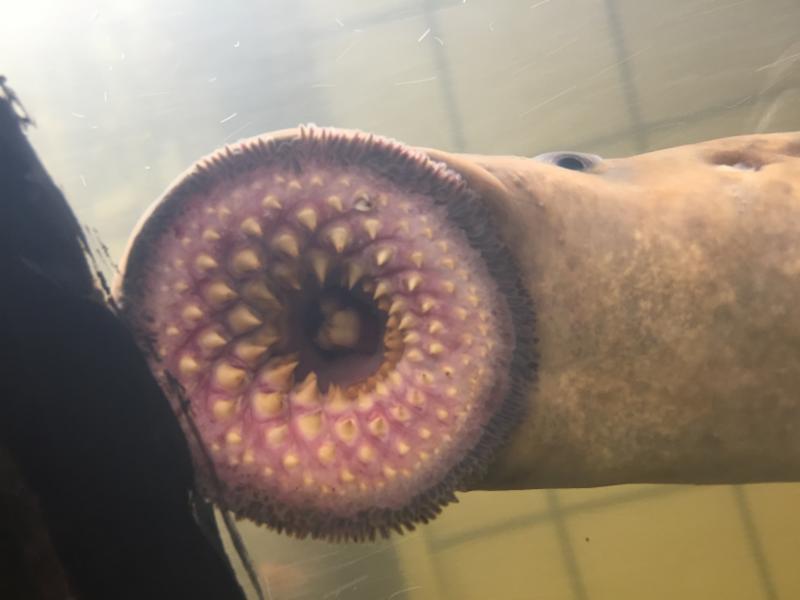
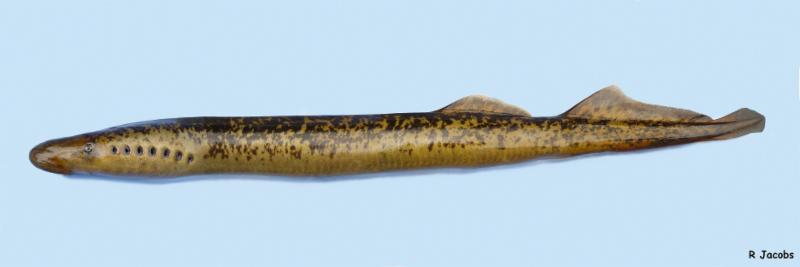
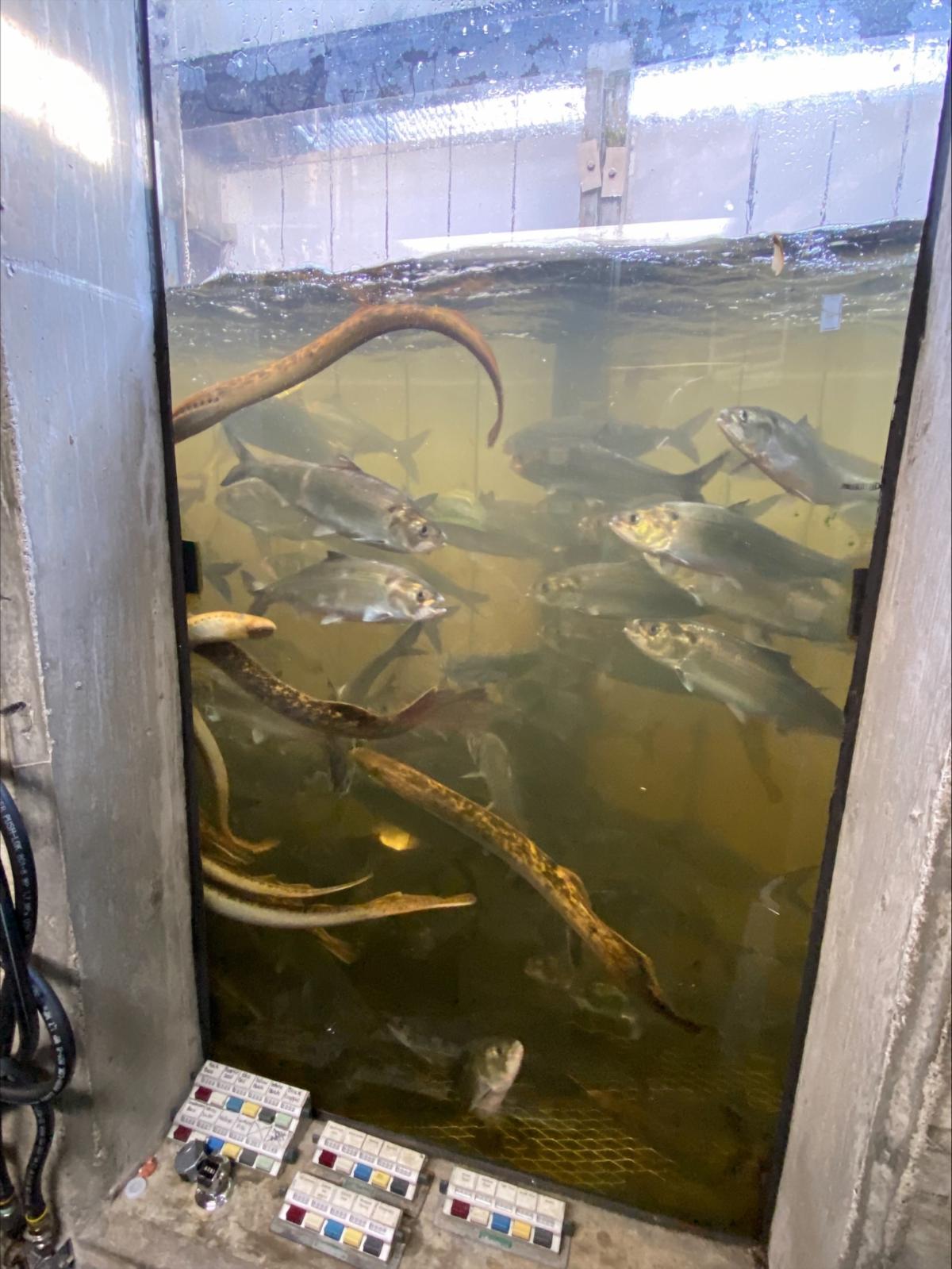
Sea Lamprey - A CT Native Needing Conservation | |
|
Busting Myths about CT’s Sea Lamprey
CT DEEP has recently received numerous reports of Sea Lamprey being needlessly killed and piled up along riverbanks. Contrary to popular belief, there is no reason to harm these fish in Connecticut waters. Unlike non-native landlocked populations in the Great Lakes and Lake Champlain where various fisheries have been negatively impacted, Sea Lamprey play a vital role in our riverine ecosystems.
Myth: Sea Lamprey are deadly bloodsuckers, which have a negative impact on Connecticut’s fish populations.
Busted: Sea Lamprey are a native member of CT’s fish community and are in need of conservation not destruction. Sea Lamprey, just like the pumpkinseed, yellow perch, brook trout, and other native species, do not have a negative impact on Connecticut’s freshwater fish.
However, this is not the case in some parts of the country which have non-native unintentionally introduced landlocked populations.
Did you know?
In 1829, when engineers completed the Welland Canal that connects Lake Ontario to Lake Erie, they believed that the new inland navigation route would foster economic growth and prosperity in the upper Midwest of the recently minted United States of America. They never could have known that they were providing passage to a voracious Atlantic predator—the sea lamprey—which, by the 1930s, would destroy the Great Lakes' 10-million-pounds-per-year trout fishery and decimate other commercially valuable species.
Myth: Sea Lamprey should be killed if seen in CT rivers and streams.
Busted: No, they should not. Adult Sea Lamprey encountered in CT rivers and streams are likely migrating upstream to their spawning habitat (just like Atlantic salmon would do). Upon maturity, Sea Lamprey stop feeding and begin their migration back into freshwater rivers and streams. Because adult Sea Lamprey do not feed during their spawning run, they do not pose any threat to our native freshwater species. Sea Lamprey die after spawning and the decaying bodies play an important role in the nutrient cycle (just like Pacific salmon do).
Myth: Juvenile Sea Lamprey, resulting from the spawning, will wipe out CT’s stocked trout.
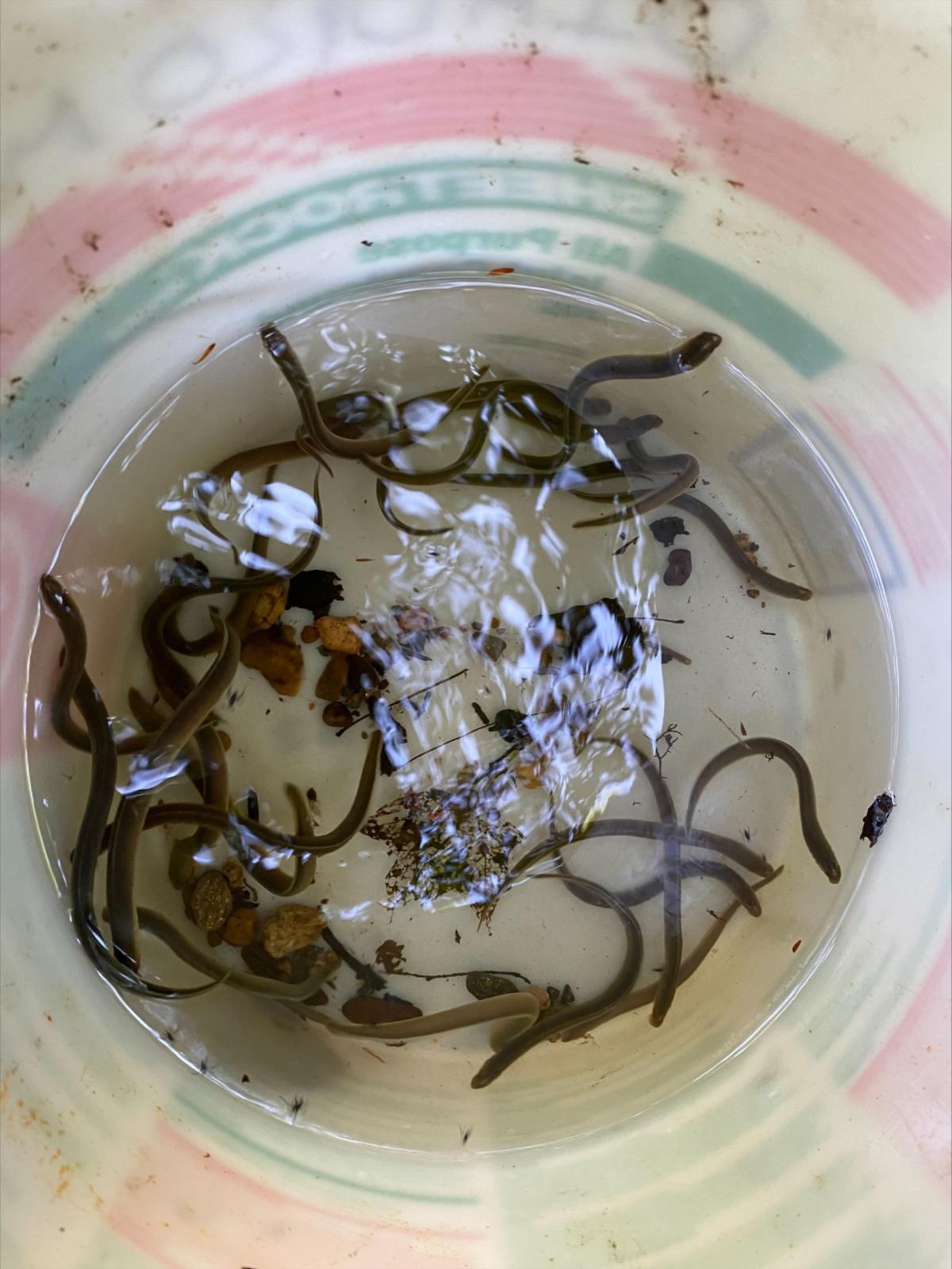
Busted: Not at all. Larval Sea Lamprey burrow into streambed sand other fine sediments for approximately 5 years where they feed on decaying organic matter and microorganisms, not fish. Juvenile Sea Lamprey then migrate out to sea where they enter a parasitic stage and feed on bodily fluids of other fish species for approximately two years.
Did you know?
Sea Lamprey are considered ecosystem engineers that improve habitat and water quality in the streams they inhabit. Adult nest building and larval burrowing activity both serve to promote increased flow through the streambed, improving habitat for trout and other fish species as well as the macroinvertebrates they feed on.
Myth: Sea Lamprey are abundant in CT waters.
Busted: Sea Lamprey have been extirpated from many of our streams due to habitat loss and poor water quality over the past few centuries. With significant improvements in water quality in recent years and the removal of dams and other fish passage enhancements, Sea Lamprey are increasingly regaining access to their historic range throughout Connecticut. The CT DEEP Diadromous Fish Restoration Program actively stocks pre-spawn adult Sea Lamprey into newly accessible habitats to jumpstart the recolonization process.
|  | |
Free Fishing License Day #1 | |
|
Sunday June 16, 2024 is Connecticut's first of two FREE fishing license days, where anyone can obtain a one-day free license. The free one-day licenses are available three weeks prior (May 27, 2024) via our online license system.
All other rules and regulations remain in effect (minimum size, daily limit, gear, etc.). The second free fishing license day will be on Saturday August 10, 2024.
As a reminder 100% of the revenue from the sale of fishing licenses comes to the DEEP's Bureau of Natural Resources. Your purchase of a fishing license does so much more than allow you to fish. License fees fuel programs related to water quality, land acquisition, fish culture and stocking, habitat enhancement and conservation, and much more. So please consider purchasing a license even if you may only get to fish a few times per year.
| |
Tips for Safe Sturgeon Release | |
|
Attention Anglers!
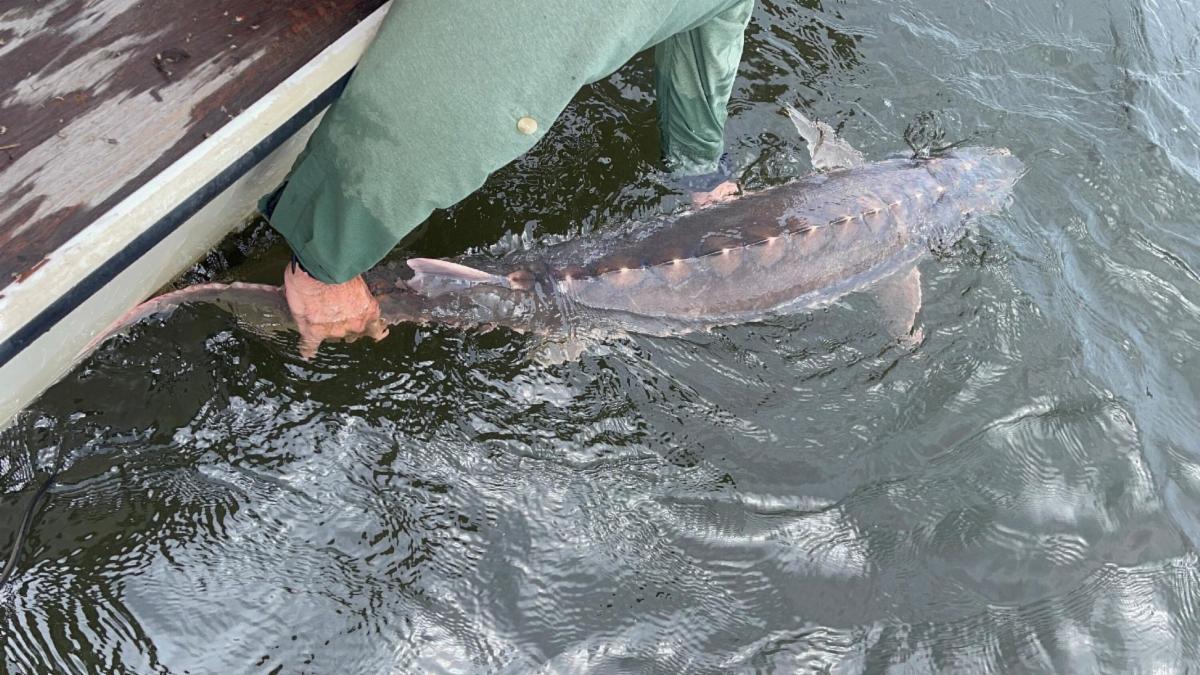
As the spring season and warmer weather arrive, many more people are headed out for some recreational fishing. Through social media, we have become aware of actions that could potentially harm some of Connecticut’s most historic and vulnerable fish - Shortnose and Atlantic Sturgeon.
These ancient first evolved in the Jurassic period nearly 200 million years ago. They can often be seen breaching out of the water, which is a sight to behold. Despite their armored appearance, they are extremely vulnerable. Sturgeon do not have a calcified backbone, making them more susceptible to injury when handled.
Here is what you can do to protect these incredible creatures if you accidentally catch a Sturgeon,
-
Keep the fish in the water and remove the hook.
- If you can't remove the hook, cut the line as close to the hook as possible.
-
Do not lift them out of the water. Handling these fish is illegal and prohibited by State and Federal Law.
All Sturgeon caught must be immediately released unharmed.
If you see a Sturgeon, whether caught while fishing, observed in the environment, injured, or dead, please report it using CT DEEP’s online app, Report-a-Sturgeon.
https://portal.ct.gov/DEEP-SturgeonSighting
Remember, every Sturgeon sighting is valuable to CT DEEP researchers. Your report will help us gain more knowledge on the abundance and movement of these fish. If you spot a dead sturgeon, and we are able to retrieve the carcass in time, we can garner even more information on age, genetics, sex, diet, etc.
Please help us to keep the Shortnose and Atlantic Sturgeon safe in our local waters by keeping them in the water and releasing them as soon as possible. Our goal is to protect these incredible creatures and ensure their survival for future generations. Thank you for your cooperation.
You can find the Report-a-Sturgeon app here: https://portal.ct.gov/DEEP-SturgeonSighting
| |
|
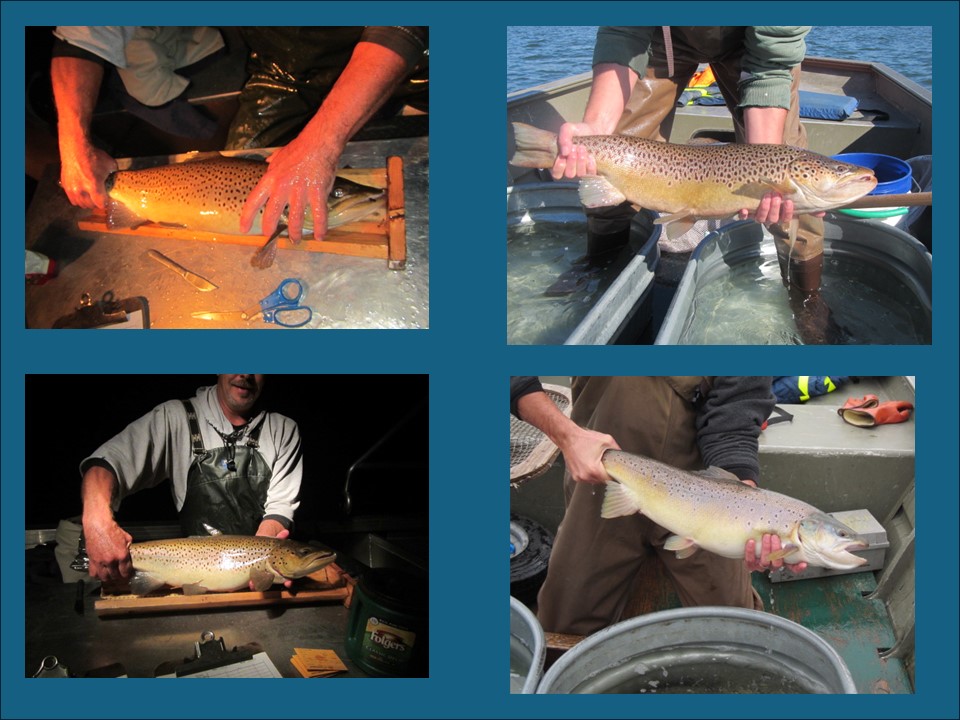
Lake Wononscopomuc is one of the state’s best trout fisheries and can produce trophy fish up to 30” in length. Maintaining angler access to this unique fishery is important to both the DEEP and the Town of Salisbury.
However, in the fall of 2023, the Town of Salisbury closed the boat launch on Lake Wononscopomuc (aka Lakeville Lake) to all outside vessels to help prevent hydrilla, a fast-spreading invasive aquatic plant species in Connecticut, from becoming established within the lake. The town spends a considerable amount of local tax funds to control invasive weeds without chemicals and is very concerned about hydrilla.
To maintain fishing access, the town purchased four (4) jon boats (with trolling motors) that are available for rent by anglers starting in 2024. The cost of these boat rentals is $18/hour, $40/half day (5 hours), or $80/full day. Kayaks, canoes, and row boats are also available for rent at a reduced fee of $10/hour, $24/half day (5 hours), or $40/full day (Town Grove (salisburyct.us). There is no parking fee for those renting boats, kayaks or canoes.
While this situation is not ideal, several other stocked waterbodies within Connecticut have similar access limitations or fees. For example, Lake McDonough in Barkhamsted requires a $20/day fee to launch a boat, the Saugatuck Reservoir in Redding requires a $10/day or $30/season license to fish from shore, and Lake Saltonstall in Branford does not allow any outside boats but rents 14’ aluminum jon boats for $50/day.
Currently, the Fisheries Division is continuing to stock Lake Wononscopomuc as normally scheduled. This includes the stocking of several thousand yearling Seeforellen strain Brown Trout, a fast growing and large bodied variant of Brown Trout that is only stocked in Trout Management Lakes. While access to the lake has been reduced from previous levels, there is still access for the angling public. Angler use of the rental boats will be monitored during 2024, and the Fisheries Division will continue working with the Town of Salisbury to enhance access, especially seeking opportunities to restore access for those with their own vessels.
| |
Angler Surveys on the Farmington River | |
|
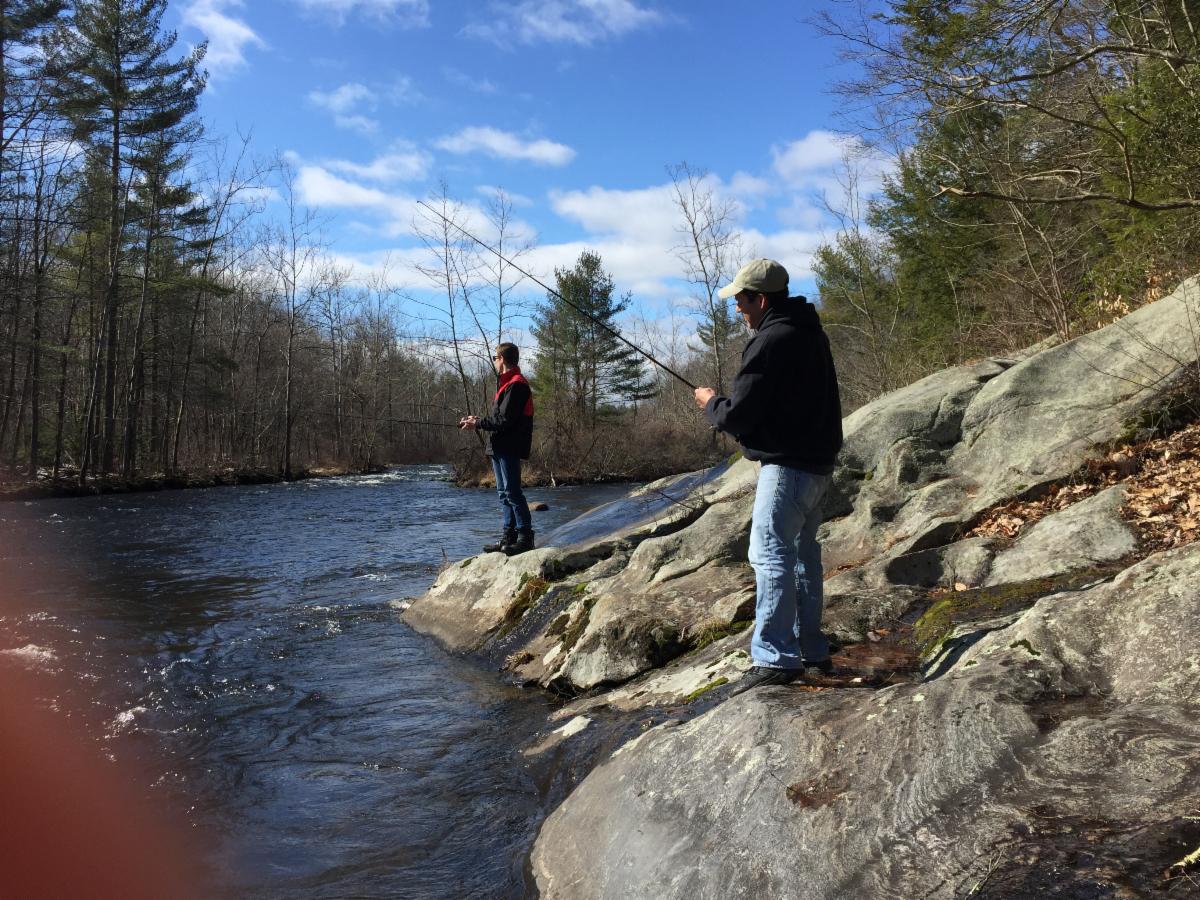
If you fish the Farmington River Trout Management Area (TMA) from the Rt. 177 bridge in Unionville to the Goodwin Dam in Hartland you likely may have met some of the Fisheries Division staff who will be out and about this entire year.
The Fisheries Division is conducting a year-long angler survey primarily to determine fishing effort and catch in various sections of the river. We are also conducting a shorter less intense survey in the Tariffville section of the River to document angler use and catch.
In the TMA section we are asking anglers the degree to which they support or not support extending year-round Catch and Release Only regulations to two different end points. The Fisheries Division will also use an electronic survey, sent later this year, to reach as many people and groups as possible, including those who may not have been interviewed on the river.
Questions about the ongoing angler interviews can be sent to brian.eltz@ct.gov
| |
|
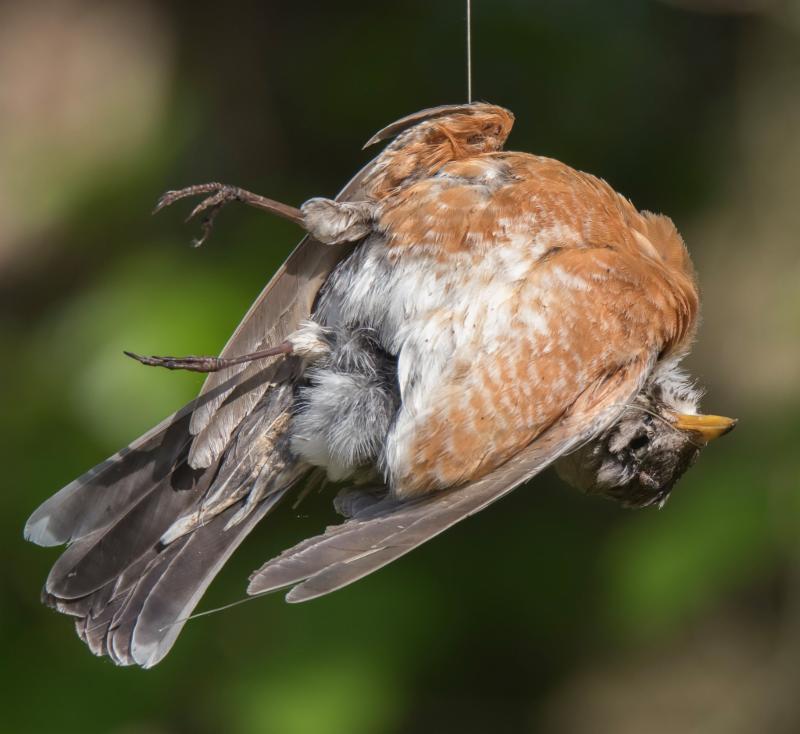
Discarded Fishing Line Can be Deadly
please pick up and dispose fishing line you see
| |
NEW for '24: CARE Fishing Slam | |
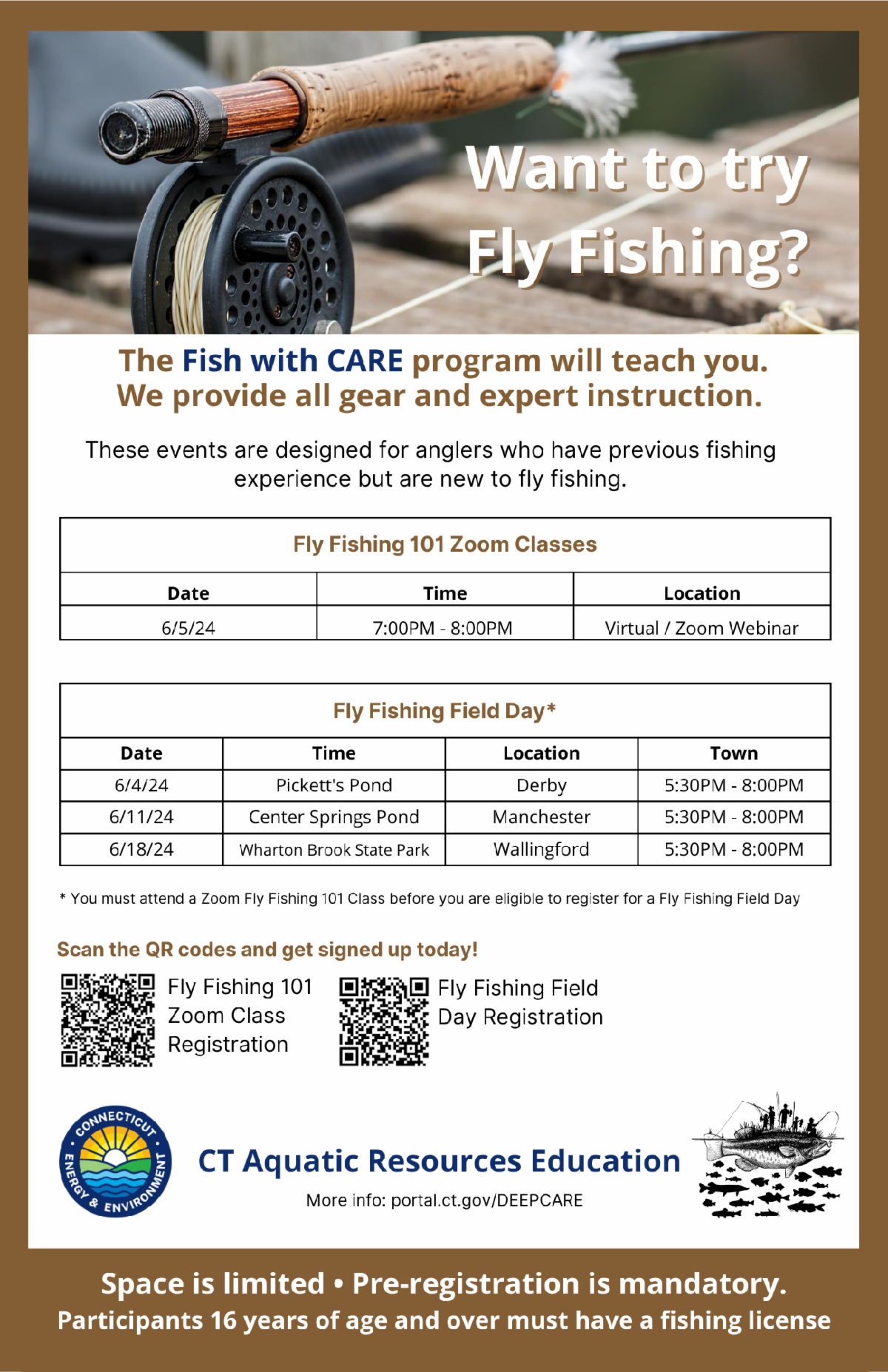
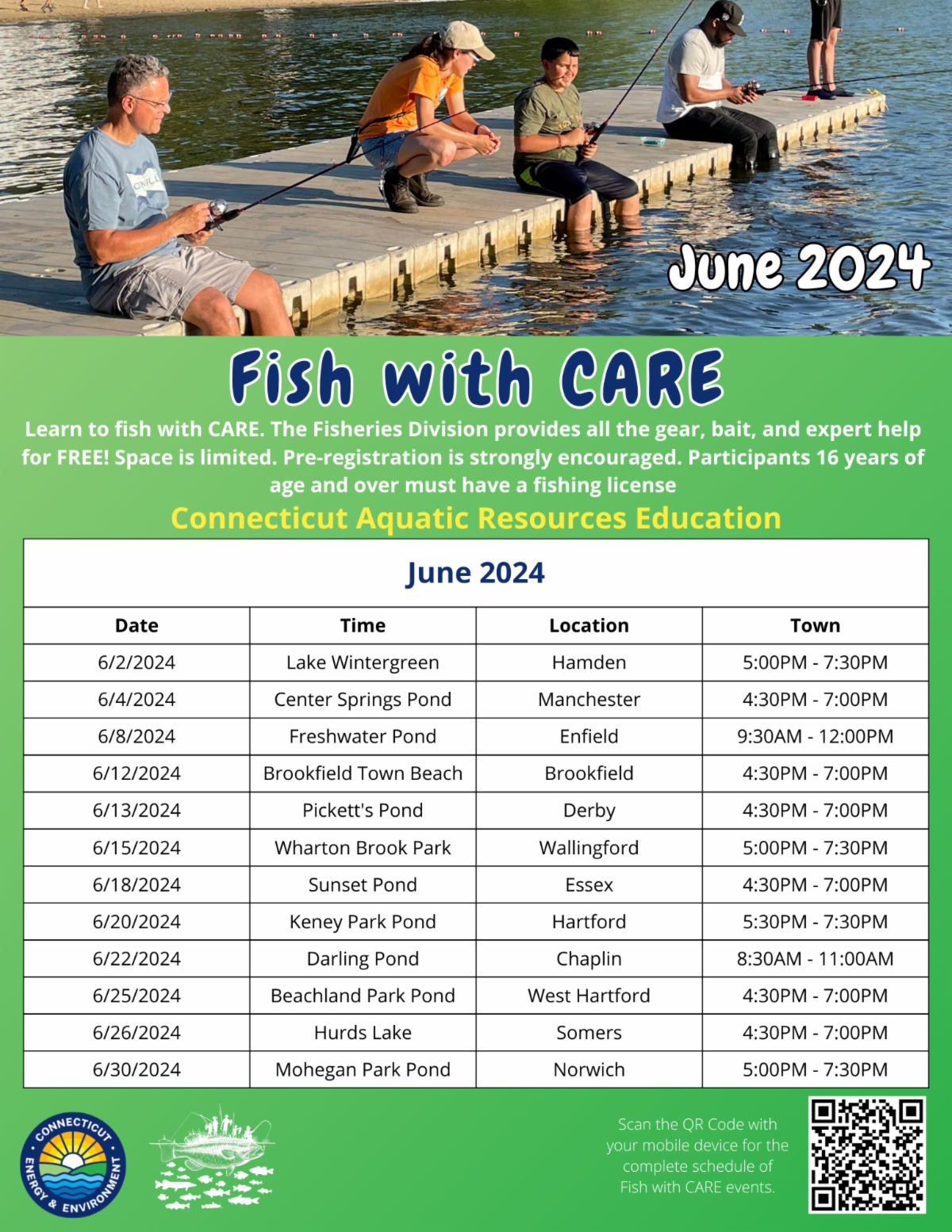
Fishing is always better with a buddy - Come and join the "Fish with CARE" program at each of our four types of fishing events; Trout Parks, Freshwater Ponds (Sunfish/Bass/Channel Catfish), Saltwater Species, and Ice Fishing. We guarantee you will have fun, reduce your stress, and create memories. See our spring/summer schedule here. | |
|
CARE to Teach Fishing? We do!
We Need You!
| |
|
The Fisheries Division – Connecticut Aquatic Resources Education Program (CARE) is seeking volunteers to join our team of certified Fishing Coaches! FISH with CARE program hosts classes and events all over the state where we teach basic fishing skills to adults, families, and youth. FISH with CARE coaches work with Fisheries staff to educate and engage the public in the outdoors through the sport of fishing. If you are interested in sharing your love and knowledge of fishing while creating the next generation of environmental stewards, consider joining our Fishing Coach team! Our next certification training will be offered in spring of 2024, information to get involved can be found HERE!
| |
|
Fishing Buddy Bulletin Board:
Announcements and More from the Angling Community
to Feed Your Passion
| |
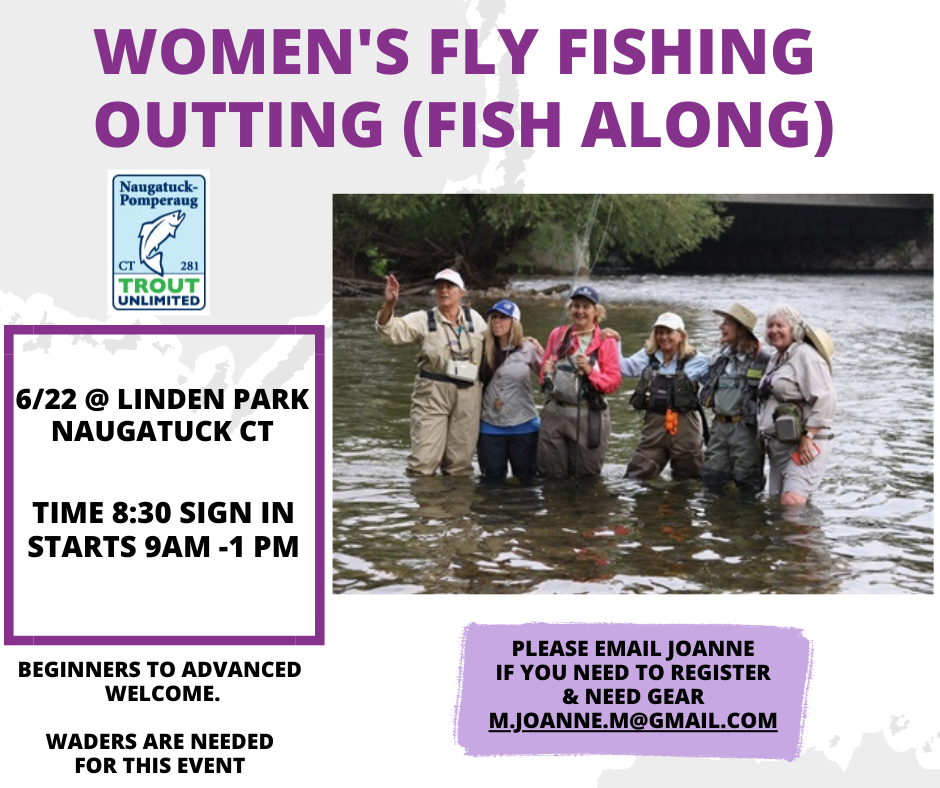
If you have classes, events, or meetings you would like us to share as a "Fishing Buddy" please email information to mike.beauchene@ct.gov. | |
Fishing Challenge - For YOUth | |
The Youth Fishing Passport Fishing Challenge is a year long fishing scavenger hunt. To have your catch count, simply snap a photo of your fish (from our scorecard) and use our online submission form. The top four anglers (who catch the most different types on our list) receive a prize pack full of fishing swag.
| |
CT's FREE Youth Fishing Passport is your child's ticket to all of the amazing outdoor discoveries fishing has to offer. Fishing involves knowing about habitat, environmental quality, food webs, life history of species, and so much more. You can get a Youth Fishing Passport, for those 15 or younger, using our online licensing system. Register your child as a new user. If you have questions please contact us.
| |
|
How to get the Youth Fishing Passport | |
This Month's Mystery Fish | |
|
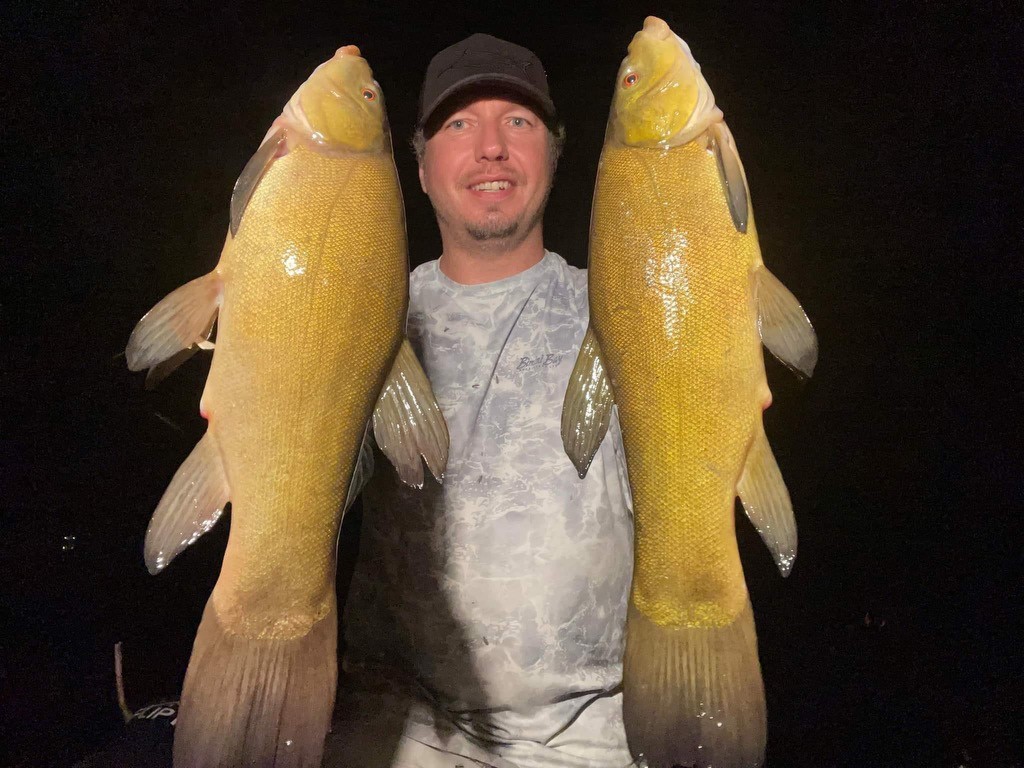
Last month's mystery fish were members of the family (Ictaluridae), which are catfish and bullhead. The family Ictaluridae is sometimes referred to as the “North American” catfishes because their native range is limited to this continent. North American catfish species are generally similar in form. They all have a flattened head and wide mouth. They have eight barbels around the mouth: two off the snout, two off the corners of the mouth, and four under the chin. These long barbels give the impression of whiskers, hence the name “catfishes.” There are single, stout spines at the origin of the dorsal and pectoral fins. They possess a single dorsal fin, abdominal pelvic fins and an adipose fin. They have no scales.
Five species of catfishes, only one native, have been reported from fresh waters of Connecticut. Catfish are primarily nocturnal feeders, using their highly sensitive barbels to feel and taste the environment. All Connecticut catfishes possess venom glands at the base of the dorsal and pectoral spines that can cause pain ranging from mild irritation to something similar to a bee sting.
Read more from articles in CT Wildlife Magazine - "No Bull - It's a Cat" and "Catfish Prepared Three Ways"
The mystery fish are:
A. Brown Bullhead
B. Channel Catfish and DEEP Channel Catfish Management Program
C. Yellow Bullhead
D. White Catfish
| |
How to get your License Online | |
Past Editions of CT Fishin' Tips | |
If you happened to miss one a month or two, feel free to get caught up! | |
Información disponible en español
| |
The Connecticut Department of Energy and Environmental Protection is an Affirmative Action/Equal Opportunity Employer that is committed to complying with the requirements of the Americans with Disabilities Act. If you are seeking a communication aid or service, have limited proficiency in English, wish to file an ADA or Title VI discrimination complaint, or require some other accommodation, including equipment to facilitate virtual participation, please contact the DEEP Office of Diversity and Equity at 860-418-5910 or by email at deep.accommodations@ct.gov. Any person needing an accommodation for hearing impairment may call the State of Connecticut relay number - 711. In order to facilitate efforts to provide an accommodation, please request all accommodations as soon as possible following notice of any agency hearing, meeting, program or event.
| |
This program receives Federal financial assistance from the U.S. Fish and Wildlife Service.
Under Title VI of the 1964 Civil Rights Act, Section 504 of the Rehabilitation Act of 1973, Title II of the Americans with Disabilities Act of 1990, the Age Discrimination Act of 1975, and Title IX of the Education Amendments of 1972, the U.S. Department of the Interior prohibits discrimination on the basis of race, color, national origin, age, sex, or disability.
If you believe that you have been discriminated against in any program, activity, or facility, or if you need more information, please write to:
Office of Diversity, Inclusion and Civil Rights
U.S. Department of the Interior 1849 C Street, NW
Washington, D.C. 20240
| | | | |