|
New Jersey Business Immigration Coalition
Pursuing Bipartisan and Evidence-Based Immigration Policy
| | THE DEBATE OVER WHAT IT
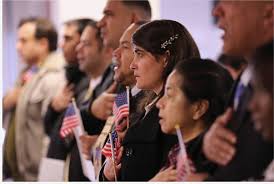
MEANS TO BE AN AMERICAN | | New Citizens at a Swearing-In Ceremony in Newark | | |
Although we often pride ourselves on being a nation of immigrants, we have had periodic flare-ups of anti-immigrant sentiment. We seem to be living through such a period today.
Unfortunately, all immigrants, both those here legally and illegally, are suffering from anti-immigrant rhetoric and the spread of racist views.
Even U.S.-born citizens pay a price for this kind of hostility. Those who hold these views no longer see the U.S. as a nation of democratic principles and respect for diversity. Nor do they see the U.S. as a country that benefits from the continuing contribution of immigrants.
Rather, they want to severely restrict immigration and preserve the power and influence of a white majority. Fortunately, there are people on all sides of the political spectrum who are challenging these views.
A recent blog post by Alex Nowrasteh, Senior Vice President for Public Policy at the conservative CATO Institute, contends that “heritage doesn’t make somebody an American.” Citing a recent YouGov poll on how someone becomes an American, Alex found that obeying U.S. laws, supporting the Constitution, and believing in the principles of the Declaration of Independence were the three most important cultural markers (all shared by more than 2/3 of Americans).
Being white, being Christian, and having many generations of American ancestors were considered unimportant by a large majority. The only cultural requirement that received attention was English fluency, a skill that we require for full citizenship and that is fairly easy to acquire.
Some would argue that our ability to welcome and integrate immigrants into American society has been a distinguishing characteristic of our nation -- and one that has helped us achieve remarkable economic strength and a unique position of global leadership.
| | |
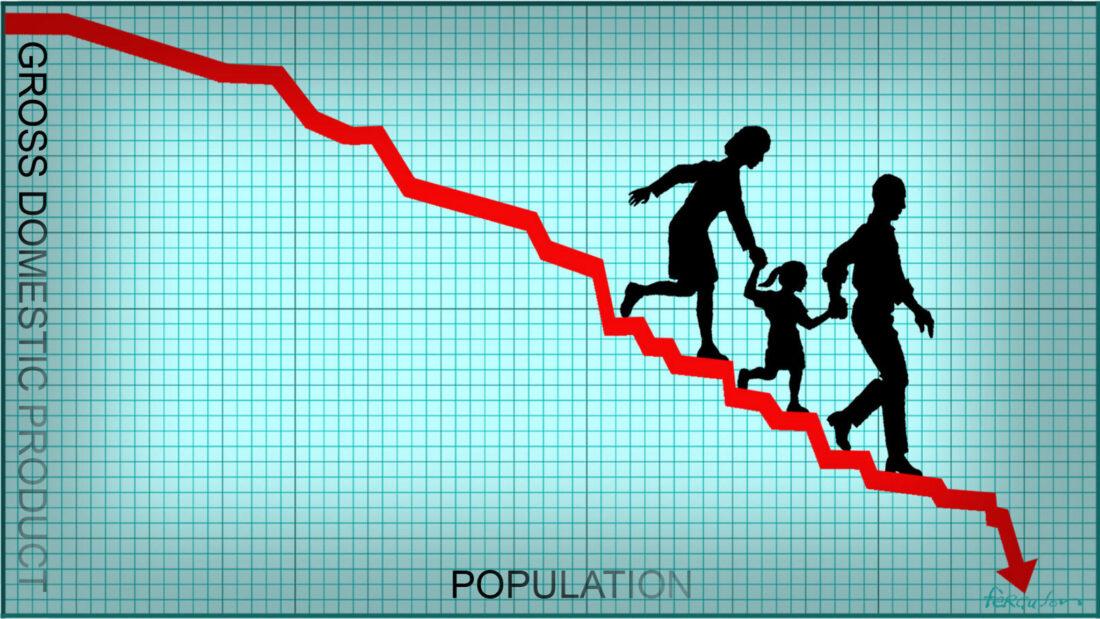
U.S. Population Growth Slows Sharply as Immigration Numbers Plunge
| |
|
Population growth in the United States has slowed significantly with an increase of only 1.8 million, or 0.5%, between July 1, 2024, and July 1, 2025, according to a report just released by the U.S. Census Bureau.
Not only did immigration numbers plunge, but the U.S. birthrate continued its nearly two-decade long decline, reaching 1.6 children per woman, well below the replacement rate of 2.1.
Although it is estimated that 230,000 people were deported last year, there are many other causal factors for low growth, including the near closure of the refugee program, migration restrictions imposed on many nationalities, difficulties in obtaining immigrant visas, voluntary departures, and possible reluctance on the part of potential immigrants to come to the U.S.
This article provides more information about recent population trends.
| | | | |
Join us for our upcoming webinar on the history, importance, and future of the
H-1B program for Skilled Immigrants
| | |
New Jersey has a large number (more than 20,000) of H-1B visa recipients per year. Many employers are worried about recent changes in the H-1B program, which may sharply reduce the number and professional backgrounds of visa holders in this category.
H-1B visas are only available to foreigners with college degrees in high-skilled occupations like the various STEM fields. Many of these visa holders bring important innovations to existing New Jersey industries and often create new businesses as entrepreneurs.
Employers seeking H-1B visa holders must show that these workers do not adversely affect the wages and working conditions of similarly employed U.S. workers.
Many of these visa holders eventually qualify for immigrant status. Indeed, H-1B visa holders make up a majority of immigrants receiving employer-sponsored green cards.
Proposed reforms may seriously limit the number of skilled immigrants and entrepreneurs allowed to work in the U.S. These limitations may push jobs and investments out of the United States.
The Coalition has organized a free webinar on March 24 from 11:00 am to 12:30 pm featuring experts in this area, as well as employers dependent on H-1B workers. Our goal is to come up with a set of bipartisan recommendations as to how this program should be reformed and strengthened.
Webinar sponsors include the law firms of Archer & Greiner, and Genova Burns.
| | |
Should Newcomers Be Denied
the Opportunity to Learn English?
Should adult English language programs prevent undocumented or non-permanent immigrants from learning English? The Trump administration seeks to add this restriction to the welfare law enacted in 1996, which denied immigrant access to programs providing cash benefits.
A legal challenge filed by 21 states has put this ESL restriction on hold. However, a few states that are not parties to this litigation have begun to implement the restrictions.
If fully implemented, this policy will prevent employers from upskilling their workers, especially in critical industries where immigrants make up a large share of the workforce. Cutting off English language instruction also seems to conflict with an important goal of the Trump administration, e.g. strengthening our unity as a nation.
Another suggested federal reform could do even more damage: eliminating all federal support ($715 Million in FY2025) for ESL programs. The federal government provides the bulk of support for these programs.
To learn more about the possible severe reduction in English language training, check out this article by the Migration Policy Institute.
| | |
Threatened Demise
of the U.S. Refugee Program
One of the legal immigration programs that has been almost shut down is the U.S. refugee resettlement program. For many decades, this program functioned effectively and enjoyed bipartisan support. From the Reagan Administration through the Obama years, American presidents permitted the resettlement of approximately 80,000 refugees annually.
Despite being admitted to the U.S. for humanitarian purposes, they made impressive contributions to the American economy. Indeed, according to a government report, they contributed much more in revenue to the government that they consumed in service costs. They also helped to end shortages of workers in multiple fields.
Most refugees under consideration for resettlement were intensively vetted through multiple security screenings and background checks in a process that takes an average 18 to 24 months. They were resettled by local affiliates of ten national organizations, most of which are religious in nature, e.g. Church World Service and the U.S. Conference of Catholic Bishops. For more information about the refugee program, check out this report.
Although the President of the U.S. is supposed to consult with Congress to determine the number of refugees to be admitted each year, this apparently did not happen this year. The administration will only allow the admission of 7,500 refugees in Fiscal Year 2026, most of whom will be white Afrikaners from South Afrida -- a group seemingly chosen by race.
| | |
Help us Expand our Work
and Bring Real Benefits
to All Americans
We are committed to educating the public on vital immigration policy questions
and to advancing non-partisan immigration reform that will strengthen our economy and
benefit all Americans.
Our effectiveness as an organization depends on the amount of support we receive from our members and the general public.
Can you help the Coalition grow as an organization and spread the real truth about immigration?
Thanks for your support.
| | |
|
BECOME A MEMBER ORGANIZATION OR
JOIN US AS A VOLUNTEER!
Organizations, corporations, and individuals supportive of the mission and goals of the NJ Business Immigration Coalition are welcome to become members of the Coalition.
There is no fee to join the Coalition.
Apply for membership at: https://njbusinessimmigration.org/join-us/
Share your thoughts on the immigration reform challenges facing the United States. How is your industry affected? What specific reform proposals are you championing? Do you have time and skills to devote to the Coalition as a volunteer?
Write us at: info@njbusinessimmigration.org
| | | |
The New Jersey Business Immigration Coalition,
16 South Avenue, Suite 252, Cranford, NJ 07016
info@njbusinessimmigration.org
| | |
THE NEW JERSEY BUSINESS IMMIGRATION COALITION | |
| | | |