DCEMBER 15, 2025

2025 A YEAR IN REVIEW FOR THE MARICOPA COUNTY BOARD OF SUPERVISORS


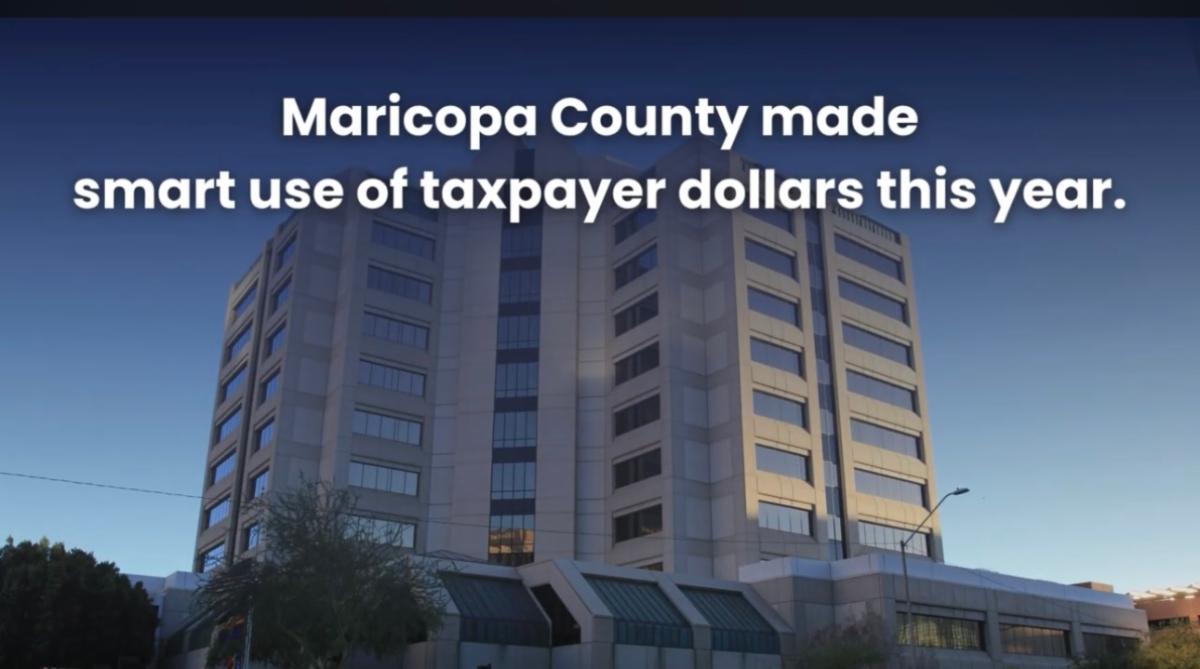
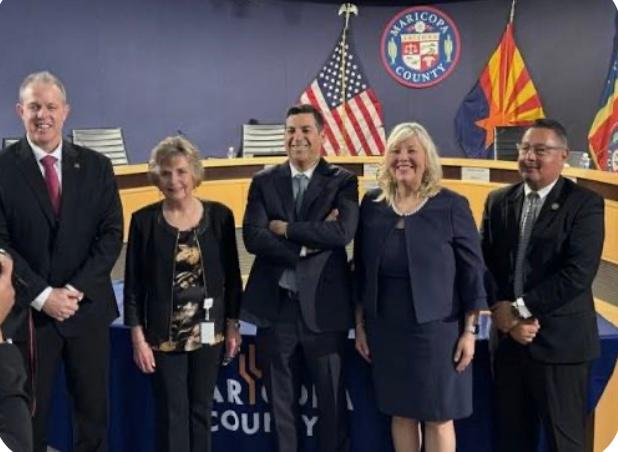
It was a busy and productive year for the Maricopa County Board of Supervisors, with Chairman Thomas Galvin leading the charge toward teamwork, stability, and positive change. Despite the challenges that come with a rapidly growing county, the Board delivered meaningful results. They produced a balanced budget, responded quickly and effectively to monsoon damage, ran four successful elections, maintained the county's AAA credit rating, and provided strong support for the Maricopa County Sheriff’s Office—just to name a few accomplishments. Their work reflects a commitment to fiscal responsibility, public safety, and reliable county services for all residents.


This year also marked a period of transition, with three new Supervisors joining the Board. Even with this significant shift, the team never skipped a beat. They collaborated seamlessly, stayed focused on problem-solving, and demonstrated that good governance is possible when leaders are dedicated to serving their community rather than pursuing division. I am proud of the work Maricopa County has accomplished in 2025, and I am genuinely looking forward to seeing what 2026 will bring as the Board continues to build on this strong foundation.

Arizona Secures Huge Election Integrity Win in Court of Appeals


Phoenix, AZ – Arizona scored a huge victory for election integrity this week after the Arizona Court of Appeals affirmed that counties must cancel a voter’s registration when that individual swears on a jury form that they have moved out of the county. The ruling, prompted by a lawsuit brought forward by the Arizona Legislature, strengthens voter-roll maintenance and reinforces protections for legitimate Arizona voters.


AZGOP Chair Gina Swoboda, who played a key role in the litigation during her time with the State House of Representatives, praised the ruling as a critical step toward restoring trust in the state’s election systems.


The court’s decision also marks a significant defeat for Secretary of State Adrian Fontes. Fontes was forced to abandon an extreme proposed rule that would have allowed counties to discard all ballots cast in an election if a municipality submitted its canvass late—a policy widely criticized as reckless and destabilizing. Critics said such a rule would have jeopardized lawful ballots, created chaos in tight races, and undermined public confidence in Arizona’s elections.


“This ruling is a major victory for our state and for every Arizona voter,” said AZGOP Chair Gina Swoboda. “Cleaner rolls protect voters. That’s the bottom line. No more dodging the law, no more loopholes, and no more games with Arizona’s voter rolls. Republicans in Arizona are fighting to ensure our elections are secure and stopping extreme leftist policies that would have thrown our elections into chaos. This is a huge step forward, but our work continues. We’ll keep working to restore trust, enforce the law, and deliver an election system every Arizonan can count on.”


The strengthened requirement for removing voters who attest under oath that they have moved out of the county closes a significant loophole and ensures counties maintain accurate and legally compliant voter rolls. Clean and accurate rolls are considered foundational to election security, helping prevent errors, misdirection of ballots, and vulnerabilities within the voting system.


This ruling reinforces the importance of proper list maintenance and upholds longstanding statutory requirements—requirements that Arizona voters overwhelmingly support as common-sense measures to protect the integrity of their vote.

Any Republican in Maricopa County will tell you that election integrity remains one of our top concerns. Our county seems to be at the center of nearly every national controversy surrounding elections. Yes, we are the fourth-largest county in the United States—but the three larger counties (Los Angeles, CA; Cook, IL; and Harris, TX) do not face the same level of scrutiny.


There’s a simple reason for that:


All three of those counties have overwhelmingly Democrat voter bases, which means elections are rarely close. When the margin is wide, it’s easy to call races early.


Florida is often held up as the example of “quick counting,” but Florida is a deeply red state. Once again, wide margins make results predictable and fast. They do not actually finish counting the votes in one day, they can give you the results in one day though. The UOCAVA and other votes still have not been counted when the results are published.


Maricopa County is very unique. Our voter registration numbers tell the story clearly:


  • Republican: 896,295
  • Democrat: 706,799
  • Party Not Declared: 886,503
  • Minor parties: ~46,000


This balance is why Arizona is truly a purple state. Races here are close, and close races take longer to count accurately.


It’s also important to understand the scale of our county. Maricopa County has 59.5% of all registered voters in the entire state and 61.7% of Arizona’s total population. Despite this tremendous volume, we actually spend far less per vote counted—$9.36 per vote compared to Los Angeles County’s $33.22.


And while many people repeat the claim that “it takes forever to count votes in Maricopa,” the opposite is true.


  • In 2006, it took 12 days to count roughly 1 million ballot pages.
  • In 2024, it took 10 days to count 4.1 million ballot pages.


Maricopa County is counting four times the volume in less time.


Yet rumors fly constantly. Some people knowingly repeat false information, and with AI tools now widely available, misinformation spreads faster than ever. This makes it incredibly difficult for election workers who must defend themselves against endless false accusations.


Last week I toured MCTEC, our election center, and saw firsthand how the process works. The storage and tabulation areas looked like something out of The Matrix—rows of machines, cables, workstations, and multiple layers of security. Every cable is clearly visible, leaving no question:

none of the equipment is connected to the internet. There are ports in systems that are blocked and require a key to open to prevent any nafarious acts like inserting a thumb drive our connecting to another device.


There are cameras recording 24/7 and multiple layers of strict access controls.


Yes, mistakes can happen—human systems are never flawless—but I witnessed a team that is continually improving, streamlining processes, and tightening accuracy with each election.

Look at how close our recent elections have been:


  • 2020 Presidential: separated by 10,457 votes out of 3,385,294 ballots cast
  • 2022 Attorney General: separated by 280 votes out of 2,508,715 ballots cast
  • 2024 District 3 Supervisor: separated by 300 votes out of 408,216 ballots cast


These razor-thin margins demonstrate why calling races early in Maricopa County is nearly impossible. Our elections are tight because our parties have nearly equal numbers of registered voters.


Ultimately, in Maricopa County, it all comes down to turnout.


In 2024, Maricopa County had an 80.34% turnout rate, one of the highest in the country for a county of our size. This reflects how engaged our voters are and in combination with the closeness of many contests, why accurate processing—not speed—must remain the priority. There are ways to prioritize both speed and accuracy equally, but most of those solutions such as moving up the deadline to drop off mail in ballot, would require a change in state law.


Across the country, there is growing discussion about returning to precinct-based voting and hand counting ballots. I remember working elections when that was the norm, and many forget just how time-consuming and labor-intensive it truly was. Dallas County, Texas, is preparing to test this approach during their March primary next year. More than 1,000 people have already signed up to hand count ballots. As Dallas County Republican Chair Allen West said, “Not only are the eyes of Texas upon us, but the eyes of America.” Their primary will feature a high-profile Senate race between incumbent John Cornyn and Attorney General Ken Paxton. As a Texan, I will admit I am praying Paxton wins. Cornyn supports red flag laws and has drifted far from the values Texans expect their senator to represent. I will be closely watching Dallas County’s election—not only for the outcome of the Senate race but also to see whether large-scale hand counting proves effective, efficient, and accurate in a modern election environment.


One of the greatest strengths of Maricopa County is its commitment to transparency. Anyone can tour MCTEC. Except during the final preparation for an election or while ballots are actively being counted, MCTEC offers public tours every Tuesday from 9–11 a.m. or 2–4 p.m. Many of you have strong feelings about our elections—as you should. Seeing the process firsthand brings clarity, eliminates misconceptions, and provides real peace of mind. It is easy to sit behind a keyboard and make judgmental or unverified statements, but it is entirely different once you meet the people who work there and witness the systems and safeguards in place. I encourage everyone to take advantage of these tours and see the process for yourself.


I hope this provides a clearer picture of the realities behind the headlines and rumors. The work being done at MCTEC is far more transparent and secure than most people realize, and it deserves to be understood accurately.

Nine East Valley School Districts Sue EVIT Over CTE Funding Dispute


Nine East Valley school districts have filed a lawsuit against the East Valley Institute of Technology (EVIT), alleging the career and technical education (CTE) district is withholding millions in state funds meant to support CTE programs operated on local high school campuses.


The districts—Apache Junction, Chandler, Cave Creek, Fountain Hills, Higley, J.O. Combs, Queen Creek, Gilbert Public Schools, and Tempe Union—say EVIT has kept between $4.6 million and $6 million annually since 2020, spending over $60 million on its own Mesa campuses while leaving districts with large funding gaps. Some districts report receiving far less than the cost of running programs; for example, Queen Creek says it spent $269,644 on its Sports Medicine program while receiving only $103,628 from EVIT.


The dispute escalated after EVIT rejected a February 2025 proposal to increase district passthrough funding to 90%. Instead, EVIT issued a draft agreement that would reduce passthroughs to “up to 70%” without defining how that percentage would be calculated. The districts argue this contradicts state law and longstanding practice.


With no agreement reached before contracts expired Aug. 31, the lawsuit says EVIT has stated it will not release further funds until a new IGA is signed—leaving more than 26,000 students in on-campus CTE programs in limbo.


The districts are asking the court to require EVIT to keep only funds actually used for oversight, itemize its spending claims, and negotiate a lawful agreement.


EVIT, in a statement, expressed disappointment and said the lawsuit threatens high-quality CTE programs. EVIT leaders argue that stronger oversight is needed following a 2024 state Auditor General report criticizing both EVIT and member districts for failing to collect or use key student outcome data. EVIT says updated agreements add accountability and ensure taxpayer dollars directly support workforce readiness.


Career and Technical Education (CTE) has become an essential part of modern education, offering students hands-on training that prepares them to enter the workforce immediately after high school. As more young people choose CTE pathways over traditional four-year college—often to avoid taking on overwhelming student debt—these programs play a vital role in helping students build stable, well-paid careers. That is why the turmoil surrounding EVIT and its member districts is especially troubling. Amid funding disputes and stalled agreements, it is the students who stand to lose the most. Any disruption in CTE support ultimately threatens their opportunities, their readiness for the workforce, and their ability to build a strong future without the burden of costly loans.

The Last BOS Meeting of 2025 Included Controversial Agenda Items


A Major Milestone: Comprehensive Update to the Maricopa County Zoning Ordinance

One of the most significant accomplishments on the agenda was the long-awaited comprehensive update to the Maricopa County Zoning Ordinance (MCZO). This was a massive undertaking involving extensive public input, a dedicated task force, and review by the Planning & Zoning Commission.


The goal was simple but essential:


Modernize, clarify, and streamline the zoning ordinance for the 21st century.


The updated document replaces dense paragraphs of text with clear visual graphics, charts, and simplified language. The result?


More than 50,000 words removed, making the ordinance far easier for residents, developers, and staff to understand and apply.


The Board of Supervisors voted unanimously to approve the update— a win for transparency and usability in county government.


The Controversial Casita Bill: State Mandates Force County Action

Another major agenda item stirred far more concern. Due to the Arizona Legislature’s passage of HB 2720 and HB 2928, often referred to as the “Casita Bill,” counties across Arizona are now required to allow certain Accessory Dwelling Units (ADUs) and Short-Term Rentals (STRs) regardless of local preferences.


The county had no choice but to amend the MCZO to comply with state law, establishing new standards for these units as required under ARS § 11-810.01 and § 11-269.17. The Planning & Zoning Commission recommended approval by a 9–0 vote.


However, several Supervisors made it clear they shared the public’s concerns.


Chairman Galvin, Supervisor Debbie Lesko, and Supervisor Kate Brophy McGee all spoke out strongly against the mandate. They emphasized that they expect many angry calls from residents in unincorporated areas who do not want ADUs or short-term rentals next door—but the Legislature has tied the county’s hands.


They reiterated that while the Board is being forced to adopt these policies, they understand and share the frustration of homeowners who feel their property rights and neighborhood integrity are being overshadowed by state interference.


Despite objections, the Board passed the required changes because failing to do so would violate state law.


Melendres Case: A Costly Obligation Continues

The Board also faced another difficult vote: approving a $165,000 payment to the plaintiff in the long-running Melendres case to cover court-ordered fees.


Supervisor Lesko expressed her deep frustration, noting that this case has dragged on for far too long and has already cost Maricopa County millions of dollars. She stated that while she personally did not want to approve another payment, the county is legally required to comply with the judge’s order.


Supervisor Brophy McGee echoed these concerns, calling on the judge to bring this case to an end. Both Supervisors made it clear that the ongoing financial burden on county taxpayers is unacceptable.


A Meeting That Reflected the Challenges of Leadership

From celebrating the successful modernization of the zoning ordinance to reluctantly complying with unpopular state mandates and enduring court-ordered payments, the meeting showcased the complex reality of county governance.


Local leaders often must balance their own judgment, constituent concerns, state laws, and federal court rulings—all at the same time.


This meeting was a reminder that even when the Board disagrees with the policies they are required to enforce, their responsibility is to uphold the law while advocating for the people they serve.

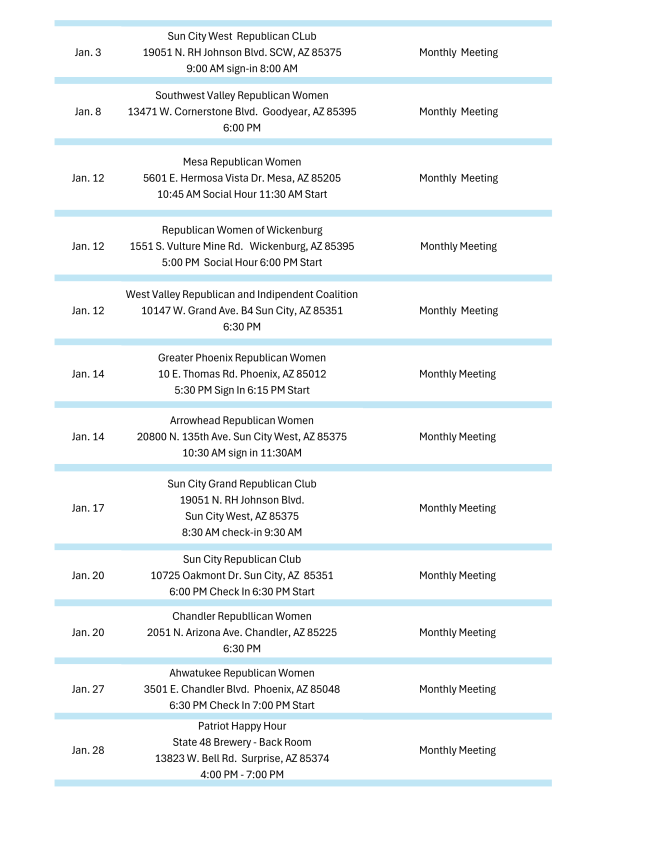
Are you exhausted from all the Christmas shopping? Dreading the moment you’ll have to take down the decorations you just put up? Maybe you finally finished cleaning the kitchen after Thanksgiving, only to realize you’ll be cooking another big Christmas dinner soon. You deserve a break! Before the holiday rush sweeps you away again, come relax with friends at Patriot Happy Hour.


This is your chance to unwind, recharge, and spend time with like-minded patriots who appreciate faith, family, and community as much as you do. Whether you are new or old to politics or simply looking to enjoy good company and conversation, you are welcome. Grab a friend and join us for fellowship, laughter, and a reminder that we are stronger when we stay connected during this busy season.


 Where: State 48 Brewery - 13823 West Bell Road, Surprise, AZ 85374

 When: Wednesday, December 17th (different night due to holiday)

 Time: 4:00 PM – 7:00 PM


**We will meet in the back room. There will be a sign directing you.**


Patriot Happy Hour is always the last Wednesday of the month. (holiday effects this month's hh)


We won the first vote against BNSF’s proposed intermodal hub in Wittmann — and that is an important victory. But make no mistake, BNSF is not stopping, and neither are we.


There will be additional votes, hearings, and decisions ahead. Every step of the way, it is critical that our elected officials continue to hear directly from the people who live, work, and raise families here.


If you have not yet signed an opposition letter against BNSF building the intermodal hub in Wittmann, please take a moment to do so now. Your voice truly matters.


Each letter strengthens our position and shows broad, community-wide opposition to this project. Together, we are protecting our quality of life, our schools, our roads, and our western way of life.

Thank you for staying engaged and standing with us. This fight is far from over — and with your continued involvement, we can continue to make a difference.

What We Learned — and Still Don’t Know — About BNSF’s Intermodal Hub After the Sun City West Republican Club Meeting


Last month, Lena Kent, Regional Director of Public Affairs for BNSF, attended the Sun City West Republican Club meeting to present information on the proposed BNSF Intermodal Hub planned for Wittmann. As has happened at several other community meetings, her presentation ran long, leaving no time for live questions from the audience. Because of this, residents were asked to submit their questions in writing afterward, and BNSF has since provided written responses.

Below are the key questions, BNSF’s responses, and my thoughts based on months of research, public documents, and direct conversations with stakeholders across Surprise, Wittmann, and county leadership.


I did not correct any spelling or grammatical errors to preserve the integrity of what BNSF stated.


OUTREACH

1. Question: Where/when are you in the area to speak with residents? BNSF is committed to being a long-term partner in this community.


BNSF's Response: We remain actively engaged— listening to residents, answering questions, and providing updates as the project moves forward. Our goal is to maintain open communication and ensure the community’s voice is part of the process.


Lisa’s Response: Prior to hearing I was speaking at clubs, HOAs, and other organizations BNSF did not take the time to make any real public presentations. It is concerning that they regularly do not leave time for questions.


SITE SELECTION

2. Why this location? Is there a different location that you could build?


BNSF's Response: BNSF selected this site because it offers direct access to our mainline tracks (which was originally built in the late 1800’s), ensuring efficient rail service while reducing regional truck traffic. The location is close to major markets and growing communities, which helps keep goods moving where they’re needed most. Building farther away would increase truck trips back into the region, adding congestion and emissions. This site allows us to support local economic growth while minimizing environmental impact and strengthening supply chain reliability for Arizona.


Lisa’s Response: From what I understand there are several factors as to why this location is important to BNSF. The land is flat, there is already BNSF rail, quick access to 60, 74, and 303.


 3. Question: Buckeye wants BNSF, Tonopah wants BNSF. Why not go where wanted? We don't want it in Wittmann.


BNSF's Response: BNSF does not have existing track in Buckeye or Tonopah, which makes building a rail-served facility impractical. Rail infrastructure is essential for efficient operations, and Wittmann is located along our mainline, allowing direct access to the national network. This location ensures we can meet growing demand while keeping goods moving efficiently for Arizona communities.


Lisa's Response: This is a fair answer.


4. Question: On 211 Ave, there is an area outlined by dashes, which is labeled as Logistics Acres. Aren't there private homes and ranches in that area? (not Logistics Acres?) How will setbacks affect these residents as well as those residents on Dove Valley and 211 Ave? What are the effects of property values?


BNSF's Response: Our goal is to ensure that the Phoenix Logistics Park is developed responsibly, balancing economic growth with respect for neighboring communities. We remain committed to ongoing dialogue throughout this process. There are no residential properties within the project boundaries. To protect nearby neighborhoods, we’ve proposed 150-foot landscaped setbacks and 400-foot building setbacks for properties adjacent to homes. These buffers reduce visual impacts and help maintain community character. Property values are influenced by many factors, but similar projects with strong buffers and landscaping have shown minimal impact and can even improve infrastructure. We remain committed to responsible development and open communication with our neighbors.


Lisa’s Response: There are homes and ranches in that area. Those residents have signed opposition letters.


5. Question: Can you address why the 27,000 residents of Sun City West should support this project at this location and not continue to request BNSF to explore alternative sites?


BNSF's Response: The LPP project is designed to significantly reduce train traffic through West Valley neighborhoods, including Sun City West. Today, BNSF trains must travel south through communities like Sun City West, Sun City Grand, Surprise, El Mirage, and Peoria to reach facilities in the Phoenix region. When LPP opens in 2028, that changes. Many trains will stop at LPP instead of continuing south toward Phoenix. The result? Up to 40% fewer trains move through your community which results in less traffic at rail crossings. Beyond local benefits, LPP strengthens the supply chain that delivers the goods you rely on every day— from groceries and medications to household essentials. By creating a modern, efficient hub, we can keep costs down and ensure timely delivery of these necessities. Exploring alternative sites would delay these benefits for years and increase costs, while continuing the current pattern of heavy train traffic through Sun City West. Supporting LPP at this location means faster relief for your community and a stronger, more reliable system for everyone.


Lisa’s Response: No one believes there will be fewer trains. I feel this response is pushing the fear button telling folks you won’t be able to afford your medication and food if we do not get this project.


Thank you,

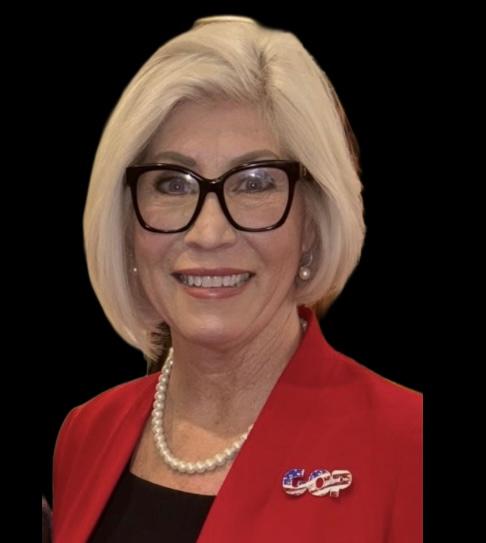
Lisa Everett


www.patriotnheels.com


Follow me on:

X - @patriotnheels

Facebook - @patriotnheels

Instagram - @patriotnheels