Converging Labor and Transportation | | |
May 1st or May Day, is a common celebration of 21st century worker’s right movements. It has roots in ancient agricultural festivals signaling the end of winter and the coming season of labor and cultivation. As a Department nearly 23,000 people strong, we endure fire, earth and rain to connect communities, ecosystems, and goods all the while ensuring safety and accessibility with a people-first approach. In many instances, this work is challenging maybe even grueling; and yet, an immense labor of love. In the Director’s Office of Equity & Tribal Affairs we are extremely grateful to the crews, team members and workers that labor tirelessly to ensure that our transportation system serves all Californians, safely and equitably.
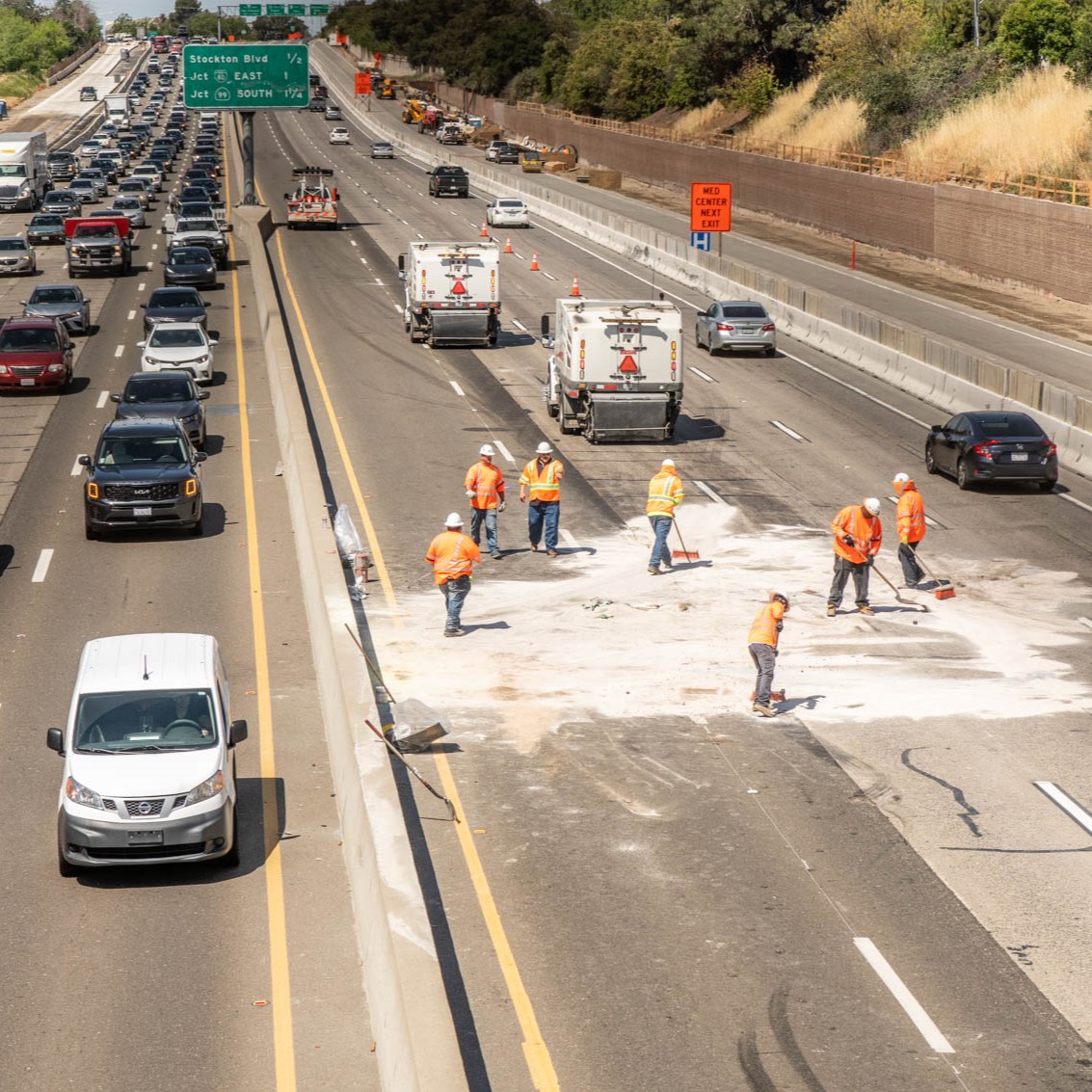
Pictured: A cleanup crew on Highway-50 in April 2022.
Nailah Pope-Harden
Deputy Director, Director’s Office of Equity & Tribal Affairs
| |
| |
May is Bike Month - A celebration of biking as a mode of transportation, fun, and means for our well-being and everyday lives. Bike to Work Week will be celebrated from May 12-18, with Bike to Work Day on Friday, May 16, 2025. Find a local bike organization and participate in a ride near you!
| | | |
| |
NAAC Meeting in June - The Native American Advisory Committee will meet statewide virtually on June 11, 2025.
| | | | |
On the Road with Caltrans:
Department Highlights
| | Office of Civil Rights: Heavy Equipment Operator (HEO) Academy | |
According to the U.S. Bureau of Labor Statistics, the construction sector will need to add nearly 500,000 workers annually through 2028 to meet industry demands due to growth and retirements.
In January of 2023, Caltrans partnered with Baker Technical Institute, Highlands Community Charter and Technical Schools, Wilton Rancheria, and the Federal Highway Administration (FHWA) to pilot a Heavy Equipment Operators (HEO) Academy. The HEO Academy addresses the construction industry’s workforce shortage by equipping participants with valuable skills for operating heavy equipment, making them competitive for in-demand jobs in construction trades. These careers often provide pathways to financial stability and upward mobility for individuals from underserved communities, including women, minorities, and those who were previously incarcerated. Additionally, the program addresses critical needs such as childcare, housing, transportation, personal protective equipment (PPE), and food. In doing so, the HEO Academy removes barriers and ensures participants can focus on their training without the added burden of navigating personal challenges alone.
The academy achieved a rate of 65% of participants having job placement within six months of graduation. In November 2024, the program expanded Statewide and will now operate nine academies over the next three years. The next academy will be hosted in 2025 in Eureka, CA.
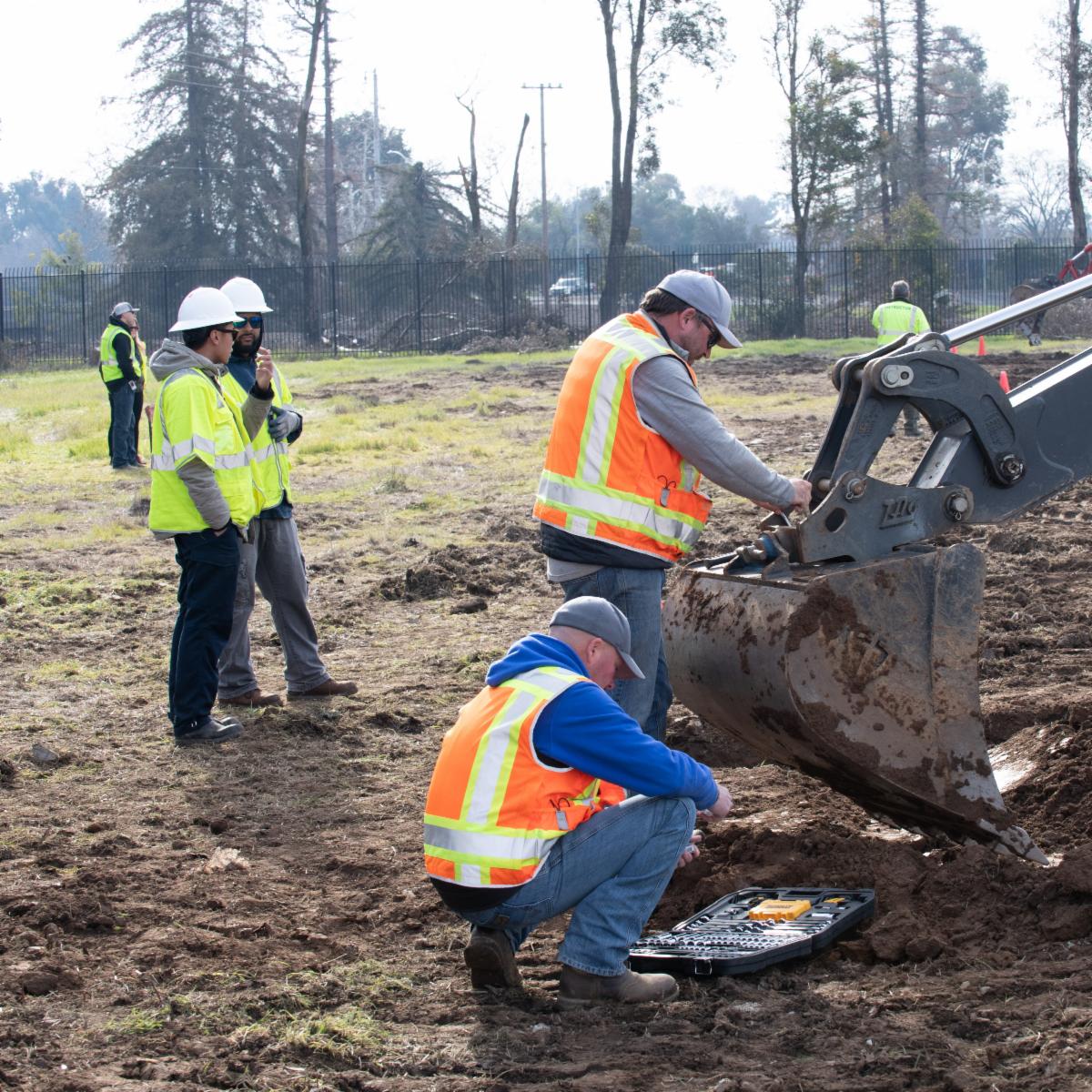
Pictured: HEO Academy students during training in February 2023.
| | Director’s Office of Equity & Tribal Affairs: Reviving Tribal Economic Development Workgroup | |
Darrian Snider-Ashtari was recently onboarded to the Native American Liaison Branch as a Tribal Economic Development Advisor. He will focus on implementing the Caltrans Tribal Employment Rights Ordinance (TERO) policy, advancing efforts to support tribal hiring and economic development, and addressing related policy challenges.
Since joining, Darrian has conducted internal meetings to better understand the work happening around TERO across Caltrans districts. He aims to create a centralized, comprehensive view of these efforts for everyone’s benefit. This includes documenting tribes with active TEROs, tracking ongoing TERO MOUs, and identifying internal challenges in TERO implementation. As part of this effort, we plan to revive the TERO working group, bringing together both Tribal and Caltrans staff to address key issues in TERO policy implementation. Additionally, Darrian is exploring strategies to make employment opportunities more visible and accessible in Tribal communities.
We are confident that Darrian’s expertise and passion will help advance the amazing work happening across Caltrans districts and strengthen our collaboration with California Tribes.
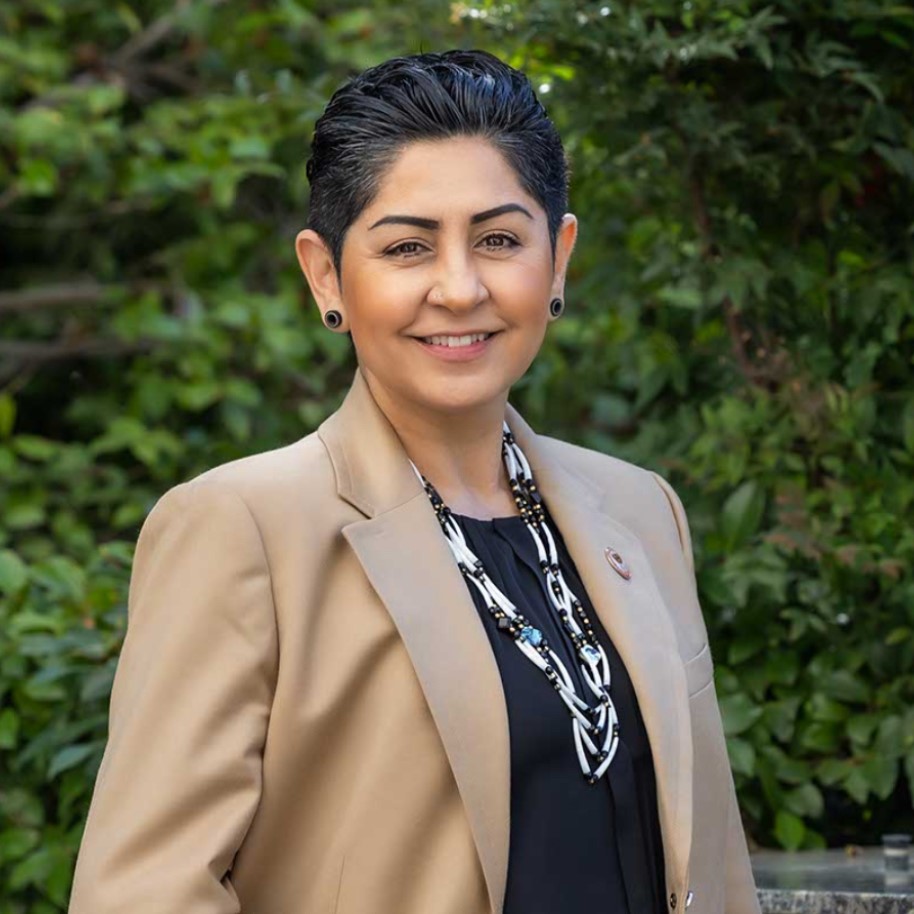
Pictured: A headshot of Darrian Snider-Ashtari.
| | Meet our Advisory Committees: Member Spotlight | | Native American Advisory Committee (NAAC) | | |
Erica M. Pinto
Chairwoman
Jamul Indian Village
📍Caltrans District 11
| | Historically, the Jamul Indian Village was designed with one access point. To create safer access points to its lands, the Tribe had to purchase additional lands presenting countless challenges. It’s through these challenges that Chairwoman Pinto's interest in transportation equity began. As a young leader, she quickly realized that roads intersected across jurisdictional boundaries. These roads connect people; and so, connecting people requires collaboration between jurisdictions. As a member of the NAAC for 8 years, Chairwoman Pinto focuses on breaking down barriers between the Tribe and State. Her experience living in a small, impoverished community has fueled her passion to elevate Tribal voices and ensure they are valued in the transportation planning process. | | |
“Tribal members often live in places that are difficult to [access] and connectivity [directly] impacts our lives. Gathering data is key to successful planning; however, data gathering is challenging in tribal communities.”
“It has been an honor and privilege to be able to be part of an active and forward-thinking committee.”
| | Equity Advisory Committee (EAC) | | |
Andres Ramirez
Executive Director
People for Mobility Justice
📍Caltrans District 7
| | |
Andres has over 20 years of experience advocating for equity through community organizing and policy advocacy efforts. Andres’ work on mobility justice in Los Angeles County focuses on addressing the intersection of transportation, housing, economic, environmental, and health inequities of overburdened communities living with the legacy of past harms. Andres believes that every voice in the community has value be they youth, adult, or elder.
Andres began serving on the EAC in 2024. He represents the interests of communities throughout the State recognizing that solutions must reflect the realities and diverse needs of communities be they urban, rural, or desert communities.
| |
"People for Mobility Justice’s (PMJ) mission is to seed critical consciousness about mobility justice for all communities. Our vision is for all people to have freedom and resources to move in public spaces with love and dignity."
"As our transportation systems continue to evolve, California must recognize and rectify decades of transportation planning that has negatively impacted its people."
| | Tune into what our team is reading and listening to this month! | |
| |  | Assistant Deputy Director, Alexis Lantz, listened to the “Beautiful West Oakland, California” episode from the 99% Invisible Podcast. The host interviewed KQED reporter, Alexis Madrigal, on his new book "The Pacific Circuit". In the episode, they discussed how the state transportation system, international commerce and freight have and continue to impact the community of West Oakland. They also highlight the positive progress made to address and reduce pollution by resident and community activist, Ms. Margaret Gorden, and the West Oakland Environmental Indicators Project. Learning more about the history of this community is especially interesting to Alexis since Caltrans District 4 is working with local groups such as the West Oakland Indicators Project on the Vision 980 Study. The Vision 980 Study aims to improve quality of life through a community-led visioning process to reimagine the freeway to create new opportunities for land-uses like housing, businesses, open space, recreational, and cultural facilities.
| | | |
Equity, Engagement, and Health Program Planner, Cassidy Ellis, recommends the Transportation Library at Caltrans Headquarters as a great resource to have top of mind. It holds materials about all modes of transportation and includes selections on highways and structures design, construction, operations and maintenance, earthquake engineering, transportation economics, equity and environmental planning. For Caltrans staff, supervisor approval is required to check out items. Individuals may request materials through their local library – public, academic, corporate or government agency. Alternatively, individuals may use select transportation and history materials in-house via appointments.
| | | | | |