Odds-against in England's Grand National |
|
In true Fenwick fashion, hear the story
of a rogue English import that returned
to his homeland to silence his critics, and make history
|
|
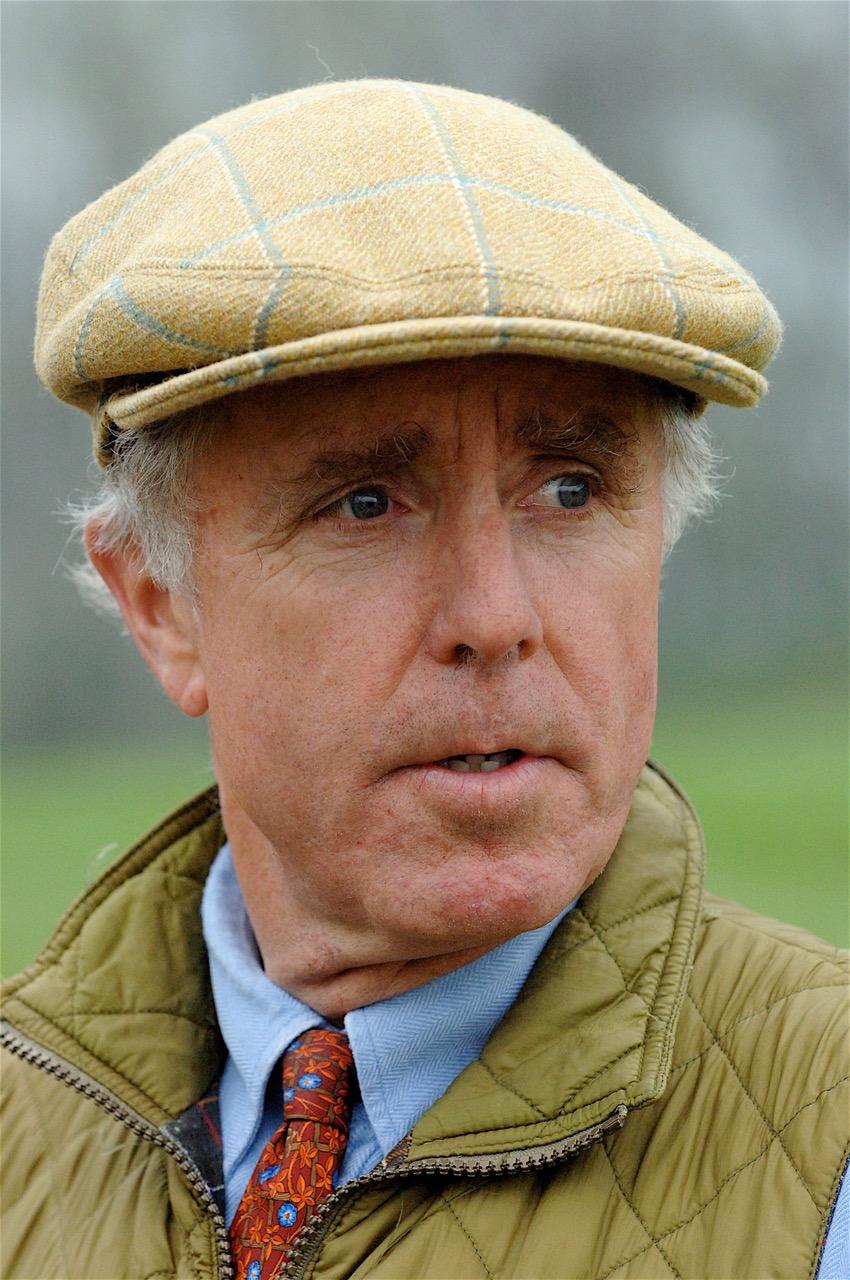
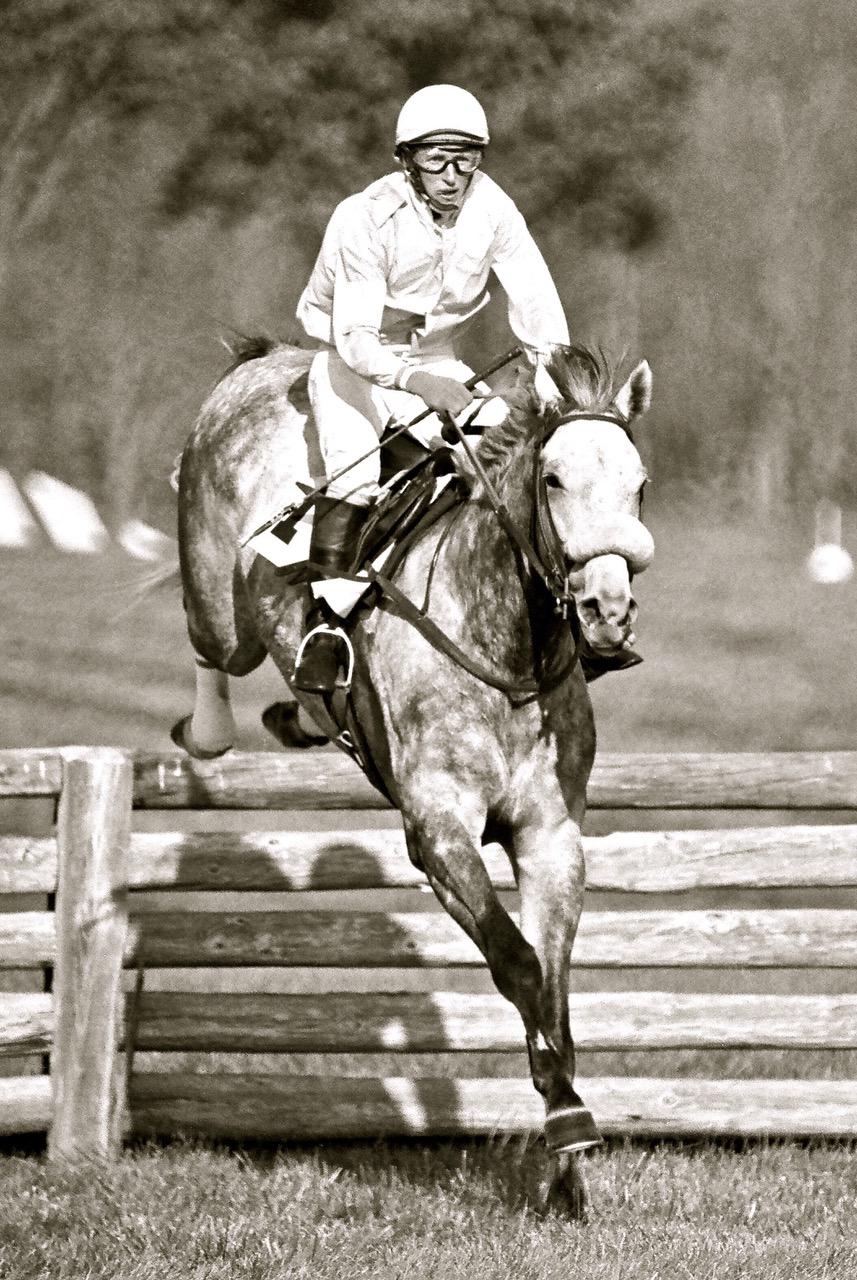
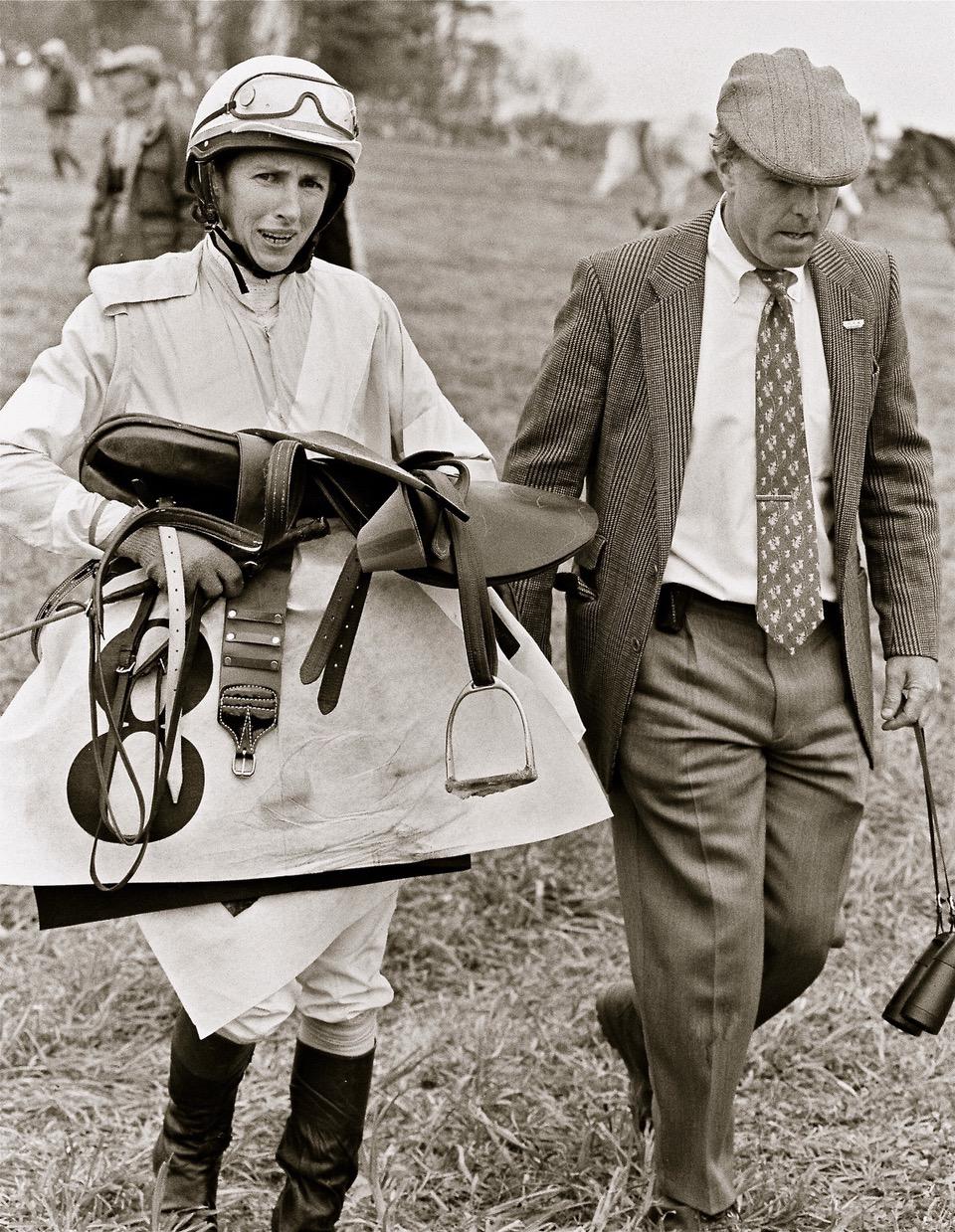
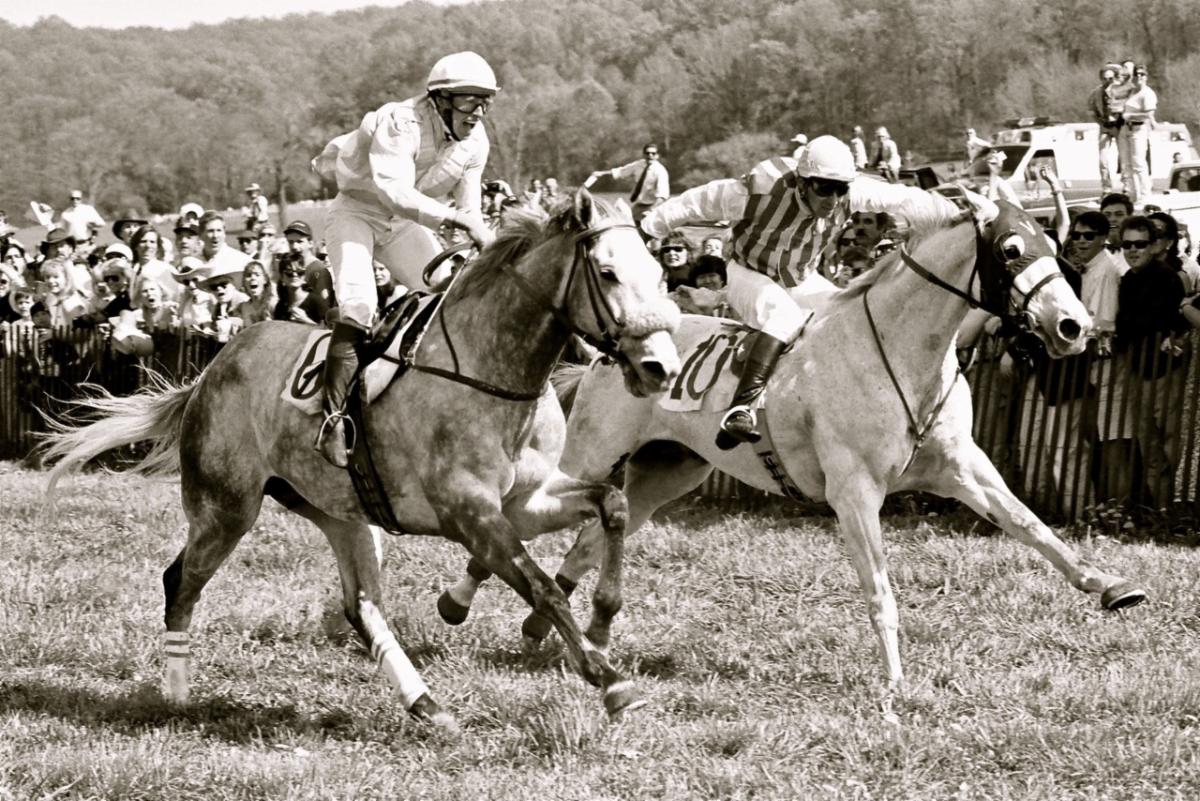
No one, not even trainer-rider Charlie Fenwick Jr. understood what it would mean if the American team could capture the most famous steeplechase in the world. Hear the story of Ben Nevis II's 1980 English Grand National victory, their record-breaking Maryland Hunt Cup score and more Fenwick adventures. |
|
With 40-1 Odds Ben Nevis II Outran Everyone At The English Grand National |
|
Reprinted with permission.
By Laura Lemon
|
|
“One more try,” Charles “Charlie” Fenwick Jr. vowed as he came off the Aintree Racecourse in 1979. He and his horse Ben Nevis II had done their homework and built their resume leading up to their journey to Liverpool, England. But on their first introduction, the English Grand National claimed victory over them.
And while the British-bred Thoroughbred gelding (Casmiri—Ben Trumiss, Hop Bridge) never achieved success in his homeland before being imported to Maryland in 1974 by Redmond Stewart Jr., he’d told a different story in his five years partnered with Fenwick.
“He was sort of a runaway I think [in England],” said Fenwick. “He was difficult pretty much the whole time. He was difficult—I think that’s the politest way to put it.”
But despite his strong personality—he would frequently display his unruliness making his way the paddock—Fenwick and “Ben” were practically unbeatable Stateside. They set a track record in ’77 at the Grand National (Maryland) as well as winning the Maryland Hunt Cup, a race they won again the following year in record-breaking time.
So with these victories, they returned to Ben’s homeland in 1979 to face the notorious 4-plus mile course established in 1839. Temporarily relocating his entire family of his wife and three kids, Fenwick practiced and trained in England for 4 1/2 months. And on the last day of March, a large Maryland contingent crossed the pond to watch them.
But The Chair, the 15th fence on the 30-jumping effort course, brought them, and their months of preparation, down.
|
|
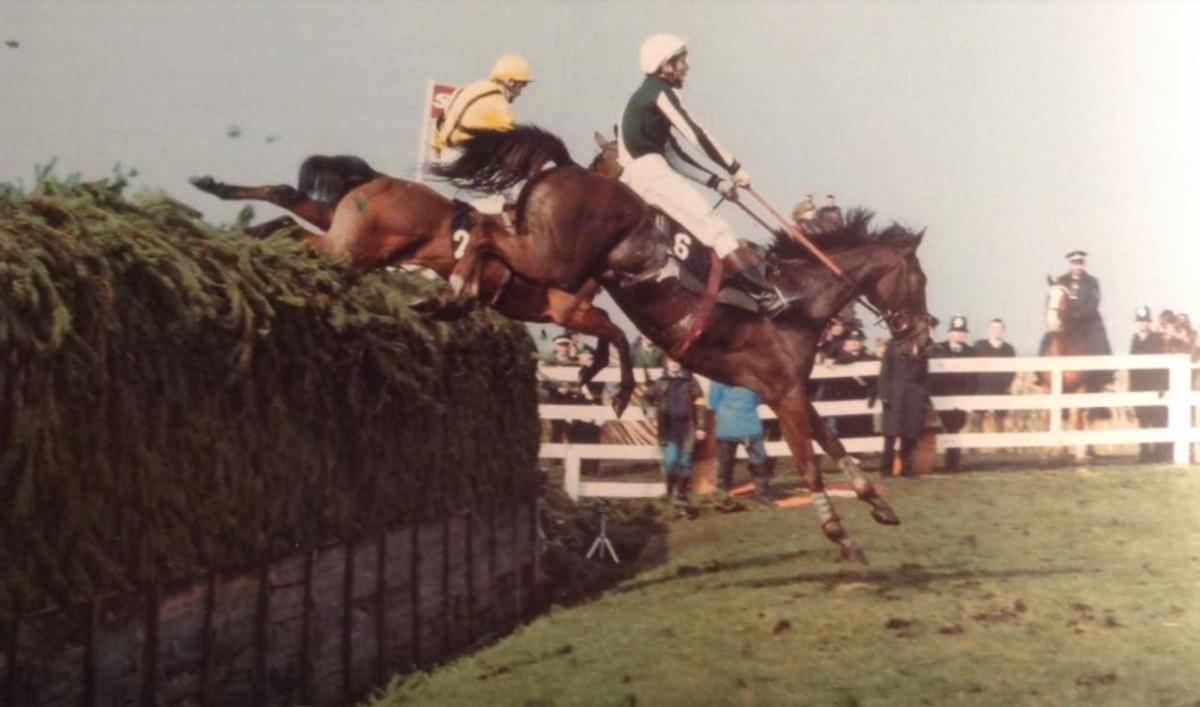
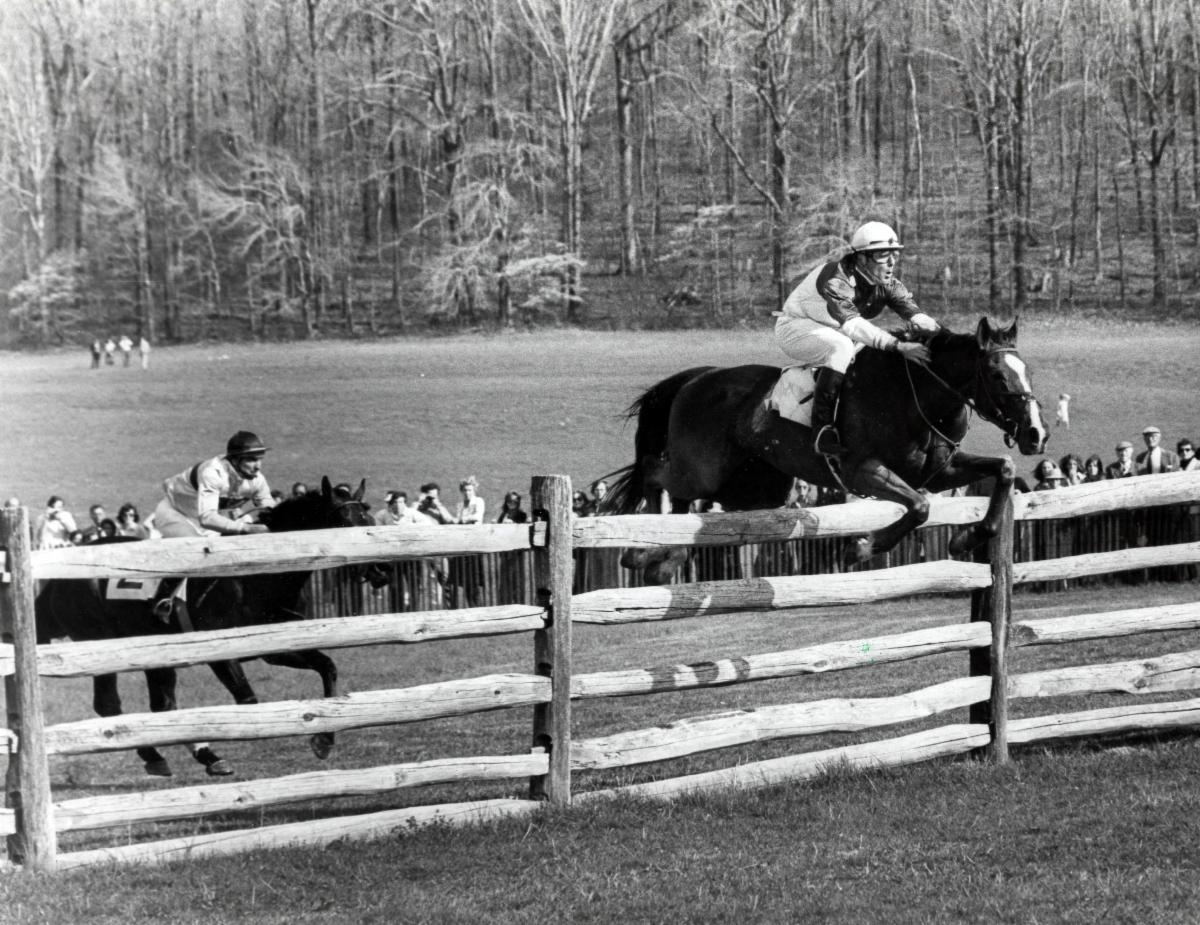
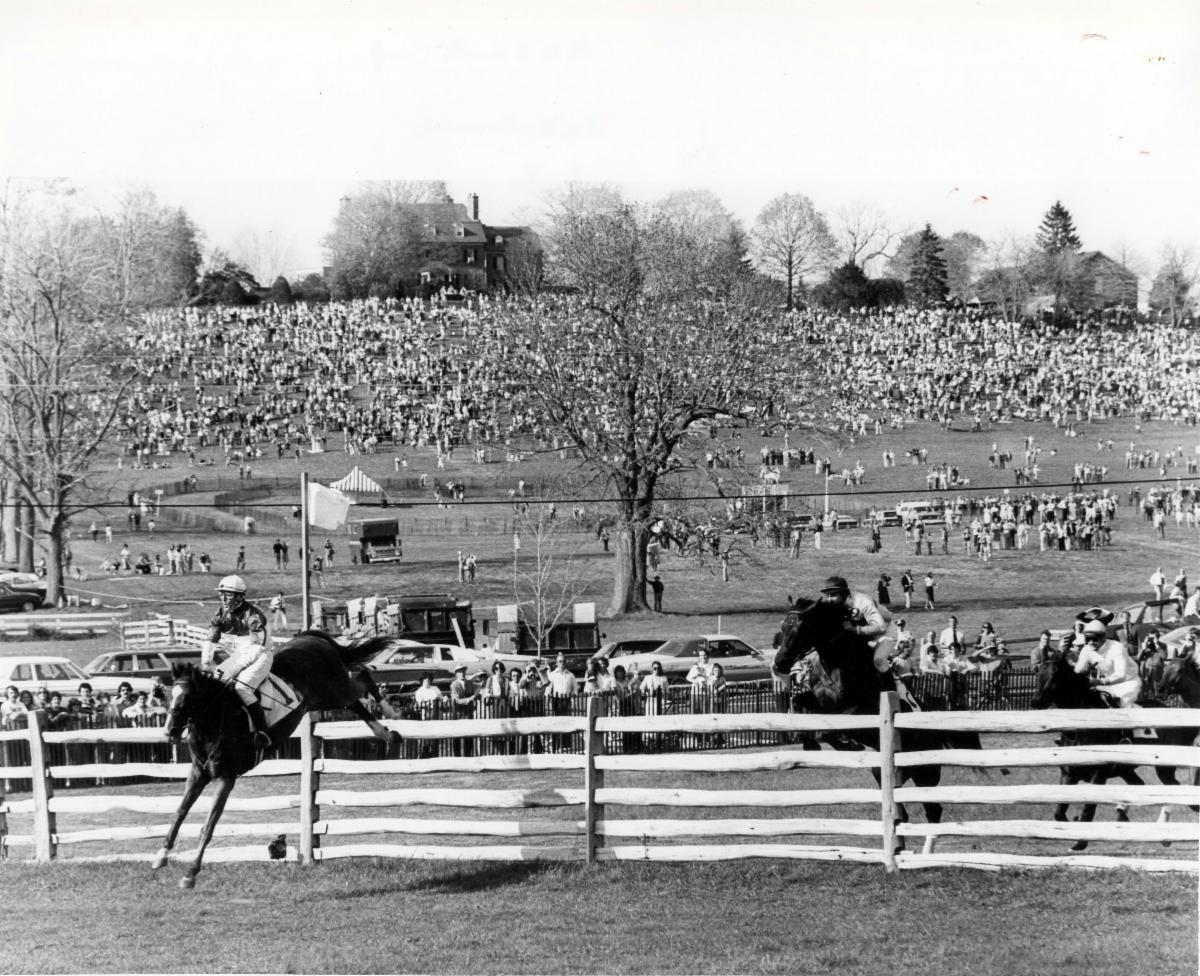
Charles “Charlie” Fenwick Jr. and Ben Nevis II passed Gerry Newman and Delmoss at Becher’s Brook on their second try at the English Grand National in 1980.
Photo Courtesy Of Charlie Fenwick
|
“Nine horses came to grief at The Chair that year,” said Fenwick. “The Chair is a big fence, and there’s a ditch in front of it. So when we got to the fence, there was a horse in the ditch, so you had to jump the ditch, the horse and the fence. He couldn’t do it.
“I don’t think I’ve ever experienced frustration like that before or since,” he continued. “We’d been over there for 4 and 1/2 months and dedicated everything to this race. And it wasn’t that we just got beat. We got brought down by loose horses. It was just everything we’d done was naught for all intents and purposes. That was a real challenge.”
But with the welcoming of a new decade, they started fresh. Ben stayed in England with Tim Forster at his yard in Letcombe Bassett, while Fenwick traveled back and forth about six times preparing for the second go-around. But none of the races leading up to the Grand National showed anything extraordinary from the then-12-year-old horse.
“We get to the Grand National, and we haven’t done anything particularly exciting. He’s at 40-1. So nobody was giving him much regard,” said Fenwick. “The odds are terrible. And it also had been raining a lot, and we thought he only liked firm ground. But the facts were he liked everything. He performed well on all grounds. So anyway that race got to be an endurance test of sorts.”
Little by little, the 30 entries dwindled, and as Ben and Fenwick approached Becher’s Brook for the second time, they surpassed leader Gerry Newman and Delmoss, who fell at the fence’s famous 6′ landing drop.
|
“[We] passed the grandstand, and you turn to go back out into the country, and we jumped six fences all in a row. Boom, boom, boom, boom—right after the other,” said Fenwick. “Becher’s Brook is the sixth and last fence there, and then you make a turn and start coming back. So Gerry and I jump all of those fences together, head and head. And then we get to Becher’s, and he fell. And then all of a sudden Ben’s in front. And it was the first time he’d been in front in an English race, period. Almost like he didn’t know where to go.”
And after clearing the eight remaining jumps, Ben won by 20 lengths, with only three other horses finishing the race behind him. (Fenwick’s great friend Wallace Lanahan won 40,000 pounds that day for betting on Ben. Luckily the betting office honored a Xerox copy of his ticket since a pickpocket stole his wallet before he could collect his earnings.)
Ben trailered to Letcombe Bassett the next morning.
“Ben returned back to the village where he had been trained, and everybody turned out on the streets for him,” said Fenwick. “There’s only two streets on the town, but it was crowded. He paraded through there. He loved it. It was all very special.”
The victory marked Ben’s swan song, as Fenwick retired him to Meadow Run in Butler, Maryland, where Ben lived until he was 27 years old.
“He was 12, and he did not need to do anything else,” said Fenwick. “He got to the top, so why in the world would we need to prove anything else by running him anywhere else?
“It’s definitely for me something that—it was 39 years ago—and I remember it just as well now as I did then,” he continued. “It’s a wonderful, wonderful experience.”
|
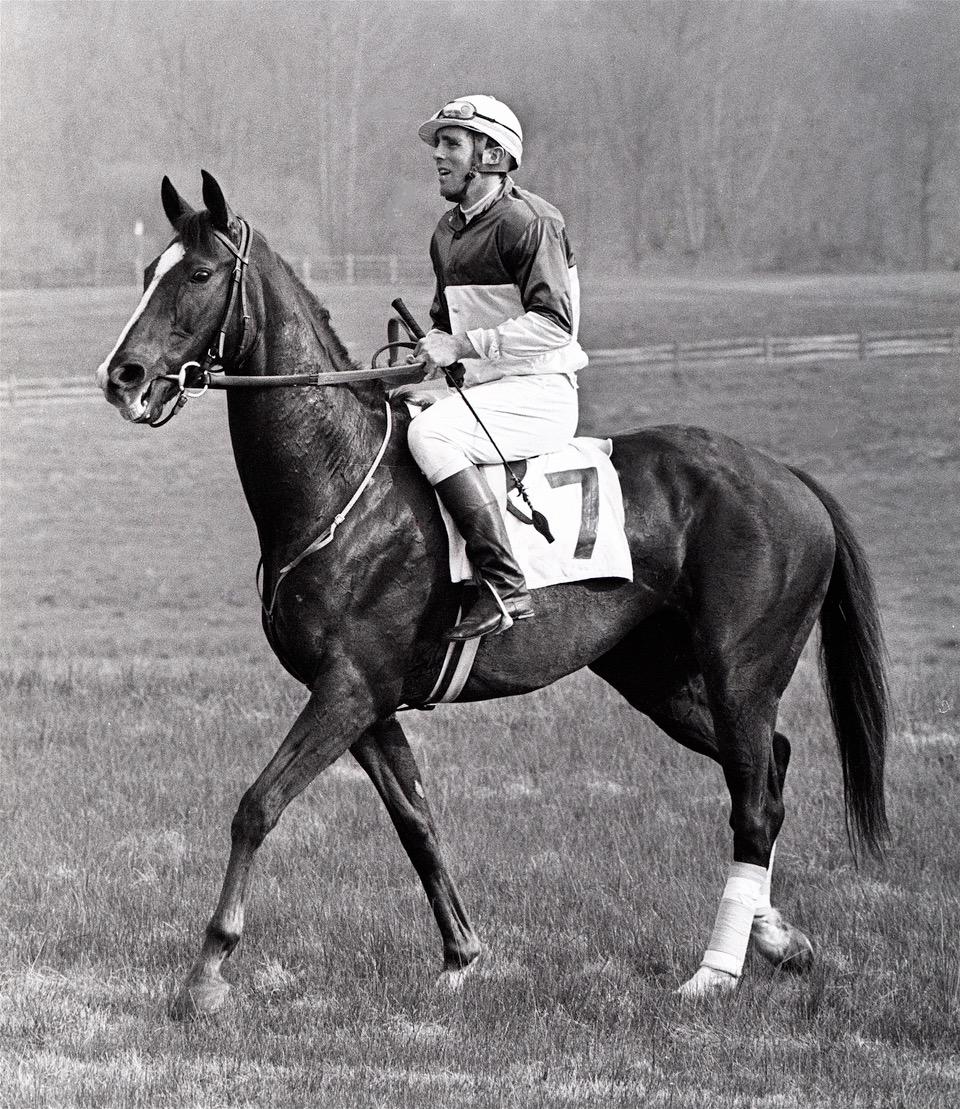
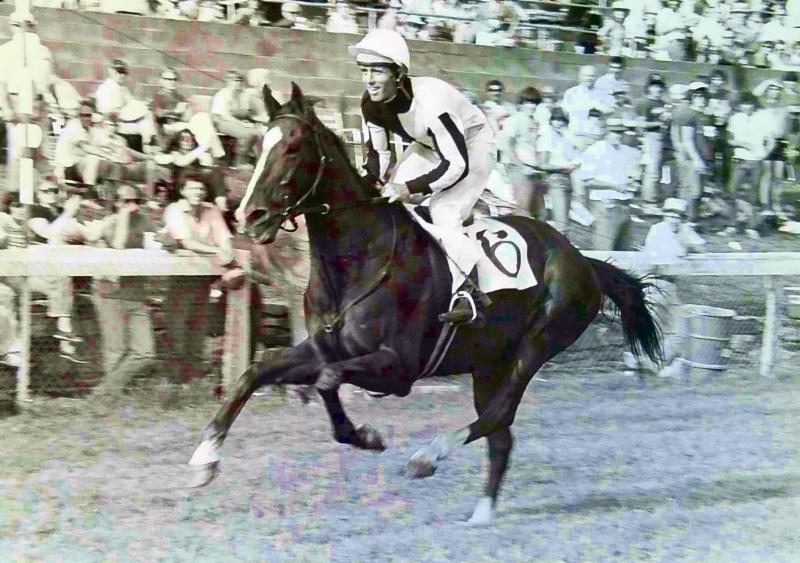
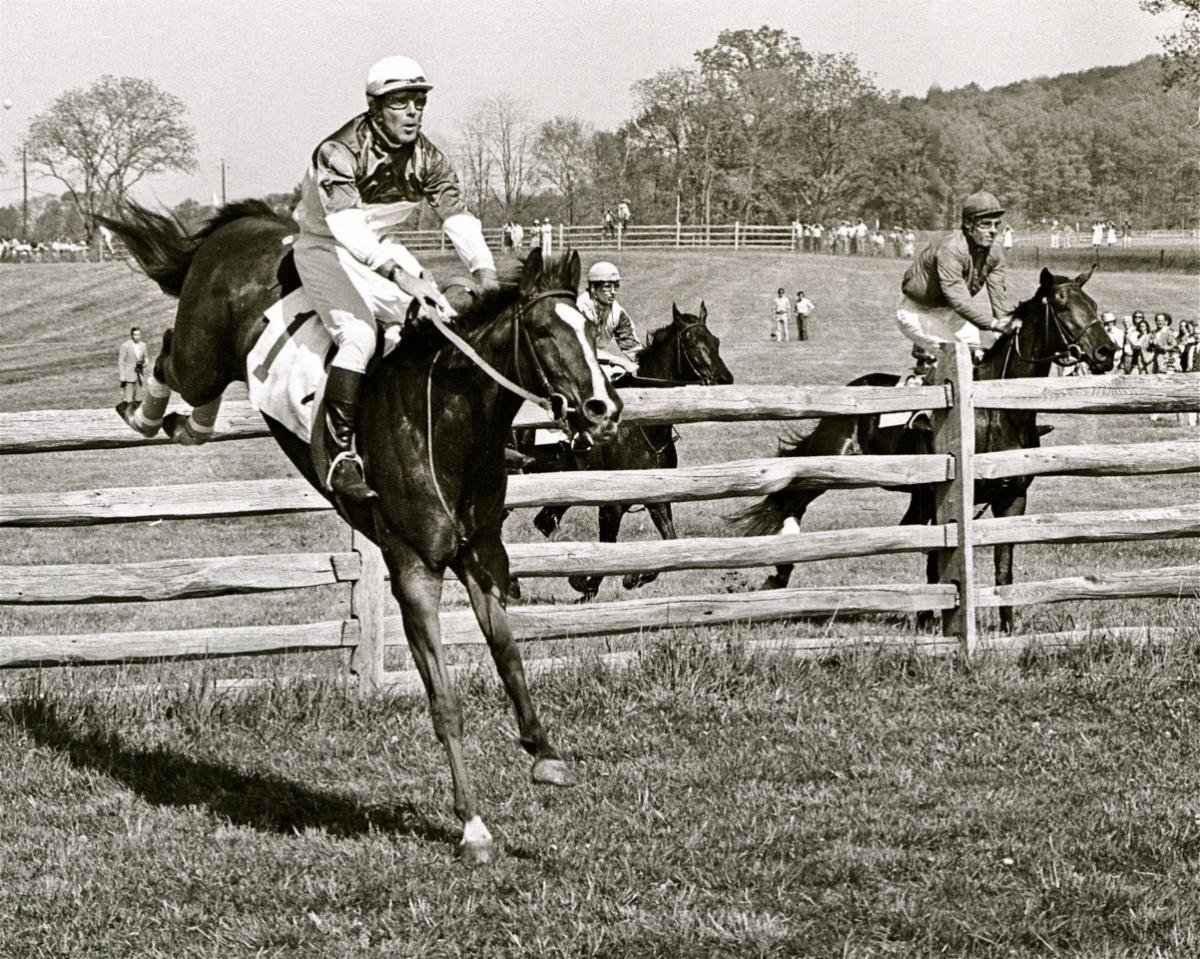
Charlie Fenwick and Ben Nevis at the 1976 Murray Memorial.
©Douglas Lees
|
Redmond Stewart, Ben Nevis' owner, at the Maryland Grand National. Stewart owned the land over which the race is run.
©Douglas Lees
|
During the spring of 1976, Ben Nevis won the 3 1/2-mile Foxcatcher Hounds Timber Steeplechase. In 1980, Ben became the first Fair Hill winner to also win the National at Aintree. Several weeks later, Ben Nevis and Charlie Fenwick galloped between races for a Fair Hill crowd.
©Birkenstock / NSA Archives
|
Ben Nevis and Fenwick lead Perfect Cast and Turney McKnight over the 13th fence at the 1978 Maryland Hunt Cup.
©Douglas Lees
|
|
Fenwick On The 1978 Maryland Hunt Cup |
Obviously the (Aintree) Grand National is the biggest deal, and it's hard to say it isn't the greatest race that I ever rode.
But the story I think is the most compelling is the Maryland Hunt Cup in 1978.
Turney McKnight rode, throughout Ben's career, a mare named Perfect Cast. She was owned by Audrey Riker and she was out of a mare named Golden Fly.
|
Perfect Cast and Turney McKnight just trailing Fenwick and Ben Nevis at the 3rd fence of the 1978 Maryland Hunt Cup.
©Douglas Lees
|
Golden Fly was third in the Maryland Hunt Cup in 1959, and was owned by either Audrey Riker or by Audrey Riker's mother, and ridden by Mikey Smithwick. (fun fact - Golden Fly's sire was Peterski, who won the 1948 Maryland Hunt Cup, again with Smithwick in the irons.)
Perfect Cast ran in both Maryland Hunt Cups that Ben Nevis won (1977 and 1978, and Perfect Cast was second in each race), and I think maybe in both Maryland Grand Nationals (we double checked - just one Grand National, in '77). She was Ben's nemesis in the big races.
The 1978 Maryland Hunt Cup was Ben's 12th straight win in the United States, and I don't think, except for maybe his first race, that there was ever a horse in front of him. He was... crazy. He was a front runner. He was a freak of nature. There really wasn't a horse that could get in front of him. It would have been tough for both horses, because Ben would have challenged him and taken him on. Ben might've won, he might've lost. But he wanted to be in front.
But he wasn't manageable.
I always thought that I was just only barely good enough to control him, but not good enough to manage him.
If he'd come along later in my career, when I was a better jockey and a better horseman, I would have tried to manage him. And he would not have been as successful.
|
Charlie and Ben Nevis at the 3rd fence of the 1977 MHC.
©Douglas Lees
|
So, the point here was Turney McKnight and Perfect Cast.
In 1978 the ground was rock hard. Eight seconds were taken off the course record that day. And the only reason that happened is because McKnight determined that the only way to beat Ben was to harass him. They weren't going to try to get in front of him. That would be a disaster for both of them. But Perfect Cast was on Ben Nevis' tail the whole way around. Ben was always aware that she was right behind him, nipping at his heels.
I think it was the right strategy.
It wouldn't have taken a genius to come up with the strategy. But it took a genius to execute it. McKnight did that.
For the first three and a half miles I don't think she was ever a length and a half away, over the biggest fences. Ben was always aware she was there.
It was the execution of the strategy that was just superb, and it was a combination of horsemanship and courage.
|
In the end, Ben Nevis took 8 seconds off Jay Trump's course record, and my bet is Perfect Cast took off four seconds. She went around in the second fastest time ever.
It was with that win that we came up with the idea that we had some kind of super horse, and it gave us the confidence that we ought to go to England.
Had we won the race in just an average time, we might have just stayed around and tried to win the race a third time. But the way he did it gave us the confidence to go. And the only reason he did it the way he did it is because of Perfect Cast.
She deserved to win the Maryland Hunt Cup herself. She just was around at the wrong time."
|
|
The Shawan Downs Point-to-Point |
|
Just last week Shawan Downs announced they would have to run their races without spectators, and would therefore have to change from a sanctioned day of racing to a point-to-point format. Since that announcement Shawan has had a flurry of activity - new conditions were created for the point-to-point, entries switched to Central Entry Office, payments and procedures all finalized for the new format.
Up to his elbows in the flurry of activity is Race Chair Charlie Fenwick. Fenwick has headed up the Legacy Chase since its inception in 2001.
|
|
This was the thinking (for 2020). We had in mind a purse structure of $85,000.
It costs us roughly $40,000 to put the races on. So we needed to raise $125,000.
We also had to have permission from Baltimore County and the State of Maryland in order to do this. The regulations were in flux when we were in our planning stage.
We knew we had to keep the numbers down, so we came up with this idea of selling parking 'pods.' If we sold all the pods, we would have brought in $125,000, allowing us to cover the purse money and the costs to break even.
|
|
We hired a council to represent us to the Department of Health, and we came up with a plan. We would have three sections, and we would not have more than 250 people in any of the three sections, one section being for the horsemen.
In the end they (the Department of Health) had already ruled that the Preakness could only be hosted in a No Spectator environment. Even though Shawan is a totally different environment, with no grandstands and no tents, still they had said this to Pimlico. They began to think they would have trouble telling us we could have 500 people watch a steeplechase race.
If they had wanted to do it, I think they could have done it. But I think they had painted themselves in a political box by what they were not allowing at Pimlico.
As time went on, the state said that all athletic events had to be conducted in a No Spectator environment.
So that was the evolution of the decision.
We had said in the beginning (of selling the pods) that if you want your money back, we'll give you your money. And when the time came, last week, we offered people their money back and I'd say maybe a quarter of them asked for their money back, and the others made a contribution to racing going forward.
We are limited to a No Spectator, 250 people event. We thought that the horsemen wanted opportunity for their horses, so we converted the sanctioned meet to a point-to-point.
Now we're just trying to raise enough money to cover the cost of putting on a Point-to-Point, which is not a lot less than putting on a sanctioned meet. We still have $40,000 in operating expenses.
|
|
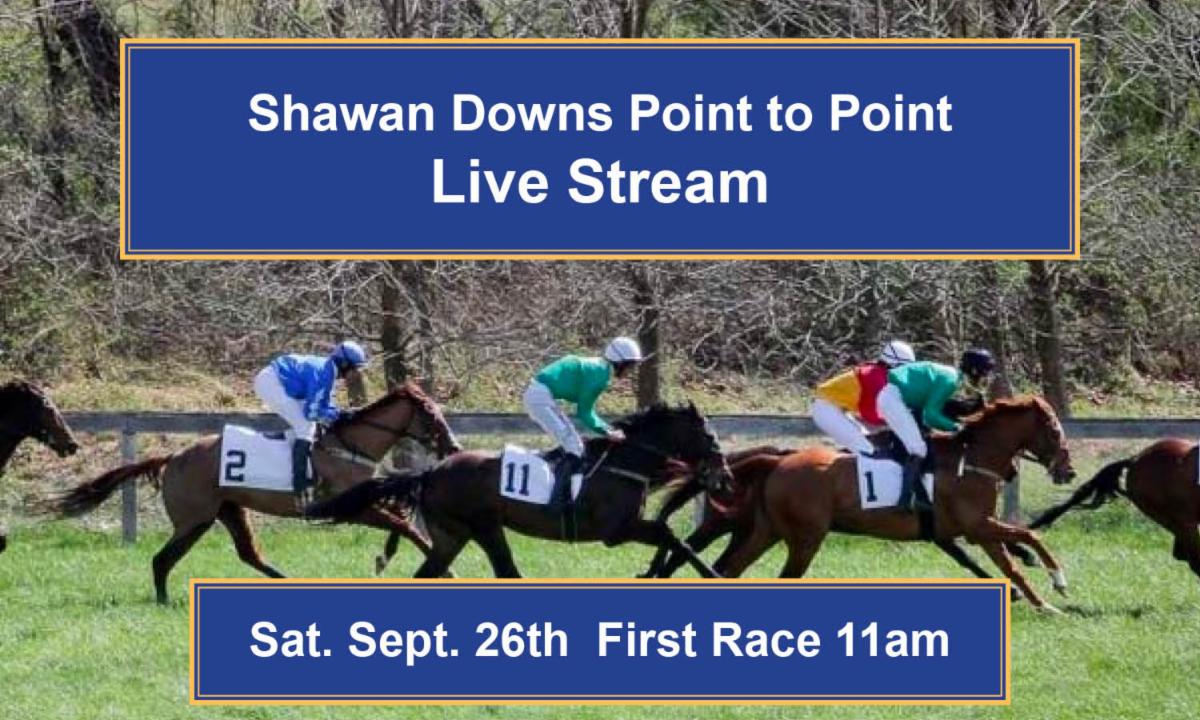
Shawan is going to live stream the races. No program, just watch the races then watch the grass grow. Jack Hardway is going to produce the live stream for us, and our cost is low.
People want to see the races. The owners want to see their horses run. One way or another we're trying to keep people engaged in the sport."
|
|
Fenwick and Hannum On the Future of the Steeplechase Business Model |
|
"The business model of steeplechases going forward is going to be very challenging," says Fenwick. "For a long time we depended upon corporate sponsorship. And for the foreseeable future I think that's going to be really challenging. I'm not sure there's going to be a corporate sponsor who wants to host a bunch of people up in a tent on a hill, eating food. Certainly not in the midst of a pandemic.
"The Virginia sanctioned meets are heavily funded by the Virginia Equine Alliance - they all were given grants. The Alliance is funded by gambling and slots.
"If we had been given a $75,000 grant to get started we'd be in great shape, even for a No Spectator event. The point is, that opportunity doesn't exist in any other state."
|
|
"The Virginia Equine Alliance was established in 2014 when the racing industry in Virginia was in a crisis situation," says Hannum "The original concept of the VEA - which remains the case today - is that the industry must speak with one voice and work together to benefit all aspects of the industry: flat, breeding, steeplechase and harness. Speaking as one voice enabled us to make changes to the Racing Act which established the funding mechanism for the VEA. If each group had been pushing for a different agenda, we would not have been successful.
"The key facet of the VEA which has enabled us to help steeplechase racing this year is that the VEA Board has the discretion and flexibly to allocate funds as needed to each member group.
"The VEA model could be replicated in Maryland and Pennsylvania. The coronavirus has caused jump racing to look hard and fast at its funding model. It strikes me that this is the time for other states, with slots or other alternative forms of gaming, to look at how some of that money can come back to support all aspects of the industry - not just flat purses."
Fenwick has a few other ideas, as well. "To keep the sport going in the future, one thing we've got do is we've got to get our feet wet in the gambling market. We need pari-mutuel wagering at steeplechase racing.
"The other thing we've got to do is work toward a marketable, viable live streaming product.
"The combination of pari-mutuel wagering and a good live streaming product is certainly one road map that we ought to be exploring."
Hannum, on the other hand, doesn't agree. He argues that on site wagering is actually a money loser for the individual race meet, although he does agree with Fenwick that it makes people watch the races in a more professional way, and to actively follow the sport.
He also doesn't believe that steeplechase racing should become part of the main-stream media. "I think having the odd hurdle race at the track is good - it kind of peaks some interest with some owners. But I actually don't think that there should be a big effort to have more racing on TV. The big issue is that when there are accidents, when you're simulcasting that race to the world you're really exposing yourself.
"If there's an accident at Shawan it's kind of contained, and the people there understand. But if there's a problem at, say, Monmouth the track doesn't really understand how to manage it, and the spectators have never seen that before and they don't know what to think."
|
|
Stories With Charlie
One of our favorite things about working with (past TGSF president) Charlie Fenwick is just sitting down to lunch, or standing along the paddock fence, and listening to Charlie's stories. Always there are stories. We asked Charlie to tell us a few of his favorites.
|
|
On Anne Moran, Buck Jakes, and Retirement |
|
The last race I won was on Buck Jakes at the (Maryland) Grand National. I left the paddock and went up on the hill, next to Paddy Neilson. And I said to Neilson, 'You know, if a guy was thinking about retiring this would be a pretty good time.'
And Neilson said, 'There'll never be a better one.'
And that was it. I retired. (read more about Fenwick's retirement in The Baltimore Sun)
|
|
|
|
Fenwick and Buck Jakes, in Charlie's final race as a jockey, winning the 1994 Maryland Grand National.
©Douglas Lees
|
|
|
Jake won at Willowdale that spring, and then I had to find a rider for the fall. I didn't really know Anne Moran, and she didn't really know me. She was at the tail end of her career. I didn't do any research. I didn't even know when she had last ridden a race.
She made a mess of the first race (an allowance at Glenwood Park), the owners got all upset, said, 'You've picked the wrong person, got the wrong rider.'
So then she rode him in the International Gold Cup, and they were on fire after that. It was a lot of fun.
I always told Anne, 'I'd be in the Hall of Fame by now if I hadn't retired when I did and gave you all those easy wins.' (laughs)
|
|
 |
Anne Moran and Buck Jakes en route to winning the 1994 International Gold Cup.
©Douglas Lees
|
|
|
|
Anne Moran and Charlie Fenwick at the Maryland Grand National.
©Douglas Lees
|
|
|
|
Sugar Bee went to England specifically for the Grand National, and Buck Jakes went over. But it wasn't right for them. It definitely wasn't right.
Sugar Bee was not a big tough robust horse. I don't think he liked it over there.
Buck Jakes was not managed properly by me. He was the right type. He went over there, and the trainer told me he'd never had a faster horse. He was doing fine. Then they put Richard Dunwoody on him, the leading rider in the world at the time. And Jake pulled himself up.
This horse, I drew to believe as time went on, he loved Anne Moran.
Anne Moran didn't weigh 110 pounds soaking wet. She was an incredible horsewoman, but she wasn't going to manhandle anybody. She did it with finesse. Jake loved her. He absolutely loved her.
So Jake went to England, ridden by the best jockey in the world, and Jake said, 'I'm not used to this. I want that little girl.'
And I said, 'Why would we get that little girl to ride when we've got the best in the world?'
You don't send over an amateur jockey, choir singing mother of three girls to take the ride from the best jockey in the world.
But that was all wrong. It was a bad decision on my part."
|
|
|
|
Anne Moran winning the 1995 Maryland Hunt Cup on Buck Jakes, beating Florida Law (John Bosley, up)
©Douglas Lees
|
|
|
"I've enjoyed being an owner. Can't be a jockey any more. I was a trainer for a good while, until Shawan Downs came along and then I elected to devote more time to that.
In all three walks of life - a jockey, a trainer, and owner - for me the opportunity to dream has been almost the high point of the whole experience.
Certainly I loved winning races - I thrived on it.
I was 17 when Jay Trump won the English Grand National. I'll never forget that day. I had a cousin with a short wave radio, so Bruce (my brother) and I listened to the race. It was a real life event for us both. We knew Tommy Smith, and the story of Jay Trump. That came along at a time in my life where it made a real impression on me.
I aspired to do the same thing as Tommy Smith. I dreamed of that, and I ended up living the dream.
For me, the opportunity to go back (to the English Grand National) is another dream.
It makes it exciting to look at new horses, watch horses race, and to think of that opportunity developing.
I'm not sure Doc Cebu is the right horse to go (to the Grand National), but boy Doc has given us a real opportunity to dream, and that to me is so great."
|
|
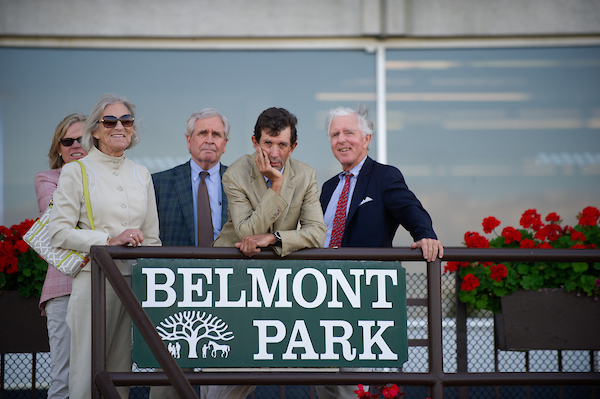
Sheila Fisher, Sue Sensor, George Sensor, Jack Fisher and Charlie Fenwick watch the replay of the 2019 William Entenmann Novice Stakes at Belmont. Snap Decision won with Willie McCarthy in the irons.
|
|
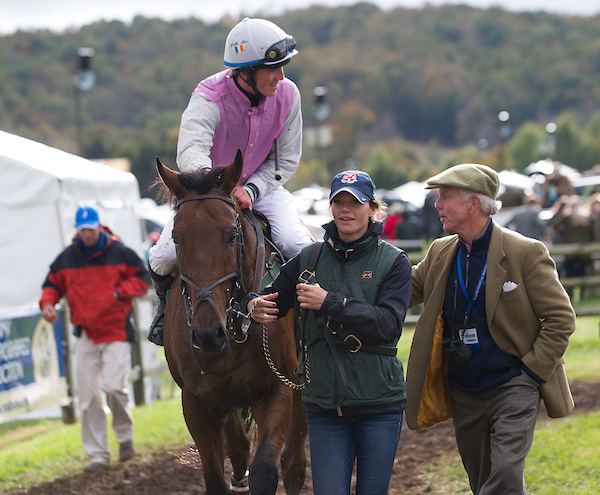
Charlie Fenwick accompanying Doc Cebu and jockey Hadden Frost to the winner's circle after the 2018 International Gold Cup.
|
|
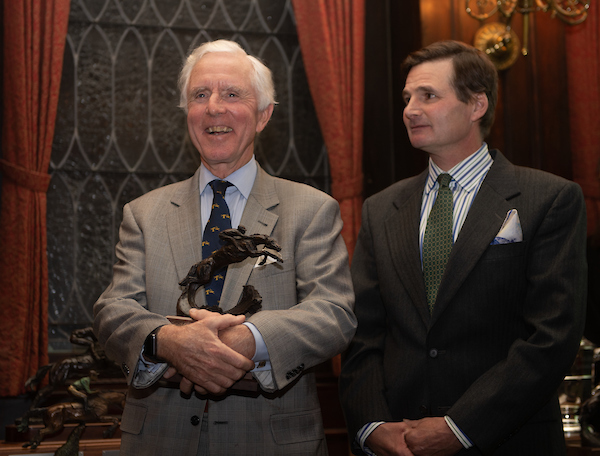
Charlie Fenwick accepting the Leading Owner trophy from presenter Todd Wyatt at the January 2020 NSA Awards Banquet
|
|
NOTE - We've got a large photo album called Legends of Steeplechase - Charlie Fenwick on our Facebook page. Check it out!
|
|
|
|
|
|
|