|
Halloween brings fun costumes, trick-or-treating, and sweet treats! A little planning can help your family enjoy the festivities while keeping a few common hazards in mind. For more ways to keep your little ones safe this Halloween, explore these additional tips from the American Academy of Pediatrics.
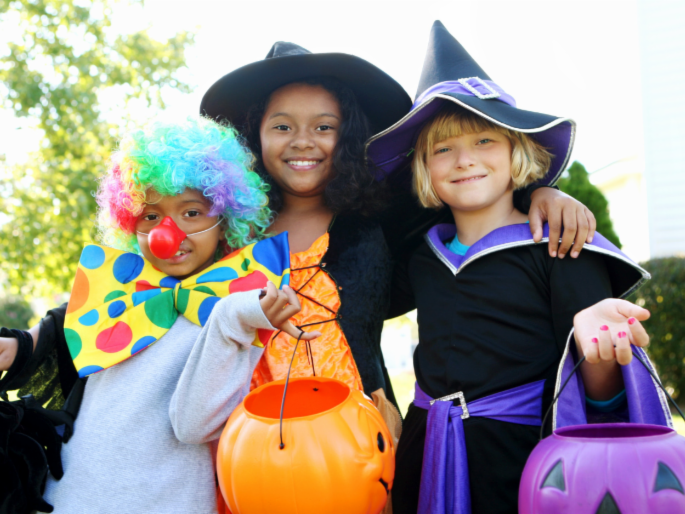
Choose Costumes Carefully
- Make sure costumes fit well and are short enough to prevent trips and falls.
- Use face paint instead of masks that may block vision. Test makeup on a small area of skin first.
- Add reflective tape or glow sticks to help children be seen after dark.
- Choose flame-resistant materials and avoid sharp costume accessories.
Stay Safe While Trick-or-Treating
- Accompany young children. Older children should travel in groups, follow a planned route, and agree on a time to return home.
- Use sidewalks and crosswalks, and remind children to look both ways before crossing the street.
- Carry a flashlight and visit homes with porch lights on.
- Remind children never to enter a stranger's home or car for a treat.
Check Treats Before Eating
Wait until you get home to check candy. Discard anything unwrapped, damaged, or suspicious. Giving children a meal or snack before heading out can also help curb snacking along the way.
For younger children, remember that hard candy, gum, gummy candies, popcorn, and whole nuts can pose choking risks. Keep small toys and candy wrappers away from babies and toddlers, too.
Take Extra Care With Food Allergies
Halloween candy can contain common allergens, including peanuts, tree nuts, milk, eggs, soy, and wheat. If your child has a food allergy, read every ingredient label carefully, even on familiar brands. Miniature candies may have different ingredients than their full-size versions. Here are a few helpful tips from FARE (Food Allergy Research & Education).
- Avoid treats without ingredient labels and homemade goodies when you cannot confirm their ingredients.
- Remind children not to share food or eat treats before an adult checks them.
- Make sure your child has their prescribed emergency medication, such as an epinephrine auto-injector, and that supervising adults know how to use it.
Learn more from FARE's Halloween food allergy safety tips.
Make Your Home Safe For Trick-or-Treaters
If you're welcoming trick-or-treaters to your home, a few simple preparations can help make your walkway and front porch safer for little ghosts and goblins. Keep these tips in mind before the doorbell starts ringing!
- Clear walkways of leaves and other tripping hazards, keep pets secured, and use battery-operated candles to light pumpkins. Adults should handle pumpkin carving.
- Consider joining the Teal Pumpkin Project! If you're handing out treats, offer non-food options like stickers, glow sticks, or small toys for children with food allergies and other food-related conditions. Place a teal pumpkin outside to let families know these alternatives are available.
Wishing your family a fun and happy Halloween!
|