|
The influence of Relational Construction
on My Work with Communities in Conflict
By Deborah Nathan, Taos Associate
| |
|
These are challenging times as we face deep division, both in the United States and around the world. For those of us who work to build bridges between Israeli and Palestinian communities it has been acutely painful. There are over 250 grass-roots organizations that are committed to bringing together Israelis and Palestinians through environmental projects, conversations, social justice, the arts and many other avenues. All are struggling to make sense of and work through an unimaginable reality.
The current crisis in the Middle East is tragic both for the extreme violence and loss of life, as well as for the subsequent sense of fear and hopelessness that so many are experiencing. These feelings often lead to a lack of curiosity as we struggle to come to terms with what is happening. Rather than appreciating the complexity of a conflict situation, the response is often to gravitate towards more simplistic responses. What we have seen happening on college campuses in the United States and elsewhere, with protests becoming violent and calls for the destruction of one side or the other is an example of what happens when we seek simplistic answers to complex problems. It often feels easier and safer to gravitate to a particular “side”, refusing to acknowledge the narrative and/or humanity of the other. While this may offer temporary relief and a sense of belonging, it rarely leads to a constructive path forward.
The lens of relational construction informs not only my worldview and my practice as a psychotherapist, it also informs my work within areas of conflict, such as the Israeli/Palestinian conflict. The organization I created in 2008, Artsbridge, is informed by relational constructionist ideas. Through Artsbridge, Israeli and Palestinian teens have come together over the years to learn how to engage constructively through Transformative Reflecting Dialogue and collaborative art projects. Through this process they also learn to appreciate complexity, think creatively, maintain curiosity, and sustain a level of reasonable hope. These are all elements of what I call Relational Resilience. Through these difficult times I have spoken to many of our alumni. What I have heard is that these difficult times have helped them to appreciate even more the ideas learned during Artsbridge. It has helped them recognize the complexity of the conflict and to appreciate the multiplicity of narratives that exist. Many are reaching out to their peers across the deep divides, to check in to see how they are doing and to offer kind words of support, despite their own pain. They are working hard to find ways to bring people together and to contribute their energies towards ending the conflict.
Relational construction reminds us to remain curious in the face of deep divides, to recognize the multiplicity of narratives that exist within any challenge, and to question our own deeply held beliefs, opening up to the possibility that there are other ways of viewing a situation. With that in mind, it is possible to see that conflict, itself, is not the problem. How we manage conflict will determine whether the outcome will have positive or negative consequences. Maintaining a relational stance allows me to remain curious, and to maintain space for listening to opposing viewpoints. While I may not agree, listening to those with whom I disagree allows me to expand my own frame of reference and to appreciate that others have had different lived experiences than me, which inform their worldview.
To learn more about relational resilience in times of conflict, please join myself and Sheila McNamee on December 6 for the workshop, Pathways to Relational Resilience: Creating relational resilience in the midst of conflict through the use of the arts and reflective dialogue.
| |
|
It is with a heavy heart that we share the passing of José Otte, a beloved and dedicated member of our community. After a courageous two-year battle with cancer, José has found peace. José will be deeply missed by all who had the privilege of knowing her. Her presence was a constant source of encouragement and care. She completed her Ph.D. with Tilburg University, where she made significant contributions to the development of Appreciative Inquiry methodology. Her work has had a profound impact, especially within the Taos Institute Europe network in the Netherlands, where she actively participated and contributed. We wish to honor her legacy, her kindness, and the passion she brought to the Taos Institute community.
| | | |
December 6, 2024
Pathways to Relational Resilience
An online workshop with Deb Nathan & Sheila McNamee
Whether it is between nations, within families, between partners, or with colleagues, it is challenging to find ways to move beyond conflict towards greater understanding and an appreciation of difference. However, it is not impossible, and hope can be found even amid the deepest of divides. How do we hold on to our beliefs while making room for other perspectives? As the political and social aspects of the world in which we live become more polarized, how do we learn to tolerate difference and listen to viewpoints that differ dramatically from our own? How do we work together and learn to value difference?
This online workshop features relational alternatives to more traditional approaches to conflict resolution. Participants will learn how the utilization of art and reflecting dialogue can work together to encourage the development of relational resilience and to shift from conflict to appreciating the value of difference. More details.
Certificates of Completion available upon request.
| |
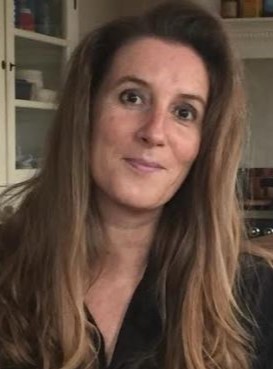
Sheila McNamee, Ph.D. is Professor Emerita of Communication at the University of New Hampshire and co-founder and Vice President of the Taos Institute. Her work is focused on dialogic transformation within a variety of social and institutional contexts. | |  |
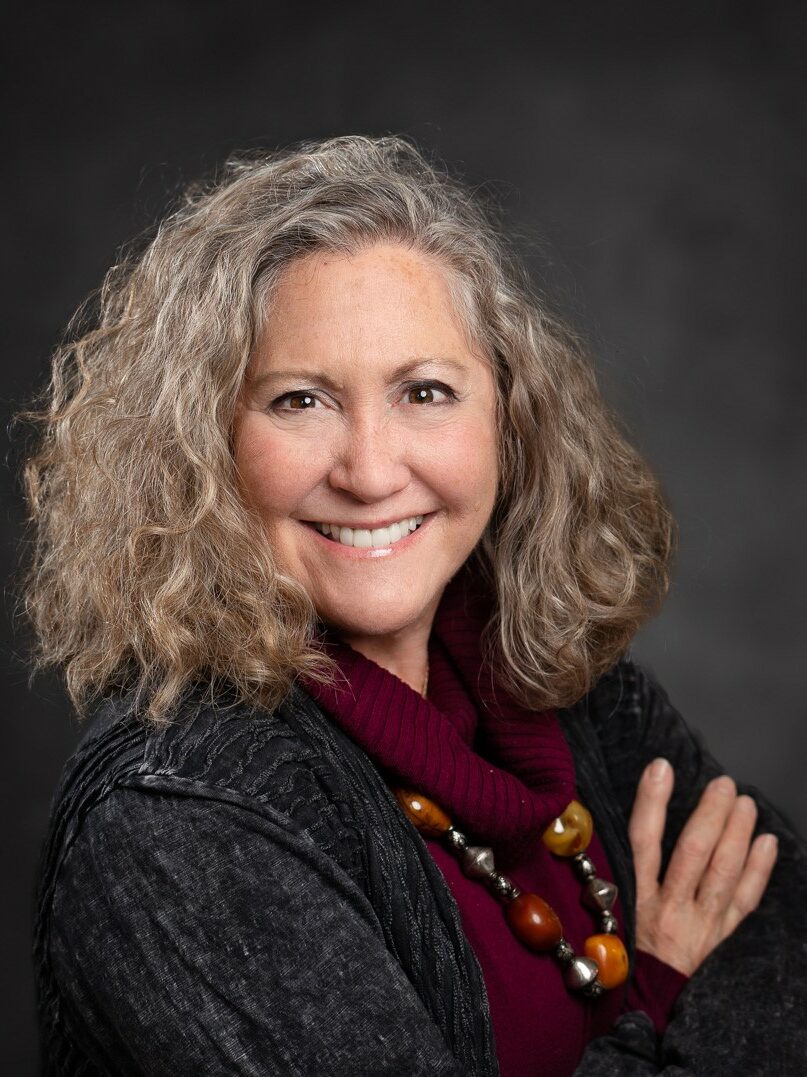
Deborah Nathan, Ph.D., LMHC, ATR is a psychotherapist specializing in art therapy, conflict mitigation and trauma. In 2008, Deb founded Artsbridge, Inc. – an organization that utilizes a unique methodology to bring together teens from communities in conflict. | | |
What's Happening in the Commons | |
Join with over 1600 members from around the world in the Taos Institute Commons online community as we explore social constructionist, relational, and appreciative theory and practices. We invite you to attend the free events in the Commons to engage in rich dialogue, share valuable resources, watch event replays, and make meaningful connections with others interested in creating more promising futures, one conversation at a time. More details here. | |
|
|
|
|
Dialogue with the Authors
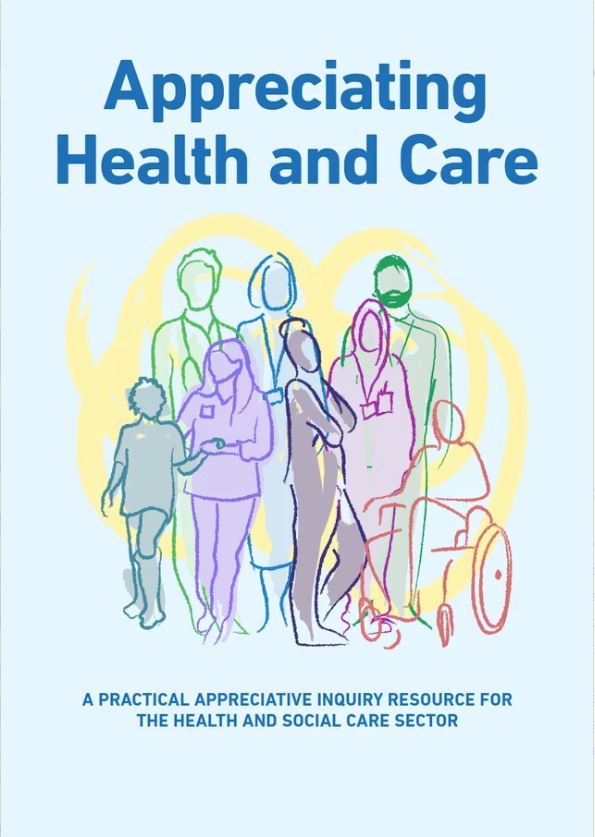
Appreciating Health and Care
October 11, 10:00-11:00am EDT
Suzanne Quinney and co-authors Daniel Hodgkiss, Tim Slack, Kayleigh Barnett & Brook Howells invite you to join them in dialogue about their new book, Appreciating Health and Care. The book features learning from a myriad of examples of Appreciative Inquiry projects and practice over the last decade across the health and care sector. The stories demonstrate the rich response from health and social care practitioners across the UK. Register here.
| | | |
|
|
|
Community Meet & Greet
Informal gatherings in the Taos Commons
October 21 & November 22, 2:00-2:30pm EDT
Whether you are new to the Taos Institute Commons online community or already a member, we invite you to join this informal gathering to meet other Taos Institute Commons members and share stories of how you are applying (or hoping to apply) social constructionist, relational and appreciative approaches in your work and life. Stop by to say hello, we would love to meet you.
| | | |
|
|
|
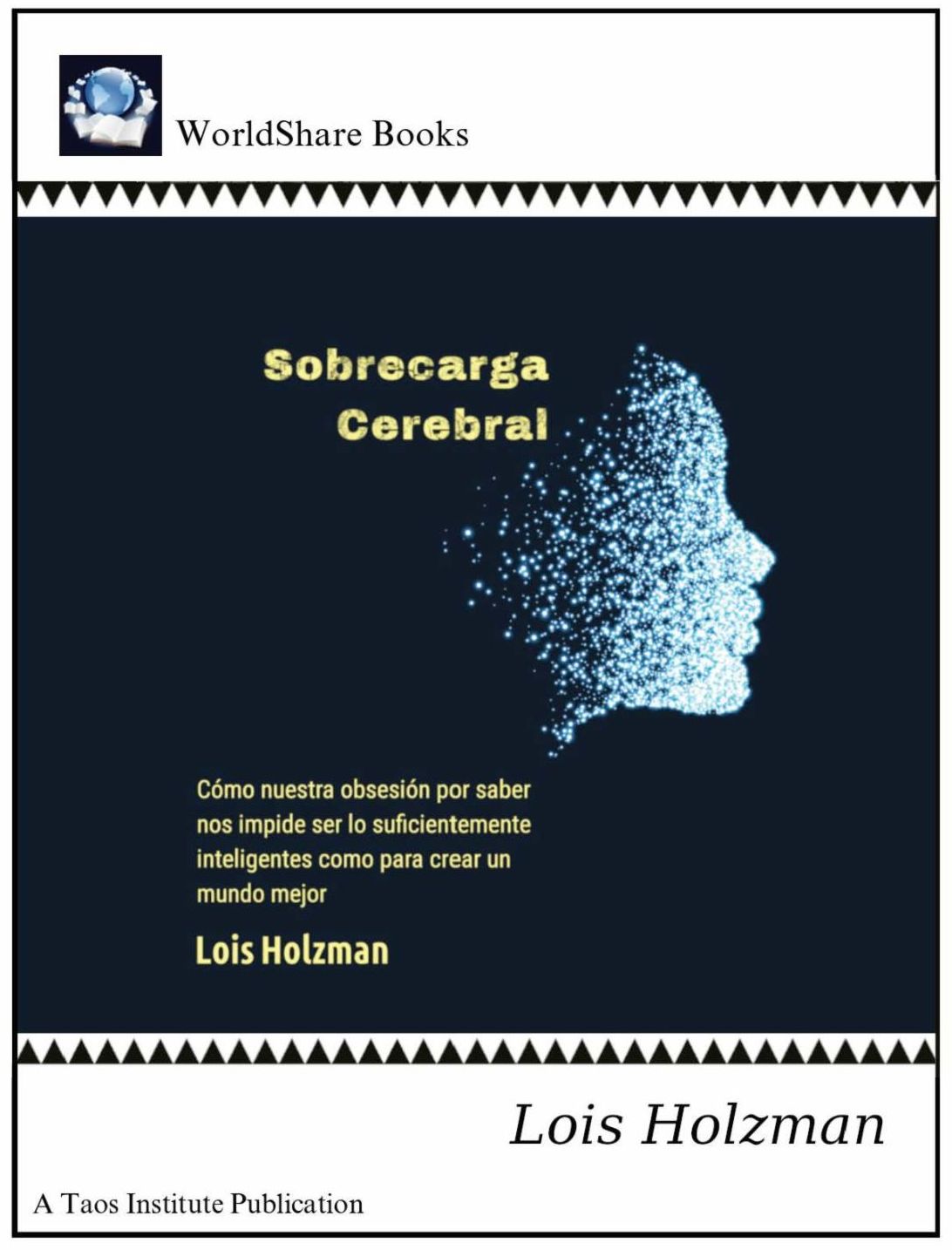
Sobrecarga Cerebral: diálogo con la autora y les traductores (evento llevado a cabo en español)
Octubre 26, 1:00-2:30pm EDT
Acompáñanos al lanzamiento de la traducción al español de Sobrecarga Cerebral un libro de Lois Holzman, el cual desafía la primacía del saber como base para comprender el desarrollo humano. El enfoque de la terapéutica social nos brinda nuevas posibilidades en la práctica de la educación y la salud mental, sugiriendo que quizás el crecimiento personal/grupal no siempre provenga del saber, sino de la experiencia compartida. Más información.
| | | |
|
|
|
Taos Conversation
The Relational Manager
November 5, 2:00-3:00pm EST
Chris Blantern and Philip Messent invite you to join a discussion, and possible collaboration, about a new resource for managers - a website and an app through which managers are able to access in the moment alternatives to the taken-for-granted disciplinarian approaches born of monological, authoritarian managerialism, offering ways of managing that arise from a more respectful, relational, dialogic sensibility. More details here.
| | | |
To be notified when more details become available, visit the Taos Institute Commons online community. It is free, quick and easy to join. | | | |
|
Join us a in creative dialogue between three psychologists with different experiences who converge in their interest in Education. Ana Luiza Novis invites us to discuss the resources and skills of children who experience diverse situations in their schools: bullying, fears, and sadness. Valeria Paschoal is interested in generating possibilities to broaden the perception and descriptions that teachers make of their students, often marked by prejudices or derogatory connotations. Maria del Pilar Montero shares her interest in teachers' work in the school context. The question is how to create bridges to generate dialogic spaces where all voices are heard and included, which enable educational environments where students can learn to live with others in a climate of mutual respect and creativity and where it is possible to focus on each one's capabilities. Details.
| | | |
|
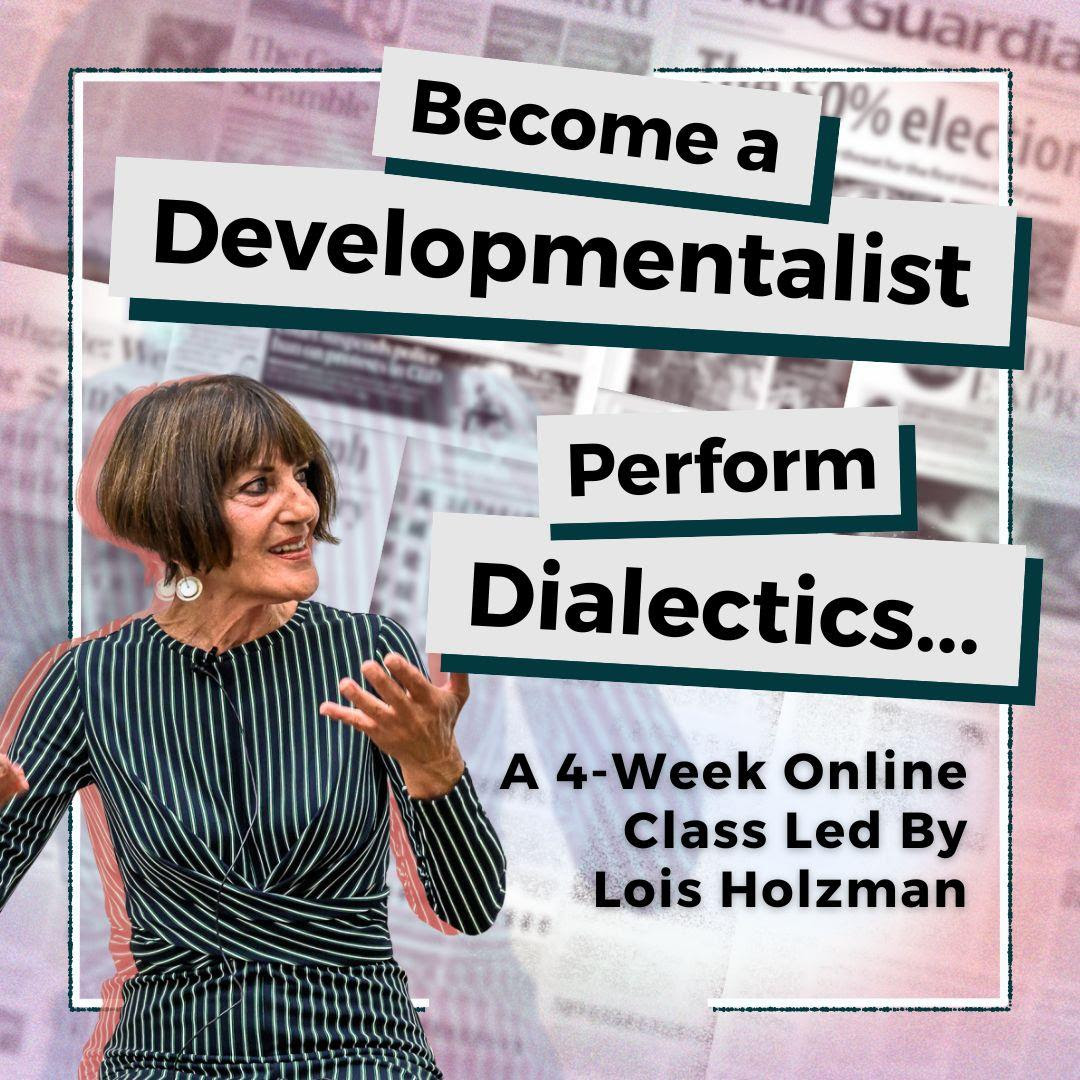
Become a Developmentalist! Perform Dialectics…
A 4-week practicum with Lois Holzman
Saturdays, Oct 26 - Nov 23, 2024
| |
Behind the dire headlines, there are people across the world – at the grassroots, in the academy, even within some large corporations – who are creating qualitatively new forms of life and social change. We saw it in the self-organized mashups on the internet during the pandemic and it continues in the many people and organizations creating conversation and community across ideological and other differences. How are they doing it? Is it magic or methodology? At the East Side Institute we think/feel it’s a bit of both… Lois Holzman has identified these four features of some of the groundbreaking creative, developmental theories and practices: 1) Engage the dualisms! 2) Embrace unknowability! 3) Stop competing and start completing! and 4) Perform dialectics! Join Lois for a four week class/practicum where we will explore, collectively practice, and expand the impact of these features in the class and in our lives. More details here.
| | | |
 | |
Collaborative Supervision and Peer Consultation
Critically reflective practices for transformative possibilities
October 19, 2024
In this interactive workshop Caroline Tremblay and Jim Duvall will invite participants to journey through the post-structuralist assumptions that inform critically reflective practices. These practices can be applied to a wide range of environments including but not limited to non-profit, social service organizations, independent practices, coaching practices, corporate environments, health care, and educational environments and will be of interest to both experienced and hardworking beginner supervisors and consultants. More details.
Novel Practices for Breaking Free from Panic and Anxiety: A Somatic meets Narrative training event
November 16, 2024
Panic and anxiety are amongst the most frequent problems that people present when seeking therapy. Their personal stories often reflect the impoverishing and debilitating effects that it has on their ability to appreciate and participate in the mundane details of everyday life. In this one-of-a-kind workshop, Jim Duvall and Bob Schwartz will present a range of valuable assumptions and practices for addressing panic and anxiety that are not normally presented together. They are all non-normative time-sensitive approaches to therapy. Jim will be focusing on brief narrative practices and Bob will be focusing on somatic approaches including energy psychology and Ericksonian hypnosis. Together they will present empowering alternative short-term approaches for overcoming panic and anxiety. More details.
| | | |
One way the Taos Institute carries out its mission to create brighter futures through social construction is by creating and disseminating a wide variety of resources for scholars, practitioners, and students interested in dialogic and relational approaches. These free resources span many disciplines and languages. To suggest a resource, email info@taosinstitute.net. | | |
|
This month's feature: Stories Lived. Stories Told. Podcast Stories Lived. Stories Told. is a podcast celebrating humanity and all our stories—the beautiful ones, the messy ones, and the ones that are a little bit of both. Through this podcast we learn to tell our own stories and listen to the stories of others, treating both with care and respect. To do this, we will be exploring the communication theory Coordinated Management of Meaning (CMM). Join Abbie Van Meter as she and her guests use the lens of CMM to better understand their social realities and work to create better ones. Learn more about the podcast here. | | |
|
The Taos Institute is a non-profit educational organization. We strive to keep our offerings free or at low cost to make social constructionist, relational, and appreciative ideas available to as many people as possible around the globe. Please consider supporting our mission of creating brighter futures through social construction by making a donation. | | | | |