Vol. 39 | January 2026, 5-minute read | | Inside the New AI Education Hub | |
As part of UT Southwestern’s Artificial Intelligence with Meaning (UTSW AIM) initiative, we have created the AI Education Hub website to support faculty, staff, and students across the medical center as they navigate the rapidly evolving role of AI in clinical research, education, and operations. The Hub will provide curated training, practical workshops, and on-demand resources focused on responsible, compliant, and effective use of the AI tools available through UTSW licenses. Additionally, an AI education manager will soon join the Office of Clinical Research to support this important initiative.
A selection of AI training resources, including on-demand Foundational Training Videos, System-Specific Training links, and AI guides, can currently be found on the UTSW AIM website. A curated Responsible Use of AI training module has been created in conjunction with the Office of Institutional Compliance and is required for all users before accessing enterprise AI tools.
We are excited about the future of the AI Education Hub and the continued expansion of these resources as we actively develop new content to meet the evolving needs of our academic community.
If you have requests for training topics, please do not hesitate to contact AI@UTSouthwestern.edu.
| From Data to Discovery: Partner with Biostatisticians to Strengthen Your Research | |
The growing demand to work with larger, more complex datasets used in modern clinical research often requires specialized expertise beyond what clinical training typically provides. At UTSW, we are fortunate to have expert biostatisticians who can assist you in creating high-impact study designs, data structures, and analyses. This summary based on the didactic sessions with Kevin Lutz, Ph.D., shares how our clinical researchers can partner with biostatistical support to substantially improve the quality of research projects and the odds of attaining successful grants and publications.
The first step toward building a partnership is knowing where to find support. Many UTSW departments and centers have a dedicated biostatistician working alongside their unit. UTSW also supports several institutional resources, including the Biostatistics and Data Science Core (BDSC); Biostatistics, Epidemiology, and Research Design (BERD); Population Research Support Services (PRSS); the Children and Adolescent Population Health Program (CAPHP); and shared resources at the Simmons Comprehensive Cancer Center.
Prior to enlisting a biostatistician's assistance, make sure to do some planning in advance. Biostatisticians are most effective when involved early, before data collection begins, so they can help refine research questions, define outcomes, and guide study design. Investigators should come prepared with clear aims, hypotheses, relevant literature, and detailed descriptions of available or planned data to build out the full picture of your research question.
Our biostatisticians recommend holding regular meetings to help maintain momentum, reduce delays, and ensure that their analytics align with your project goals. Investigators should budget appropriately for biostatistical effort because most services also require funding. PIs should allow adequate time for data cleaning and analysis and should create a plan for maintaining well-documented data. "Quick analyses" often lead to more complex questions, so accounting for appropriate time is critical to successfully completing your project.
UTSW's biostatisticians are here to contribute as scientific partners and bring years of expertise from their own independent research to support your work. By preparing thoughtfully and collaboratively, UTSW's biostatisticians can become a transformative member of your research team.
Learn more at the upcoming didactic session "Data Resources at UTSW: Utilizing Internal EMR Data and Beyond" on Jan. 28, noon-1 p.m., with Dr. Lutz and a panel of data-resource experts. Register here.
| UTSW and Parkland Health Sign Research Data Sharing Agreement |
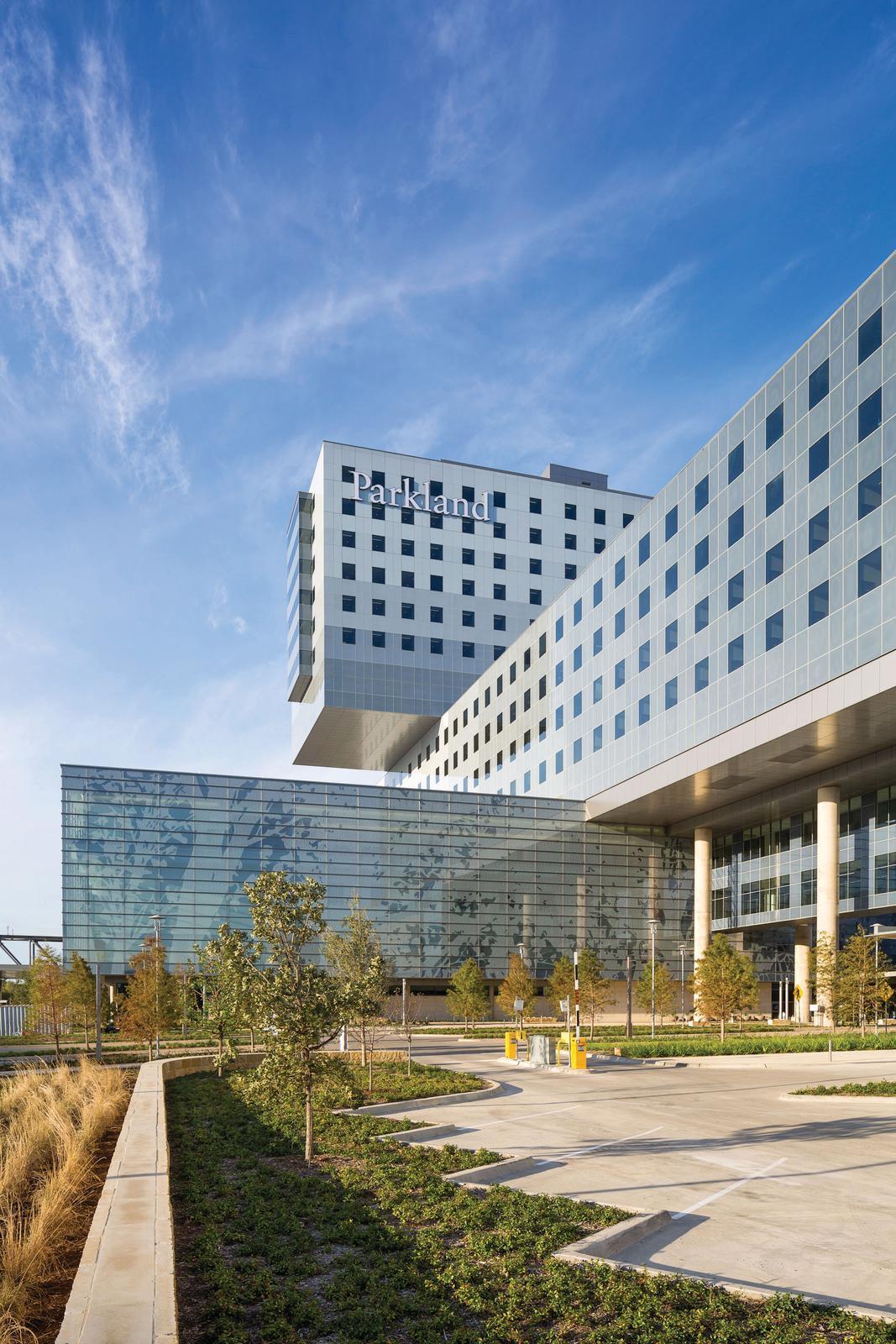
 | | We are pleased to let you know that UTSW and Parkland Health entered into a Research Data Sharing Agreement in September 2025. This new master agreement streamlines the process for UTSW researchers to obtain research data from Parkland without the need for a study-specific DUA, thus reducing administrative burdens and expediting data acquisition. For studies that require an informed consent from the participant, research data may be collected and used pursuant to the participant's signed informed consent and as approved in the protocol. For studies that use research data consisting of PHI or deidentified data sets under an IRB-approved waiver or alteration of a study subject’s authorization, UTSW researchers may obtain research data by submitting a data request and a signed Research Data Recipient Acknowledgment Form to the Parkland ORA. UTSW researchers should not disclose Parkland research data to third parties unless the disclosure is explicitly approved and documented in the protocol and the Research Data Recipient Acknowledgment Form. UTSW researchers must also follow all applicable state and federal laws governing data privacy.
If you have any questions on this topic, please contact ocr@utsouthwestern.org.
| | UTSW Teams Recognized in Prestigious International AI Competition | | The UTSW NeurIPS Cure-Bench teams: (Back row, from left) Dr. Guanghua Xiao, Ph.D., Matt Doucette, Emmanuel Ogu, Zain Hussain, James Willig, M.D. M.S.P.H.; (front row) Yang Xie, Ph.D., Wenqi Shi, Ph.D., Luyu “Amber” Xie, Ph.D., Pharm.D., Smrithi Upadhyayula. | | |
We are delighted to share that two teams of UTSW medical students were awarded the second and third place prizes in the Neural Information Processing Systems (NeurIPS) Cure-Bench competition held on Dec. 6.
Competing against more than 1,600 participants from over 300 teams from around the world, the UTSW teams achieved astounding success. One team of two medical students (Matt Doucette and Emmanuel Ogu) and three faculty members (Drs. Luyu Xie, Yang Xie, Wenqi Shi) was awarded second place for their tool-augmented and search-augmented agent framework. Their large language model effectively strengthens online knowledge and addresses hallucination challenges that arise in complex therapeutic reasoning.
A second team, consisting of resident Vivian Zhang and seven medical students (Alex Wu, Smrithi Upadhyayula, Moises Narvaez, Sharvinee Ragunatha Rao, Zain Hussain, Vishal Gokani, and Durga Kaveti), along with two faculty members (Drs. Guanghua Xiao and James Willig) secured third place for developing an innovative large language model reasoning framework. The LLM incorporates extensive medical knowledge and streamlines complex clinical reasoning tasks.
Their achievements not only elevate UTSW's reputation for excellence in AI development but also represent an important step toward addressing one of the most challenging problems in medical applications of artificial intelligence. Congratulations all!
| | |
Apply for the Dean's Scholar in Clinical Research
The UT Southwestern Dean’s Scholar in Clinical Research program provides promising early-career faculty with financial resources, career guidance, research training, and protected research time to facilitate their development as successful clinical physician scientists. The goal is to provide transitional support to allow these faculty an opportunity to launch their independent research careers.
Nominations for the spring application cycle open Feb. 1. Apply here.
| | |
Children's Clinical Research Advisory Committee Grant Funding Cycle Now Open*
Use the opportunity title links below for full details.
Applications due March 20, 2026.
Applications due May 4, 2026.
Applications due May 4, 2026.
Applications due April 1, July 1, and Oct. 1.
| |
2026/2027 Texas Health Resources Clinical Scholars Program
The Texas Health Resources (THR) Clinical Scholars Program supports the training and development of outstanding clinician-researchers at UT Southwestern. It provides up to 70% protected research time and other resources to promote career development for clinical investigators. Scholars are eligible to receive up to $750,000 for research and salary support for three years.
-
Cycle 1 applications are due May 8.
-
Cycle 2 applications are due Sept. 25.
-
Cycle 3 applications are due Jan. 30, 2027.
| | Important Dates and Upcoming Events | | |
Data Resources at UTSW: Utilizing Internal EMR Data and Beyond*
This virtual session is designed for researchers at any stage who want to make the most of internal UTSW and affiliated hospitals' data. Join online to:
- Understand the various data platforms available at UTSW and affiliated hospitals, with insights directly from experts who manage and support these systems.
- Learn how to formulate and submit effective internal data queries from experts who can clarify access processes, governance requirements, and integration between institutional data sources.
- Learn how to access and use institutional data more effectively for research, quality improvement, and operational projects, including practical tips from those who manage the systems every day.
| |
Call for Abstracts: 2026 Celebration of Women in Science & Medicine Poster Session
The Women in Science and Medicine Advisory Committee (WISMAC) invites the entire UT Southwestern community to submit abstracts for the 2026 Celebration of Women in Science & Medicine Poster Session that will be held on April 2.
We encourage scientists, clinicians and educators, including faculty, postdocs, fellows, residents, and students at UT Southwestern to submit an abstract for a poster presentation in basic science, clinical/translational, or public health/education research.
| | |
Core Showcase Series
Explore the powerful technologies shaping research at UT Southwestern. Join directors from the Macromolecular Biophysics Resource, Proteomics Core, and Cryo-Electron Microscopy Facility to see how their imaging expertise fuels innovation and collaboration across campus.
| | |
48th Annual Carrell Krusen Neuromuscular Symposium
This symposium is a clinical education experience for members of multidisciplinary teams who care for patients with rare, complex neuromuscular diseases, including hereditary muscular dystrophies, motor neuron diseases, neuroimmunologic neuropathies, and rare genetic disorders of muscle and nerve. Case presentations will include physical diagnosis and discussion of management and new therapies by participating experts. All discussions involve active participation by attendees.
| |
Apply to the Master of Science in Clinical Investigation (MSCI) Program
The O’Donnell School of Public Health offers the Master of Science in Clinical Investigation (M.S.C.I.) degree and the Certificate in Clinical Investigation to equip investigators with the knowledge, skills, and experience necessary to succeed in academic or industry careers in clinical and translational research.
| |
Obstetric Critical Care Symposium
This one-day, live symposium, designed for providers caring for critically ill obstetric patients will review, address, and update key components in the management of these patients, equipping providers (physicians, advanced practice providers, nurses, respiratory therapists, and ECMO specialists) with knowledge, confidence, and resources to improve patient care. The symposium will also foster collaborative learning and strengthen interdisciplinary partnerships to advance the quality of care for this vulnerable patient population.
| | *Sponsored by the UT Southwestern CTSA Program | | | | |