January/February 2026

Montana Beaver Working Group

Connecting people and sharing resources to advance the beaver's keystone role

in watershed health

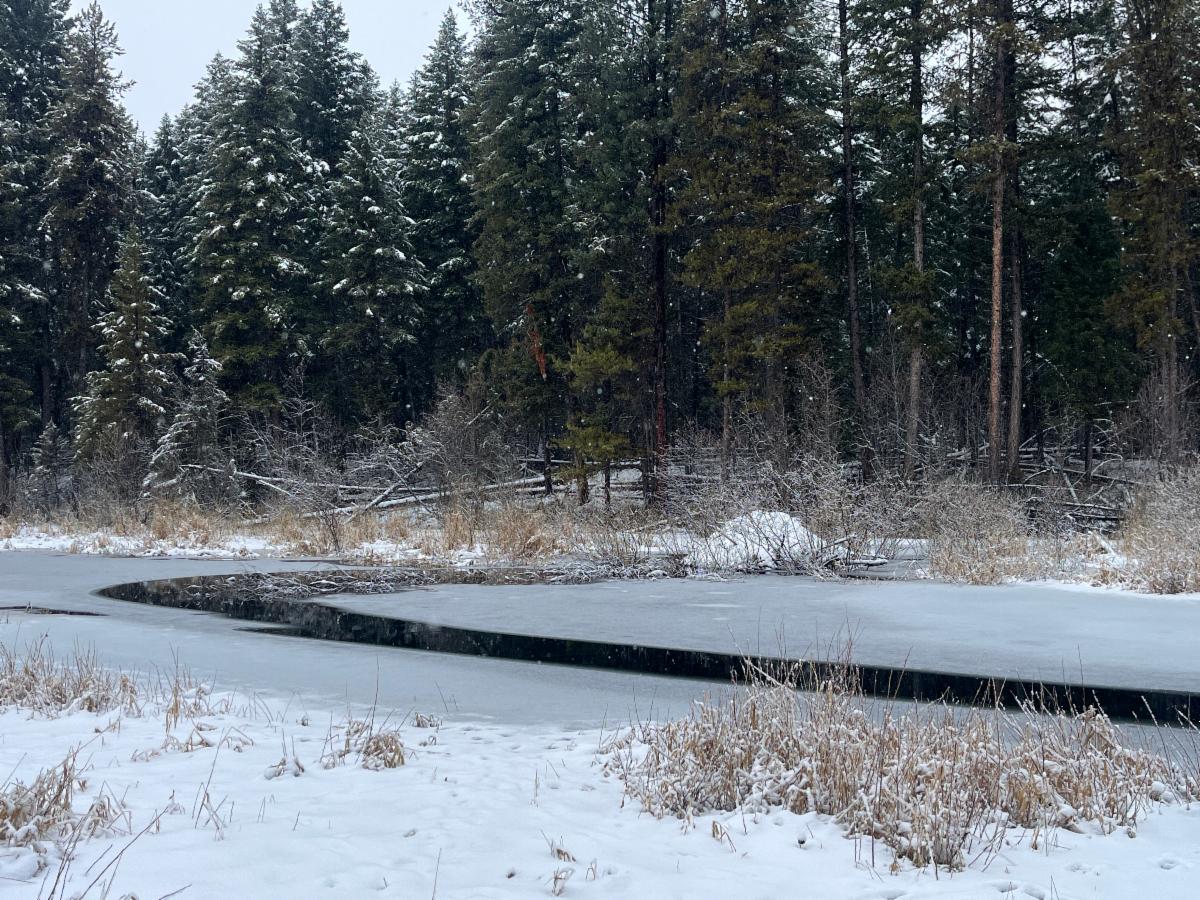
It's been an atypically warm winter in much of Montana, but these beavers are ready if we ever get deep snows and thick ice. Photo: Rob Rich

Stories and News

Photos: Rob Rich

Montana's Land Trusts: Best Friends of Beavers


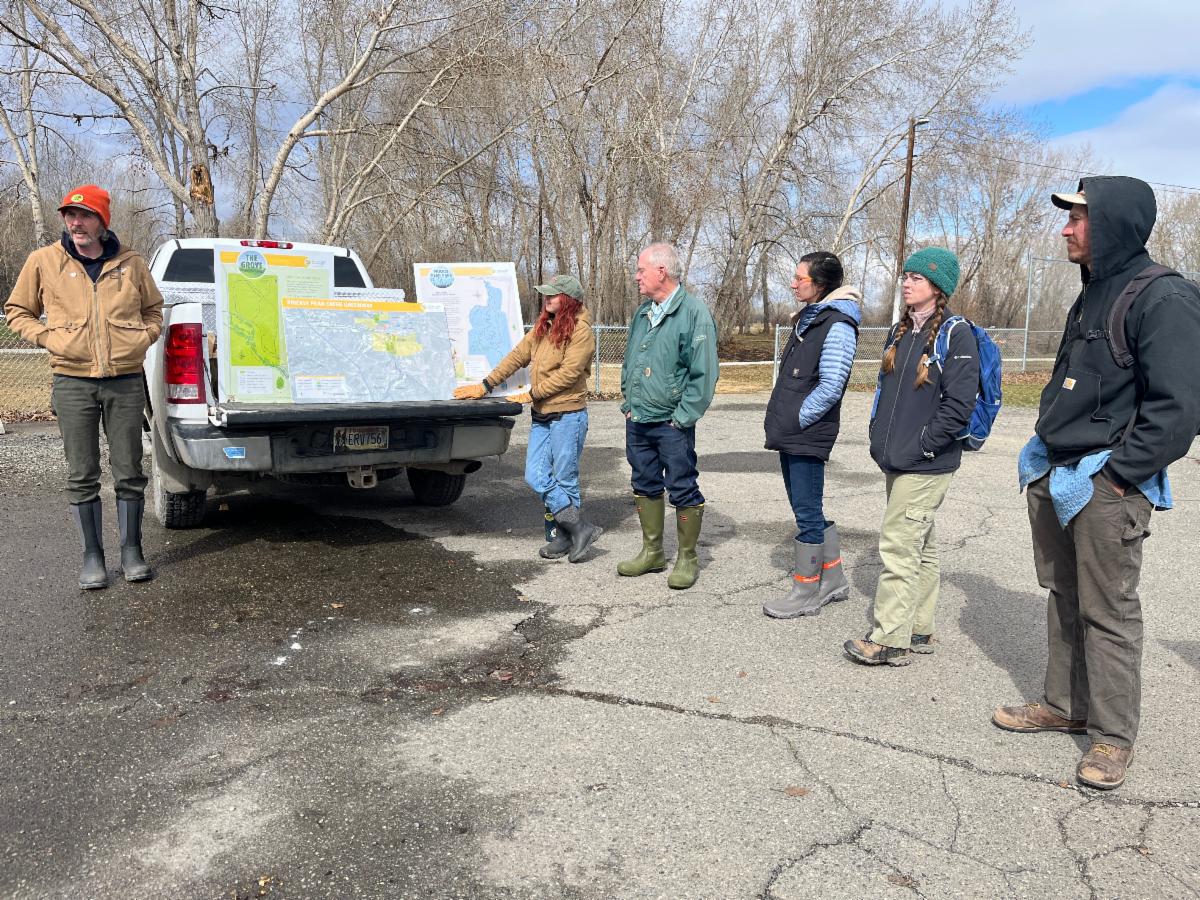
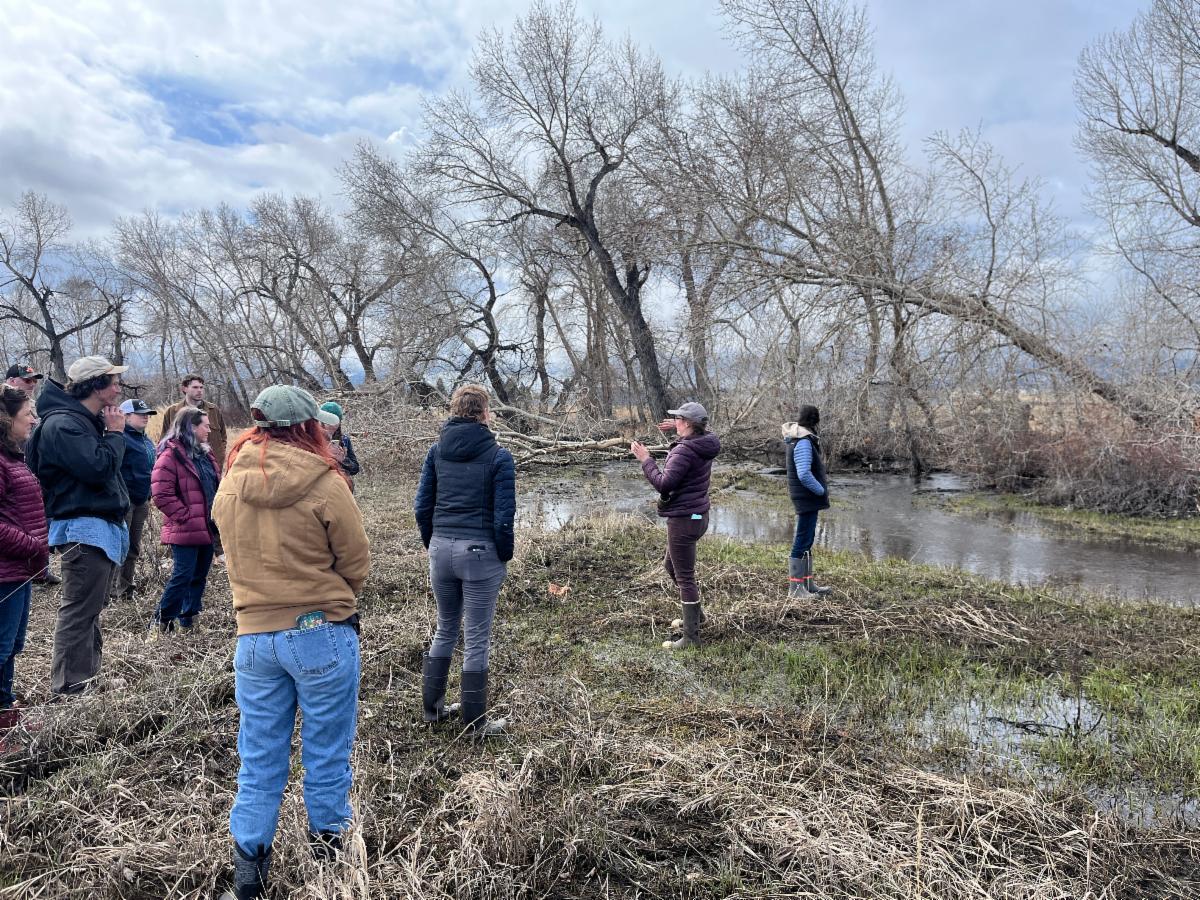
The prospect of the 2026 Annual Montana Beaver Working Group Meeting (see below) has us thinking about a wonderful field trip that capped last year's event, with the Prickly Pear Land Trust (PPLT). The outing took place at The Grove, 80 acres full of mature trees, complex creek banks, leaky floodplains, and plenty of places for people to walk, bike, fish, and view wildlife. For our crew of Muck-booted, meeting-weary beaver believers, it was beyond heartening to see how our beloved rodents were building dams, storing water, and cutting all kinds of sculptures into the cottonwoods. 


But as PPLT Parks Coordinator Lucas Orth reminded us, this wild nook of East Helena didn't have to exist. After its beavers were likely eclipsed in the Fur Trade, this site was home to a major lead smelter, processing 70,000 tons of lead bullion per year. That smelter operated for more than a century, and it gave rise to East Helena, plus lots of heavy metals to threaten the water supply. When concerns about the operation's hazards to human and ecological health grew unbearable, a sequence of federal, state, and community-based collaborations helped to remediate the toxins accrued on the land, which was ultimately transferred to PPLT in 2020 for permanent stewardship.


The Grove is just one place reminding us that land can recover from harm, and that land trusts have a crucial role in protecting places where beavers can perpetuate the healing process. As nonprofits that can own and steward land, or hold conservation easements for willing landowners, land trusts can be catalysts enabling the nature-based solutions that all species (including people) need: intact open space, clean water, habitat connectivity, functioning ecological processes, and so many more. The collaborative agreements they forge help conserve the private lands most at risk of losing wildlife habitat, biodiversity, and land-based human livelihoods, and they do this not only for communities now, but for those generations far into the future.


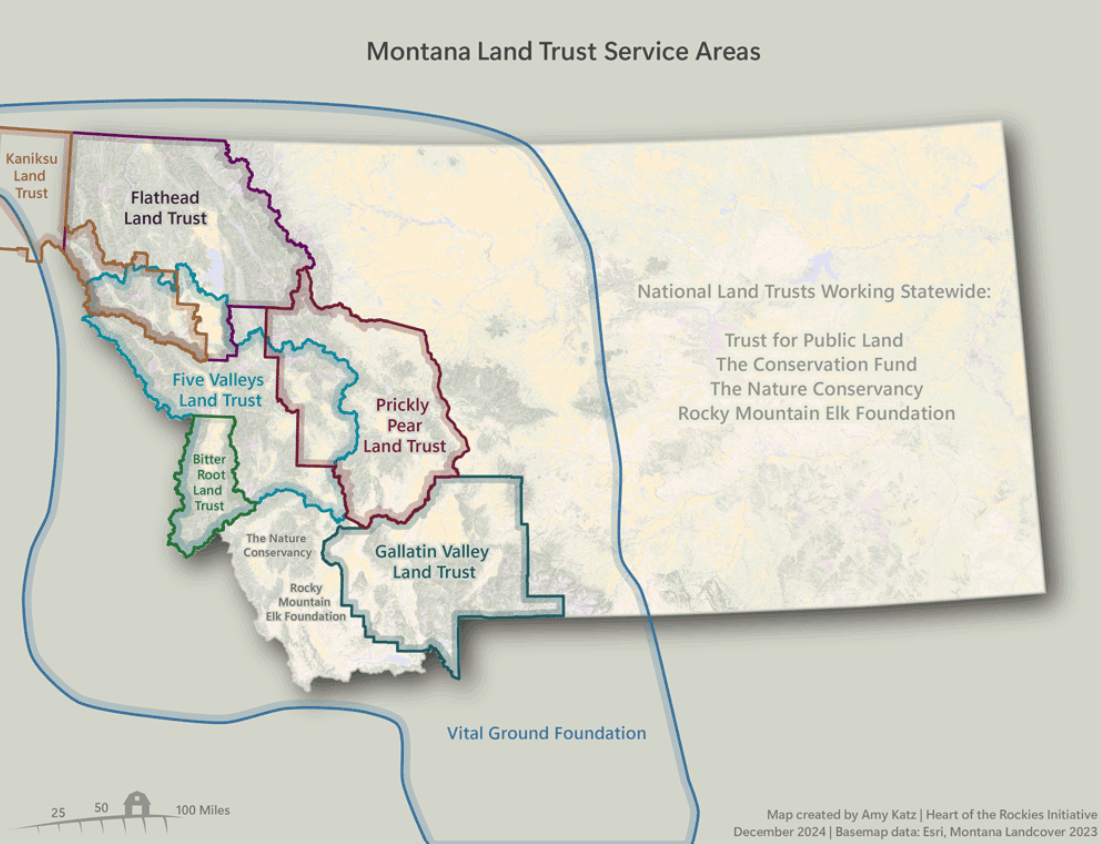
Montana is home to several land trusts: some working in specific regions, others working statewide, and many united in partnerships like the Heart of the Rockies Initiative or the Montana Association of Land Trusts. They each make unique contributions to land conservation, and they're each supporting a better legacy with beavers, too. Do you know which land trust(s) are at work near you? Do you know where their beavers are? 2026 is a great year to learn more about them, support them, and share their story. Many thanks to Montana's land trusts! 

 Image Credit: Amy Katz

Upcoming Events

Montana Beaver Working Group Annual Spring Meeting

Lewistown, MT

April 13-14, 2026


Please save the date for the annual spring meeting of the Montana Beaver Working Group! This event will be take place in Lewistown, MT on April 13-14, 2026. Please reach out to Shelby Weigand (weigands@nwf.org) if you have questions or would like to present at or help plan this event. We hope to see you there!

Resources

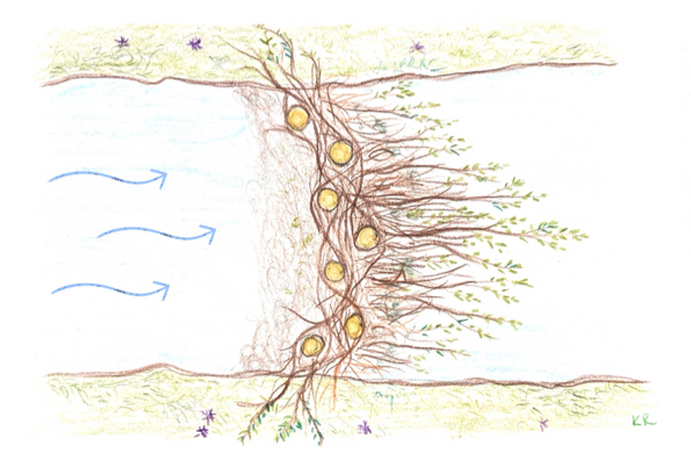
 Image Credit: Kaylee Rose

Beaver Dam Analog Quality Control Checklist

The Nature Conservancy

Heidi Anderson (content & design), Kaylee Rose (drawings)

December 2025


Did you have a sturdy base on your BDA? Does it arc in a nice u-shape? You'll never forget the core features of a good BDA with this new checklist from The Nature Conservancy. It is full of practical tips from TNC's Southwest Montana Riparian Project Manager, Heidi Anderson, and it is beautifully illustrated by TNC's 2025 Field Technician, Kaylee Rose.

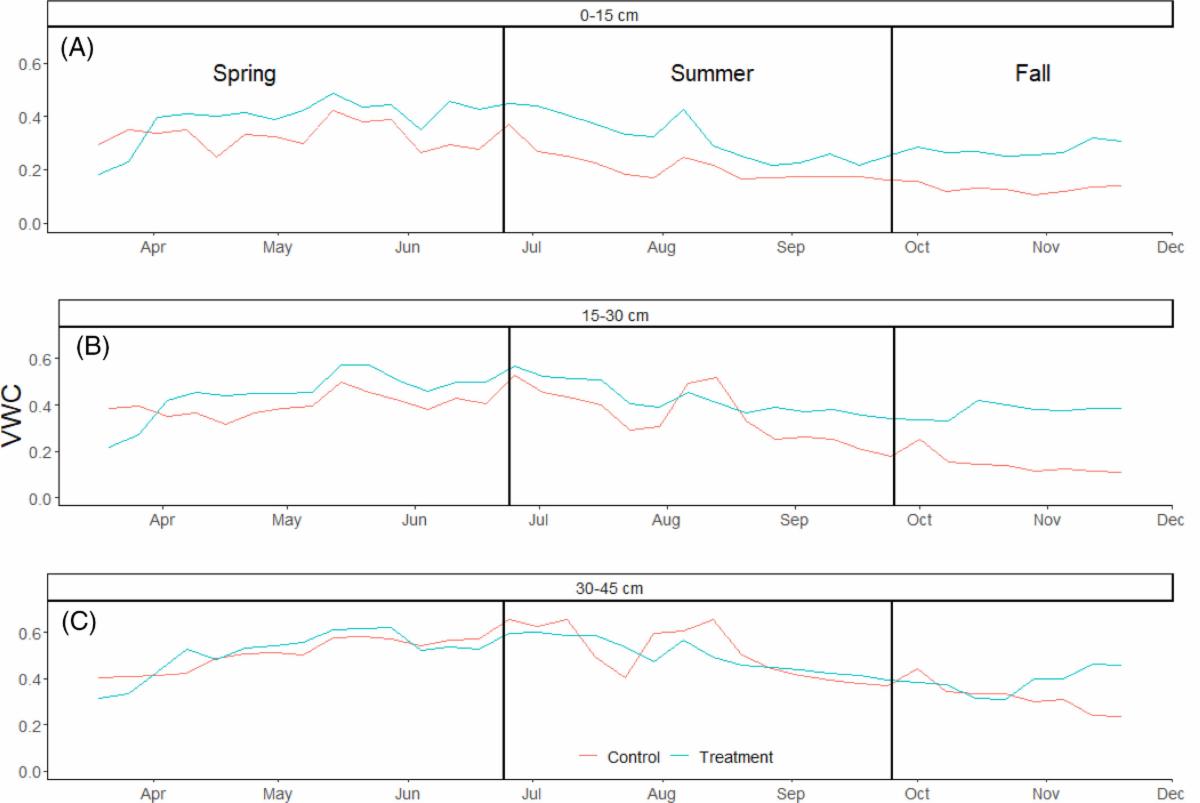
BDAs keep it blue! This figure shows the median weekly volumetric water content (VWC) of soils in stream reaches treated with beaver dam analogs (blue line) versus control (red line) reaches across four sites in western South Dakota. Panel (A) = 0–15 cm; (B) = 15–30 cm; (C) = 30–45 cm. Photo Credit: Bolyard, J.A., Brennan, J.R. and Ehlert, K.A. (2026), Effects of low-tech, process-based restoration on riparian plant communities and soil moisture of streams in the Northern Great Plains (NGP) of the United States. Restor Ecol. https://doi.org/10.1111/rec.70305

Effects of Low-tech, Process-based Restoration on Riparian Plant Communities and Soil Moisture of Streams in the Northern Great Plains (NGP) of the United States

James L. Bolyard, Jameson R. Brennan, and Krista Ehlert

Restoration Ecology

January 2026


This new research looked at the effect of beaver dam analogs (BDA) in livestock production systems of the Northern Great Plains, where limited region-specific evidence can impede the adoption of process-based restoration. Across four sites, in western South Dakota, the researchers found that BDAs can create significant short-term (<3 years) differences in riparian systems within livestock settings of the Northern Great Plains, particularly when looking at soil moisture. In addition, BDAs promote subtle, positive changes in the plant community. Check out the full study here.

Montana Beaver Working Group 2025 Virtual Annual Meeting

Zoom

December 2025


Thank you to all the partners who joined our 2025 Virtual Annual Meeting of the Montana Beaver Working Group! Your curiosities and contributions are supporting our success, and we appreciate all that you do. If you missed the event, you can catch up with the recording and presentation slides here. Thank you so much...we'll see you at the in-person meeting in April (details above)!

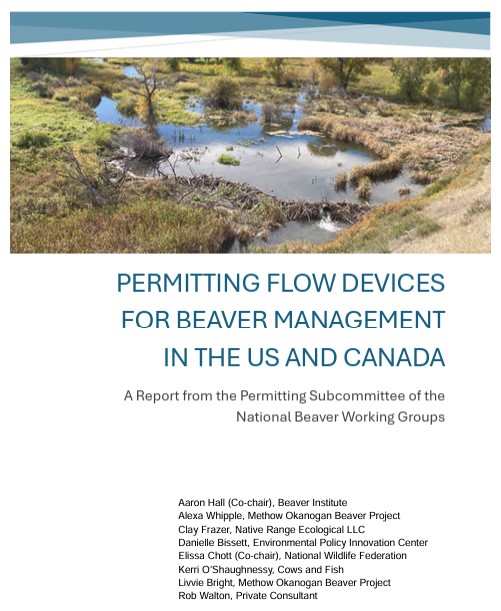
Permitting Flow Devices for Beaver Management in the United States and Canada

Permitting Subcommittee - National Beaver Working Group

December 2025


Each state and province across the beaver's range in North America has distinct answers to questions about the conservation of species and habitats. This can make it a challenge to provide the consistent, cross-boundary support that beaver conservation requires, but a wonderful new report explores the status and context for permitting issues across the continent. Check out this awesome resource here!

Opportunities

Beaver Conflict Resolution Technician

Great Falls, MT

Open Until Filled


The National Wildlife Federation is now hiring for their 2026 field season! The Beaver Conflict Resolution Technician position is part of a small but mighty team of practitioners working in Montana to build tolerance for beavers and the ecosystem services they provide on the landscape. Through resolving human-beaver conflicts (constructing mitigations projects) and hosting education/outreach events with local partners, this position will build upon the 8 prior field seasons of success in Montana.

Please send us any beaver-related jobs or funding opportunities you want to promote here!

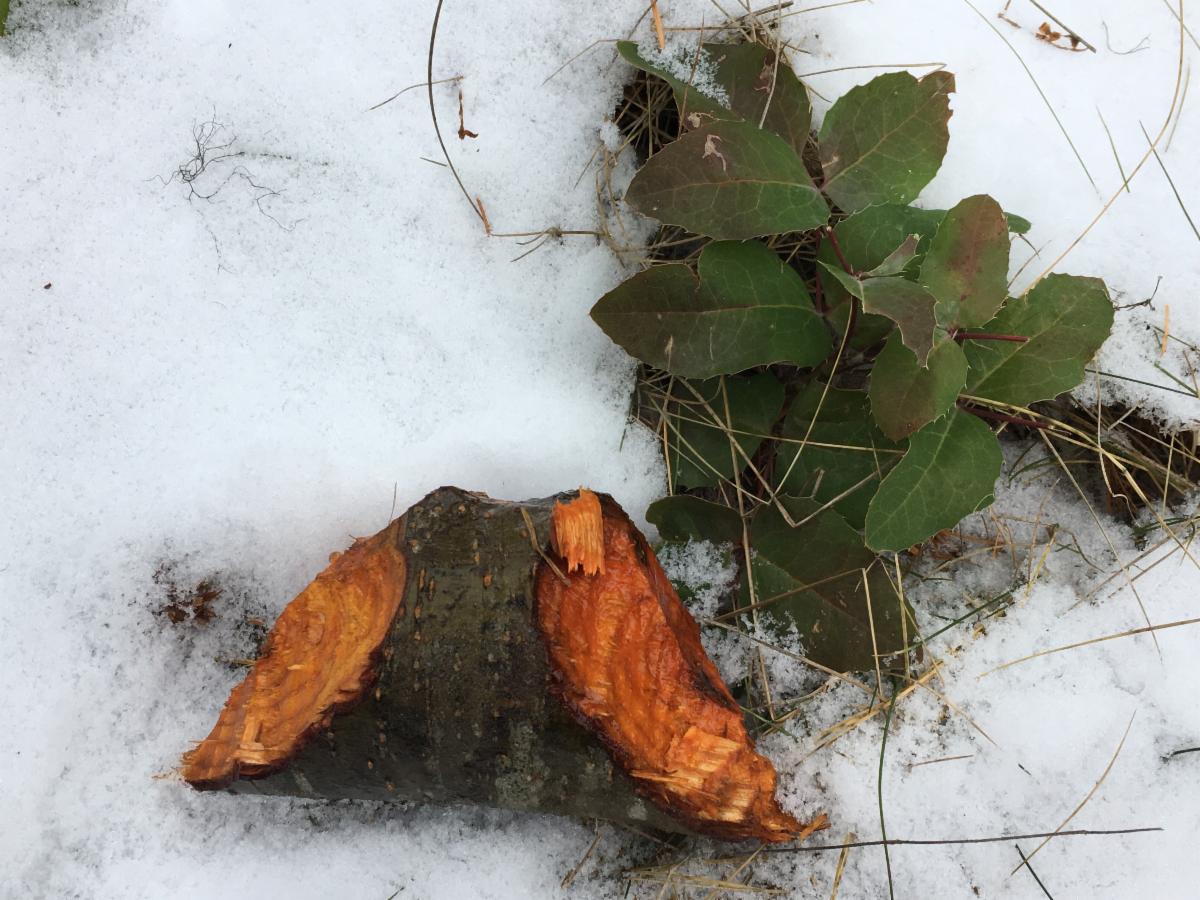
Photo Credit: Rob Rich

Please send photos, stories, upcoming events, opportunities, and other resources to:

Shelby Weigand - Riparian Connectivity Manager,

National Wildlife Federation

WeigandS@nwf.org


MT Beaver Working Group newsletters are posted online here.