|
Happy Holidays.
Can't believe we've made it through 2020. It's been such an extraordinary year with challenges and pressures and utterly unexpected events. Have we ever needed the chance to celebrate with family - carefully, socially-distanced - more than now?
The entire Daniels family wishes you the happiest, healthiest and safest December ever. We hope this month's epistle brings you a bit of joy and a smile or two. See you in January!
|
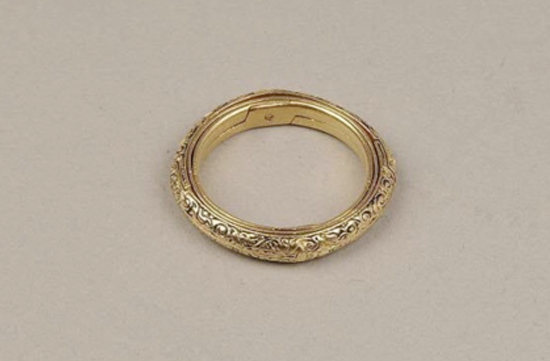
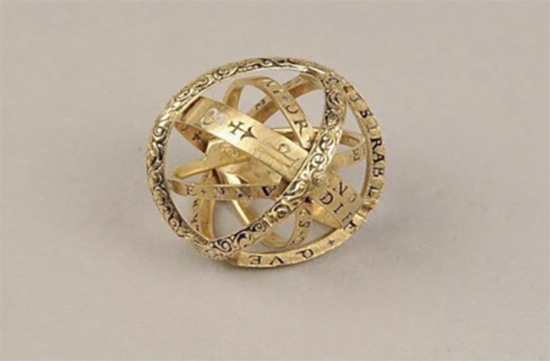
Imagine getting a ring at the holidays.
A ring that unfolds into an astronomical sphere!
This one dates to the early 16th century. We wonder, could we find one today? Jewelers of Connecticut we await your answer.
|
Of each other.
We're thinking about your elderly neighbor.
As the holidays approach and the winter sets in, be bold - knock on his or her door and simply say hello. Let them know you are there - safely distanced - but available if they need help. It will, we promise, mean a lot to them.
So would a purchase or three from your local mom and pop stores.
Sure Amazon has deals, but our local stores are the lifeblood of our communities. If we want them around after COVID, now's the time to give them a bit of support. One purchase more can keep them going through the pandemic.
Finally, a thought about you.
If you're thinking about getting away for a few weeks - or - heading south for the winter - you might want to ask a neighbor to check on your home - or have an alarm system company install a temperature sensor so if your heating system fails you don't come home to a frozen, sometimes devastated house.
You need to keep the water in radiators and baseboards warm and moving to prevent freezing and splitting causing water damage. Make sure that you set your thermostat no lower than 58 degrees.
|
A world where a baby elephant has a fluffy ostrich as a pillow is my kinda world.
|
The last nine months have been an extraordinary challenge for all of us. The COVID pandemic has shaped and changed our lives and how we live them.
We wanted to bring you up to date with what Daniels is doing to help protect our employees, install technicians, delivery drivers -
and you.
First and foremost we are following all CDC guidelines and best practices.
We are utilizing masks, shoe coverings and copious amounts of hand sanitizers whenever we visit your home. In fact, we ask, if possible, to use side entrances or basement access if appropriate to reduce personal contact.
We have also, where possible and prudent, postponed some annual tune-ups until the spring and summer when we anticipate having a healthier environment.
However, it is important to remember that if you need emergency service - or delivery - Daniels will be there this winter.
To cut down on personal contact, we have instituted some new policies to keep our office staff safe, including having some of our customer service reps working directly from home.
As a result you may find your "on-hold" time extended by a minute or two, but they are working diligently to get to everyone.
For 95 years our family has faced difficult times and challenging hardships to serve the people of Central Connecticut. We want you to know that we'll be there for you in 2021 and we thank you for "Letting Daniels Do It."
|
During the holiday season, families exchanged holiday cards and gifts arrive in packages -- did you ever take a moment to wonder how zip codes help each piece of mail get to its intended destination? The U.S. Postal Service introduced the "zone improvement plan" (ZIP) code in 1963.
The nationwide system mechanized more of the work of mail sorting, which had previously been done by hand. It was not the first digital location code used in the US: in 1944 postal inspector Robert Moon proposed adding a three-digit code to addresses.
His idea was adopted, with modifications, 20 years later after mail volumes had grown exponentially. The five-digit zip code we know today provides the region (1st number) the mail processing center (2nd and 3rd number) and the specific post office (4th and 5th numbers).
The zip code has been expanded twice. Four additional numbers indicate what side of the street, or even hallway, the destination is on. Two more numbers sequence the carrier's route to make it more efficient. Now...you know.
|
|
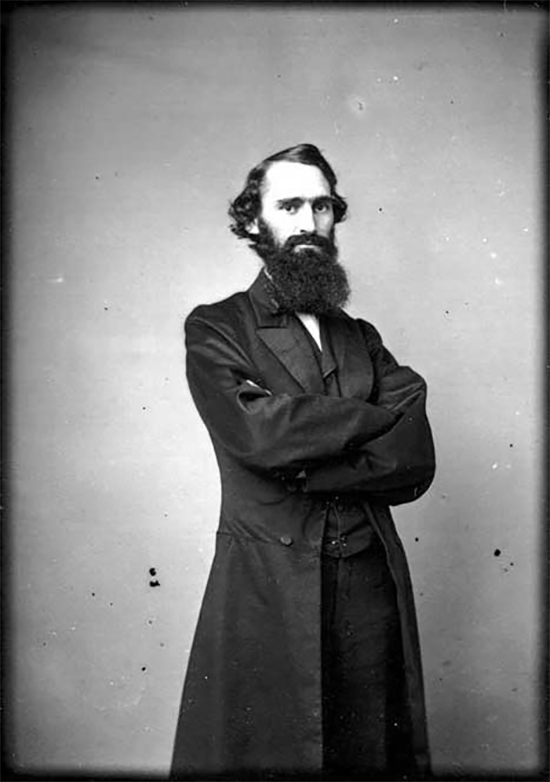
This is not Joseph Smith. There, hope that helps. Question is: Who might this be and what was/is his claim to fame? Tell us here and well, you know - it's the holidays and there will be gifts aplenty! (For at least one lucky person)
|
|
|
|
|
Off the coast of the Bahamas, a giant awaits...
At 18 feet tall, she is the size of a two-story building and weighs a hefty 60 tons. Inspired by the Greek myth of Titan Atlas, who held the heavens on his shoulders, this Bahamian girl, entitled Ocean Atlas, is depicted holding the weight of the ocean on her shoulders.
This sculpture, produced by English artist Jason deCaires Taylor, is not only an impressive piece of art. Jason created this piece with conservation methods in mind.
The sculpture is made from marine grade cement, which is pH neutral and very strong; it also doesn't require reinforcing metal, which could corrode underwater. In addition, it has a texturized surface, perfect for mimicking reef environments.
The sculpture was placed downstream from natural coral reefs, so that embryonic coral drifting through the water will reach the structure, creating an artificial reef system and encouraging colonization, as well as the added benefit of drawing tourists away from diving hotspots in over-stressed areas.
|
Three Books For The Holidays
It appears that we will be spending a bit more time semi-quarantined. So...here are suggested escapes into the pages of the written word.
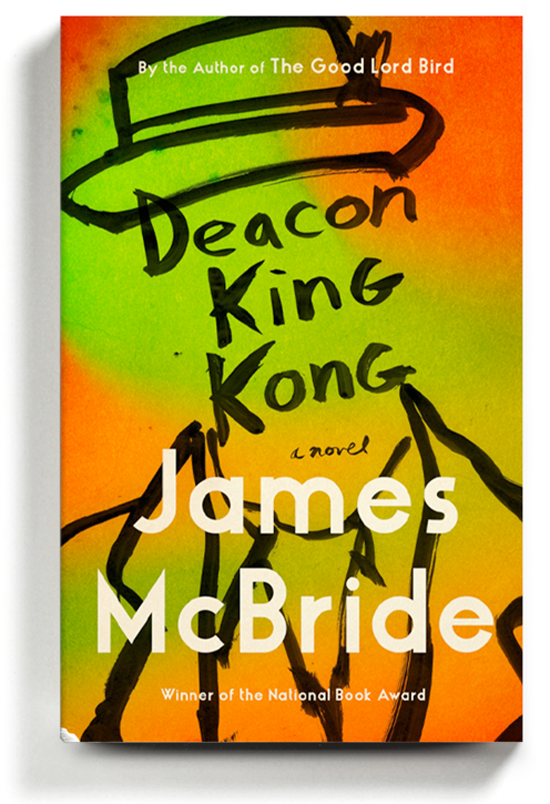
A mystery story, a crime novel, an urban farce, a sociological portrait of late-1960s Brooklyn: McBride's novel contains multitudes.
At its rollicking heart is Deacon Cuffy Lambkin, a.k.a. Sportcoat, resident of the Causeway Housing Projects, widower, churchgoer, odd-jobber, home brew-tippler and, now, after inexplicably shooting an ear clean off a local drug dealer, a wanted man.
The elastic plot expands to encompass rival drug crews, an Italian smuggler, buried treasure, church sisters and Sportcoat's long-dead wife, still nagging from beyond the grave.
McBride, the author of the National Book Award-winning novel "The Good Lord Bird" ( a great Netflix series!) and the memoir "The Color of Water," among other books, conducts his antic symphony with deep feeling, never losing sight of the suffering and inequity within the merriment.
In his latest book, the author of "Contested Will: Who Wrote Shakespeare?" and "1599: A Year in the Life of William Shakespeare" has outdone himself.
He takes two huge cultural hyper-objects - Shakespeare and America - and dissects the effects of their collision.
Each chapter centers on a year with a different thematic focus. The first chapter, "1833: Miscegenation," revolves around John Quincy Adams and his obsessive hatred of Desdemona.
The last chapter, "2017: Left | Right," where Shapiro truly soars, analyzes the notorious Central Park production of "Julius Caesar." By this point it is clear that the real subject of the book is not Shakespeare plays, but us, the U.S.
Bushes, Roosevelts, Kennedys, Clintons: Where would any of them be without John Quincy Adams?
That the son of a president could assume the presidency, as John Quincy did was hardly self-evident in a nation that had only recently freed itself from monarchy. The election of John Quincy Adams proved that political dynasty was actually possible in the United States.
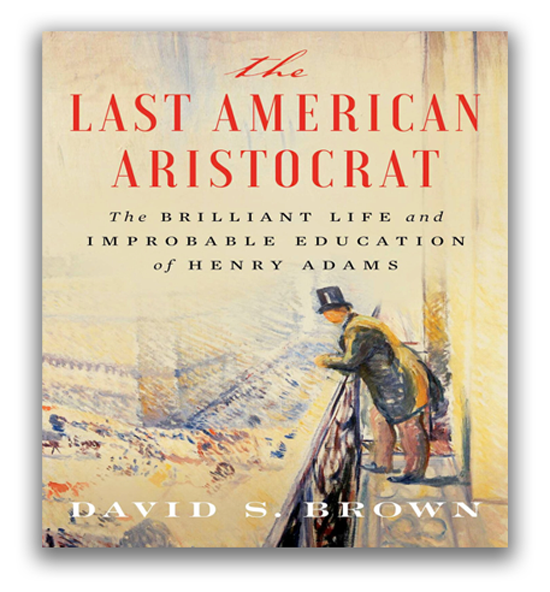
When 12-year-old Henry Adams first visited the White House in 1850, he felt as if he "owned" it. This wasn't only because he had known his recently deceased president grandfather, or because the family gardener joked that young Henry expected to become president.
It was also because his father, Charles Francis Adams, was the vice-presidential candidate on the Free Soil ticket in 1848. Henry had every reason to believe that his father would soon become the third Adams president, and he the fourth.
What he became instead was one of the great intellectuals of the Gilded Age, lauded for his elegant works of history, trenchant political critiques and essays bristling with aesthetic sophistication, none of which made him happy.
"The Last American Aristocrat," a marvelous new biography by David S. Brown, reveals how dynastic burden shaped the personality and career of the brilliant, bitter and thoroughly unlikable man who brought the prominence of the Adams family, and expectations for the endurance of political legacies, to an ignominious end.
In the process it provides a compelling account of America's transformation in the space of one man's lifetime, from a Republic where the Adams name meant everything, to an industrialized behemoth that had left him behind.
|
Tradition!
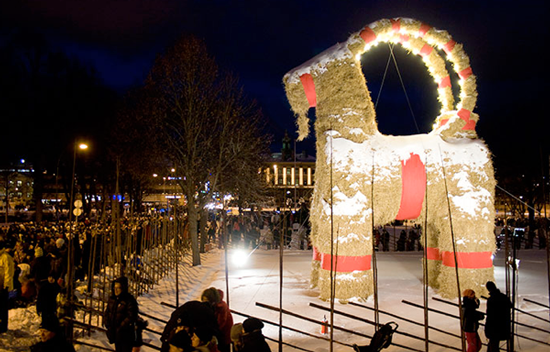
Aside from being a great song from "Fiddler on the Roof" it is what keeps us together as a society. Gathering for the Thanksgiving. Opening Day. Visiting Santa. Hiding the Matzo. Burning down the Yule Goat. What?
Here are four traditions you may not be familiar with. Then again, with our readership, we wouldn't be surprised if half of you have put a match to a Yule Goat!
Sweden
Since 1966, a 43 ft. tall Yule Goat has been built in the center of Gävle's Castle Square for the Advent. But this Swedish Christmas tradition has unwittingly led to another "tradition" of sorts - people trying to burn it down.
Since 1966 the Goat has been successfully burned down 29 times - the most recent destruction was in 2016. Go figure.
If you want to see how the Goat fares this year when it goes up on December 1st, you can follow its progress on the Visit Gävle website through a live video stream.
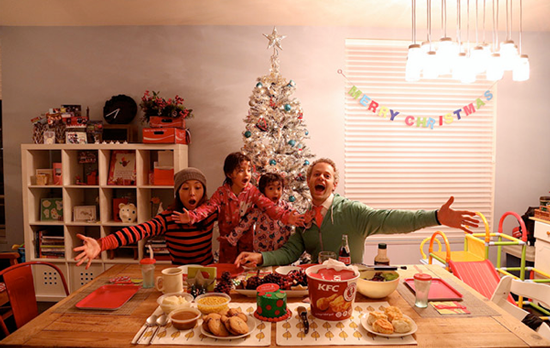
Japan
Christmas has never been a big deal in Japan. Aside from a few small, secular traditions such as gift-giving and light displays, Christmas remains largely a novelty in the country.
However, a new, quirky "tradition" has emerged in recent years - a Christmas Day feast of the Colonel's very own delicious Kentucky Fried Chicken.
The festive menu will soon be advertised on the KFC Japan website and, even if you don't understand Japanese, the pictures sure will look delicious with everything from a Christmas-themed standard bucket to a premium roast-bird feast.
Again, go figure.
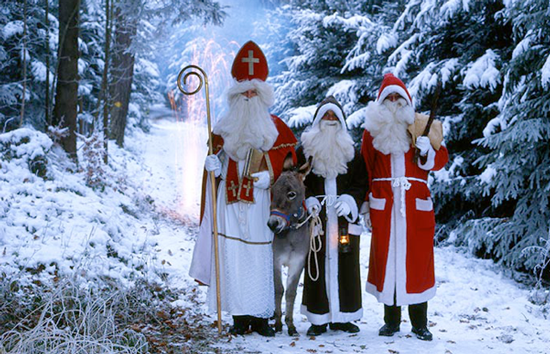
Germany
Not to be confused with Weihnachtsmann (Father Christmas), Nikolaus travels by donkey in the middle of the night on December 6 (Nikolaus Tag) and leaves little treats like coins, chocolate, oranges and toys in the shoes of good children all over Germany, and particularly in the Bavarian region.
St. Nicholas also visits children in schools or at home and in exchange for sweets or a small present each child must recite a poem, sing a song or draw a picture. In short, he's a great guy.
But it isn't always fun and games. St. Nick often brings along Knecht Ruprecht (Farmhand Rupert). A devil-like character dressed in dark clothes covered with bells and a dirty beard, Knecht Ruprecht carries a stick or a small whip in hand to punish any children who misbehave. And...go...figure.
Perhaps one of the most unorthodox Christmas Eve traditions can be found in Norway, where people hide their brooms.
It's a tradition that dates back centuries to when people believed that witches and evil spirits came out on Christmas Eve looking for brooms to ride on.
To this day, many people still hide their brooms in the safest place in the house to stop them from being stolen. And you thought your family was a bit...weird.
|
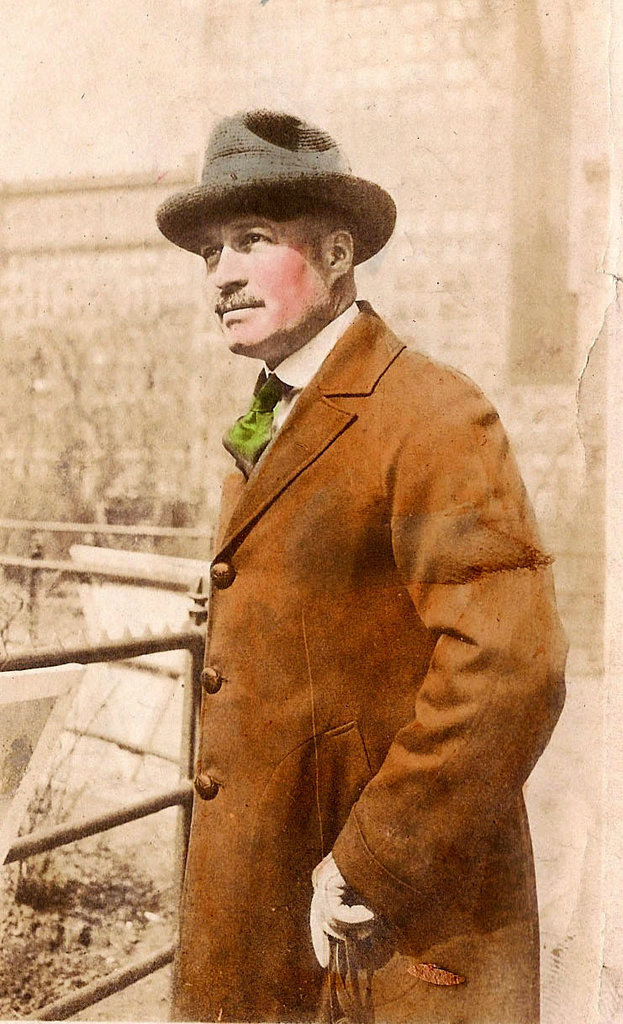
Introducing John Duval Gluck.
Santa, in a great coat. But also, a con man!
Gluck was an American philanthropist and customs broker, best known for popularizing the practice of sending and answering letters to Santa Claus in New York City.
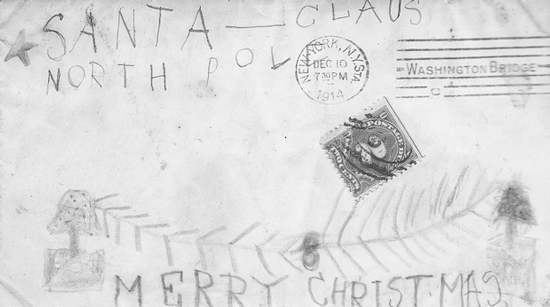
Gluck's organization, the Santa Claus Association, would receive letters addressed to Santa Claus from impoverished children, investigate them to ensure that they were truly needy, and if approved would send gifts to those children.
The Santa Claus Association was founded in December 1913. Prior to 1911, the Post Office destroyed letters sent addressed to Santa Claus. In 1911, the local postmaster began giving the letters to charity groups in the area instead.
In New York City, there was no charity groups willing to participate in this program. Gluck contacted Edward M. Morgan, then the Postmaster of New York City, with a proposal to set up a not-for-profit organization which would receive, verify, and respond to Christmas letters sent by needy children in New York.
Gluck, who was born on Christmas Day was seen as a natural choice for the role.
The Santa Claus Association essentially served as a middleman between the donors and children. Volunteers would spend their time reading and organizing letters while donors (often wealthy businesspersons or other members of the social elite) would fund the gift-giving operations.
The organization quickly grew large, receiving thousands of dollars in donations while collaborating with major politicians like Governor Al Smith and President Warren Harding as well as celebrities like Mary Pickford and Douglas Fairbanks.
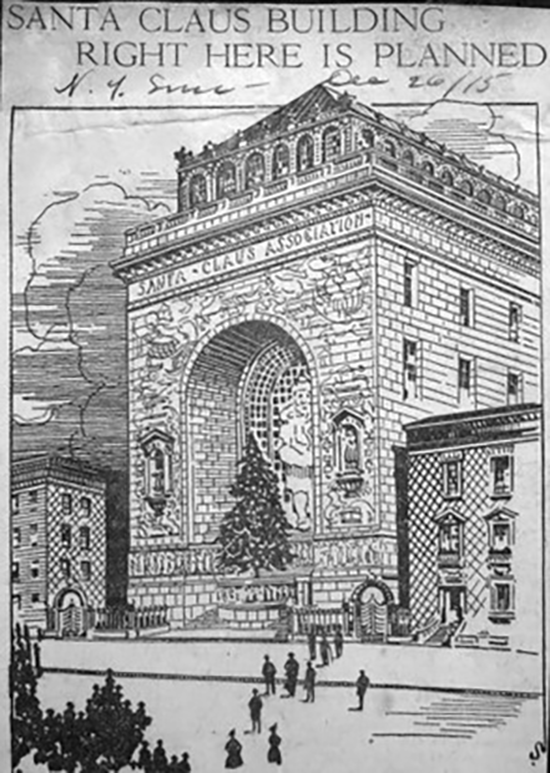
In 1915 three years after the Association started operating, Gluck announced a plan to build a massive structure called the Santa Claus building on a 100-foot wide plot in the middle of New York CIty. Gluck aggressively fundraised to raise the $300,000 needed to build the project, but no work was ever done.
The Santa Claus Association became embroiled in controversy as a result of dubious fundraising and accounting practices. Bird S. Coler, the commissioner for public welfare in New York City, investigated the organization and uncovered tens of thousands of dollars in unaccounted-for-funds as well as a lack of institutional oversight over Gluck's use of donor's funds. Coler's audit revealed that almost all of the money raised for the Santa Claus Building had been embezzled by Gluck himself. Gluck was never charged with a crime for his activities with the Santa Claus Association. After the collapse of the Association, he and his wife moved to Miami where he became a real estate agent.
|
|
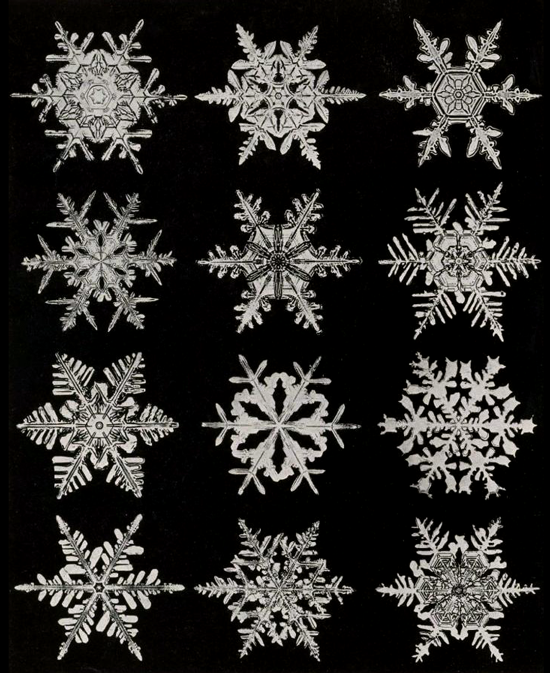
That's MISTER Snowflake to You...
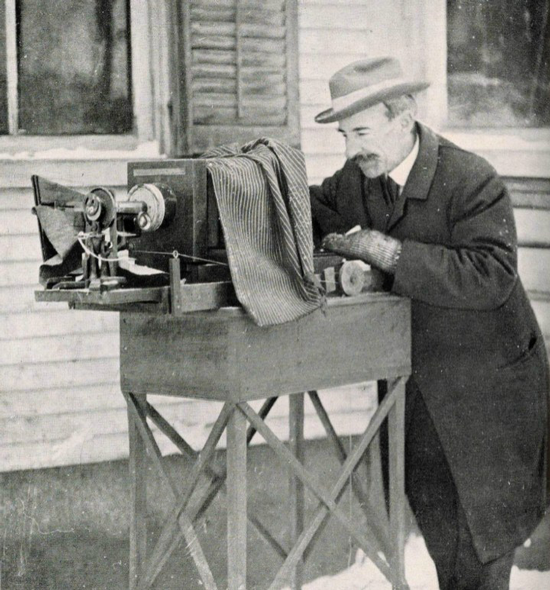
When Wilson Bentley died in 1931, his hometown newspaper eulogized him thus: "Longfellow said that genius is infinite painstaking. John Ruskin declared that genius is only a superior power of seeing. Wilson Bentley was a living example of this type of genius." A fine accolade for a photographer.
Born in Vermont to a family prosperous enough to gift him a microscope at his 15th birthday, Bentley, for the next half a century, would go on to perfect a process of photographing snowflakes on black velvet before they melted away.
As a young boy, Bentley would hand-draw pictures of snow crystals, and in his lifetime, Wilson made over 5,000 photographic negatives of dew frost, snowflakes, raindrops, clouds and fog.
He wrote the entry on 'snow' in Encyclopedia Britannica.
Although he was dismissed initially as an uneducated country bumpkin by the scientific community of the day towards the end of his life, his work was embraced and Bentley embarked on lecture tours across the United States.
His book, Snow Crystals, illustrated with 2,500 photographs is still the definitive volume on the subject manner, and he sold many slides to colleges and universities.
Bentley even sold 200 of his negatives to Tiffany's in New York City, which used the snow crystal patterns in its jewelry designs.
Bentley was also an early proponent of the theory that no two snowflakes were exactly alike, and his method to photograph snowflakes is still followed today, despite advancements in photography.
|
December Surprise Link
People are Amazing
|
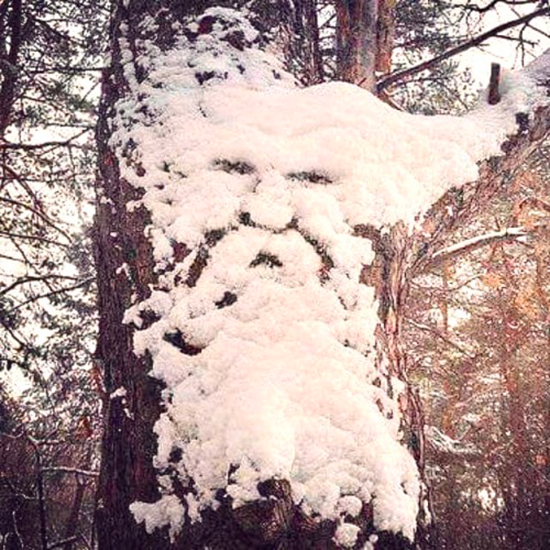
Santa's All Around Us
If We Just Look Up
Or Wait...Is That Old Man Winter?
|
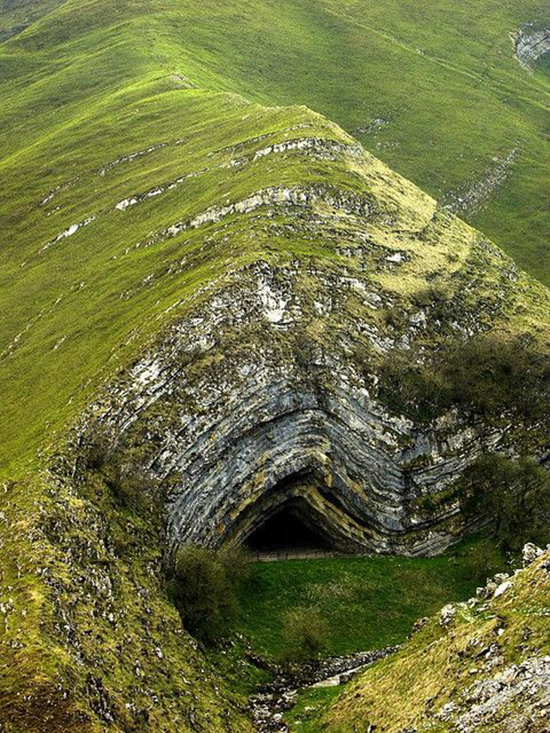
Quiz #2 Where The Heck Are We?
Simply because we are in the holiday spirit we will give you a choice - tell us where either one of these places might be located and you will INSTANTLY be entered into the huge drawing to select a $25 Visa gift card winner. Choose wisely and have fun. (Hint - neither of these places is in Connecticut!)
Victor H did last month when he identified Plymouth - the Capitol of Monstserrat - and - the Bungle Bungles in Australia!
Harry C was one of 55 folks who solved our math quiz. The correct answer was 41312432 or its reverse - 23421314!
We must say that there were some perfectly wonderful thoughts shared with us on "getting dressed up" and many of you seem ready to ditch the pandemic as soon as possible and get back to dancing with your favorite partners.
|
|
|
|
Jusssssst....a bit of help.
Look at how pristine that lawn looks. Yet, underneath there is a 1-2000 gallon propane tank. In the summer it's easy to find the fill pipe. However... in the winter, with snow and ice covering that lawn, well it can be more than a challenge.
It can be impossible.
So... would you please place an identifying stake in the ground near the fill so that our drivers can easily find it on the day that is sure to be the biggest blizzard on record!
|
|
Daniels Energy, 8 High Street, Portland CT 06480
Daniels Energy: CT License S1-385517 HOD#19 /
Daniels Propane. LLC: #846 CT License S1-302857
|
|
|
|
|
|