|
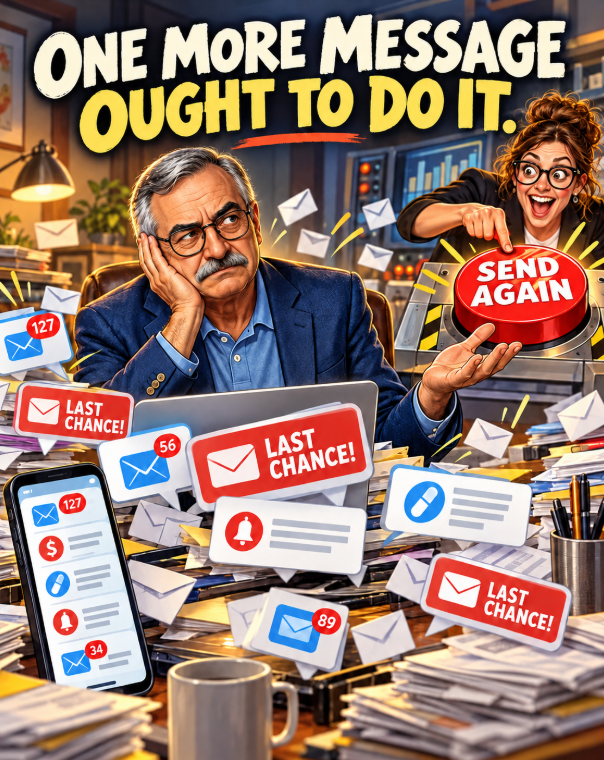
Which raises an interesting question: How many businesses are losing customers, subscribers, donors, voters, and supporters not because they communicate too little, but because they communicate too much?
I suspect the number is larger than most marketers would like to admit.
Now, before someone points out the obvious, yes, I send this newsletter by email every day. There is some delicious irony in a daily email publisher complaining about frequency.
But there is a crucial difference: You signed up for a daily newsletter. Daily is the product, not an ambush. You know what is coming, why it is coming, and how often.
The same cannot be said for a medical supplier that decides on its own that I need a text every day, or for politicians whose mailing lists seem to reproduce faster than rabbits.
Frequency is not the villain. Frequency without permission, relevance, or reasonable control is.
There is a lesson here for publishers, politicians, advertisers, medical suppliers, and anyone else with access to an email address or telephone number:
More communication is not necessarily better communication.
Frequency can build familiarity, but it can also breed contempt. The difference is timing, restraint, respect, and whether the recipient actually asked to hear from you.
The goal of communication is not simply to reach people.
The goal is to be welcomed when you arrive.
If your only choices are to bombard people or lose contact with them completely, do not be surprised when they choose silence.
The unsubscribe button is not a relationship strategy.
It is the exit door.
And once people walk through it, getting them back is a whole lot harder than simply shutting up a little sooner.
|