Follow Us On

Facebook  X  Linkedin  YouTube


IN MEMORIAM


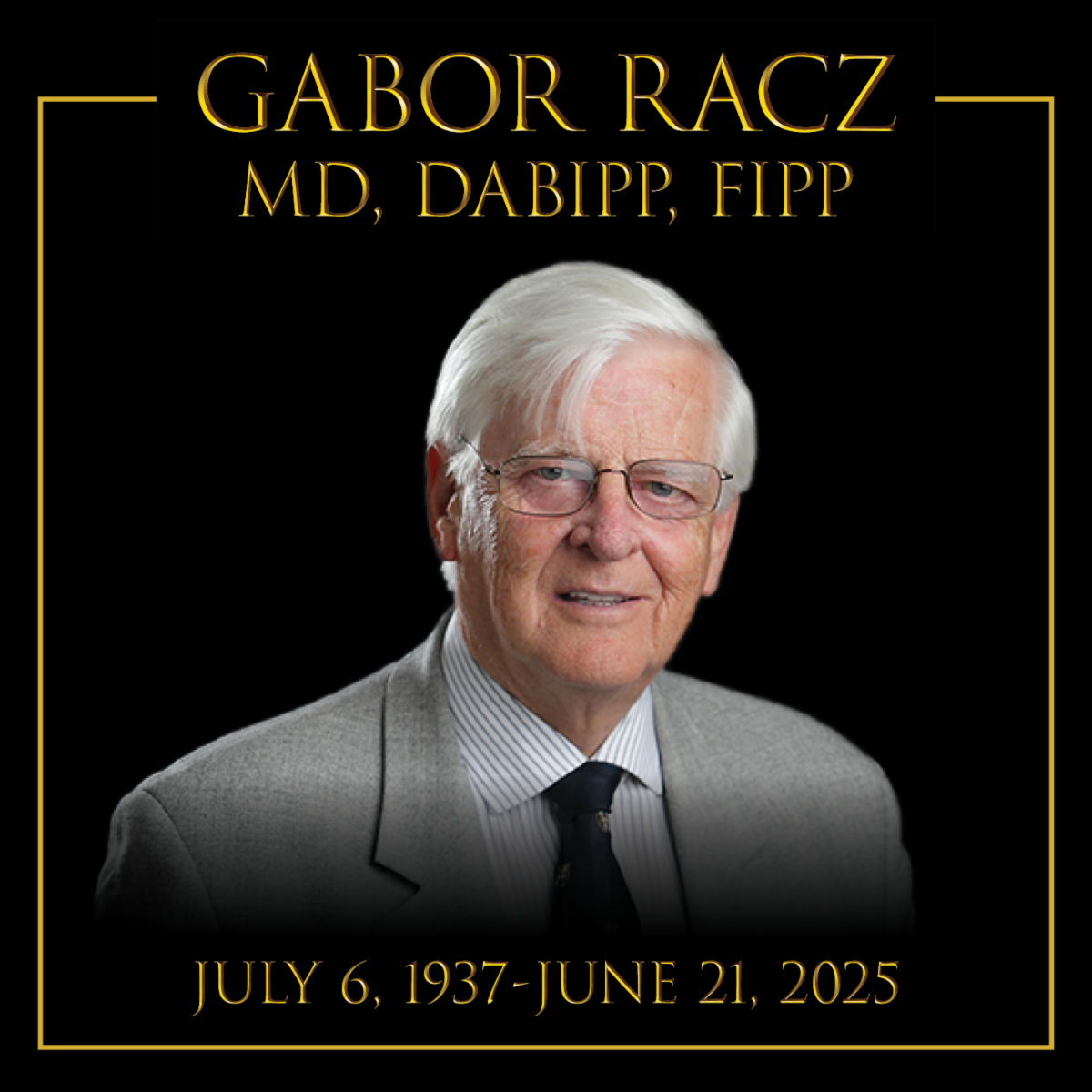
It is with profound sadness and a deep sense of loss that we share the passing of our beloved teacher, mentor, friend, and colleague, Gabor Bela Racz, MD, who passed away peacefully in his sleep in the early hours of June 21, 2025. Widely recognized as a Giant in pain management worldwide and awarded by the American Society of Interventional Pain Physicians (ASIPP) with this award, Dr. Racz’s contributions shaped the very foundation of our field.


Though he earned global acclaim, many of us remember him best as the long-serving Professor and Chair of Anesthesiology in Lubbock, Texas, where he trained hundreds of fellows and countless other physicians. He was an innovator at heart, pushing the boundaries of interventional pain medicine with vision and precision. I recall, even as early as 1982 when I began my anesthesiology practice, Dr. Racz had already pioneered the use of a spring, shear-resistant catheter to perform epidural injections in patients with epidural fibrosis—an innovation inspired by the kinking of an intravenous catheter in a pregnant patient. This eventually became the percutaneous epidural neuroplasty, known worldwide as the “Racz Procedure”, now performed hundreds of thousands of times across the globe.


His pioneering work extended beyond catheters and techniques. He applied this same catheter for intrathecal phenol injections for cancer pain and later combined it with hypertonic saline for adhesiolysis, further refining and standardizing these procedures.


Dr. Racz’s educational impact was equally far-reaching. Together with Dr. Prithvi Raj, he co-founded the World Institute of Pain (WIP), and the Annual Gabor Racz Pain Conference in Budapest stands as a testament to his enduring legacy.


He consistently emphasized that every procedure must be SAFE (safe, appropriate, fiscally responsible, and effective), he advanced multiple interventional techniques for both cancer and non-cancer pain, including early work in neuromodulation. Despite his towering influence across continents, it is humbling to remember that he began his life in Budapest (born 1937), fleeing Hungary during the 1956 Revolution with his beloved wife Enid, and later making the United States his home. He raised a loving family and found joy in the company of his children and grandchildren.


On a personal note, I first met Dr. Racz during a breakfast meeting—an encounter that led me to begin performing adhesiolysis. When I once faced a complication with a retained catheter, he personally guided me through the resolution. He had a gift for recognizing and encouraging original thinkers, and I was honored to receive the Trailblazer Award from him through WIP. I cherish the photographs from his visit to Paducah, KY, where he and Enid spent time with us, along with Drs. Prithvi and Susan Raj. These moments and memories hang proudly in my home and office.


Dr. Racz will be remembered not only for his unparalleled contributions to pain medicine but also for his compassion, mentorship, and enduring humanity. His absence leaves a void that will not be easily filled—but his legacy will live on through every life he touched and every procedure he refined.


While we miss him sorely, this is the time we can memorialize him. If you are interested in writing about him, please submit the manuscripts to Pain Physician. You will be waived the submitting fee.


Limits are as follows:

Abstract: Up to 250 words

Text: Maximum of 3,000 words

You can use pictures, references, etc. which are outside the limits.


Laxmaiah Manchikanti, MD

Chairman of the Board and Chief Executive Officer, ASIPP

Read More

REGISTER TODAY!


Managing Weight in Older Adults Isn’t About Weight at All


While weight loss is often the goal of weight management, weight management in older adults should go beyond weight loss to focus on functional health outcomes, comorbidity improvements, and harm reduction. 


Weight management in older adults requires greater mindfulness and clinical nuance than in younger populations, owing to the increased risk of potential harm. Aging is commonly accompanied by a rise in medical complexity — older adults are more likely to live with multiple chronic conditions and to take several medications, which adds important layers of consideration when pursuing weight loss interventions.


Over 50% of older adults have three or more chronic diseases. These overlapping conditions demand coordinated, multidisciplinary care. Within this context, clinicians must consider how meaningful weight loss might improve obesity-related complications, while also weighing the potential for unintended consequences that can arise from rapid or unmonitored changes in health status.


Read more

JOIN or RENEW your ASIPP Membership for the best registration rates.

Peer-to-Peer Prior Authorization: Is Physician Participation Ethical?

They can be seen as barriers to care or stewards of limited resources


Over the past few months, Austin-based breast reconstruction surgeon Elisabeth Potter, MD, has become notable for her social media videos giving insight into the real-world interactions of physicians with health insurance companies. Potter has highlighted the prior authorization process and even posted a video of her phone call with a fellow physician serving as a peer-to-peer (P2P) reviewer for a large insurance company. The P2P reviewing physician states two things on this call that stand out: (1) they are not a breast reconstruction surgeon (and therefore not intimately familiar with the nerve-sparing mastectomy at question that was meant to preserve sensation), and (2) they are bound by company policy to not reveal their name (ostensibly for security reasons).


There are reasonable economic arguments for some level of prior authorization being a mechanism for reducing low-value care and therefore ensuring healthcare dollars are spent prudently. However, this phone call -- and many other documented instances of the challenges physicians face in overcoming prior authorization burdens -- raises important questions: is it ethical for physicians to actively participate in denials of medical care? Or could an argument instead be made that they have a moral imperative to do so?


The American Medical Association (AMA)'s Principles of Medical Ethics explicitly state, "A physician shall support access to medical care for all people." This presumably means that the ethical physician has a responsibility to ensure that any care in a patient's best interest that can be provided, is provided. These AMA principles suggest that physicians shouldn't act as P2P reviewers. In another framework, Tom Beauchamp, PhD, and James Childress's, PhD, famous 1979 Four Principles (of bioethics) reason that the ethical physician has respect for patient autonomy, is non-maleficent in their care, treats patients in a beneficial manner, and acts in a manner rooted in justice. Two of these principles are perhaps the most salient here. First, non-maleficence implies not engaging in activities that harm patients -- to most, denying care falls in that bucket. And second, beneficence implies only acting in the patient's best interest. These principles thus signify that physicians engaging in prior authorization denials are not acting in accord with bioethical principles.


Read More

Our Sponsor

Short on Specifics, Insurers’ New Prior Authorization Pledge Draws Skepticism


As US health insurers promote a new joint plan to overhaul prior authorization (PA) as a major advance, clinician and patient advocates say insurers have provided few specifics about what will change and how they’ll be held accountable.


For example, the voluntary plan unveiled on Monday promises that insurers will reduce the PA burden on providers and patients, but no numbers are provided. And insurers only pledged to “work” toward overhauling the electronic PA system with a goal of implementation by 2027.


“There are some incremental things that go above and beyond what they’re required to do, but there are few concrete commitments,” California-based consultant and former healthcare executive Seth Glickman, MD, MBA, told Medscape Medical News. “There’s not a lot here to ensure their actions are going to match their words.”


Read More


New Dates Just Announced

Mark your calendars!


July 26, August 30,

September 27, October 25,

November 15, & December 13


  • ABIPP Part I

Four (4) hour virtual exam


  • ABIPP Path – Combined CCPM/ CSM Exam

For those with subspecialty in Pain Medicine

Two (2) hour virtual exam


  • ABIPP Competency Exam in IPM

For those without primary board certification

Two (2) hour virtual exam


  • ABIPP Competency Exam in Regenerative Medicine

Two (2) hour virtual exam


  • Controlled Substance Management Competency Exam

Two (2) hour virtual exam


  • Documentation, Coding, Compliance, Practice Management Competency Exam

Two (2) hour virtual exam

Exam Dates


Analyzing the Sacred Moments That Heal the Healers


Angela Hiefner, PhD, behavioral health specialist, was feeling especially exhausted when she was tapped by a primary care physician to evaluate a patient for behavioral health services.


“She shared about being evicted from her apartment, worrying about her son, and feeling fearful about the current immigration political climate,” Hiefner, the director of behavioral health in the Department of Family and Community Medicine at UT Southwestern Medical Center in Dallas, said. “We talked about how difficult these things have been for her and her family and were able to get her connected with one of the primary care clinic’s mental health clinicians.” 


The interaction helped Hiefner slow down and reconnect with her purpose of work, she said.


Read More


We're excited to let you know that the new ASIPP Community, hosted by DocMatter, is now live!


The ASIPP Community on DocMatter will serve as a place for members to collaborate around clinical and research topics to advance the care of their interventional pain patients.


Click here to be a part of the conversation!

- ASIPP Members Only Site Information -
  1. To log in for the first time you will need to click “forgot password” at the bottom of the login window.
  2. Check your email and then log in as directed.
  3. If you have problems logging into your account, click here.

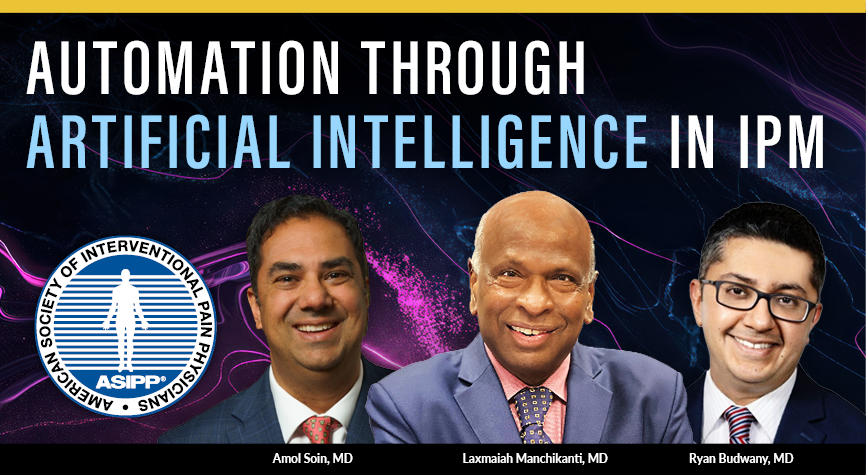
Did you miss ASIPP's AI webinar?


You can watch it for FREE on ASIPP's YouTube channel!


Click here to watch it now!

Pain Medicine Case Reports (PMCR) and Editor-in-Chief Alaa Abd-Elsayed, MD, PhD would like to invite you to submit case reports and case series to the PMCR journal. Your article will be published free of charge.


Open access journals are freely available online for immediate worldwide open access to the full text of published articles. There is no subscription fee for open access journals. Open access journals are no different from traditional subscription-based journals: they undergo the same peer review and quality control as any other scholarly journal.


Interested in becoming a member of the PMCR Editorial Board?

Editorial board members are asked to review 2-6 manuscripts per year. Please submit your most up-to-date CV to sgold@asipp.org for consideration.


For more information or to submit your articles, click here.

We are excited to announce that Pain Medicine Case Reports (PMCR) journal (eISSN 2768-5152) has been accepted for inclusion in MEDLINE and PubMed, the prestigious bibliographic database of the U.S. National Library of Medicine. PMCR, a companion publication to the prestigious Pain Physician journal by ASIPP, joins its counterpart in achieving indexing in both MEDLINE and PubMed, marking ASIPP’s dual presence in these renowned databases.


The inclusion of PMCR journal in MEDLINE signifies a higher level of selectivity, as MEDLINE consists of the top 5,200 biomedical journals. This indexing also means that articles from PMCR will be searchable using NLM Medical Subject Headings (MeSH terms) and other metadata.


The selection for MEDLINE follows a rigorous evaluation process by reviewers from the Literature Selection Technical Review Committee (LSTRC). According to their criteria, the scientific quality of a journal’s content is the primary factor considered for indexing.


We extend our congratulations to the Pain Medicine Case Reports Editor-in-Chief, Deputy Editor-in-Chief, Journal Team, and Editorial Board for this achievement, which underscores the significance and excellence of this esteemed journal.


CASE REPORTS

Subarachnoid Hemorrhage Following Cervical Medial Branch Radiofrequency Ablation: A Case Report

Joel Peltonen, MD, and Timothy Bolton, MD


Analgesic and Curative Effects of 35kDa Hyaluronan Fragment on Zoster-Associated Pain: A Case Report of Two Patients


Fenghe Xu, MD, Dylan Treger, MD, Xiaoxiao Jia, MSc, Mizhou Hui, MD, and Zhaohui Ma, PhD


RANDOMIZED CLINICAL TRIAL

Safety and Efficacy of Platelet-Rich Plasma versus Genicular Nerve Radiofrequency Ablation in Knee Osteoarthritis: An Open-Label, Prospective, Randomized, Clinical Trial


Shahzad Anwar, MD, Swarnima Vardhan, MD, Abhinav Aggarwal, MD, Sulayman Waquar, PhD, Madhurima Vardhan, PhD, Gull A. Rukh Shoukat, MS, Sudhir A. Diwan, MD, and Annu Navani, MD


OBSERVATIONAL STUDIES

Comparison of Radiation Exposure Between Trident and Conventional Cannula in Genicular RF Procedures Under Fluoroscopy for Gonarthrosis

Ahmet Yilmaz, MD

The Efficacy and Safety of Applying the Combination of Pulsed Radiofrequency and Platelet-Rich Plasma to the Gasserian Ganglion for the Treatment of Idiopathic Trigeminal Neuralgia: A Protocol for a Multi-Center, Prospective, Open-Label, Propensity Score Match Cohort Study


Tong Ren, MD, Lingjie Xia, MD, Yongjun Zheng, MD, Yixuan Yang, MD, Nan Ji, MD, and Fang Luo, MD


ASIPP is now in collaboration with Curi Medical Liability Program


Since this malpractice insurance program officially launched in November 2018, ASIPP has signed up hundreds of providers with an average savings of 30%. This is professional liability insurance tailored to our specialty and will stand up for us and defend our practices. 


Curi is a full-service advisory firm that serves physicians and their practices. Their valued advice is grounded in your priorities and elevated in your outcomes. They are driven by a deep understanding of your specific circumstances in medicine, business, and life. To read a few important points to keep in mind about the program, including discounts, administrative defense, cyber coverage, aggressive claims handling, and complimentary risk management CME activities, visit our website.


IMPORTANT UPDATE

SPRINT no longer misclassified as PNT 


SPR is happy to announce an important update regarding Humana Medicare Advantage. As of May 1, Humana is now recognizing SPRINT as a PNS therapy. Previously, SPRINT was categorized as PNT (Percutaneous Nerve Stimulation), which allowed denials on the grounds that the therapy fell outside the NCD.


Additional details are as follows:

Payer: Humana Medicare Advantage (click here to view policy)

Policy Title: Peripheral Nerve Stimulators

Policy changes: SPRINT no longer misclassified as PNT and is now appropriately classified as PNS. Humana is applying the Noridian Medicare LCD criteria to ALL PNS devices – Including SPRINT PNS!

Effective Date: 5/1/2025


Click here to view a PDF of the official policy update.


Group Purchasing Organization Offer Better Pricing and Creates Added Value


ASIPP has formed a partnership with Henry Schein and PedsPal, a national GPO that has a successful history of negotiating better prices on medical supplies and creating value-added services for independent physicians. Working with MedAssets, PedsPal provides excellent pricing on products like contrast media that alleviate some of the financial pressures you experience today.


Learn More


For updated information concerning tariffs on products, click here.


ASIPP, Fedora Healthcare Solutions Partnership


ASIPP offers our members the benefit of a unique revenue cycle management/ billing service.


We have received a tremendous amount of interest in the ASIPP billing and coding program.


Click here to learn more about the negotiated rate for practices and more!

Like and follow ASIPP® on Facebook, X, LinkedIn, and YouTube for the most up-to-date news related to you, your practice, and your patients!