Documenting Maryland’s biodiversity for science, conservation, and education. | ||
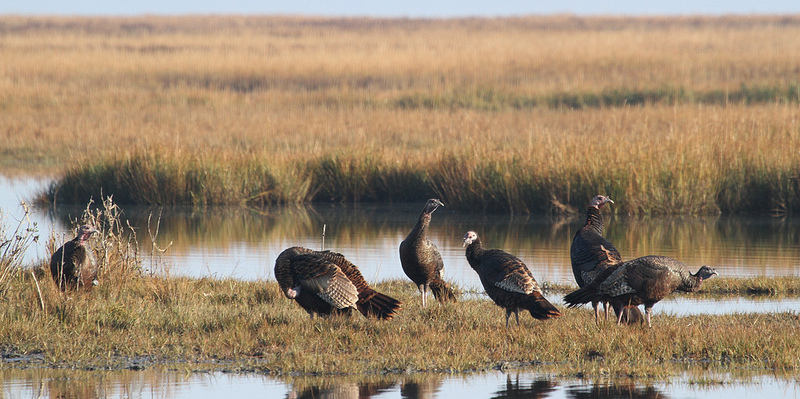
Wild Turkeys foraging out in the saltmarsh on Assateague Island, Maryland (11/10/2012). | ||
The Biome — November 2026 | ||
|
Hope you're all having a great November. It's been an exciting month for MBP with major events like the Waterfowl Festival and Jim's presentation at Entomology 2026, the 74th annual meeting of the Entomological Society of America (ESA) in Columbus, Ohio. We added powerful new MBP features like spectrograms and upgraded the maps on our species pages. And amazingly, we're already about to wrap up the Turkey Point and Dans Rock Bird Counts. We hope you enjoy this newsletter, which is pretty loaded with information. On behalf of the whole MBP team, we wish you a happy Thanksgiving and a lovely start to the winter holiday season! -- Bill | ||
See the Sounds of Maryland | ||
|
You can now see as well as hear sounds on MBP! Our new spectrogram feature dynamically generates a visual representation of an audio recording, showing how its frequencies change over time. Time runs from left to right, and frequency runs from low to high. The patterns give you another way to explore a sound alongside listening to it, whether you’re following a bird’s calls or investigating a less familiar animal voice. 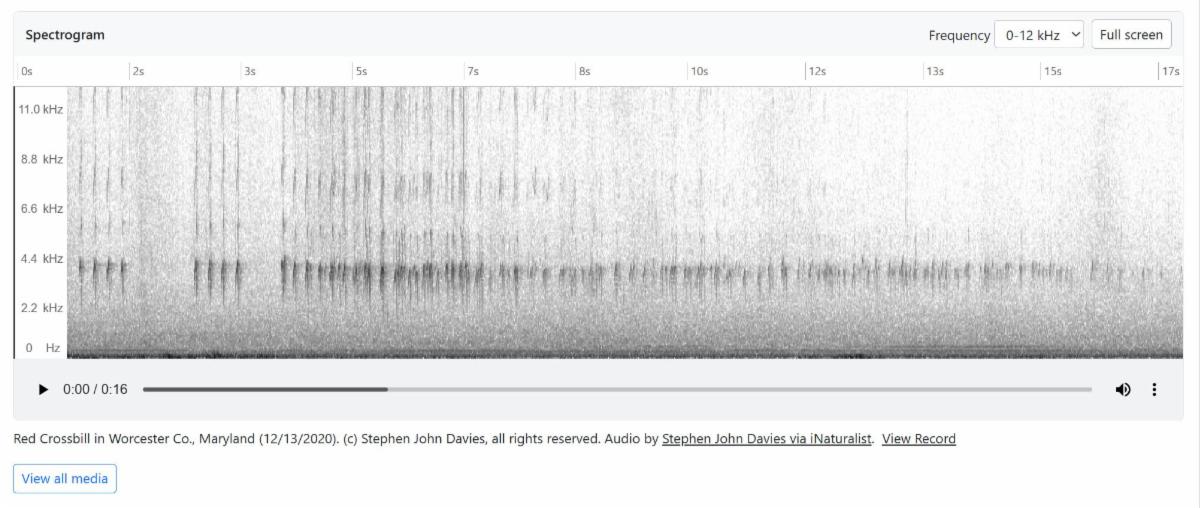
The new spectrogram display for a Red Crossbill recording from Worcester County, December 13, 2020. Audio by Stephen John Davies via iNaturalist. Explore the sounds on our Red Crossbill, Patent Leather Beetle, and Woodchuck (aka “Whistle Pig”) pages. Open a page and look for the audio player to listen and explore the spectrogram. | ||
October Highlights from the Morning Flight Counts | ||
|
By Jim Brighton October is always an exciting month for the Maryland Biodiversity Project’s Morning Flight Counts at Dans Rock and Turkey Point. By this time, many of our breeding birds have migrated south to their wintering grounds, while winter residents are starting to trickle in. At Turkey Point, waterfowl numbers surged in October, with migrating dabblers and diving ducks being counted. Other waterbirds, including Double-crested Cormorants and Laughing Gulls, also put up strong numbers. October is a big month for Blue Jays, and Lucas and crew counted more than 11,000 over the month. Perhaps the biggest surprise was the large movement of Pine Siskins: 2,097 were counted at Turkey Point in October! 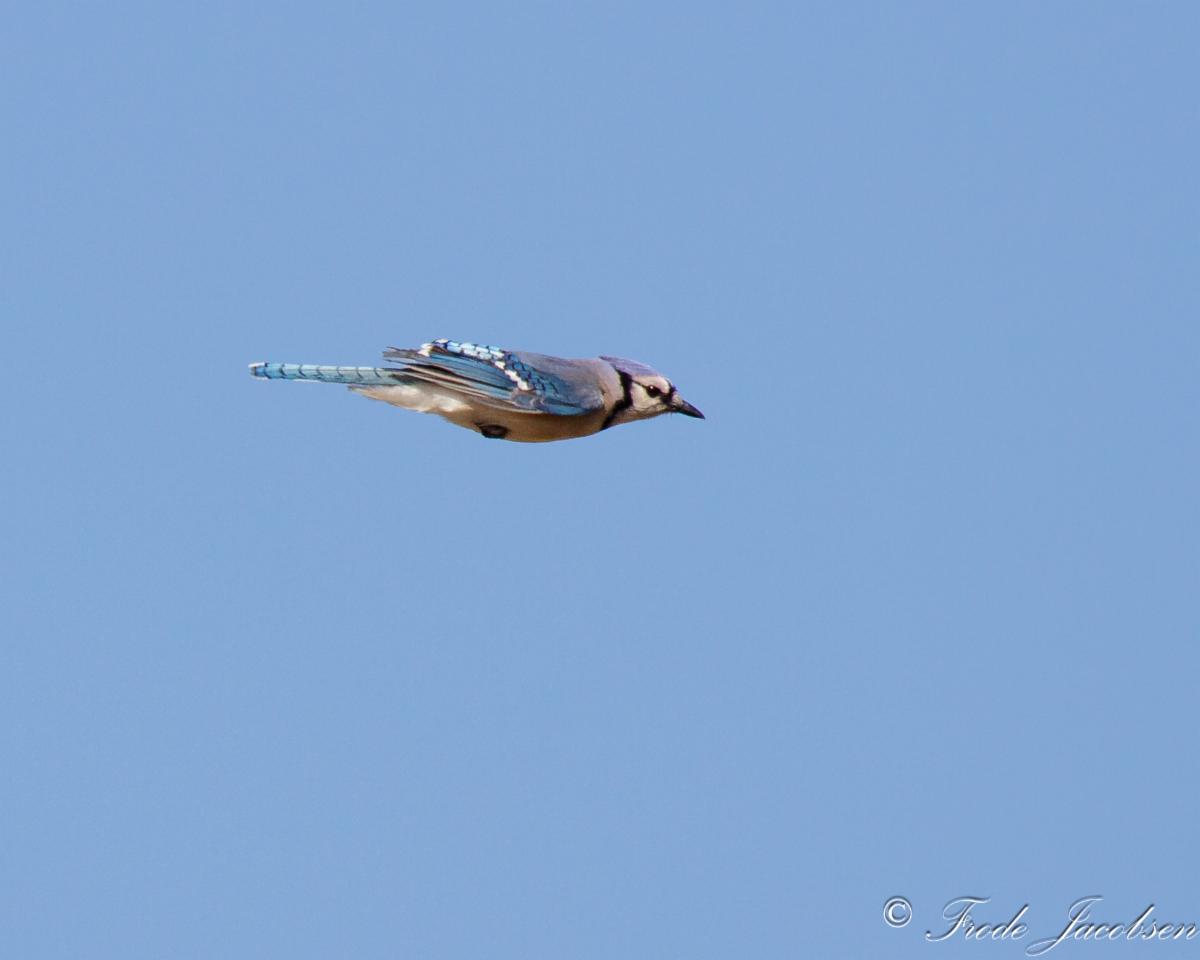 Blue Jay in flight. Photo by Frode Jacobsen. Dans Rock also had a spectacular October. Ben and crew tallied impressive numbers of migrating passerines. While the Rock is best known for the large numbers of Cape May Warblers that pass through in September, October still brings a good movement of this species, with more than 130 counted during the first two weeks of the month. Tennessee and Blackpoll Warbler numbers were also strong. American Robins were particularly abundant, with more than 6,100 birds counted throughout October. Pine Siskins made another impressive showing at Dans Rock, with nearly 700 birds tallied. 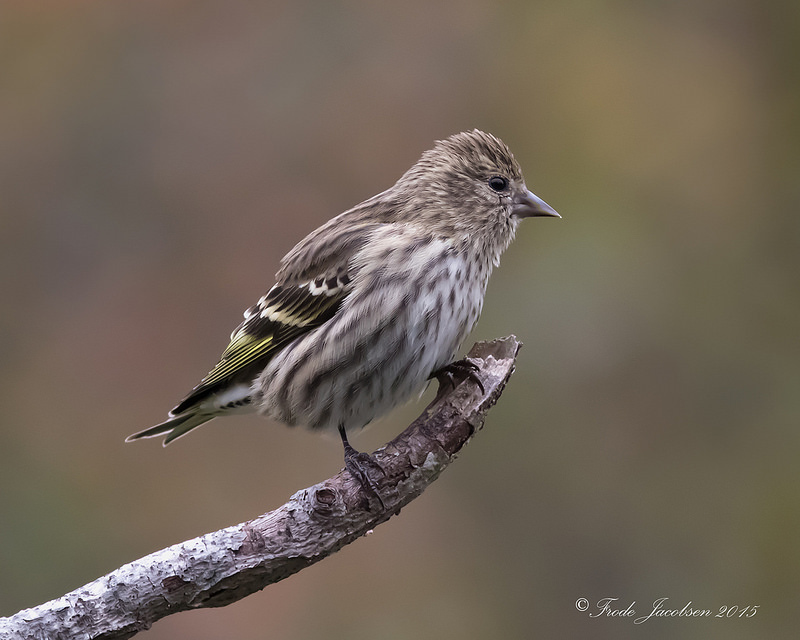 Pine Siskin. Photo by Frode Jacobsen. It’s hard to believe we’re already heading into the final weeks of this year’s bird counts! We’re excited to see what surprises the remaining days will bring and what Ben, Lucas, and their crews turn up before the end of the season. | ||
Identifying Maryland’s Plumegrasses | ||
|
By Jim Brighton Maryland is home to five native species of plumegrass in the genus Erianthus. These tall grasses are found primarily on the Coastal Plain and occasionally on the Piedmont. They are found in open, sunny habitats such as roadsides, areas under power lines, and the edges of freshwater marshes. 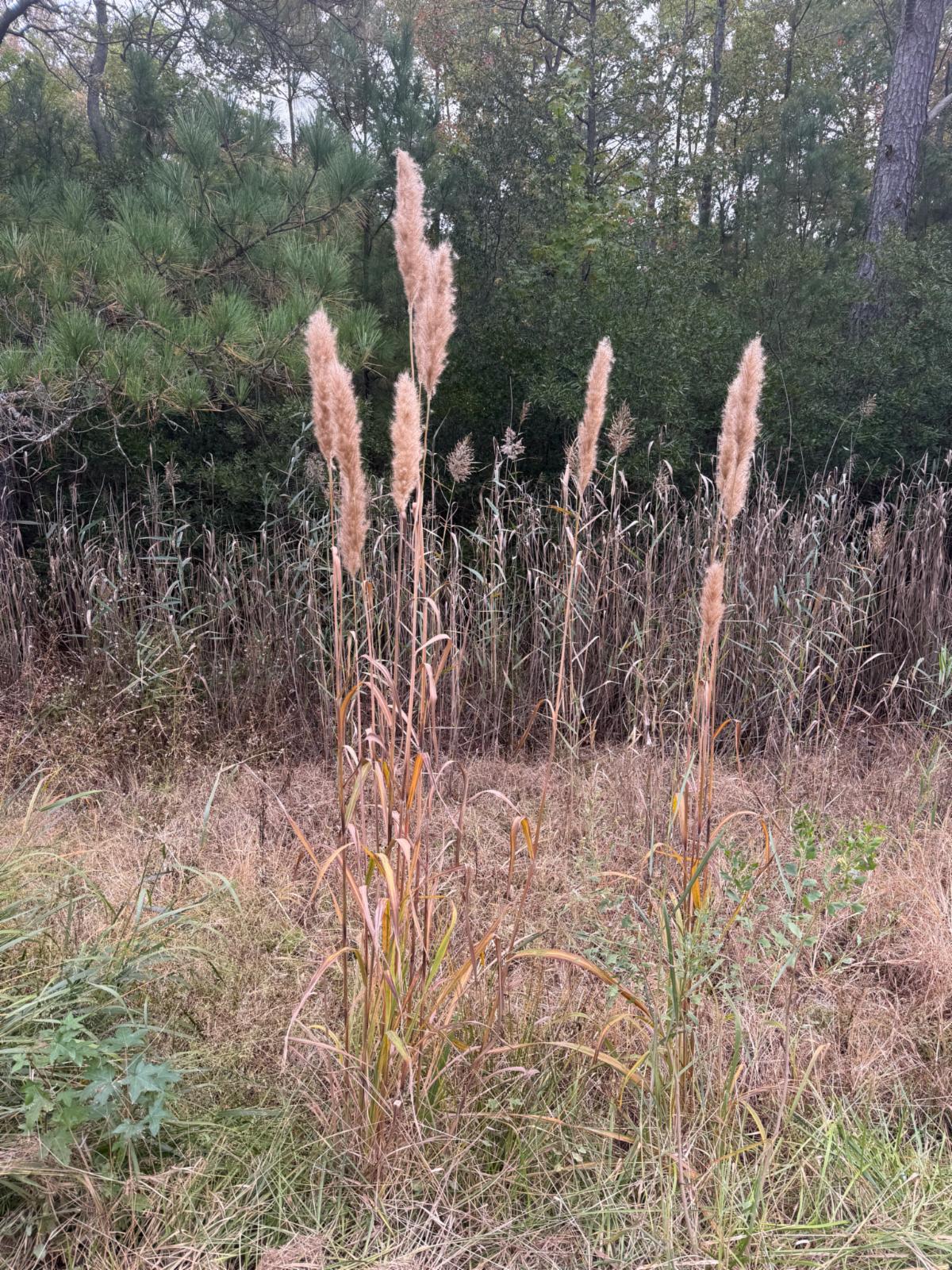
Sugarcane Plumegrass (Erianthus giganteus) in Somerset County, October 10, 2026. Photo by Jim Brighton. View MBP record. Maryland’s five plumegrass species, listed from most common to rarest, are:
Identifying plumegrasses can be challenging, but with a little practice and knowledge of a few key characteristics, distinguishing these five species becomes easier. The first feature to examine is the node just below the inflorescence (flowering head): Is it densely hairy or mostly hairless? This simple characteristic is an important first step in narrowing down your identification.
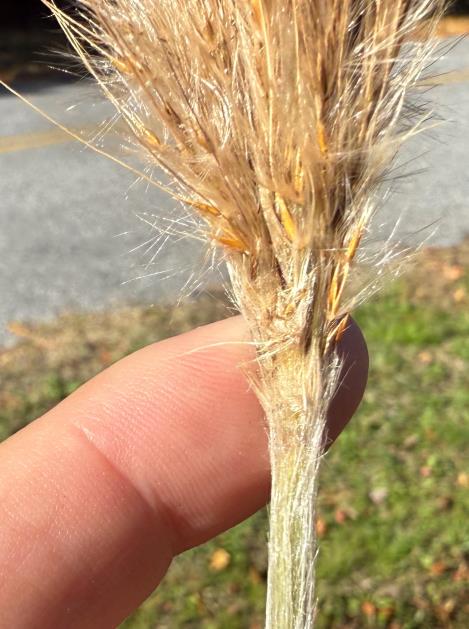
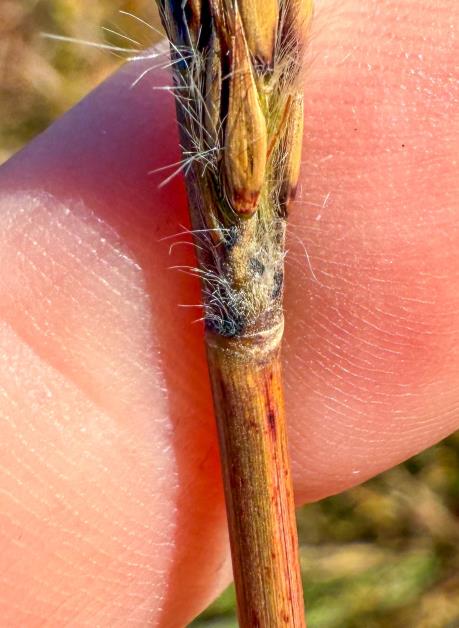
Left: the densely hairy node of Sugarcane Plumegrass. Right: the mostly glabrous node of Shortbeard Plumegrass. Photos by Jim Brighton. Now you need to look at the awns and callus hairs of the spikelet. 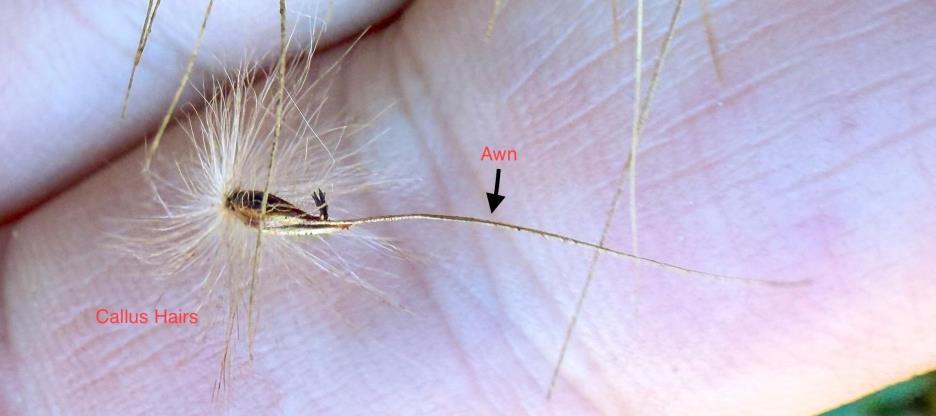 Awn and callus hairs of a plumegrass spikelet. Photo by Jim Brighton. If the node below the inflorescence is densely hairy and the awn of the spikelet is straight, you have Sugarcane Plumegrass (E. giganteus). If the awn is spirally twisted at the base, you have Silver Plumegrass (E. alopecuroides). If the node below the inflorescence is mostly glabrous and the spikelet has no hairs on the callus, then you have Narrow Plumegrass (E. strictus). If the spikelet has callus hairs, then you need to once again look at the awns. If the awn is straight, you have Compressed Plumegrass (E. coarctatus). If the awn is spiraled at the base, then you have Shortbeard Plumegrass (E. contortus). 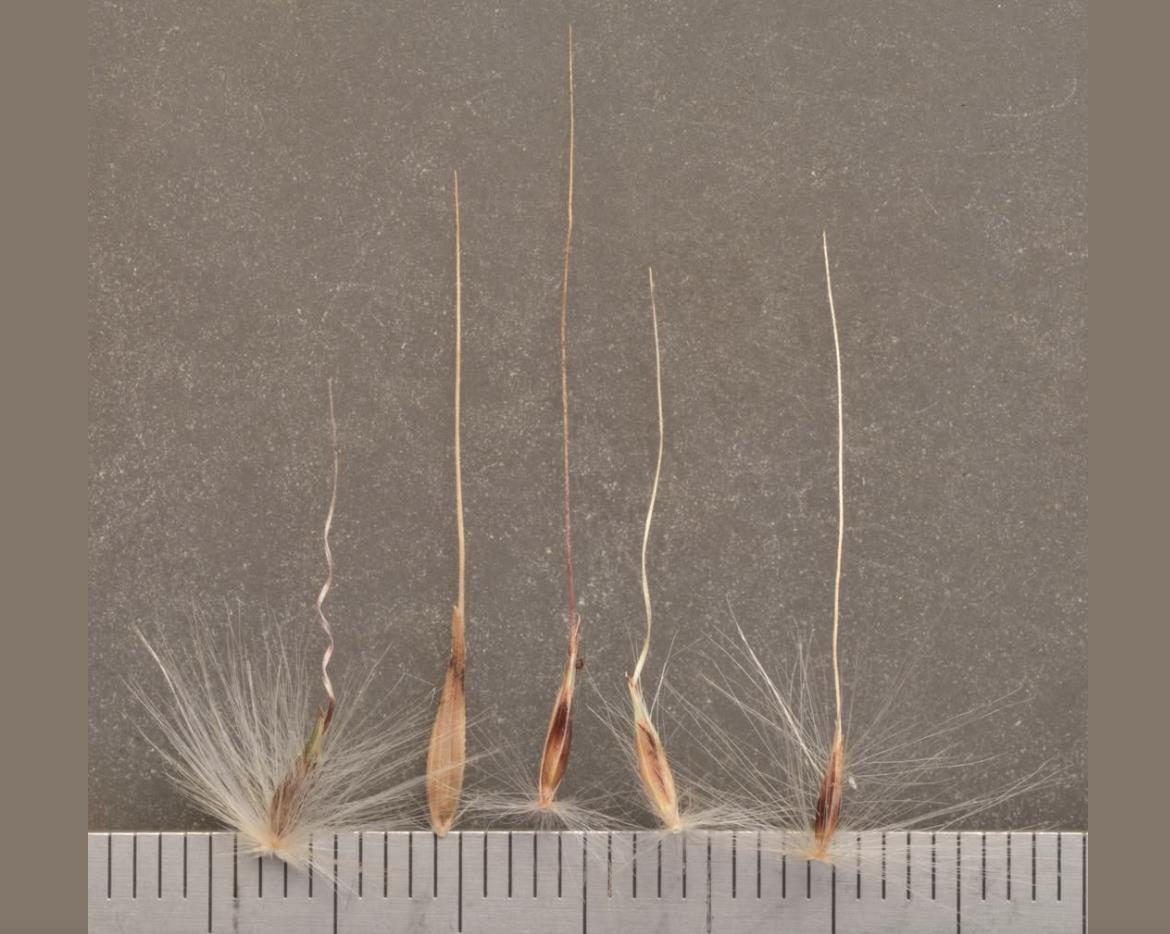 From left to right: Silver Plumegrass (E. alopecuroides), Narrow Plumegrass (E. strictus), Compressed Plumegrass (E. coarctatus), Shortbeard Plumegrass (E. contortus), and Sugarcane Plumegrass (E. giganteus). This photo by Zach Bradford, created for a Facebook post, illustrates the differences in spikelet awn shapes. | ||
Looking Back at the Cosca BioBlitz | ||
|
By John Hall Now that the growing season is winding down, it’s a great time to look back at the Cosca BioBlitz, one of MBP’s biggest events of the year. Held June 20–21, 2026, at Clearwater Nature Center and Cosca Regional Park in Prince George’s County, the event was co-sponsored by Maryland Biodiversity Project, Prince George’s County Parks and Recreation, and the Mycological Association of Washington, D.C. 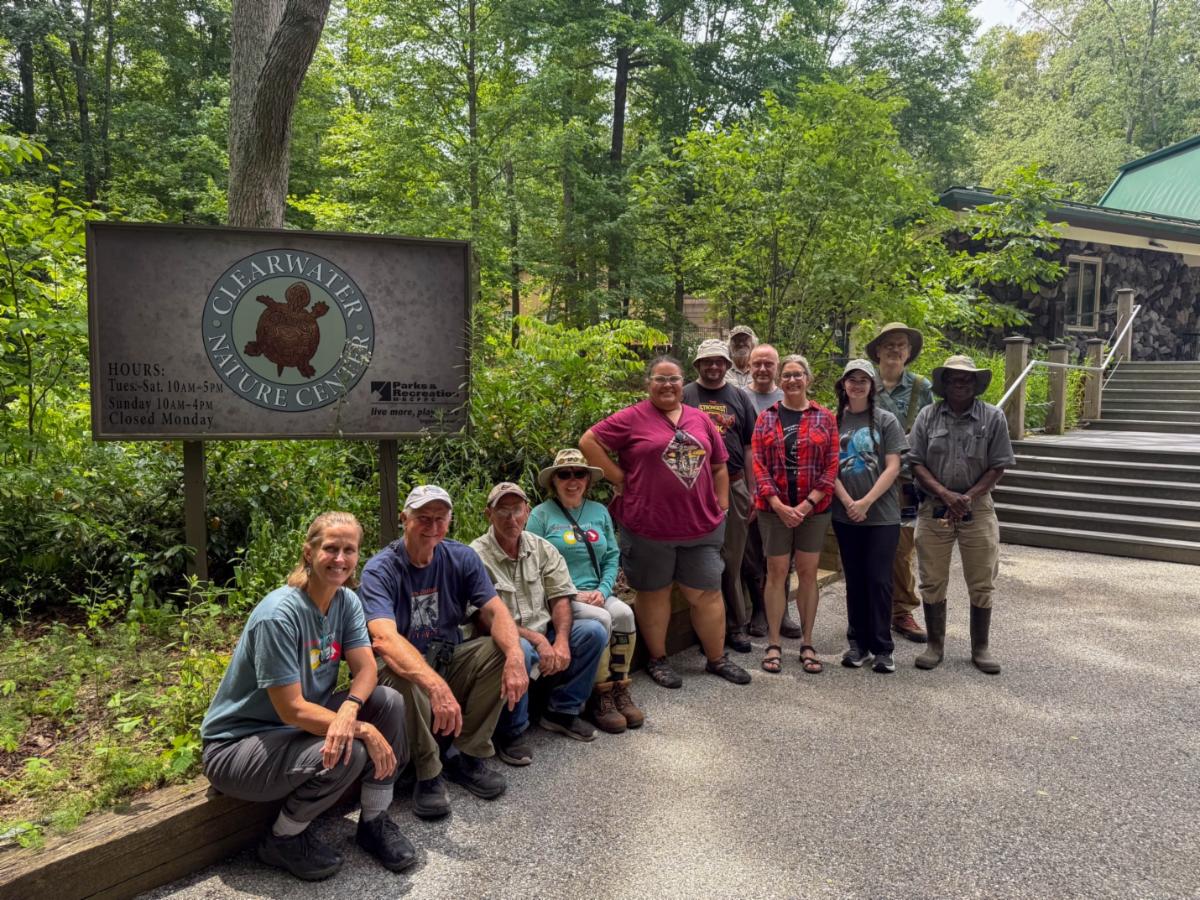
Some of the Cosca BioBlitz participants. Photo by John Hall. The roughly 690-acre park just outside the D.C. Beltway includes developed recreation areas, hardwood forests dominated by beech and oak, streams, and infrequently mowed meadows. More than 100 naturalists of all ages explored these habitats over the weekend to learn about wildlife and document the park’s biodiversity. Our efforts paid off! Together, we made more than 4,600 observations documenting over 1,000 taxa, with insects, plants, and fungi particularly well represented. A small group of experienced naturalists ran UV lights on Saturday night, documenting hundreds of species, including an Eastern Hercules Beetle. 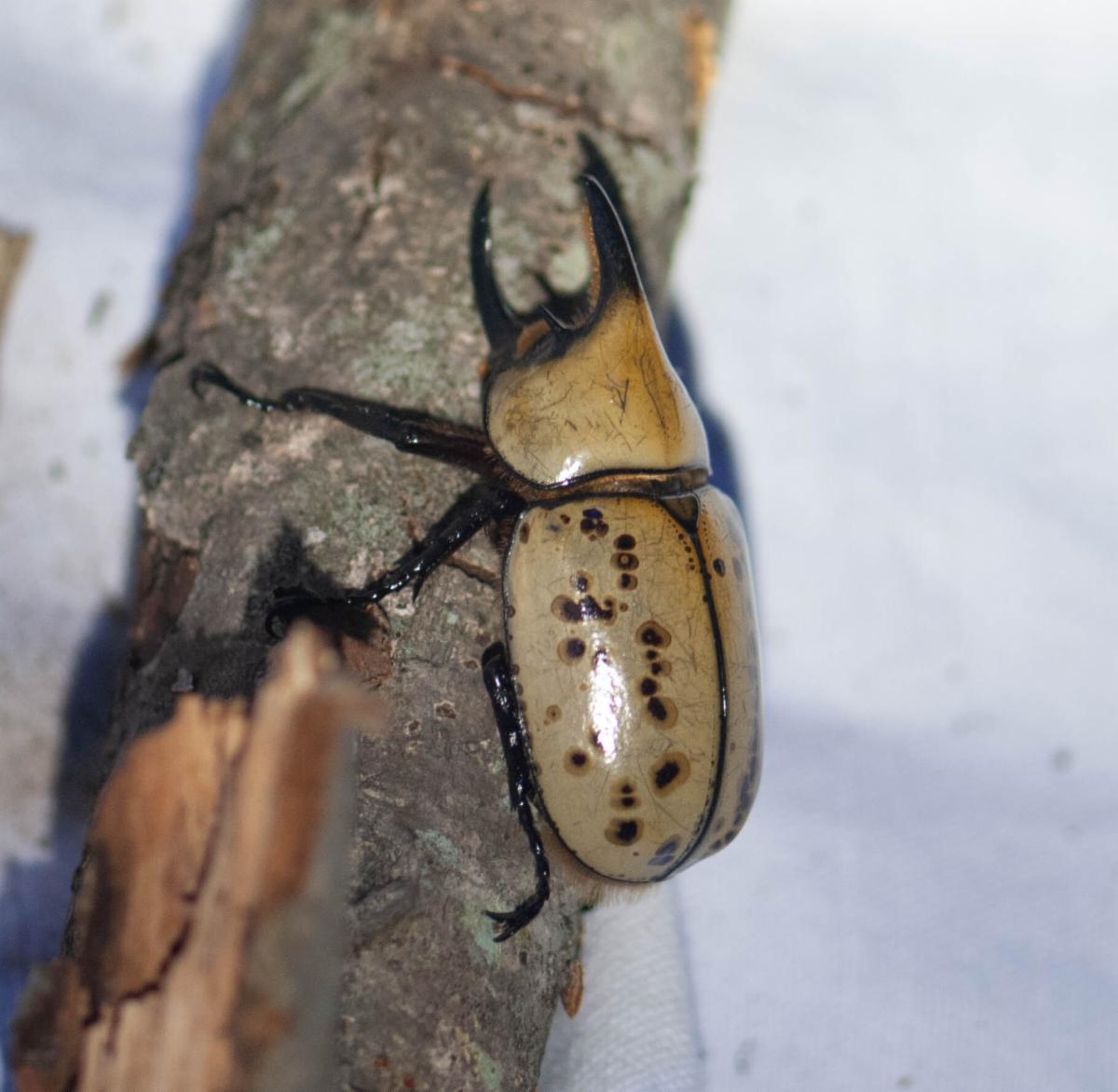
Eastern Hercules Beetle. Photo by John Hall. Specialists from the Mycological Association of Washington, D.C., set up high-quality microscopes in Clearwater Nature Center and documented many microfungi, including four species new to the MBP database. The BioBlitz also documented about 44 taxa that were new MBP records for Prince George’s County and 491 taxa new to MBP’s records for the Piscataway Quad. Explore the observations and species in the Cosca BioBlitz iNaturalist project. | ||
Recent Events | ||
|
Entomology 2026: Jim Brighton presented at Entomology 2026, the Entomological Society of America’s annual meeting, held November 8–11 in Columbus, Ohio. Waterfowl Festival: MBP joined the 55th Annual Waterfowl Festival in Easton, November 13–15. Thanks to everyone who stopped by our table in the Conservation Corner at Easton High School to say hello and celebrate Maryland’s biodiversity! | ||
What is Maryland Biodiversity Project? | ||
|
Maryland Biodiversity Project (MBP) is a 501(c)(3) nonprofit dedicated to cataloging the living things of Maryland. Together, our community maintains a living atlas of the state’s flora and fauna and makes this carefully curated biodiversity archive available for science, conservation, and education. | ||
|
|