Rep. Stanley votes for bill to combat opioid epidemic
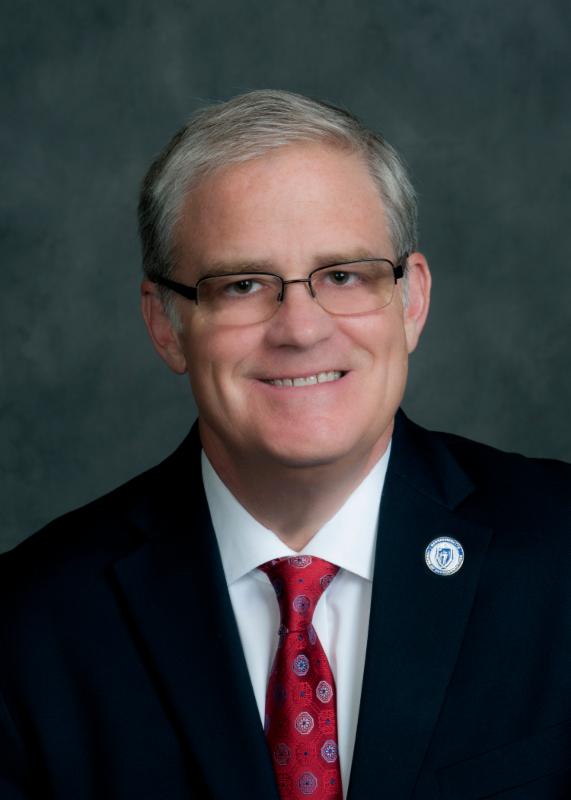
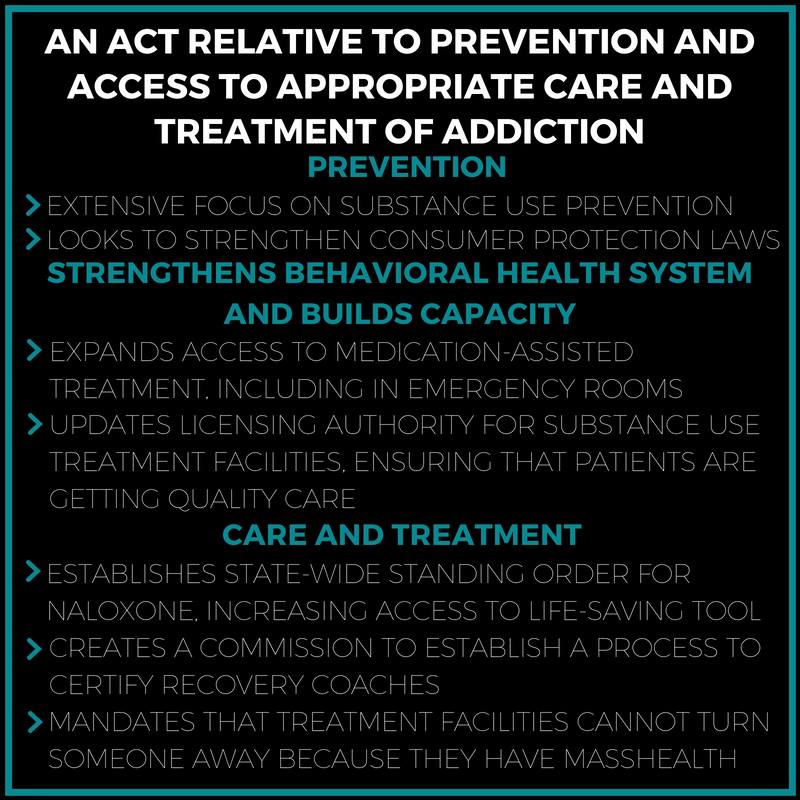
On 7/31, Rep. Stanley joined his colleagues and voted to support an act for prevention and access to appropriate care and treatment of addiction, a bill focused on combating the opioid epidemic. This bill takes steps to strengthen community based prevention of substance use disorders and promote healthy behaviors, enhance the quality and number of substance use disorder and mental health programs in our state, and increase the "tools in the toolbox" for desperately needed treatment and care. The legislation includes a standing Naloxone order, which means that anyone can now purchase Narcan, treats pain with a focus on alternative therapies, and makes sure that all programs for care will accept all individuals. Rep. Stanley is proud that Massachusetts continues to lead in the fight against the relentless disease of addiction and is steadfastly committed to prevention meeting the needs of individuals, families and our communities ravaged by the relentless disease of addiction.
Rep. Stanley lobbies for Waltham Tourism Funding
Rep. Stanley sent a letter to Speaker DeLeo and Chairman Sánchez requesting an opportuning to override Gov. Baker's veto of a $75,000 allocation to the Waltham Tourism Council. The Waltham Tourism Council uses these funds to promote and advertise special events in Waltham year-round: the Waltham Riverfest, the Waltham Steam Punk Festival, the Watch City Festival, Concerts on the Common as well as multiple 5k Road Races, among others. These events drive people to the City's restaurants and hotels.
Outside of Boston and Cambridge, Waltham has more hotels than any other city/town in the Commonwealth and is home to approximately 115 restaurants. The tourism/travel sector supports Waltham's hotel and restaurant economy which in turn drives employment. Many of the people working in the hospitality sector in Waltham are from the greater Waltham area so the money that is spent on hotels and restaurants in Waltham flows directly into the local and regional economy.
Rep. Stanley supports bill which addresses the special education needs of children with dyslexia
In a letter to Ways and Means Chairs Senator Spilka and Representative Sanchez, Rep. Stanley urged favorable passage of legislation which addresses the special education needs of children with dyslexia. This legislation would enable students with dyslexia to access the services and support they need to succeed and to help Massachusetts teachers learn the best practices for their instruction. Because dyslexia is not currently defined in our special education statutes, families struggle to acquire the services and support needed to ensure that their children receive a proper education. As it stands now, most students with dyslexia do not have other disabilities that would inhibit their academic progression, but tend to fall far behind their peers in reading from an early age due to this lack of support.
Early screening for dyslexia is important because if it is diagnosed at the appropriate time, dyslexic students can receive specialized instruction in strategies for reading with dyslexia, lessening their risk of falling behind. When students with dyslexia are diagnosed early and receive the proper support, they are more likely to read at grade level and succeed independently, both in school and eventually as adults.
Rep. Stanley helps pass legislation to promote and enhance civic education
Rep. Stanley and his colleagues in the House passed legislation which creates a Civics Project Trust Fund to to assist with the implementation of professional development training, the development of the history and social science curriculum framework, including civics education; the collaboration with institutions of higher education and other stakeholder organizations; and the establishment of a competitive evaluation of a student-led civics project, available to all eighth grade students.
The bill requires the state secretary, in consultation with the commissioner of elementary and secondary education and the board of elementary and secondary education, to establish a high school voter challenge program. The voter challenge program must provide opportunities for outreach and for all eligible students to register or pre-register to vote on any participating high school campus.
The bill also ensures there is comprehensive civic education in the Commonwealth and requires that each public school serving students in the eighth grade and each public high school provide at least one student-led civics project. It also requires the state secretary disseminate information to cities and towns to promote youth membership on municipal boards, committees and commissions as a means to promote civic engagement.
Rep. Stanley signs Purple Heart Day Joint Resolution
Rep. Stanley recently signed onto a resolution recognizing August 7th as Purple Heart Day. The Purple Heart is the oldest American military decoration in present use and was created as the badge of military merit, made of purple cloth, shaped as a heart with the word "merit" sewn upon it, on August 7, 1782 in Newburgh, New York by General George Washington. The Purple Heart is awarded to members of the armed forces of the U.S. who are wounded by an instrument of war in the hands of the enemy and posthumously to the next of kin in the name of those who are killed in action or die of wounds received in action.
Governor Baker Signs Bill Raising Age to Purchase Tobacco Products
Governor Baker signed H4486, An Act protecting youth from the health risks of tobacco and nicotine addiction, which will raise the legal age to buy tobacco products statewide from 18 to 21. The bill also broadens existing prohibitions on public smoking to include e-cigarettes, and prohibits the use of tobacco products on the grounds of any public or private primary, secondary, or vocational school. Additionally, the new law will prohibit the sale of tobacco products by any pharmacy, hospital, or other entity that offers health care services or that employs any licensed health care providers.
Governor Baker Signs Bill Repealing Archaic Laws
Governor Baker signed S. 2260, An Act relative to reproductive health, repealing a number of archaic provisions, some of which were initially passed into law in the 1800s and have since become largely unenforceable in light of decisions made by the U.S. Supreme Court and Massachusetts Supreme Judicial Court. S. 2260 repeals a law that requires an abortion conducted during or after the 13th week of pregnancy be performed in a hospital authorized for general surgery, which conflicts with current practice that permits women to also receive services at health clinics. These laws are rescinded effective immediately upon the governor's signature.
Governor Baker Signs Fiscal Year 2019 Budget
Governor Baker signed the Fiscal Year 2019 (FY19) budget into law. The $41.232 billion plan reinforces the Baker-Polito Administration's commitment to structurally balancing the state budget, while investing $4.91 billion towards K-12 education, providing over $200 million to combat the opioid and heroin epidemic, increasing funding to build stronger communities and supporting the state's workforce from job growth to public transit. The FY19 budget anticipates a sizeable deposit in the Stabilization Fund, resulting in a net increase of $368 million for this fiscal year and a total balance of $2.15 billion by the end of FY19.
The budget reflects the Administration's commitment to reducing the reliance on one-time sources of revenue, down from nearly $1.2 billion in Fiscal Year 2015 to $95 million in FY19, a decrease of 92%. Consistent with the administration's previous budgets, this plan does not raise taxes or fees. The FY19 budget represents a 3.2% increase in spending over estimated spending in Fiscal Year 2018 (FY18). The total $41.232 billion in spending excludes the Medical Assistance Trust Fund transfer.
The Commonwealth's investment in Chapter 70 education aid to local schools will reach an all-time high of $4.91 billion, an increase of $160.6 million over FY18 and $507 million since the Administration took office. The budget also includes an increase in the state Earned Income Tax Credit from 23% to 30% of the federal tax credit, and builds on an earlier increase from 15% to 23% signed by the Governor in 2015. The tax credit increase, which was included in the Governor's FY19 budget proposal, will provide additional tax relief for 450,000 filers, allowing working families in Massachusetts to retain more of their earnings. Next year an income-eligible family with three qualifying dependent children will receive a tax credit of nearly $2,000, or $458 more than at the current rate. The budget also increases the dairy farm tax credit.
The FY19 plan continues the Administration's support of local communities with a $37.2 million increase in unrestricted local aid, to $1.1 billion, an increase of $153.2 million since taking office. The budget includes $5.3 million for the Community Compact Cabinet program, and FY19 funding will reach $6.8 million total, pending approval by the Legislature of $1.5 million in additional funds. Chaired by Lt. Governor Karyn Polito, the Community Compact promotes municipal best practices and supports efficiency and regionalization grants for cities and towns. As of May 2018, all 351 cities and towns in the Commonwealth have signed compacts with the Commonwealth.
The FY19 budget continues the Administration's focus on addressing opioid addiction and substance misuse, funding $203 million across multiple agencies (not including MassHealth) for treatment and services for individuals with substance use disorder, an approximately 70% increase since 2015. The budget will continue support for women's addiction treatment services at Taunton State Hospital and programs at the Massachusetts Alcohol and Substance Abuse Center in Plymouth.
The budget makes a major investment in behavioral health with a $109 million increase in funding for the Department of Mental Health, which includes $83.8 million for Adult Clinical Care Services to improve community-based services for adults with serious mental illness.
The Department of Children and Families will receive $1 billion in funding, an increase of $34.2 million over FY18. Since 2015, funding for DCF has increased by $180.2 million, which has supported the hiring of more than 600 new employees to address the critical infrastructure needed to run the agency.
The budget makes important progress toward funding accounts that traditionally have been underfunded and typically require significant supplemental appropriations, including snow and ice removal, legal services for the poor, and emergency shelter for the homeless.
The Massachusetts Department of Transportation receives $582.5 million in funding, including the MBTA and Regional Transit Authorities. The MBTA will receive $127 million in state support in FY19 to build on the Administration's commitment to improve financial sustainability at the T, in addition to the annual $1 billion sales tax transfer.
Governor Baker Signs Bill Funding Municipal Police Training
Governor Baker signed H. 4516, An Act relative to the municipal police training fund, which will allow the Municipal Police Training Committee (MPTC) to conduct additional recruitment and trainings that will give local police critical tools needed to ensure the safety of Massachusetts residents and communities. The MPTC is responsible for training and setting training standards for local police, University of Massachusetts police and state environmental police.
The legislation calls for up to $10 million in annual revenue for training and also allows for revenue from the Marijuana Regulation Fund, legislative appropriations designated to the municipal police training fund and revenue from private sources such as grants, gifts and donations to be used for the fund. This legislation will allow the Municipal Police Training Committee to maintain critical services and expand training, including first aid training, first-line supervision training, field training, sexual assault investigator training, School Resource Officer training and instructor training courses.
$57 Million Will Support Affordable Housing Development
Governor Baker announced this year's affordable rental housing awards, which will provide $57 million in direct subsidies for 19 projects to fund the development, renovation and preservation of housing opportunities throughout the state. Since 2015, affordable housing awards have led to the creation and preservation of more than 6,300 housing units.
The $57 million in state funding will support affordable, multifamily rental projects. Funding sources include federal HOME funds and state bond funds from six capital bond accounts. Additionally, the Department of Housing and Community Development (DHCD) is awarding $33.5 million in federal and state housing tax credits which will generate more than $240 million in equity to support the construction and preservation of 1,463 units, including 1,312 affordable units with 227 units reserved for very low-income households. Funded projects include six developments for seniors, three projects that will support substantial renovations of public housing developments, and four transit-oriented developments. Many include housing units reserved for formerly homeless families and individuals.
Gov. Baker Proposes $150 Million Investment in Public Education & School Safety Package
The Baker Administration filed legislation providing $150 million across K-12 and higher education programs, including funds to support school safety, strengthen mental health programs in schools, provide additional pathways to higher education opportunities, and address substance misuse prevention, education and screening for students.
The administration is proposing a wide-ranging $72 million package to make school security upgrades in the Commonwealth's schools and provide resources to students, staff, and first responders to better respond to threats within schools. Under this bill, each superintendent would report annually to the Department of Secondary and Elementary confirming whether they have a multi-hazard evacuation plan in place, as required by state law. In addition, they would report on any trainings, exercises, or simulations related to the plan that were conducted in the prior year.